
Note: This article contains affiliate links. If you click on these links and make a purchase, we may earn a small commission at no extra cost to you. This helps support our research and content. Read our full affiliate disclosure here.
Choosing the right oven for baking cakes has a big effect on how your finished layers look, rise, and texture. You want an oven that holds temperature steadily, distributes heat evenly, and gives you control over settings that matter for delicate batters. This guide shortlists the top options for baking cakes and explains the practical reasons each type made the cut. Below you will find our top picks for cake baking alongside clear evaluation criteria so you can match an oven to the kinds of cakes you bake most often.
Top Picks at a Glance
| Best Overall The best all-around choice for most situations | Ninja French Door Premier FO101 |  |
| Best Quality Built to a higher standard if you want something more solid | Our Place Wonder Oven Pro |  |
| Best Value The sweet spot between price and what you get | BLACK+DECKER Crisp 'N Bake Toaster Oven | 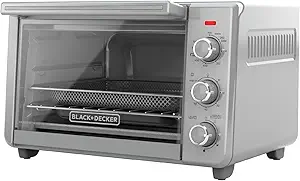 |
| Best Budget The cheapest option that still gets the job done reliably | Elite Gourmet Countertop Toaster Oven ETO490 |  |
| Top Rated A top-rated pick with lots of positive feedback | Ninja Double Oven Pro DCT801BL |  |
| Most Popular A crowd favorite that many people choose with confidence | Emeril 26QT French Door Air Fryer Oven |  |
| Best Seller A high-volume bestseller chosen again and again | BLACK+DECKER 8-Slice Convection Toaster Oven |  |
Ninja French Door Premier FO101
| Capacity | 5 quarts |
|---|---|
| Wattage | 1800 watts |
| Temperature Range | 450°F |
| Control Type | Button Control |
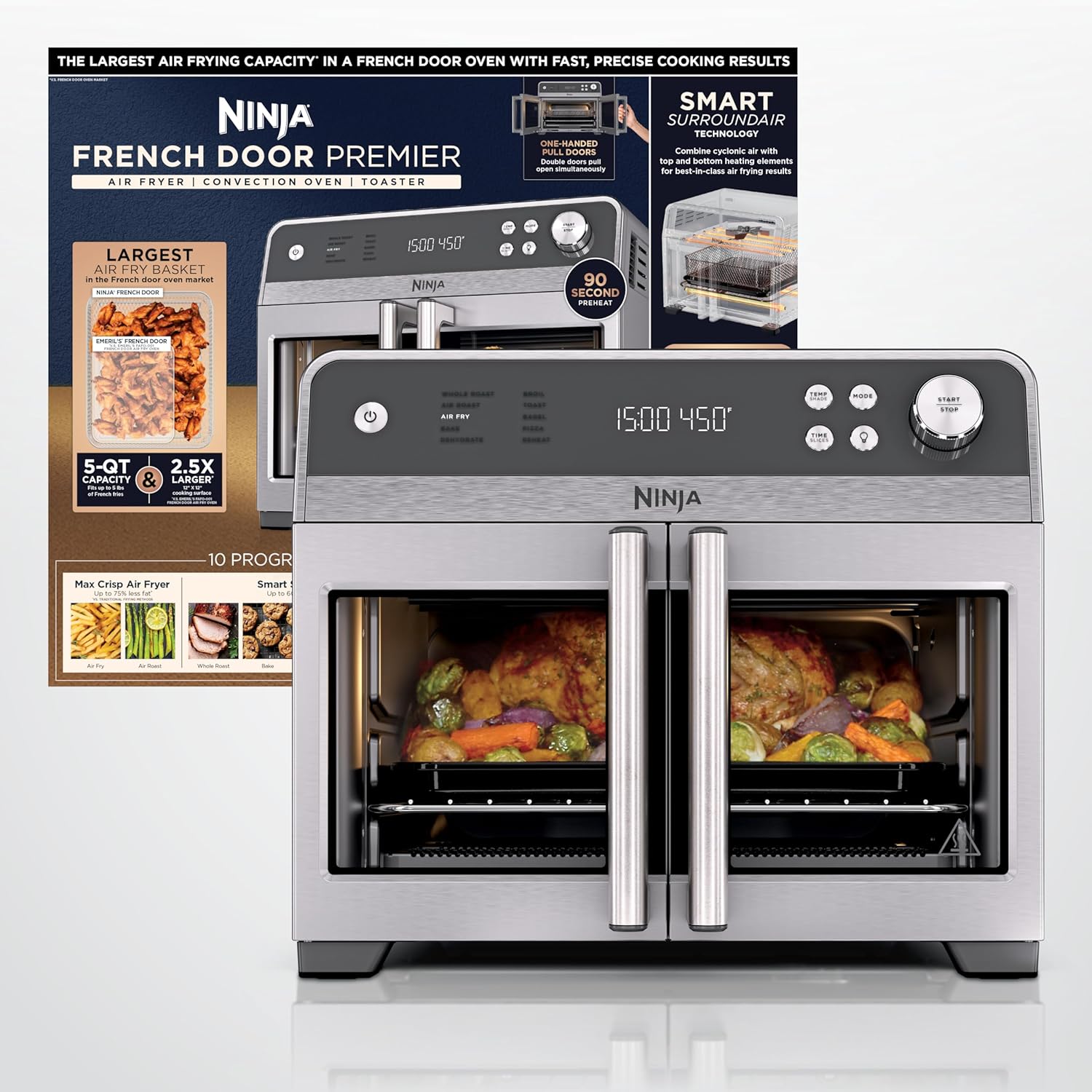
The Ninja French Door Premier FO101 is a countertop air fry oven built for family-sized, performance-focused cooking. It uses 450F cyclonic air and Smart SurroundAir-style convection to speed cooking and deliver crisp results without rotating baskets, and the included 5-qt air fry basket and sheet pan let you air fry, roast, bake, broil, toast, dehydrate and more. Controls are button-based and the unit reaches high temperatures quickly for efficient searing and browning, while dishwasher-safe accessories and a PFAS-free cooking surface simplify cleanup and food safety. The French-door design provides one-handed access and the oven claims up to 60% faster cooking than conventional ovens, which is useful for crisping keto-friendly proteins and vegetables. Limitations are typical for a high-power countertop oven: it has a sizable footprint, and at 1800 watts it may require circuit consideration in smaller kitchens, and some users may prefer a simpler basket-only air fryer for single-dish quick snacks.
Best for: Buyers who prioritize fast, restaurant-style browning and need a versatile oven that handles family-sized keto meals and crisping proteins and vegetables.
Less Ideal for: Those with very limited counter space or circuit capacity, or buyers who only want a compact single-purpose air fryer for occasional small snacks.
- High 450F cyclonic airflow for fast, even browning and searing
- Large 5-qt air fry basket and sheet pan support family-sized portions
- 10 cooking functions cover air fry, roast, bake, broil, toast and dehydrate needs
- PFAS-free cooking surface and dishwasher-safe accessories simplify cleanup
- Relatively large and heavy for a countertop appliance
- 1800W power draw may stress limited kitchen circuits
Verdict: If you want a high-heat, versatile countertop oven that crisps family-sized keto meals quickly, the Ninja French Door Premier FO101 delivers strong, fast performance.
Our Place Wonder Oven Pro

| Capacity | 32 quarts |
|---|---|
| Wattage | 1700 watts |
| Temperature Range | 80°F to 450°F |
| Control Type | Touch Control |
| Number of Shelves | 3 |
The Wonder Oven Pro is a high-capacity countertop air fryer toaster oven built for versatile, reliable cooking. It combines an intuitive touchscreen for precise time and temperature control with a 360° convection system and quartz/stainless heating elements that preheat quickly and push heat evenly across three rack levels. You can air fry, bake, roast, broil, toast, dehydrate, proof, and reheat, and the built-in steam infusion helps retain moisture when baking breads and cakes. Included accessories — a large bake tray, wire rack, air fry basket, and crumb tray — make multi-layer baking and sheet-to-sheet turnover straightforward. At 1700 watts and a 80°F–450°F range, it reaches high baking temperatures and speeds up preheat, so batter and crusts brown consistently. The unit is stainless steel with ceramic nonstick surfaces and advertises PFAS-free materials for peace of mind. Trade-offs are countertop footprint and an 18 lb weight that limit portability, and the controls and accessories follow the oven's proprietary layout so replaceable parts and cleaning require attention.
Best for: Bakers who prioritize consistent, restaurant-quality results and faster preheating for multi-layer cakes, breads, and batch baking in a family-sized countertop oven.
Less Ideal for: Buyers who need an ultra-compact or highly portable oven for small kitchens, or those who prefer fully dishwasher-safe accessories for easy cleanup.
- Large 32‑quart interior with three rack levels for multi-layer baking.
- 360° convection plus quartz and stainless heating elements for even browning and faster preheat.
- Digital touchscreen gives precise time and temperature control for baking consistency.
- Built-in steam infusion helps retain moisture for cakes and breads.
- Includes full-size bake tray, wire rack, air fry basket, and crumb tray out of the box.
- Countertop footprint and weight reduce portability and require adequate counter space.
- Not dishwasher-safe accessories and stainless surfaces need regular hand-cleaning.
Verdict: If you want a family‑sized countertop oven that bakes evenly and preheats fast for multi-rack cakes and breads, the Wonder Oven Pro delivers precise, bakery-style results.
BLACK+DECKER Crisp 'N Bake Toaster Oven

| Wattage | 1500 |
|---|---|
| Control Type | Knob Control |
| Temperature Range | 200-450 °F |
| Included Components | Air Fry Basket, Bake Pan, Rack |
This BLACK+DECKER Crisp 'N Bake is a roomy countertop toaster oven that doubles as an air fryer and convection oven for faster, more even results. It offers five cooking modes—bake, broil, toast, keep warm, and air fry—selected with three simple knobs for temperature, function, and a 60-minute timer with stay-on capability. The included air fry basket and convection fan let you crisp frozen or hand-made pizza toppings with less oil and shorter cook times than a conventional oven, and the cavity holds a 12-inch pizza or six slices of bread, so it works for family-sized meals. Practical touches like an adjustable rack, a slide-out crumb tray, and basic bake/broil pan make cleanup and everyday use straightforward. Limitations are its manual knob controls rather than digital presets and a single shelf that constrains simultaneous multitasking when cooking multiple pizzas or dishes at once. For bench spaces where you want reliable pizza reheating and quick small-batch baking without firing up a full range, this unit is a sensible, no-frills choice.
Best for: Buyers who want a practical countertop oven that reheats and crisps 12-inch pizzas quickly without using a full-size oven and value straightforward controls and easy maintenance.
Less Ideal for: Those who need precision programmable controls, multi-shelf baking for several dishes at once, or a larger capacity for oversized pizzas.
- Large interior fits a 12-inch pizza or six slices of bread
- Air fry plus convection speeds cooking and crisps toppings with less oil
- Simple knob controls and 60-minute stay-on timer are easy to use
- Includes air fry basket, bake pan, rack, and a removable crumb tray for easier cleanup
- Single shelf limits cooking multiple items at once
- No digital presets or programmable controls for repeatable pizza settings
Verdict: A practical, roomy toaster oven that crisps and reheats 12-inch pizzas quickly using air fry and convection without the complexity of digital controls.
Elite Gourmet Countertop Toaster Oven ETO490

| Capacity | 9 liters |
|---|---|
| Wattage | 800 watts |
| Timer | 30 minutes |
| Temperature Range | 200F-450F |
| Control Type | Knob Control |
The Elite Gourmet ETO490 is a compact countertop toaster oven that handles toasting, baking, broiling, and warming in small kitchens, dorms, or RVs. It offers an adjustable thermostat up to 450°F and a 30-minute timer, so you can bake small cakes, warm slices, or broil sandwiches with straightforward knob controls. At 800 watts and with one rack plus two rack positions, the oven heats quickly and includes a baking pan, wire rack, and removable crumb tray for easier cleanup. Its 9-liter capacity fits personal pizzas and small cake pans but will not accept full-size baking pans, so plan recipes accordingly. The aluminum construction and dropdown door keep the unit lightweight and simple to maintain, though precise temperature uniformity across larger bakes can be limited compared with full-size ovens. For basic cake baking and reheating in tight spaces, it delivers reliable, no-frills performance.
Best for: Buyers who need an inexpensive, space-saving oven to bake small cakes, personal pizzas, and everyday snacks in a dorm, RV, or small kitchen and who prioritize simplicity and low cost over full-size capacity.
Less Ideal for: People who regularly bake large layer cakes or need precise, uniform results for multiple pans should choose a larger countertop or conventional oven instead.
- Adjustable thermostat up to 450°F suitable for most small baking tasks
- Compact footprint fits small kitchens, dorm rooms, and RV countertops
- Includes baking pan, wire rack, and removable crumb tray for easy cleanup
- Simple knob controls make operation intuitive without a learning curve
- 9-liter capacity is limited to small pans and cannot handle full-size cake tins
- 800-watt power and compact cavity may cook less evenly than a full-size oven for larger bakes
Verdict: A budget-friendly, compact toaster oven that reliably bakes small cakes and snacks when space and price are the top priorities.
Ninja Double Oven Pro DCT801BL

| Capacity | 28 liters |
|---|---|
| Wattage | 1800 watts |
| Control Type | Button Control |
| Number of Shelves | 2 |
The Ninja Double Oven Pro is a countertop convection oven with two independent cooking chambers that let you run separate programs or sync both with Smart Finish and DualZone technology so meals complete at the same time. The top cavity uses QuartzHeat for quick, even heating while the bottom cavity offers Ninja air-fry performance for crispy results; together they support 12 cooking modes including bake, convective bake, roast, and dehydrate. The XL capacity fits family-size pans and a whole chicken, and the included racks, pans, and air-fry basket make it ready for multi-dish cooking. For baking cakes, the oven's convection modes and even heat from QuartzHeat help produce consistent browning and texture, and being able to dedicate one chamber to a cake while using the other for batch tasks keeps flavors separate. Trade-offs are countertop footprint and weight compared with single-chamber toaster ovens, and you need to learn the control layout to make full use of dual-zone syncing. Wattage is high, so it heats fast but draws substantial power.
Best for: Home bakers who prioritize consistent, repeatable results and want the flexibility to bake cakes while simultaneously preparing other dishes for family meals.
Less Ideal for: Those with very limited counter space or anyone seeking a lightweight, portable toaster oven should look for smaller single-chamber models instead.
- Two independent ovens let you bake in one chamber while cooking other items in the other
- QuartzHeat top cavity provides fast, even heating that benefits cake browning and rise
- Large interior fits family-size sheet pans and whole poultry so you can bake multiple cakes or large pans
- 12 cooking programs including convective bake and whole roast give bake-specific modes without needing extra accessories
- Relatively heavy and takes significant countertop space compared with single cavity ovens
- High 1800W power draw requires an appropriate outlet and can increase energy use during long bakes
Verdict: Choose this dual-chamber Ninja if you want a reliable, family-sized countertop oven that bakes evenly and can handle multi-dish cake baking without flavor crossover.
Emeril 26QT French Door Air Fryer Oven

| Capacity | 24.6 liters |
|---|---|
| Wattage | 1700 watts |
| Voltage | 120 volts |
| Control Method | Touch |
| Max Temperature Setting | 500 °F |
This Emeril 26 QT French door air fryer toaster oven is built to replace several appliances and handle family-sized meals. It uses 360° hot air circulation and a 1700W dual-speed fan to air fry, roast, bake, broil, dehydrate and slow cook, and the rotisserie and included spit make it easy to roast whole chickens. The touchscreen control and 24 one-touch presets simplify common tasks, while French doors and an interior light make loading and monitoring food straightforward. The extra-large 26 QT cavity fits 12-inch pizzas or a full sheet of cookies, and the seven included accessories (air fry basket, bake pan, drip tray, crisper basket, rotisserie spit and tools) let you use it for many recipes out of the box. Practical limits are countertop footprint and power draw from the 1700W heater, and like many all-in-one ovens it takes some experimenting to dial in times for specific recipes compared with a conventional oven. Noise from the fan is noticeable at high speeds. For families who want one versatile unit for everyday meals and entertaining, it covers most bases well.
Best for: Buyers who need a single, versatile countertop appliance to prepare full family meals and want presets and accessories that simplify a range of cooking tasks.
Less Ideal for: Those with very limited counter space or who prefer using separate full-size ovens and stovetops for high-volume cooking should consider alternatives.
- Very large 26 QT capacity fits whole chickens and 12-inch pizzas
- Wide function set with 24 presets including air fry, roast, dehydrate and rotisserie
- Includes seven useful accessories so you can start cooking right away
- Touchscreen controls and French doors make loading and control intuitive
- 1700W power draw requires a dedicated outlet in some kitchens
- Takes countertop space and may be bulky for small counters
- Fan can be somewhat loud on high-speed settings
Verdict: A family-focused, all-in-one countertop oven that combines large capacity, rotisserie and many presets to replace multiple appliances for everyday family cooking.
BLACK+DECKER 8-Slice Convection Toaster Oven

| Wattage | 1500 watts |
|---|---|
| Control Type | Knob Control |
| Temperature Range | 250 – 450 °F |
| Capacity | 8 liters |
This Black+Decker 8-slice convection toaster oven is designed for everyday baking tasks and fits a standard 9×13 pan so you can bake cakes, lasagna, and sheet-pan items without using your full-size oven. It uses a 1500-watt convection fan to circulate heat for more even, faster baking and has knob controls for temperature and a 60-minute precision timer with stay-on for longer bakes. The oven offers three rack positions, a baking/broiling pan and a removable crumb tray for easier cleanup, and a dedicated toast timer for predictable browning. Practical limitations include a modest 8-liter capacity that still means smaller batches than a full oven and a dial-based control layout that lacks precise digital timers or presets for delicate baking tasks. For someone who needs quicker small-batch bakes and wants to use standard pans, this unit is straightforward and dependable, but it is not a replacement for a full-size oven when you need larger volume or highly precise temperature control.
Best for: Home bakers who want a reliable countertop oven that accepts standard 9×13 pans and delivers faster, even results for small to medium cakes and everyday baking.
Less Ideal for: Anyone who needs to bake large batches, multi-tier cakes, or requires highly precise digital temperature control should opt for a full-size oven or a more feature-rich model.
- Fits standard 9×13 pans so you can use existing bakeware
- Convection fan promotes more even and faster baking
- Includes baking/broiling pan and removable crumb tray for easier cleanup
- 60-minute precision timer with stay-on for longer bakes
- Capacity is limited compared with a full-size oven, restricting large or multiple-layer cakes
- Manual knob controls lack digital precision for temperature and timers
Verdict: Choose this toaster oven if you want a dependable, convection countertop oven that fits 9×13 pans for faster, even small-batch cake baking.
Choosing the Right Oven for Baking Cakes: Key Factors to Consider
Temperature Accuracy and Stability
Accurate temperature control matters because cake structure forms in precise thermal windows; an oven that runs hot or cold will alter rise, crumb, and baking time. Look at how closely the oven holds set temperatures over a full bake cycle rather than peak numbers.
Stability is also crucial across repeated bakes. Ovens with better insulation and reliable thermostats reduce the need to rotate pans or adjust times, which leads to more consistent results when you bake multiple cakes or repeat a recipe.
Heat Distribution and Airflow
How heat moves inside the cavity affects browning and whether layers bake evenly. Convection or fan-assisted modes can help create uniform heat but vary in intensity; some cakes do better with gentle circulation while others need still-air baking.
Consider whether the oven offers adjustable fan settings or the ability to disable convection. The position of heating elements and the quality of internal reflectors also change how evenly the top, middle, and bottom of a cake develop.
Control Precision and Program Options
Precision controls let you set and maintain exact temperatures and baking profiles. Digital thermostats, programmable timers, and temperature probes reduce guesswork and help duplicate results across bakes.
Useful program options for cake bakers include delayed start for scheduling, preheat indicators, and memory for custom settings. The more intuitive and repeatable the controls, the easier it is to follow strict recipes and reproducible techniques.
Interior Capacity and Rack Configuration
Capacity determines what size pans and how many layers you can bake at once. Measure usable cavity width and depth against the pans you use most frequently; an oven that fits two standard round pans side by side gives more flexibility than one that does not.
Adjustable rack positions and stable rack pulls are important when handling batter and transferring pans. A layout that supports mid-rack placement for even baking is preferred for most layer cakes.
Recovery Time and Preheat Speed
Recovery time is how quickly an oven returns to temperature after opening the door or inserting cold pans. Faster recovery reduces the chance of collapsed centers and uneven rise when you need to check or rotate cakes.
Preheat speed affects how quickly you can start baking, which matters when timing multiple batches. Good insulation and responsive heating elements shorten both preheat and recovery intervals.
Cleaning, Maintenance, and Durability
An oven that is simple to clean saves time and keeps baking surfaces from affecting flavor or browning. Features like removable racks, smooth interior surfaces, and accessible seals make routine maintenance easier.
Durability of seals, door hinges, and controls matters for long-term consistency. Frequent repairs or degraded insulation will change performance and increase the likelihood of temperature drift over time.
Convection Vs Conventional Baking
Convection baking uses a fan to circulate air, which can speed browning and improve evenness. For many cake recipes, a gentle convection setting yields more uniform results, but too strong a fan can cause doming or uneven crusts on delicate batters.
Conventional still-air heat is often preferred for custard-based cakes or very light sponge batters where radiant heat yields a more gentle rise. The best ovens for cake baking give you the option to switch modes or adjust fan intensity so you can adapt to the recipe.
- Use low or no convection for chiffon, angel food, and delicate sponge cakes.
- Use mild convection for multi-rack baking to keep temperatures balanced.
- Test recipes once when switching modes and adjust time or temperature by small increments.
Choosing Rack Positions and Pan Placement
Mid-rack is the default for most layer cakes because it balances heat from the top and bottom elements. If you bake multiple layers at once, stagger pans and use the fan mode if available to promote even airflow between racks.
Avoid placing pans too close to the top heating element to prevent over-browning. If your oven has hot spots, rotate pans halfway through the bake and monitor color to judge whether adjustments are needed.
- Center rack for single pans.
- Stagger racks when baking two pans to allow airflow.
- Use an oven thermometer to identify hot spots before critical bakes.
Using Probes, Timers, and Thermometers
A built-in probe or an instant-read thermometer helps ensure the cake reaches the correct internal temperature without overbaking. Relying solely on time can be misleading because pan size, batter density, and oven calibration affect bake duration.
Timers and programmable cycles let you automate steps like preheat hold or delayed starts, which is helpful when managing multiple bakes or layered assembly tasks. Keep a handheld thermometer on hand for spot-checks.
- Use an internal temperature target for dense cakes and cheesecakes.
- Set alarms for visible cues like color change and spring-back tests.
- Calibrate your oven thermometer periodically for accuracy.
Preventing Common Cake-Baking Problems
Many baking issues trace back to temperature inconsistencies or improper pan placement. If cakes are doming and cracking, try lowering the oven temperature slightly or using an insulating strip around the pan. If bottoms brown too quickly, move the rack up a notch or use an insulating sheet.
For sunken centers, check that the oven maintains temperature during the full bake and avoid opening the door unnecessarily. Also confirm that leavening agents were measured correctly and that batters are not overmixed, which are non-oven causes but often blamed on equipment.
- Dome and crack: reduce temperature by 10 to 20 degrees.
- Uneven browning: reposition racks or switch convection on/off.
- Sunken centers: ensure proper bake completion and avoid sudden temperature drops.
Maintenance Tips to Keep Baking Performance Consistent
Regular cleaning of spills and grease prevents smoke and uneven heat reflection. Inspect door seals and hinges annually to ensure the oven holds temperature correctly. Replace any warped racks or damaged pans that can tilt and alter heat exposure.
Run a simple calibration check with an oven thermometer every few months. If you notice persistent temperature drift, schedule a professional check rather than compensating with extended bake times, which can cause other issues.
- Wipe up spills after the oven cools.
- Check and replace worn gaskets to preserve insulation.
- Calibrate with a thermometer to verify temperature accuracy.
How We Chose the Best Oven for Baking Cakes
We focused on features that directly affect cake-baking results and everyday usability. Key evaluation criteria included temperature accuracy and stability, since small fluctuations change crumb and rise; heat distribution and airflow, because even browning and level rise depend on consistent interior circulation; control precision, including programmable ramps and convection options; usable interior volume and rack layout to fit standard cake pans and multiple tiers; and ease of cleaning and maintenance to reduce downtime between bakes. We also considered build quality and insulation as they influence long-term temperature consistency and energy use. Ovens were excluded if they lacked basic temperature controls or had interior layouts that do not accommodate standard round or sheet cake pans. We did not include specialty countertop appliances that are not intended for full-size baking. The list favors real-world performance factors and specifications that matter to home bakers rather than novelty features.
Our full evaluation process is outlined in our review methodology.
FAQ
Do I need convection to bake good layer cakes?
Convection can improve evenness and is useful for multi-rack baking, but it is not strictly necessary. Many bakers prefer still-air for delicate sponges and use low-intensity convection for sturdier batters.
How do I know if my oven runs hot or cold?
Place a reliable oven thermometer on the center rack and preheat to a set temperature, then compare the thermometer reading to the setpoint. Repeat at several temperatures to check for consistent offsets and note any variation during a full bake cycle.
What rack position is best for cakes?
The center rack is generally best because it balances top and bottom heat. When baking multiple layers, stagger racks and use airflow settings to promote even circulation between pans.
Can I bake multiple cake layers at once without losing quality?
Yes, if your oven has good airflow and you stagger pans to avoid blocking heat. Using mild convection helps keep temperatures consistent across racks, but you should still test and possibly increase bake time slightly.
How often should I calibrate my oven?
Check calibration with an oven thermometer every few months or before an important bake. If you notice consistent temperature differences, recalibrate or arrange service to maintain reliable results.
Final Verdict
Focus on temperature accuracy, how heat moves inside the cavity, and whether the oven fits your typical pan sizes when choosing an oven for baking cakes. Expect tradeoffs between speed and gentleness when using convection, and prioritize recoverability and control precision if you bake layered or delicate cakes often. Choose an oven that matches the kinds of cakes you make most and that offers the control and interior layout you need; doing so will make it easier to achieve consistent, reproducible results.