
Note: This article contains affiliate links. If you click on these links and make a purchase, we may earn a small commission at no extra cost to you. This helps support our research and content. Read our full affiliate disclosure here.
If you run a small pizzeria, catering service, or a cafe adding pizza to the menu, the right oven determines throughput, consistency, and final crust quality. Choosing a commercial-grade pizza oven for a small business matters because it affects how many pies you can produce per hour, the uniformity of bakes, and energy use during busy shifts. This guide shortlists the top options for small-business kitchen environments and explains the specs and features that matter most. We evaluated capacity, temperature control, footprint, and serviceability to assemble the most practical picks for real-world operations. Read on to find ovens suited to your service style and output goals.
Top Picks at a Glance
| Best Overall The best all-around choice for most situations | Chefman Pizza Oven RJ25-PO12-SS | 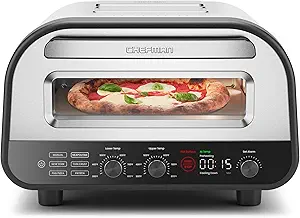 |
| Best Quality Built to a higher standard if you want something more solid | Gozney Roccbox Pizza Oven |  |
| Best Value The sweet spot between price and what you get | Cuisinart Indoor Pizza Oven CPZ-120 |  |
| Best Budget The cheapest option that still gets the job done reliably | Baker's Friend Countertop Pizza Maker |  |
| Top Rated A top-rated pick with lots of positive feedback | Breville Smart Oven Pizzaiolo BPZ820BSS |  |
| Most Popular A crowd favorite that many people choose with confidence | Presto Pizzazz Plus 03430 |  |
| Best Seller A high-volume bestseller chosen again and again | BIG HORN 12" Multi-Fuel Pizza Oven |  |
Chefman Pizza Oven RJ25-PO12-SS

| Wattage | 1700 watts |
|---|---|
| Control Type | Touch Control |
| Power Source | Electric |
| Temperature Range | 300-800 °F |
The Chefman Pizza Oven is a high-heat countertop electric oven built to make 12-inch pizzas quickly using temperatures up to 800°F. It is used like a compact commercial unit: set one of five touchscreen presets (Neapolitan, New York, Thin-Crust, Pan, Frozen) or a manual mode, slide the pie onto the included stone with the peel, and the oven brings the stone and top/bottom elements to intense heat for short cook times and crisp crusts. The double-paned window and 1700-watt elements help the chamber stay hot for making multiple pies in succession, and the programmable touch controls plus included cookbook speed repeatable results. Trade-offs are its countertop footprint and single 12-inch capacity, which limits throughput compared with full-size deck ovens, and the unit is not designed for oversized or multiple simultaneous pizzas. For small commercial operations that need restaurant-style temperatures in a portable package, it delivers fast, high-temperature cooking with useful accessories and straightforward controls.
Best for: Small-business owners who need a compact, high-heat pizza oven to produce restaurant-style 12-inch pies quickly and consistently during service.
Less Ideal for: Operators who require high-volume output, oversized pizzas, or simultaneous multi-pizza baking should consider larger deck or conveyor ovens instead.
- Reaches very high temperatures up to 800°F for restaurant-style crusts
- Programmable touchscreen with five presets plus manual control for consistency
- Includes pizza stone and peel so it is ready to use out of the box
- Double-paned window and 1700W elements retain heat for back-to-back pizzas
- Limited to single 12-inch pizza capacity so throughput is restricted
- Countertop footprint may be large for very small prep spaces
Verdict: A compact, high-temperature countertop pizza oven that delivers restaurant-style results for small businesses needing fast 12-inch pizza production.
Gozney Roccbox Pizza Oven

| Heating Method | Gas, Wood |
|---|---|
| Fuel Type | Liquefied Petroleum Gas |
| Installation Type | Freestanding |
| Material Type | Stone (Interior), Stainless Steel/Cast Iron (Exterior) |
The Gozney Roccbox is a portable, freestanding outdoor pizza oven built to hit very high temperatures quickly and deliver Neapolitan-style results. It uses a detachable gas burner (with an optional wood-burner accessory) and a thick stone floor insulated to retain heat up to about 950°F, so pizzas can cook in roughly 60 seconds once the oven is up to temperature. Retractable legs, a carry cover, and a compact low-profile shell make it straightforward to move between backyard, tailgate, and campsite. Included with the oven are a professional-grade peel and a propane-compatible burner, so setup is minimal and you can start cooking right away. The oven's intense dry heat also excels at charring steaks and roasting vegetables, but the high temperature and hefty stone floor mean a warm-up time of 20–30 minutes and a relatively heavy unit to carry. For home cooks who want fast, restaurant-style pizzas and are willing to manage fuel and heat-up routine, Roccbox delivers consistent, chef-level performance in a compact package.
Best for: Buyers who want restaurant-grade pizza performance at home and value a portable oven that produces fast, high-heat results for pizzas and high-temperature searing.
Less Ideal for: People who need an ultra-lightweight cooker for frequent backpacking or those who prefer low-and-slow cooking methods where very high direct heat is unnecessary.
- Reaches very high temperatures (up to ~950°F) for authentic Neapolitan-style pizza.
- Stone cooking floor and dense insulation provide even heat retention and quick cook times.
- Portable design with folding legs and carry cover makes transport and storage easier.
- Dual-fuel capability via gas burner and optional wood attachment expands cooking styles.
- Includes a professional-grade pizza peel and detachable gas burner for out-of-the-box use.
- Warm-up time of roughly 20–30 minutes before it reaches peak cooking temperature.
- Heavier construction due to stone floor and insulation makes it less convenient for long-distance transport.
Verdict: Choose the Roccbox when you want a portable, chef-grade pizza oven that reaches restaurant temperatures for authentic 60-second Neapolitan pizzas.
Cuisinart Indoor Pizza Oven CPZ-120

| Wattage | 1800 watts |
|---|---|
| Power Source | Electric |
| Temperature Range | 350°F-700°F |
| Capacity | 0.6 cubic feet |
The Cuisinart CPZ-120 is a countertop electric pizza oven built to hit high temperatures quickly for fast, restaurant-style results on a home or small commercial counter. It heats to between 350°F and 700°F, reaches peak temperature in roughly 20 to 30 minutes, and uses a included 12.5" heat-conducting pizza stone to produce a crisp crust; a deep-dish pan and pizza peel are also supplied for different styles. A large viewing window and interior light make monitoring simple, and straightforward knob controls plus an independent countdown timer keep operation intuitive during back-to-back bakes. At 1800 watts the oven is powerful enough for rapid cooks but will need appropriate electrical supply and counter clearance in a busy setting. Capacity is aimed at single 12" pies, so it excels for focused production of specialty pizzas rather than high-volume output without staging multiple ovens or shifts. Active cooling and the stainless steel exterior help it fit into a small-business counter environment while keeping cleaning and maintenance manageable.
Best for: Small-business owners or operators who need a compact, high-temperature countertop oven for producing high-quality 12" pizzas quickly and want a turnkey setup with stone, pan, and peel included.
Less Ideal for: Places that require continuous high throughput or multiple pizzas simultaneously should consider larger conveyor or multi-deck commercial ovens instead.
- Heats up to 700°F for fast, crisp Neapolitan-style pizzas.
- Includes 12.5" pizza stone, deep-dish pan, and peel for versatile pizza styles.
- Large viewing window and interior light let you monitor without opening the door.
- Simple knob controls and independent countdown timer keep operation quick and intuitive.
- Single-cavity design fits one 12" pizza at a time, limiting throughput for high-volume service.
- Requires significant power (1800 watts) and space planning for continuous commercial use.
Verdict: Choose this oven when you need a compact countertop unit that reaches restaurant temperatures for fast, high-quality 12" pizzas in a small-business setting.
Baker's Friend Countertop Pizza Maker

| Wattage | 1400 watts |
|---|---|
| Power Source | electric |
| Included Components | Recipe Book |
| Material | Metal, Plastic |
This compact countertop pizza maker uses dual nonstick plates and 1400 watts of power to deliver fast, crispy 12-inch pizzas or pressed sandwiches in minutes. Intended for quick home use, it preheats with indicator lights so you know when the cooking surface is ready, and the nonstick finish makes wipe-clean maintenance simple. The machine is versatile enough to handle quesadillas, tortillas, crepes, and omelets, turning it into an all-in-one sandwich press and small griddle for everyday meals. Its slim footprint and vertical storage option help in tight kitchens, though the single cooking chamber limits batch size to one pizza at a time and there is no temperature display or advanced controls for precise baking. For buyers who want fast, easy pizza and versatile countertop cooking without the complexity of a full oven, this model is a practical, space-saving choice.
Best for: Buyers seeking an affordable, space-saving appliance for fast homemade pizzas and grilled sandwiches who prioritize speed and low-maintenance operation.
Less Ideal for: Those wanting full oven-style baking control, larger family batch cooking, or professional-style pizza with adjustable temperatures should look elsewhere.
- 1400W power heats quickly for short cook times
- Nonstick cooking plates allow easy wipe-clean maintenance
- Indicator lights show power and ready status for simple use
- Versatile for pizzas, quesadillas, sandwiches, crepes, and more
- Single cooking chamber only fits one 12-inch pizza at a time
- No temperature display or precise control for baking accuracy
Verdict: A budget-friendly, compact pizza maker that delivers fast, easy 12-inch pizzas and multiuse tabletop cooking with minimal fuss.
Breville Smart Oven Pizzaiolo BPZ820BSS

| Wattage | 1800 watts |
|---|---|
| Control Type | Knob Control |
| Power Source | Corded Electric |
| Temperature Range | 350 – 750 °F |
The Breville Smart Oven Pizzaiolo is a countertop pizza maker built to hit pizza-focused performance rather than general baking. It uses responsive incoloy heating elements, a cordierite stone, and Breville's Element iQ algorithms to reach up to 750°F so you can get a charred, leopard-spotted crust and evenly browned toppings in minutes. The oven includes preset functions for Wood Fired, New York, Pan, Thin & Crispy, and Frozen pizzas, plus a Manual mode to control deck and top elements independently for fine tuning. Heat retention features and a double-pane front window keep the high temperatures inside while the exterior stays relatively cool. The unit ships with a pizza peel and pan so you can start cooking right away. Trade-offs are its focused capacity and footprint: this is a dedicated pizza countertop oven rather than a full-size oven substitute, and its high-temperature operation requires attention to placement and handling. For buyers seeking pizzeria-style results at home, its precision and presets deliver consistently crisp, charred crusts and well-browned toppings.
Best for: Home cooks focused on high-performance pizza who want the speed and crust characteristics of a brick or wood-fired oven without an outdoor setup.
Less Ideal for: Users seeking a general-purpose countertop oven for roasting, baking large dishes, or compact kitchens with minimal counter space should consider alternatives.
- Reaches up to 750°F for authentic wood-fired style crust and fast bakes
- Element iQ smart heating for responsive, balanced heat distribution
- Multiple pizza presets plus Manual mode for precise, style-specific results
- Cordierite stone and incoloy elements produce a charred base and well-browned toppings
- Includes pizza peel and pan so you can start using it immediately
- Designed primarily for pizza so it has limited versatility compared with a general countertop oven
- Relatively large and heavy for a countertop unit, requiring dedicated space
Verdict: If you want pizzeria-quality, high-temperature pizza at home, this oven delivers the charred crust and fast, precise bakes that performance-minded home pizza makers demand.
Presto Pizzazz Plus 03430

| Wattage | 1235 watts |
|---|---|
| Control Type | Knob Control |
| Power Source | Electricity |
| Size | 12-Inch |
The Presto Pizzazz Plus is a small, dedicated countertop pizza oven designed to bake frozen and fresh pizzas quickly using a continuously rotating pan and independently controlled top and bottom heating elements. You use the knob controls to select top, bottom, or both elements and set the mechanical timer; the rotating tray helps promote even browning without flipping. The removable nonstick baking pan makes cleanup and compact storage straightforward, and the unit's 1,235-watt output cooks pizzas faster than a conventional oven while using less energy. Practical benefits include simple, reliable operation for 7- to 12-inch pizzas and other convenience foods, plus a built-in timer with automatic shutoff for consistent results. Limitations are its single-purpose size—it fits small pizzas only—and manual knob controls mean fewer precision settings compared with digital countertop ovens. The oven's compact footprint is great for tight counters but restricts capacity and prevents larger dishes.
Best for: Buyers who prioritize a proven, simple pizza-focused appliance that reliably cooks 7–12 inch pizzas quickly and want the reassurance of a long-running popular model with strong user feedback.
Less Ideal for: People who need a multi-function countertop oven for larger dishes or who require precise digital controls and programmable presets.
- Rotating tray promotes more even baking without repositioning food
- Independently controlled top and bottom heating elements for flexible browning
- Removable nonstick pan for easy cleanup and compact storage
- Compact footprint that heats faster and uses less energy than a conventional oven
- Only accommodates small pizzas and limited food sizes
- Basic knob controls lack programmable or precise digital settings
Verdict: If you want a straightforward, compact pizza oven that bakes small pizzas faster and more evenly than a conventional oven, the Presto Pizzazz Plus is a reliable choice.
BIG HORN 12" Multi-Fuel Pizza Oven

| Fuel Type | Wood Pellet |
|---|---|
| Heating Method | Radiant |
| Installation Type | Freestanding |
| Size | 12-inch pizzas |
The BIG HORN 12" Multi-Fuel Pizza Oven is a portable stainless steel outdoor oven designed to reach very high temperatures quickly for fast stone-baked pizzas. It primarily runs on hardwood pellets for an authentic smoky flavor, and it can be fitted with separately sold gas or electric burner attachments for different fuel options. Setup is straightforward: folding legs and tool-free assembly make it easy to move and store, and the included 12" square pizza stone heats up during the roughly 18-minute preheat to deliver pizzas in about 60–90 seconds when the oven is at top heat. In practice it is best for Neapolitan-style pies with light toppings because the intense radiant heat cooks crust and toppings rapidly; heavier, thick-crust pizzas need more attention and turning to avoid overcooking toppings. There is no built-in thermometer so an infrared gun is recommended for accurate temperature checks, and optional burners must be purchased separately if you want gas or electric operation. The unit is well suited to backyard cookouts, tailgating, and camping where portability and high heat are priorities.
Best for: Buyers who want a reliable, easy-to-set-up outdoor pizza oven that produces high-heat, restaurant-style pizzas quickly and who prefer a low-hassle portable unit for backyard cooking and travel.
Less Ideal for: Home cooks who need a full-featured countertop electric oven with precise built-in temperature controls or those who only want an out-of-the-box gas or electric appliance without buying extra attachments.
- Portable, lightweight stainless steel construction with folding legs for easy transport and storage
- Preheats quickly to very high temperatures for 60–90 second pizzas on the included 12" stone
- Multi-fuel flexibility via optional gas or electric burner attachments in addition to pellet mode
- Simple tool-free assembly and easy-to-clean design suited for outdoor use
- No built-in thermometer so buyers should use an external infrared thermometer for accurate temps
- Gas and electric burners are not included and must be purchased separately
Verdict: Choose this oven if you want a portable, high-heat outdoor pizza oven that delivers authentic fast-cooked pizzas and the option to add gas or electric burners later.
Choosing the Right Pizza Oven for Small Business: Key Factors to Consider
Throughput and Production Rate
How many pizzas you can bake per hour is the single most important factor for most small businesses. Throughput depends on chamber size, number of decks or belts, required bake time at target temperatures, and how quickly the oven recovers between loads. Estimate peak service demand and choose an oven with headroom so you are not at full capacity every service period.
A small operator that relies on rapid table turnover or heavy delivery volumes needs higher continuous throughput, while a venue with limited pizza orders can prioritize flexibility over maximum output. Consider whether staggered loading or batch baking fits your workflow and whether an oven design supports that style without excessive operator time.
Temperature Range and Control Precision
Pizza styles require different baking temperatures and hold times. A wide maximum temperature is essential for Neapolitan-style pies, while precise lower-temperature control helps with thick-crust, pan, or frozen-par-bake items. Look for ovens with accurate thermostats, fast preheat times, and reliable recovery after loading.
Consistent temperature across the cooking surface reduces product variance and waste. If you will be running varied menus, choose controls that let you program or repeat commonly used settings so staff can reproduce results under busy conditions.
Cooking Surface and Chamber Configuration
The usable cooking surface and internal geometry determine what sizes and styles of pizza you can produce efficiently. Deck ovens, conveyor ovens, and stone-top units each offer distinct advantages. Deck ovens provide direct stone contact useful for traditional crusts, while conveyors allow continuous feed and consistent cycle times. Consider chamber height and ability to handle pans or trays if you offer multiple formats.
Also account for whether a single large deck or multiple smaller decks will better suit your operation. Multiple decks can increase capacity while keeping a smaller footprint by stacking usable surface area vertically.
Footprint, Venting, and Installation Needs
Kitchen space and hood or ventilation capacity often limit oven choices in small operations. Measure the available floor area and ceiling height and confirm clearance requirements for installation and servicing. Fuel type affects placement and local code compliance; electrical, gas, or wood-fired units have different venting, power draw, and flue needs.
Plan for operator flow around the oven during service. An oven that fits physically but blocks prep stations or pass lines can become a bottleneck, so visualize how staff will load, monitor, and unload pies during peak periods.
Energy Use and Operating Costs
Ongoing fuel or electric consumption is a major cost center for high-volume baking. Different oven technologies vary in energy efficiency, recovery time, and insulation quality. Look for published energy use or fuel BTU ratings and consider how extended service hours affect utility bills.
Also think about the cost and availability of replacement parts, maintenance intervals, and how easy routine cleaning is. An initially cheaper unit that is inefficient or costly to maintain can be more expensive over time for a small business.
Serviceability, Warranty, and Parts Access
In commercial kitchens downtime quickly becomes lost revenue. Choose ovens with accessible panels, standardized replacement parts, and clear service documentation. Local service networks or straightforward self-maintenance tasks reduce repair lead times and operating disruption.
Check warranty coverage for key components such as heating elements, thermostats, and motors. Consider how quickly parts can be sourced and how invasive common repairs are, since rapid fixes help maintain consistent production during busy periods.
Deck Vs Conveyor Vs Countertop Styles
Different oven architectures suit different workflows. Deck ovens typically provide a stone or ceramic surface that gives direct heat transfer and a traditional crust texture. They are common for made-to-order kitchens that need flexibility in bake style and size.
Conveyor ovens automate throughput with consistent cycle times and are useful for operations prioritizing speed and repeatability. Countertop or smaller modular units are available for kitchens with limited space or lower volumes and can be stacked or combined to increase capacity while minimizing footprint.
- Deck ovens: good for artisanal crusts and flexible sizing
- Conveyor ovens: best for continuous high-volume output
- Countertop units: fit cramped kitchens and lower-volume menus
Sizing Your Oven to Match Menu and Volume
Start by mapping your menu mix and peak order flow. Estimate average pies per hour during busiest 60-minute windows and factor in prep and oven-loading time. That target throughput will inform whether you need a single large deck, multiple stacked decks, or a conveyor to meet demand.
Also consider future growth. Small businesses often scale quickly once a menu finds traction, so a modest amount of spare capacity can protect against immediate obsolescence and reduce the need for disruptive equipment upgrades.
- Calculate peak pies per hour, not daily averages
- Allow 10 to 30 percent capacity headroom for growth
- Match chamber size to your largest pizza format
Integrating an Oven Into a Small Commercial Kitchen
A successful installation balances performance with operational logistics. Confirm ventilation, utilities, and clearance with local building codes and your kitchen layout plan before selecting a model. Consider how the oven's placement affects service flow, staff safety, and access for cleaning.
Training and standard operating procedures are part of integration. Establish simple checklists for daily start-up, calibration checks, and end-of-day cleaning so staff can maintain consistent output and identify issues before they cause downtime.
- Plan hood and vent placement early
- Reserve space for staging and plating near the oven
- Document start-up and cleaning routines for staff
Maintenance Practices to Maximize Uptime
Routine maintenance reduces unexpected failures. Simple daily tasks include surface and crumb removal, checking seals and gaskets, and verifying control readouts. Periodic work should cover motor lubrication, belt tension (on conveyors), and inspection of heating elements or burners.
Keep a small inventory of commonly replaced parts such as thermostats, belts, and gaskets. Quick access to these items shortens repair time and keeps the oven on the line while technicians handle more complex service tasks.
- Daily cleaning keeps heat transfer surfaces effective
- Log calibration and service events to spot trends
- Stock fast-moving replacement parts for quick fixes
Menu Development Tips for Small-Business Operators
Design your menu around the oven's strengths. If you choose a deck oven with stone surfaces, highlight pies that benefit from a blistered crust and short, high-temperature bakes. If you use a conveyor, exploit consistent timing for items that flourish with steady exposure.
Standardize recipes and portioning to reduce variability under high-volume conditions. Prepping ingredients to match oven cycle times helps maintain throughput and prevents bottlenecks at the loading station.
- Match bake profiles to oven type
- Standardize portion sizes for predictable cycle times
- Sequence production to smooth peak demand
How We Chose the Best Pizza Oven for Small Business
We focused on features that directly affect day-to-day production, reliability, and operating cost for small commercial kitchens. Our selection filters prioritized ovens with clear capacity ratings, stable high-temperature performance, and controls suitable for repeated use during peak service. We also considered footprint and installation flexibility because many small businesses have limited kitchen space. Concrete evaluation criteria included maximum continuous throughput per hour, temperature range and stability, usable cooking surface and chamber dimensions, and maintenance or serviceability of heating elements and controls. Energy consumption and fuel type were assessed to reflect ongoing operating cost differences. Safety features and ventilation requirements were checked to ensure practical integration into small commercial spaces. We excluded residential hobby ovens and industrial-scale equipment designed for large-scale manufacturing. Models without published capacity or temperature specifications, or those lacking accessible replacement parts, were not considered. The result is a list of ovens that balance production needs, durability, and predictable operating costs.
Our full evaluation process is outlined in our review methodology.
FAQ
What oven type is best for a small pizzeria with limited space?
Many small pizzerias choose stacked deck units or compact conveyor ovens to maximize usable cooking surface in a small footprint. The right choice depends on whether you prioritize artisanal crusts or continuous throughput.
How do I estimate the number of pizzas an oven can produce per hour?
Estimate cycle time per pizza at your target temperature and divide the oven's usable surface or conveyor throughput by that cycle time. Include load and unload times to get a realistic peak-hour figure.
Are electric ovens preferable to gas for small businesses?
Electric ovens offer simpler installation in some locations and tighter temperature control, while gas ovens can reach high temperatures quickly with lower fuel cost in some regions. The best choice depends on local utilities, hood requirements, and desired bake characteristics.
How important is ventilation when installing a pizza oven?
Venting is critical for safety, smoke control, and heat management. Confirm hood capacity and local code requirements before purchasing, since inadequate ventilation can restrict where an oven is installed or require costly modifications.
What routine maintenance keeps a commercial pizza oven reliable?
Daily surface cleaning, regular gasket and seal inspections, checking temperatures for calibration drift, and scheduled inspections of heating elements and motors keep ovens running reliably. Keeping spare parts on hand speeds repairs.
Final Verdict
Choosing the right pizza oven for a small business is about matching throughput, bake profile flexibility, and installation constraints to your menu and service model. Prioritize ovens that deliver the capacity you need during peak hours, maintain precise temperature control for consistent results, and fit the physical and utility limits of your kitchen. Balance initial features against long-term operating costs and serviceability. With a clear estimate of peak demand, a plan for ventilation and placement, and attention to maintenance, you can select an oven that supports steady growth and predictable, repeatable pizza quality.