
Note: This article contains affiliate links. If you click on these links and make a purchase, we may earn a small commission at no extra cost to you. This helps support our research and content. Read our full affiliate disclosure here.
If you want to upgrade camp breakfasts and group dinners, a portable camping griddle makes outdoor cooking faster and more versatile than a single-burner stove. The right griddle delivers even heat across a broad surface, easy cleanup at the campsite, and a footprint that fits in your gear setup. This guide covers five shortlisted portable camping griddles that performed well against practical field-focused criteria. We evaluated heat distribution, build durability, setup and cleanup, and portability so you can pick a model that matches how and where you cook. Read on for the factors that matter and the features to prioritize.
Top Picks at a Glance
| Best Quality Built to a higher standard if you want something more solid | Solo Stove Steelfire 22 Griddle |  |
| Best Value The sweet spot between price and what you get | Royal Gourmet PD1301S Griddle |  |
| Best Budget The cheapest option that still gets the job done reliably | Gas One GS-3400P-KIT Griddle Stove |  |
| Top Rated A top-rated pick with lots of positive feedback | Blackstone 17-Inch Portable Griddle 1814 |  |
| Most Popular A crowd favorite that many people choose with confidence | Blackstone 22" Tabletop Griddle |  |
Solo Stove Steelfire 22 Griddle

| Cooking surface | 321.7 sq in (21.75" x 16.5") |
|---|---|
| Burner output | 14,000 BTU |
| Material | 3-ply clad stainless steel |
| Propane | 1 lb. cylinder compatible (adapter available for 20 lb) |
The Steelfire 22 is a portable tabletop propane griddle built for fast, even outdoor cooking. Its 3-ply clad stainless steel cooktop and Solo Racetrack Burner heat quickly and distribute temperature across the 321.7 sq in surface, so you can get to sear temperatures in about seven minutes and cook edge-to-edge without cold spots. The stainless surface resists rust and requires no seasoning, making cleanup a simple wipe down plus use of the integrated rear grease tray. At 14,000 BTU it delivers solid power for pancakes, burgers, fajitas, and similar camp or tailgate meals, and the compact footprint and integrated heat shield make it straightforward to use on picnic tables or patio surfaces. It connects to a 1 lb. propane cylinder out of the box and can be adapted to a 20 lb. tank with a conversion kit for longer sessions. Be aware it is a tabletop griddle meant for outdoor use and not a full-size backyard range, and you will want to plan for propane accessories if you need extended run time.
Best for: Buyers who prioritize cooking performance and even heat on the go and want a low-maintenance stainless griddle for camping, tailgates, patios, and portable outdoor meals.
Less Ideal for: People needing a large, high-capacity backyard griddle or those who want extended runtime without adding a conversion kit and larger propane tank.
- Fast heat-up to searing temperatures in about seven minutes
- Patent pending Racetrack Burner provides even edge-to-edge heating
- Stainless steel cooktop resists rust and needs no seasoning
- Integrated rear grease tray simplifies cleanup after cooking
- Designed as a tabletop portable unit so it is not a full-size backyard griddle
Verdict: Choose the Steelfire 22 if you want a portable, performance-focused stainless steel griddle that heats quickly and delivers consistent edge-to-edge cooking for camping and tailgating.
Royal Gourmet PD1301S Griddle

| Fuel Type | Gas |
|---|---|
| Main Burner Count | 3 |
| Cooking Surface Area | 304 square_inches |
| Heating Power | 7454.54 watts |
The Royal Gourmet PD1301S is a tabletop gas griddle built for camping, tailgating, and backyard use. It uses three independently controlled stainless steel burners to deliver 25,500 BTU and heat a 304 sq. in. 3.5 mm steel griddle top for even, edge-to-edge cooking — enough room to cook a batch of burgers, pancakes, or stir-fry at once. Startup is simple with the piezo ignition and cleanup is handled by a detachable griddle top plus a removable grease cup and oil drain. Adjustable feet help stabilize the unit on uneven ground and the compact footprint makes it easy to fit in a car trunk. Practical buyers should note it is a tabletop unit with no legs or built-in cart included and the steel top will require regular seasoning or care to avoid rusting over time. For straightforward outdoor cooking where portability and usable surface area matter, this griddle is a capable choice.
Best for: Buyers who prioritize a balance of portable size and usable cooking area for camping, tailgating, or small backyard gatherings and value reliable, easy-to-clean outdoor gear.
Less Ideal for: People who need a permanent freestanding grill, a built-in cart, or a rustproof nonstick cooking surface should look at other options.
- Generous 304 sq. in. cooking surface lets you cook multiple items simultaneously.
- Three independently controlled burners provide even heat and flexible zone cooking.
- Piezo ignition for quick, battery-free startup.
- Detachable griddle top and removable grease cup simplify cleanup.
- Adjustable feet improve stability on uneven outdoor surfaces.
- Tabletop design lacks integrated legs or cart so you may need a support surface or separate stand.
- Steel griddle top needs seasoning and care to prevent corrosion over time.
Verdict: A portable, no-frills three-burner gas griddle that delivers roomy, even heat for campers and tailgaters who want efficient outdoor cooking.
Gas One GS-3400P-KIT Griddle Stove
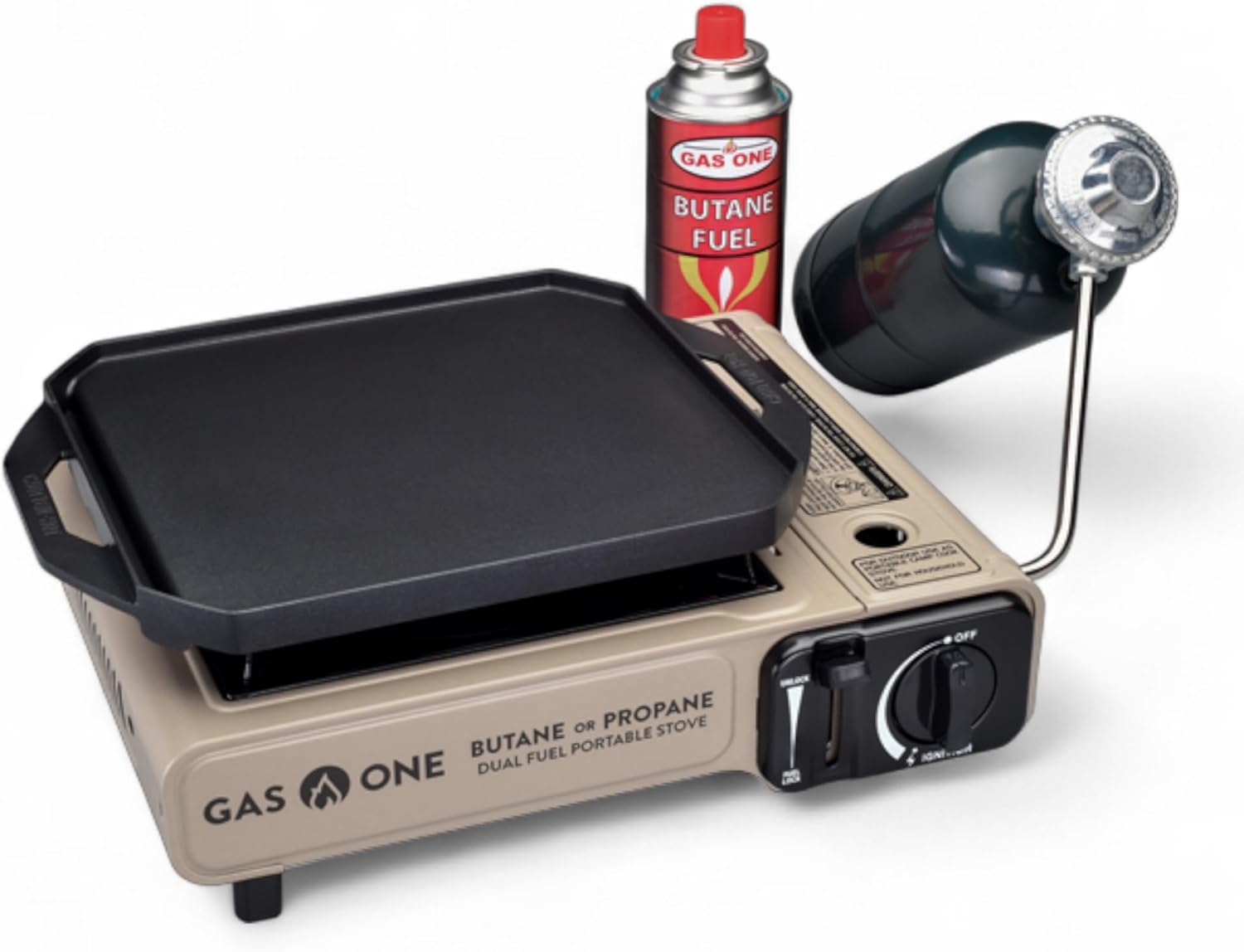
| Fuel Type | Gas (propane or butane) |
|---|---|
| Main Burner Count | 2 |
| Cooking System | griddle |
| Included Components | Dual Fuel Stove |
The Gas One GS-3400P-KIT is a lightweight dual-fuel camp stove with a diecast aluminum nonstick griddle that runs on either butane or propane, and ships with a propane converter regulator. It uses piezo-electric ignition for push-button starts and an adjustable heat dial to control flame for tasks from frying breakfast to searing meat. Safety features include a pressure-sensor cartridge ejection and gas flow cut-off that shut the unit down if irregular pressure is detected, which is useful for campsite use and emergency kits. The griddle's nonstick surface spreads heat evenly for quick cooking and simplifies cleanup, and the whole unit packs into a carrying case for easy transport. Trade-offs are its compact footprint that limits cooking area to one small griddle and a lightweight aluminum build that is portable but less heavy-duty than full-size camp grills. For basic camping, RV, tailgate, or emergency cooking where price and portability matter, it delivers straightforward, reliable performance.
Best for: Buyers looking for an inexpensive, highly portable griddle stove for camping, tailgating, RVing, or emergency kits who value fuel flexibility and easy setup.
Less Ideal for: Those who need a large, heavy-duty outdoor grill or want to cook for large groups frequently should consider larger, more robust models instead.
- Runs on both butane and propane with included propane converter for flexible fuel options
- Piezo-electric ignition for instant, lighter-free starts
- Diecast aluminum nonstick griddle offers even heating and easy cleanup
- Built-in pressure sensor and gas flow cut-off for added safety
- Compact and lightweight with a carrying case for easy transport
- Small cooking surface limits the amount of food you can cook at once
- Aluminum construction is less rugged than heavier steel grills
Verdict: A budget-friendly, portable dual-fuel griddle stove that gives reliable, safe cooking for campers and emergency kits.
Blackstone 17-Inch Portable Griddle 1814

| Fuel Type | Propane |
|---|---|
| Cooking Capacity | 268 sq. inch |
| Burner Type | H-style |
| Wattage | 3516 watts |
The Blackstone 17-inch portable griddle is a small, rugged flat-top built for backyard cookouts, tailgates, and camping trips. It runs on propane and uses an H-style burner to deliver fast heat-up and relatively even temperature across the 268 sq. inch stainless steel cooking surface, so you can sear burgers, fry pancakes, or scramble eggs for a small group. The unit includes a protective hood, a rear grease tray for easier cleanup, and height-adjustable rubber feet to keep the griddle steady on uneven ground. Its compact footprint and light weight make it easy to stow in a car and set up at a campsite. Expect the usual flat-top maintenance: season the steel surface and wipe down the griddle after use to prevent corrosion and keep performance consistent. The single-burner design limits simultaneous high-heat zones compared with larger multi-burner griddles, but for reliable, on-the-go cooking this model balances power, portability, and simple cleanup well.
Best for: Buyers who need a dependable, take-anywhere griddle for small-group outdoor cooking and value quick start-up, straightforward cleanup, and stability on uneven ground.
Less Ideal for: Those who regularly cook for large crowds or need multiple independent cooking zones should consider a larger multi-burner griddle instead.
- Compact and lightweight for easy transport and storage
- H-style burner provides quick heat-up and mostly even cooking across the plate
- Integrated rear grease tray simplifies cleanup after outdoor use
- Protective hood helps retain heat and shields the surface during transport or storage
- Height-adjustable rubber feet add stability on uneven surfaces
- Single burner limits ability to create separate temperature zones for different foods
- Requires regular seasoning and wiping of the steel surface to prevent rusting
Verdict: A reliably portable propane griddle that delivers quick heat and easy cleanup for small-group outdoor cooking.
Blackstone 22" Tabletop Griddle

| Cooking surface | 339 sq. inches |
|---|---|
| Heat output | 24,000 BTUs |
| Fuel type | Propane |
| Material | Carbon Steel |
The Blackstone 22" tabletop griddle is a small, heavy-duty flat-top grill designed for camping, tailgating, and backyard use. It heats quickly with two H-style burners that deliver a combined 24,000 BTUs and offer independent controls so you can run two heat zones for different foods at once. The rolled carbon steel griddle plate provides a durable, rust-resistant cooking surface that locks in flavor and is large enough to handle breakfasts, burgers, or a batch of fajitas for a small group. Cleanup is simplified by Blackstone's rear grease management system that channels drips into an easy-to-empty cup, and the built-in igniters make startup straightforward. Because it uses small propane bottles or a tank via adapter, it is genuinely portable for off-grid cooking. The trade-offs are its tabletop orientation and compact footprint, which limit total cooking area compared with full-size griddles, and the carbon steel surface needs seasoning and care to prevent rust over time. For buyers who value portability and versatile flat-top cooking, this model balances power and convenience well.
Best for: Buyers who want a powerful, portable flat-top for outdoor meals and prioritize proven user satisfaction and reliability in a compact unit for camping, tailgates, and small outdoor gatherings.
Less Ideal for: People who need to cook for large crowds or want a maintenance-free enamel or stainless cooking surface should consider larger or different-style grills.
- Two independent H-style burners with 24,000 BTUs for fast, controllable heat
- Rolled carbon steel cooking surface that locks in flavor and is durable when seasoned
- Rear grease management system for easier cleanup
- Compact and genuinely portable for camping or tailgating with adjustable feet for stability
- Smaller cooking area than full-size griddles limits batch cooking for large groups
- Carbon steel surface requires regular seasoning and care to prevent rust
Verdict: A compact, portable griddle that delivers high heat and reliable flat-top cooking for small outdoor groups, making it a practical pick for camping and tailgating.
Choosing the Right Portable Camping Griddle: Key Factors to Consider
Heat Distribution
How evenly a griddle spreads heat determines how much of the surface you can actually use at once. Uneven heat forces you to shuffle food around, increases cooking time, and can burn small items while larger sections remain undercooked. For camp use, look for thick flat plates or designs with integrated heat spreaders that minimize hotspots.
Consider the fuel interaction too. Wind and low-output burners reduce effective surface temperature, so choose griddles that maintain even heat with moderate heat sources. If you plan to cook for a group, prioritize models proven to hold steady across the entire plate.
Cook Surface Size and Shape
Surface area affects how many portions you can prepare at once and whether you can use larger pans or multiple items simultaneously. A longer, rectangular plate is efficient for pancakes and bacon, while a wider square surface favors sheet-style cooking and stir-fry. Think about how you cook: single large batches or several small items.
Also consider usable edge area. Some griddles taper or have raised rims that reduce flat cooking area. Pick a layout that suits the number of people you usually cook for and the types of meals you plan to make.
Materials and Durability
Material affects heat retention, scratch resistance, and long-term rust protection. Thick steel or cast-iron plates hold heat well and are forgiving when searing, but they add weight and require more maintenance. Lighter aluminum plates can warm quickly but may have more pronounced hot spots unless engineered with heat spreaders.
Check fasteners, hinges, and any legs or handles. Outdoor gear faces vibration, drops, and exposure to moisture. Corrosion-resistant finishes and robust hardware extend lifespan and reduce replacement frequency.
Portability and Storage
A truly portable griddle fits your packing strategy. Consider folded dimensions, total weight, and whether components nest or stack for a compact footprint. Bulky griddles are fine for car camping but impractical for bike or backpack trips.
Also evaluate how easy it is to set up and break down. Time-consuming assembly or fragile locking parts become frustrating at camp. Look for intuitive designs that a single person can deploy on uneven ground without extra tools.
Compatibility with Camp Fuel and Heat Sources
Some griddles are designed for direct flame, integrated burners, or to sit over multiple camp stove heads. Confirm that the griddle works with the fuel or stove system you use. Using a griddle with an underpowered or mismatched heat source leads to poor cooking performance.
If you often cook in windy conditions, pick designs that shield the flame or concentrate heat under the plate. Fuel compatibility also affects refill frequency and overall trip logistics.
Cleaning and Maintenance
Ease of cleaning impacts how often you will actually use the griddle. Surfaces that are easy to wipe, with minimal crevices or removable grease channels, shave time off camp chores. Some plates accept seasoning like cast iron, which helps with sticking but requires re-seasoning and careful drying.
Consider whether parts are dishwasher-safe when you return home and how easily burnt-on residues can be removed at the campsite. Simpler maintenance reduces the chance of rust and preserves performance.
Setting Up on Uneven Campsites
Campsites are rarely flat, and a griddle that wobbles makes cooking unpredictable and unsafe. Look for models with adjustable legs or a stable tripod-style support that spreads weight evenly on rocky or sloped ground.
If your griddle requires a separate stand or sits on an existing stove, test the combined footprint at home on an uneven surface to see how it balances. Small leveling shims or a piece of plywood under the unit can compensate for minor irregularities without compromising heat delivery.
- Prefer broad bases over narrow feet to reduce tipping.
- Check that legs lock securely and use corrosion-resistant hardware.
- Bring a compact leveling mat if you camp on very uneven terrain.
Managing Grease and Drip Control
Grease management matters for safety and cleanup. Integrated grease channels and removable trays capture drippings and keep flames from flaring up. If your griddle lacks a tray, position a shallow container at the edge to catch runoff.
Empty and clean grease traps before packing to avoid attracting wildlife and to stop residual oils from spoiling. When cooking fatty foods, monitor grease buildup closely and clear excess regularly to maintain even cooking.
- Locate grease trays so they are accessible without disassembling the griddle.
- Choose materials that tolerate hot grease without warping.
- Bring tools for safe grease removal, such as silicone spatulas.
Seasoning Versus Nonstick Surfaces
Some camping griddles arrive with a factory nonstick coating that simplifies cleanup but can degrade with high heat or abrasive scrubbing. Cast and carbon steel plates rely on seasoning, which creates a natural nonstick layer with use but requires some initial upkeep.
Seasoned plates provide excellent searing and are more repairable in the field. Nonstick plates reduce short-term maintenance but may limit high-heat searing and could be less durable over years of heavy use. Decide whether you prefer the low-maintenance of coatings or the longevity of seasoned steel.
- Seasoned plates benefit from occasional oiling and careful drying.
- Avoid metal tools on coated surfaces to preserve the finish.
- If you prioritize quick cleanup, look for removable plates or grease catchers.
Transport Tips and Protective Storage
Protecting the cooking surface during transport prevents dents and preserves any seasoning or coating. Use padded sleeves, a hard case, or wrap the plate in cloth between gear to avoid abrasion and moisture buildup.
Store removable parts together and secure small hardware to prevent loss. If your griddle includes a burner or fuel adapter, keep those components dry and sealed in a separate bag to avoid contamination of cooking surfaces.
- Label small parts or keep them in a zippered pouch.
- Dry thoroughly before long-term storage to prevent rust.
- Carry lightweight protective layers to cushion the plate in transit.
Cooking Techniques for Camp Griddles
Maximize a griddle by planning multi-stage cooking. Use hotter zones for searing and cooler edges for keeping items warm. That lets you cook proteins and sides concurrently without overcooking.
Control heat by adjusting the flame or moving the griddle relative to the burner if it is designed to slide. Preheat the plate thoroughly before adding food to reduce sticking and ensure even browning.
- Start on the hottest part for a quick sear, then move to the edge to finish.
- Use a thin metal spatula for flipping and scraping to keep the surface clean.
- Keep a spray bottle of water to manage small flare-ups safely.
How We Chose the Best Portable Camping Griddle
We focused on real-world usability for camp cooking rather than laboratory specs. Our selection began by identifying portable griddles that emphasize a flat, consistent cooking surface suitable for pancakes, stir-fries, and seared proteins. We prioritized heat distribution because uneven surfaces or hot spots reduce usable cooking area and lengthen meal times. Durability was a second filter, including materials and construction that tolerate outdoor use, exposure to flame or wind, and repeated setup and teardown. Portability and setup speed were factored next, with preference for griddles that pack compactly, assemble quickly, and integrate with common camp fuel sources. Cleaning and maintenance were also considered because residues and rust are common issues that shorten product life and complicate camp chores. We excluded items intended solely for tabletop or indoor griddle use and models that require nonstandard fuels or permanent installations. Final picks reflect a balance across practical cooking performance, build quality, convenient transport, and ease of cleaning. The criteria we used map directly to the scoring dimensions listed below.
Our full evaluation process is outlined in our review methodology.
FAQ
Can I use a portable camping griddle on any camp stove?
Often it depends on the griddle design. Many plates are made to sit on common single or dual-burner camp stoves, but some require a specific stand or multiple burners to heat evenly. Confirm the griddle's mounting and recommended heat source before use.
How do I prevent food from sticking on a new griddle?
Preheat the plate thoroughly and apply a thin layer of oil or fat before cooking. For seasoned steel or cast plates, build up a seasoning layer over a few uses. Nonstick surfaces typically need less initial oil but still benefit from proper preheating.
What is the best way to clean a griddle at camp?
Wipe excess grease with paper or a cloth while the plate is warm but not scalding. Use a scraper to remove stuck bits, then wash with hot water and mild soap if the finish allows. Dry the surface completely and apply a light coat of oil to prevent rust on bare metal plates.
Are heavier griddles worth the extra weight?
Heavier plates often retain heat better and reduce hot spots, which improves searing and overall cooking control. For car camping the tradeoff is usually worthwhile. If you backpack or bike camp, lighter alternatives may be necessary despite some performance compromises.
How do wind and weather affect griddle performance?
Wind can drastically reduce burner output and create uneven heating. Use wind screens, position the griddle out of direct wind, or choose designs that concentrate heat under the plate. Cold conditions also increase fuel use and lengthen preheat times.
Final Verdict
Focus on the combination of heat distribution, usable cook surface, and how the griddle fits into your camping style. If you cook for groups, prioritize larger plates and stable supports. If you value light pack weight and quick setup, accept some tradeoffs in heat retention. Balance durability and ease of cleaning with portability to find the model that matches your typical trips. Prioritize the features you will use most often and be realistic about fuel compatibility and campsite conditions to make a confident choice.