
Note: This article contains affiliate links. If you click on these links and make a purchase, we may earn a small commission at no extra cost to you. This helps support our research and content. Read our full affiliate disclosure here.
When nights turn cold on the trail or at the campsite, the right portable heater for camping can make the difference between an uncomfortable evening and a cozy night. You want something that warms quickly, runs reliably on your chosen fuel or power source, and includes safety features appropriate for tent or RV use. This guide narrows the field to seven top-rated portable camping heaters, each shortlisted for practical outdoor use. We evaluated options across heat output, fuel efficiency, size and packability, and safety systems to help you choose the model that fits your trip style. Below are our top picks and the criteria we used to assess them.
Top Picks at a Glance
| Best Overall The best all-around choice for most situations | Mr. Heater Buddy FLEX MH11B |  |
| Best Quality Built to a higher standard if you want something more solid | VEVOR 8KW Diesel Air Heater |  |
| Best Value The sweet spot between price and what you get | AeriePrecium Portable Propane Heater GS-05 |  |
| Best Budget The cheapest option that still gets the job done reliably | Amazon Basics 500W Ceramic Mini Heater |  |
| Top Rated A top-rated pick with lots of positive feedback | Mr. Heater Portable Buddy F232000 |  |
| Most Popular A crowd favorite that many people choose with confidence | GiveBest Portable Space Heater PTC-905 |  |
| Best Seller A high-volume bestseller chosen again and again | DREO Space Heater HSH006 |  |
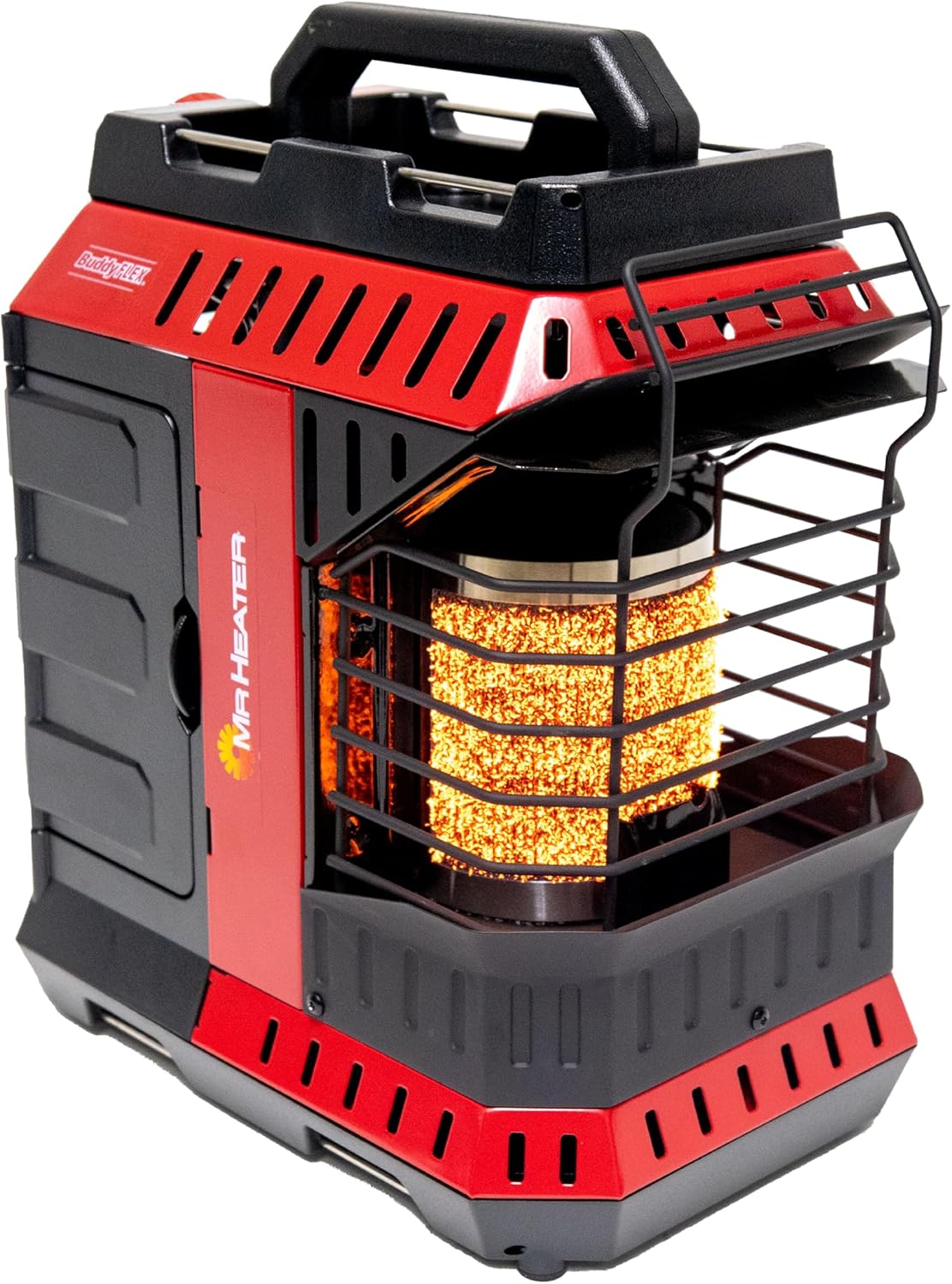
Mr. Heater Buddy FLEX MH11B
| Heat Output | 11000 BTU |
|---|---|
| Heating Coverage | 275 square feet |
| Fuel Type | Propane |
| Heating Method | Radiant |
| Special Features | Low-Oxygen Safety Shutoff, Tip-Over Protection |
The Mr. Heater Buddy FLEX is a compact, propane-powered radiant heater built for both campsite and small-shack use, delivering 8,000 to 11,000 BTU through an omni-directional fiber mesh burner for even heat spread. It runs on a 1 lb cylinder with an option to hook up a 20 lb tank, offers variable low-to-high output and an integrated electric ignition for quick starts, and includes safety features such as low-oxygen shutoff and tip-over protection. In practice it warms a small tent, camper vestibule, or campsite seating area quickly and is easy to move and set on a tabletop or the ground. The heater's wind-resistant design helps maintain flame stability outdoors, but run times are limited to a few hours on small cylinders and it requires propane fuel and proper ventilation when used in enclosed spaces. For campers wanting reliable, directed radiant heat in a portable package, the Buddy FLEX is a solid, safety-minded choice; those wanting longer unattended runtimes or electric convenience should consider alternatives.
Best for: Campers or outdoor hobbyists who want a compact, safety-focused propane heater that produces strong radiant warmth for small tents, awnings, or seating areas.
Less Ideal for: People who need long continuous run times without refueling or who prefer electric heaters that do not require propane or ventilation.
- Portable and easy to move with floor or tabletop mounting
- Omni-directional fiber mesh burner for even radiant heat distribution
- Runs on 1 lb cylinder with optional 20 lb tank hookup for flexibility
- Built-in safety features including low-oxygen shutoff and tip-over protection
- Electric integrated ignition for simple starting
- Limited runtime on 1 lb cylinders compared with larger fuel sources
- Requires propane and safe ventilation for indoor use
Verdict: A portable, safety-minded propane radiant heater that gives campers fast, even warmth in small outdoor or semi-enclosed spaces.
VEVOR 8KW Diesel Air Heater

| Heater Power | 8KW |
|---|---|
| Rated Voltage | 12 V |
| Applicable Range | 20-25 m² |
| Altitude Adaptive | Up to 5,500 m |
| Fuel Tank Capacity | 5 L |
The VEVOR 8KW Diesel Air Heater is an all-in-one portable unit that delivers fast, high-output heat for vehicles, boats, and small indoor spaces when camping or parked. It runs from 12V power, uses its integrated fuel tank and precision fuel pump for continuous operation, and claims a heating coverage around 20–25 m². Controls include an LCD panel, a 10 m remote, and Bluetooth app support so you can preheat from a distance, and automatic altitude compensation helps maintain performance up to about 5,500 meters. The sandblasted aluminum heat exchanger and silencer aim to produce rapid warm airflow with relatively low noise, and built-in safety features include overheating protection and timed presets. Expect several hours of run time from the internal tank depending on output level, but the unit adds weight and requires fuel handling compared with battery or propane options and will need proper ventilation and secure mounting for vehicle installations. For campers who prioritize powerful, consistent warmth off-grid, this heater gives strong performance in cold conditions but is heavier and more complex than lightweight camping heaters.
Best for: Campers and overlanders who need a powerful, vehicle-compatible heater that can deliver consistent warmth off-grid and perform reliably at altitude.
Less Ideal for: Those seeking a lightweight, backpackable camping heater or a no-fuel, plug-and-play electric solution should consider alternatives better suited to ultralight or indoor-only use.
- High heat output suitable for quickly warming vehicles and small cabins
- Bluetooth app, LCD and remote control allow convenient preheating and adjustments
- Automatic altitude compensation maintains performance at high elevations
- Integrated fuel tank and efficient fuel consumption enable several hours of continuous heat
- Silencer design reduces operational noise compared with basic diesel heaters
- Heavier and bulkier than lightweight camping heaters and requires handling of diesel fuel
- Requires secure placement and ventilation when used in vehicles or enclosed spaces
Verdict: Choose this unit if you want a high-output, vehicle-ready diesel heater that reliably warms camps and cabins even at high altitude.
AeriePrecium Portable Propane Heater GS-05

| Heat Output | 8500 BTU/h |
|---|---|
| Heating Coverage | 200 sq.ft. |
| Fuel Type | Propane |
| Power Source | Gas powered |
This compact AeriePrecium GS-05 is a portable propane tabletop heater built for short outdoor trips and tent use. It connects to a 1-lb propane cylinder (not included) and uses piezoelectric push ignition for quick, tool-free starts. The heater offers an adjustable valve that lets you modulate output up to about 8,500 BTU and is rated to cover roughly 200 sq. ft., which makes it suitable for a small tent, picnic area, or an ice-fishing shelter for two to four people. Safety touches include a stainless steel protective mesh around the burner, a low-pressure regulator, a threaded sealed interface, and a foldable cylinder base to improve stability. The unit is lightweight, comes with a storage case, and runs about 2.5 hours at max output on a 1-lb cylinder. Important limits: it only accepts propane cylinders (not ISO butane), must be used outdoors or in very well ventilated areas, and run time on small cylinders is brief, so plan fuel accordingly for longer stays.
Best for: Buyers who prioritize a compact, easy-to-use heat source for short outdoor trips and small shelters and who value portability and straightforward operation.
Less Ideal for: Not a good choice for overnight stays or larger groups that need continuous heat for many hours or for use inside poorly ventilated spaces.
- Quick piezoelectric push ignition for easy startup
- Adjustable output up to 8,500 BTU with valve control
- Lightweight and comes with a storage case for easy transport
- Built-in safety features: protective mesh, low-pressure regulator, sealed threaded connection, and foldable base
- Runs only on propane cylinders and is incompatible with ISO butane
- Short runtime on a 1-lb cylinder at maximum output (about 2.5 hours)
Verdict: AeriePrecium GS-05 is the practical pick for campers who want a lightweight, easy-to-start propane heater that delivers quick warmth for small outdoor gatherings.
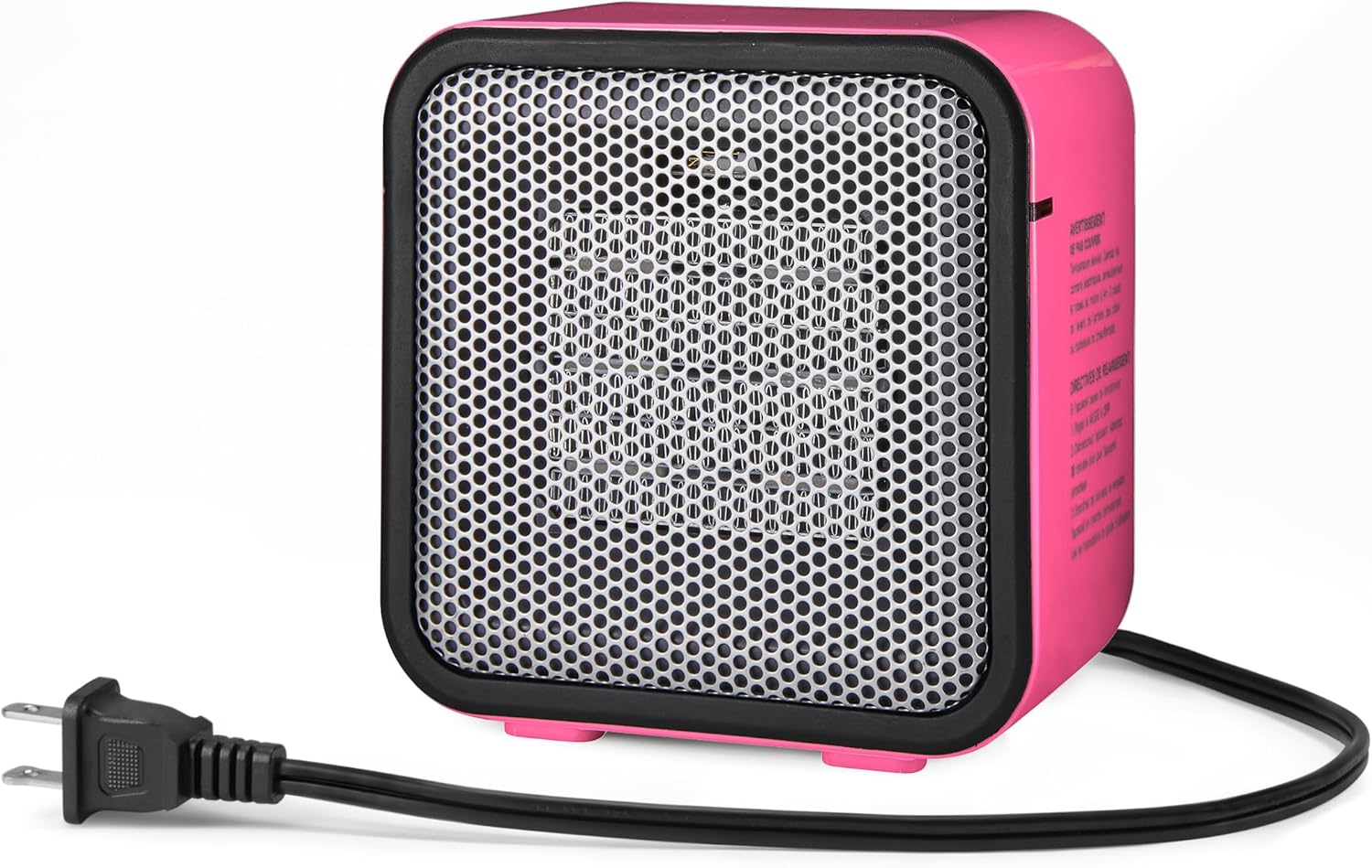
Amazon Basics 500W Ceramic Mini Heater
| Heat Output | 500 watts |
|---|---|
| Power Source | Corded Electric |
| Heating Method | Convection |
| Special Features | Tip-Over Protection |
| Voltage | 120 volts |
This small ceramic heater supplies focused heat quickly using a 500W ceramic element in a lightweight, portable package. It is intended for use on desks, tabletops, or other small indoor spots where you need immediate warmth rather than whole-room heating. The heater is simple to operate with a single heat setting and produces modest noise, making it suitable for home offices or bedside use. Built-in tip-over protection adds an important safety layer by cutting power if the unit is knocked over, and the low weight makes it easy to move between rooms. The main limitation is its low power: at 500 watts it only warms a very small area and is not suitable for heating tents or larger spaces effectively, and it lacks multiple heat settings or thermostatic control. For buyers seeking cheap, portable spot heat indoors, this is a practical no-frills choice; anyone needing stronger, adjustable, or outdoor-rated heat should look elsewhere.
Best for: Buyers on a tight budget who need inexpensive, portable spot heat for small indoor areas like a desk or bedside, and who prioritize simplicity and light weight over power.
Less Ideal for: People who need to heat tents, garages, or larger rooms, or who want adjustable heat levels, thermostatic control, or outdoor-rated equipment.
- Very compact and lightweight for easy placement and transport
- Quick warm-up from ceramic heating element at 500 watts
- Tip-over protection for added safety during everyday use
- Quiet operation suitable for desks and bedrooms
- Only one fixed heat output and no thermostat for temperature control
- 500W power is too low to heat large rooms or outdoor spaces
- Not rated for outdoor or camping use
Verdict: A very affordable, ultra-portable desk heater that delivers quick spot warmth indoors for budget-focused buyers.
Mr. Heater Portable Buddy F232000

| Heat Output | 9,000 BTU |
|---|---|
| Heating Coverage | 225 sq ft |
| Fuel Type | Propane |
| Number of Speeds | 2 |
The Mr. Heater Portable Buddy is a compact propane radiant heater designed for quick heat on patios, campsites, garages, and other small spaces. It offers two output settings—about 4,000 and 9,000 BTU—so you can choose lower fuel use or stronger warmth, and it runs on a 1 lb cylinder with an option to hook up to a 20 lb tank using accessories. The unit includes safety features important for portable propane use: an oxygen depletion sensor, thermal shut-off, and tip-over switch, plus a piezo igniter and an easy-grip handle for carrying. In practice it heats a defined area (about 225 sq ft) effectively but is best as a personal or small-group heat source rather than for large enclosed rooms. Runtime on a 1 lb cylinder is several hours on low but much shorter on high, so expect to manage fuel for longer outings. The design is rugged and simple, with no electronics to fail, which supports dependable operation in field conditions but means fewer convenience controls than electric heaters.
Best for: Campers and outdoor enthusiasts who prioritize a simple, rugged, and safety-minded propane heater that reliably delivers personal-area warmth without relying on electricity.
Less Ideal for: People needing to heat large indoor rooms or who prefer electric heaters with thermostatic control and silent operation.
- Two heat settings for adjustable output and fuel use.
- Designed for indoor and outdoor use with safety systems including oxygen depletion sensor and tip-over shutoff.
- Runs on common 1 lb propane cylinders with optional 20 lb tank hookup.
- Lightweight, portable design with an easy-grip handle and piezo igniter for simple operation.
- Short runtime on high setting when using a 1 lb cylinder.
- Radiant heater provides localized warmth and is not ideal for heating large enclosed spaces.
Verdict: A reliable, safety-focused portable propane heater that delivers dependable personal-area warmth for camping and outdoor use.
GiveBest Portable Space Heater PTC-905

| Heat output | 1500 watts |
|---|---|
| Alternate power | 750 watts |
| Heating coverage | 200 sq.ft |
| Number of speeds | 2 |
| Max temperature setting | 158 °F |
The GiveBest PTC-905 is a small PTC ceramic heater designed to warm a single room quickly while remaining portable and simple to use. It offers two heat settings (1500W and 750W) plus a cool fan mode, and an adjustable thermostat that cycles the unit to hold a set temperature without constant manual changes. The unit is quiet compared with many fans and heaters, and the built-in carry handle and light weight make it easy to move between rooms or place on a desk. Safety features include overheat shutdown, tip-over protection with audible beep, flame-retardant ABS housing, and a long power cord. Because it is a corded, plug-in electric heater meant for indoor tabletop or floor use, it is best suited to small bedrooms, offices, or bathrooms rather than outdoor environments; it also lacks battery or propane options that camping often requires. For buyers who value simple controls, rapid localized warmth, and multiple safety cutouts in a compact package, this hits the mark, but it should be treated as an indoor personal heater rather than a camping heat source.
Best for: Buyers who prioritize a compact, safe, plug-in personal heater for indoor spaces and want a quiet unit that maintains a set temperature with minimal fuss.
Less Ideal for: People needing a portable heat source for camping or off-grid outdoor use or anyone who requires a battery or fuel-powered heater for wet or unpowered environments.
- Dual heat modes plus cool-fan expand seasonal use
- Adjustable thermostat that cycles to maintain set temperature
- Multiple safety protections: overheat shutoff and tip-over cutoff with audible alert
- Compact, lightweight design with built-in carry handle for easy repositioning
- Quiet operation suitable for bedrooms and home offices
- Corded plug-in design prevents use where no mains power is available
- Not rated or designed for outdoor or wet environments such as camping setups
Verdict: A compact, safety-focused indoor ceramic heater that delivers quiet, reliable personal warmth for small rooms but is not suitable for camping or off-grid use.
DREO Space Heater HSH006

| Heat Output | 1500 watts |
|---|---|
| Heating Element | PTC Ceramic |
| Heating Coverage | 200 sq.ft |
| Power Source | Corded Electric |
| Number of Speeds | 4 |
The DREO HSH006 is a small tower-style electric heater that delivers quick forced-air warmth from a 1500W PTC ceramic element and is designed for personal rooms and close-range heating. You use it standing on the floor near your seating or sleeping area, choosing between multiple heat levels, ECO and fan modes, or setting a precise temperature with the thermostat (41 to 95 F in 1 F steps). It includes a 12-hour timer, remote, child lock, and memory function for simple daily use, and the brushless DC motor plus winglet fan design keeps operating noise low at about 34 dB. Safety is emphasized with ETL listing, tip-over detection, overheat protection, and flame-retardant materials. Because it is a corded 120V unit rated for about 200 sq ft, it provides reliable indoor heat but requires mains power and is not intended for unprotected outdoor or open-air camping use; also its coverage is best for small rooms rather than large, open spaces. For buyers who prioritize quiet, precise thermostat control and built-in safety, this heater is a convenient, easy-to-use option.
Best for: Buyers who want a compact, quiet indoor heater with precise thermostat control and strong built-in safety for everyday room heating.
Less Ideal for: People needing an off-grid, battery or propane solution for outdoor camping or heating large, open areas should consider outdoor-rated portable heaters instead.
- 1500W PTC ceramic element delivers fast, steady heat.
- Precise adjustable thermostat with 1 F increments for accurate temperature control.
- Multiple modes, 12-hour timer and remote for convenient daily operation.
- ETL-listed safety features including tip-over and overheat protection.
- Requires 120V mains power so not suitable for off-grid or open-air camping.
- Designed for small rooms; performance drops in large or poorly insulated spaces.
Verdict: Choose this DREO tower heater if you need a quiet, safety-focused indoor unit with precise thermostat control for personal rooms.
Choosing the Right Portable Heater for Camping: Key Factors to Consider
Heat Output and Runtime
Heat output determines how quickly and effectively a heater can raise and maintain temperatures in a tent or small shelter. For camping, output is usually expressed in BTUs for combustion heaters or watts for electric models. Higher output shortens warm-up time and can support larger shelters, but consumes more fuel or battery power.
Runtime is the companion metric that indicates how long a unit will provide heat on a single fuel canister, tank, or battery charge. Longer runtime reduces the need to change fuel or recharge in the middle of a trip, which is especially valuable on multi-night outings or in remote locations.
Fuel Type and Availability
Different portable heaters run on propane, butane, liquid fuels, battery power, or plain electricity. Fuel type affects convenience, weight, and the logistics of resupply. Propane and butane are common for short trips and are easy to source at many outdoor retailers, while battery-powered units remove combustion concerns but require charging infrastructure or spare batteries.
Consider how you travel and where you camp. Car campers can carry heavier fuel supplies or larger tanks, while backpackers need lightweight, compact fuel that is permitted where they camp. Fuel storage rules and campsite fire regulations may also limit certain fuel types, so check local restrictions before planning.
Safety Systems
Safety is critical when using portable heaters in enclosed or semi-enclosed spaces. Look for tip-over shutoffs that cut power or cut fuel flow if the unit is knocked over, low-oxygen or CO sensors for combustion heaters, and automatic overheat shutoffs. A stable base and low center of gravity reduce the chance of accidental toppling.
Proper ventilation and using a heater rated for tent or RV use are essential to avoid buildup of combustion gasses. Even with safety features, position the heater away from flammable materials and follow manufacturer guidance for clearances.
Size, Weight, and Packability
A heater that works great in a basecamp may be useless for backpacking. Size and weight determine how you can carry the heater and whether it fits inside your pack or vehicle. Compact designs often trade off raw output or runtime, so balance portability against the heating needs of your typical campsite.
Consider how the heater stows when not in use and whether it fits into existing gear systems. Protective covers or integrated handles help with transport and can reduce wear during trips.
Durability and Weather Resistance
Outdoor use exposes heaters to bumps, moisture, and dirt, so durable construction matters. Look for corrosion-resistant materials, protected controls, and designs that tolerate light rain and condensation. Units with sealed switches or raised control panels stay usable in damp conditions.
Weather-resistant design also helps with long-term reliability. Durable units will survive repeated setup and teardown cycles, and replaceable components or easy maintenance extend service life for frequent campers.
Ease of Use and Maintenance
Simple ignition, intuitive controls, and easy refueling make a heater far more pleasant at camp. Piezo igniters or push-button starts remove the need for matches, while clear output controls let you dial in comfort. Removable or accessible panels for cleaning extend effective life and keep performance consistent.
Maintenance requirements such as periodic filter changes, tank inspections, or battery swaps should match your willingness to perform field upkeep. Lower-maintenance units reduce hassle on short trips and for casual users.
Choosing the Right Fuel Type for Your Trip
Fuel choice should match how you camp. For weekend car camping, larger propane canisters or refillable tanks provide steady heat and longer runtime. They are convenient when weight and space are less constrained.
For backpacking or minimalist trips, lightweight canisters or battery-powered heaters reduce pack weight and simplify fuel logistics. Battery units remove combustion risks but require charging plans or spare power banks.
Consider campsite rules and weather. Some parks restrict liquid fuel stoves or open-flame devices, so select a heater type that complies with local regulations and expected conditions.
- Propane: reliable, widely available, good runtime for car camping
- Butane/Isobutane: lighter canisters, performance drops in cold
- Battery/Electric: no combustion, dependent on charging
- Liquid fuels: high heat density, requires careful handling
Safe Placement and Ventilation in Tents and RVs
Even heaters rated for tent or RV use need careful placement. Keep the unit on a stable, level surface away from sleeping bags, tarps, and gear. Use the lowest safe setting that meets comfort needs.
Ventilation is essential when using combustion heaters. A small vent or cracked window allows combustion gasses to dissipate and supports oxygen flow. Follow manufacturer clearance recommendations and avoid placing a heater under low ceilings or near mesh walls.
Use carbon monoxide detection when using combustion heaters inside enclosed spaces. Battery-powered heaters reduce this risk but still require attention to heat-generated materials and clearances.
- Maintain manufacturer-recommended clearances on all sides
- Avoid placing heaters near exits or foot traffic paths
- Use a heat-resistant mat on flammable ground covers
Sizing a Heater for Your Shelter
Match heater output to the volume of the shelter you intend to heat. Small tents and one- to two-person shelters need far less output than large family tents or enclosed trailers. Overpowered heaters may waste fuel, while underpowered units will not maintain comfort.
Consider insulation factors. A well-insulated tent, added thermal liners, or vestibule setups retain heat better and reduce required output. In exposed or windy campsites, choose a unit with enough headroom to compensate for heat loss.
- Estimate cubic feet of your shelter to compare with heater output
- Increase output in wet or windy conditions
- Pair a modest heater with thermal insulation for efficiency
Power Management for Electric and Battery Heaters
If you rely on battery or electric heaters, plan for how you will recharge. Solar panels, portable power stations, or vehicle outlets can extend runtime, but each adds weight and setup complexity. Calculate expected watt-hours to ensure your power source covers multiple nights if needed.
Manage heat cycles to conserve energy. Lower settings or intermittent use during sleep can stretch battery life. Keep spare batteries or a small generator for longer remote trips where recharging is uncertain.
- Check heater wattage against your power station capacity
- Bring spare batteries or a charging plan for multi-night trips
- Use lower heat settings and thermal layers to save energy
Maintaining Heaters on the Trail
Regular maintenance preserves safety and performance. Clean vents and burners to prevent soot buildup on combustion units and check seals and hoses for leaks before each trip. For battery units, inspect connectors and charge cycles periodically.
Carry a small repair kit suited to the fuel type. Spare O-rings, a multi-tool, and a compact brush can solve minor issues at camp. Replace worn components promptly to avoid failures when you need heat most.
- Inspect for dents, corrosion, or fuel leaks before use
- Clean vents and air passages after dusty trips
- Store units dry and with fuel disconnected between trips
How We Chose the Best Portable Heater for Camping
We focused on real-world camping needs when selecting the finalists. Our evaluation prioritized four to six concrete dimensions that directly affect usability at camp. Heat output and runtime were measured by stated BTU or watt ratings and documented fuel consumption or battery life to estimate how long a heater will sustain warmth for typical small-group shelter sizes. Portability and packability looked at physical dimensions, weight, and the ease of carrying or packing the heater for backpack or car camping. Safety features were a hard requirement: tip-over shutoff, low-oxygen sensors, overheat protection, and stable footprints or mounting options were all considered essential for tent and RV environments. Fuel type versatility and availability were evaluated to reflect how easy it is to refuel on a trip, and power options — including battery, propane, or electric — were factored based on campsite access. We excluded indoor-only space heaters that lack certified outdoor or camping-safe operation and any units without basic safety interlocks. We also filtered out products that do not provide clear runtime or output specifications. The final list reflects durable, practical designs suitable for camping scenarios and balances performance with portable convenience.
Our full evaluation process is outlined in our review methodology.
FAQ
Can I safely use a portable heater inside a tent?
Often yes, but only if the heater is rated for tent use and includes essential safety features like tip-over shutoff and a low-oxygen sensor. Always ensure adequate ventilation and follow clearance guidelines to avoid fire or carbon monoxide risks.
How do I know what heater size I need for my tent?
Estimate your shelter volume and choose a heater whose stated output can cover that space. Smaller one- to two-person tents need much less output than larger family tents. Also account for insulation and outdoor temperature when sizing.
Are battery-powered heaters practical for multi-night trips?
They can be practical for short trips if you have a robust charging plan such as a high-capacity power station or solar panels. Battery heaters avoid combustion risks but require careful power budgeting for extended outings.
What fuel is best for cold temperature camping?
Fuel performance varies with temperature. Propane and certain liquid fuels maintain output in cold conditions better than butane, which can suffer reduced pressure in low temperatures. Choose a fuel suited to expected ambient conditions.
How should I store a portable camping heater between trips?
Drain or disconnect fuel according to the heater's instructions, store the unit in a dry place, and protect it from dust and moisture. For battery units, store batteries partially charged in a cool environment to preserve lifespan.
Final Verdict
Choosing the right portable heater for camping means balancing heat output, fuel logistics, and safety features against how and where you camp. Prioritize safety systems and realistic runtime for the length of your trip, and pick a fuel or power type that matches your resupply options and weight constraints. With the right tradeoffs, you can extend your season and stay comfortable on chilly nights without compromising safety or convenience.