
Note: This article contains affiliate links. If you click on these links and make a purchase, we may earn a small commission at no extra cost to you. This helps support our research and content. Read our full affiliate disclosure here.
If you spend time camping, having a dependable portable ice maker can keep food chilled, cocktails cold, and first aid supplies properly cooled. Choosing the right unit matters because campsite conditions, power availability, and how much ice you actually need vary widely. This guide shortlists the top portable ice makers for camping, focusing on production rate, power options, footprint, and durability so you can pick a model that fits your typical trip. Below we cover the primary tradeoffs you will face and the practical features that matter for real-world outdoor use, then present the seven top choices tailored to camping scenarios.
Top Picks at a Glance
| Best Overall The best all-around choice for most situations | Frigidaire Portable Ice Maker 26 lb |  |
| Best Quality Built to a higher standard if you want something more solid | GE Profile Opal Mini Ice Maker |  |
| Best Value The sweet spot between price and what you get | Antarctic Star Countertop Ice Maker | 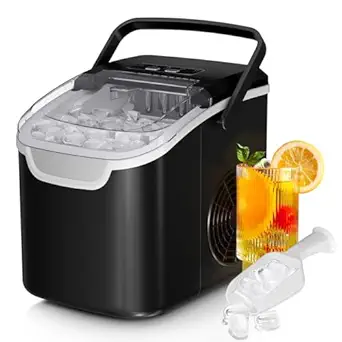 |
| Best Budget The cheapest option that still gets the job done reliably | Crzoe Countertop Ice Maker |  |
| Top Rated A top-rated pick with lots of positive feedback | Aeitto ICM15 Countertop Ice Maker |  |
| Most Popular A crowd favorite that many people choose with confidence | EUHOMY Nugget Ice Maker |  |
| Best Seller A high-volume bestseller chosen again and again | EUHOMY Countertop Ice Maker IM001-B |  |
Frigidaire Portable Ice Maker 26 lb

| Ice Production per Day | 26 pounds |
|---|---|
| Wattage | 1000 watts |
| Voltage | 120 volts |
| Capacity | 26 pounds |
The Frigidaire portable ice maker is a compact countertop machine designed to make bullet-shaped ice quickly for small gatherings or outdoor use. It produces up to 9 bullet cubes every 7 minutes and offers two size options selected via a simple LED control panel, while a transparent window lets you monitor production without opening the lid. A 2.1 quart water tank and 1.5 lb holding basket provide steady output between refills, and the included scoop and drain plug make emptying and basic cleaning straightforward. At 1000 watts it works fast but requires a reliable 120V power source, so plan for electricity when using it outdoors. The unit is metal-bodied with R410a refrigerant and is best for hosts who need a steady supply of ice without a permanent installation, though it is not a self-contained freezer so it will not keep large amounts of ice frozen for long periods. For camping where electric power is available or for tailgates and RV hookups, it delivers fast, consistent ice on demand.
Best for: Buyers who want a reliable, fast countertop ice maker for camping trips with electrical hookups, tailgates, RV stays, or short outdoor events where steady ice production matters.
Less Ideal for: People planning off-grid camping without access to shore power or users who need a machine that stores large frozen reserves for extended periods.
- Fast production rate: up to 9 bullet cubes every 7 minutes and 26 lb per day capacity
- Two ice size options and an LED control panel for simple operation
- Large 2.1 qt water tank reduces refill frequency
- Transparent viewing window and included scoop for convenient monitoring and retrieval
- Requires 120V mains power and 1000 watts, limiting use where electricity is unavailable
- Holds only about 1.5 lb of ice in the basket so it does not store large quantities long-term
Verdict: Choose this Frigidaire if you need a fast, easy-to-use countertop ice maker that reliably produces bullet ice when you have access to mains power.
GE Profile Opal Mini Ice Maker

| Ice Production per Day | 36 pounds |
|---|---|
| Capacity | 2 pounds |
| Wattage | 240 watts |
| Voltage | 120 volts |
| Refrigerant | R600a |
The GE Profile Opal Mini is a portable countertop nugget ice maker that delivers soft, chewable ice quickly for drinks, coffees, and cocktails. It uses a batch-based system with a top-fill reservoir and makes the first batch in about five minutes, producing roughly 1.5 pounds per hour and up to 36 pounds per day. The compact footprint and 2 lb removable bin suit small spaces, and built-in Wi‑Fi with app and voice control lets you schedule production and get maintenance alerts. Practical features include a hidden front drain tube for easier cleaning, front storage for descaling packets, and a Drain & Dry system that reduces internal moisture and mineral buildup. On the downside, the 2 lb on-board capacity and need for regular descaling mean it is best used where power and some maintenance are acceptable rather than truly off-grid situations. For camping use it will perform well at a basecamp with reliable power but is less convenient for remote, car-free excursions.
Best for: Campers who prioritize high-quality nugget ice and fast, scheduled production at a powered basecamp or RV setup and who value app control for hands-off operation.
Less Ideal for: Backpackers, tent campers, or anyone needing truly off-grid, low-maintenance ice solutions should look for battery-powered or passive cooling alternatives instead.
- Produces chewable nugget ice favored for drinks and iced coffee
- Fast first batch in about five minutes and steady production up to 1.5 lb/hour
- Compact footprint fits small counters, apartments, RVs or camp kitchens
- Wi‑Fi and voice control let you schedule production and receive maintenance alerts
- Built-in drain tube and Drain & Dry system simplify cleaning and reduce buildup
- 2 lb bin and top-fill reservoir limit how long it runs without refilling
- Requires regular descaling and access to mains power for best performance
Verdict: If you want fast, cafe-style nugget ice at a powered campsite or RV with smart scheduling and compact size, the Opal Mini is the performance-oriented portable choice.
Antarctic Star Countertop Ice Maker

| Ice Production per Day | 26 pounds |
|---|---|
| Capacity | 26 pounds |
| Wattage | 88 watts |
| Voltage | 28 volts |
| Refrigerant | R600a |
This Antarctic Star countertop ice maker is a compact, portable unit designed to make bullet ice on demand for home, RV, or outdoor use. It completes an ice cycle in about 6 minutes and can produce up to 26 pounds of ice per day, which is adequate for small gatherings, camping trips, or tailgates. The machine includes a removable basket, scoop, and a carry handle for transport, and it offers a one-touch self-cleaning cycle to reduce odors and maintenance effort. It runs on an 88 watt motor using R600a refrigerant and is advertised as quieter than 40 dB, making it suitable for campsites or quiet evenings. Practical limitations include a relatively small internal basket and the need for a standard power source since it lists 28 volts and no battery operation, so planning for power while camping is required. The plastic construction keeps weight down but may not be as rugged as higher-end metal units. For buyers who want fast, portable ice without complex setup, this unit covers the basics well.
Best for: Campers and tailgaters who prioritize quick, portable ice production and low-maintenance operation for small groups.
Less Ideal for: Large parties or off-grid trips without reliable power where a higher-capacity or battery/12V solution is needed.
- Fast 6-minute ice cycle for quick refreshes
- Produces up to 26 pounds of bullet ice per day
- Built-in self-cleaning cycle simplifies maintenance
- Compact footprint and carry handle make it easy to transport
- Quiet operation under 40 dB suitable for campsites
- Small ice basket limits how much is ready at once
- Requires mains power rather than battery operation
Verdict: A compact, low-noise countertop ice maker that delivers fast bullet ice and easy upkeep, ideal for campers who want convenient on-demand ice.
Crzoe Countertop Ice Maker

| Capacity | 26 pounds |
|---|---|
| Wattage | 87 watts |
| Voltage | 115 volts |
| Ice Production per Day | 26 pounds |
| Refrigerant | R600a |
This compact Crzoe countertop ice maker delivers fast, portable ice production suited for small gatherings and outdoor trips. It makes eight bullet-shaped cubes every 6 to 12 minutes and can produce up to 26 pounds of ice in 24 hours, with two selectable cube sizes and a 1.2 L water reservoir. The machine uses an R600a compressor for quieter operation (under 40 dB) and includes a self-cleaning mode plus a removable basket and scoop for easy serving. Because it is small and has a built-in handle, it fits easily in a campsite cook tent, RV galley, or picnic setup and does not require installation. Limitations to note are the modest internal ice storage—about 1.3 pounds—so you will need to cycle it frequently for steady demand, and performance can vary with ambient and water temperature as described in the manual.
Best for: Campers and weekend travelers who want a low-cost, portable machine that reliably makes small batches of ice for drinks and meals at campsite setups.
Less Ideal for: Large groups or long off-grid trips where continuous large-volume ice storage is needed, or users who need a built-in freezer-style ice reserve.
- Fast cycle time with 8 bullet-shaped cubes ready in about 6–12 minutes.
- Compact, lightweight design with a handle for easy transport and countertop use.
- Two ice sizes let you choose larger cubes for drinks or smaller cubes for cold beverages and food.
- Self-cleaning function and included scoop/basket simplify maintenance and serving.
- Quiet compressor operation (under 40 dB) suitable for campsite and RV environments.
- Small internal ice storage requires frequent cycling during higher demand.
- Performance depends on room and water temperature and may slow in hot conditions.
Verdict: A budget-friendly, portable ice maker that quickly produces bullet-shaped ice and is well suited for campers who need a compact, easy-to-transport solution.
Aeitto ICM15 Countertop Ice Maker
| Ice Production per Day | 26 pounds |
|---|---|
| Capacity | 1 liters |
| Voltage | 120 volts |
| Refrigerant | R600a |
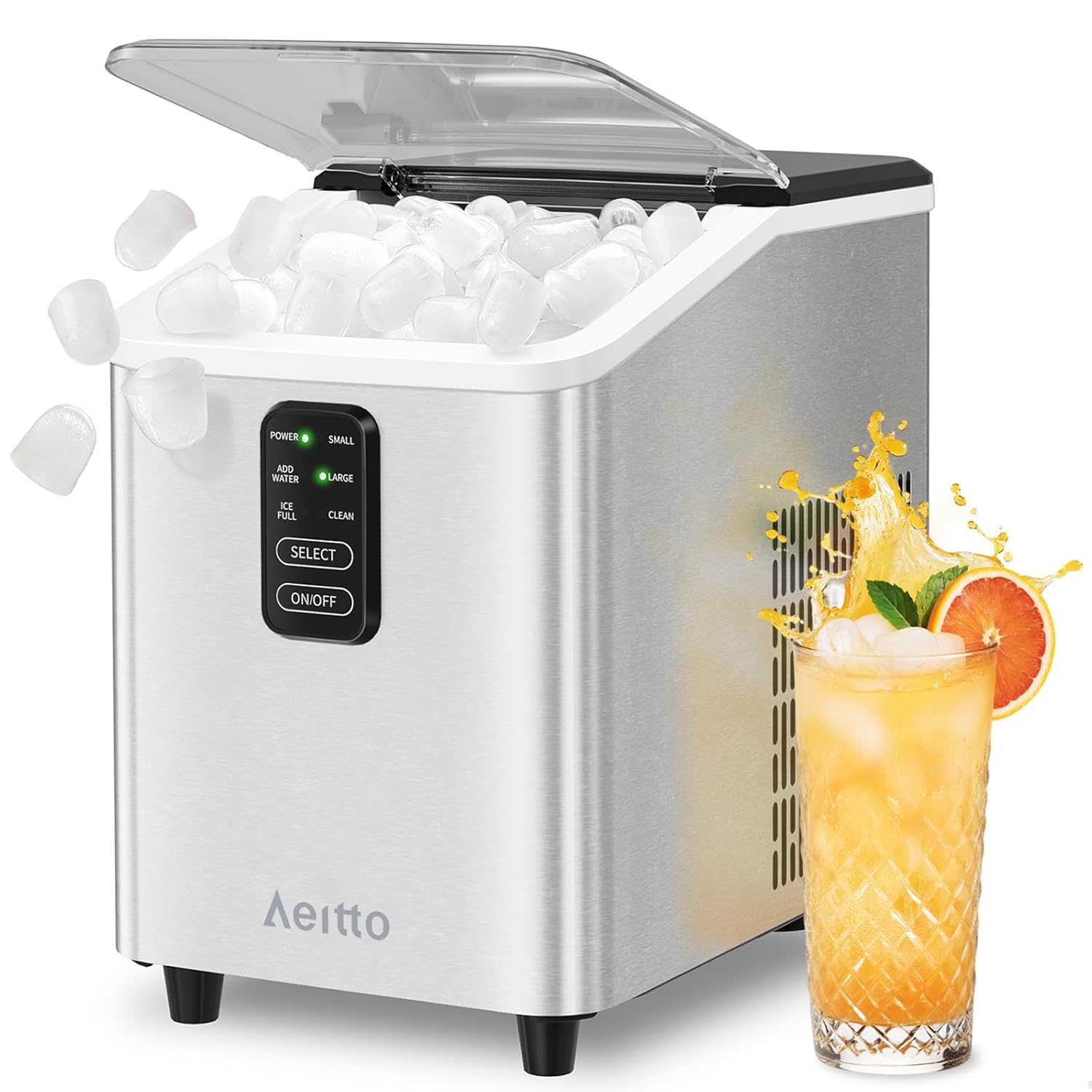
The Aeitto ICM15 is a portable countertop ice maker designed to deliver fast, consistent ice production for small gatherings, kitchens, or outdoor use like camping with power access. It makes bullet-style ice in about six minutes and can produce up to 26 pounds of ice per day, with a choice of two cube sizes to suit drinks or pitchers. Setup is simple: plug in, choose the size, and use the one-button control; the included basket and scoop make serving easy. The unit also offers an automatic self-cleaning cycle that helps keep ice tasting fresh with minimal user effort. Its stainless steel exterior and R600a refrigerant make it feel like a quality, modern small appliance, and the compact footprint packs down for transport. The main limits are that it requires mains power and is sized for small groups rather than heavy commercial use, and its 1 liter water reservoir means you will refill it during extended use. For those needing reliable, on-demand ice in a portable package, it delivers predictable performance with low maintenance.
Best for: Buyers who prioritize dependable, low-maintenance ice production for camping trips where mains power is available and want a compact machine that reliably supplies ice for drinks and small groups.
Less Ideal for: People planning extended off-grid camping without shore power or those needing continuous, high-volume ice for large events should look for larger-capacity or generator-ready solutions.
- Fast first batch ready in about 6 minutes and steady daily output up to 26 pounds
- Two ice size options let you choose slower-melting or larger cooling cubes
- Automatic self-cleaning cycle simplifies maintenance and keeps ice tasting fresh
- Compact, portable stainless steel design that is easy to move and fits small counters
- Requires a standard 120V power source so not usable off-grid without an inverter
- Small 1 liter water reservoir needs frequent refills during long or heavy use
Verdict: Aeitto ICM15 is a reliable, low-maintenance portable ice maker that delivers fast bullet ice on demand when you have access to mains power.
EUHOMY Nugget Ice Maker

| Capacity | 34 pounds |
|---|---|
| Ice Production per Day | 26 pounds |
| Wattage | 15.63 watts |
| Voltage | 115 volts |
| Refrigerant | R600a |
The EUHOMY Nugget Ice Maker is a portable countertop unit that makes soft, chewable nugget ice in about 6 to 8 minutes and can produce up to 34 pounds of ice daily. It has a 1.2 quart water tank, a removable 1.8 lb ice basket, and a carry handle that together make it easy to move between kitchen, RV, campsite, or party locations. Simple controls include an ice/clean button that triggers a 15-minute self-clean cycle and indicator lights for "ice full" and "add water," which reduce guessing during use. The viewing window and scoop holder are handy for monitoring and serving. Practical drawbacks are modest real-world daily production versus the headline capacity—continuous output is limited by the small tank and basket—plus the unit is plastic-bodied and not as rugged as heavy-duty camping gear. Noise is advertised under 50 dB, so it runs relatively quietly for indoor or RV use but you should still plan placement to avoid close sleeping areas. For short trips, tailgates, or a campsite with shore power, this unit delivers quick, chewable ice with easy cleaning and simple controls.
Best for: Buyers who want a lightweight, easy-to-use portable ice maker for short camping trips, RV stays, or outdoor gatherings where grid power is available and quick chewable ice is desired.
Less Ideal for: People needing heavy-duty, all-weather gear for prolonged off-grid camping or large events where high continuous ice output and rugged metal construction are essential.
- Makes soft, chewable nugget ice quickly (6–8 minutes)
- Compact and portable with a built-in handle and scoop holder
- Self-cleaning cycle and intuitive indicator lights reduce maintenance guesswork
- Large viewing window and removable basket simplify monitoring and serving
- Small water tank and ice basket limit sustained continuous output
- Plastic construction is less rugged than metal-bodied camping gear
Verdict: A compact, easy-to-clean nugget ice maker that’s ideal for campers and RV users who prioritize quick, chewable ice and portability when shore power is available.
EUHOMY Countertop Ice Maker IM001-B

| Capacity | 26 pounds |
|---|---|
| Wattage | 170 watts |
| Voltage | 115 volts |
| Ice Production per Day | 26 pounds |
The EUHOMY countertop ice maker is a small, portable unit designed to deliver bullet-style ice on demand for home, RV, or camping use. It uses a 170 W compressor and an internal 1.2 L water tank to produce the first batch in about 6 minutes and up to 26 pounds of ice per 24 hours, with a visible window and a removable ice basket for easy access. Controls are simple: add water, press power, and the unit uses infrared sensors to signal when the basket is full or water is low, plus it has a one-touch 30-minute auto-clean mode. Practical benefits include fast cycles for drinks or short outings, a built-in handle and light weight for portability, and relatively quiet operation under 45 dB. Limitations to note are the small onboard storage—only about 1.3 pounds—so you will need to transfer ice to a cooler for longer trips, and daily production depends on continuous power and ambient temperature, which can reduce output in hot conditions. For risk-averse buyers it is straightforward to use and maintain, with a 12-month warranty and basic accessories included.
Best for: Buyers who want a reliable, easy-to-operate portable ice maker for short camping trips, RV stops, or small gatherings and prioritize straightforward controls and low maintenance.
Less Ideal for: People who need large onboard ice storage or sustained high-volume ice production without access to mains power should consider larger or different solutions.
- Makes first batch of bullet ice in roughly 6 minutes for fast on-demand use
- Compact, lightweight design with a carry handle for easy transport
- Infrared sensors and simple controls indicate add-water and ice-full conditions
- One-touch 30-minute auto-cleaning reduces hands-on maintenance
- Quiet operation around 45 dB suitable for indoor or RV use
- Small internal storage (about 1.3 lb) requires moving ice to another container for extended use
- Daily production rated at 26 lb relies on ideal conditions and continuous power, so output can drop in hot environments
Verdict: A compact, easy-to-use countertop ice maker that delivers fast bullet ice and simple maintenance, making it a dependable pick for short camping and RV trips.
Choosing the Right Portable Ice Maker for Camping: Key Factors to Consider
Ice Production Capacity
Ice production capacity determines how much ice the unit makes in an hour and how large the storage bin is. For camping you want a balance: too little output means you will run out mid-trip, while too large a machine adds unnecessary weight and uses more power.
Consider how many people you typically camp with and how long you need the ice to last between production cycles. If you host daily meals and drinks, prioritize higher hourly output. For minimalist trips or solo campers, a smaller capacity that produces ice steadily may be preferable.
Power Options and Efficiency
Power options are critical for camping because grid access is often unavailable. Look for units that can run on multiple inputs, such as AC wall power for car-camping, 12V DC adapters for vehicle power, or low-watt designs that are practical with a portable power station.
Efficiency affects how long a power pack will run the ice maker. Machines with lower wattage and good insulation need less energy per ice cycle. Also check for simple power management features like auto-shutoff when the bin is full to avoid wasting battery life.
Size, Weight, and Packability
Portability is more than just weight. Physical footprint, how the unit nests with other gear, and whether it has secure latches or handles all influence campsite convenience. Compact units that fit in your car's storage, have flat profiles for stacking, or include built-in handles make transport and setup much easier.
Think about where you will place the machine at camp. A stable, level surface matters for reliable operation. If you backpack long distances, portable ice makers are usually impractical; they are most suited to vehicle-based camping where bulk and weight are manageable.
Durability and Outdoor Readiness
Camping exposes gear to bumps, dirt, humidity, and temperature swings. Materials that resist dents, corrosion, and UV degradation will lengthen the unit's usable life. Seals and seams should be robust to prevent leaks, and panels or vents should be positioned to avoid clogging with dust or debris.
Also consider serviceability in the field. Units with simple removable parts and easy access for cleaning are less likely to be permanently sidelined by minor issues encountered on the road.
Noise Level
Noise matters at quiet campsites and during overnight use. Some ice makers run noticeably louder during harvest cycles. If you camp where sleeping areas are close to equipment, prioritize machines with lower decibel operation or models that allow quieter settings.
Review how noise changes during different phases: initial freezing, harvest cycle, and pump operation. A consistently loud machine can be disruptive even if it produces a lot of ice quickly.
Ease of Cleaning and Maintenance
Camping often limits your ability to perform extensive cleaning tasks. Machines with removable trays, tool-free access panels, and simple drain options make field maintenance practical. Mold and mineral buildup are common when using untreated water, so choose units that allow easy rinsing and drying.
Consider how often filters or parts need replacement and whether replacements are easy to source. A design that minimizes crevices and uses stain-resistant materials will reduce the time you spend cleaning between trips.
Matching Ice Output to Trip Length
Estimate your daily ice needs first. For a weekend with four to six people you will use substantially more ice for drinks and food than for a solo overnight. Choose a machine that can produce a reasonable percentage of your expected daily use without running continually.
If you expect gaps in production, plan storage solutions. Cooler insulation and pre-chilling the bin can extend usable ice life between production cycles. Also think about staggering production times to cover peak needs like meal prep and evening gatherings.
- Short trips with low demand: prioritize smaller, lighter units.
- Extended stays or groups: favor higher hourly output and larger storage.
- Combine with insulated coolers to reduce overall production needs.
Powering a Portable Ice Maker at Camp
Decide whether you will rely on vehicle power, a portable battery station, or campground hookups. Each source has tradeoffs in convenience and runtime. Confirm the unit's input requirements and compare them to the realistic output of your power source.
If using a battery station, calculate the ice maker's watt draw and estimate run time based on station capacity. Choose efficient units and consider using production windows during daylight to preserve battery for lights and other essentials.
- Vehicle 12V adapters are convenient but may drain the vehicle battery if used long periods without the engine running.
- Portable power stations offer quiet operation but require planning to match capacity with appliance draw.
- AC hookups are easiest at powered campsites but are not always available.
Placement and Setup Tips for Campsite Use
Find a stable, level surface away from direct dirt and water flow. Ensure vents are not blocked and allow sufficient clearance for airflow. If the campsite is exposed, place the unit where it will not be splashed or rained on during use.
Use a small folding table or a dedicated gear box to protect the machine from ground moisture. Keep the water source and drainage accessible to simplify refills and draining, and carry a short hose or funnel to make water management easier.
- Avoid placing on soft ground that can shift during harvest cycles.
- Protect from rain with an overhang or canopy while maintaining ventilation.
- Keep cords tidy and routed to avoid tripping hazards.
Water Quality and Its Effect on Ice
Tap or purified water will produce clearer, better-tasting ice than hard or mineral-rich sources. When camping, you may have limited water quality control, so bringing filtered water for ice production can reduce mineral buildup and improve ice clarity.
Regularly empty and rinse the reservoir between trips to prevent bacterial growth. If your machine includes a removable filter, follow maintenance intervals to maintain taste and performance.
- Use potable or filtered water for best results.
- Drain and dry the reservoir after each trip to prevent odors.
- Consider carrying a small supply of pre-filtered water for long stays.
Keeping the Unit Clean on the Road
Cleaning between trips keeps the machine functioning and reduces odors. Bring a soft brush and nonabrasive cleaner, and avoid harsh solvents that could damage seals. Rinse thoroughly and allow components to air dry before packing.
Inspect seals and drains for debris and address mineral spots promptly. For extended storage, leave lids open slightly to prevent trapped moisture and stale smells.
- Pack a small cleaning kit specifically for the ice maker.
- Wipe vents and external surfaces after muddy or dusty trips.
- Store with components separated if practical to ensure full drying.
How We Chose the Best Portable Ice Maker for Camping
We evaluated units specifically for camping use with an emphasis on portability, ice output, and off-grid power compatibility. Key filters removed bulky countertop-only machines, units requiring complex installation, or models that rely solely on specialized supplies. Our selection prioritized machines that balance compact size with meaningful hourly ice production, since campers often need a steady small-to-moderate supply over several hours. We also assessed power flexibility, favoring models that run on standard 12V/24V adapters, AC power, or are easily paired with common portable power stations. Build quality and weather-tolerant materials were included to ensure units hold up to repeated outdoor packing and light exposure. Ease of cleaning, simple controls, and clear maintenance access were other critical criteria, since campsite cleaning is typically limited. Finally, noise level and run time efficiency were considered for overnight and quiet-camp situations. Units that lacked basic portability or required complex hookups were excluded.
Our full evaluation process is outlined in our review methodology.
FAQ
Can a portable ice maker run off a car battery?
Often, but it depends on the unit's power draw and the car battery capacity. Short-term use while the engine runs is safer. For extended use without the engine, a dedicated portable power station or deep-cycle battery is a better choice.
How much ice will a camping portable ice maker produce in an hour?
Production varies by model from a small tray every 10 to 15 minutes up to several pounds per hour. For camping, focus on the realistic hourly output and storage capacity that match your group size and trip length.
Is it OK to use nonfiltered water from a campsite?
You can, but mineral-rich or untreated water reduces clarity, increases scale buildup, and may affect taste. When possible use potable or filtered water to preserve machine life and improve ice quality.
How noisy are portable ice makers at a campsite?
Noise varies by design and phase of operation. Many are quiet during freeze cycles and louder during harvest. If campsite quiet is important, choose a unit rated for lower operational noise or run production during daytime hours.
Do portable ice makers require regular maintenance while camping?
Yes. Simple tasks like emptying and rinsing the reservoir, wiping surfaces, and checking drains will prevent odors and buildup. More thorough cleaning should be done between trips to remove deposits and ensure hygienic operation.
Final Verdict
When choosing a portable ice maker for camping, prioritize a model that matches your typical daily ice needs and power situation. Balance hourly output against footprint and energy draw, and prefer designs that are easy to clean and built to withstand transport and outdoor exposure. Ultimately, the best choice depends on trip length, group size, and whether you will rely on vehicle power or a battery station. Focus on the core tradeoffs described here to pick a unit that reliably delivers ice without adding unnecessary bulk or complexity.