
Note: This article contains affiliate links. If you click on these links and make a purchase, we may earn a small commission at no extra cost to you. This helps support our research and content. Read our full affiliate disclosure here.
If you want a cleaner, more nuanced cup, a pour-over coffee maker is one of the simplest upgrades you can make to your daily routine. The right brewer gives you control over brew time, water flow, and extraction without complicated electronics. Whether you value clarity of flavor, single-cup convenience, or easy maintenance, selecting the best pour-over coffee maker affects how your beans express acidity, sweetness, and body. This guide covers six shortlisted pour-over coffee makers that represent the most practical approaches to manual brewing. We evaluate extraction consistency, build and materials, ease of cleaning, and capacity so you can pick the brewer that matches your habits and kitchen setup. Read on for the criteria we used and practical buying guidance before the product list.
Top Picks at a Glance
| Best Overall The best all-around choice for most situations | OXO Brew Single Serve Pour-Over |  |
| Best Value The sweet spot between price and what you get | Cosori Pour Over Coffee Maker |  |
| Best Budget The cheapest option that still gets the job done reliably | Melitta Single-Cup Pour-Over |  |
| Top Rated A top-rated pick with lots of positive feedback | Chemex Classic Series 8-Cup |  |
| Most Popular A crowd favorite that many people choose with confidence | Bodum Pour Over 34oz |  |
| Best Seller A high-volume bestseller chosen again and again | Bodum Pour Over 17oz |  |
OXO Brew Single Serve Pour-Over
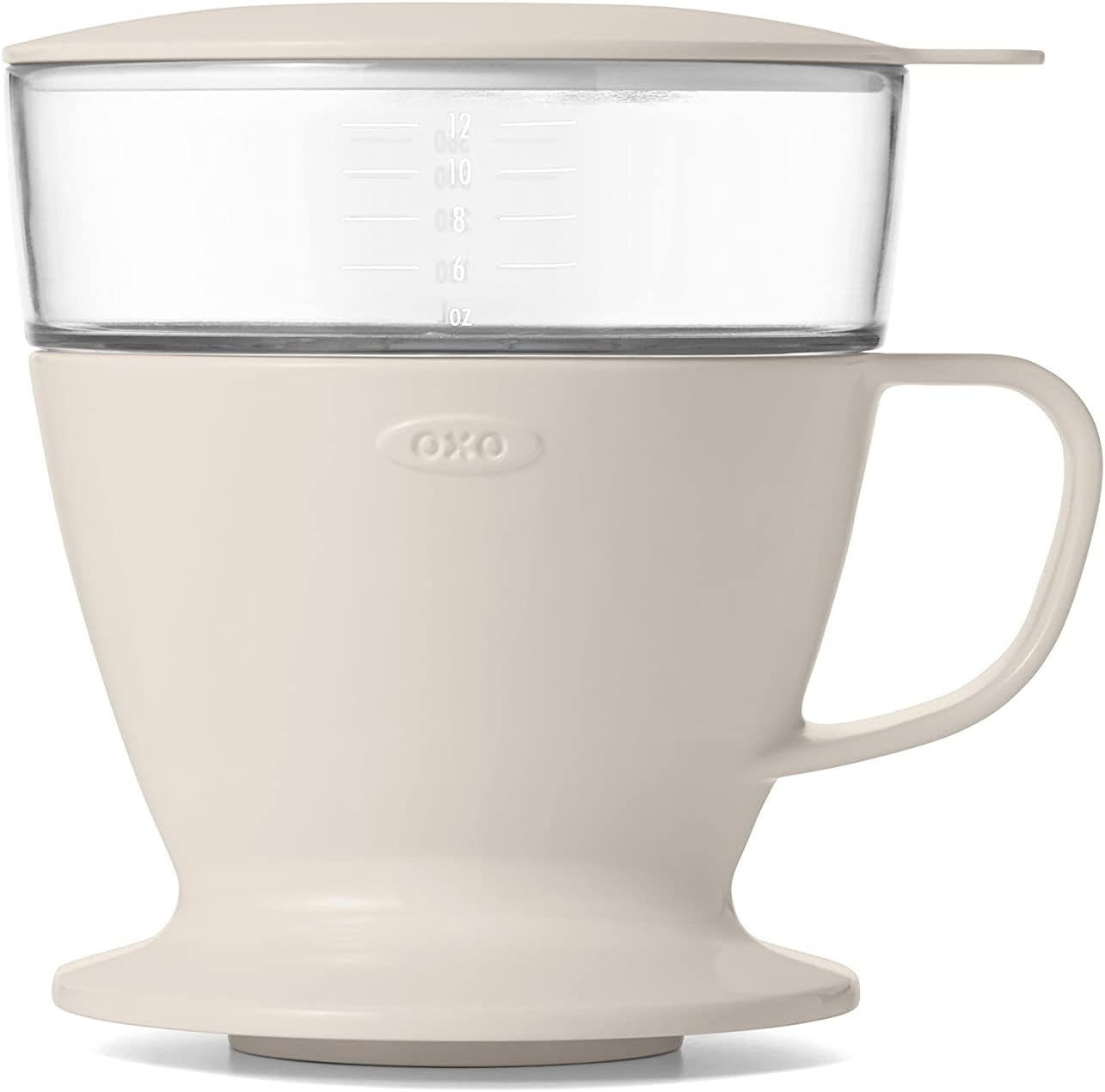
| Capacity | 360 ml |
|---|---|
| Coffee Input Type | ground |
| Filter Type | Reusable |
| Power Source | Manual |
The OXO Brew Single Serve Pour-Over makes traditional pour-over coffee easier by combining a measured water tank and a controlled auto-drip flow with a reusable cone filter. You add ground coffee to the reusable filter, fill the tank to the easy-read markings (up to 12 ounces or 360 ml), and the tank's precise hole pattern meters water evenly over the grounds to produce a balanced extraction without needing a gooseneck kettle or perfect pouring technique. The included lid helps retain heat during brew and doubles as a drip tray afterward, and the plastic components are dishwasher-safe for quick cleanup. Because it is manual and compact, it is well suited to travel or small kitchens, and it comes with paper filters so you can switch between paper and the reusable filter. Limitations are that brew control is less flexible than a skilled hand-pour using a kettle, and the unit's 360 ml capacity is built for single servings rather than larger batches.
Best for: Buyers who want reliable, barista-style pour-over flavor without mastering precise pouring or owning extra equipment and who prioritize convenience and portability.
Less Ideal for: People who regularly brew multiple cups at once or who want full manual control over pour rate and temperature for advanced brewing techniques should look elsewhere.
- Auto-drip water tank that meters flow for consistent extraction
- Reusable cone filter plus included paper filters for flexibility
- Compact, travel-friendly design with easy-read water markings
- Dishwasher-safe plastic parts for simple cleaning
- Lid that retains heat during brewing and doubles as a drip tray
- Single-serve 360 ml capacity is not suitable for brewing multiple cups at once
- Manual operation offers less fine-grained control than a precision gooseneck pour
Verdict: If you want single-cup pour-over flavor with simpler, repeatable brewing and easy cleanup, this OXO model delivers a consistent result without extra gear.
Cosori Pour Over Coffee Maker

| Filter Type | Reusable |
|---|---|
| Coffee Maker Type | Pour Over |
| Material | Glass |
| Specific Uses For Product | Iced Coffee |
| Other Special Features of the Product | Dual Stainless Steel Filter, Wooden Sleeve |
This Cosori pour-over brewer is a straightforward manual dripper built around a double-layer 304 stainless steel filter and a heat-resistant borosilicate glass carafe. You use it like a classic pour-over: add grounds to the reusable metal filter, pour hot water in controlled pours, and let brewed coffee drip into the wooden-sleeved decanter. The dual-layer steel screen traps fines better than a single mesh, while still letting oils through for a fuller cup than paper filters. The glass decanter is stove-safe on low heat and the main pieces are dishwasher-safe for easy cleanup, though the wooden sleeve should be wiped by hand. Its 34-ounce capacity suits two to four servings, making it useful for mornings with guests or for brewing a few cups to keep nearby. Limitations are the manual workflow, which requires attention to pouring technique and temperature control, and the glass carafe needs careful handling compared with insulated or all-metal options. For someone who prioritizes simple, repeatable pour-over performance without disposable filters, it performs well.
Best for: Buyers who want a no-frills, reusable-filter pour-over that produces fuller-bodied coffee without disposable paper filters and who care about easy cleanup and modest batch sizes.
Less Ideal for: People looking for hands-off brewing, an insulated travel carafe, or single-serve automation should consider other brewer types.
- Double-layer 304 stainless steel filter reduces grounds in the cup while preserving flavorful oils
- Borosilicate glass decanter is heat resistant and can be warmed on low stove heat
- Dishwasher-safe decanter and filter make cleanup simple
- 34-ounce capacity brews multiple 4-oz servings for small groups
- Manual pour-over requires skill and attention to pouring and water temperature
- Glass decanter is fragile compared with insulated or metal carafes
Verdict: A practical reusable-filter pour-over that delivers fuller-flavored coffee for small groups with easy cleaning and stove-safe glassware.
Melitta Single-Cup Pour-Over

| Coffee Maker Type | Pour Over |
|---|---|
| Filter Type | Paper (#2) |
| Capacity | 1 cups |
| Operation Mode | Manual |
The Melitta Single-Cup Pour-Over is a no-frills cone brewer for making one cup of pour-over coffee by hand. You set a Melitta #2 paper filter in the cone, add ground coffee, and pour hot water over the grounds to extract a clean cup; the cone shape and visible reservoir make it easy to control the pour and avoid overfilling. The unit is lightweight plastic and dishwasher-safe, which keeps cleanup quick and makes it a low-maintenance option for daily use or travel. It comes with a starter supply of paper filters and is strictly manual so there are no electronics or timers to learn. Practical limits are its one-cup capacity and basic plastic construction, which lacks the heat retention of ceramic or metal cones and is not suited to brewing larger batches. For buyers seeking the cheapest, simplest path to pour-over coffee, this delivers predictable results without complexity.
Best for: Buyers who want the cheapest, simplest way to make a consistent single cup of pour-over coffee at home or on the go and prefer manual control over automated machines.
Less Ideal for: People who need to brew multiple cups at once, want premium heat retention or a metal/ceramic aesthetic, or who prefer automatic drip or electric pour-over systems.
- Very affordable and straightforward to use for single-cup brewing
- Dishwasher-safe plastic makes cleanup fast and convenient
- Includes starter supply of Melitta #2 cone filters
- Cone design lets you monitor the pour and avoid overfilling
- One-cup capacity limits use for multiple drinkers or batch brewing
- Plastic construction provides less heat retention than ceramic or metal
Verdict: Choose this Melitta cone if you want the most affordable, fuss-free way to brew a single pour-over cup with reliable, predictable results.
Chemex Classic Series 8-Cup

| Capacity | 40 fluid ounces |
|---|---|
| Material | Glass |
| Filter Type | Paper |
| Operation Mode | Manual |
| Other Features | Dishwasher Safe |
The Chemex Classic Series 8-Cup is a straightforward manual pour-over carafe built from laboratory-grade borosilicate glass and designed to brew clean, sediment-free coffee when used with Chemex bonded paper filters. You set a folded paper filter in the top, add ground coffee, pour hot water in a controlled bloom and pour sequence, and the brew drains into the wide glass carafe below. Its non-porous glass resists odors and does not impart flavors, and the tall, open design makes it easy to monitor pour speed and saturation. The product is dishwasher-safe, but many users prefer hand washing to avoid bumping the glass. The main limitations are that it requires separate paper filters and a bit of technique and time compared with automatic brewers, and the glass carafe is breakable if dropped. For someone who prioritizes reproducible, clean-tasting pour-over coffee and long-term material stability, the Chemex delivers reliable performance once you learn a simple pouring routine.
Best for: Buyers who want a durable, flavor-neutral brewer that consistently produces clean pour-over coffee and value long-term material reliability over automated convenience.
Less Ideal for: People who need fast, hands-off brewing or a shatterproof travel-capable brewer should consider alternatives better suited to those needs.
- Non-porous borosilicate glass preserves flavor and resists odors
- Patented pour-over shape yields a clean, sediment-free cup with bonded paper filters
- Dishwasher-safe glass for easier cleaning
- Simple, manual operation with no electronics to fail
- Requires proprietary folded paper filters which are sold separately
- Glass carafe is fragile and can break if dropped
Verdict: A simple, long-lasting glass pour-over brewer that reliably produces clean, flavor-neutral coffee for buyers who prioritize durability and consistency.
Bodum Pour Over 34oz

| Capacity | 34 oz (8 × 4 oz servings) |
|---|---|
| Material | Borosilicate Glass |
| Filter Type | Reusable Stainless Steel Mesh |
| Operation Mode | Manual |
This Bodum pour-over brewer is a simple, hands-on way to make clear, flavorful coffee while preserving natural oils because it uses a stainless steel mesh filter instead of paper. To use, add coarse ground coffee to the cone-shaped reusable filter, pour hot water in a slow circular stream, and let the brew drip into the borosilicate glass carafe; a cork band provides an insulated grip when pouring. The fixed stainless filter extracts more oils and body than paper filters, so cups are fuller and you save on consumables, and most components are dishwasher safe for easy cleanup. The single-wall glass carafe heats quickly and is lightweight, but it does not retain heat like double-wall or insulated servers and is breakable if dropped. This model works best for small batch brewing and the manual process requires attention to pour rate and grind size to get consistent results.
Best for: Buyers who value socially validated, low-waste coffee gear and want a straightforward manual brewer that highlights flavor rather than automation.
Less Ideal for: People who need high heat retention, hands-off automatic brewing, or large-volume service for many guests at once should consider other formats.
- Reusable stainless steel filter preserves coffee oils and eliminates paper waste
- Borosilicate glass carafe resists thermal shock and shows brew level
- Cork band offers a comfortable, heat-resistant grip when pouring
- Dishwasher-safe parts make cleanup straightforward
- Single-wall glass carafe cools faster than insulated servers
- Manual pour technique requires practice for consistent extraction
Verdict: Choose this Bodum pour-over if you want a low-waste, glass pour-over brewer that emphasizes flavor and simple, repeatable manual brewing.
Bodum Pour Over 17oz

| Filter Type | Stainless Steel Filter |
|---|---|
| Capacity | 500 ml |
| Material | Glass, Cork |
| Coffee Input Type | Ground |
This Bodum pour-over brewer is a simple, low-maintenance way to make a clean cup of coffee without paper filters. You fill the cone-shaped stainless steel mesh with coarsely ground coffee, pour hot water in a controlled circular motion, and let it drip into the heat-resistant borosilicate carafe for about 3 to 4 minutes. The permanent metal filter preserves coffee oils for fuller flavor and reduces waste and ongoing costs compared with paper filters, and both the carafe and filter are dishwasher safe for easy cleaning. The cork sleeve provides a comfortable, heat-insulating grip but should be kept out of the dishwasher. It is manual so you control bloom and pour speed, which is great for dialing in taste but requires a steady hand and basic pour-over technique. Capacity is suited to one to two cups, so it is not intended for large servings or automatic brewing. For buyers who want straightforward, durable pour-over brewing with minimal recurring costs, this is a reliable choice.
Best for: Buyers who prefer low-risk, easy-to-use coffee gear that minimizes waste and ongoing costs and who brew one or two cups at a time.
Less Ideal for: People who need hands-free automatic brewing or who regularly make multiple servings at once.
- Reusable stainless steel filter preserves oils and eliminates paper filter waste
- Borosilicate glass carafe resists thermal shock and does not impart flavors
- Dishwasher-safe carafe and filter simplify cleanup
- Cork sleeve offers comfortable, heat-insulating grip and a modern look
- Small 500 ml capacity only suitable for one to two cups per brew
- Manual pour-over requires attention and some technique to achieve consistent results
Verdict: A compact, low-maintenance pour-over brewer that delivers fuller-flavored cups while eliminating paper filter waste.
Choosing the Right Pour-Over Coffee Maker: Key Factors to Consider
Extraction Consistency
Even extraction determines whether your cup balances acidity, sweetness, and bitterness. A pour-over brewer that promotes uniform water flow and prevents channeling will extract solubles evenly across the coffee bed.
Design elements like cone angle, internal ribs, and the relationship between filter shape and walls all influence how water moves through grounds. For home use, look for brewers whose geometry works well with common pour techniques so you do not have to chase perfect pours to get good results.
Material and Heat Retention
The material of the brewer affects thermal stability during brewing. Glass and ceramic are inert and visually appealing but lose heat more quickly than metal. Stainless steel and insulated designs retain temperature better, which can improve extraction for larger pours.
Consider how quickly the brewer cools between pulses and whether you will be making single cups or multiple servings. If you prefer a very warm cup without preheating steps, choose materials with better heat retention or accommodate preheating into your routine.
Filter Compatibility and Availability
Filter type and availability affect both flavor and convenience. Paper filters produce a cleaner cup by trapping oils and fines, while metal or cloth filters allow more body and oil through. The shape of the brewer dictates which filters fit properly and how they interact with flow rate.
Before buying, think about the long-term habit: will you maintain a supply of the correct paper filters, or do you prefer a reusable filter to reduce waste? Also check whether the brewer uses common cone sizes so replacement filters are easy to source.
Ease of Cleaning
Residue buildup alters flavor over time, so cleaning should be straightforward. Brewers with wide openings and few nooks are easier to rinse and scrub. Dishwasher-safe components speed maintenance, but simple hand-washing is usually quick if the design is accessible.
If you plan to brew every day, choose a brewer whose disassembly and drying are fast to avoid stale oils and odors. Reusable filters require additional attention, so factor that into your cleaning preferences.
Pour Control and Ergonomics
How you pour matters more with manual brewers than with automated machines. The lip shape, handle position, and overall balance of the brewer affect how steadily you can perform concentric pours and pulse techniques.
An intuitive brewer minimizes wrist strain and helps beginners hold consistent flow rates. If you value precise bloom and pulse steps, prioritize devices that feel stable on a carafe or cup and that guide water rather than forcing awkward hand positions.
Capacity and Practical Throughput
Capacity should match how many cups you make per session. Single-cup cones work well for solitary drinkers but require repeated pours for multiple servings. Larger cones or multi-cup carafes reduce hands-on time but demand better thermal management.
Think about how much coffee you brew each morning and whether you want to pour once for multiple cups or perform several single-cup pours. The brewer's flow characteristics will affect total brew time as batch size increases.
Brewing Basics for Pour-Over Success
Mastering pour-over starts with a consistent routine: grind size, coffee dose, water temperature, and pour rhythm all interact. For many home setups, water just off the boil and a medium-fine grind produce a reliable starting point.
Pay attention to a controlled bloom phase, which allows trapped CO2 to escape and helps saturation. A slow, steady pour in concentric circles prevents channeling and promotes even extraction across the bed.
- Preheat the brewer and vessel to stabilize brewing temperature
- Use a reliable scale and timer for repeatable results
- Adjust grind in small steps rather than large jumps when dialing in
Paper Vs. Metal Vs. Cloth Filters
Filter choice directly affects mouthfeel and clarity. Paper filters trap oils and fines, producing a clean, bright cup that highlights acidity and delicate flavors. Metal filters let more oils through, giving a fuller body and richer texture.
Cloth filters sit between paper and metal, preserving some oils while filtering fines efficiently. Each filter type requires different maintenance and has environmental and taste tradeoffs to consider.
- Paper: clean, disposable, emphasizes clarity
- Metal: reusable, fuller body, requires thorough cleaning
- Cloth: balanced texture, needs gentle care and drying
Choosing the Right Cone Shape and Size
Cone geometry influences contact time and flow. Narrow, tall cones extend contact time and can bring out complexity in lighter roasts, while shallow cones or flat-bottom brewers shorten contact and can emphasize sweetness in medium roasts.
Match the cone size to your typical brew volume so flow rate and temperature stability remain predictable. If you switch between single cups and small batches, a mid-size cone provides flexibility.
- Narrow cone: longer contact, highlights acidity
- Shallow cone: faster flow, more body
- Choose standardized sizes for filter availability
Practical Maintenance Tips
Rinse paper filters before brewing to remove papery flavors and preheat the brewer at the same time. After brewing, discard grounds promptly and rinse components to prevent stale buildup. For reusable filters, backflush or brush to remove oils.
Periodically descale glass or ceramic components if you use hard water. Let parts dry completely before storing to prevent mold or odors, especially with cloth or reusable filters.
- Rinse filters and preheat brewer with hot water
- Clean reusable filters after each use and deep-clean weekly
- Descale periodically based on local water hardness
How Grind Size Changes the Cup
Grind size controls extraction rate: finer grinds increase surface area and speed extraction, producing a stronger, sometimes more bitter cup if over-extracted. Coarser grinds slow extraction and can yield a flatter, under-extracted flavor if too coarse.
When adjusting grind, change by one step at a time and observe changes in brew time and taste. Aim for a total brew time that matches your cone geometry and desired strength.
- Finer: faster extraction, higher strength, risk of bitterness
- Coarser: slower extraction, risk of sourness or thinness
- Dial in by tasting and timing, not by guesswork
How We Chose the Best Pour-Over Coffee Maker
We focused on attributes that matter to people who want repeatable, high-quality manual brewing at home. Core evaluation dimensions included extraction consistency, which covers how the brewer supports even water distribution and stable flow rate; material and durability, assessing glass, ceramic, metal, and heat-retention characteristics; ease of cleaning, including whether parts are dishwasher safe and how quickly residue is removed; and user ergonomics, such as lip shape, handle comfort, and how easy it is to control the pour. We also considered capacity and throughput for different household sizes, and how the design interacts with common filter types. Exclusions included novelty devices that do not reliably control flow, brewer variants that require proprietary disposable components, and units intended only for commercial use. Our shortlist favors solutions that balance precise brewing control with everyday practicality, so readers can expect options suitable for single-cup brews and small batches alike.
Our full evaluation process is outlined in our review methodology.
FAQ
What water temperature should I use for pour-over coffee?
Water between 195 and 205 degrees Fahrenheit usually produces reliable extraction. If you do not have a thermometer, let boiling water rest 30 to 45 seconds before pouring to reach the right range.
How fine should I grind for a pour-over cone?
Start with a medium-fine grind similar to table salt and adjust based on brew time and taste. If the cup tastes sour, try finer; if it is bitter, try coarser.
Can I use the same filter type for all pour-over brewers?
Not always. Filter compatibility depends on cone shape and size. Standard cone sizes fit many brewers, but check that the filter matches the brewer geometry to avoid flow issues.
How often should I clean reusable filters?
Rinse reusable filters after every brew and perform a deeper clean with warm soapy water or a brush weekly, depending on how frequently you brew. This prevents oil buildup that can affect flavor.
Will preheating the brewer make a difference?
Yes. Preheating helps maintain stable brewing temperature and reduces heat loss during the pour, which leads to more consistent extraction, especially for larger batches.
Final Verdict
Choosing a pour-over coffee maker comes down to matching geometry, material, and filter preference to your brewing habits. Prioritize extraction consistency and ease of cleaning if you want reliable results with minimal fuss. If you value full-bodied cups and reuseable filters, focus on metal or cloth options and a design that cleans easily. Balance tradeoffs between heat retention, capacity, and filter type to find a brewer that fits your morning routine. With attention to technique and the right brewer, you can reliably produce bright, balanced coffee at home.