
Note: This article contains affiliate links. If you click on these links and make a purchase, we may earn a small commission at no extra cost to you. This helps support our research and content. Read our full affiliate disclosure here.
Choosing a propane heater for indoor use matters because it directly affects how safe, comfortable, and efficient indoor heating will be in garages, workshops, or poorly insulated rooms. The right heater delivers steady warmth without excessive fuel waste and with built-in safeguards to reduce risks associated with combustion indoors. This guide covers seven shortlisted propane heaters designed for indoor use, and it explains the practical tradeoffs between performance, ventilation needs, and safety systems. Read on to see the evaluation criteria we applied and what to expect from each type of indoor propane heater.
Top Picks at a Glance
| Best Overall The best all-around choice for most situations | DEWALT Portable Radiant Heater DXH45LP |  |
| Best Quality Built to a higher standard if you want something more solid | Mr. Heater 30,000 BTU Radiant Heater |  |
| Best Value The sweet spot between price and what you get | GASLAND MHA18BN Propane Heater |  |
| Best Budget The cheapest option that still gets the job done reliably | BLAZEAL Portable Propane Heater |  |
| Top Rated A top-rated pick with lots of positive feedback | LAANPOLE 15000BTU Propane Heater |  |
| Most Popular A crowd favorite that many people choose with confidence | Mr. Heater Portable Buddy F232000 |  |
| Best Seller A high-volume bestseller chosen again and again | Amazon Basics 46,000 BTU Patio Heater |  |
DEWALT Portable Radiant Heater DXH45LP
| Heat Output | 45,000 BTU |
|---|---|
| Heating Coverage | 1125 (square feet) |
| Fuel Type | Propane |
| Power Source | Gas powered |
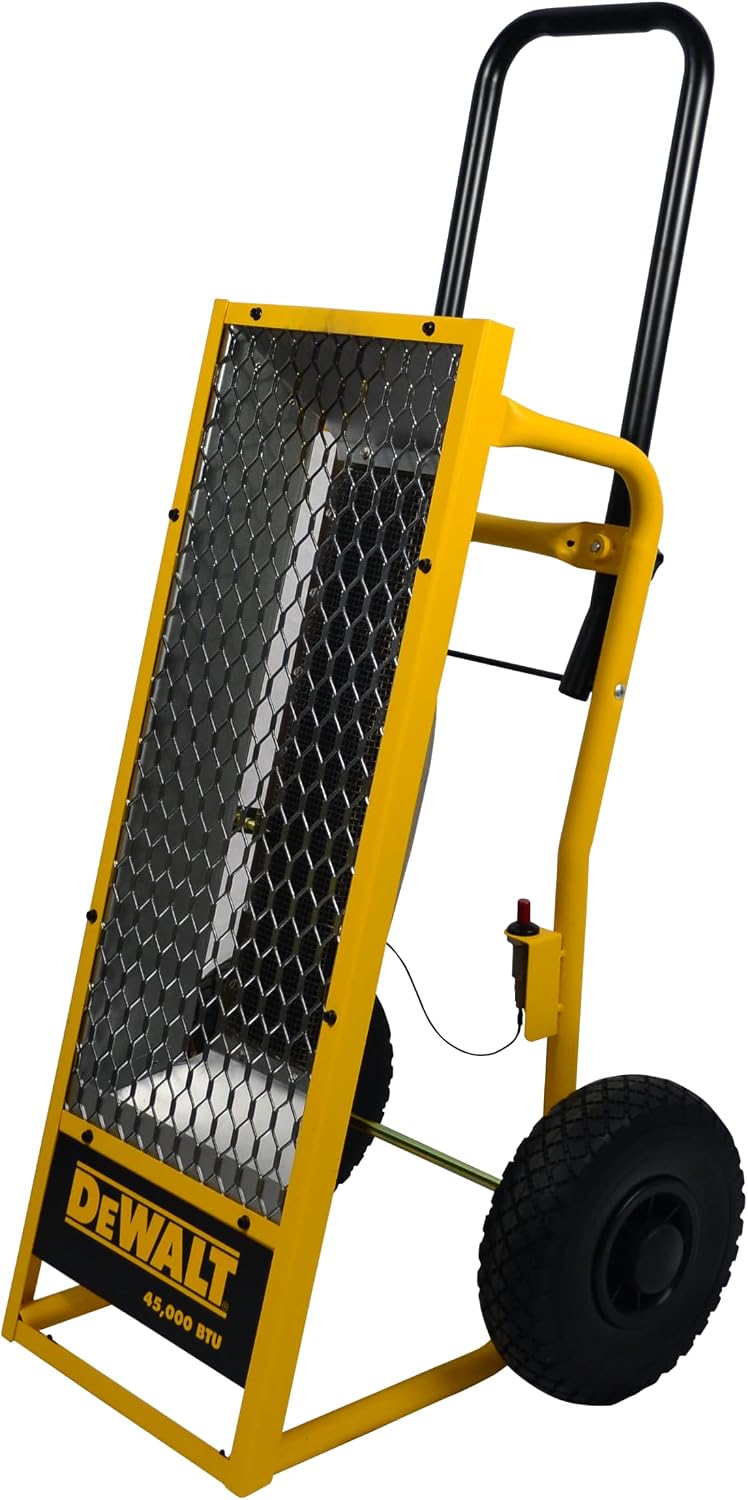
The DEWALT DXH45LP is a heavy-duty portable radiant propane heater built for jobsite or ventilated indoor use where electricity is not available. It delivers 45,000 BTU of radiant heat and is mounted in a roll-cage dolly frame with fold-down handles and foam-filled flat-free tires for easy transport and durable on-site handling. The unit uses piezo ignition and includes a 20 foot hose and regulator so it can run from a standard 20 lb propane tank for roughly 10 hours per tank under typical conditions. Because it radiates heat rather than relying on forced air, it provides strong localized warmth for people and objects in its beam and is relatively quiet. Notable limits are that it is intended for ventilated spaces and outdoor use, so it is not suitable for sealed, occupied rooms where combustion byproducts could accumulate, and the radiant pattern means coverage is directional rather than whole-room convection. The build quality and included regulator make it a practical choice for tradespeople or temporary jobsite heating when safe ventilation is available.
Best for: Buyers who need a portable, high-output heater for ventilated indoor workspaces or temporary jobsite heating where electricity is unavailable and rugged construction matters.
Less Ideal for: People seeking a sealed-room residential heater for continuous indoor use or those who need even, whole-room convection heating should consider other options.
- High 45,000 BTU output for rapid localized heating
- Operates without electricity which is useful on unpowered jobsites
- Rugged roll-cage frame and fold-down handle for durability and transport
- Includes 20 ft hose and regulator so it is ready to hook up to a 20 lb tank
- Piezo ignition and flat-free wheels reduce maintenance needs
- Designed for ventilated/outdoor use and not safe for sealed indoor spaces
- Delivers directional radiant heat rather than even whole-room convection
Verdict: Choose this DEWALT if you want a rugged, high-output propane radiant heater that delivers portable, electricity-free warmth for ventilated workspaces.
Mr. Heater 30,000 BTU Radiant Heater

| Heat Output | 30000 BTU/hr |
|---|---|
| Heating Coverage | 750 sq ft |
| Fuel Type | Propane |
| Ignition | Battery operated electronic ignition |
| Max Temperature Setting | 90 °F |
The Mr. Heater 30,000 BTU Vent Free Radiant Propane Heater delivers strong, direct radiant heat intended to warm living spaces quickly. It can be wall-mounted or used freestanding with included feet and hardware, and its multiple burner tiles produce focused infrared-style warmth that feels immediate on people and nearby surfaces. The unit includes a built-in adjustable thermostat and a battery-powered electronic ignition for convenient starts without household electricity, plus a low-oxygen safety shutoff for indoor safety. It is rated to heat up to roughly 750 to 1,000 square feet depending on how you interpret the listing, so it suits open living rooms, finished basements, or cabins where fast spot heating is needed. Limitations to consider are the need for propane fuel and adherence to vent-free appliance rules and altitude restrictions, and it does not include a blower (an optional fan is sold separately) so heat distribution relies on radiant output and room convection rather than forced air.
Best for: Buyers who prioritize strong, immediate heat delivery for indoor spaces and need a reliable propane option that can be mounted or used freestanding for spot or whole-room warming.
Less Ideal for: People who want whole-home forced-air heating or who cannot use vent-free appliances due to local codes or high-altitude locations should consider other solutions.
- High 30,000 BTU radiant output for fast, direct warmth.
- Adjustable thermostat and battery electronic ignition for easy control and starting without house power.
- Can be wall mounted or freestanding with included mounting hardware and feet.
- Built-in low-oxygen safety shutoff for indoor safety compliance.
- Requires propane fuel and compliance with local vent-free appliance guidelines.
- No included blower fan so heat distribution is primarily radiant and may not circulate evenly in large open plans.
Verdict: Choose this heater when you need powerful, no-electricity-required radiant propane heat to quickly warm an indoor space.
GASLAND MHA18BN Propane Heater
| Heat Output | 18,000 BTU |
|---|---|
| Heating Coverage | Up to 450 square feet |
| Fuel Type | Propane |
| Ignition Type | Piezo |
| Safety Features | Tip-over switch, Oxygen depletion sensor |
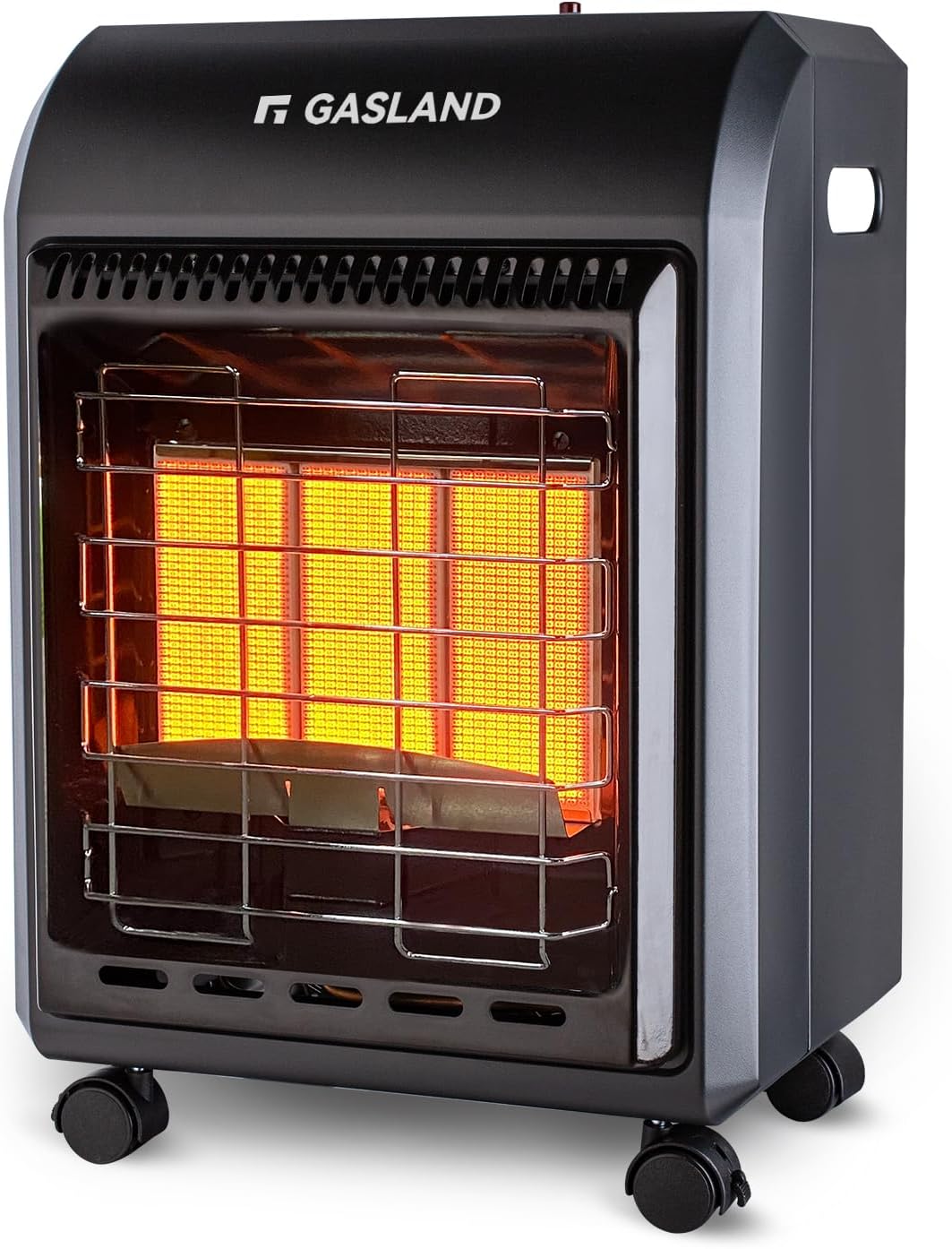
The GASLAND MHA18BN is a portable propane cabinet heater that produces up to 18,000 BTU and uses radiant heat to warm nearby areas. It is typically used on patios, in garages, workshops, or temporary outdoor workspaces and offers three heat settings—high, medium, and low—for adjustable comfort. The unit houses a 20 lb. propane tank inside the cabinet and includes a regulator, hose, piezo ignition, tip-over safety switch, and an oxygen depletion sensor for added safety. Built-in wheels and a carry handle make it easy to move and position, and the manufacturer claims long run times on a 20 lb tank at low output. Important limitations for this product in the context of indoor use are that it is specified for outdoor use and requires good ventilation because it consumes oxygen and produces combustion byproducts; using it in small, poorly ventilated indoor rooms is unsafe and not recommended. For ventilated garages or large open workshops where combustion-safe operation is possible and local codes permit propane appliances, this heater provides a quiet, mobile way to add heat without electricity.
Best for: Buyers who prioritize practical, no-electric heating for ventilated garages, large workshops, or open indoor-outdoor spaces and want a mobile propane unit with built-in safety cutoffs.
Less Ideal for: People seeking a safe, plug-in indoor space heater for small bedrooms or tightly sealed rooms should avoid this unit and choose an electric or factory-listed indoor propane option instead.
- Produces up to 18,000 BTU with three heat settings for adjustable output
- Includes tip-over switch and oxygen depletion sensor for added safety
- Houses 20 lb propane tank inside cabinet with regulator and hose included
- Built-in wheels and handle make the unit easy to move and store
- Piezo ignition eliminates need for external power source
- Designed and labeled for outdoor use, so indoor use requires careful ventilation and code checks
- Consumes oxygen and produces combustion byproducts, making it unsafe in small enclosed spaces
Verdict: Choose this portable propane cabinet heater if you need a mobile, no-electric heat source for ventilated garages or large open workspaces where combustion appliances are allowed.
BLAZEAL Portable Propane Heater
| Heating Coverage | 200 sq ft |
|---|---|
| Heat Output | 6200 BTU |
| Heating Method | Radiant |
| Fuel Type | Propane |
| Power Source | Gas powered |
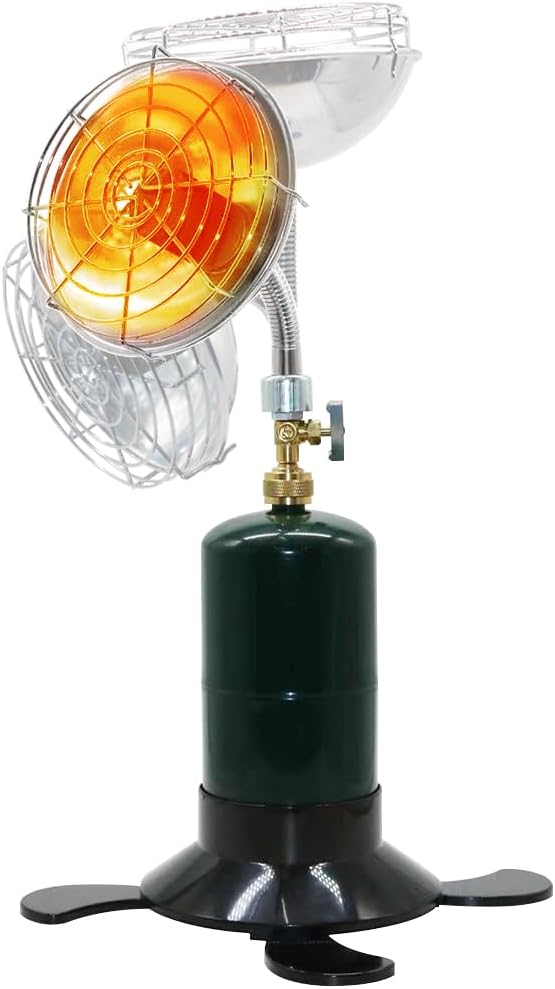
The BLAZEAL Portable Propane Heater is a lightweight, tabletop-style radiant heater sized for quick spot warming of small indoor spaces or nearby outdoor seating. It runs on 1 lb propane canisters and uses an upgraded catalytic infrared burner to deliver up to 6200 BTU of radiant heat, which the manufacturer says covers about 200 square feet in sheltered conditions. The unit has an adjustable tilt head and a control knob for dialing heat output, and a folding stand and tank holder for stable, compact portability. Safety features include a mesh guard and a brass hose connector for leak resistance, and the all-aluminum reflector helps concentrate radiant warmth toward people or a tent opening. Trade-offs are the small fuel source and limited run time from 1 lb tanks and the modest coverage compared with full-size patio heaters, so it is best used for close-range heating in garages, tents, or small rooms rather than trying to heat an entire open space.
Best for: Buyers who need an affordable, portable heater for short-term indoor tasks like garage work, tenting, or spot-warming a small room and prioritize compactness and ease of use over whole-room heating.
Less Ideal for: People who need sustained whole-room heating or long run times without frequent tank changes should consider larger propane or electric heaters instead.
- Compact and lightweight for easy transport and setup
- Upgraded catalytic infrared burner for efficient radiant heating
- Adjustable tilt head and control knob let you direct and tune heat
- Includes folding tank holder for stable tabletop use
- Brass hose connector and mesh guard improve safety and durability
- Runs on small 1 lb propane canisters so run time is limited per tank
- Not intended to heat large open areas; best for close-range spot heating
Verdict: A budget-friendly, portable propane radiant heater that delivers quick, close-range warmth for small indoor or sheltered outdoor spots.
LAANPOLE 15000BTU Propane Heater

| Heat Output | 15000 british thermal units |
|---|---|
| Fuel Type | Propane |
| Number of Speeds | 3 |
| Form Factor | Pedestal |
| Indoor Outdoor Usage | Indoor, Outdoor |
This LAANPOLE pedestal-style propane heater produces 15,000 BTU and offers three heat settings so you can dial warmth up or down for a small indoor space, garage, or enclosed patio. It hooks to a standard propane cylinder and has a rotating heating head to broaden coverage, which makes it useful for spot heating while working or socializing. The unit is built from heavy-duty aluminum with a protective grille and heat-resistant mesh guards, and it includes tip-over protection plus an automatic gas shutoff valve to reduce fire and leak risks when used inside ventilated spaces. Practical benefits are quick heat-up, portability, and simple controls with three speeds. Important limits are that propane heaters require careful ventilation and safe cylinder handling indoors, and the listing omits detailed indoor clearance and ventilation specs so you should follow local codes and manufacturer instructions before indoor use.
Best for: Buyers who prioritize a dependable, safety-minded portable heat source for ventilated indoor spaces, garages, or enclosed patios and want straightforward controls and durable construction.
Less Ideal for: People who need a fully specified indoor-rated heater with listed clearance and ventilation data or who cannot provide safe ventilation and propane handling indoors.
- Powerful 15,000 BTU output for rapid spot heating.
- Three adjustable heat settings for flexible temperature control.
- Tip-over protection and automatic gas shutoff for safer indoor operation.
- Rotating heating head expands effective coverage area.
- Rugged yet lightweight aluminum construction for portability and durability.
- No manufacturer-stated indoor clearance or ventilation specifications in the listing.
- Requires a standard propane cylinder and vigilant ventilation when used indoors.
Verdict: Choose this unit if you want a robust, safety-equipped propane heater that delivers fast, adjustable heat for ventilated indoor spaces and garages.
Mr. Heater Portable Buddy F232000

| Heat Output | 9000 BTU |
|---|---|
| Heating Coverage | 225 sq. ft. |
| Fuel Type | Propane |
| Number of Speeds | 2 |
| Power Source | gas_powered |
The Mr. Heater Portable Buddy is a small pedestal propane heater built for quick spot heating in garages, patios, or other ventilated indoor spaces. It produces 4,000 or 9,000 BTU via a radiant burner and runs on a 1-lb propane cylinder with an optional adapter for larger tanks, giving about 5.4 hours on low or 2.4 hours on high per small cylinder. Use is straightforward: attach the swivel regulator, strike the piezo igniter, and set low or high depending on desired warmth. Safety features include an oxygen depletion sensor, tip-over switch, and thermal shutoff, which matter for indoor use when ventilation and monitoring are maintained. At about 7 pounds it is easy to carry by the molded handle and the two heat settings let you balance runtime versus output. Limitations are its single-zone, radiant-only heating style that is best for people nearby rather than whole-room uniform heat, and it requires proper ventilation and adherence to the included safety guidance for indoor operation.
Best for: Buyers who prioritize a proven, compact propane heater with strong user reviews and built-in safety features for occasional indoor spot heating in garages or covered outdoor spaces.
Less Ideal for: People seeking uniform whole-room heating or an electric/ventless option for permanently heated living spaces should look elsewhere.
- Two heat settings for quick low or high output
- Designed for indoor use with oxygen depletion sensor and tip-over shutoff
- Runs on common 1-lb propane cylinders and can connect to larger tanks with accessories
- Lightweight with an easy-grip handle for portability
- Radiant design provides focused heat near the unit rather than even whole-room warmth
- Requires ventilation and safe operation practices for indoor use
Verdict: Choose this heater if you want a highly rated, portable propane spot heater with proven safety features for occasional indoor use.
Amazon Basics 46,000 BTU Patio Heater

| Heat Output | 46,000 BTU |
|---|---|
| Heating Coverage | 9 feet |
| Power Source | Gas Powered |
| Fuel Type | Propane |
This freestanding Amazon Basics propane patio heater delivers strong, concentrated warmth using a 46,000 BTU burner and an adjustable control knob to vary output. It is built as a tower unit with a piezo one-touch ignition and a tilt-safety auto shutoff valve for basic safety during use, and the wheeled base plus a water-weighted tank box and chain make it straightforward to move and keep stable. Typical use is for outdoor patios, cafés, or similar open-air seating where immediate radiant heat is needed for small groups; the heater produces a focused heat pattern rather than evenly warming large covered rooms. The unit requires a 20 lb liquid propane tank (not included) and has a powder-coated finish that resists wear. Important limitations for your context: this model is intended for outdoor use and lacks approvals and ventilation features required for safe indoor operation, so it should not be used inside enclosed spaces. Assembly and occasional maintenance are needed to keep the ignition and safety valve reliable over time.
Best for: Buyers who prioritize a reliable, easy-to-use outdoor heater that provides strong, immediate warmth and simple safety features for patios or commercial outdoor seating.
Less Ideal for: People seeking a heater that can be used inside enclosed rooms or who need even whole-room heating; those users should consider properly rated indoor heating alternatives.
- High 46,000 BTU output for rapid, localized warmth.
- One-touch ignition and adjustable temperature knob for easy operation.
- Wheels and weighted base design make placement and stability simple.
- Tilt-safety auto-shutoff and chain for added basic safety around the tank.
- Designed and rated for outdoor use only and not safe for indoor spaces.
- Requires a separate 20 lb propane tank and occasional maintenance for reliable ignition.
Verdict: If you need powerful, portable outdoor radiant heat with straightforward controls and basic safety features, this 46,000 BTU Amazon Basics patio heater is a practical choice.
Choosing the Right Propane Heater for Indoor Use: Key Factors to Consider
Safety Systems And Certifications
Indoor propane heaters must include active safety systems because incomplete combustion and fuel leaks can create immediate hazards. Look for oxygen depletion sensors, automatic shutoffs for tip-over or flame loss, and enclosed combustion chambers when applicable. Certified testing from recognized labs indicates the unit met specific safety thresholds during independent evaluation.
Safety systems matter not just for regulatory reasons but for day-to-day peace of mind. If you plan to use a heater in a workshop or an area where people sleep or work, redundancy in shutoff mechanisms reduces reliance on perfect user behavior and lowers risk exposure.
Heating Capacity Relative To Room Size
Heating capacity, usually shown in BTUs, determines how quickly a heater can raise and maintain indoor temperatures. Estimate the cubic footage of the space you want to heat and choose a BTU rating appropriate for that volume, accounting for insulation levels, ceiling height, and how cold the ambient starting temperature will be.
Oversizing a heater wastes fuel and can create uncomfortable hotspots. Undersizing leaves rooms chilly and stresses the appliance. Consider adjustable output or multiple heat settings for better control across variable spaces.
Ventilation Needs And Indoor Air Quality
Even heaters marketed for indoor use can affect air quality if ventilation is inadequate. Combustion produces moisture and combustion byproducts that need either dilution through fresh air or management with built-in systems. Consider whether the heater requires a dedicated vent, periodic airing of the room, or active air-exchange strategies during operation.
Plan for common-use patterns. Short, intermittent use in a garage differs from overnight low-output use in a living area. Choose a heater whose ventilation requirements match how you will actually use it.
Fuel Type, Cylinder Compatibility, And Runtime
Propane heaters rely on disposable or refillable cylinders, and compatibility with standard cylinder sizes affects convenience and runtime. Check how many hours the heater runs at typical output levels on a commonly available cylinder size. Runtime impacts how frequently you need to swap tanks and whether you need a spare on hand.
Fuel management also affects cost-effectiveness and storage logistics. If you plan to use a heater for extended periods, consider models with better fuel efficiency or the option to connect to larger supply arrangements, where safe and appropriate.
Controls, Ignition, And Maintenance
Controls determine how easily you can set and maintain a comfortable temperature. Look for straightforward ignition systems, preferably push-button or piezo igniters, and intuitive power or output settings. Simple controls reduce user error and make it easier to adapt heater output to changing conditions.
Maintenance accessibility matters for long-term operation. Units that offer user-accessible filters, easy-to-clean surfaces, and clear guidance for replacement parts will be less costly to keep in service and safer to operate over time.
Portability And Installation Requirements
Many indoor propane heaters are designed to be moved between rooms or job sites, so weight, handle ergonomics, and footprint play into usability. Portable units should balance stability with easy transport. If a heater requires permanent mounting or professional installation, ensure that the installation constraints match how and where you intend to use it.
Consider storage needs and how frequently you will relocate the unit. A slightly heavier but more stable heater can be preferable if you frequently use it in cramped or high-traffic areas.
Matching Heater Output To Indoor Spaces
Calculate the room volume and then match the heater output to that volume while accounting for insulation and usage patterns. Use a conservative estimate for poorly insulated spaces and choose a heater with adjustable output for more flexibility. For common scenarios, a small enclosed workshop will need far less continuous output than a detached garage with high ceilings.
- Measure cubic footage: length × width × height
- Factor insulation: add 20 to 40 percent BTU capacity for poorly insulated rooms
- Prefer adjustable output for multi-use spaces
Installation, Placement, And Venting Best Practices
Position the heater on a flat, stable surface away from combustibles and traffic paths. Maintain manufacturer-recommended clearances around the unit to prevent heat damage to nearby objects. If the heater requires ventilation or exhaust management, follow the specified layout and never block intake or exhaust ports.
Proper placement reduces fire risk and improves heating efficiency. For temporary setups in workshops or garages, create a designated heater zone with barriers or marked clearances to prevent accidental contact.
- Keep clear space around all sides as advised
- Do not operate on flammable flooring without heat-resistant protection
- Avoid enclosed cabinets or closets unless the unit is rated for such placement
Routine Maintenance And Troubleshooting Tips
Regular maintenance keeps a propane heater operating safely and efficiently. Inspect hoses, connectors, and seals for cracks or wear before each season of use, and replace parts that show damage. Clean grills, reflectors, and any accessible combustion areas to prevent soot buildup and to maintain airflow.
If you encounter ignition failure, check the fuel supply, regulator, and connections first. For persistent issues, consult the user manual or a qualified technician rather than attempting invasive repairs that could compromise safety.
- Test safety shutoffs annually
- Replace damaged hose fittings immediately
- Keep vents and grills free of dust and debris
Using Heaters Safely Around People And Pets
Indoor heaters produce heat and can quickly create burn hazards for curious pets and children. Use guards, barriers, or location strategies that prevent accidental contact, and never leave a running heater unattended in a room where people are sleeping unless it is specifically rated and configured for that use.
Carbon monoxide is a concern with combustion-based heaters. Ensure adequate ventilation and consider installing a CO detector in the area to alert you to unsafe conditions. Follow fuel-handling guidelines to avoid accidental releases during cylinder changes.
- Install a CO detector in frequently used heated spaces
- Use barriers to prevent contact with hot surfaces
- Never refuel or change cylinders while the unit is operating
When To Choose Temporary Versus Semi-Permanent Solutions
Temporary portable heaters are useful for short-term tasks, seasonal use, or spaces where you do not want a permanent installation. They are typically easier to store and require minimal setup. Semi-permanent options may offer higher sustained output, integrated venting, or connections for larger fuel supplies, which can suit continual use in workshops or auxiliary living spaces.
Decide based on frequency of use, required runtime, and whether you can provide necessary ventilation. A portable unit may be ideal for occasional garage work while a semi-permanent setup could be better for a regularly used workshop.
- Temporary units favor portability and simple storage
- Semi-permanent units often need more planning for ventilation and fuel supply
- Match solution to expected annual hours of operation
How We Chose the Best Propane Heater for Indoor Use
We focused on units specifically intended for indoor or enclosed-space operation and screened for features that matter to everyday users. Evaluation criteria emphasized measurable safety systems, like oxygen depletion sensors and tip-over shutoffs, because combustion in enclosed spaces raises clear health and fire risks. Heating capacity and BTU output were key metrics to match heaters to common indoor room sizes. Fuel efficiency and runtime on standard propane cylinders were reviewed to reflect operational cost and convenience. Ease of ignition, controls, and maintenance influenced usability scores, while build quality and materials determined durability and resistance to knocks and transport. We excluded outdoor-only and jobsite-only models, unvented units without documented indoor safety features, and any heater that required permanent hardwiring or professional installation. Units missing basic safety sensors or lacking accessible user controls were not considered. Our process prioritized heaters that balance clear indoor safety provisions with reliable heat output, straightforward setup, and predictable fuel use.
Our full evaluation process is outlined in our review methodology.
FAQ
Are propane heaters safe for indoor use?
Propane heaters can be safe indoors when specifically designed for enclosed spaces and used with proper ventilation and safety features. Choose units with oxygen depletion sensors and automatic shutoffs, and follow placement and ventilation guidance.
How much ventilation does an indoor propane heater need?
Ventilation needs vary by model and output. Many indoor-rated units require periodic fresh air exchange or passive ventilation. Consult the heater's documentation and ensure a CO detector is present in the heated area.
Can I use a standard propane cylinder indoors?
Many indoor propane heaters are compatible with standard cylinders, but you must follow the manufacturer's guidelines about cylinder placement and changeover procedures. Store spare cylinders outside or in a ventilated area and do not change cylinders while the heater is operating.
How do I choose the right BTU rating for my room?
Estimate the room's cubic footage and account for insulation and ceiling height. Select a heater with adjustable output or a BTU range that covers your calculated need plus a margin for poor insulation or cold starting conditions.
What maintenance is required for propane heaters used indoors?
Routine maintenance includes checking hoses and fittings for leaks, cleaning grills and vents, and testing safety shutoffs. Replace worn parts promptly and follow the manufacturer's seasonal maintenance recommendations.
Final Verdict
Prioritize safety systems, appropriate heating capacity, and ventilation needs when choosing a propane heater for indoor use. Balance runtime and fuel efficiency against how often and how long you will operate the unit, and select controls and maintenance features that match your comfort with upkeep. By focusing on measurable criteria like safety features, BTU output, and fuel runtime, you can choose an indoor propane heater that provides reliable warmth while minimizing risks and ongoing hassles.