
Note: This article contains affiliate links. If you click on these links and make a purchase, we may earn a small commission at no extra cost to you. This helps support our research and content. Read our full affiliate disclosure here.
If you want faster prep without hauling out a full-size processor, a pull-string food chopper can cut chopping time and dishwashing. These compact, manual choppers let you control chop size and texture with short pulls while keeping cleanup simple. The right chopper matters when you are preparing daily salads, salsas, or small batches of vegetables for cooking. This guide lists five shortlisted pull-string food choppers vetted for consistent chopping, durability, and ease of cleaning. Below we explain the criteria used to evaluate each option and highlight what to consider before buying so you can pick the model that fits your routine. Read on for practical buying guidance and answers to common user questions.
Top Picks at a Glance
| Best Quality Built to a higher standard if you want something more solid | KitchenAid Manual Food Chopper |  |
| Best Value The sweet spot between price and what you get | Brieftons QuickPull Food Chopper |  |
| Best Budget The cheapest option that still gets the job done reliably | Ourokhome Manual Food Processor 500ml |  |
| Top Rated A top-rated pick with lots of positive feedback | Kuhn Rikon Pull Chop 2-Cup |  |
| Most Popular A crowd favorite that many people choose with confidence | Butterfly 2.5-Cup Manual Food Chopper |  |
KitchenAid Manual Food Chopper

| Capacity | 3.8 cup |
|---|---|
| Material Type | Plastic |
| Blades | Stainless steel |
| Included Components | Food Chopper |
The KitchenAid Manual Food Chopper uses a simple pull-string mechanism to spin razor-sharp stainless steel blades for quick chopping without electricity. You load up to the 3.8-cup container, secure the locking lid, then pull the cord in short bursts to control coarseness — short pulls for chunky pieces and longer or more pulls for finer results. The nonslip base keeps the unit stable during use, and the detachable lid base doubles as a cover for storage. Blades, container, and lid base are dishwasher safe for easy cleanup, while the pull-cord lid needs hand washing. Its lightweight, compact design makes it easy to store and handy for small prep tasks, but the manual action requires repeated pulls for large batches or very hard items. For quick, hands-on prep of salads, salsas, dips, and small nut chopping it is fast and reliable, though it is less suited to high-volume or heavy-duty chopping compared with powered choppers.
Best for: Buyers who prioritize hands-on control and reliable, fast chopping for small to moderate prep jobs and who prefer a simple, non-electric solution.
Less Ideal for: Anyone who needs to process large batches, frequently chop very hard foods, or who prefers an automatic, powered chopper for heavy daily use.
- Pull-cord operation gives precise, immediate control over chop size
- Razor-sharp stainless steel blades deliver consistent chopping performance
- Dishwasher-safe container, blades, and lid base simplify cleanup
- Nonslip base and locking lid improve stability and safe use
- Compact 3.8-cup bowl is easy to store and suitable for small prep tasks
- Manual pull mechanism requires effort and repeated pulls for larger quantities or very hard ingredients
- Not intended for high-volume or continuous heavy-duty chopping
Verdict: Choose this pull-string KitchenAid chopper if you want precise, no-power chopping for small batches with easy cleanup and compact storage.
Brieftons QuickPull Food Chopper
| Operation Mode | Manual |
|---|---|
| Material Type | Stainless steel blades, ABS plastic |
| Included Components | Chopper attachment, mixer attachment |
| Capacity | 4-cup (950 ml) |
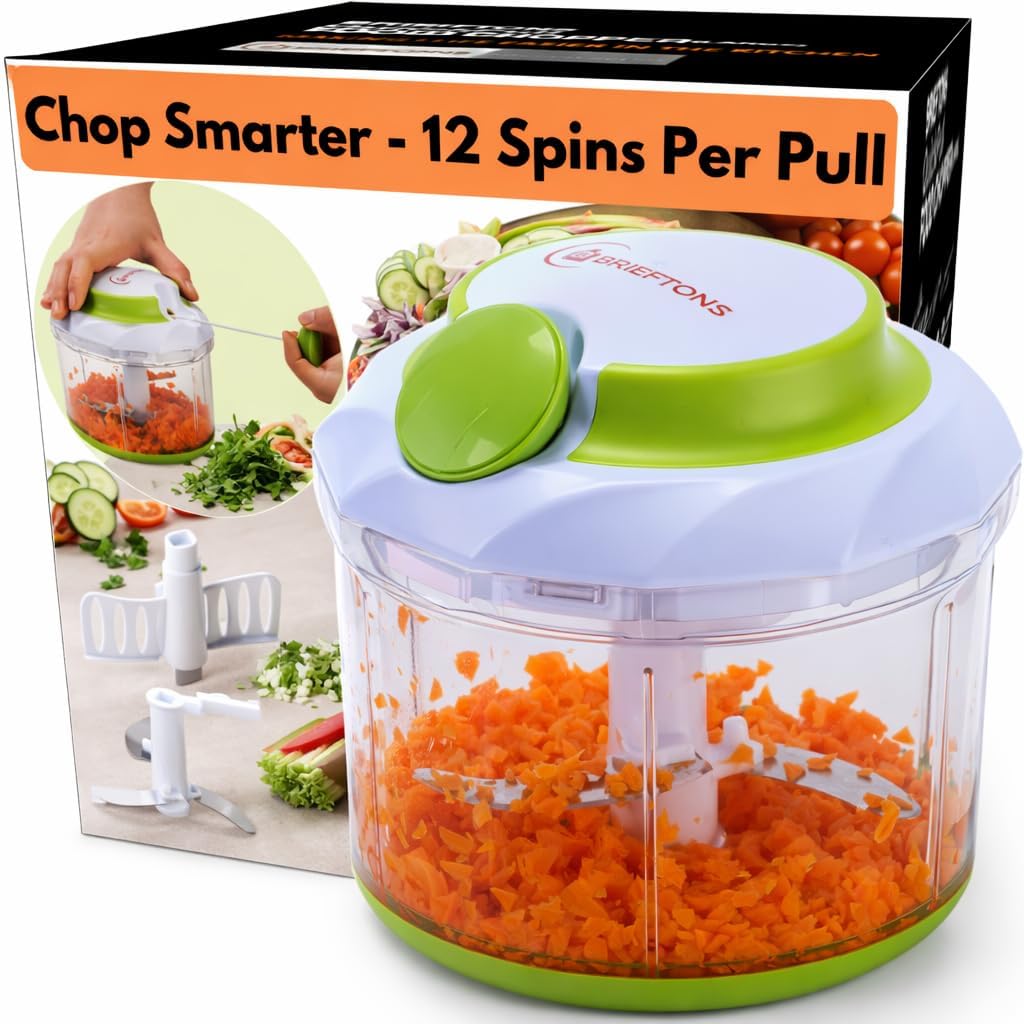
The Brieftons QuickPull is a hand-operated food chopper that uses a pull cord to spin a three-blade cutting rotator and two sweeper arms inside a 4-cup (950 ml) bowl to chop herbs, vegetables, nuts, and soft meats without electricity. You control texture by number of pulls—about five for coarse and ten for fine—while the sealed lid keeps onion fumes contained and noise to a minimum. The included mixer attachment lets you whisk dressings and batters, and parts disassemble for easy cleaning and nested storage. Practical touches like a soft-grip lid, anti-skid base, and concealed blades make it safe and travel-friendly for RVs or small kitchens. Limitations are inherent to manual operation: large batches require multiple cycles, and very hard items may not process as quickly as a powered processor. Still, for quiet, compact, and reliable everyday prep this chopper speeds small jobs and avoids cords or motors.
Best for: Buyers who prioritize compact, reliable kitchen tools that save counter space and work without power—ideal for small kitchens, RVs, and cooks who want simple, quiet prep for herbs, salsas, and baby food.
Less Ideal for: People who regularly process large volumes or need high-speed performance for very hard ingredients should choose a powered food processor instead.
- No electricity required so it is quiet and works anywhere
- Clear texture control by adjusting the number of pulls
- Three stainless steel blades plus sweeper arms for even chopping
- Parts disassemble and nest for compact storage and easy cleaning
- Includes a mixer attachment for whisking and blending
- Manual operation is slower for large batches compared with electric processors
- Not suited for very hard or dense items that need a motorized unit
Verdict: A compact, no-power pull-string chopper that delivers controlled, quiet chopping for everyday small-batch prep and travel use.
Ourokhome Manual Food Processor 500ml

| Material Type | Acrylonitrile Butadiene Styrene, Stainless Steel |
|---|---|
| Blade Material Type | Stainless Steel |
| Operation Mode | Manual |
| Unit Count | 1 Count |
This pull-string food processor uses a hand-pull cord to spin three staggered stainless steel blades inside a 500 ml bowl so you can chop onions, garlic, herbs, tomatoes and small amounts of veggies quickly without power. Use short bursts for coarse pieces or more pulls for finer results; the vendor suggests about 10 pulls for coarse, 15 for medium and 20+ for puree. The anti-skid rubber base and built-in lid lock keep the bowl steady while the durable retractable cord and manual operation make it portable for camping or small kitchens. Blades are dishwasher-safe stainless steel and the bowl and lid are ABS plastic, which keeps weight and cost down. Limitations include the small capacity that makes it best for prep rather than large batches and the manual pull action, which can be tiring for large quantities. For everyday small chopping tasks and buyers prioritizing low cost and simplicity, it delivers practical, no-electric chopping with easy cleanup.
Best for: Buyers who want a very affordable, no-frills chopper for quick single-batch prep, camping, or small kitchens and who prefer simplicity over powered appliances.
Less Ideal for: People who routinely prepare large quantities, need continuous hands-free operation, or want finer control for large-volume processing should choose a larger electric chopper instead.
- Pull-string manual drive works without electricity and is portable for camping or small kitchens
- Three staggered stainless steel blades provide more even chopping
- Anti-skid rubber base and lid lock improve stability during use
- Dishwasher-safe parts simplify cleanup
- Compact 500 ml bowl is easy to store and suitable for single-portion prep
- Small 500 ml capacity limits use to small batches and prep tasks
- Manual operation can be tiring if processing larger quantities
Verdict: A low-cost, portable pull-string chopper that reliably handles small prep jobs without electricity.
Kuhn Rikon Pull Chop 2-Cup
| Material Type | Plastic |
|---|---|
| Blade Material Type | Stainless Steel |
| Operation Mode | Manual |
| Included Components | Pull Chop |
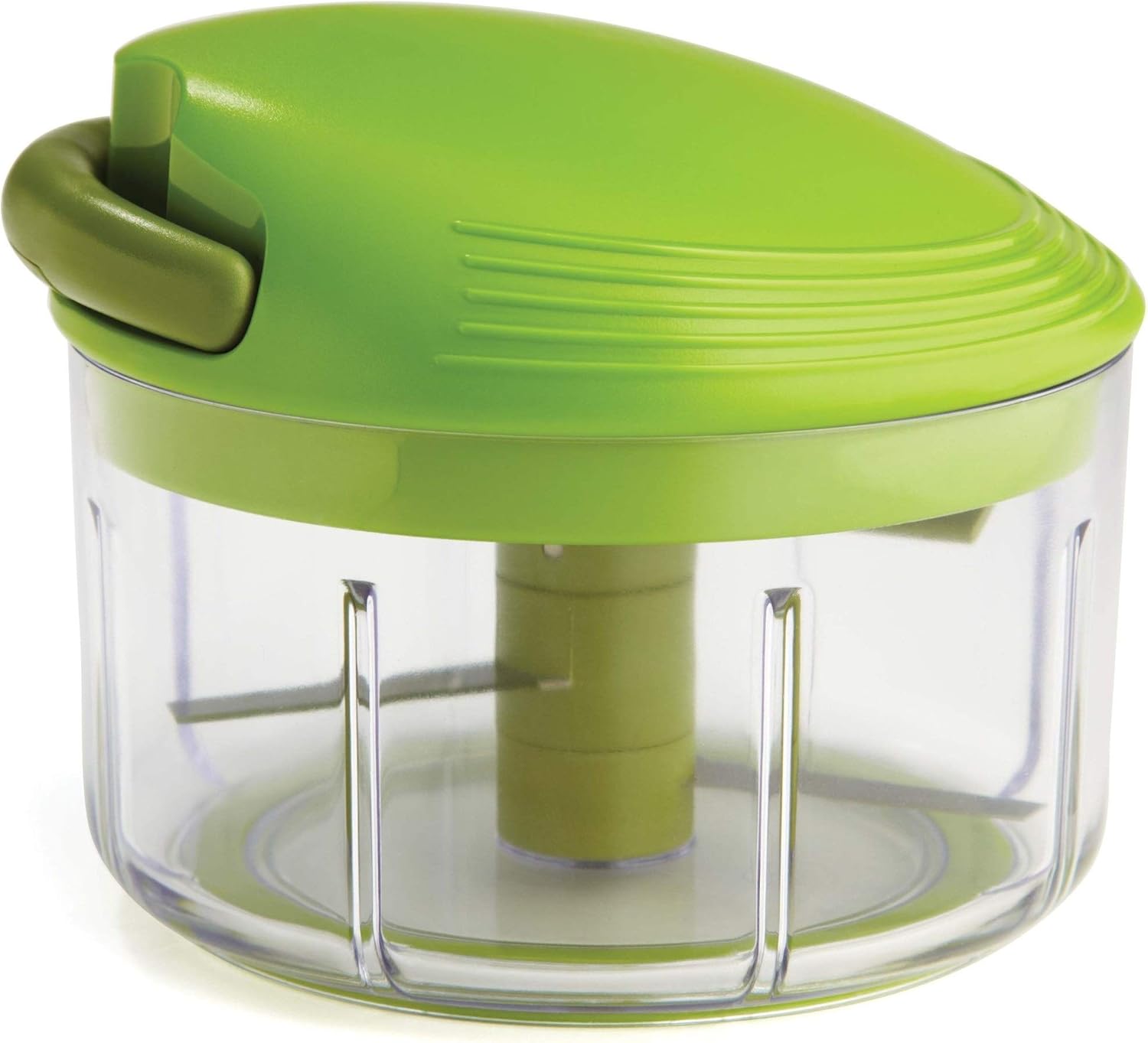
The Kuhn Rikon Pull Chop is a small manual food processor that chops ingredients using a pull-cord that spins razor-sharp stainless steel blades inside a 2-cup container. It is designed for quick prep of onions, garlic, herbs, nuts and small amounts of vegetables, giving coarse or fine results depending on the number of pulls. Notable features include a non-slip base for stability, a blade cover for safer storage, and a container that is microwave- and dishwasher-safe for easier cleanup. Because it is manual, it needs no power and gives direct control over texture, which is useful when emulsifying small batches of mayonnaise where short, controlled pulses help. The compact size keeps it handy for single-serve dressings and dips but limits batch size to about two cups, so making larger quantities will require multiple rounds. Expect durable, simple mechanics that rarely fail and minimal maintenance other than hand-washing the lid and storing blades safely.
Best for: Buyers who prioritize a dependable, low-maintenance tool for small-batch prep and who prefer simple mechanical devices over electric appliances for tasks like making single-serve mayonnaise and dressings.
Less Ideal for: People who need to make larger quantities in one go or who prefer fully hands-off electric processors for frequent, high-volume emulsifying.
- Manual pull-cord gives precise control over chop consistency
- Razor-sharp stainless steel blades for effective chopping
- Compact 2-cup size ideal for small batches and countertop storage
- Non-slip base keeps the unit stable during use
- Container is microwave- and dishwasher-safe for easier cleanup
- Small 2-cup capacity limits larger batches of mayonnaise or dressings
- Manual operation can be tiring for repeated or lengthy chopping sessions
Verdict: Choose this manual 2-cup chopper if you want a reliable, no-power tool that offers precise control for small-batch mayonnaise and dressing prep.
Butterfly 2.5-Cup Manual Food Chopper

| Material Type | Plastic |
|---|---|
| Product Care Instructions | Dishwasher Safe |
| Blade Material Type | Stainless Steel |
| Unit Count | 1 Count |
The Butterfly manual food chopper is a compact pull-string mincer designed for small chopping tasks like onions, herbs, garlic, and soft vegetables. You pull the cord to spin a three-blade stainless steel V-shaped assembly inside an unbreakable ABS plastic container, producing coarse to fine chop depending on number of pulls. It is dishwasher-safe for easy cleanup and its 600 ml (about 2.5 cups) capacity makes it handy for single meals, dressings, and sauces without using an electric appliance. The simple manual design means no cords or batteries and low maintenance, but it requires more effort for large batches and will not puree heavy or frozen items. The plastic bowl and manual mechanism are lightweight and portable, though repeated heavy use may show wear sooner than metal alternatives. For buyers who value straightforward, easy-to-clean chopping and occasional prep work, this is a practical small-kitchen tool.
Best for: A buyer who wants a no-frills, easy-to-clean manual chopper for occasional meal prep and small batches, and who prefers proven simple tools backed by clear product details and reviews.
Less Ideal for: Those who regularly prepare large quantities, need a motorized food processor, or want a tool that handles heavy or frozen ingredients without effort.
- Simple pull-string operation requires no power and is quick for small tasks
- Three stainless steel blades provide consistent chopping for vegetables and herbs
- Dishwasher-safe ABS plastic bowl and blades make cleanup easy
- Compact 600 ml bowl is convenient for single servings and small prep jobs
- Limited 600 ml capacity makes it inefficient for large batches
- Manual mechanism is not suited for heavy-duty or frozen ingredients
Verdict: Choose this compact pull-string chopper if you want a reliable, easy-to-clean manual tool for quick small-batch chopping without electricity.
Choosing the Right Pull-String Food Chopper: Key Factors to Consider
Chopping Consistency and Blade Design
How uniformly the chopper cuts ingredients affects texture and cooking. Blade angle, sharpness, and the number of cutting tiers determine whether you get even dice, coarse pieces, or a puree. For recipes where texture matters, look for a chopper that produces repeatable results with short pulls.
Blade material and how the blades are mounted also impact long-term sharpness and cutting action. Stamped or thicker blades tend to retain an edge longer. Consider whether blades can be removed for sharpening or replacement when assessing lifetime usefulness.
Ease of Cleaning and Maintenance
A compact chopper needs to be easy to take apart and wash; otherwise it will end up unused. Check how the lid, pull mechanism housing, blades, and bowl separate. Parts that are dishwasher-safe or rinse-clean friendly save time in daily use.
Also consider crevices where food gets trapped and whether components dry fully when stored. Simple designs with minimal seams reduce trapped food and make it easier to keep the chopper hygienic over time.
Durability and Construction Materials
Durable materials and robust assembly determine how long the chopper will perform well. Look for bowls made of thick, food-safe plastic or glass for scratch resistance and stain resistance. Reinforced hubs and metal blade mounts reduce wobble and stress during repeated pulling.
The longevity of the pull cord and recoil mechanism is crucial. Materials and engineering that protect the cord path and limit friction will reduce wear. Assess whether the manufacturer documents replacement parts or warranties as an indicator of expected lifespan.
Ergonomics and Pull Mechanism Effort
Pull-string choppers rely on human effort, so ergonomics matter for comfort and control. The handle shape, pull length, and required force determine how many pulls you need and how quickly you tire. Models with longer pull travel often give finer control with less force per pull.
Consider whether the chopper is usable for people with limited hand strength. A low-force mechanism or a larger, easier-to-grip handle reduces strain during repeated use and improves safety by minimizing sudden jerks.
Bowl Capacity and Versatility
Capacity affects what tasks the chopper handles efficiently. Small bowls are fine for sauces and toppings, while larger bowls let you prep multiple servings without repeating cycles. Choose a size that matches your typical meal prep volumes.
Versatility also includes whether the chopper can handle wet and dry ingredients, crush ice, or make purees. Some models work better for leafy herbs and soft vegetables, while others can tackle harder roots. Consider the home tasks you perform most often when selecting capacity and capability.
How Pull-String Choppers Work
Pull-string food choppers convert linear pull motion into blade rotation using a cord-and-recoil mechanism. Each pull spins the blade stack several revolutions, and repeated pulls progressively reduce pieces to the desired size. This simple mechanical approach removes the need for electricity while still delivering controlled chopping.
Because the mechanism mechanically multiplies hand motion, the length of the pull and cord design influence how fast the blade spins and how finely ingredients are chopped. Understanding this lets you match the device to tasks where you want coarse chunks or a finer mince without overworking the food.
- Short, strong pulls generally produce coarser chop
- Longer, repeated pulls reduce pieces to finer texture
- Blade geometry controls whether you get diced pieces or puree
Best Uses in Everyday Cooking
Pull-string choppers excel at small-batch tasks: chopping onions for a single meal, mincing garlic, making herb blends, and preparing salsas. Their compact size and manual operation make them handy for quick prep without pulling out larger appliances.
They are also useful where electricity is unavailable or when you want quiet operation. For emulsions, like small dressings or pestos, a few controlled pulls can produce the right texture without warming ingredients the way a high-speed blender might.
- Salsas, pestos, and vinaigrettes
- Mincing aromatics and herbs
- Small vegetable prep and baby food batches
Cleaning Tips to Keep Performance Consistent
Disassemble the unit after each use to remove trapped bits and prevent odor buildup. Rinse blades and bowl immediately to avoid drying that is harder to remove later. If parts are dishwasher-safe, place them on the top rack to preserve seals and plastics.
Inspect the pull mechanism housing for food residue periodically. Wipe the exterior cord path with a damp cloth and let all parts dry completely before reassembly to prevent mold or odor. Regular light maintenance keeps the recoil smooth and prolongs cord life.
- Rinse blades and bowl promptly after use
- Hand-wash or top-rack dishwasher only when safe
- Dry parts fully before reassembly to avoid mildew
Safety and Storage Considerations
Blades are sharp even when the chopper is not assembled. Store blades away from children and pack them securely when moving the unit. Some bowls include blade guards for storage; if not, wrap or place blades in a safe container.
Store the chopper with the lid off or slightly ajar if moisture is a concern, so trapped air circulates and parts stay dry. Keep the pull cord protected from pets and curious hands to avoid accidental damage or tangling.
- Keep blades secured and out of reach
- Store dry to prevent odor and mold
- Protect the pull cord from pets and heavy objects
When a Manual Chopper Makes Sense Versus Electric
A manual pull-string chopper is ideal when you need quick, small-quantity prep without noise, power, or bulky storage. They are portable and simple to maintain, offering precise control for light tasks. If you frequently prepare large batches or need continuous high-power blending, an electric appliance may be more efficient.
Consider how often you cook, the typical batch sizes, and whether portability or quiet operation is a priority. For many home cooks, a pull-string chopper complements other tools rather than replacing them entirely.
- Choose manual for quiet, small-batch tasks
- Choose electric for large-volume or heavy-duty blending
- A manual chopper is a useful secondary tool in most kitchens
How We Chose the Best Pull-String Food Chopper
We shortlisted pull-string food choppers based on real-world use cases and the features that most directly affect everyday performance. Our evaluation prioritized chopping consistency and control, because an evenly sized chop affects cooking times and texture. We also measured ease of cleaning and disassembly, since small kitchen tools are only useful if they do not add maintenance overhead. Durability and build quality were considered to estimate long-term value from repeated pulls and blade contact. Ergonomics and comfort were included because repeated pulling should not strain the hand or wrist. Finally, capacity and versatility were evaluated to ensure each chopper suits common tasks from small batches to slightly larger prep jobs. We excluded single-use novelty gadgets and items lacking basic safety features or clear cleaning instructions. Models with poorly specified materials or nonreplaceable blades were also filtered out. The resulting picks represent choppers that balance consistent results, straightforward upkeep, and construction designed for frequent home use.
Our full evaluation process is outlined in our review methodology.
FAQ
How many pulls does it take to get a fine chop?
It depends on the model and ingredient. Typically, 8 to 15 short pulls produce a fine mince for soft vegetables, while harder items may require more pulls. Practice with your chopper to learn the pull count for the texture you want.
Are the blades replaceable or sharpenable?
Some models have removable blades that can be sharpened or swapped, while others are fixed and intended to be replaced as part units. Check product documentation to confirm blade serviceability before buying if long-term sharpening or replacement is important to you.
Can I use a pull-string chopper for wet sauces and purees?
Yes, pull-string choppers can handle wet ingredients and small purees like pestos and dressings. For very smooth purees or larger volumes, you may need a few extra pulls or to finish in a blender, depending on the chopper capacity and blade design.
How do I prevent the pull cord from snapping?
Avoid yanking the cord abruptly and do not exceed recommended force. Keep the cord path free of food residue and store the chopper away from sharp edges. Regularly inspect the cord for fraying and replace it if you notice wear to maintain safe operation.
Is there a recommended way to chop onions without tears?
Chopping onions in chilled conditions—refrigerating them briefly before chopping—or using short, controlled pulls can reduce the release of tear-inducing compounds. Working quickly and ensuring good ventilation also helps minimize eye irritation.
Final Verdict
A pull-string food chopper is a practical, low-maintenance tool for small-batch chopping, herb mincing, and quick sauce prep. Prioritize chopping consistency and blade quality if texture is critical, and favor easy disassembly when cleanup speed matters. Consider capacity and the effort required per pull so the tool fits how you cook. Balance those priorities against durability and cord longevity to choose a chopper you will reach for regularly. With the right tradeoffs, a manual pull-string chopper can significantly cut prep time while keeping cleanup simple.