
Note: This article contains affiliate links. If you click on these links and make a purchase, we may earn a small commission at no extra cost to you. This helps support our research and content. Read our full affiliate disclosure here.
If noise matters as much as cleaning power, the right quiet vacuum cleaner makes daily chores less disruptive. You want an appliance that removes dirt, hair, and dust without turning the whole house into a racket. This guide focuses on five carefully shortlisted quiet vacuum cleaners that aim to balance audible comfort with real-world suction, filtration, and usability. Below we walk through the core factors that separate genuinely quiet machines from ones that only look quiet on paper. Expect evaluation of measured noise, suction performance, filtration, and ease of upkeep. Read on to find the models that fit your tolerance for noise while still delivering the cleaning results you need.
Top Picks at a Glance
| Best Quality Built to a higher standard if you want something more solid | DEWALT Stealthsonic 6-Gallon Shop Vac |  |
| Best Value The sweet spot between price and what you get | HAUSHOF 24V Cordless Wet/Dry Vacuum |  |
| Top Rated A top-rated pick with lots of positive feedback | Soniclean WhisperJet C2 |  |
| Most Popular A crowd favorite that many people choose with confidence | Vacmaster CC0501 Canister Vacuum |  |
| Best Seller A high-volume bestseller chosen again and again | eufy 11S Max Robot Vacuum |  |
DEWALT Stealthsonic 6-Gallon Shop Vac

| Capacity | 6 gallons |
|---|---|
| Noise Level | 65 db |
| Hose Length | 7 feet |
| Power Source | Corded Electric |
| Wattage | 960 watts |
The DEWALT Stealthsonic 6-Gallon shop vac is a wet/dry canister vacuum built for heavy cleanup while keeping noise low. It pairs a powerful motor (advertised as 5 peak HP) with Stealthsonic quiet technology to deliver strong suction for workshop, garage, or jobsite debris at a reported noise level under 65 dB. The unit includes a 7-foot hose, two extension wands, a 10-foot power cord and multiple nozzles so you can reach around benches and into vehicles without frequent unplugging. Practical features like a washable cartridge filter plus foam and disposable bags, 360 degree rubberized casters, a large water-resistant on/off switch and secure lid latches make it durable and easy to move. The 6-gallon tank balances capacity and portability, but it is still a dedicated shop vac rather than a lightweight household stick or canister for daily home cleaning. If you need a quiet but rugged wet/dry vacuum that handles heavy tasks, this model delivers; if your priority is minimal weight or ultra-compact storage, consider a smaller consumer vacuum instead.
Best for: Buyers who prioritize quiet yet high-performance cleaning for workshops, garages, and jobsite environments and want a rugged wet/dry vacuum that can handle heavy debris with fewer interruptions.
Less Ideal for: People seeking a lightweight, compact vacuum for daily living-room or apartment cleaning should look at smaller household-focused models instead.
- Quiet Stealthsonic motor design with noise level listed under 65 dB
- Strong suction and motor power suitable for heavy wet and dry debris
- Comprehensive accessory kit including hose, extension wands, and multiple nozzles
- Washable cartridge filter plus disposable and foam filter options for flexible maintenance
- Durable, jobsite-ready features such as rubberized casters, large handle, and water-resistant switch
- Larger and heavier than consumer household vacuums, so less convenient for light daily cleaning
- Primarily designed for shop and garage use rather than delicate indoor surfaces
Verdict: Choose this Stealthsonic model when you need a robust wet/dry vac that keeps noise down without sacrificing jobsite-grade suction.
HAUSHOF 24V Cordless Wet/Dry Vacuum

| Capacity | 2.5 gallons |
|---|---|
| Voltage | 24 volts |
| Wattage | 250 watts |
| Runtime | 20 minutes |
| Filter Type | Cartridge |
The HAUSHOF 24V Cordless Wet/Dry Vacuum is a compact, battery-powered shop vac designed for quick cleanups around the home, car, garage, and workshop. It uses a 250W brushless motor to deliver up to 18 kPa of suction for picking up dust, debris, hair, and small liquid spills, and its washable cartridge filter plus included dust bag let you switch between wet and dry modes. The removable 4.0Ah battery and smart touch display make it straightforward to monitor runtime and recharge via USB-C, and the battery can double as a portable power bank in a pinch. At about 10.4 pounds with four casters and on-board accessory storage, it is easy to move and store with the standard nozzle, crevice tool, and floor brush included. Noise is kept relatively low under 63 dB, which makes this model a good fit where quieter operation matters. Expect roughly 20 minutes of runtime per charge, so it is best suited for short jobs rather than long continuous use or heavy-duty workshop tasks.
Best for: Buyers who want a quieter, portable wet/dry vacuum for short, frequent jobs around the house, car, or small workshop and prioritize easy storage and cordless convenience.
Less Ideal for: Users needing long runtimes or large-capacity vacuums for continuous heavy workshop use or extended floor cleaning sessions should consider larger corded models.
- Cordless mobility with removable 4.0Ah battery and USB-C charging for flexible use
- Brushless 250W motor providing up to 18 kPa suction for effective pickup of dust and small spills
- Ultra-quiet operation under 63 dB for use in noise-sensitive environments
- Washable cartridge filter plus dust bag support both wet and dry cleaning modes
- Lightweight design with four casters and onboard accessory storage for easy maneuvering and organization
- About 20 minutes runtime limits long or continuous cleaning sessions
- 2.5 gallon capacity is small for large workshop or heavy-duty jobs
Verdict: A quiet, lightweight cordless wet/dry vac that delivers strong suction for short, everyday cleanups where portability and low noise matter.
Soniclean WhisperJet C2

| Filter Type | U15 ULPA |
|---|---|
| Noise Level | 58 db |
| Power Source | Corded Electric |
| Wattage | 700 |
The Soniclean WhisperJet C2 is a bagged canister vacuum built for quiet, high-filtration cleaning on hard floors and low-pile rugs. It delivers strong suction with a digital control dial so you can dial power down for delicate rugs or up for tougher pickup, and the Technik straight-suction floor tool is suited to natural fiber area rugs. Soniclean highlights ultra-quiet WhisperJet motor technology with reported noise levels as low as 58 dB, making it noticeably calmer than many uprights during routine use. Filtration is a standout: a laboratory-grade U15 ULPA system and included filter bag and exhaust filter capture extremely small particles for allergy-sensitive homes. Practical features include a 26 ft power cord with auto-rewind for a 37 ft cleaning radius, a stainless steel telescopic wand, and a set of on-board tools for crevices, upholstery, and dusting. The unit is corded and bagged, so it trades cordless convenience and instant emptying for consistent suction and cleaner exhaust air, and the premium filtration means replacement bags and filters are recommended for peak performance.
Best for: Buyers who prioritize dependable, low-noise operation and top-tier filtration for everyday home cleaning and who prefer consistent corded performance over cordless convenience.
Less Ideal for: Users who need a lightweight, grab-and-go cordless cleaner for quick spot cleaning or who want to avoid ongoing consumable costs for bags and filters.
- Ultra-quiet operation with motor technology rated around 58 dB for low-noise cleaning
- Laboratory-grade U15 ULPA filtration captures extremely fine particles for cleaner exhaust air
- Precise digital suction control dial lets you adjust power for different surfaces
- Long cleaning radius with a 26 ft power cord and automatic rewind for easier reach
- Includes a stainless steel telescopic wand and a practical set of on-board tools
- Corded design limits portability compared with cordless models
- Bagged system requires purchasing and replacing filter bags and filters over time
Verdict: Choose the WhisperJet C2 if you want a reliably quiet, high-filtration canister vacuum for thorough cleaning of hard floors and low-pile rugs.
Vacmaster CC0501 Canister Vacuum
| Filter Type | HEPA Filter |
|---|---|
| Capacity | 1 liters |
| Noise Level | 60 db |
| Power Source | Corded Electric |
| Number of Power Levels | 2 |
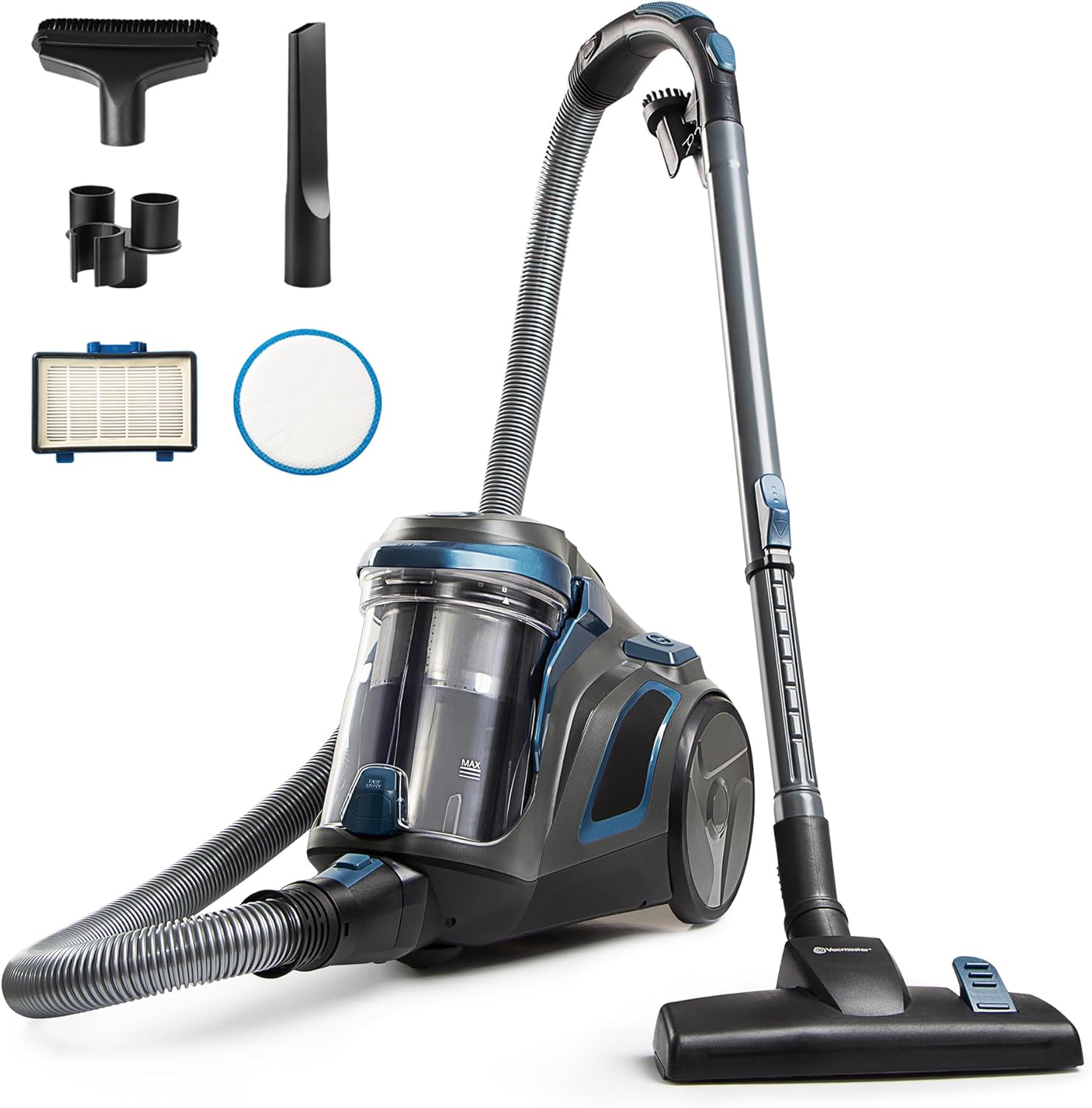
The Vacmaster CC0501 is a compact bagless canister vacuum designed for quiet, everyday cleaning. It delivers usable suction while running at a claimed 60 dB, so it is noticeably quieter than many upright models and works well for low-pile carpet, hard floors, and above-floor surfaces. The unit includes a telescopic wand, onboard crevice, dusting and built-in dust tools, and a 16-foot retractable cord that makes moving between rooms convenient. Emptying the one-liter dust cup is straightforward thanks to the one-touch release, and the HEPA media filter captures fine dust down to 0.3 microns for better indoor air quality. Practical trade-offs are its heavier feel compared with some cordless or ultra-light canisters and a two-power-level control that limits fine tuning of suction. For buyers who value quieter operation and HEPA filtration in a traditional corded canister, the CC0501 is a sensible choice; those who need a very lightweight or fully cordless machine may prefer alternatives.
Best for: Buyers who prioritize low-noise cleaning and verified filtration performance and who prefer a corded canister design for regular home use.
Less Ideal for: People who need a very lightweight vacuum for frequent stair or vehicle cleaning or who require the convenience of a cordless model.
- Relatively quiet operation at around 60 dB suitable for apartments or homes where noise matters
- HEPA filtration captures 99.97% of particles down to 0.3 microns to improve indoor air quality
- One-touch release dust cup and onboard tools make emptying and above-floor cleaning simple
- 16-foot retractable cord offers good reach and convenient storage
- Heavier than many modern cordless or lightweight canister models
- Only two power levels restrict precise suction control
Verdict: Choose the Vacmaster CC0501 if you want a corded canister vacuum that keeps noise low while providing HEPA-grade filtration for everyday home cleaning.
eufy 11S Max Robot Vacuum
| Surface Recommendation | Hard Floor & Tile & Medium carpet |
|---|---|
| Battery Life | 100 minutes |
| Suction Power | 2000 Pa |
| Capacity | 600 ml |
| Noise Level | 55 db |
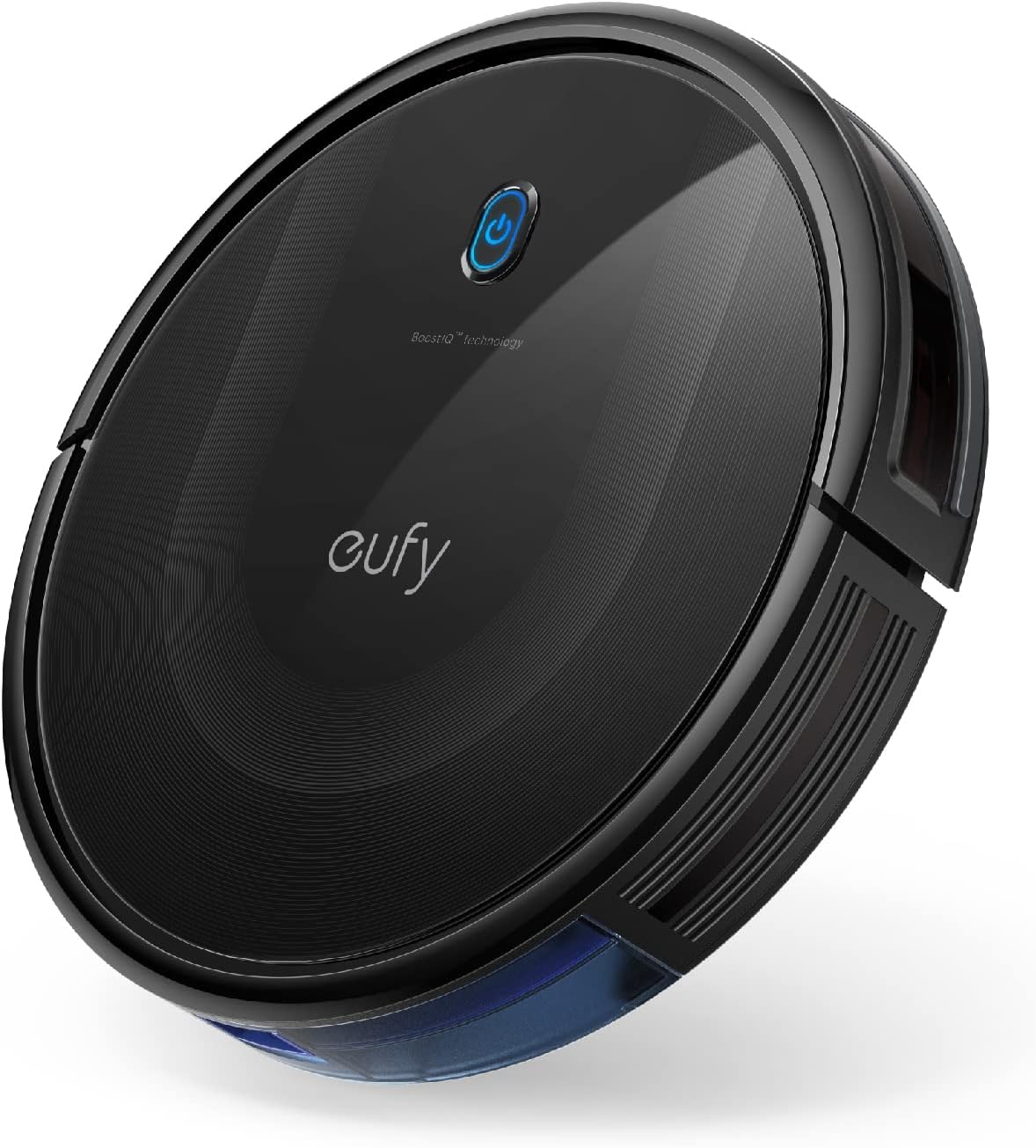
The eufy 11S Max is a low-profile robot vacuum built to clean hard floors and medium-pile carpets without drawing attention. Its 2.85-inch slim body lets it slide under low furniture while 2000Pa suction and a 12.8-inch cleaning path pick up dust, crumbs, and pet hair. It runs up to 100 minutes on hardwood at a reported low 55 dB, and automatic return-to-base means it tops off battery without user intervention. Controls are simple: the included remote and onboard buttons let you start, stop, and switch modes quickly, though there is no Wi-Fi or app control. Practical touches include washable filters, drop-sensing and anti-collision sensors, and a 600 ml dust capacity that reduces how often you empty the bin. The trade-offs are straightforward: navigation is basic rather than lidar or map-based, so room coverage is more random and may miss tight corners, and the single-side-brush design can be less thorough along edges compared with dual-brush models. For routine, quiet cleaning of hardwood, the 11S Max balances strong suction and a slim profile in a simple, reliable package.
Best for: Buyers who prioritize a quiet, no-frills robot that cleans hardwood reliably and fits under low furniture will appreciate this model for regular maintenance cleaning.
Less Ideal for: If you want mapped cleaning, smartphone scheduling, or the most thorough edge-cleaning for complex floorplans, choose a model with advanced navigation and app control instead.
- Slim 2.85" profile reaches under low furniture
- Up to 100 minutes runtime for extended cleaning sessions
- Powerful 2000Pa suction for effective pickup on hard floors
- Quiet operation at about 55 dB suitable for daytime or evening use
- Large 600 ml dust capacity and washable filter lower maintenance frequency
- Random navigation rather than mapping can lead to uneven coverage
- No Wi‑Fi or smartphone app means limited scheduling and remote control options
Verdict: A slim, quiet robot with strong suction made for routine hardwood maintenance when you want reliable, no-frills cleaning.
Choosing the Right Quiet Vacuum Cleaner: Key Factors to Consider
Measured Noise Level
Noise specification and real-world decibel testing are the most direct way to judge a quiet vacuum cleaner. Published decibel ratings give a baseline, but how the unit sounds in a living space matters too. A vacuum with a lower dB rating will generally be less intrusive for daily vacuuming, phone calls, and households with children or noise-sensitive occupants.
Also consider noise at different power settings. Some machines remain quiet on low and moderate settings but spike at maximum suction. If you plan routine quick cleans, a model that stays below typical conversational levels on mid settings will be most useful.
Suction Power and Pick-Up
A quieter motor is only valuable if the vacuum still picks up dirt effectively. Look for machines with clear suction metrics such as airflow (CFM) or sealed suction figures, and consider how those translate to performance on carpet, area rugs, and hard floors. Quiet models sometimes trade raw power for noise reduction, so check for intelligent brushroll designs and good seal management that improve pick-up without louder motors.
Evaluate how the unit performs on common household debris like pet hair, cereal, and fine dust. A quiet vacuum that misses debris because it sacrifices suction is a poor tradeoff for noise reduction alone.
Filtration and Dust Containment
Quieter vacuums often rely on additional airflow control and baffle chambers that can affect how dust is trapped. High-efficiency filtration matters if you or other household members have allergies or respiratory concerns. HEPA or equivalent filtration captures fine particulates that can become airborne during vacuuming, which is especially important in quieter machines where slower airflow might let dust linger.
Also consider dust bin and filter access. Good containment that minimizes dust escape during emptying preserves indoor air quality and reduces the need for repeat passes.
Maneuverability and Ergonomics
Weight, handle design, and articulation affect how often you will actually use the vacuum. Lighter, well-balanced units are easier to push and carry up stairs, and smoother head articulation reduces user fatigue during longer cleaning sessions. Noise reduction features can add heft, so find a model that balances solid construction with manageable weight.
Accessory storage, on-board tools, and telescoping wands also influence how useful a vacuum is for varied household tasks from upholstery to baseboards.
Ease of Maintenance
Maintenance affects long-term noise and performance. Clogged filters, full dust bins, and tangled brushrolls can make a vacuum work harder and louder over time. Check for washable filters, straightforward filter-replacement procedures, and simple brushroll access for hair removal.
Clear maintenance paths also reduce downtime and service costs. A quiet machine that is difficult to maintain will likely lose its low-noise advantage as performance declines.
How Quiet Ratings Relate to Real-World Use
Decibel numbers are helpful but not the whole story. A difference of 3 dB is roughly a noticeable change, while 10 dB is perceived as about twice as loud. Pay attention to the testing context behind any reported noise number since open-room measurements differ from closed-room tests.
Also listen for sound quality cues. A vacuum with a low steady hum will feel less disruptive than one that emits high-pitched whines or rattles even if the dB rating is similar. User reviews and independent tests that include audio samples can be particularly informative.
- Compare noise at typical cleaning settings, not just maximum power.
- Note whether the manufacturer reports noise using a standard testing distance and environment.
Quiet Design Approaches and What They Mean
Manufacturers use several approaches to reduce noise: insulated motor mounts, sound-damping housings, redesigned airflow to reduce turbulence, and variable-speed motors that operate efficiently at lower RPMs. Each method has tradeoffs for weight, cost, and serviceability.
For example, extra sound insulation can add bulk, while sophisticated airflow tuning may reduce peak noise but require more precise maintenance. Knowing which approach a model uses helps set expectations about handling and long-term upkeep.
- Insulation reduces noise but can make the unit heavier.
- Airflow tuning can preserve suction at lower noise levels if well executed.
Best Practices for Quieter Vacuuming at Home
Even a quiet machine benefits from behavior adjustments. Vacuum during daytime hours to avoid disturbing sleeping household members, and run quieter settings for routine light cleaning while reserving higher power for spot treatments.
Maintain filters and brushrolls to keep the motor from straining. Use soft-surface cleaning attachments for delicate furniture to minimize impact noise, and consider adding felt pads to furniture legs before vacuuming under pieces to reduce rattling.
- Schedule heavier cleaning when household activity is low.
- Use attachments rather than the main head for quick touch-ups to limit noise.
When Quietness Should Not Be the Priority
Some situations require prioritizing raw suction and durability over lower noise output. Heavy pet-owners, homes with thick high-pile carpet, and tasks involving deeply embedded debris often need sustained high-power cleaning that can be louder.
If your primary goal is deep cleaning on a regular basis, accept that you may need to run at higher power occasionally and plan vacuuming times accordingly. A quiet vacuum can be excellent for maintenance cleaning, but not every quiet model is intended as the primary heavy-duty cleaner.
- Assess the balance between daily maintenance and periodic deep cleans.
- Plan for occasional louder sessions if deep cleaning is needed.
How We Chose the Best Quiet Vacuum Cleaner
We prioritized measurable noise performance and real-world cleaning effectiveness when shortlisting quiet vacuum cleaners. Key product filters included published decibel ratings or independent noise tests, suction metrics or airflow figures, and evidence of effective filtration to capture fine dust that quieter motors might otherwise miss. Usability criteria such as weight, maneuverability, and maintenance access were also applied because lower noise is only useful if the unit is practical for regular cleaning. We excluded units that relied solely on advertising claims about being "quiet" without technical specs, and we did not consider single-function tools that lack broad floor capability. Long-term reliability indicators such as warranty length and common serviceability features were used as tie-breakers. The final choices reflect a balance across noise output, suction performance, filtration efficiency, and everyday convenience.
Our full evaluation process is outlined in our review methodology.
FAQ
How many decibels is considered 'quiet' for a vacuum cleaner?
Generally, vacuums that operate below about 65 dB are considered quiet compared with typical household background noise. Remember that perceived loudness also depends on sound frequency and room acoustics, so two machines with similar dB ratings can sound different.
Do quieter vacuums clean less effectively?
Not necessarily. Many quiet vacuums use airflow optimization, brushroll design, and efficient seals to maintain pickup at lower noise levels. However, some models trade peak suction for noise reduction, so check suction metrics and real-world pickup performance before deciding.
Will a quieter vacuum be more expensive to maintain?
Maintenance needs depend on design rather than noise alone. A well-designed quiet vacuum with easy filter access and washable components can be no more expensive to maintain than a louder model. Conversely, complex acoustic housings may complicate repairs, so consider serviceability when choosing.
Are bagged vacuums quieter than bagless models?
Bagged designs can reduce dust escape and sometimes alter airflow noise characteristics, but bag presence alone does not guarantee lower noise. Noise performance depends on the full design, including motor mounting, insulation, and airflow pathways.
Can I make my current vacuum quieter?
You can reduce noise by keeping filters and brushrolls clean, tightening loose panels, and using softer attachments for delicate surfaces. Adding aftermarket sound-dampening around the cleaning head is generally not recommended because it can interfere with airflow and void warranties.
Final Verdict
When choosing a quiet vacuum cleaner, prioritize measurable noise performance alongside suction and filtration. Look for models that document decibel ratings across power settings and pair that data with clear suction metrics or airflow figures so you do not sacrifice cleaning effectiveness for a lower sound level. Balance ergonomics and maintenance ease with noise performance. A truly useful quiet vacuum is one you will use regularly because it is comfortable, practical to maintain, and effective across the surfaces in your home. Base your final choice on the tradeoffs you are willing to accept between noise, power, and convenience.