
Note: This article contains affiliate links. If you click on these links and make a purchase, we may earn a small commission at no extra cost to you. This helps support our research and content. Read our full affiliate disclosure here.
A rear venting range hood directs smoke, steam, and cooking odors straight out the back wall for efficient kitchen ventilation. If you rely on high-heat cooking or have limited space above the cooktop, choosing the right rear venting range hood affects indoor air quality, comfort, and long-term maintenance. This guide presents six top shortlisted rear venting range hoods that perform well in real kitchens. We evaluated airflow, installation flexibility, and noise so you can pick the model that fits your layout and ventilation needs. Read on for the criteria we used and practical tips to match a hood to your cooking style and duct setup.
Top Picks at a Glance
| Best Quality Built to a higher standard if you want something more solid | Hauslane UC-PS38 Range Hood | 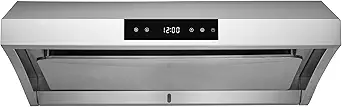 |
| Best Value The sweet spot between price and what you get | EVERKITCH EVK243 30-inch Range Hood |  |
| Best Budget The cheapest option that still gets the job done reliably | FIREGAS 30-inch Range Hood |  |
| Top Rated A top-rated pick with lots of positive feedback | Hauslane UC-PS18 Range Hood |  |
| Most Popular A crowd favorite that many people choose with confidence | COMFEE' 30" Range Hood CVU30W2AST |  |
| Best Seller A high-volume bestseller chosen again and again | Zomagas 30-inch Range Hood ZMS-3976 |  |
Hauslane UC-PS38 Range Hood
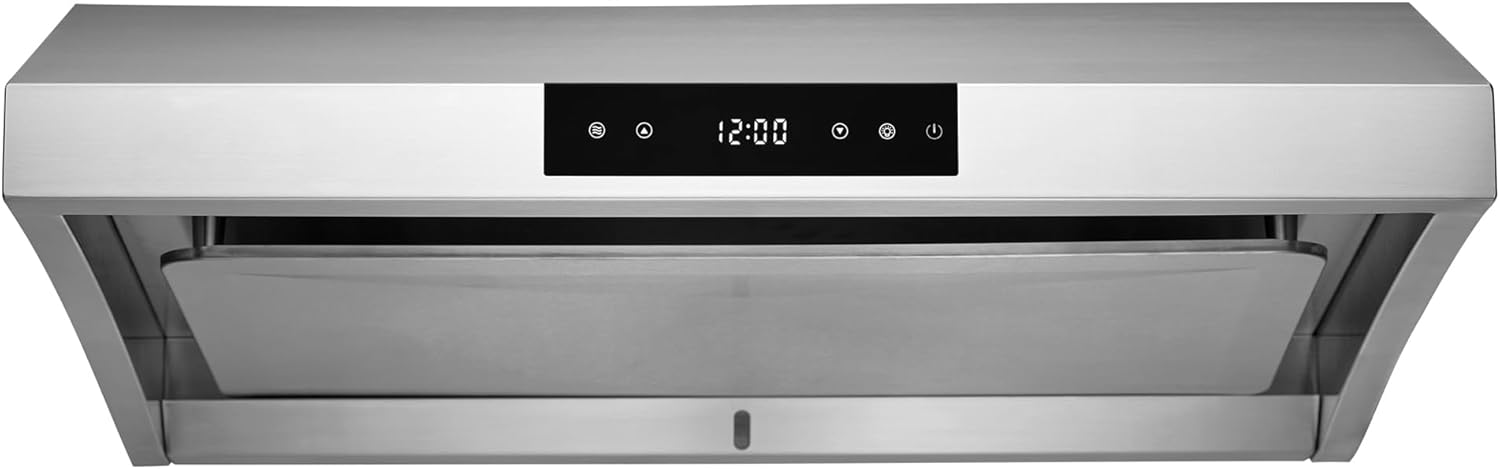
| Air Flow Capacity | 950 cfm |
|---|---|
| Number of Speeds | 6 |
| Noise | 67 db |
| Light Source | LED (GU10 bulbs) |
| Filter Type | Baffle |
The Hauslane UC-PS38 is a performance-focused 30-inch under-cabinet rear-venting range hood built to handle heavy-duty home cooking. It uses dual motors and a high airflow rating (up to 950 cfm) across six speeds so it can clear smoke and strong odors from front and rear burners, and the hood's angled panel is designed to capture fumes more effectively than a flat canopy. Controls are touch-based and lighting comes via replaceable GU10 LED bulbs for bright task illumination. Practical extras include a baffle filter, dishwasher-safe components, and a steam-clean cycle that loosens grease for easier maintenance. At its higher fan settings the unit produces noticeable noise, and the powerful 266 watt/1.8 A motor draws more energy than quieter residential hoods, so expect louder operation when running at maximum capacity. Installation requires a 6-inch round duct and under-cabinet mounting, which is standard for rear-vent setups but should be confirmed against your existing ductwork.
Best for: Home cooks who demand restaurant-level extraction and need a rear-venting under-cabinet hood that removes heavy smoke and strong odors during frequent, high-heat cooking.
Less Ideal for: People seeking an ultra-quiet or recirculating (ductless) solution or those without compatible 6-inch rear ducting and under-cabinet space should consider other options.
- High maximum airflow (950 cfm) suitable for heavy-duty cooking
- Six-speed touch controls let you balance suction and noise
- Dual-motor design improves capture and consistent extraction
- Steam-clean function and dishwasher-safe parts simplify maintenance
- Replaceable GU10 LED bulbs provide bright, easy-to-change lighting
- Loud operation at top speeds (specified around 67 dB)
- Requires 6-inch round ducting and under-cabinet mounting for correct installation
Verdict: If you need a powerful rear-venting under-cabinet hood that clears heavy smoke and odors for serious home cooking, this model delivers strong extraction and convenient cleaning features.
EVERKITCH EVK243 30-inch Range Hood
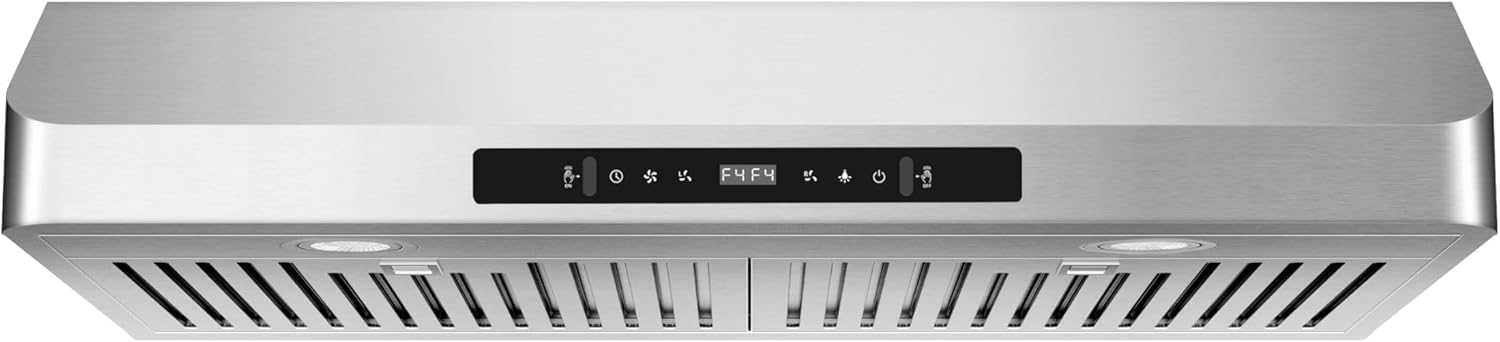
| Air Flow Capacity | 900 cfm |
|---|---|
| Noise | 64 db |
| Mounting Type | Under Cabinet Mount |
| Controls Type | Touch |
| Filter Type | Baffle |
The EVERKITCH EVK243 is a 30-inch under-cabinet, ducted range hood built to move a lot of air while staying reasonably quiet. It uses two 90W motors delivering four speed settings up to 900 CFM and claims a maximum noise around 64 dB at top speed, making it suited for heavy cooking and rear/top vent installations. Controls include a touch panel, gesture sensor and a digital display, plus a 1-minute delay shutoff and dimmable 3500K LEDs that help with cooking visibility. The unit ships with permanent stainless steel baffle filters that are dishwasher-safe for easier cleaning, and the stainless steel housing and dual-motor design aim for stable, low-vibration operation. It is ducted-only, so plan your vent run accordingly, and the noise at full blast is noticeable even if within the specified range. Installation requires access for top or rear venting and some DIY or pro effort for proper ducting. The long motor warranty is reassuring for frequent cooks who need durable extraction for rear-vent setups.
Best for: Buyers who need powerful rear/top-vent extraction for heavy cooking and prioritize durable, easy-to-clean components and convenient controls for everyday use.
Less Ideal for: People who cannot install ductwork or need a ductless recirculating hood should look elsewhere, and those who need an ultra-quiet low-Sone unit for very light cooking may prefer quieter models.
- High maximum airflow up to 900 CFM for strong smoke and odor removal
- Dual 90W motors for robust, stable extraction and selectable motor operation
- Touch and gesture controls with a digital display for convenient, hands-free use
- Dishwasher-safe stainless steel baffle filters for easier grease cleanup
- Dimmable LED lamps improve task lighting while cooking
- Ducted-only design requires compatible rear or top venting and proper ductwork
- Maximum noise around 64 dB can be loud at the highest speed
Verdict: A powerful, dual-motor under-cabinet hood built for effective rear/top ducted ventilation and easy maintenance, ideal for heavy cooks who need strong extraction.
FIREGAS 30-inch Range Hood

| Air Flow Capacity | 300 cfm |
|---|---|
| Number of Speeds | 2 |
| Light Source | LED |
| Power Source | Hardwired |
This FIREGAS 30-inch under-cabinet hood is a budget-friendly option for removing cooking fumes in compact kitchens. It provides up to 300 CFM through a two-speed internal blower, supports top or rear ducted venting and can be converted to recirculate with the included carbon pad option. Controls are simple rocker switches for fan speed and LED light, and the slim 4.7-inch profile fits under standard 30-inch cabinets without taking much headroom. Practical touches include a replaceable multi-layer aluminum mesh filter, an energy-saving 2W LED light, and a 7-inch top round adapter for straightforward duct runs. Expect decent suction for everyday cooking and quieter operation compared with louder utility models, though the two-speed control limits fine airflow adjustment and the hood ships hardwired which may require an electrician or a separate power cord accessory. For the price this unit delivers solid airflow, easy installation options, and low-profile styling suited to apartments and smaller kitchens.
Best for: Buyers who need an affordable, space-saving rear/top-venting hood for everyday cooking in apartments, condos, or small kitchens and value straightforward installation and reliable basic performance.
Less Ideal for: Users who need very precise fan speed control, professional-grade high-CFM ventilation, or an integrated plug-and-play power connection should look at higher-end models.
- 300 CFM airflow with convertible ducted or ductless operation
- Slim under-cabinet profile fits standard 30-inch cabinets
- Replaceable multi-layer aluminum mesh filter and charcoal pad option for recirculation
- Simple rocker controls and integrated replaceable LED light
- Only two fan speeds offer limited control over airflow intensity
- Ships hardwired so adding a plug may require an extra accessory or electrician
Verdict: A cost-conscious, slim 30-inch range hood that delivers solid 300 CFM extraction with flexible rear or top venting for small kitchens.
Hauslane UC-PS18 Range Hood

| Air Flow Capacity | 860 cfm |
|---|---|
| Noise | 7 sones |
| Number of Speeds | 6 |
| Ventilation Type | Top and Back |
| Filter Type | Baffle |
The Hauslane UC-PS18 is a heavy-duty under-cabinet range hood built for serious cooking and rear/top venting installations. It draws up to 860 CFM and offers six fan speeds plus a delay shutoff so you can dial suction and noise to match frying, searing, or boiling tasks. The dual-motor design and baffle filters are designed for robust grease capture and the filters are dishwasher-safe, which simplifies maintenance after greasy cooking sessions. Controls use a touch panel and the unit includes swappable GU10 LED bulbs for adjustable lighting. Installation is flexible thanks to three-way venting (6" round or 3-1/4"x10" rectangular top or rear) so it fits kitchens with existing ductwork without major modifications. Expect higher airflow noise at max power (listed at 7 sones) and the unit is fairly large, so proper clearance and professional installation for rear vent runs are advisable. For cooks who need strong, dependable extraction for heavy cooking, the UC-PS18 delivers practical power and easy upkeep, but it is a substantial appliance that benefits from correct ducting to perform at its best.
Best for: Home cooks who prioritize reliable, high-capacity extraction for heavy-duty cooking and need a hood that integrates with existing rear or top ductwork.
Less Ideal for: Those seeking an ultra-quiet, lightweight hood for very small kitchens or non-ducted installations should consider quieter or ductless-specific models instead.
- High maximum airflow at 860 CFM for effective smoke and odor removal
- Three-way venting (top and rear adapters included) for straightforward rear or top duct installations
- Dishwasher-safe stainless steel baffle filters make grease cleanup simple
- Six fan speeds plus delay shutoff let you balance extraction and noise
- Touch controls and replaceable GU10 LED bulbs provide easy operation and adjustable lighting
- Noise level can be noticeable on the highest setting (listed at 7 sones)
- Large footprint and weight mean installation may require professional help
Verdict: Choose the UC-PS18 when you need strong, reliable rear/top-venting extraction and easy-to-maintain baffle filtration for heavy cooking.
COMFEE' 30" Range Hood CVU30W2AST

| Air Flow Capacity | 200 cfm |
|---|---|
| Noise | 71 db |
| Number of Speeds | 2 |
| Controls Type | Touch |
| Light Source | LED |
This COMFEE' 30-inch slim range hood is a simple, space-saving under-cabinet vent that pulls air through a 200 CFM motor and offers ducted or ductless installation depending on your kitchen layout. Typical use is everyday cooking in small to medium kitchens where you need quicker removal of smoke, steam and odors; touch controls, an LED light and two fan speeds make it easy to run while you cook. The hood ships with both an aluminum mesh filter and an activated-carbon composite filter for ductless odor control, and the stainless steel body and removable filters clean easily. At its top speed the unit is effective for rear venting when connected to ductwork, though the 200 CFM rating and 71 dB noise spec mean it is not meant for heavy commercial use or very large kitchens. Installation is straightforward for a standard 30-inch cabinet but buyers should plan for basic electrical hookup and follow the ducting orientation for best performance.
Best for: Buyers who prioritize a compact, installable rear-venting hood with clear user reviews and predictable performance for everyday home cooking. Ideal for condo or apartment kitchens where space and flexible ducting matter more than high-end commercial extraction.
Less Ideal for: Avoid this model if you need very quiet operation, precise multi-speed control, or high-capacity extraction for large or professional kitchens.
- Convertible ducted or ductless installation for flexible venting layout
- 200 CFM airflow suitable for most home cooking needs
- Includes both aluminum mesh and activated carbon composite filters for grease and odor control
- Slim stainless steel design fits standard 30-inch under-cabinet openings and is easy to clean
- Top noise level of 71 dB can be noticeably loud on high speed
- Only two fan speeds limit finer control of ventilation power
Verdict: A compact 30-inch hood that delivers dependable rear-venting performance and easy ducted or ductless installation for small to medium kitchens.
Zomagas 30-inch Range Hood ZMS-3976

| Air Flow Capacity | 280 cfm |
|---|---|
| Noise | 55 db |
| Mounting Type | Under Cabinet Mount |
| Number of Speeds | 2 |
| Ventilation Type | Convertible |
This Zomagas 30-inch under-cabinet range hood is a slim, hardwire-mounted hood designed to remove smoke and odors from the cooktop area. It delivers up to 280 CFM through a top 7-inch duct or rectangular rear vent, and the convertible ventilation makes it usable in homes with a rear-vent configuration. Controls are simple rocker buttons with two fan speeds and an integrated 2W LED light for task illumination. The hood uses a three-layer aluminum mesh and activated carbon composite filter when run ductless, which helps trap grease and reduce odors but requires periodic replacement. At a listed noise level near 55 dB on higher speed, it is reasonably quiet for everyday cooking but will still be noticeable during heavy use. Installation is under-cabinet hardwire and the stainless steel body is easy to wipe clean, though a junction box and professional wiring are recommended for safety. This model suits straightforward rear-vent installs where a compact, no-frills hood and easy controls are priorities.
Best for: Buyers who want a compact, reliable rear-vent capable under-cabinet hood with simple controls and effective everyday smoke removal for standard cooking routines.
Less Ideal for: Not a good fit for those wanting high-end variable-speed ventilation, very bright adjustable lighting, or a plug-and-play unit that avoids hardwiring and professional installation.
- Convertible ducted or ductless venting supports rear-vent installations.
- Up to 280 CFM airflow handles typical stovetop smoke and odors.
- Slim brushed 430 stainless steel body is easy to clean and fits under cabinets.
- Simple rocker button controls and a 2W LED provide straightforward operation and lighting.
- Includes three-layer aluminum mesh and activated carbon composite filter for grease and odor reduction.
- Only two fan speeds offer limited fine control between low and high.
- Requires hardwiring and a separate junction box for safe installation.
- LED lighting is a single 2W lamp which provides basic illumination but not bright, adjustable task lighting.
Verdict: A compact, rear-vent friendly under-cabinet hood that delivers reliable 280 CFM extraction and straightforward operation for risk-averse buyers seeking a practical, easy-to-maintain solution.
Choosing the Right Rear Venting Range Hood: Key Factors to Consider
Airflow Capacity
Airflow measured in cubic feet per minute determines how effectively a rear venting range hood clears smoke, steam, and odors. Higher CFM is necessary for gas ranges, high-BTU cooktops, or frequent high-temperature cooking. However, raw CFM is only part of the story because duct length, bends, and restriction reduce delivered airflow. Match the hood's rated CFM with your cooktop type and the likely duct run to the exterior.
Also consider variable speed control so you can run higher airflow for heavy cooking and a low, quiet speed for simmering. Oversized airflow can increase noise and energy use, so balance peak capacity with typical usage patterns.
Noise and Fan Control
Noise level matters because a powerful hood that is too loud makes the kitchen less pleasant and discourages consistent use. Look for models with published decibel levels at multiple fan speeds and a well-designed blower that maintains extraction efficiency while controlling sound. Multi-speed fans, soft-start controls, and remote or timer functions improve usability.
Consider the relationship between fan placement and noise. Inline or remotely mounted blowers can reduce sound at the cooktop but may complicate installation. If the blower is integrated, assess whether performance at mid and low speeds is acceptable for routine cooking.
Duct Size and Installation Requirements
Rear venting hoods need a compatible back-wall duct opening and adequate clearance behind the unit. Standard duct sizes and clear installation instructions simplify retrofit projects. Verify whether the model supports common duct diameters and whether adapters are required. The hood's ventilator orientation, flange design, and mounting hardware affect how easily it fits into existing chases.
Also examine required clearances above the cooking surface for safety and performance. Some installations may need minor carpentry to create a plenum or chase, so factor labor and space constraints into the decision.
Filter Type and Maintenance
Grease capture and ease of cleaning are critical for odor control and fire safety. Rear venting range hoods typically use metal baffle filters or mesh filters; baffle filters perform better with heavy frying and are easier to keep clean over time when regularly degreased. Dishwasher-safe filters reduce maintenance time. Consider whether the model provides easy filter access and clear replacement intervals.
Maintenance also includes light replacement and access to the blower for cleaning. A design that minimizes trapped grease and allows straightforward filter removal will lower upkeep effort and extend service life.
Construction Quality and Finish
Durable materials and corrosion-resistant finishes matter because hoods operate in a hot, greasy environment. Stainless steel or coated steel with robust seams resists staining and warping. Check for welded or reinforced mounting points and a solid internal framework to minimize vibration.
A quality finish also simplifies cleaning. Smooth, fingerprint-resistant surfaces reduce visible wear. Consider whether the aesthetic and finish match the kitchen while delivering long-term resilience to heat, grease, and cleaning chemicals.
Choosing the Right CFM for Your Kitchen
To select the correct airflow, start by identifying your cooktop heat output and typical cooking style. Light cooking and simmering call for lower CFM, while frequent high-heat frying or wok use requires higher extraction. Also factor in the duct run length and number of elbows because every bend reduces effective airflow.
A practical approach is to choose a hood whose rated CFM exceeds your minimum need by a modest margin to offset duct losses. If you have a short, straight rear duct, a moderately rated hood may perform close to its spec. For longer or obstructed runs, plan for higher capacity or consider a booster or inline blower.
- Short straight duct: rated CFM is closer to delivered performance
- Long bends or narrow duct: increase required CFM
- Variable speed helps match extraction to cooking intensity
Installation Tips for Rear Wall Venting
Confirm the location and size of the rear duct before buying. Measure the centerline and ensure the hood's back flange and mounting brackets align with your wall opening. If your wall cavity is shallow, you may need a slim-profile hood or a recessed mounting solution.
Seal duct joints and use rigid ductwork where possible to reduce noise and maximize airflow. Flexible foil ducts are convenient but increase resistance and collect grease more readily.
- Verify electrical access and switch location before installing
- Use backdraft dampers where needed to prevent outside air entry
- Follow local codes for exhaust termination clearances
Filter Types and Cleaning Best Practices
Baffle filters are preferred for heavy frying and high grease loads because they channel grease into collection trays and resist clogging. Mesh filters are lighter and sometimes less expensive but require more frequent cleaning and may not trap heavy grease as effectively.
Make a cleaning schedule based on usage: lightly used kitchens can clean monthly, while frequent frying may need weekly degreasing. Always shut power to the hood before servicing internal parts or lights.
- Dishwasher-safe filters reduce time spent on maintenance
- Regular filter cleaning preserves airflow and reduces fire risk
- Inspect for oil buildup inside the hood and blower housing
Noise Reduction Strategies
If noise is a primary concern, consider models with sound-rated fans, insulated housings, or the option for remote blowers. Even modest investments in duct insulation and properly sized ducting reduce noise transmission into the room.
Running the hood at mid-speed during most cooking activities keeps sound manageable while still removing contaminants effectively. Reserve top speed for heavy smoke events.
- In-line or remote blowers lower sound at the cooktop
- Insulating and straightening duct runs reduces resonance
- Soft-start fans minimize sudden loud bursts
Safety and Compliance Considerations
Ensure the hood installation meets local building and mechanical codes, including required clearances above the cooktop and duct termination distances. Properly installed exhaust prevents backdraft and reduces fire risk by removing flammable grease-laden vapors from the cooking area.
Look for features such as thermal cutoff, reliable control switches, and secure filter retention that help manage safety and reduce the chance of accidental contact with hot components during maintenance.
- Verify minimum clearance from cooktop to hood per code
- Use certified electrical connections and strain reliefs
- Confirm outdoor termination complies with local regulations
How We Chose the Best Rear Venting Range Hood
We focused on features that matter for rear venting range hoods in typical home kitchens. Primary evaluation criteria included measured airflow capacity at realistic fan speeds, because sufficient CFM determines how quickly smoke and steam clear the cooktop area. Noise output was considered next, reporting kitchen-level decibel performance so quieter operation is rewarded. Installation flexibility was evaluated, including compatibility with common rear duct sizes, clearances, and mounting options, since ease of fitting into an existing back-wall chase reduces retrofit cost. Grease and filter handling received attention for long-term upkeep: hoods with accessible, durable grease traps and easy-to-clean filters scored higher. Construction and finish quality were assessed for corrosion resistance around heat and grease exposure. Safety features such as thermal protection and reliable fan controls were also part of the review. We excluded any models that required nonstandard ductwork or bespoke installation beyond normal residential rear-wall venting or that lacked published performance specs. We prioritized documented airflow, verified noise ratings or manufacturer acoustic data, clear installation instructions, and accessible maintenance design. The list favors units that balance extract power with realistic noise and installation demands for most homes.
Our full evaluation process is outlined in our review methodology.
FAQ
How much CFM do I need for a rear venting range hood?
Required CFM depends on your cooktop type and duct run. Light cooking often needs 300 to 500 CFM, while high-BTU ranges or heavy frying may need 600 CFM or more. Increase capacity to compensate for long or convoluted duct runs.
Can I use my existing rear wall duct with a new hood?
Often you can reuse an existing rear duct if it matches standard diameters and is in good condition. Inspect for accumulated grease, proper sealing, and minimal damage. If the duct is flexible or excessively long, upgrading to rigid ducting improves performance.
Are baffle filters better than mesh filters for rear venting hoods?
Baffle filters generally handle heavy grease loads better and channel oil into collection areas, making them preferable for frequent frying. Mesh filters trap particles well but require more frequent cleaning and can clog faster under heavy use.
How noisy will a rear venting range hood be?
Noise varies by blower design, speed, and installation. Many hoods provide published decibel ranges for different speeds. Proper duct selection, shorter runs, and insulated or remote blowers reduce perceived noise at the cooktop.
Do rear venting hoods require professional installation?
Some installations are straightforward if you have matching ductwork and electrical access, but complex duct runs, in-wall chases, or structural modifications usually require a professional. Professional installation ensures code compliance and optimal performance.
Final Verdict
Pick a rear venting range hood by balancing extract capacity, noise, and installation practicality for your kitchen layout. Prioritize sufficient CFM for your cooktop and compensate for any long or obstructed duct runs. Choose durable filter systems and a construction that eases cleaning to keep performance steady over time. With attention to those tradeoffs, you can select a hood that removes smoke and grease effectively while remaining quiet and easy to maintain.