
Note: This article contains affiliate links. If you click on these links and make a purchase, we may earn a small commission at no extra cost to you. This helps support our research and content. Read our full affiliate disclosure here.
A basement refrigerator solves a common home problem: extra cold storage without crowding the kitchen. Whether you need long-term overflow for bulk groceries, a dedicated drinks fridge, or a backup for seasonal canning, picking the right refrigerator for basements matters because lower-level spaces present unique constraints. Basements often have limited clearance, variable ambient temperature, and tighter power access, so you want a unit that maintains steady cold, fits the available footprint, and runs efficiently. This guide shortlists the top 7 refrigerators suited to basement use and explains the evaluation criteria we used, from temperature control and footprint to noise and energy. Read on to find the features that matter for reliable basement storage, then scan the product list for the options that best match your space and needs.
Top Picks at a Glance
| Best Overall The best all-around choice for most situations | BLACK+DECKER 11 Cu. Ft. Convertible Freezer Refrigerator |  |
| Best Quality Built to a higher standard if you want something more solid | Sharp SJB1255GS 11.5 cu ft Refrigerator |  |
| Best Value The sweet spot between price and what you get | Frigidaire 4.5 cu ft Compact Refrigerator |  |
| Best Budget The cheapest option that still gets the job done reliably | Midea 3.3 Cu Ft Compact Refrigerator |  |
| Top Rated A top-rated pick with lots of positive feedback | hOmeLabs Beverage Refrigerator HME030065N | 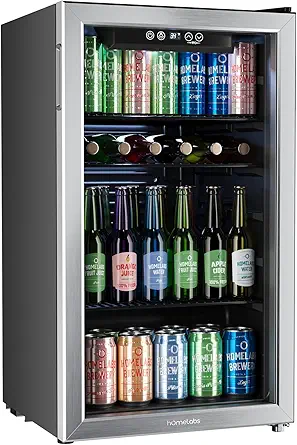 |
| Most Popular A crowd favorite that many people choose with confidence | Frigidaire Retro EFR751 |  |
| Best Seller A high-volume bestseller chosen again and again | Upstreman BD75 7.7 Cu.Ft. Refrigerator |  |
BLACK+DECKER 11 Cu. Ft. Convertible Freezer Refrigerator

| Capacity | 11 cubic feet |
|---|---|
| Door Orientation | Reversible |
| Number Of Shelves | 4 |
| Voltage | 120 volts |
| Specification Met | CSA, Energy Star |
This BLACK+DECKER upright unit serves as a flexible cold-storage solution for basements and garages by converting between a full-size freezer and a refrigerator. It offers 11 cubic feet of usable space with four removable glass shelves, a bottom storage compartment with basket and two door bins to organize bulk items, frozen foods and larger containers. Frost-free operation removes the need for manual defrosting and the LED digital temperature display makes switching modes and fine-tuning temperatures straightforward, from fast-freeze to fridge settings. Additional practical touches include an interior LED light, reversible door and a pair of leveling legs plus roller wheels to ease placement on uneven basement floors. It uses R600a refrigerant and meets ENERGY STAR efficiency standards, so running costs are reasonable for continuous basement use. Limitations to consider are the unit weight and footprint that require enough clearance during installation, and while versatile it is a single-compartment convertible unit so you cannot run separate freezer and fridge zones simultaneously.
Best for: Buyers who want a single flexible cold-storage appliance for a basement that can switch between long-term freezing and everyday refrigeration depending on seasonal needs.
Less Ideal for: Families who need simultaneous freezer and refrigerator zones or very tight installation spaces where a smaller unit is required.
- Convertible freezer-to-refrigerator mode for flexible basement storage needs
- Frost-free design eliminates manual defrosting
- Digital LED temperature control with a wide temperature range
- ENERGY STAR rated for efficient continuous operation
- Removable glass shelves and door bins for organized storage
- Single compartment cannot function as a freezer and refrigerator at the same time
- Large footprint and heavy weight make placement and moving more difficult
Verdict: Choose this convertible BLACK+DECKER if you need an energy-efficient basement unit that can switch between full freezer and refrigerator modes for seasonal or overflow storage.
Sharp SJB1255GS 11.5 cu ft Refrigerator

| Capacity | 11.5 cubic feet |
|---|---|
| Freezer Capacity | 4.2 cubic feet |
| Configuration | Freezer-on-Bottom |
| Defrost System Type | Frost Free |
| Specification Met | Energy Star |
The Sharp SJB1255GS is a slim counter-depth refrigerator with a bottom freezer that prioritizes space-efficient storage and temperature control. It provides 11.5 cubic feet of total capacity with a 4.2 cu ft freezer that uses three drawers for organized frozen storage, plus two refrigerator shelves and a removable wine rack. Controls are handled through an LED display with electronic temperature settings and a Multi Air Flow system to even out temperatures, while Freeze Boost helps rapidly chill the freezer when needed. The Fresh Converter Drawer can be toggled between chiller and crisper modes to either store deli items or keep produce crisp. Useful modes like Eco and Vacation reduce energy use when the unit is lightly used, which suits seasonal or secondary spaces. Practical limits include a modest interior layout compared with full-size units and only basic shelving materials, so bulky items may require rearranging. The unit is freestanding and counter-depth, making it a straightforward fit for tighter footprints such as a finished basement where reliable, energy-conscious cooling is needed.
Best for: Buyers who need a performance-minded, space-saving secondary refrigerator for a finished basement or similar compact area and value consistent temperature control and energy efficiency.
Less Ideal for: Those who need large-capacity primary refrigeration or heavy-duty storage for oversized platters and bulk grocery hauls should choose a full-size model instead.
- Counter-depth, slim 24-inch footprint fits tight spaces and finished basements
- Multi Air Flow and Freeze Boost help maintain even temperatures and faster freezing
- Fresh Converter Drawer that switches between chiller and crisper for flexible storage
- Energy Star certified with Eco and Vacation modes to reduce energy use when idle
- Limited shelving and interior volume compared with full-size refrigerators may restrict large-item storage
- Shelves are plastic rather than glass, which may feel less premium
Verdict: A compact, energy-conscious bottom-freezer refrigerator that delivers reliable temperature control and space-smart storage for finished basements and other tight spaces.
Frigidaire 4.5 cu ft Compact Refrigerator
| Capacity | 4.5 cubic feet |
|---|---|
| Freezer Capacity | 0.3 cubic feet |
| Defrost System Type | Manual Defrost |
| Installation Type | Freestanding |
| Refrigerant | R-600A |
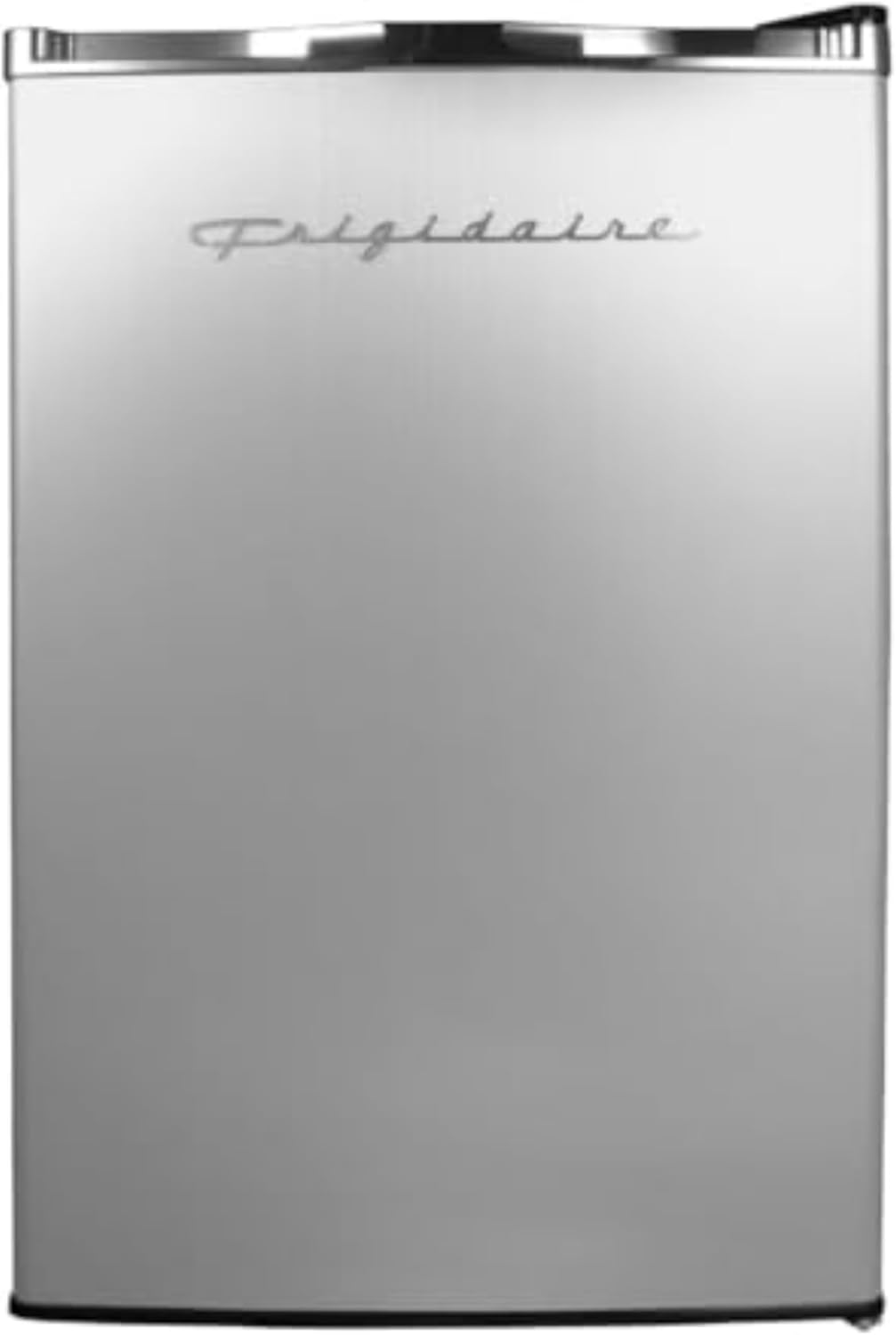
This Frigidaire 4.5 cu ft compact refrigerator is a straightforward small fridge intended for tight spaces like basements, dorms, or offices. It combines a 0.3 cu ft internal freezer with three wire shelves, three door bins and a built-in can dispenser to keep beverages and basics organized. The unit uses a rotary scroll compressor and manual defrost, which delivers reliable cooling while keeping energy use low enough to meet Energy Star guidelines. Practical touches include a reversible stainless steel door, adjustable leveling legs for uneven floors, an electronic lock, and a simple temperature-control knob for easy adjustments. Trade-offs are its compact capacity and manual defrosting, so it is best for drinks, snacks and short-term food storage rather than full grocery loads or heavy frozen storage. Installation is freestanding and the flush-back design helps place it close to walls in tight basement setups.
Best for: Buyers who need a dependable, energy-efficient secondary fridge for a basement or small space and prioritize compact footprint and simple, no-frills operation.
Less Ideal for: People who need large freezer space, full-size refrigerator capacity, or hands-off automatic defrosting should look at larger upright or frost-free models instead.
- Energy Star certified for lower operating costs
- Reversible stainless steel door and adjustable legs for flexible placement
- Internal freezer compartment plus organized door storage and can dispenser
- Compact flush-back design fits tight basement spots
- Manual defrost requires occasional maintenance to remove ice buildup
- Limited freezer capacity and overall storage for larger households
Verdict: A compact, energy-efficient secondary fridge that fits tight basement spaces and handles drinks and short-term food storage reliably.
Midea 3.3 Cu Ft Compact Refrigerator

| Capacity | 3.3 cubic feet |
|---|---|
| Annual Energy Consumption | 260 kilowatt hours per year |
| Temperature Range | 33.8°F–50.0°F |
| Defrost System Type | Manual |
| Compressor Type | rotary |
The Midea 3.3 cu ft compact refrigerator is a straightforward freestanding fridge aimed at small rooms and secondary spaces like basements. It uses a rotary compressor with R-600A refrigerant and an adjustable thermostat that ranges from about 33.8°F to 50°F, so you can keep drinks, produce, and leftovers at usable temperatures. Inside are three shelves including two removable glass shelves and a 2L bottle rack that make organizing bottles and cartons simple, and the interior LED light helps when the basement is dim. The unit is ENERGY STAR certified and lists annual energy use around 260 kWh, which helps keep running costs down compared with non-certified minis, and the listed noise level under 42 dB keeps it unobtrusive in living or work areas. It is freezerless and manually defrosted, so it is not suited for long-term frozen storage. The cabinet is compact and the door is reversible for flexible placement, but buyers who need a freezer compartment or very low temperatures should look elsewhere.
Best for: Someone fitting a limited budget who needs an energy-efficient, quiet secondary fridge for a basement, workshop, or entertainment area and values low running costs over freezer space.
Less Ideal for: Buyers who need a freezer, large-volume cold storage, or near-zero refrigerator noise for bedroom-style placement should consider other models.
- ENERGY STAR certified for lower annual energy use (about 260 kWh/year).
- Reversible door and compact freestanding design for flexible basement placement.
- Adjustable thermostat with a useful temperature range for beverages and fresh food.
- Removable glass shelves and a 2L bottle rack provide easy organization and customization.
- No freezer compartment, so it cannot store frozen foods long term.
- Manual defrosting requires occasional maintenance to prevent frost buildup.
- Capacity is limited to everyday chilled items and may be small for shared household storage.
Verdict: A budget-friendly, ENERGY STAR certified compact fridge that delivers quiet, efficient chilled storage ideal for basements where low running cost and flexible placement matter.
hOmeLabs Beverage Refrigerator HME030065N

| Capacity | 3.2 cubic feet |
|---|---|
| Temperature Range | 34°F-50°F |
| Cooling Method | Compressor |
| Number Of Shelves | 3 |
| Voltage | 120 volts |
This hOmeLabs beverage refrigerator is a compact, compressor-cooled unit designed to hold up to 120 slim cans in a 3.2 cubic foot interior. It uses a whisper-quiet compressor and a convection fan to circulate cold air, and the touch-button digital control can dial temperatures down to 34°F for reliably chilled drinks. The reinforced double-glazed glass door and bright interior LED make it easy to see contents without opening the door, while three removable chrome shelves let you organize cans, bottles, or a few wine bottles. Practical for basements, game rooms, or home bars, the fridge is freestanding and can also fit under certain counters, and the reversible door helps with placement in tight spaces. Expect steady cooling and low noise, but note the unit is a refrigerator only and not suitable for frozen storage, and the annual energy consumption is relatively high compared with some high-efficiency compact models. Installation is straightforward and the adjustable feet help level it on uneven basement floors.
Best for: Buyers who need a reliable, purpose-built beverage refrigerator for a basement, game room, or home bar and prioritize steady cooling and quiet operation over frozen storage.
Less Ideal for: People who need freezer capability, very low energy use, or whose primary goal is long-term food freezing should choose a different appliance.
- Holds up to 120 slim cans in a 3.2 cu ft interior for generous beverage capacity
- Touch-button digital temperature control that cools down to 34°F for consistent chilling
- Whisper-quiet compressor and interior LED make it suitable for shared living spaces
- Reinforced glass door with reversible hinge and adjustable shelves for flexible placement and organization
- Not a freezer so it cannot make or store ice or frozen items
- Annual energy consumption (288 kWh/year) is higher than some compact, energy-efficient models
Verdict: A quiet, dependable beverage fridge that delivers roomy, adjustable chilled storage ideal for basement bars and entertainment spaces.
Frigidaire Retro EFR751
| Capacity | 7.5 cubic feet |
|---|---|
| Freezer Capacity | 2 cubic feet |
| Defrost System Type | Manual |
| Cooling Method | Compressor |
| Power Source | Corded Electric |
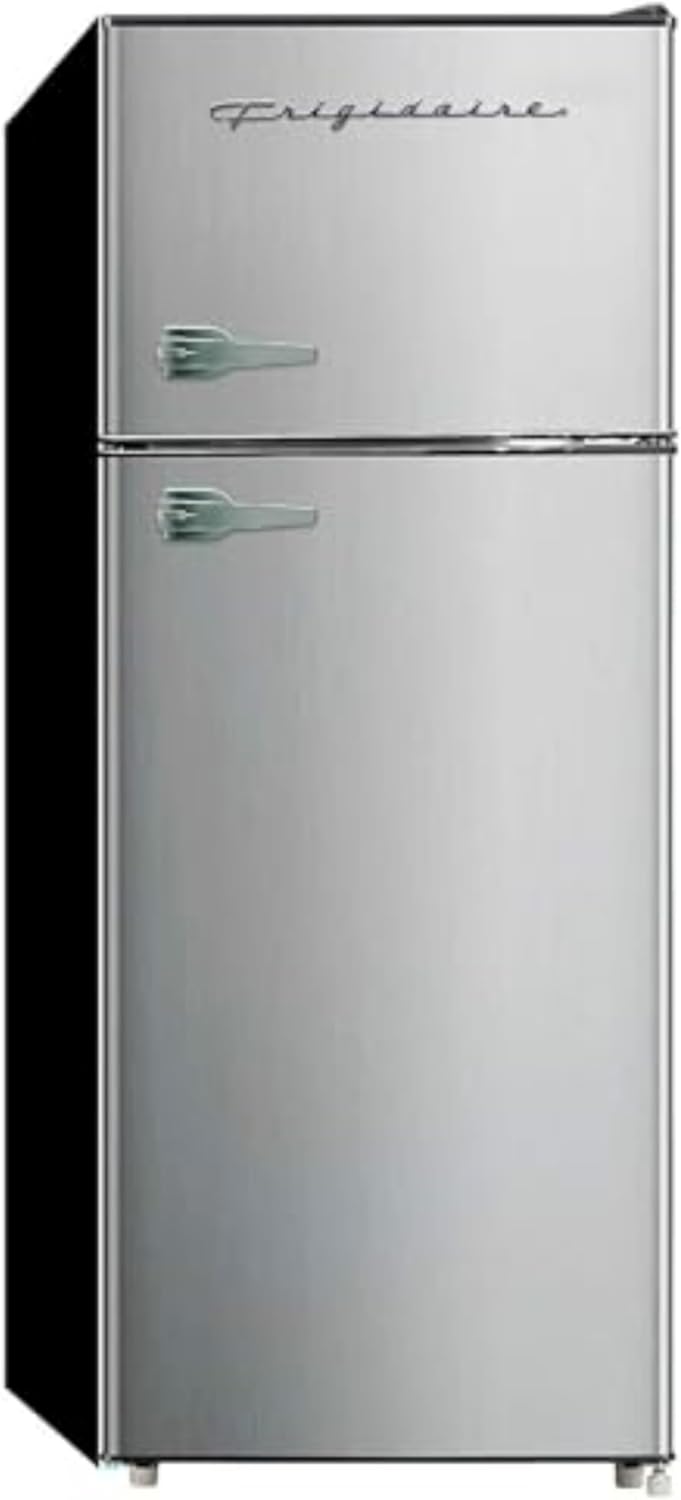
This Frigidaire Retro EFR751 is a straightforward apartment-size fridge with a separate top freezer and about 7.5 cubic feet of total capacity, making it easy to fit into basements, garages, or small kitchens. It uses a compressor cooling system and manual defrost for the freezer, with three adjustable glass shelves, a transparent crisper, and clear door shelves that help keep items organized. The unit has mechanical controls and a reversible door hinge for flexible placement, plus two front leveling legs and rear castors to move and position the fridge on uneven basement floors. Practical benefits include simple, familiar operation, removable shelving for taller items, and a dedicated 2 cu ft freezer for frozen storage. Limitations include manual defrosting, which requires occasional maintenance, and an annual energy consumption figure that is moderate rather than highly efficient, so it may be less ideal if you need the lowest possible running costs in a continuously used basement space.
Best for: Buyers who want a reliable, easy-to-use compact fridge with a separate freezer and flexible placement options for a basement or other small space and who prefer proven features over cutting-edge technology.
Less Ideal for: People seeking the quietest, most energy-efficient long-term option for continuous 24/7 use in an occupied living area or those who want frost-free freezer convenience.
- Compact 7.5 cu ft capacity with separate top freezer for organized storage
- Adjustable/removable glass shelves and clear door bins for flexible interior layout
- Reversible door hinge and front leveling legs plus rear castors for easy placement
- Mechanical controls and simple compressor cooling for reliable, low-tech operation
- Freezer uses manual defrost, requiring periodic maintenance
- Annual energy consumption is moderate and not optimized for maximum efficiency
Verdict: A practical, movable 7.5 cu ft compact fridge with a separate freezer that fits basement and small-space needs for buyers who prioritize reliable, no-frills performance.
Upstreman BD75 7.7 Cu.Ft. Refrigerator

| Capacity | 7.7 cubic feet |
|---|---|
| Freezer Capacity | 1.5 cubic feet |
| Cooling Method | Compressor |
| Defrost System Type | Manual Defrost |
| Door Orientation | Reversible |
The Upstreman BD75 is a compact top-freezer refrigerator aimed at small spaces such as basements, apartments, or dorms. It provides 7.7 cubic feet of total capacity with a 1.5 cu.ft. freezer and 6.2 cu.ft. fresh compartment, and uses a rotary scroll compressor for standard compressor cooling. The appliance includes two tempered glass removable shelves, a crisper drawer for produce, automatic interior lighting, and a reversible door for flexible placement. Temperature is set manually across five adjustable settings for both fridge and freezer zones, letting you tune performance for beverages, leftovers, or bulk items. It is described as quiet in operation and lists an estimated annual energy consumption, which is helpful for running in a basement that may be used frequently. Trade-offs are its manual defrost system and lack of advanced controls or smart features, so expect occasional defrosting and more basic temperature management compared with higher-end models. For buyers who want a straightforward, space-efficient refrigerator, the BD75 covers core needs without complexity.
Best for: Buyers who prioritize a reliable, no-frills refrigerator for a secondary space and prefer simple controls, quiet operation, and flexible placement over advanced features.
Less Ideal for: People who need a frost-free refrigerator with precise digital temperature control or integrated smart features should look at higher-end models instead.
- Compact footprint with relatively large 7.7 cu.ft. capacity suitable for tight basement spaces
- Removable tempered glass shelves and crisper drawer allow flexible organization
- Reversible door and freestanding installation make placement adaptable
- Quiet operation (listed at around 39 dB) suitable for living or finished basement areas
- Manual defrost requires periodic maintenance to prevent frost build-up
- Basic mechanical thermostat lacks digital precision or smart controls
Verdict: A straightforward, quiet compact refrigerator that gives dependable storage and flexible placement for basement use without extra technology.
Choosing the Right Refrigerator for Basements: Key Factors to Consider
Temperature Range and Stability
Basements can be colder or warmer than main living areas depending on insulation and humidity. A refrigerator that maintains a stable internal temperature regardless of moderate shifts in ambient conditions protects perishable food and prevents spoilage.
Look for units with good thermostat control, consistent compressor cycling, and test data or specifications showing operation across a wider ambient range. Stability matters more in basements than in conditioned kitchens because large ambient swings can force the compressor to run harder, increasing wear and the risk of freezing in the coldest corners.
Footprint, Clearance, and Door Swing
Basement rooms often have awkward layouts, low ceilings, tight alcoves, or limited doorway widths. The refrigerator's external dimensions, depth with door open, and required clearance behind the unit for ventilation determine whether it will fit without modification.
Pay attention to right- or left-hand door swing, reversible doors, and how shelving or bins affect usable space. Slim-depth or counter-depth styles can help in narrow corridors, while models with reversible doors or configurable shelving let you adapt placement without major carpentry.
Energy Use and Heat Output
An efficient refrigerator reduces ongoing electricity costs and lowers heat output into the basement, which can otherwise raise ambient temperature or stress nearby items. Look for models with efficient compressors, good insulation, and modern thermostatic control to minimize runtime.
Also consider standby power and defrost methods. Automatic defrost can be convenient but may cycle more frequently; manual defrost models use less electricity during idle periods but require attention. Balancing runtime, insulation quality, and defrost approach helps control both costs and the basement environment.
Noise Level and Vibration
Basements are often used as multipurpose spaces or are adjacent to living areas, so quiet operation matters. Compressors and fans produce different noise frequencies; low-frequency vibration is especially noticeable if the unit sits on a thin floor or shares walls with living spaces.
Check published decibel ratings when available, but also look for mentions of low-vibration compressors and solid mounting feet. A quieter unit improves comfort and reduces the chance that refrigerator vibration will rattle stored items or cause nuisance noise upstairs.
Interior Layout and Storage Flexibility
How the interior is organized affects how much usable storage you actually get. Adjustable shelves, split bins, removable door trays, and convertible compartments let you store tall bottles, platters, or bulk goods more efficiently.
Pay attention to shelf materials and load capacity, the presence of crisper drawers or deli drawers for organized storage, and whether shelves slide or fold to accommodate odd-shaped items. Basement refrigerators are often used for mixed loads, so flexible interior configurations increase usefulness.
Serviceability and Installation Needs
Basement installations can present access challenges for repairs or maintenance, so serviceability is an important long-term consideration. Units that allow easy access to coils, filters, or compressors simplify upkeep and reduce downtime.
Consider power cord length, plug type, and whether additional ventilation space or a dedicated circuit is recommended. Also think about how you will move the unit into place: models that can be disassembled or have transport wheels make installation in tight stairwells or narrow doors easier.
Sizing and Measuring for a Basement Refrigerator
Before you pick a model, measure the installation path and final location carefully. Include doorway widths, stair turns, and the clearance needed behind the unit for ventilation and coil access.
Account for door swing clearance and the space required when the door is fully open. If the fridge will be placed against a wall or inside a built-in niche, subtract that space from the measured footprint and confirm the manufacturer's recommended clearances.
- Measure height with any base or leveling feet attached
- Measure depth including handle projection
- Check refrigerator depth with door fully open for shelving access
Placement Tips to Minimize Temperature and Moisture Issues
Avoid placing the refrigerator directly against exterior-facing walls that are subject to moisture or large temperature swings. Dampness can accelerate corrosion and encourage mold around seals.
If the basement tends to be humid, add a dehumidifier or improve ventilation around the unit to protect seals and electronics. Keep at least the manufacturer-recommended clearance for airflow to maintain efficient heat exchange and prevent the compressor from working overtime.
- Place on a level, stable surface to reduce vibration
- Leave space above any vent openings to ensure proper airflow
Managing Power and Electrical Safety
Confirm the outlet location and circuit capacity before installation. Some basements have older wiring or shared circuits that can trip when larger appliances start up. A dedicated circuit may be advisable for continuous operation.
Use grounded outlets and avoid extension cords for long-term appliance connection. If the refrigerator will be used seasonally, consider how long it will run unattended and whether built-in safety features like automatic restart after power loss are present.
- Check for GFCI requirements in finished basements
- Verify plug orientation and clearance behind the unit
Seasonal Use and Long-Term Storage Strategies
If the basement refrigerator will be used seasonally, plan how you will prepare it for periods of low use. Empty perishables, clean and dry all surfaces, and prop the door slightly open to prevent odors and mold growth during long idle periods.
For long-term food storage, maintain consistent monitoring of temperature and humidity. Use simple devices like battery-powered thermometers with external displays or data loggers to check that the unit is holding the desired range.
- Rotate stock and label containers for easy inventory
- Keep frequently used items at eye level to avoid overloading
Noise Mitigation and Installation Best Practices
To reduce noise transfer, place the refrigerator on vibration-damping pads or a rubber mat to isolate low-frequency vibration from the floor structure. Ensure feet are adjusted so the unit sits level and does not rock, which amplifies noise.
If the basement is a living space, position the refrigerator away from shared walls and use sound-absorbing materials nearby when possible. Regular maintenance such as clearing condenser coils and tightening mounting screws will also reduce operational noise over time.
- Tighten loose panels and hinges to minimize rattles
- Keep condenser coils clean to reduce compressor strain
How We Chose the Best Refrigerator for Basements
We focused on attributes that directly affect performance and usability in a basement environment. Our filters prioritized models with reliable temperature control across a range of ambient conditions, compact and flexible footprints that work in low-clearance or narrow spaces, and efficient compressors or cooling systems to limit operating cost and heat output. We also weighed noise level and vibration since basements are often adjacent to living areas, plus usable interior layout including adjustable shelving and door configuration for practical storage. We excluded units designed only for indoor kitchen installation with large footprints or excessive heat output that make them poor fits for basements. We also filtered out refrigerators without clear specifications for operating-temperature range or those lacking basic warranty or serviceability information. The final list balances consistent cold performance, footprint versatility, energy efficiency, quiet operation, and ease of maintenance, so homeowners can find a basement-ready refrigerator they can rely on.
Our full evaluation process is outlined in our review methodology.
FAQ
Can a standard indoor refrigerator operate reliably in an unheated basement?
It depends on the model and the basement temperature range. Many refrigerators are designed for typical indoor environments and can struggle if ambient temperatures drop below the manufacturer's specified operating range. Choose a unit rated for lower ambient temperatures or add supplemental insulation and monitor temperatures to avoid issues.
Do basement refrigerators need special ventilation?
Yes. Proper ventilation is essential for efficient heat rejection. Basements may restrict airflow, so follow the recommended clearances and avoid enclosing the back or sides. Allowing adequate airflow reduces compressor runtime and improves longevity.
How much noise should I expect from a basement refrigerator?
Noise varies by compressor type and construction. Look for units with lower decibel ratings and low-vibration designs if sound is a concern. Placement on a solid, level surface and using vibration-damping pads can noticeably reduce perceived noise.
Is manual defrost better for cold basement environments?
Manual defrost models can have advantages in very cold or humid basements because they avoid the heat spikes associated with automatic defrost cycles. However, they require regular manual maintenance to remove ice build-up. The best choice depends on your willingness to perform periodic defrosting.
What should I use to monitor temperature in a basement fridge?
Simple digital thermometers with an external probe or compact data loggers are effective. Look for units that record highs and lows or provide a continuous readout so you can spot trends and adjust settings or placement if temperatures drift.
Final Verdict
Choosing a refrigerator for a basement is about matching operational capability to the environment. Prioritize models with proven temperature stability across a wider ambient range, a footprint and door configuration that fit your space, and efficient cooling that limits added heat and running costs. Consider noise and vibration, interior flexibility, and how serviceable the unit will be once installed. Balance these tradeoffs according to how you plan to use the refrigerator—long-term food storage, drinks and overflow, or seasonal use—to select the model that meets your practical needs and fits your basement layout with minimal hassle.