
Note: This article contains affiliate links. If you click on these links and make a purchase, we may earn a small commission at no extra cost to you. This helps support our research and content. Read our full affiliate disclosure here.
Picking the right refrigerator for office use affects daily convenience, staff morale, and energy costs. Offices need reliable cooling for lunches, drinks, and shared supplies without taking up too much floor space or creating noise disruptions. This guide shortlists seven top refrigerators for office use and explains the practical tradeoffs you should expect. We evaluated options for capacity, footprint, sound level, and ongoing energy demands so you can match a model to your break room, private office, or multiuser pantry. Read on for the features that matter and quick guidance to help you pick the best fit.
Top Picks at a Glance
| Best Overall The best all-around choice for most situations | Upstreman BR321 3.2 Cu.Ft Mini Fridge |  |
| Best Quality Built to a higher standard if you want something more solid | hOmeLabs Beverage Refrigerator HME030065N | 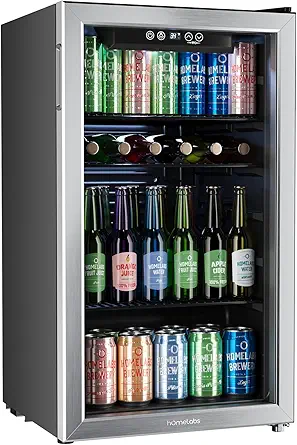 |
| Best Value The sweet spot between price and what you get | Feelfunn 24-Can Beverage Refrigerator | 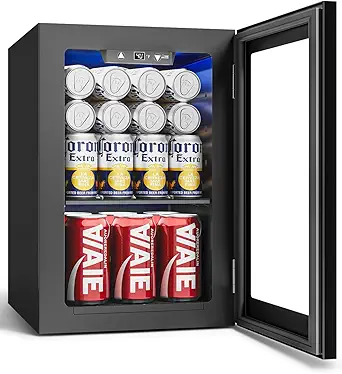 |
| Best Budget The cheapest option that still gets the job done reliably | AstroAI 6L Mini Fridge LY2206A |  |
| Top Rated A top-rated pick with lots of positive feedback | Midea Compact Refrigerator WHS-65LB1 |  |
| Most Popular A crowd favorite that many people choose with confidence | Cooluli Classic 4-L Mini Fridge |  |
| Best Seller A high-volume bestseller chosen again and again | Frostorm BC-90 Mini Fridge |  |
Upstreman BR321 3.2 Cu.Ft Mini Fridge

| Capacity | 3.2 cubic feet |
|---|---|
| Freezer Capacity | 0.3 cubic feet |
| Cooling Method | Compressor |
| Defrost System Type | Manual Defrost |
| Voltage | 115 volts |
The Upstreman BR321 is a compact compressor-driven mini fridge that fits into tight office or dorm spaces while still offering usable storage thanks to its 3.2 cubic foot capacity and 0.3 cu ft freezer. It cools via a rotary scroll compressor and uses an easy five-level adjustable thermostat (32°F to 50°F) so you can tailor temperatures for beverages, dairy, or produce, though it is not intended for long-term ice or ice cream storage. Inside there are two adjustable glass shelves, a crisper drawer and three door shelves that help organize cans and snacks, and the reversible door and adjustable leveling feet make placement flexible. The unit is ETL listed, uses R-600A refrigerant, and claims quiet operation around 38 dB with Energy Star efficiency for lower running costs. Expect manual defrosting and a basic one-year warranty, and note the refrigerator is freestanding and not built-in compatible. For office use it offers a practical balance of capacity, low noise, and energy efficiency with straightforward features rather than premium extras.
Best for: Buyers who want a quiet, energy-efficient office fridge that balances usable interior space with a small footprint and simple, adjustable temperature control.
Less Ideal for: People who need a large freezer or automated defrosting, or who require built-in installation rather than a freestanding unit.
- Compact footprint that fits small offices and dorm rooms while still providing a 3.2 cu ft interior
- Adjustable five-level thermostat for flexible cooling needs across seasons and contents
- Quiet operation (~38 dB) suitable for workspaces and bedrooms
- Reversible door and adjustable leveling feet for flexible placement
- Adjustable glass shelves and multiple door bins for organized storage
- Manual defrost requires periodic maintenance and is less convenient than auto-defrost models
- Freezer is very small and cannot reliably store ice cream or large frozen items
Verdict: A quiet, energy-efficient freestanding mini fridge that delivers practical storage and adjustable cooling for office or dorm use.
hOmeLabs Beverage Refrigerator HME030065N

| Capacity | 3.2 cubic feet |
|---|---|
| Temperature Range | 34°F-50°F |
| Number Of Shelves | 3 |
| Cooling Method | Compressor |
| Defrost System Type | Automatic |
This hOmeLabs beverage refrigerator is a compact compressor-cooled unit built to store up to 120 slim cans while keeping temperatures between 34°F and 50°F via a touch-button digital control. Typical use is as a dedicated drink fridge for small offices, break rooms, home bars, or dorms where visible inventory and quick access matter. The reinforced glass door and bright interior LED make it easy to find drinks without opening the door, and three removable chrome wire shelves let you reconfigure storage for cans or bottles. The whisper-quiet compressor and automatic defrost system mean steady cooling with minimal noise and low maintenance in an office setting. It is freestanding and can sit under counters or in a corner, and the reversible door gives placement flexibility. Important limits are its compact capacity—designed for personal or small-group use rather than high-volume commercial needs—and it uses a conventional compressor rather than inverter tech, which can mean slightly higher energy use compared with high-efficiency models.
Best for: Buyers who prioritize reliable, quiet beverage cooling and clear display for a small office, break room, or personal workspace where easy access and a neat presentation of drinks matter.
Less Ideal for: Large offices, event hosts, or commercial environments that need high-volume or walk-in refrigeration should choose a larger-capacity or commercial-grade unit instead.
- Holds up to 120 slim cans in a 3.2 cu ft interior for organized beverage storage.
- Touch-button digital temperature control with range to 34°F for consistent chilling.
- Bright interior LED and glass door provide clear, quick visibility of contents.
- Whisper-quiet compressor supports low-noise operation suitable for offices.
- Adjustable removable shelves and reversible door for placement and storage flexibility.
- Compact capacity is not suitable for large teams or heavy-duty commercial use.
- Uses a standard compressor without inverter technology, which can be less energy efficient than inverter models.
Verdict: A quiet, compact compressor beverage fridge that delivers reliable, visible chilling and flexible storage for small office or personal use.
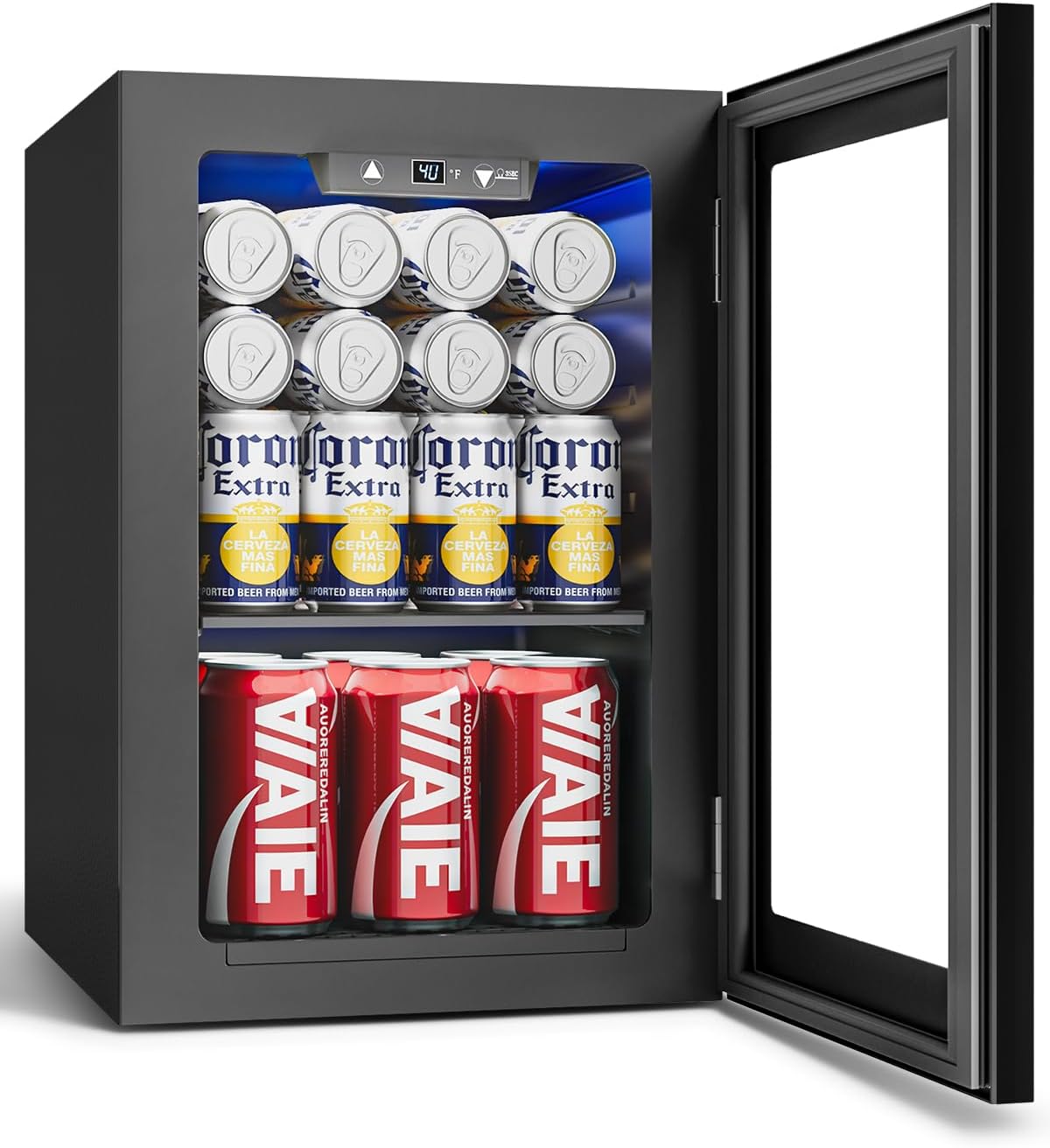
Feelfunn 24-Can Beverage Refrigerator
| Capacity | 0.6 cubic feet |
|---|---|
| Temperature Range | 40-61°F (4-16°C) |
| Cooling Method | Compressor |
| Power | 115 volts |
| Noise Level | ≤38 dB |
This Feelfunn mini beverage refrigerator is a compact compressor-driven cooler intended for small spaces like offices, dorms, or home bars. It holds roughly 24 cans in a 0.6 cu ft interior and uses a removable shelf so you can fit cans or a handful of wine bottles. Temperature is adjustable from 40 to 61°F via simple touch controls and an LED display, while a 3D circulating air system and compressor aim to deliver even, relatively fast cooling with minimal frost. The unit runs quietly at or below 38 dB, making it suitable for noise-sensitive environments, and includes interior LED lighting and adjustable feet for stability on uneven surfaces. Expect manual defrosting and a basic freestanding setup only, and the annual energy consumption listed is relatively high for such a small unit. For office use it provides flexible, space-saving cold storage but is not intended as a full refrigerator replacement or for high-volume storage needs.
Best for: Someone optimizing limited office space who needs a quiet, dedicated cooler for drinks and occasional bottles rather than a full-size refrigerator.
Less Ideal for: Teams or environments that require high-volume cold storage, long-term food preservation, or built-in undercounter installation should look at larger refrigerators.
- Compact footprint fits easily under desks or in small office kitchens
- Adjustable 40–61°F temperature range for cans or serving-temperature wine
- Quiet compressor operation rated at ≤38 dB suitable for shared spaces
- Removable shelf and interior LED light improve storage flexibility and visibility
- Small 0.6 cu ft capacity limits storage to about 24 cans
- Manual defrost requires occasional maintenance
- Annual energy consumption listed is relatively high for a mini fridge
Verdict: A quiet, space-saving compressor mini fridge that keeps drinks at adjustable serving temperatures for offices with limited space.
AstroAI 6L Mini Fridge LY2206A

| Capacity | 6 liters |
|---|---|
| Cooling method | Thermoelectric |
| Voltage | 110V AC / 12V DC |
| Defrost system type | Manual |
| Installation type | Countertop |
The AstroAI 6L mini fridge is a compact thermoelectric cooler and warmer designed for personal spaces like offices, bedrooms, and cars. It holds roughly eight 12-oz cans or four 20-oz bottles and includes a removable shelf to arrange beverages, skincare, or snacks. The unit runs on 110V AC or 12V DC, so you can power it from a wall outlet or a vehicle lighter for trips. Cooling performance is modest — about 18–22°C (32–40°F) below ambient — and the fridge is best used in a 50–86°F room with a couple inches of clearance for proper ventilation. Notable touches include low-noise operation, silicone anti-slip feet, hidden hinges, and a latch-style door for a secure seal. Expect normal condensation if temperatures fluctuate and limited cold capacity compared with compressor models; the thermoelectric system is quieter and more portable but less effective in hot rooms. The AstroAI is simple to use and easy to move, making it a practical small fridge for a single person or a desktop setup where space and noise matter more than rapid, deep cooling.
Best for: Buyers who need a portable, low-noise fridge for a single workspace, office desk, or occasional car trips and prioritize compactness and convenience on a budget.
Less Ideal for: Teams or shared offices that need to store multiple lunches or rapidly chill larger quantities should choose a larger compressor refrigerator instead.
- Dual power options with included AC and DC cords for home and car use
- Compact footprint fits on a countertop or office desk and includes anti-slip silicone pads
- Removable shelf increases usable configurations for bottles, cans, or skincare
- Quiet thermoelectric cooling and warming functions suitable for noise-sensitive spaces
- Thermoelectric cooling is limited compared with compressor fridges and struggles in hot ambient temperatures
- Very small 6L capacity only supports personal use rather than shared office storage
Verdict: A budget-friendly, quiet, portable mini fridge ideal for one-person office desks or car use when compact size and dual power options matter most.
Midea Compact Refrigerator WHS-65LB1

| Capacity | 1.6 cubic feet |
|---|---|
| Annual Energy Consumption | 207 kilowatt hours per year |
| Defrost System Type | Automatic |
| Cooling Method | Compressor |
| Installation Type | Freestanding |
This Midea 1.6 cu ft compact refrigerator provides simple, reliable cooling for offices, dorms, or small break rooms. It uses an R600A reciprocating compressor that is ENERGY STAR certified and rated for about 207 kWh per year, so it keeps operating costs low while maintaining steady temperatures. The unit includes a small internal chiller compartment for quick cooling, one removable glass shelf and door racks sized for bottles, and a reversible door hinge to fit different layouts. Controls are mechanical and straightforward, letting you select among several temperature settings down to the mid 30s Fahrenheit. Setup is plug-and-play as a freestanding appliance and it runs quietly under the stated 42 dB level, which matters in shared workspaces. Limitations include the very small 1.6 cu ft capacity and a chiller that is only suitable for short-term cooling rather than deep freezing, so it is best for beverages and light food storage rather than bulk meals or frozen items. For an office needing a compact, energy-conscious fridge that blends into tight spaces, this model is a practical choice.
Best for: Buyers who prioritize steady, energy-efficient cooling and a compact footprint for an office, dorm, or small break room where reliability and low operating cost matter.
Less Ideal for: Not a good fit for users who need sizable refrigerated storage, long-term freezing, or to store multiple meal-prep containers.
- ENERGY STAR certified compressor for lower annual energy use
- Compact footprint and reversible door for flexible office placement
- Removable shelf and door racks accommodate bottles and odd-shaped items
- Simple mechanical thermostat with multiple temperature settings
- Quiet operation suitable for shared work areas
- Very small 1.6 cu ft capacity limits storage to beverages and small food items
- Internal chiller is for short-term cooling only and will not freeze items
Verdict: A compact, energy-efficient mini fridge that delivers quiet, reliable cooling for office spaces where space and low operating cost are the top priorities.
Cooluli Classic 4-L Mini Fridge

| Capacity | 4 liters |
|---|---|
| Cooling Method | Thermoelectric |
| Power Source | AC/DC/USB |
| Defrost System Type | Manual Defrost |
| Specification Met | ETL |
The Cooluli Classic 4-L is a compact thermo-electric mini fridge that cools or warms small items and is built for portability around the office, dorm, or car. It operates quietly using a semiconductor cooling system and switches between cooling and warming with a simple toggle, letting you keep skincare, snacks, medications, or a couple of cans at controlled temperatures. The unit includes AC, DC, and a USB power cord so it can run from a wall outlet, a vehicle socket, or a 2A power bank for flexible placement. Its 4-liter interior and two wire shelves make organizing tiny items straightforward, and the molded top handle makes it easy to carry between locations. Because it is thermoelectric rather than compressor-based, it cools relative to ambient temperature rather than to a fixed low degree and does not include a freezer compartment, so expect modest cooling performance in hot environments. The small capacity also limits how much you can store at once, but for a personal desk fridge that needs to be moved or powered from USB, it is a convenient, low-noise solution backed by a large number of user reviews.
Best for: Buyers who want a low-noise, highly portable personal fridge for an office desk or small workspace and who prioritize convenience and social validation from well-reviewed, widely used products.
Less Ideal for: Not a good fit for users who need freezer capability, consistent low-temperature refrigeration in hot rooms, or storage for multiple people.
- Portable and lightweight with a molded handle for easy transport
- Multiple power options: AC, DC, and USB for versatile placement
- Quiet, energy-efficient thermoelectric cooling suitable for offices
- Simple cool/warm switch for storing both chilled and warmed items
- Compact two-shelf interior that organizes small items like skincare or drinks
- Cooling is limited to a set delta below ambient so performance drops in hot rooms
- Very small 4 L capacity restricts what and how much you can store
Verdict: If you need a quiet, highly portable personal fridge for an office or desk that runs from AC, DC, or USB, this compact 4-L Cooluli is a convenient, well-reviewed choice.
Frostorm BC-90 Mini Fridge

| Capacity | 3.2 cubic feet |
|---|---|
| Freezer Capacity | 0.3 cubic feet |
| Defrost System Type | Automatic |
| Voltage | 115 |
| Annual Energy Consumption | 210 kilowatt hours per year |
The Frostorm BC-90 is a compact 3.2 cu ft refrigerator with a dedicated 0.35 cu ft upright freezer that is intended for small spaces like offices, dorm rooms, or bedrooms. It cools using a simple mechanical thermostat with settings 1–5 and a separate freezer chamber that can reach typical ice-making temperatures, while two adjustable glass shelves and door bins let you organize drinks, snacks, and meal prep items. The unit is ETL certified, runs on standard 115V power, and is designed for energy-efficient daily use with an estimated consumption of about 0.6 kWh per day. Practical features include an automatic defrost system, a reversible door to suit room layout, and included accessories such as an ice tray and scraper. Limitations are its modest freezer space suitable for short-term storage rather than large frozen loads and a basic mechanical thermostat without digital precision. For an office needing a reliable, straightforward beverage and lunch fridge, it strikes a good balance between capacity, energy use, and simplicity.
Best for: Buyers who want a low-maintenance, energy-conscious fridge for an office or small workspace that prioritizes reliability and simple controls over advanced features.
Less Ideal for: Anyone needing substantial frozen storage, precise digital temperature control, or a full-size refrigerator for household meal storage should consider larger models.
- Compact 3.2 cu ft capacity fits offices and small rooms
- Separate upright freezer suitable for ice and short-term frozen storage
- Reversible door offers flexible placement in tight layouts
- Energy-efficient operation with low daily power use and ETL certification
- Adjustable glass shelves and door bins for organized storage
- Freezer compartment is small and not suited for long-term frozen food storage
- Mechanical thermostat lacks precise digital temperature control
Verdict: A dependable, energy-efficient mini fridge with a small freezer and reversible door that is well suited to office use where simplicity and space savings matter.
Choosing the Right Refrigerator for Office Use: Key Factors to Consider
Capacity and Interior Layout
Capacity matters beyond raw liters or cubic feet because office use often combines drinks, meals, and communal items. Look for usable shelf space and adjustable shelves or door bins so you can fit tall bottles, lunch containers, and stacked takeout boxes without wasted gaps.
Shelves that slide or remove easily make it simpler to reorganize for temporary needs like catering trays or office events. Consider both fridge volume and the layout of drawers or compartments for produce and deli items to avoid cross-contamination and to keep frequently used items accessible.
Noise Level and Compressor Design
Noise is a critical factor in offices where quiet is important for concentration. Check for rated decibel levels when available and prefer models with variable-speed compressors or vibration-damping mounts that reduce compressor cycling noise.
Placement also affects perceived sound, so choose a unit with lower fan noise if it will sit near desks or meeting areas. Even small differences in operating hum can become disruptive over the course of a workday, so prioritize quieter designs for open-plan or small offices.
Energy Consumption and Operating Cost
Offices run appliances for many hours a day, so energy efficiency influences ongoing cost and environmental impact. Compare annual energy consumption figures or efficiency ratings to estimate electricity use.
Efficient insulation and modern compressors reduce run time and costs. Features like adaptive defrost and LED interior lighting also cut energy draw. When possible, calculate expected annual consumption against local electricity rates to understand long-term operating costs.
Footprint and Installation Flexibility
Office spaces often have limited floor area or specific clearance requirements. Measure the intended location, including door swing and ventilation clearance, before choosing a refrigerator.
Consider slim, under-counter, or compact upright formats when floor space is at a premium. Reversible doors and side-clearance options increase installation flexibility. Also check whether the unit needs hardwiring or a standard plug-in to avoid unexpected installation complexity.
Maintenance, Cleanability, and Hygiene
Shared refrigerators demand easy cleaning and low maintenance to remain sanitary. Smooth, removable shelves and drawers make wipe-downs faster, while spill-containment features and removable door seals simplify routine care.
Antimicrobial liners and washable components reduce odor and bacteria buildup. Also evaluate how accessible coils and drain channels are for periodic cleaning to prevent efficiency loss and unpleasant smells over time.
Durability and Warranty Support
Durability matters because office units see frequent door openings and varied loads. Look for sturdy door hinges, rust-resistant interiors, and compressor warranties that indicate confidence in long-term performance.
Longer warranty periods on sealed systems or compressors reduce the risk of major repair costs. Consider the expected lifespan in a high-use environment and whether parts are readily serviceable to minimize downtime.
Matching Size to Office Use Case
Different office settings require different refrigerator sizes. A small private office might only need a compact under-counter model for personal lunches and a few beverages, while a shared break room requires a larger upright unit with multiple shelves and a crisper drawer.
When estimating needed capacity, inventory typical daily items such as staff lunches, milk for coffee, communal beverages, and occasional catering. Factor in growth: a team that brings lunches daily will fill space faster than one that uses the fridge only for drinks.
- Under-counter units fit under counters and double as extra workspace.
- Slim upright fridges maximize vertical storage while minimizing floor area.
- Compact units are easier to move for cleaning or office reconfiguration.
Placement and Ventilation Best Practices
Proper placement affects both efficiency and noise. Refrigerators need airflow around the compressor and condenser to run efficiently. Avoid tight enclosures that trap heat, and maintain the manufacturer-recommended clearance when possible.
Place the unit away from direct sunlight and heat sources such as ovens, microwaves, or heating ducts. If the refrigerator will be near desks, orient the quietest side toward workstations and use rubber pads to isolate vibration.
- Leave space behind and above the unit for ventilation.
- Avoid placing the fridge in direct sunlight or near heat-producing equipment.
- Use vibration-dampening pads to reduce transmitted noise.
Organizing Shared Refrigerators
A predictable organization system prevents lost lunches and reduces arguments. Use clear labeling or assigned shelves to keep personal items separated from communal supplies. Consider transparent bins for shared items so people can quickly see what is available.
Set simple guidelines for how long items may remain and where to put condiments or communal beverages. Regularly scheduled clean-outs keep odors and clutter at bay, and removable liners or trays make that process easier.
- Assign shelves for teams or individuals in larger offices.
- Use small clear containers to corral sauces and opened snacks.
- Post a short refrigerator use policy to keep shared expectations clear.
Temperature Controls and Food Safety
Accurate temperature control protects perishable items and reduces spoilage. Look for units with easy-to-read thermostats and stable temperature performance. For offices storing milk, salads, or prepared meals, keeping the interior at safe refrigeration temperatures is important.
Some models offer digital controls and alarms for out-of-range temperatures, which are useful in environments where spoilage would be costly. If many different food types are stored, pay attention to how temperature varies between shelves and how the unit handles warm-door openings.
- Aim for consistent temperatures across the main compartment.
- Prefer models with simple user controls and clear indicators.
- Digital thermostats provide finer control when needed.
Accessory Options That Improve Office Use
Accessories can significantly increase the usefulness of a refrigerator in an office setting. Removable bins, bottle racks, and drawer dividers help organize items and prevent spills. LED lighting makes contents easy to find without keeping the door open long.
Consider models that accept aftermarket organizers or come with small extras like egg holders or can dispensers. These features often cost little but reduce daily friction and keep the interior tidy.
- Removable door bins for tall bottles and cartons.
- Slide-out shelves for easy access to items at the back.
- Interior lighting to reduce door-open time.
How We Chose the Best Refrigerator for Office Use
We focused on attributes that matter most for office environments where compact footprint, low noise, predictable storage, and operating cost are top concerns. Selection began by filtering for models designed for shared spaces or compact installation, then prioritizing measurable specs and user-focused features. Key evaluation criteria included usable interior storage layout and adjustable shelving that maximize organized capacity; measured energy consumption and available efficiency ratings; verified sound levels or design features that reduce compressor noise; and durability factors such as door hinge quality and corrosion-resistant interiors for long service life. We also considered user convenience points like reversible doors, easy-to-clean surfaces, and simple temperature controls. Products were excluded if they were intended strictly for residential full-size kitchens, required specialized installation beyond a standard plug-in, or lacked basic safety and energy information. The final list favors refrigerators that combine quiet operation, sensible storage options, and realistic energy performance for sustained office use.
Our full evaluation process is outlined in our review methodology.
FAQ
How quiet does a refrigerator for office use need to be?
Quiet operation is relative to the office layout. In open-plan areas, aim for models with low fan and compressor noise and look for decibel ratings when available. For private offices, slightly louder units may be acceptable, but avoid models with frequent loud cycles.
Can I use a residential-style refrigerator in an office?
You can use many residential-style units in offices, but check footprint, ventilation needs, and noise. Some residential models have larger compressors and louder cycles, so choose one that fits the office environment and electrical setup.
How often should a shared office refrigerator be cleaned?
Regular maintenance keeps odors and bacteria at bay. A quick wipe of spills should happen weekly, with a deeper clean and removal of expired items monthly. Increase frequency if many people use the fridge or if food is frequently stored for extended periods.
What temperature should an office refrigerator be set to?
Keep the main compartment at standard refrigeration temperatures, typically between 35 and 40 degrees Fahrenheit. Consistent temperature helps prevent bacterial growth and keeps perishable items safe. Use a thermometer to verify settings if controls are imprecise.
Are there energy-saving tips for office refrigerators?
Place the refrigerator away from heat sources, avoid leaving the door open, and keep condenser coils clean to maintain efficiency. Choose units with LED lighting and good insulation, and consider turning off nonessential lighting or features outside of business hours.
Final Verdict
When choosing a refrigerator for office use, prioritize the features that will affect daily convenience: usable interior layout, low operational noise, and reasonable energy consumption. Fit the unit to the available footprint and pick models that are easy to clean and maintain for shared environments. Tradeoffs are inevitable: very compact units save space but limit organized storage, and the quietest compressors may cost more upfront. Focus on the factors that matter most for your office setting to select a reliable, low-disruption refrigerator that meets day-to-day needs.