
Note: This article contains affiliate links. If you click on these links and make a purchase, we may earn a small commission at no extra cost to you. This helps support our research and content. Read our full affiliate disclosure here.
Picking the right refrigerator with freezer box matters because layout and temperature control directly affect how long food stays fresh and how well the appliance fits your daily routine. Whether you need extra freezer space for bulk buys or a compact freezer compartment for ice and frozen meals, the right configuration changes meal planning and reduces waste. This guide shortlists the top options across common sizes and use cases, and evaluates each on real buyer priorities like usable capacity, cooling consistency, energy efficiency, and ease of use. Read on to compare the leading choices and see which features matter most for your kitchen.
Top Picks at a Glance
| Best Overall The best all-around choice for most situations | Frostorm BC-90 Mini Fridge |  |
| Best Quality Built to a higher standard if you want something more solid | Midea 3.1 Cu Ft Mini Fridge |  |
| Best Value The sweet spot between price and what you get | Frestec Mini Fridge FTC30RE |  |
| Best Budget The cheapest option that still gets the job done reliably | Frestec 1.7 Cu Ft Mini Fridge FTC16RE |  |
| Top Rated A top-rated pick with lots of positive feedback | Stopsad 3.2 Cu Ft Mini Fridge |  |
| Most Popular A crowd favorite that many people choose with confidence | Upstreman BR321 3.2 Cu.Ft Mini Fridge |  |
| Best Seller A high-volume bestseller chosen again and again | EUHOMY Beverage Wine Cooler with Freezer | 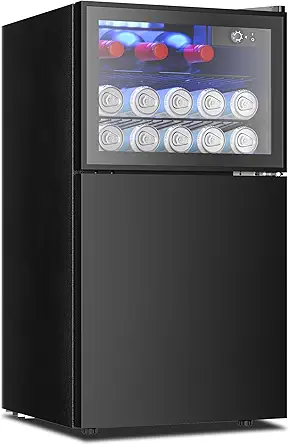 |
Frostorm BC-90 Mini Fridge

| Capacity | 3.2 cubic feet |
|---|---|
| Freezer Capacity | 0.35 cubic feet |
| Defrost System Type | Automatic |
| Voltage | 115 |
The Frostorm BC-90 is a compact upright mini fridge designed for bedrooms, dorms, and small offices that need a small refrigerator with a usable freezer section. It provides 3.2 cubic feet of total capacity with a dedicated 0.35 cu ft upright freezer for ice and short-term frozen storage, and a simple 1–5 mechanical thermostat for easy temperature control. The interior includes two adjustable glass shelves and door bins so you can reconfigure storage for cans, groceries, or meal prep containers, while the reversible door lets you position the unit to suit tight layouts. Energy use is modest at about 0.6 kWh per day and the unit is ETL certified for safety. Expect manual defrosting of the freezer area and straightforward cleaning rather than fully automatic maintenance features. At this size, cooling is adequate for daily snacks and beverages but not for large frozen inventories. For buyers seeking a compact, energy-conscious mini fridge with a usable freezer and flexible placement, the BC-90 covers the essentials without extra complexity.
Best for: Buyers who want a practical, energy-conscious mini fridge with a small freezer for everyday dorm, office, or bedroom use and value simple controls and flexible placement.
Less Ideal for: Not suitable for households that need large frozen storage or fully automatic frost-free operation for heavy freezer use.
- Dedicated upright freezer compartment for ice and short-term frozen items
- Adjustable glass shelves and door bins for flexible organization
- Reversible door for left or right opening to fit tight spaces
- Energy efficient operation (~0.6 kWh/day) with ETL safety certification
- Freezer capacity is small and intended for short-term storage or ice only
- Manual defrost process rather than frost-free convenience
Verdict: A compact, energy-efficient mini fridge with a usable internal freezer and reversible door that fits small spaces and everyday needs.
Midea 3.1 Cu Ft Mini Fridge

| Capacity | 3.1 cubic feet |
|---|---|
| Annual Energy Consumption | 270 kilowatt hours per year |
| Configuration | Freezer-on-Top |
| Defrost System Type | Manual Defrost |
| Cooling Method | Compressor |
The Midea 3.1 Cu Ft Mini Fridge WHD-113FB1 is a small freestanding refrigerator with a top freezer aimed at dorms, offices, and small apartments. It uses an R600A compressor with inverter technology and a multi-airflow system to keep temperatures steady while using about 270 kWh per year, which earns it Energy Star certification and relatively low running costs. The unit offers adjustable mechanical thermostats for both fridge and freezer, removable glass shelves, a crisper drawer, a 2L bottle rack, internal LED lighting, and a reversible door for flexible placement. Practical benefits include quiet operation around 45 decibels, configurable storage for odd-shaped items, and a modest freezer compartment for frozen goods. Limitations are typical for the size: limited overall capacity for larger households and manual defrosting for the freezer, which requires occasional maintenance. The fridge is solidly specified for its class and balances efficiency and usable storage in a compact footprint, making it a sensible performance-focused choice when space and energy use matter.
Best for: Buyers who prioritize efficient, quiet performance in a compact refrigerator with a usable freezer compartment for single-person households, dorm rooms, or tight kitchens.
Less Ideal for: Households that need large-capacity refrigeration or frequent heavy freezer use should consider a larger model with automatic defrost and more freezer volume.
- Energy Star certified with R600A compressor and inverter for lower annual energy use
- Adjustable thermostats for fridge and freezer allow precise temperature control
- Removable shelves, crisper drawer, and 2L bottle rack maximize flexible storage
- Reversible door and internal LED light improve placement and visibility
- Relatively quiet operation suitable for bedrooms or offices
- Freezer uses manual defrost which requires periodic maintenance
- 3.1 cu ft capacity is limited for users needing bulk frozen storage
Verdict: A compact, energy-efficient mini fridge with a practical top freezer that delivers quiet, reliable cooling for space-constrained, performance-minded buyers.
Frestec Mini Fridge FTC30RE

| Capacity | 3.2 cubic feet |
|---|---|
| Freezer Capacity | 1 cubic feet |
| Defrost System Type | Manual |
| Cooling Method | Compressor |
| Voltage | 115 volts |
The Frestec FTC30RE is a compact two-door refrigerator with a dedicated 1 cu ft freezer and 2.2 cu ft refrigerator compartment intended for dorms, bedrooms, or small offices. It uses a compressor cooling system with an R600a refrigerant and offers seven adjustable temperature settings to tailor cooling for drinks, produce, or frozen items. The unit is freestanding, has a reversible stainless steel door, an interior LED light, a crisper drawer, an adjustable glass shelf and six door shelves to help organize bottles and small containers. Noise is kept low at under 37 dB, making it suitable for quiet spaces, and the manual defrost design is simple to maintain but requires occasional defrosting. Energy consumption is listed and the compressor promises quicker cooling than thermoelectric mini fridges, though the compact capacity limits large food loads and tall items without shelf repositioning. For buyers who need a space-efficient freezer box plus everyday refrigeration, this model balances utility, low noise, and adjustable shelving for practical daily use.
Best for: Buyers who prioritize a compact, low-noise refrigerator with a usable freezer box for daily staples and organized storage in tight spaces.
Less Ideal for: People who need high-capacity refrigeration, commercial use, or fully maintenance-free frost-free operation should consider larger or frost-free models instead.
- Separate top freezer and refrigerator compartments for mixed storage needs
- Seven temperature settings for flexible cooling control
- Compressor cooling with R600a for efficient, faster cooling than thermoelectric designs
- Low operating noise under 37 dB suitable for bedrooms or offices
- Adjustable glass shelf, crisper drawer and multiple door shelves for organized storage
- Manual defrost freezer requires periodic thawing and maintenance
- Limited total capacity may not suit users who need to store large or tall items
Verdict: Choose this unit if you want a quiet, compressor-cooled compact fridge with a functional top freezer that fits small spaces.
Frestec 1.7 Cu Ft Mini Fridge FTC16RE

| Capacity | 1.7 cubic feet |
|---|---|
| Freezer Capacity | 0.2 cubic feet |
| Cooling Method | Compressor |
| Defrost System Type | Manual |
| Voltage | 115 volts |
This Frestec mini fridge provides a simple, space-saving refrigeration solution with a built-in 0.2 cu ft freezer compartment for ice and small frozen items. It uses a compressor cooling method and a manual defrost system with a one-touch defrost button on the thermostat knob, making routine maintenance straightforward. The reversible door and removable glass shelf let you adapt the interior layout for bottles or taller items, while adjustable feet help level the unit on uneven surfaces. Noise is relatively low at about 37 dB, so it fits in quiet rooms, and its stated energy use (about 0.55 kWh/day) keeps running costs down. Limitations include the small overall capacity that restricts larger groceries and the manual defrost requirement compared with frost-free models. The single shelf and compact freezer mean this is best for drinks, snacks, and short-term food storage rather than a primary household refrigerator.
Best for: Buyers looking for an affordable, low-noise mini fridge to keep drinks and snacks cold in a dorm, bedroom, or office who prioritize saving space and low operating cost.
Less Ideal for: People who need a primary refrigerator with large capacity or hands-off frost-free operation should look for larger or automatic-defrost models.
- Built-in small freezer compartment for ice and frozen snacks
- Compact footprint suitable for dorms, offices, and under-desk placement
- Low noise operation (~37 dB) for quiet environments
- Reversible door and removable glass shelf for flexible interior layout
- Relatively low daily energy use (about 0.55 kWh/day)
- Manual defrost requires occasional user intervention
- Limited internal capacity not suited for full kitchen storage
- Single shelf restricts organized storage of many small items
Verdict: A budget-friendly, low-noise mini fridge with a small freezer compartment that fits tight spaces and keeps running costs low.
Stopsad 3.2 Cu Ft Mini Fridge

| Capacity | 3.2 cubic feet |
|---|---|
| Freezer Capacity | 0.3 cubic feet |
| Cooling Method | Compressor |
| Defrost System Type | Automatic |
| Voltage | 110 volts |
This Stopsad mini fridge combines a 0.3 cu ft freezer with a 2.9 cu ft refrigerator compartment in a compact freestanding cabinet intended for dorms, offices, bedrooms, or small spaces. It uses a compressor cooling method with an adjustable thermostat offering three temperature settings so you can fine-tune the freezer (-4°F to 10.4°F) and fridge (28.4°F to 50°F). Two removable glass shelves and door shelves make basic organization simple, and reversible doors plus leveling feet help placement where space is tight. The unit is marketed as energy-efficient and quiet, with estimated daily energy use around 0.85 kWh and a working noise near 38 dB, which keeps it unobtrusive in living spaces. Practical limitations are its small freezer capacity suitable for ice cream and short-term frozen storage only, and the modest overall volume means it is not meant for large households. If you need a straightforward, compact fridge with a usable freezer box and simple manual controls, this model covers those needs reliably.
Best for: Buyers who prioritize a dependable, no-frills compact refrigerator with a usable freezer box for a single person or small shared space and who value quiet, energy-conscious operation.
Less Ideal for: Families or anyone needing large frozen storage, meal-prep capacity, or full-size refrigerator features should choose a larger appliance.
- Includes a dedicated 0.3 cu ft freezer compartment for frozen snacks and ice cream.
- Compressor cooling with adjustable thermostat provides reliable, selectable temperatures for fridge and freezer.
- Removable glass shelves and door storage allow flexible organization in a small footprint.
- Reversible door and leveling feet make installation adaptable to tight or uneven spaces.
- Rated for low noise and low daily energy use, suitable for quiet rooms and long-term operation.
- Freezer space is very limited and only suitable for small or short-term frozen items.
- 3.2 cu ft total capacity is too small for full household food storage.
Verdict: A compact, quiet, and energy-efficient mini fridge that reliably adds a small freezer box where space is limited.
Upstreman BR321 3.2 Cu.Ft Mini Fridge

| Capacity | 3.2 cubic feet |
|---|---|
| Freezer Capacity | 0.3 cubic feet |
| Defrost System Type | Manual Defrost |
| Voltage | 115 volts |
| Annual Energy Consumption | 206 kwh |
The Upstreman BR321 is a compact compressor mini fridge designed for small spaces that need a basic refrigeration and a freezer box. It provides 3.2 cu ft of total capacity with a 0.3 cu ft top freezer, two adjustable glass shelves, three door shelves and a crisper drawer, so it can hold beverages, snacks and a few frozen items without taking much floor space. Temperature is set via a five-level adjustable thermostat that covers typical chilled temperatures for drinks and dairy, and the reversible door plus adjustable leveling feet make placement flexible. The unit runs on a rotary scroll compressor and is rated Energy Star efficient while claiming low noise operation around 38 dB, which helps in bedrooms or offices. Practical conveniences include a tight door seal and a manual defrost design that is simple to maintain, though the small freezer is not suitable for long-term ice storage or large frozen meals. Expect straightforward, no-frills performance well suited to dorms, offices, or secondary kitchen use rather than as a primary household freezer.
Best for: Buyers who prioritize a compact, energy-efficient secondary fridge with a small freezer box and value user reviews and proven reliability when choosing appliances.
Less Ideal for: People who need significant freezer space, advanced temperature management, or a frost-free main refrigerator should look at larger or differently featured models.
- Compact footprint with 3.2 cu ft total and a dedicated 0.3 cu ft freezer for small frozen items
- Adjustable thermostat with five temperature levels for basic precise cooling control
- Energy Star rated compressor design for relatively efficient operation and lower annual energy use
- Reversible door and leveling feet allow flexible placement in tight spaces
- Adjustable glass shelves and door bins provide usable, adaptable storage layouts
- Manual defrost freezer requires occasional maintenance and is less convenient than frost-free units
- Freezer capacity is very small and cannot store large frozen items or long-term ice
- No lock or advanced temperature controls for sensitive storage needs
Verdict: A small, energy-efficient mini fridge with a usable freezer box that reliably serves dorms, offices, and secondary locations.
EUHOMY Beverage Wine Cooler with Freezer

| Capacity | 3 cubic feet |
|---|---|
| Freezer Capacity | 1.7 cubic feet |
| Refrigerator Net Capacity | 1.5 cubic feet |
| Cooling Method | Compressor |
| Voltage | 115 volts |
This EUHOMY mini fridge combines a glass-front beverage cooler on top with a deeper freezer below, making it a flexible small-appliance solution for kitchens, home offices, or dorm rooms. The top compartment offers adjustable wire shelves, a visible glass door and a seven-setting temperature knob that ranges roughly 26°F to 46°F for chilling wine, beer, or soft drinks. The bottom freezer is substantially deeper at 1.7 cu ft and can reach temperatures as low as -13°F, so it can hold frozen meals and ice cream that standard beverage fridges cannot. The unit uses a compressor cooling method, has a reversible door and a keyed lock for added security, and an internal LED light with its own switch. Practical downsides are the manual defrost requirement and modest 3.0 cu ft overall capacity, which limits larger grocery loads, and the matte glass door will show fingerprints. For buyers who want a compact, dual-purpose fridge with a true freezer compartment rather than just a chiller, this model delivers sensible features and usable cold storage in a small footprint.
Best for: Buyers who want a compact, low-risk appliance that provides both a visible beverage cooler and a usable freezer for frozen foods, and prefer a straightforward, easy-to-understand appliance with basic controls and support.
Less Ideal for: Families or users who need large-capacity refrigeration for weekly grocery storage or a fully featured kitchen refrigerator should consider larger-capacity models instead.
- Separate top beverage cooler and bottom freezer for distinct storage needs
- Deep bottom freezer reaching about -13°F suitable for frozen foods
- Adjustable shelves and reversible door improve placement flexibility
- Compressor cooling provides stronger and more consistent cooling than thermoelectric units
- Keyed lock and switchable LED light add security and convenience
- Manual defrost requires occasional maintenance to prevent ice buildup
- Total 3.0 cu ft capacity is small for full-kitchen replacement
- Matte glass door can show smudges and needs regular cleaning
Verdict: A compact dual-compartment fridge that gives risk-averse buyers a visible beverage cooler plus a genuine deep freezer in a small freestanding package.
Choosing the Right Refrigerator with Freezer Box: Key Factors to Consider
Usable Refrigeration and Freezer Capacity
Advertised liters or cubic feet only tell part of the story. Usable capacity depends on shelf layout, drawer size, and whether the freezer box intrudes into the main refrigerated volume. Consider the types and amounts of food you store most often. If you buy bulk staples or frozen meals, a larger, well-organized freezer box will matter more. For fresh produce, look for deep crispers and flexible shelving that let you reconfigure space.
Also think about how door bins are sized. Tall bins can hold bottles and jars without sacrificing shelf space. Measure common items you store to ensure the internal layout supports them rather than relying on headline capacity numbers alone.
Temperature Control and Stability
A refrigerator with consistent temperatures preserves food longer and reduces spoilage. Look for separate controls for the refrigerator and freezer box, or systems that let you fine-tune settings. Rapid cool-down after loading, minimal temperature swings, and even airflow across shelves are all signs of better control. If you store dairy, deli meats, or sensitive produce, tighter stability is especially important.
Consider how defrosting is handled. Manual defrost units can be simpler but require maintenance, while automatic defrost or frost-free systems reduce upkeep but may slightly increase temperature variability. Read performance specifications and reported operation behavior to match the level of temperature control you need.
Energy Use and Long-Term Cost
Energy efficiency affects your electricity bill and environmental footprint. Compare official energy consumption figures or efficiency ratings to understand long-term cost differences. A more efficient model may cost more up front but usually pays back through lower monthly operating expenses.
Also factor in the impact of feature choices. Frost-free systems and active cooling features often use more power than basic designs. Insulation quality and door sealing integrity influence how hard the compressor must work. If the unit will run in a warmer kitchen or near a heat source, prioritize better insulation and higher efficiency specifications.
Storage Flexibility and Organization
Flexible shelving, adjustable door bins, sliding drawers, and removable compartments let you tailor the interior to your lifestyle. This matters when you need to store tall beverages, party platters, or extra grocery runs. A refrigerator with thoughtful organization reduces the need for external storage and makes food easier to find, cutting down on wasted energy from open doors.
Evaluate how easy it is to move shelves and whether the freezer box offers compartments or trays that separate items. Well-designed organization also speeds cleaning and helps maintain airflow for consistent temperatures.
Maintenance and Cleaning
Ease of cleaning reduces the time and effort needed to keep the unit hygienic. Smooth, removable shelves and door bins that disassemble without tools make spills easier to manage. Consider whether surfaces are stain-resistant and how accessible corners and drawers are for wiping down.
Also review defrost procedures and filter access. Filters that are straightforward to replace and defrost systems that do not require frequent manual intervention lower the routine maintenance burden and reduce the chance of odors or frost buildup that can affect food quality.
Noise and Installation Considerations
Compressor and fan noise levels matter if the refrigerator will be placed near living spaces. Look for units with quieter operation ratings if low noise is a priority. Installation needs such as door swing, clearance for ventilation, and leveling adjustments affect how the unit fits into your kitchen.
Plan for door reversibility if your kitchen layout requires it, and check the required clearances stated by manufacturers to ensure consistent cooling performance. Proper installation reduces wear and helps maintain efficiency and temperature stability over time.
Choosing the Right Size for Your Kitchen
Measure the space before you consider features. Account for door swing, ventilation clearance, and any cabinetry that may limit door opening. A fridge that is slightly smaller but fits well often performs better in practice than an oversized unit that cannot be installed correctly.
Think about household patterns. Single cooks or couples may prioritize compact models with generous freezer boxes for occasional bulk storage. Families that cook from scratch more often will want larger refrigerated volume and segmented door storage for condiments, milk, and snacks.
- Measure height, width, and depth including clearance space
- Confirm door swing fits nearby cabinets or walls
- Factor in service access for future maintenance
Layout Tradeoffs Between Freezer Box and Fridge Space
A larger freezer box reduces usable refrigerated volume, and vice versa. Decide which compartment you use most and choose a unit where that space is emphasized. Some designs place the freezer box at the top or bottom, affecting how you reach frequently used items.
Consider daily access patterns. If you open the fridge multiple times a day, place commonly used items in the most accessible zone and use the freezer box for less-frequently accessed goods.
- Top freezer boxes are easy to reach but can limit shelf depth
- Bottom freezer boxes are often deeper but require bending to access
- Side-by-side layouts split vertical space and affect bin width
Maintaining Food Safety and Freshness
Proper temperature management keeps perishable foods safe. Use a fridge thermometer to verify that the main compartment stays between recommended ranges for fresh food and that the freezer box remains solidly frozen. Avoid overpacking, which restricts airflow and can create warm spots.
Rotate stored items and use clear labeling for leftovers to reduce waste. Clean spills quickly and check door seals periodically to ensure a tight closure that preserves internal cold.
- Keep refrigerator between recommended temperature ranges
- Allow airflow by avoiding overfilling shelves
- Check door seals and clean gaskets regularly
Installation Tips for Best Performance
Install on a level surface and leave the recommended clearance from walls to allow proper airflow around the condenser. Poor ventilation forces the compressor to run harder and shortens component life. If the unit is placed near heat sources, allow extra clearance.
After installation, let the refrigerator sit upright for several hours before powering on if it was transported on its side. This helps oils and refrigerant settle and reduces strain on the compressor when it first starts.
- Level the appliance to prevent door misalignment
- Respect ventilation space specified in the manual
- Allow the unit to settle after transport before starting
When to Consider Professional Service
Routine maintenance such as cleaning coils and replacing filters can be done at home, but electrical issues, persistent temperature problems, or unusual noises usually warrant a technician. Professional diagnosis prevents misdirected DIY fixes that could void warranties.
Use professional help for complex repairs and for verifying refrigerant levels or compressor health. Service records also help maintain resale value and document that the unit received proper care.
- Schedule coil cleaning annually or as recommended
- Call a technician for cooling or compressor faults
- Keep service records for warranty and resale
How We Chose the Best Refrigerator with Freezer Box
We prioritized features that directly affect everyday performance and ownership costs for refrigerators with built-in freezer boxes. Our selection focused on usable refrigeration and freezer capacity, measured layout flexibility, and how compartment design translates into real storage for plates, produce, and frozen goods. Cooling and temperature stability were inspected through reported temperature control range and presence of separated controls that help preserve different food types. Energy efficiency ratings and estimated annual energy use were included because they shape lifetime operating cost and climate impact. Practical convenience factors such as shelf adjustability, door storage layout, and ease of cleaning were also weighted since they determine day-to-day usability. We excluded specialty units that lack a dedicated freezer box or that are primarily designed for commercial use. Extremely uncommon or single-source products were not considered. The final list reflects a balance of capacity, consistent cooling, energy performance, and user-friendly features that matter most to household buyers of refrigerators with freezer boxes.
Our full evaluation process is outlined in our review methodology.
FAQ
How often should I defrost a manual-defrost freezer box?
Defrosting frequency depends on use and frost buildup. Typically, defrost when ice reaches about a quarter-inch thick. Regular defrosting keeps airflow consistent and reduces energy use.
Can I install a refrigerator with freezer box in a garage?
You can install in a garage if the model is rated for the expected temperature range. Units not designed for cold environments may struggle to maintain proper internal temperatures and should be avoided in unheated spaces.
What is the best way to organize a small freezer box?
Use stacking bins or flat containers to maximize vertical space and keep similar items grouped. Label containers with dates and prioritize frequently used items near the front to reduce open-door time.
How do I know if the door seal is leaking?
A quick test is to close the door on a strip of paper; if it slides out easily without resistance in multiple spots, the seal may be failing. Check for visible cracks or gaps and clean the gasket to remove debris that can prevent a tight seal.
Will a frost-free defrost system increase my energy usage?
Frost-free systems typically use intermittent heating cycles that can slightly raise energy consumption compared with manual-defrost units. The tradeoff is less maintenance and no manual defrosting, so weigh convenience against modest efficiency differences.
Final Verdict
Focus on the balance between usable refrigerated volume and freezer box space when choosing a refrigerator with freezer box. Prioritize temperature stability and energy efficiency if you store perishable foods frequently, and select models with flexible shelving and easy-to-clean surfaces for everyday convenience. Consider installation and noise needs to ensure the unit fits your kitchen layout and lifestyle. With these factors in mind, you can confidently choose a refrigerator that meets your storage needs and minimizes long-term operating cost.