
Note: This article contains affiliate links. If you click on these links and make a purchase, we may earn a small commission at no extra cost to you. This helps support our research and content. Read our full affiliate disclosure here.
A refrigerator with glass door changes how you organize, access, and showcase chilled items. Whether you plan to use one in a home kitchen, bar, or commercial-looking pantry, the right glass-front fridge improves visibility so you spend less time hunting for items and more time using them. You want solid temperature control, practical shelving, and efficient insulation so contents stay cold despite the transparent door. This guide covers seven shortlisted refrigerators with glass doors that excel for everyday use and light commercial-style display. We evaluated each pick on storage flexibility, temperature stability, and running cost so you can choose the best unit for your space. Read on to see the criteria we used and the practical tradeoffs to consider before you pick a unit.
Top Picks at a Glance
| Best Overall The best all-around choice for most situations | Whynter BR-130SB Beverage Refrigerator | 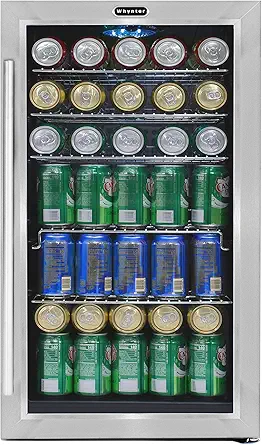 |
| Best Quality Built to a higher standard if you want something more solid | Cintva Commercial Beverage Refrigerator |  |
| Best Value The sweet spot between price and what you get | Manastin 3.2 Cu Ft Beverage Refrigerator |  |
| Best Budget The cheapest option that still gets the job done reliably | Erivess 1.7 Cu Ft Beverage Refrigerator |  |
| Top Rated A top-rated pick with lots of positive feedback | hOmeLabs Beverage Refrigerator HME030065N | 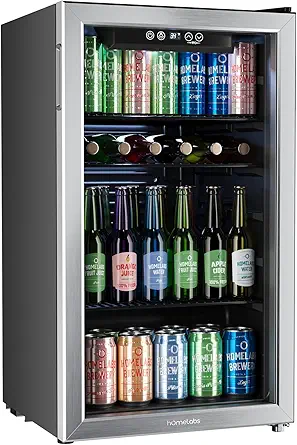 |
| Most Popular A crowd favorite that many people choose with confidence | EUHOMY BR013-110 Beverage Refrigerator |  |
| Best Seller A high-volume bestseller chosen again and again | EUHOMY BR-145 Beverage Refrigerator |  |
Whynter BR-130SB Beverage Refrigerator

| Capacity | 3.1 cubic feet |
|---|---|
| Can Capacity | 127 standard 12 oz. cans |
| Temperature Range | High 30°F to mid 60°F |
| Shelves | 5 slide-out wire shelves |
| Cooling Method | Compressor |
The Whynter BR-130SB is a compact glass-door beverage refrigerator designed to store and display cans and bottles in small spaces. It uses a hermetic scroll compressor and internal fan-forced circulation to keep temperatures consistent across the cabinet, and a mechanical control lets you set the interior from the high 30s to the mid 60s Fahrenheit to suit sodas, beer, or some wines. Five slide-out wire shelves are adjustable so you can stack cans or make room for taller bottles, and soft LED lighting plus a double-pane glass door create a polished display while helping insulation. The unit is freestanding with a reversible recessed handle and a keyed lock for secure placement in a shared area. Trade-offs include manual defrost and no Energy Star rating, and the compressor design means it is best for areas where a low level of operating noise is acceptable. For someone who wants a sturdy, display-ready drink fridge with reliable compressor cooling, the BR-130SB delivers practical capacity and a clean look.
Best for: Buyers who want a mid-size, display-focused beverage fridge that balances reliable compressor cooling, flexible shelving, and a polished glass-door presentation for home or small office use.
Less Ideal for: Those seeking a no-maintenance, energy-certified appliance or a whisper-quiet unit for a bedroom where compressor noise must be minimal should look elsewhere.
- Double-pane glass door with LED lighting for visible, better-insulated display
- Compressor cooling with fan-forced circulation for even internal temperatures
- Adjustable slide-out shelves to fit cans and taller bottles
- Reversible door and recessed handle allow flexible placement and a flush look
- Keyed lock adds security for shared spaces
- Manual defrost requires occasional maintenance
- Not Energy Star rated so it may consume more power than certified units
Verdict: A compact glass-door beverage refrigerator that pairs reliable compressor cooling and adjustable shelving with a display-friendly design for balanced, everyday use.
Cintva Commercial Beverage Refrigerator

| Capacity | 28 cubic feet |
|---|---|
| Number of Doors | 2 |
| Defrost System Type | Automatic |
| Cooling Method | Compressor |
| Refrigerant | R-290 |
This Cintva commercial beverage refrigerator is built to show and chill products in a retail or restaurant setting. The unit uses a compressor with R-290 refrigerant and double glass doors to keep contents visible while the full-surround LED lighting and an independent top light box improve product presentation. Four adjustable metal shelves (eight counted as shelf pieces) and a 28 cubic foot net capacity let you configure displays for cases, bottles, or prepared foods, and lockable doors plus caster wheels help with security and positioning. Temperature is adjustable and the fridge offers automatic defrost to avoid manual maintenance, while ETL and DOE certification indicate it meets commercial safety and efficiency standards. Practical downsides are its large footprint and curbside freight delivery requirement, and at roughly 268 pounds it will need planning for placement and installation. Noise is listed as low, which helps in front-of-house locations, but buyers should confirm clearances and delivery logistics before purchase.
Best for: Buyers who prioritize reliable, high-capacity product display and steady cooling for front-of-house retail or restaurant environments and need a durable commercial unit that emphasizes visibility and easy merchandising.
Less Ideal for: Small cafes or locations with limited floor space, customers needing inside delivery or quick DIY installation, or residential users looking for a compact fridge.
- Large 28 cu ft display capacity suitable for high-volume retail or foodservice use
- Double tempered glass doors and surround LED lighting enhance product visibility and impulse buys
- Automatic defrost reduces maintenance and helps prevent frost buildup
- Adjustable metal shelving and lockable doors allow flexible merchandising and security
- Freight curbside delivery only and heavy weight require preplanned placement
- Significant footprint may not fit small back-of-house areas
Verdict: Choose this unit if you need a durable, high-capacity glass-door refrigerator built to display products and maintain steady commercial cooling.
Manastin 3.2 Cu Ft Beverage Refrigerator

| Capacity | 3.2 cubic feet |
|---|---|
| Temperature Range | 35–65°F |
| Cooling Method | Compressor |
| Number of Shelves | 3 |
| Defrost System Type | Frost Free |
This Manastin beverage refrigerator is a compact, freestanding cooler designed to chill and display drinks in a small footprint. It uses a compressor and an internal fan for even, relatively fast cooling across a 35–65°F range shown on a digital temperature display that can switch between Fahrenheit and Celsius. Inside there are three removable wire shelves with multiple height positions so you can store cans flat or bottles upright, and a soft blue LED strip and glass door make the contents easy to see. The unit is frost free and operates quietly with minimal vibration, and a keyed lock plus adjustable feet add convenience for varied placements. Trade-offs are typical for a small-capacity cooler: it won't replace a full-size refrigerator for food storage and the compressor system may cycle more often under heavy loading, which can affect energy use. For a basement bar, office, dorm, or small kitchen where you want a presentable drink display, this model delivers a straightforward, practical solution.
Best for: Buyers who want a compact, display-ready drink cooler that keeps beverages at precise temperatures and fits tight spaces while prioritizing reliable cooling and simple controls.
Less Ideal for: People who need large-capacity refrigeration for family food storage or who require smart connectivity and advanced preservation features.
- Digital thermostat with 35–65°F range for precise temperature control
- Compressor plus fan circulation for even, faster cooling
- Adjustable removable shelves accommodate cans and bottles in different orientations
- Glass door with soft blue LED lighting improves visibility and presentation
- Frost-free operation and keyed lock add convenience and security
- 3.2 cu ft capacity is limited for larger households or full food storage
- No listed smart/Wi-Fi controls or advanced preservation features
Verdict: A compact, glass-door beverage cooler that balances precise digital temperature control and even compressor cooling with a small footprint for attractive drink display.
Erivess 1.7 Cu Ft Beverage Refrigerator

| Capacity | 1.7 cubic feet |
|---|---|
| Cooling Method | Compressor |
| Temperature Range | 37-61°F |
| Installation Type | Freestanding/Countertop/Built-in |
| Number Of Shelves | 2 |
This compact Erivess beverage refrigerator is a freestanding glass‑door cooler aimed at holding drinks neatly on two adjustable metal shelves; the 1.7 cubic foot interior fits about 76 cans or several wine bottles and works well in a home bar, office, or dorm. It uses a compressor with internal air circulation for even cooling and a frost‑free design so you do not need to manually defrost. The touch digital display lets you set temperatures between 37 and 61°F, while the soft blue LED lighting and reversible glass door make it both practical and presentable. Setup is straightforward and the compact footprint allows countertop or under-counter placement. Expect normal compressor noise rather than near-silent thermoelectric operation, and the unit is relatively small compared with larger beverage fridges, so deep bottle storage is limited. For buyers focused on a budget-friendly glass‑front cooler that looks good and keeps drinks cold without fuss, this model is a sensible option.
Best for: Buyers wanting an affordable, space‑saving glass‑front cooler to store cans and bottles where appearance and simple temperature control matter more than maximum capacity.
Less Ideal for: People who need very large beverage storage, quietest possible operation, or deep shelving for full‑size wine bottles should look at larger or different specialty models.
- Compact 1.7 cu ft capacity fits about 76 cans for efficient beverage storage
- Adjustable removable metal shelves to accommodate different bottle and can sizes
- Compressor cooling with frost-free operation for consistent temperatures and no manual defrosting
- Touch digital display with temperature range control (37–61°F) and soft blue LED interior lighting
- Reversible glass door allows flexible placement and an attractive display
- Compressor units produce audible noise compared with thermoelectric models
- Smaller interior limits capacity for larger wine bottles or bulk storage
- Annual energy consumption listed may be higher than ultra‑efficient models
Verdict: A budget-friendly glass‑door beverage fridge that delivers reliable compressor cooling and an attractive display in a compact footprint.
hOmeLabs Beverage Refrigerator HME030065N

| Capacity | 3.2 cubic feet |
|---|---|
| Storage | Holds up to 120 slim cans |
| Temperature range | 34°F to 50°F |
| Cooling method | Compressor |
| Defrost system | Automatic |
This hOmeLabs beverage refrigerator is a compact glass-door cooler designed for chilled drinks in home bars, offices, dorms, or entertainment rooms. It uses a compressor-based cooling system with a touch-button digital control that lets you set temperatures between 34°F and 50°F, and an interior LED light makes it easy to see contents without leaving the door open. Three removable chrome wire shelves and adjustable feet let you configure the interior for cans or taller bottles, and the reinforced double-glazed glass door is reversible so you can fit it into different layouts. The unit emphasizes quiet operation with a whisper-quiet compressor for low ambient noise. Expect steady, reliable cooling and straightforward controls, though the compact 3.2 cu ft capacity limits the total number of bottles you can store compared with full-size fridges and it is intended for indoor, freestanding use rather than built-in installation. For buyers seeking a clear display fridge that balances visibility, quiet performance, and simple temperature control, this model performs well.
Best for: Buyers who prioritize reliable, low-noise cooling and clear display for a compact drink collection and want a straightforward, easy-to-use beverage fridge for a home bar, office, or dorm.
Less Ideal for: People who need large-capacity refrigeration for parties or those seeking a built-in undercounter appliance should consider larger or dedicated built-in models instead.
- Digital touch temperature control with range down to 34°F for consistent beverage cooling
- Reinforced glass door with interior LED light keeps drinks visible without opening the door
- Three removable shelves and adjustable feet let you customize storage layout
- Whisper-quiet compressor supports low-noise operation suitable for living spaces
- 3.2 cubic foot capacity is modest compared with larger beverage or full-size refrigerators
- Designed as a freestanding unit and may not be suitable for built-in undercounter installation
Verdict: Choose this glass-door beverage refrigerator if you want a quiet, reliable compact cooler that showcases drinks and keeps them consistently chilled.
EUHOMY BR013-110 Beverage Refrigerator

| Capacity | 3.2 cubic feet |
|---|---|
| Temperature range | 37°F to 61°F |
| Cooling method | Compressor |
| Number of shelves | 5 removable shelves |
| Defrost system | Frost Free |
The EUHOMY BR013-110 is a compact compressor beverage refrigerator designed to store cans and bottles at controlled temperatures for home or office use. It cools between 37°F and 61°F via an electronic touch panel and keeps contents visible behind a double-layer glass door with UV blocking. Five removable wire shelves slide into five positions so you can rearrange storage for tall bottles or stacked cans, and the reversible door and adjustable feet make placement flexible. The compressor plus internal fan aim to deliver even cooling and the unit is frost free, so you do not need to defrost manually. Energy use is modest at about 0.69 kWh per day and reported noise is low, making it suitable for living areas. Important limitations are its compact 3.2 cu ft capacity—while it fits roughly 130 standard cans, it will not replace a full-size fridge—and annual energy consumption listed suggests buyers mindful of operating cost should compare long-term usage. The BR013-110 is practical for someone who wants a visible, temperature-controlled drinks fridge without a freezer.
Best for: Buyers who want a compact, visible drinks cooler with reliable compressor cooling and easy temperature control and who value social proof from established product reviews when choosing a low-risk option.
Less Ideal for: Those needing full refrigerator or freezer function or much larger capacity for frequent large gatherings should look at full-size or higher-capacity units.
- Digital temperature control with 37°F–61°F range for precise chilling
- Double-layer UV blocking glass door preserves visibility while reducing light exposure
- Five removable, adjustable shelves allow flexible storage layouts
- Compressor cooling with internal fan delivers even, frost-free cooling
- Reversible door and adjustable feet enable flexible placement
- Compact 3.2 cu ft capacity may be too small for large households or heavy entertaining
- Annual energy consumption figure is relatively high compared with some ultra-efficient mini fridges
Verdict: Choose the EUHOMY BR013-110 if you want a compact, glass-door beverage fridge that offers precise digital temperature control and flexible shelf layouts for visible, reliable drink storage.
EUHOMY BR-145 Beverage Refrigerator

| Capacity | 4.5 cubic feet |
|---|---|
| Temperature Range | 32°F to 61°F |
| Cooling Method | Compressor |
| Defrost System Type | Frost Free |
| Annual Energy Consumption | 240 kilowatt hours per year |
The EUHOMY BR-145 is a compact compressor beverage refrigerator designed to store cans and bottles at controlled temperatures between 32°F and 61°F. It is commonly used undercounters, in home bars, offices or game rooms to keep drinks ready at serving temperature. The unit holds up to 145 cans or about 37 wine bottles in its 4.5 cubic foot interior and offers adjustable glass shelves to fit mixed loads. A digital control panel makes setting and reading the temperature simple, while internal LED lighting helps locate items without opening the door. The double-pane tempered glass door and airtight seal provide decent insulation and block some UV exposure, and the rotary-scroll compressor keeps temperatures steady with reported noise around 40 dB. Practical downsides are its built-in installation orientation and its weight, which make it less portable, and annual energy consumption is moderately high at 240 kWh. For buyers who prioritize steady cooling and a visible glass-front display, this unit balances capacity and features in a compact footprint.
Best for: A cautious buyer who wants a reliable, visible glass-door fridge for a home bar or office and values steady compressor cooling and easy temperature control.
Less Ideal for: Those needing a lightweight, highly portable cooler or the most energy-efficient model should consider alternatives focused on low power draw or mobility.
- Wide adjustable temperature range (32°F to 61°F) for cans, beer and wine
- Large 4.5 cu ft interior that fits up to 145 cans or about 37 bottles
- Digital temperature control and internal LED lighting for easy monitoring
- Compressor cooling with rotary-scroll compressor for consistent temperature
- Double-pane tempered glass door with airtight seal for visibility and insulation
- Annual energy consumption is relatively high at 240 kWh
- Built-in installation orientation and substantial weight reduce portability
Verdict: Choose the BR-145 when you want a roomy, glass-front beverage fridge that delivers steady compressor cooling and straightforward digital temperature control.
Choosing the Right Refrigerator with Glass Door: Key Factors to Consider
Temperature Consistency
A refrigerator with a glass door must hold steady temperatures despite the increased heat transfer risk through the transparent panel. Consistent cooling affects food safety, beverage quality, and the lifespan of perishable items. Look for units with accurate temperature controls and adaptive compressors that can respond to door openings and ambient temperature changes.
Thermostat accuracy and how quickly the unit recovers after frequent door openings are important. If you plan to store sensitive items, prioritize models with documented temperature range control and good internal air circulation to avoid hotspots.
Door Construction and Seal
The glass, frame, and gasket design determine how well a refrigerator with glass door resists thermal gain. Double-pane or thermally broken glass reduces heat transfer and can minimize condensation on the interior surface. A compression gasket that maintains a tight seal around the entire perimeter helps preserve cold air and improves energy performance.
Inspect the hinge quality and whether the door has a positive close mechanism. For high-traffic placements, durable hardware prevents sagging that compromises the seal. Consider whether the door opens left or right and if it is reversible to fit your layout.
Storage Layout and Shelving
Glass-front refrigerators are often used to display beverage or ready-to-grab items, so flexible shelving is a major advantage. Adjustable or removable shelves allow you to configure the interior for tall bottles, trays, or stacked containers. Wire shelves can promote airflow, while flat glass or metal shelves may be easier to clean.
Pay attention to load ratings for shelves if you plan to store heavy items. Additional features like door baskets, sliding shelves, or dedicated bottle racks improve day-to-day usability and enable efficient organization.
Lighting and Visibility
Interior lighting ensures items are visible through the glass without opening the door, which reduces door-open time and energy loss. LED lighting is preferred for its brightness and low heat output. Evenly distributed lights prevent shadowed areas that make the display less useful.
Consider the placement of lights and whether there are protective covers to prevent accidental damage. For display use, adjustable illumination or dimming controls can help tailor the visual presentation while still preserving contents.
Energy Use and Operating Cost
Glass doors typically let in more heat than solid doors, so energy performance matters more than with opaque refrigerators. Look at rated energy consumption and features that improve efficiency, such as thicker insulation, low-emissivity coatings on the glass, and efficient compressor design. Lower energy draw reduces operating cost and environmental impact over the appliance lifetime.
Also consider standby power for digital controls and interior lighting. Higher-efficiency components can offset the inherent energy penalty of a glass door.
Maintenance and Cleaning
A glass door highlights the interior, so easy cleaning is essential. Surfaces that resist smudges, removable shelving, and accessible drain channels make routine maintenance simpler. Check whether the door glass has an anti-fog or anti-smudge coating and whether seals can be removed for cleaning.
Routine tasks like defrosting, drip tray cleaning, and light replacement should be straightforward. Units with tool-free components or clear service access points reduce the hassle of upkeep.
Where a Glass-Front Refrigerator Works Best
Glass-front refrigerators excel in settings where quick visual access and presentation matter. They are ideal for kitchen beverage centers, home bars, open pantries, and small business display areas where customers or guests need to see stock at a glance.
They are less suited for long-term bulk food storage when energy efficiency or maximum insulation is the primary priority. Choose placement away from direct sunlight and heat sources to reduce work on the cooling system and to limit condensation issues.
- Best for high-turnover items like drinks, grab-and-go snacks, and prepared foods
- Not recommended as the main freezer or deep cold storage solution
- Position away from ovens, dishwashers, or sunny windows to reduce heat load
Installation and Placement Tips
Measure clearance for door swing and service access before purchase. A reversible hinge can help in tight layouts, but check how the door hardware affects seal integrity when reversed.
Allow adequate ventilation space around the compressor and condenser. Compact display refrigerators often need a few inches of clearance on the sides and rear to dissipate heat effectively.
- Verify electrical outlet placement and circuit capacity to avoid tripping breakers
- Level the unit carefully to ensure doors close correctly and drains flow
- Keep the fridge at least several inches from walls or tall cabinetry for airflow
Controlling Condensation and Fog
Condensation is a common concern with glass doors, particularly in humid environments or when the door is opened frequently. Anti-fog coatings, heaters in the glass edge, and good door seals all help reduce moisture buildup on the interior face of the glass.
Maintaining interior airflow and avoiding overstocking the fridge helps too. If condensation appears, check gasket integrity and consider relocating the unit away from high-humidity zones.
- Look for glass with anti-fog features or heated edges
- Keep a small gap between items and the glass to encourage airflow
- Regularly inspect and clean the door gasket to maintain an effective seal
Making the Most of Display Storage
Organize items by frequency of use and visibility. Place high-turnover products at eye level and use adjustable shelves to create dedicated zones for bottles, cans, or small containers. Bright, cool LED lighting enhances visibility while minimizing heat input.
Use clear labeling or simple dividers to keep the display tidy. For home use, consider reserving one shelf level for bulk items and another for daily snacks to streamline restocking and retrieval.
- Reserve eye-level shelves for most-used items
- Use vertical bottle racks to save space and prevent tipping
- Avoid overcrowding to ensure even cooling and easy access
Noise Considerations for Open Areas
Glass-front refrigerators are often placed in open kitchens or entertainment zones where noise is more noticeable. Check compressor type and reported noise levels if the unit will sit near seating or work areas.
Look for models with quieter compressors and vibration-dampening feet. Regular maintenance, such as keeping condenser coils clean, also helps keep noise to a minimum over time.
- Place unit on a solid, level floor to reduce vibration
- Allow a small clearance to prevent resonance with surrounding cabinetry
- Expect slightly higher duty cycles in warm rooms, which can increase noise
How We Chose the Best Refrigerator with Glass Door
We focused on features that matter most to buyers choosing a refrigerator with a glass door. Key evaluation criteria included temperature consistency under normal use, the adaptability of shelving and storage layouts, and the quality of door construction and seals that affect long-term cooling performance. Energy efficiency and real-world running cost were assessed from rated performance and insulation measures because transparent doors can increase heat transfer. Noise level and compressor duty cycle were considered to ensure a unit is suitable for kitchens, open-plan living, or behind-the-bar use. Ease of cleaning and maintenance rounded out the framework, since glass doors highlight interior cleanliness and require accessible surfaces. We excluded units that lacked full interior lighting, adjustable shelving, or clear temperature control options, and we did not include specialized medical or laboratory-grade glass-front coolers. The resulting shortlist favors refrigerators that balance display-friendly glass doors with dependable refrigeration performance and practical interior layouts. These evaluation points align with the scoring metrics used in each product card below.
Our full evaluation process is outlined in our review methodology.
FAQ
Do glass-door refrigerators use more energy than solid-door units?
Often they do, because glass transmits more heat than insulated metal, which can increase compressor run time. Energy impact varies by insulation quality, glass type, and compressor efficiency, so look at rated consumption and features that reduce heat transfer.
How can I prevent the glass from fogging up?
Many units include anti-fog coatings or heated glass edges to limit condensation. Proper sealing, avoiding direct sunlight, and minimizing frequent door openings also reduce fogging. Regular gasket maintenance helps keep moisture out.
Are glass-front refrigerators suitable for long-term food storage?
They are best for short- to medium-term refrigeration of beverages and ready-to-eat items. For long-term storage of perishable produce or meat, a solid-door refrigerator with thicker insulation is usually a better choice.
What should I clean and how often for a glass-front refrigerator?
Wipe the glass and interior shelves weekly or as needed to keep the display attractive. Clean gasket surfaces and drain channels monthly and vacuum condenser coils twice a year to maintain efficiency and hygiene.
Can I put a glass-front fridge in a kitchen island or enclosed cabinet?
Only if the unit is rated for built-in or undercounter installation and you provide the ventilation clearances the manufacturer specifies. Without proper airflow, the compressor may overheat and the unit will run inefficiently.
Final Verdict
Choosing a refrigerator with glass door is a balance between presentation and practical refrigeration performance. Prioritize temperature stability, a tight door seal, and flexible shelving to ensure the unit works well for display and everyday use. Consider energy ratings and anti-fog features if the fridge will be in a warm or humid spot. If you value quick visual access and neat organization, focus on models that pair good insulation and door construction with adjustable interiors. For cold-storage-heavy needs, accept that a glass-front unit may be a secondary or complementary appliance rather than the primary refrigerator.