
Note: This article contains affiliate links. If you click on these links and make a purchase, we may earn a small commission at no extra cost to you. This helps support our research and content. Read our full affiliate disclosure here.
If you need extra chilled storage without a freezer compartment, a refrigerator with no freezer can free up space and reduce energy use. These units are especially useful in small apartments, home offices, pantry rooms, or as secondary fridges where frozen storage is handled elsewhere. Choosing the right all-refrigerator matters because size, shelf layout, and temperature stability directly affect how well your food stays fresh and how the unit fits your space. This guide covers a short list of the top seven refrigerators with no freezer that meet practical home-use needs. We evaluated them for storage organization, energy efficiency, noise levels, and real-world installation factors to help you narrow the choices. Read on to find the units that match your kitchen layout and daily routines.
Top Picks at a Glance
| Best Overall The best all-around choice for most situations | TCL 4.5 Cu. Ft. Compact Refrigerator |  |
| Best Quality Built to a higher standard if you want something more solid | Magic Chef 3.2 Cu. Ft. Mini Fridge |  |
| Best Value The sweet spot between price and what you get | COWSAR 4.4 Cu.Ft Compact Refrigerator |  |
| Best Budget The cheapest option that still gets the job done reliably | Smad 3.2 cu.ft Mini Fridge |  |
| Top Rated A top-rated pick with lots of positive feedback | roomwell 3.3 Cu Ft Mini Fridge |  |
| Most Popular A crowd favorite that many people choose with confidence | Upstreman CR32 3.2 Cu. Ft. Mini Fridge |  |
| Best Seller A high-volume bestseller chosen again and again | Feelfunn 3.2 Cu.Ft Beverage Refrigerator |  |
TCL 4.5 Cu. Ft. Compact Refrigerator

| Capacity | 4.5 cubic feet |
|---|---|
| Configuration | Compact Freezerless |
| Defrost System Type | Manual |
| Refrigerant | R-600A |
| Specification Met | Energy Star |
The TCL 4.5 Cu. Ft. Compact Refrigerator is a freestanding, freezerless mini fridge made for dorms, offices, bedrooms, or as secondary kitchen storage. It offers 4.5 cubic feet of fresh-food capacity with two adjustable glass shelves and dedicated 2-liter bottle storage, so you can organize groceries, drinks, and snacks efficiently. Reversible door hinges let you choose left or right swing to fit tight layouts, and the manual defrost design keeps the interior simple to maintain. The unit is ENERGY STAR rated and uses R-600A refrigerant, which helps keep running costs and noise low for placement near sleeping or work areas. Expect straightforward controls and modest annual energy consumption, but bear in mind there is no freezer compartment and larger or long-term frozen storage is not possible. Installation is simple since it is freestanding, but users who want automatic defrosting or precise digital temperature control may find the feature set basic. For buyers wanting a reliable, low-noise fresh-food fridge in a small footprint, this TCL hits the key marks.
Best for: Buyers who need a quiet, energy-efficient fresh-food refrigerator for small living spaces or as secondary storage and value simple, flexible placement and easy organization.
Less Ideal for: Those who need frozen-food storage, precise digital temperature controls, or advanced features like automatic defrost should look elsewhere.
- Compact 4.5 cu ft capacity fits small spaces while still holding groceries and bottles
- Reversible door hinges allow left or right opening for flexible placement
- Two adjustable glass shelves and bottle storage make interior organization easy
- ENERGY STAR rated with relatively low annual energy consumption
- Designed for quiet operation suitable for bedrooms and offices
- No freezer compartment limits frozen storage and versatility
- Manual defrost requires occasional maintenance
- Basic controls and feature set lack advanced digital temperature management
Verdict: A low-noise, energy-efficient compact fresh-food refrigerator that fits tight spaces and offers flexible placement and simple organization.
Magic Chef 3.2 Cu. Ft. Mini Fridge

| Capacity | 3.2 cubic feet |
|---|---|
| Cooling Method | Compressor |
| Defrost System Type | Manual |
| Number Of Shelves | 3 |
| Installation Type | Freestanding |
The Magic Chef 3.2 cu. ft. mini fridge is an all-refrigerator unit that maximizes usable cooling space for beverages and fresh food by removing the freezer compartment. It uses a compressor cooling system with manual defrost and a full-range temperature control so you can set colder or slightly warmer temperatures depending on contents. The interior includes three glass shelves and door storage with a can holder to help organize cans and taller bottles, and the reversible door and flat-back exterior make placement flexible in small rooms. Practical benefits include straightforward controls, energy-efficient operation listed at 258 kWh/year, and a compact footprint that fits dorms, offices, or apartments. Trade-offs are its manual defrost requirement and a basic 1-star BEE rating, which signals modest overall efficiency compared with high-end models, and there is no freezer option for long-term frozen storage. For someone prioritizing simple, reliable refrigeration and maximum chilled storage in a small footprint, this unit delivers a sensible, no-frills solution.
Best for: Buyers who want maximum chilled storage and straightforward, adjustable cooling in a compact freestanding refrigerator without needing a freezer.
Less Ideal for: People who need frozen storage or want a model with the highest energy efficiency ratings should consider other options.
- All-refrigerator layout provides more usable chilled storage than comparable units with small freezers
- Full-range temperature control for customizing coldness based on contents
- Glass shelves and dedicated door can holder improve organization
- Reversible door and flat-back design increase placement flexibility
- Compressor cooling offers consistent temperatures compared with thermoelectric alternatives
- Manual defrost requires occasional user maintenance
- BEE 1 Star indicates lower efficiency versus top-tier refrigerators
Verdict: Choose this mini fridge if you want simple, reliable compressor cooling and the most usable refrigerated space in a compact, freezerless package.
COWSAR 4.4 Cu.Ft Compact Refrigerator

| Capacity | 4.4 cubic feet |
|---|---|
| Configuration | Compact Freezerless |
| Defrost System Type | Manual |
| Number Of Shelves | 3 |
| Annual Energy Consumption | 253 kilowatt hours per year |
This compact refrigerator is a no-freezer model intended for small spaces where a simple, efficient cooler is needed. It provides a 4.4 cu ft interior with three removable glass shelves so you can rearrange storage for taller bottles or meal containers, and the reversible door lets you fit it into tight corners. Temperature is controlled by a mechanical 7-setting thermostat with a 32 to 50°F range, which is easy to use but lacks precision compared with digital controls. The compressor is designed for energy-efficient, relatively quiet operation and the unit is rated at about 253 kWh per year, making it sensible for continuous use in a bedroom, office, or apartment. Manual defrosting and the absence of a freezer make it simpler to maintain but mean it will not handle frozen goods. Practical touches include adjustable leveling feet and ETL safety certification. If you want a straightforward, space-saving refrigerator that maximizes fresh-food capacity without freezer complexity, this model performs well, though you trade precise temperature control and freezing capability for simplicity.
Best for: Buyers wanting a no-frills, space-saving refrigerator that maximizes fresh-food storage and is easy to place in small rooms or apartments while keeping operating costs low.
Less Ideal for: People who need a freezer, precise digital temperature control, or automatic defrosting should consider other models that include those features.
- Large 4.4 cu ft fresh-food capacity for a compact freestanding unit
- Three removable glass shelves allow flexible interior organization and easy cleaning
- Reversible door and adjustable leveling feet make placement adaptable to tight spaces
- Mechanical 7-setting thermostat with 32–50°F range is simple to operate
- Energy-efficient compressor with modest annual energy consumption (253 kWh/year) and low noise
- No freezer compartment limits use for frozen storage or long-term food preservation
- Manual defrost requires occasional maintenance and is less convenient than automatic defrost
- Mechanical thermostat lacks the precision and programmability of digital controls
Verdict: A practical, energy-conscious compact refrigerator that prioritizes fresh-food capacity and simplicity for small living spaces where a freezer is not needed.
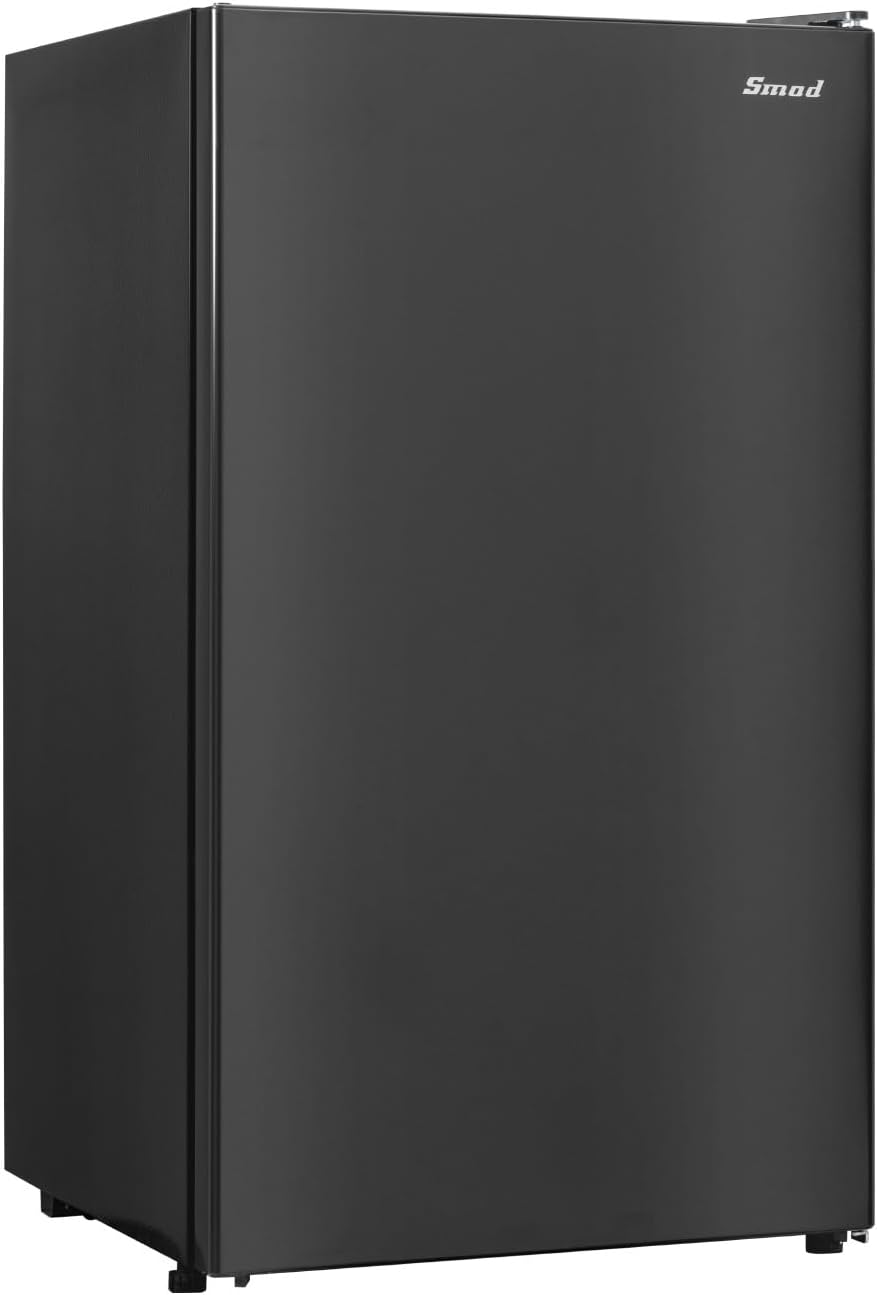
Smad 3.2 cu.ft Mini Fridge
| Capacity | 3.2 cubic feet |
|---|---|
| Configuration | Freezerless |
| Noise Level | 38 dB |
| Defrost System Type | Frost Free |
| Power Source | Corded Electric |
The Smad 3.2 cu.ft mini fridge is a compact, freezerless refrigerator built for dorms, offices, and apartments where space and energy use matter. It provides dual-zone cooling with a small chiller compartment plus a main compartment, a seven-step adjustable thermostat, two removable tempered glass shelves and three door bins for organizing bottles and snacks. The unit is designed to run quietly at about 38 dB and is billed as energy efficient, consuming roughly 0.6 kWh per day, which helps keep running costs low. Practical touches include a reversible door for flexible placement and a removable drip tray for easy cleanup. On the downside, capacity is limited to everyday essentials rather than full grocery loads and there is no dedicated freezer space for long-term freezing. The controls are basic rather than digital, so temperature fine-tuning is manual. For buyers prioritizing a compact, low-noise, low-energy fridge without a freezer, this model is a sensible, no-frills option.
Best for: Buyers looking for an affordable, space-saving refrigerator to keep drinks and daily snacks chilled in dorms, small apartments, or offices where low noise and low energy use matter.
Less Ideal for: People who need large-capacity refrigeration, a freezer compartment, or precise digital temperature control for specialized food storage.
- Freezerless design maximizes usable refrigerated space for drinks and fresh food
- Adjustable 7-level thermostat and removable glass shelves for flexible organization
- Quiet operation around 38 dB suitable for bedrooms and study areas
- Energy-efficient consumption at about 0.6 kWh per day to lower running costs
- Limited 3.2 cu.ft capacity not suited for larger grocery storage
- No digital controls or advanced temperature monitoring
Verdict: A quiet, energy-efficient freezerless mini fridge that delivers practical chilled storage for budget-minded small-space users.
roomwell 3.3 Cu Ft Mini Fridge

| Refrigerator Net Capacity | 3.28 cubic feet |
|---|---|
| Defrost System Type | Automatic |
| Voltage | 115 volts |
| Compressor Type | rotary_scroll |
| Specification Met | Energy Star |
This mini fridge is a straightforward small-capacity refrigerator meant for dorms, bedrooms, and offices where a freezer is not needed. It uses a rotary scroll compressor with R-600A refrigerant and meets Energy Star specifications, so it runs efficiently and keeps running costs low. The interior offers three full-width glass shelves, a door can dispenser for cans and one tall-bottle shelf, plus an adjustable mechanical thermostat for temperatures between 32 and 50 F. The reversible door, leveling legs, and flat-back design make it easy to position in tight spots and change door swing as needed. Automatic defrost and a simple mechanical control reduce maintenance and potential failure points, which supports long-term reliability. Limitations include its modest 3.3 cu ft capacity that is only suitable for small households and basic refrigeration needs, and it lacks a dedicated freezer compartment or advanced temperature controls for precise cooling of delicate items.
Best for: Buyers who prioritize a reliable, low-maintenance refrigerator for a single person or small space and want an efficient appliance that simply keeps drinks and perishables cold.
Less Ideal for: People who need freezer storage, larger capacity for family groceries, or precise temperature control for specialty foods should look elsewhere.
- Compact footprint fits tight spaces and has a flat-back design for close placement against walls
- Energy Star compliant with R-600A refrigerant for lower energy consumption
- Automatic defrost and a mechanical thermostat reduce maintenance and complexity
- Reversible door and adjustable leveling legs simplify placement and installation
- Three full-width glass shelves and door can dispenser provide flexible storage for bottles and cans
- No freezer compartment limits frozen storage and meal-prep options
- Capacity is small and not suitable for larger households or substantial grocery storage
Verdict: Choose this unit when you want a compact, energy-efficient, and low-maintenance fridge that reliably cools everyday food and drinks without a freezer.
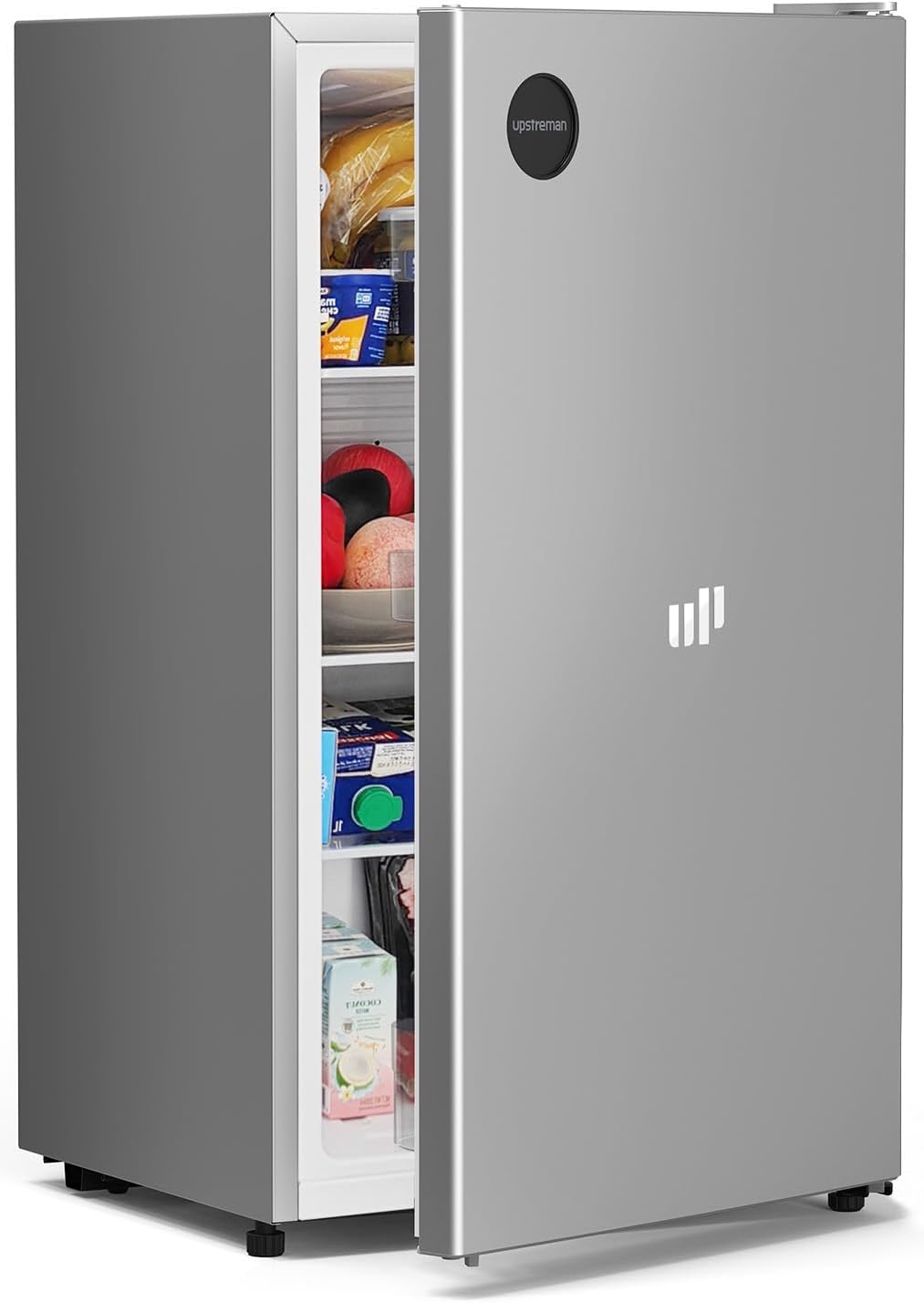
Upstreman CR32 3.2 Cu. Ft. Mini Fridge
| Capacity | 3.2 cubic feet |
|---|---|
| Configuration | Compact Freezerless |
| Cooling Method | Compressor |
| Defrost System Type | Automatic |
| Voltage | 115 volts |
The Upstreman CR32 is a compact all-refrigerator designed for offices, dorms, and bedrooms where a freezer is not needed. It cools with a compressor and offers seven thermostat settings from 32 to 50 F, so you can tailor temperatures for drinks, meal prep, or perishables. The interior is organized with three adjustable glass shelves and three clear door bins, and built-in LED lighting makes contents easy to find. The reversible door and two leveling feet give placement flexibility in tight spots, and the ENERGY STAR certification and R600a refrigerant keep running costs low. Practical limits include its small 3.2 cu ft capacity, which suits single-person use but not bulk storage, and the freestanding design requires clearance for airflow if installed under counters. Noise and long-term reliability are typical concerns with compact compressors, so expect some audible cycling and follow recommended placement and ventilation guidance. For buyers prioritizing a simple, energy-efficient no-freezer fridge with tidy organization and a modern look, this model delivers a balanced set of features for small-space daily use.
Best for: Buyers who want an efficient, no-freezer refrigerator for a single room or small household and who value adjustable organization and low running costs backed by positive user feedback.
Less Ideal for: Those needing freezer space, large-capacity refrigeration for families, or heavy long-term food storage should consider larger refrigerators with freezers.
- ENERGY STAR certified with low annual energy consumption (258 kWh/year)
- Seven temperature settings (32°F to 50°F) for flexible cooling
- Three adjustable glass shelves and three door bins for organized storage
- Reversible door and adjustable leveling feet for flexible placement
- Integrated LED lighting for easy visibility
- 3.2 cu ft capacity is limited for multi-person or bulk storage needs
- Compressor-based compact fridges can produce noticeable cycling noise
Verdict: Choose the Upstreman CR32 when you need a small, energy-efficient all-refrigerator with adjustable shelving and flexible placement for dorms, offices, or bedrooms.
Feelfunn 3.2 Cu.Ft Beverage Refrigerator

| Capacity | 3.2 cubic feet |
|---|---|
| Temperature Range | 34–64°F |
| Cooling Method | Compressor (rotary scroll) |
| Number of Shelves | 4 |
| Annual Energy Consumption | 288 kilowatt hours per year |
The Feelfunn 3.2 Cu.Ft Beverage Refrigerator is a compact, freezerless cooler intended for storing cans and bottles in kitchens, home bars, dorms, offices and similar spaces. It uses a rotary-scroll compressor and 3D air circulation to keep temperatures consistent across the cabinet while the digital control lets you set temperatures in the mid 30s to mid 60s Fahrenheit for different drinks. Four adjustable, removable shelves help organize up to about 126 cans and the double-layer low-E glass door with interior blue LED lighting keeps contents visible. Installation works as freestanding or under-counter thanks to reversible door hinges and adjustable feet. The unit is marketed as quiet (around 36 dB) and ETL tested, and it runs on R-600A refrigerant. Owners should note the fridge is compact and designed for beverage storage rather than full food preservation, and annual energy consumption is listed at 288 kWh which is moderate for a small compressor unit. The package includes basic accessories and a one-year service policy for support.
Best for: A buyer who prioritizes a reliable, factory-tested countertop or under-counter beverage cooler with predictable cooling, visible storage, and simple controls for everyday entertaining and small-space use.
Less Ideal for: Not a good choice for someone who needs freezer capability or a full refrigerator for meal prep and long-term food storage.
- Large 3.2 cu ft capacity that fits up to 126 cans for parties or home bars
- Adjustable removable shelves let you configure space for bottles or tall cans
- Digital temperature control with a wide 34–64°F range for different drink types
- Double-layer low-E glass door and interior LED lighting make contents easy to see
- Quiet compressor operation (~36 dB) suitable for bedrooms, offices, or living spaces
- Designed for beverages so it lacks freezer storage and may not suit full kitchen food needs
- Listed annual energy use (288 kWh) is higher than some small thermoelectric or efficient compressor models
Verdict: Choose this fridge if you want a quiet, compressor-based under-counter or freestanding beverage cooler with flexible shelving and straightforward digital temperature control.
Choosing the Right Refrigerator with No Freezer: Key Factors to Consider
Interior Layout and Shelf Adjustability
How the interior is organized determines how much useful storage you actually get. Look for adjustable shelves that allow tall items like milk jugs or pitchers, and consider whether the shelving material is easy to clean and reposition. Door bin capacity matters for bottles and condiments, while dedicated drawers or crisper compartments help keep produce fresher by isolating humidity.
A refrigerator without a freezer often compensates with more usable chilled volume, so pay attention to how the space is divided. Fixed shelves or awkwardly placed vents can reduce usable volume, so flexible configurations give better long-term utility when your storage needs change.
Energy Use and Long-Term Operating Cost
Energy efficiency affects monthly electricity bills and the environmental footprint of running a fridge full time. Choose units with published energy consumption figures or recognized energy certifications to estimate yearly costs. Consider whether the compressor type and insulation thickness are noted, since better insulation and efficient compressors reduce run time.
Smaller non-freezer refrigerators generally use less power than combined fridge-freezer units, but the actual savings depend on thermostat accuracy and defrost method. Models with automatic defrost cycles and smart temperature control can be more efficient in daily operation.
Temperature Control and Even Cooling
Stable, even cooling is essential for food safety and freshness. Check whether the unit offers a precise thermostat, multiple cooling zones, or air-flow design that prevents warm spots. Some chilled-only refrigerators circulate cold air differently than fridge-freezer combos, so pay attention to vent placement and any features that promote even distribution.
If you store sensitive items like dairy, deli meats, or meal-prepped dishes, consistent temperatures across shelves matter more. Models with quick-cool settings or stronger compressors can help recover temperature after the door is opened frequently.
Noise and Where You'll Place It
Because many refrigerators without freezers are used near living spaces, noise level is an important comfort factor. Look for published dB ratings or references to quiet compressors. Consider compressor type, as inverter motors often run more quietly and with fewer start-stop cycles.
Also evaluate installation location: a fridge placed in a kitchen alcove or next to seating will require a lower audible footprint than one in a garage or utility room. Vibration dampening feet and stable leveling reduce rattles and contribute to perceived quietness.
Size, Door Swing, and Installation Clearances
Measure your available space before choosing a unit. Door swing direction and whether the hinge is reversible determine if the fridge will fit in tight layouts. Check required clearances at the top, back, and sides for ventilation so the compressor can run efficiently and avoid overheating.
Consider built-in versus freestanding use. Freestanding units typically need space for airflow around the cabinet, while some slim designs are intended to sit flush in dedicated alcoves. Also factor in how the fridge will be moved into place, such as hallway width and doorway heights.
Defrost Method and Maintenance
Defrost method affects convenience and performance. Automatic defrost systems reduce manual maintenance and prevent frost buildup that can reduce usable capacity. However, some automatic systems run periodic cycles that slightly affect energy use, so weigh convenience against operating cost.
Also consider ease of cleaning: removable shelves, washable bins, and accessible condensation drains make upkeep simpler. Regular maintenance tasks like cleaning door gaskets and drip pans will keep a chilled-only refrigerator performing well over time.
When a No-Freezer Refrigerator Makes Sense
A refrigerator with no freezer is a practical choice when you already have frozen storage elsewhere or rarely use freezer space. These units maximize chilled capacity in a smaller footprint, making them ideal for single-person households, shared kitchen spaces, or serving as a dedicated beverage or produce fridge.
They are also useful in situations where quick access to chilled items is needed without the distraction of a freezer compartment. For multi-unit homes, an extra chilled cabinet can keep frequently used items close at hand and reduce door openings on a main freezer, improving overall food freshness.
- Expands chilled storage without increasing overall cabinet depth
- Better organization for tall bottles and bulk produce
- Lower chance of freezer-related odors transferring to chilled food
Sizing and Planning Your Layout
Start by measuring the intended location including ceiling height, doorway widths, and the clearance needed for the door to swing fully open. Think about the types of items you store most often and how shelf spacing will accommodate them. A compact no-freezer refrigerator can offer surprising capacity if the shelves are configurable.
Also plan for ventilation and service access. Many units require a few inches of clearance along the back or top for proper airflow and heat dissipation. If you plan to integrate the fridge into cabinetry, verify the manufacturer recommendations on built-in installation to avoid performance issues.
- Account for door swing and hinge reversibility
- Measure for transporting the unit through tight spaces
- Allow manufacturer-recommended ventilation gaps
Placement Near Living Areas: Sound and Aesthetics
If the refrigerator will live near a seating area or bedroom, prioritize models with lower reported noise output and vibration-resistant feet. Some chilled-only fridges are designed with quieter compressors and insulated panels to reduce both noise and surface heat.
Aesthetics matter when the fridge is visible in a living area. Choose finishes and door styles that complement the room, and consider reversible doors or panel-ready options when available to better integrate with cabinetry.
- Quieter compressors reduce disturbance in open-plan spaces
- Reversible doors increase placement flexibility
- Panel-ready or minimalist finishes improve visual integration
Cleaning, Odor Control, and Food Safety
Without a freezer compartment, chilled refrigerators can require more attention to spills and odors because everything shares the same airflow. Look for features like washable door bins, removable gaskets, and accessible drain channels that make routine cleaning easier.
To keep food safe, store raw proteins in sealed containers and use dedicated drawers for produce to reduce cross-contamination. Regularly check and replace door seals if they show gaps to maintain temperature performance and prevent energy loss.
- Removable components speed up cleaning
- Separate containers reduce flavor transfer
- Tight door seals maintain consistent temperatures
Power and Environmental Considerations
Consider the energy profile of the unit in relation to your local electricity costs and environmental goals. Models with better insulation, efficient compressors, and smart thermostats typically consume less energy. Over a multiyear horizon, these differences add up and can justify choosing a slightly more efficient model.
Also be mindful of refrigerant type and disposal guidelines. When replacing an older appliance, proper recycling or disposal of refrigerants and foam insulation is important to minimize environmental impact.
- Compare published annual energy consumption figures
- Prefer efficient compressor technologies when available
- Follow local guidelines for appliance disposal and recycling
How We Chose the Best Refrigerator with No Freezer
We focused on attributes that matter to people buying refrigerators without freezers and used consistent editorial filters to narrow the field. First, we limited candidates to units specifically designed without an internal freezer compartment, ensuring proper chilled-only storage and compressor configurations. We prioritized models with measured energy consumption data or Energy Star certification to reflect long-term operating cost and environmental impact. Next, we evaluated storage layout and flexibility, looking for adjustable shelving, clear door bins, and vegetable/produce storage designed for chilled-only use. Temperature stability and even cooling distribution were judged by reported features such as multiple cooling zones, evaporator placement, and user-adjustable thermostats. Installation and fit factors included overall footprint, reversible doors, leveling options, and whether the cabinet needed dedicated ventilation or special clearances. We also considered noise ratings and compressor type for users placing a fridge near living spaces. Units that lacked clear specifications for energy use, interior layout flexibility, or installation details were excluded. The final shortlist balances compactness, usable interior organization, efficiency, and quiet operation.
Our full evaluation process is outlined in our review methodology.
FAQ
Will a refrigerator with no freezer keep produce fresher?
Often yes, because chilled-only cabinets can provide more dedicated space for produce and maintain steady humid and cool conditions. Use crisper drawers and proper storage containers to extend freshness.
Are no-freezer refrigerators more energy efficient?
They can be, since they avoid the higher duty cycles of combined fridge-freezer systems. Actual efficiency depends on insulation, compressor design, and thermostat control, so look at published energy figures.
Can I use a chilled-only refrigerator as a beverage cooler in high-traffic areas?
Yes. These units work well for frequent access because they offer roomy door bins and adjustable shelves for bottles and cans. Choose a model with quick temperature recovery and low noise if placed near living spaces.
Do no-freezer units require special installation?
Most are freestanding and need standard clearances for ventilation and door swing. Built-in installations may require manufacturer-specified clearances, so review installation recommendations before purchasing.
How important is the defrost method in a refrigerator without a freezer?
Quite important. Automatic defrost reduces manual maintenance and prevents frost that can reduce usable space. Manual defrost models require more upkeep but sometimes use slightly less energy.
Will a no-freezer fridge handle deli meats and dairy safely?
Yes, provided it maintains consistent cold temperatures and you store these items in sealed containers or dedicated zones. Temperature stability and good airflow are key to keeping perishables safe.
Final Verdict
A refrigerator with no freezer is a focused solution for maximizing chilled storage, improving organization, and often lowering energy use in tight or secondary spaces. Prioritize interior flexibility, reliable temperature control, and energy performance to match your daily routines and placement in the home. Also factor in noise and installation clearances when the unit will be near living areas. Balance tradeoffs between convenience features like automatic defrost and long-term operating cost. With clear measurements and a focus on storage layout and temperature stability, you can confidently choose a chilled-only refrigerator that fits your space and keeps food fresh.