
Note: This article contains affiliate links. If you click on these links and make a purchase, we may earn a small commission at no extra cost to you. This helps support our research and content. Read our full affiliate disclosure here.
A refrigerator with a window changes a simple daily task into a quicker, less disruptive one. By letting you see inside without opening the door, these models reduce cold-air loss, make inventory checks faster, and cut down on energy waste—particularly useful in busy kitchens. This guide looks at seven shortlisted refrigerators with window that stand out for layout, visibility, and efficiency. You will find clear evaluation points we used to compare them and practical notes to help you decide which see-through design fits your routine and space. Read on for the features and tradeoffs that matter when choosing a refrigerator with a window.
Top Picks at a Glance
| Best Overall The best all-around choice for most situations | Tehanld 3.2 Cuft Beverage Fridge |  |
| Best Quality Built to a higher standard if you want something more solid | Coolski 36" Back Bar Cooler |  |
| Best Value The sweet spot between price and what you get | Feelfunn Beverage Refrigerator | 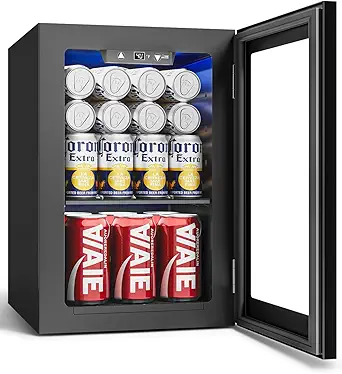 |
| Best Budget The cheapest option that still gets the job done reliably | iceBlue Mini Fridge LS-4YW |  |
| Top Rated A top-rated pick with lots of positive feedback | Whynter BBR-638SB Beverage Refrigerator |  |
| Most Popular A crowd favorite that many people choose with confidence | hOmeLabs Beverage Refrigerator HME030065N | 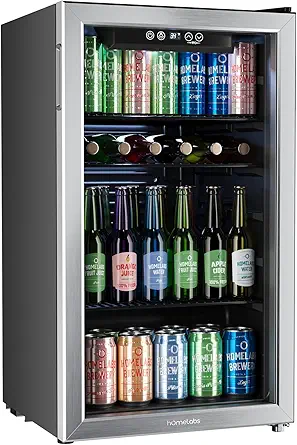 |
| Best Seller A high-volume bestseller chosen again and again | EUHOMY BR013-110 Beverage Refrigerator |  |
Tehanld 3.2 Cuft Beverage Fridge

| Capacity | 3.2 cubic feet |
|---|---|
| Cooling method | Compressor |
| Temperature range | 35-65°F (2-18°C) |
| Shelves included | 3 removable wire shelves |
| Refrigerant | R-290 |
This Tehanld 3.2 cu ft beverage fridge is a compact freestanding cooler designed to hold cans and bottles while showing contents behind a glass door. It uses a compressor cooling system with 360-degree air circulation to deliver even temperatures across three removable wire shelves, and a digital touch panel lets you set the range between 35 and 65°F with Fahrenheit or Celsius display. The low-e glass door, high-density seal and LED interior light make it easy to see and present drinks, and the unit includes a key lock for security. In everyday use it fits in a kitchen, home office, or entertainment area and stays relatively quiet thanks to a claimed sub-36 dB operating level. Practical notes: the fridge is freestanding only, requires an initial 6–12 hour rest after delivery, and its compressor design gives faster cooldown than thermoelectric units but will use typical compressor power. The combination of presentation glass, adjustable shelving and a clear temperature control makes it a versatile choice for balanced buyers wanting a visible, moderately sized beverage fridge.
Best for: Buyers who want a balanced, display-friendly beverage fridge for a home bar, office, or entertainment area and value visible storage, straightforward temperature control, and moderate capacity.
Less Ideal for: People needing a true built-in undercounter unit, extremely low-energy ultra-compact cooler, or those who require specialized wine-only features like dual cooling zones.
- Glass door with low-e coating and interior LED light for clear product display
- Compressor cooling with 360° air circulation for even temperature distribution
- Digital touch panel with selectable Fahrenheit/Celsius and a 35–65°F temperature range
- Three removable adjustable wire shelves allow flexible storage layouts
- Quiet operation under typical household noise levels (claimed <36 dB)
- Freestanding design only, not specified for built-in or undercounter installation
- Annual energy consumption (181 kWh) may be higher than some thermoelectric or smaller models
Verdict: Choose this fridge if you want a quiet, glass-front compressor beverage cooler that balances display, capacity, and simple digital temperature control.
Coolski 36" Back Bar Cooler

| Capacity | 7.4 cubic feet |
|---|---|
| Number of Doors | 2 |
| Number Of Shelves | 4 |
| Temperature Range | 33°F to 41°F |
| Refrigerant | R-290 |
The Coolski 36" Back Bar Cooler is a compact commercial beverage refrigerator built to display and chill cans and bottles while fitting under a counter. It uses a compressor with R-290 refrigerant and a forced-air system to hold temperatures between 33°F and 41°F, and an electronic digital controller lets you dial in setpoints. Two Low-E double glass doors, interior LED lighting, and four adjustable wire shelves make it easy to organize and showcase inventory, while self-closing doors and keyed locks help maintain temperature and secure stock. Construction mixes a stainless steel exterior with an anti-corrosion aluminum interior for continuous service in a food-service environment, and automatic defrost reduces maintenance. Expect a heavy unit that needs clearance behind it and a 24-hour upright rest period after transport before first use. This cooler prioritizes steady, uniform cooling and visibility over residential-style quiet or ultra-compact footprint, so it works best where consistent performance and display matter most.
Best for: Buyers who need a countertop-height, performance-focused display cooler for a bar or food-service setting and value consistent cooling and visible product presentation.
Less Ideal for: Home users who need a very quiet or lightweight fridge for small residential spaces should consider residential-style beverage refrigerators instead.
- Forced-air compressor cooling with R-290 provides fast, even chilling and a 33°F–41°F temperature range.
- Double Low-E glass doors and LED interior lighting make product display and stock checks easy.
- Four adjustable wire shelves offer flexible storage for cans and bottles.
- Commercial-grade stainless steel exterior and corrosion-resistant interior built for frequent use.
- Unit is heavy and requires space and clearance for installation and service.
- Designed for commercial use so it may be louder than residential refrigerators.
Verdict: Choose this under-counter back bar cooler when you need reliable, restaurant-grade cooling with glass display doors for visible product presentation.
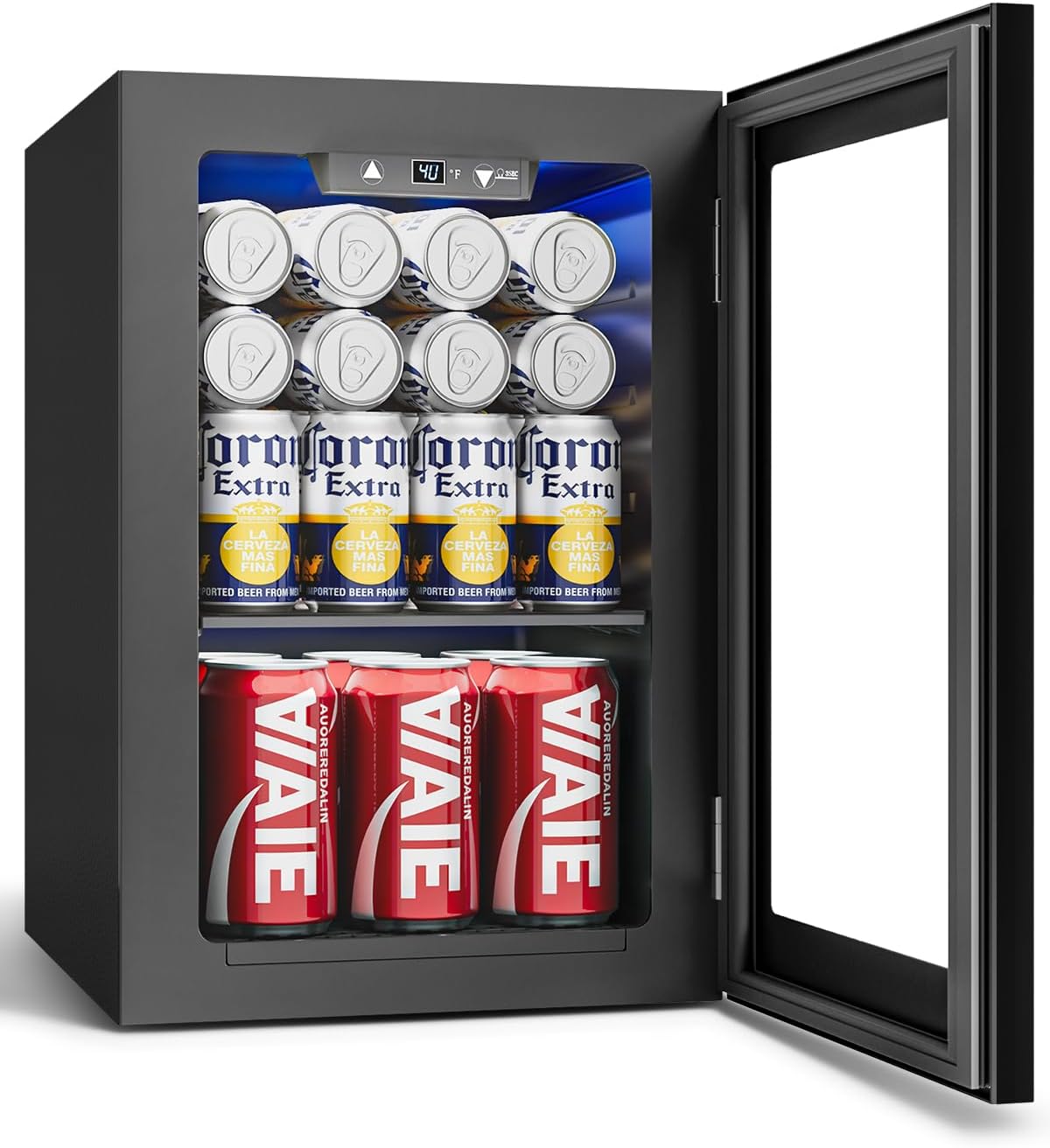
Feelfunn Beverage Refrigerator
| Capacity | 0.6 cubic feet |
|---|---|
| Temperature Range | 40-61°F (4-16°C) |
| Cooling Method | Compressor |
| Power Source | Corded Electric |
| Additional Features | Adjustable Shelves, Interior LED Lighting, Low Noise |
The Feelfunn beverage refrigerator is a compact, freestanding mini-fridge designed to hold up to 24 cans or a handful of wine bottles while fitting on a countertop, dorm room, or home bar. It uses a compressor cooling method and a 3D circulating air system to deliver even, fast cooling across a 40 to 61°F range controlled by touch buttons and an LED display. A removable shelf and adjustable feet make it easy to rearrange space for taller bottles and stabilize on uneven surfaces, and soft blue interior lighting helps with visibility. Noise is kept low at 38 dB or less, so it is suitable for bedrooms or offices, and the unit includes a UV-protective door and sealing strip to help preserve contents. Important limitations are the very small 0.6 cu ft capacity and manual defrost, which limit this to drinks and small bottles rather than bulk food storage, and the unit requires upright sit time before first use. For buyers seeking a small, quiet beverage cooler with simple controls, this is a practical option.
Best for: Buyers who want a space-efficient, low-noise beverage cooler for offices, dorms, or small home bars and prioritize reliable cooling and simple controls over large capacity.
Less Ideal for: Those needing fridge space for family groceries, meal prep, or long-term bulk storage should choose a larger refrigerator instead.
- Compact footprint that fits on counters, desks, or small bars
- Adjustable temperature range (40–61°F) for drinks and light wine storage
- Quiet operation at or below 38 dB suitable for shared spaces
- Removable shelf and adjustable feet for flexible storage and leveling
- Interior LED lighting and sealed door for visibility and better insulation
- Very small 0.6 cu ft capacity limits what you can store
- Manual defrost requires occasional maintenance
Verdict: Buy this if you need a compact, quiet, compressor-cooled beverage fridge that keeps drinks at serving temperature in very small spaces.
iceBlue Mini Fridge LS-4YW

| Capacity | 4 liters |
|---|---|
| Cooling Method | Thermoelectric |
| Power | 110 volts |
| Configuration | Compact Freezerless |
| Number Of Shelves | 1 |
This iceBlue mini fridge is a tiny, windowed thermoelectric cooler aimed at keeping skincare products and a few drinks chilled in small spaces. It uses a frost-free thermoelectric system and holds about 4 liters, roughly six 12-oz cans, on a single plastic shelf with a small door shelf for extras. The clear viewing window makes it easy to find items without opening the door, which helps retain cold and looks attractive on a vanity or desk. It runs on standard 110V power and includes portability features such as a lightweight form and an optional 12V car adapter for travel. Expect gentle cooling rather than deep refrigeration since thermoelectric units cool below ambient rather than reach fridge temperatures, so it is best for serums, masks, and beverages rather than long-term food storage. Construction is basic with plastic shelving and a single-door layout, and energy draw and cooling performance will be modest given the tiny capacity. For a budget-friendly, display-style skincare fridge the iceBlue delivers convenience and style in a very small footprint.
Best for: Buyers wanting an inexpensive, display-style skincare or beverage cooler for a desk, vanity, dorm room, or road trips who prioritize portability and a visible window over large capacity or deep refrigeration.
Less Ideal for: People who need a full-size refrigerator, deep cold storage for perishables, or a heavy-duty unit for frequent food storage should choose a larger compressor fridge instead.
- Clear viewing window for easy item display and access
- Very compact 4L capacity fits on a desk or vanity and holds about six 12-oz cans
- Thermoelectric, frost-free cooling for gentle, vibration-free chill suited to cosmetics
- Portable and lightweight design with 12V car adapter option for travel
- Thermoelectric cooling provides modest temperature drop and is not suitable for long-term food refrigeration
- Plastic shelving and simple construction limit durability and heavy use
- Small single-shelf interior restricts how much you can store at once
Verdict: A budget-friendly, windowed mini fridge that delivers portable, gentle cooling for skincare and a few drinks in very compact spaces.
Whynter BBR-638SB Beverage Refrigerator

| Capacity | 2 cubic feet |
|---|---|
| Can Capacity | 75 cans |
| Temperature Range | 34°F–54°F |
| Cooling Method | Compressor |
| Door Orientation | Reversible Door |
The Whynter BBR-638SB is a compact built-in or freestanding beverage refrigerator designed to store bottles and 12-oz cans in a neat undercounter footprint. It fits up to 75 standard cans across four wire shelves, and the touch digital control lets you set temperatures between about 34°F and 54°F for cold cans or slightly warmer drinks. The compressor cooling with internal fan circulation promotes even temperatures and the unit uses double-pane tempered glass door with LED lighting that makes contents visible while helping stabilize internal temps. Practical features include a reversible, locking door and an activated carbon filter to reduce odors. Because it is a dedicated beverage fridge with a compact 2.0 cu ft capacity, it is not meant for full-size food storage and requires the proper clearances for built-in installation; buyers should also expect typical compressor noise and occasional cycling. For someone wanting a reliable, visible undercounter fridge for entertaining or a home bar, this unit delivers consistent cooling and a tidy modern look.
Best for: Buyers who prioritize a dependable, purpose-built undercounter fridge for a home bar, office, or rec room and want a visible, locked display for cans and bottles.
Less Ideal for: People who need a general-purpose or large-capacity refrigerator for food storage or those who cannot accommodate built-in clearance requirements.
- Holds up to 75 standard 12-oz cans in a slim undercounter footprint
- Touch digital temperature control with a range down to 34°F for cold storage
- Double-pane tempered glass door and interior LED light make contents easy to see
- Reversible locking door and activated carbon filter for odor control
- Limited 2.0 cu ft capacity not suitable for general refrigeration needs
- Requires proper clearances for built-in installation and will produce normal compressor noise
Verdict: Choose the Whynter BBR-638SB if you want a compact, windowed undercounter beverage fridge that reliably chills and displays up to 75 cans.
hOmeLabs Beverage Refrigerator HME030065N

| Capacity | 3.2 cubic feet |
|---|---|
| Storage | 120 cans |
| Temperature range | 34°F–50°F |
| Cooling method | Compressor |
| Defrost system | Automatic |
This hOmeLabs beverage refrigerator is a freestanding, glass‑front cooler designed to store cans and bottles for home bars, offices, or dorm rooms. It holds about 120 slim cans in a 3.2 cubic foot interior across three removable chrome shelves that can be repositioned for taller bottles or mixed storage. Temperature is set with a touch control panel and digital display that ranges down to 34°F, while a bright interior LED and double‑glazed glass door make contents easy to see without opening. Cooling is handled by a compressor with a whisper‑quiet design, and the unit is intended for standalone use or under-counter placement with reversible door swing and adjustable feet for leveling. Practical limitations include its compact capacity if you need large-volume or full-size bottle storage and a reported annual energy consumption figure that buyers concerned about efficiency may want to consider. The overall fit is a visible, user-friendly beverage fridge that prioritizes easy access and presentation over maximum capacity or ultra‑low energy use.
Best for: Buyers who want a compact, attractive beverage fridge that puts drinks on display and offers simple digital controls for everyday home, office, or small entertaining use.
Less Ideal for: People who need large-capacity refrigeration for full-size wine bottles or bulk storage or who prioritize the most energy-efficient appliance available.
- Clear double-glazed glass door and interior LED for easy visibility without opening the door
- Touch-button digital temperature control down to 34°F for consistent beverage chilling
- Three removable chrome shelves for flexible shelf arrangement
- Whisper-quiet compressor for low-noise indoor use
- Compact 3.2 cu ft capacity limits storage for larger bottles or high-volume needs
- Annual energy consumption is relatively high at 288 kWh/year
Verdict: Choose this hOmeLabs glass‑door beverage refrigerator if you want a compact, presentation-ready cooler with easy digital controls and flexible shelving.
EUHOMY BR013-110 Beverage Refrigerator

| Capacity | 3.2 cubic feet |
|---|---|
| Temperature range | 37°F to 61°F |
| Cooling method | Compressor |
| Shelves | 5 removable wire shelves |
| Defrost system type | Frost Free |
The EUHOMY BR013-110 is a freestanding 3.2 cubic foot beverage refrigerator built to store cans and bottled drinks while keeping them visible behind a double-layer glass door. It uses a compressor cooling system with an internal circulation fan and digital touchscreen control that sets temperatures between 37°F and 61°F, so you can chill soda, beer, or white wine to preferred serving temperatures. Five removable wire shelves slide into five slots for flexible layouts and the reversible door plus adjustable feet make placement straightforward in a kitchen, home bar, bedroom, or office. The unit is frost free and reports quiet operation around 36 dB and modest energy use (about 0.69 kWh/day). Expect practical factory-style features and simple maintenance, though the compact size limits total storage compared with larger undercounter models and the glass front may show fingerprints. For buyers who want predictable performance and clear visibility of their collection, this is a reliable mid-capacity option.
Best for: Buyers who prioritize predictable, factory-quality cooling and a visible display for drinks and want a compact freestanding fridge that fits a home bar, office, or small kitchen.
Less Ideal for: Those needing large-capacity refrigeration for heavy entertaining or full household food storage should consider a bigger undercounter or full-size refrigerator.
- Visible double-layer glass door protects contents while showing inventory
- Digital touchscreen with 37°F–61°F range for precise serving temps
- Compressor cooling plus circulation fan for even, consistent cooling
- Five removable shelves that can be rearranged for cans or bottles
- Reversible door and adjustable feet for flexible placement
- 3.2 cu ft capacity may be small for large households or frequent entertaining
- Glass door can require more cleaning to remove fingerprints
Verdict: A dependable mid-size beverage fridge with a glass door and precise digital control for buyers who want visible, reliable cooling in a compact footprint.
Choosing the Right Refrigerator with Window: Key Factors to Consider
Window Size And Placement
Window size and placement determine what you can actually see without opening the door. A tall, narrow view that only shows one shelf is less helpful than a broadly placed window that aligns with commonly used compartments. Consider whether the window is centered at eye level or low on the door; the wrong placement can make regular items invisible and negate the convenience.
Also check whether the visible area is obstructed by internal components like ice makers or fixed shelving. A well-placed window should reveal a useful cross-section of the fridge so you can identify key items quickly.
Interior Layout And Accessibility
A clear window is only useful if the interior layout organizes frequently used foods where they are visible. Look for adjustable shelving, a mix of full-depth and half-depth shelves, and door bins that keep condiments and drinks in predictable spots. Drawers that slide smoothly and clear labeling or transparent bins help you match internal arrangement to the window sightlines.
Think about how you store perishables. If you keep most items in drawers or behind opaque covers, the window advantage shrinks. Prioritize layouts that let you position staples in the parts of the cabinet you can see through the window.
Energy Performance And Insulation
The whole point of a door window is to reduce the number of times you open the fridge. That said, the window itself must not compromise insulation. Look for models with thermally broken frames, multi-pane glass, or insulated glazing designed for refrigerators. These features limit conductive heat transfer and help the compressor run less frequently.
Also consider the unit's overall energy rating and typical power draw. A refrigerator with a window can still be efficient if it pairs a high-quality seal and advanced compressor control with the visible convenience of the glass door.
Light And Anti-Glare Treatment
Internal lighting significantly affects how useful a window is. Strong, evenly distributed LED lighting positioned to illuminate the visible shelves makes identification easy, even with tinted glass. Anti-glare or low-reflectivity coatings on the window surface improve visibility in bright kitchens where sunlight or overhead lighting would otherwise create reflections.
Check whether the lighting is motion-activated or on with the door only; some designs provide a light that improves viewability through the glass even when the door is closed.
Maintenance And Durability
Windows introduce additional surfaces to keep clean and secure. Fingerprint-resistant coatings, easily cleanable glass, and durable seals reduce maintenance work and preserve clarity. Consider how the window will handle everyday wear: resistance to scratches, the potential for fogging, and whether seals around the window may degrade over time.
Also factor in serviceability. If the window or its trim is damaged, ease of replacement and access to service parts will affect long-term ownership costs and convenience.
Noise, Cooling Stability, And Temperature Zones
A refrigerator must maintain stable temperatures across zones even if it includes a glass door. Windowed doors should not lead to hotspots or uneven cooling because that will negatively impact food life. Look for models with reliable airflow management, separate temperature controls for drawers, and consistent thermostat performance.
Noise levels matter in open-plan homes. Compressors and fans that compensate for extra heat gain must be quiet enough for kitchen and adjacent living spaces. Evaluate typical operating sound and whether the model has power-saving modes that balance noise and cooling.
How Windowed Doors Change Daily Routines
A transparent door shifts routine behavior by making quick inventory checks easier. Instead of opening the door to confirm milk or condiments, you can scan the visible shelves and decide if you need to fetch items, reducing door openings and short-term temperature fluctuations.
- Faster pantry checks reduce food exposure to warm air
- Less frequent door openings help preserve internal temperatures
- Visibility encourages tidier, more deliberate storage practices
Design Variations And What They Mean To You
Windowed refrigerators come in several design approaches: fully transparent doors, partial inset panels, and small inspection windows. Each approach balances visibility against insulation and privacy. Full windows maximize sightlines but require attention to insulation and anti-glare treatments. Partial or inset windows target specific shelves and can be more efficient thermally.
- Full-panel glass: best sightlines, must account for insulation
- Partial window: targeted visibility with potentially better thermal control
- Tinted or mirrored glass: increases privacy but can reduce view clarity
Placing A Windowed Refrigerator In Your Kitchen
Think about sightlines in your kitchen when positioning a windowed refrigerator. Place the door where natural movement finds the visible window easily, such as near prep zones or counters where you plan meals. Avoid locations where glare from windows or direct sunlight will flood the glass and create reflections that defeat the purpose of the window.
- Avoid direct sunlight to reduce reflection and thermal load
- Place near prep areas to take full advantage of quick checks
- Allow enough clearance for door swing and view alignment
Keeping The Window Clear And Functional
Routine maintenance keeps the window usable and attractive. Clean with nonabrasive glass cleaners and soft cloths to avoid scratches. Wipe seals and trim to prevent dirt buildup that can affect the door fit and thermal performance. If the window has coatings, follow manufacturer guidance to avoid degrading them with harsh chemicals.
- Use gentle, pH-neutral cleaners to preserve coatings
- Clean seals and gaskets to maintain insulation
- Schedule periodic checks for fogging or seal degradation
When A Window Might Not Be Worth It
A window is less valuable if your storage habits rely heavily on opaque drawers or if the visible area does not correspond to commonly accessed items. Similarly, in kitchens with bright direct light that causes glare, a window can become more of a cosmetic feature than a practical one. Consider whether a visible door would actually change how often you open the fridge before committing to a windowed model.
- Opaque storage or irregular internal layout reduces usefulness
- High-reflection rooms can negate visibility benefits
- If visibility does not change behavior, the feature offers little real advantage
How We Chose the Best Refrigerator with Window
We evaluated refrigerators with window by applying criteria that matter for everyday kitchen use. First, storage layout and shelf flexibility had top priority because the practical benefit of a window depends on whether the visible area maps to commonly accessed items. Second, energy efficiency and door-seal performance were key because minimizing cold-air loss is the main reason to have a windowed door. Third, window design and durability were considered to ensure long-term clarity and resistance to scratches or fogging. Fourth, lighting and visibility metrics were assessed so the window actually improves sightlines at typical eye level. Fifth, noise and cooling consistency were included to make sure a windowed door does not compromise temperature stability. We excluded models that offered a window purely as a cosmetic add-on with no interior visibility or models with nonstandard door openings that would not suit most kitchen layouts. The shortlist favors units that balance visible convenience with robust cooling, sensible storage, and measured energy use. Each finalist met baseline safety and refrigeration standards and scored well across the concrete, buyer-relevant dimensions described above.
Our full evaluation process is outlined in our review methodology.
FAQ
Do windows make refrigerators less energy efficient?
Not necessarily. A well-designed window uses multi-pane glass, thermal breaks, and effective door seals to limit heat transfer. Poorly designed windows or damaged seals can increase energy use, so inspect insulation features and energy ratings when evaluating models.
Will a windowed door show fingerprints and smudges more?
Yes, glass surfaces tend to show fingerprints and smudges. Many models use fingerprint-resistant coatings or treated glass, but regular cleaning with nonabrasive cloths is still required to keep the window clear.
Can a windowed refrigerator maintain even temperatures?
Windowed refrigerators can maintain even temperatures if they have proper insulation, airflow design, and reliable thermostat control. Look for models that specify consistent temperature zones and have adjustable shelving to avoid blocking vents.
Are the windows prone to fogging or condensation?
Fogging can occur if seals fail or if there are significant temperature differentials. Quality models use sealed, insulated glazing and good door seals to reduce this risk. Proper installation and avoiding excessive humidity near the fridge also help.
Is the window likely to crack or scratch easily?
Windows are typically made from tempered or reinforced glass designed for kitchen use, but they can scratch or crack under impact. Choose units with durable glass and consider protective films if the fridge will be in a high-traffic area.
Final Verdict
A refrigerator with a window can deliver real daily gains in convenience and energy control if you choose a model with thoughtful window placement, strong insulation, and an interior layout that places commonly used items in the visible zone. Prioritize storage flexibility, thermal design, and lighting so the window becomes a practical tool rather than a cosmetic feature. Weigh the tradeoffs between visibility and potential maintenance. If you value quick visual checks and keep frequently used items in predictable spots, a windowed refrigerator is a smart choice. Otherwise, focus on models with better internal organization and insulation first.