
Note: This article contains affiliate links. If you click on these links and make a purchase, we may earn a small commission at no extra cost to you. This helps support our research and content. Read our full affiliate disclosure here.
If you need a dedicated cold storage cabinet without a built-in freezer, a refrigerator without freezer compartment can simplify storage, save space, and reduce energy use. These single-purpose fridges put more of the interior volume to use for chilled items, which is useful in small kitchens, home offices, garage pantries, or beverage-only setups. Choosing the right model matters because size, temperature stability, and shelving layout determine how well the unit supports day-to-day food organization and long-term freshness. This guide covers the top shortlisted refrigerators without freezer compartments, explaining the features we prioritized and the tradeoffs to expect. Read on for the evaluation criteria and practical buying advice that will help you pick the right unit for your needs.
Top Picks at a Glance
| Best Overall The best all-around choice for most situations | Magic Chef 3.2 Cu. Ft. Mini Fridge |  |
| Best Quality Built to a higher standard if you want something more solid | roomwell 3.3 Cu Ft Mini Fridge REFNFR3300 |  |
| Best Budget The cheapest option that still gets the job done reliably | Smad 3.2 cu.ft Mini Fridge |  |
| Top Rated A top-rated pick with lots of positive feedback | Magic Chef Retro Mini Refrigerator MCR32CHW |  |
| Best Seller A high-volume bestseller chosen again and again | COWSAR 4.4 Cu.Ft Compact Refrigerator |  |
Magic Chef 3.2 Cu. Ft. Mini Fridge

| Capacity | 3.2 cubic feet |
|---|---|
| Cooling Method | Compressor |
| Defrost System Type | Manual |
| Number Of Shelves | 3 |
| Installation Type | Freestanding |
This Magic Chef 3.2 cu. ft. mini fridge is a compact, all-refrigerator unit that prioritizes usable storage over a freezer compartment, making it practical for dorms, offices, or small apartments. It uses a compressor cooling system and offers full-range temperature control so you can chill beverages or keep perishables at different settings. The interior includes three glass shelves and door storage with a can holder to help organize bottles and smaller items, while the reversible door and flat back design make placement flexible. It is manually defrosted and rated for modest energy use, which helps with running costs but requires occasional maintenance to remove frost if it appears. The unit is simple to set up as a freestanding appliance and does not include advanced smart features, so operation is straightforward but basic. If you want maximum refrigerated capacity without a freezer and an easy-to-use, space-conscious appliance, this model delivers sensible performance with a few basic trade-offs in features and manual upkeep.
Best for: Buyers who want the most usable refrigerated space in a compact freestanding unit and value straightforward controls and flexible placement over extra features.
Less Ideal for: People who need a freezer, want the highest energy-efficiency ratings, or expect smart features and automatic defrosting.
- All-refrigerator layout maximizes usable chilled storage for beverages and fresh food
- Adjustable full-range temperature control for tailored cooling
- Reversible door and flat back enable flexible placement in small spaces
- Glass shelves and dedicated door can holder help keep items organized
- Manual defrost system requires periodic maintenance
- BEE rating indicates lower star efficiency compared with top-tier energy models
- No freezer compartment limits freezer storage options
Verdict: Choose this mini fridge when you want maximum refrigerated storage in a compact, simple all-refrigerator package for dorms, offices, or small apartments.
roomwell 3.3 Cu Ft Mini Fridge REFNFR3300

| Refrigerator Net Capacity | 3.28 cubic feet |
|---|---|
| Defrost System Type | Automatic |
| Voltage | 115 volts |
| Cooling Method | Compressor |
| Refrigerant | R-600A |
This mini fridge is built for compact spaces and steady daily use. It cools with a rotary scroll compressor and offers three full-width glass shelves plus a tall bottle door rack and can-dispense storage for cans, so it handles groceries, beverages, and meal prep items in a dorm, office, or bedroom. The reversible door and flat-back design make placement flexible, and automatic defrost with a mechanical thermostat reduces routine maintenance. Energy Star compliance and R-600A refrigerant keep running costs and environmental impact low, while an interior light and lock add practical convenience. Limitations include the absence of a freezer compartment, which means no frozen storage or ice-making on board, and the compact capacity limits larger meal prep or bulk storage. For buyers prioritizing cooling performance, low energy use, and flexible placement in tight spaces, this is a capable no-freezer option; anyone needing frozen storage should look elsewhere.
Best for: Buyers who need reliable, refrigerator-only cooling in a small-space setting and prioritize steady performance, low energy use, and flexible placement over frozen storage.
Less Ideal for: People who need any freezer space, frequent long-term meal prepping, or storage for large parties should choose a unit with a freezer or larger capacity.
- Compressor cooling with rotary scroll compressor for consistent, fridge-style temperatures
- Three full-width glass shelves and tall-bottle door storage for organized, upright storage
- Reversible door and flat-back layout for flexible placement in tight rooms
- Automatic defrost and mechanical thermostat reduce maintenance and simplify temperature control
- Energy Star rated with R-600A refrigerant for lower power draw and improved efficiency
- No freezer compartment or onboard ice production limits frozen-food use
- Compact 3.3 cu ft capacity restricts bulk storage and large platters
Verdict: A compact, energy-efficient refrigerator-only unit that delivers steady compressor cooling and flexible placement for small-space users who do not need frozen storage.
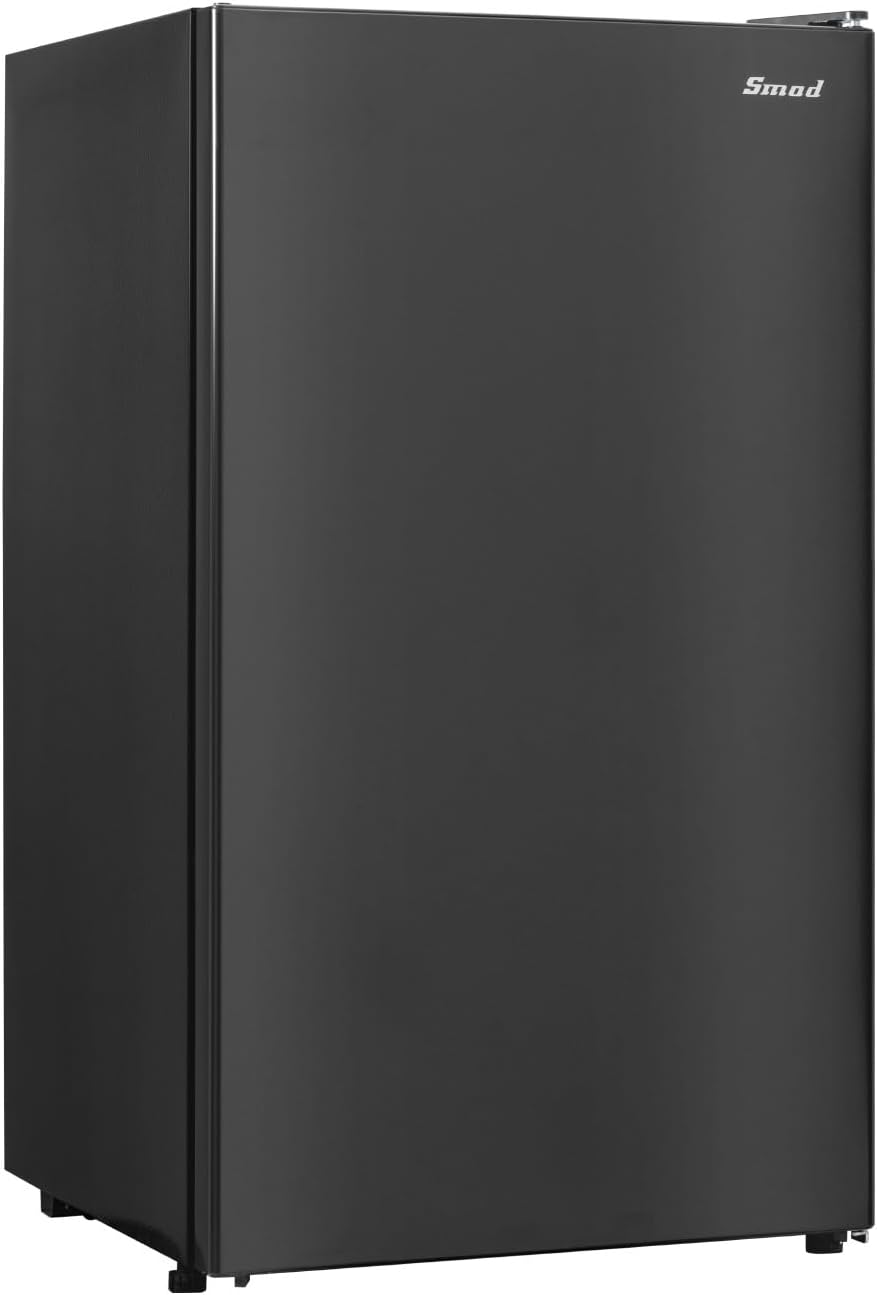
Smad 3.2 cu.ft Mini Fridge
| Capacity | 3.2 cubic feet |
|---|---|
| Configuration | Freezerless |
| Defrost System Type | Frost Free |
| Voltage | 110 volts |
| Number Of Shelves | 2 |
The Smad 3.2 cu.ft mini fridge is a small, energy-conscious refrigerator built for dorms, offices, and apartments where a freezer is not needed. It provides dual-zone cooling with a dedicated chiller compartment and a main compartment that can be set across seven thermostat levels, so you can tailor temperatures for drinks, produce, or chilled snacks. The interior uses two removable tempered glass shelves and three door bins to keep items organized, and the reversible door makes placement flexible in tight layouts. Rated to run quietly at about 38 dB and consuming roughly 0.6 kWh/day, it is suitable for noise-sensitive areas and helps keep running costs low. Practical conveniences include a drip tray for spills and a frost-free design that reduces maintenance. Limitations are its modest 3.2 cu.ft capacity and absence of a full freezer, so it will not replace a standard refrigerator for large families or long-term frozen storage needs.
Best for: Buyers prioritizing a low-cost, compact refrigerator for a dorm, office, or small apartment who value quiet operation and low energy use over freezer space.
Less Ideal for: People who need substantial refrigerated capacity or regular frozen food storage should consider a larger fridge with an integrated freezer.
- Compact footprint fits small rooms and apartments
- Dual-zone cooling with adjustable thermostat for flexible temperature control
- Removable tempered glass shelves and door bins for organized storage and easy cleaning
- Quiet operation (~38 dB) suitable for bedrooms and study areas
- Energy-efficient consumption (about 0.6 kWh/day) to keep running costs low
- Modest 3.2 cu.ft capacity limits storage for larger households
- No full freezer compartment for frozen food storage
Verdict: Choose this compact, energy-efficient freezerless fridge when you need a quiet, budget-friendly refrigerator for small spaces and chilled items only.
Magic Chef Retro Mini Refrigerator MCR32CHW

| Capacity | 3.2 cubic feet |
|---|---|
| Configuration | Freezerless |
| Cooling Method | Compressor |
| Defrost System Type | Manual |
| Specification Met | Energy Star |
This Magic Chef 3.2 cu. ft. retro mini refrigerator is a straightforward, freezerless compact fridge intended for dorms, offices, or rec rooms where space and a simple cooling solution matter. It uses a compressor cooling method with a reciprocating compressor and manual defrost, and offers three adjustable glass shelves plus a wire door rack and can dispenser to organize beverages and snacks. The interior LED light and adjustable temperature control make everyday use easy, and the unit meets ENERGY STAR specifications which helps keep operating costs down. Practical benefits include flexible shelf layout for taller bottles, a right-swing door that works in most tight spots, and a modest annual energy consumption figure for a small fridge. The main limitations are the manual defrost requirement and the absence of a freezer compartment, which restricts frozen food storage and adds occasional maintenance. For buyers prioritizing simple, reliable refrigeration without extra features, this model delivers a familiar retro look with sensible functionality.
Best for: Buyers who want a simple, dependable small refrigerator for drinks and fresh food in tight spaces and value straightforward operation and energy efficiency.
Less Ideal for: People who need to store frozen items regularly or who prefer a hands-off, auto-defrost appliance with more advanced features.
- Compressor cooling with adjustable temperature control for consistent cold
- Three removable glass shelves and door rack provide flexible organization
- ENERGY STAR certified for lower energy use
- Interior LED light improves visibility in the compact interior
- Manual defrost requires occasional maintenance
- No freezer compartment limits frozen food storage
Verdict: A dependable, energy-efficient freezerless mini fridge that delivers straightforward cooling and flexible storage for small spaces.
COWSAR 4.4 Cu.Ft Compact Refrigerator

| Capacity | 4.4 cubic feet |
|---|---|
| Defrost System Type | Manual |
| Number Of Shelves | 3 |
| Door Orientation | Reversible |
| Annual Energy Consumption | 253 kilowatt hours per year |
The COWSAR 4.4 Cu.Ft Compact Refrigerator is a freestanding, freezerless mini fridge aimed at apartments, dorms, and offices that need straightforward cold storage. It uses a compressor cooling system with a 7-setting mechanical thermostat that claims a 32 to 50°F range, so you can dial in temperatures for drinks, produce, and prepared meals. Inside are three removable glass shelves for flexible storage and easy cleaning, plus adjustable leveling feet and a reversible door to fit tight layouts. The unit is marketed as energy efficient with an annual consumption figure (253 kWh) and runs quietly at under 43 dB, which makes it suitable for bedrooms or home offices. Because it is a basic, manual-defrost design there are no fancy features like automatic defrost, digital controls, or a freezer compartment; expect simple operation and occasional manual care to avoid frost or heavy condensation. Build and finish are typical for value compact fridges and the reversible door and removable shelves make it practical for conservative buyers who prioritize reliable, no-frills refrigeration.
Best for: A cautious buyer who values a simple, reliable refrigerator for a small living space and prefers easy-to-use mechanical controls and proven compressor cooling over smart features.
Less Ideal for: People who need a freezer compartment, advanced temperature controls, or feature-rich smart appliances should look elsewhere.
- True freezerless design maximizes usable fresh-food space for beverages and meal prep
- Mechanical 7-setting thermostat offers simple, reliable temperature control
- Removable glass shelves and reversible door add flexibility for layout and cleaning
- Low reported noise level, suitable for bedrooms and home offices
- Manual defrost system requires occasional user maintenance
- Lacks digital controls, Wi-Fi, or advanced features found on higher-end models
Verdict: Buy this if you want a quiet, energy-conscious, no-frills compact refrigerator that prioritizes usable fresh-food space and straightforward mechanical controls.
Choosing the Right Refrigerator Without Freezer Compartment: Key Factors to Consider
Usable Interior Capacity
Capacity affects how much you can store and how items fit on the shelves. Manufacturers often quote total volume, but what matters is usable chilled capacity after accounting for door bins, fixed shelving, and required air space for circulation.
If you plan to store platters, tall bottles, or multiple large containers, choose a unit with adjustable or removable shelves and a higher usable volume. In smaller spaces, shallow but well-organized interiors can outperform larger but poorly laid-out cabinets because you can actually reach and organize everything. Check shelf weight limits and whether shelves are tempered glass, wire, or plastic, because sturdier shelves let you stack heavier items safely.
Temperature Control and Stability
A refrigerator without a freezer compartment should maintain consistent chilled temperatures across the interior to preserve perishable foods. Look for models with an accurate thermostat, a clear temperature display or dial, and documented control range suitable for fresh foods and beverages.
Temperature stability is affected by compressor type, insulation quality, and airflow design. Units with forced-air circulation reduce warm spots and can be better when storing mixed loads. Consider whether the fridge has separate zones or adaptive cooling features if you need temperature differentiation between shelves.
Shelving Layout and Door Storage
How the interior is organized determines real-world usability. Flexible shelving, spill-proof surfaces, and adjustable door bins let you configure the space for tall bottles, dairy, produce, or meal prep containers.
Look for interior lighting placement, clear drawers for produce, and whether the door bins have secure barriers for heavy items. Ease of removing and cleaning shelves and bins matters for long-term upkeep. Some models include dedicated bottle racks or wine storage that can be useful for beverage-focused setups.
Energy Use and Operating Cost
Because these fridges run continuously, energy consumption directly affects operating cost. Check the appliance's energy rating and typical annual energy use if available. Higher-efficiency compressors and better insulation reduce long-term electricity use.
Energy efficiency is especially important for units placed in conditioned living spaces or continuously used home offices. Consider whether features like LED lighting, adaptive defrost, or variable-speed compressors are present, as these can reduce power draw without sacrificing cooling performance.
Noise Level and Vibration
Noise matters when the refrigerator will sit near living or working areas. Compressor and fan noise plus vibration can be distracting if the unit is under a counter or next to a desk.
Look for low-decibel ratings or user-focused noise specifications when available. Solid mounting feet, balanced compressors, and quieter fan designs reduce vibration and rattling. If quiet operation is a priority, prioritize models marketed for low-noise or hospitality use.
Serviceability and Installation Flexibility
Installation needs include available clearance, door-swing direction, and whether the unit requires dedicated electrical circuits. Consider units with reversible doors and installation guides that specify ventilation clearance.
Serviceability covers how easy it is to access the compressor area for routine checks and how straightforward control adjustments or filter replacements are. A design that allows simple leveling, has replaceable gaskets, and straightforward access to components reduces long-term maintenance headaches.
When a No-Freezer Refrigerator Makes Sense
A refrigerator without a freezer compartment works well when you need maximized chilled storage rather than mixed chilled-and-frozen capacity. Common use cases include kitchens where a separate chest freezer handles frozen goods, beverage centers, dedicated produce fridges, or situations where minimal energy use and simpler temperature management are priorities.
- Ideal for wine, drinks, and fresh produce storage
- Good for shared spaces like offices or break rooms
- Useful in homes using a separate freezer for bulk-frozen items
Sizing and Placement Tips
Measure both the installation footprint and the door swing area before choosing a unit. Pay attention to required clearance for ventilation at the back and top. For built-in or under-counter installs, confirm the model supports flush or integrated mounting and whether the compressor placement allows close-wall installation.
- Allow space for door to open fully and for removing shelves
- Factor in ventilation clearance to avoid overheating
- Choose reversible doors if layout flexibility is needed
Optimizing Interior Layout for Your Food Types
Plan shelving and accessory choices around what you store most. If you mainly keep beverages and bottles, prioritize deeper door bins and bottle racks. For meal prep and dairy, multiple adjustable shelves and a humidity-controlled crisper are more valuable. Consider modular inserts or bins that help separate raw and ready-to-eat items to reduce cross-contamination.
- Use clear bins for quick visibility
- Reserve top shelves for ready-to-eat foods
- Store raw proteins lower to prevent drips
Installation and Ventilation Best Practices
Proper ventilation keeps the compressor healthy and helps maintain stable temperatures. Follow the manufacturer clearance guidelines for the back and top of the unit. Avoid enclosing a standard fridge in a tight cabinet without added ventilation unless the model is specifically rated for built-in installation.
- Keep grills and vents unobstructed
- Maintain recommended clearance around the unit
- Level the refrigerator to prevent door alignment issues
Maintenance and Cleaning Advice
Regular cleaning of interior surfaces, door gaskets, and condenser coils keeps the unit efficient and hygienic. Wiping spills promptly prevents odors and bacterial growth. Periodically inspect and clean condenser coils if they are accessible, because dust buildup increases compressor workload and energy use.
- Check and clean door gaskets for tight seals
- Defrost manually if model requires it to prevent frost buildup
- Use mild detergents and avoid abrasive cleaners on surfaces
How We Chose the Best Refrigerator Without Freezer Compartment
We focused on products that are deliberately configured as refrigerators without freezer compartments rather than units with removable freezers. Our editorial filters prioritized long-term usability, measured cooling consistency, and interior layout flexibility. Key evaluation dimensions included usable chilled capacity, temperature-control range and stability, shelving and storage design, energy consumption and efficiency, and build quality with attention to sealing and insulation. We also considered noise levels for installations near living spaces and ease of installation and maintenance for typical household users. We excluded combination refrigerator-freezer units and compact fridges with integrated freezer compartments. We also left out models that lack clear published specifications for temperature range or interior volume. Final selections are those that met minimal performance thresholds across the dimensions above and offered practical features for everyday refrigeration without the encumbrance of a freezer compartment.
Our full evaluation process is outlined in our review methodology.
FAQ
Can a refrigerator without a freezer keep meat safe?
Yes, provided you maintain the correct chilled temperature, usually between 34 and 40 degrees Fahrenheit. Store raw meat on the lowest shelf in sealed containers and use within recommended refrigeration windows to ensure safety.
Are these refrigerators more energy efficient than combo units?
Often they can be more efficient because all interior volume is dedicated to chilled storage, and there is no separate frozen compartment to cool. Actual energy use depends on insulation quality, compressor efficiency, and user habits like door openings.
Can I install a no-freezer refrigerator under the counter?
Some models are designed for under-counter or built-in installation, but you must confirm the unit is rated for that use and follow the required ventilation clearances. Countertop or cabinet-mounted installs that block vents are not recommended unless specified.
How do I organize a no-freezer fridge for maximum capacity?
Use adjustable shelves and clear bins to group items, keep frequently used items at eye level, and store tall bottles in door bins. Limiting unnecessary containers and using stackable storage helps maximize usable space.
Will these units require more frequent defrosting?
It depends on the cooling method. Models using direct cooling may develop frost and require manual defrosting, while units with automatic defrost systems manage frost internally. Check specifications to understand the expected maintenance.
Final Verdict
Prioritize usable chilled capacity, reliable temperature control, and an interior layout that matches how you plan to store food and drinks. Balance energy efficiency and noise considerations against installation constraints to find the right compromise for your space. With those priorities in mind, you can confidently choose a refrigerator without a freezer compartment that maximizes usable cold storage and fits your daily routine.