
Note: This article contains affiliate links. If you click on these links and make a purchase, we may earn a small commission at no extra cost to you. This helps support our research and content. Read our full affiliate disclosure here.
Choosing a refrigerator without a water dispenser can simplify maintenance, reduce repair points, and give you more usable interior space. If you prefer fewer plumbing requirements or want a cleaner door profile, the right model can save hassle while keeping food fresh. This guide spotlights seven shortlisted refrigerators without water dispenser that balance capacity, temperature stability, and practical storage features. We evaluated the models for cooling consistency, usable capacity, energy efficiency, and ease of maintenance so you can find an option that fits your kitchen layout and routine. Read on for the factors we considered and decision-ready guidance to help you pick the best fit.
Top Picks at a Glance
| Best Overall The best all-around choice for most situations | Kenmore 30" Top Mount Refrigerator |  |
| Best Quality Built to a higher standard if you want something more solid | BLACK+DECKER Top Mount Refrigerator BR1640KW |  |
| Best Value The sweet spot between price and what you get | Midea 3.3 Cu Ft Compact Refrigerator |  |
| Best Budget The cheapest option that still gets the job done reliably | SMETA mini fridge90 3.2 Cu.Ft |  |
| Top Rated A top-rated pick with lots of positive feedback | hOmeLabs Beverage Refrigerator HME030065N | 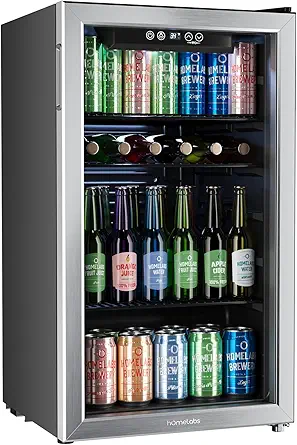 |
| Most Popular A crowd favorite that many people choose with confidence | Frigidaire Retro EFR751 |  |
| Best Seller A high-volume bestseller chosen again and again | Upstreman BD75 7.7 cu ft Refrigerator |  |
Kenmore 30" Top Mount Refrigerator

| Capacity | 18.1 cubic feet |
|---|---|
| Freezer Capacity | 4.77 cubic feet |
| Form Factor | Freezer Top |
| Shelving Type | Glass |
| ENERGY STAR | Certified |
This Kenmore 30" top-mount refrigerator is a straightforward, space-conscious fridge designed for smaller kitchens or garages. It provides 18.1 cubic feet of total capacity with a 4.77 cu ft freezer, edge-to-edge adjustable tempered glass shelves for oversized items, and four clear door bins including a gallon-sized bin for tall bottles. The inverter compressor and ENERGY STAR certification aim to keep temperatures steady while using less energy, and LED lighting plus humidity-controlled crispers help keep produce visible and fresher longer. The freezer-on-top layout is simple to organize and the recessed pocket handle and matte finish make the exterior easy to wipe clean. Expect practical day-to-day performance rather than luxury features: there is no water dispenser or ice maker built in and the design focuses on efficient storage and reliability. If you need a compact, efficient replacement or first full-size fridge for a smaller space, this model covers essentials with sensible storage choices and lower operating costs.
Best for: Buyers who want an efficient, no-frills refrigerator that maximizes usable interior space in a narrower footprint and prioritizes energy savings and adjustable storage.
Less Ideal for: Those who need built-in water or ice features, want premium finishes or smart features, or prefer a bottom-freezer layout for easier frozen-food access.
- ENERGY STAR certified with inverter compressor for improved energy efficiency and quieter operation
- Edge-to-edge adjustable tempered glass shelves allow flexible storage for tall or wide items
- Humidity-controlled crispers and LED lighting help keep produce fresher and visible
- Narrow 30-inch footprint fits smaller kitchens or garage spaces while still offering 18.1 cu ft capacity
- No integrated water dispenser or ice maker for users who want built-in chilled water or automatic ice
- Top-freezer layout offers less convenient access to frozen items compared with bottom-freezer or drawer designs
Verdict: A practical, energy-efficient 30-inch top-freezer refrigerator that delivers flexible storage and reliable everyday performance without a water dispenser.
BLACK+DECKER Top Mount Refrigerator BR1640KW

| Capacity | 16.4 cubic feet |
|---|---|
| Freezer Capacity | 4.1 cubic feet |
| Defrost System Type | Frost Free |
| Voltage | 120 volts |
| Refrigerant | R-600A |
This BLACK+DECKER top-mount fridge is a straightforward full-size refrigerator aimed at delivering reliable cooling for homes and apartments. It pairs a 12.3 cu. ft. fresh food compartment with a 4.1 cu. ft. top freezer and uses a compressor with R600a refrigerant, while frost-free auto-defrost removes the need for manual defrosting. Temperature is managed by five manual fridge settings plus a simple dial for the freezer, and the unit includes adjustable glass shelves, four door bins, interior lighting, and reversible doors for placement flexibility. Practical benefits include generous organized storage for groceries, a removable freezer shelf for larger frozen items, and preserved settings after power interruptions. Trade-offs are its basic feature set with manual controls rather than advanced smart or water/ice features, and a relatively high annual energy consumption figure compared with high-efficiency models. The matte finish and recessed handles keep the look low-profile and the electronic lock adds simple security.
Best for: Buyers who prioritize straightforward, dependable cooling and ample internal storage for everyday household food storage without needing a water dispenser or smart features.
Less Ideal for: Shoppers who want built-in water or ice dispensing, Wi-Fi connectivity, or the lowest possible energy use should consider other models.
- Generous 16.4 cu. ft. combined capacity suitable for typical household grocery storage
- Frost-free auto-defrost eliminates manual defrost maintenance
- Adjustable glass shelves and removable freezer shelf for flexible storage layouts
- Reversible doors and leveling feet make placement easier in tight spaces
- Manual temperature controls lack smart connectivity or precise digital scheduling
- Annual energy consumption (324 kWh/year) is higher than some high-efficiency alternatives
Verdict: Choose this model if you want a no-frills, frost-free full-size refrigerator that prioritizes usable storage and reliable cooling without a water dispenser.
Midea 3.3 Cu Ft Compact Refrigerator

| Capacity | 3.3 cubic feet |
|---|---|
| Annual Energy Consumption | 260 kilowatt hours per year |
| Temperature Range | 33.8°F to 50.0°F |
| Defrost System Type | Manual |
| Door Orientation | Reversible |
The Midea 3.3 cu ft compact refrigerator is a straightforward freestanding fridge designed for small spaces like dorms, offices, and apartments. It cools with a rotary compressor and offers an adjustable mechanical thermostat (33.8°F to 50.0°F) so you can tailor temperatures for drinks, produce, and prepared foods. The interior includes three shelves, a 2L bottle rack and LED lighting for easy access, and the door is reversible for flexible placement. ENERGY STAR certification and an annual energy estimate of 260 kWh make it more efficient than many basic mini fridges, and the manufacturer notes noise under 42 dB, which keeps it reasonably quiet in a bedroom or office. Setup is simple since it is freestanding and uses standard 115V power. Limitations include no freezer compartment and manual defrosting, so it is not suitable when frozen storage or automatic defrost is required, and its 3.3 cu ft capacity still requires some organization to store taller items. For buyers who want a compact, energy-conscious fridge without a water dispenser, this model covers the essentials reliably.
Best for: Buyers prioritizing a compact, energy-efficient refrigerator for small spaces who want a simple, quiet unit that keeps drinks and fresh food chilled without extra features.
Less Ideal for: People who need a built-in freezer, automatic defrost, or refrigerated models with water/ice dispensing should look elsewhere.
- ENERGY STAR certified with low annual energy consumption (260 kWh/year)
- Adjustable thermostat with a 33.8°F–50.0°F range for flexible cooling needs
- Reversible door and removable shelves for placement and storage flexibility
- Interior LED light and dedicated 2L bottle rack improve usability
- Quiet operation rated under 42 dB, suitable for bedrooms and offices
- No freezer compartment for frozen storage
- Manual defrost requires occasional maintenance
Verdict: A practical, energy-efficient compact fridge that delivers quiet, flexible chilled storage for small spaces without extra frills.
SMETA mini fridge90 3.2 Cu.Ft

| Capacity | 3.2 cubic feet |
|---|---|
| Cooling Method | Compressor |
| Defrost System Type | Automatic |
| Voltage | 110 volts |
| Annual Energy Consumption | 245 kilowatt hours per year |
The SMETA mini fridge90 is a compact single-door refrigerator built to fit bedrooms, dorms, offices, or undercounter spaces while delivering usable storage. It uses a compressor cooling system and offers seven temperature settings from about 32 to 50 degrees Fahrenheit, letting you reserve a near-zero top zone for meats and a lower area for drinks and produce. The interior includes removable glass shelves and three door racks so you can reconfigure for tall bottles or containers, and the unit runs quietly at around 38 dB. It is freestanding, operates on standard 110V power, and carries CE and UL specifications. On the downside the unit is relatively small by kitchen standards and is freezerless, so it is best for short-term food and beverage storage rather than frozen items. Energy consumption is listed around 245 kWh per year, which is reasonable for a compressor mini fridge but not the lowest in class. For buyers who need a simple, quiet, space-saving fridge without a water dispenser, it provides straightforward performance and adjustable storage at a budget-friendly scale.
Best for: Buyers on a tight budget who need a straightforward, quiet refrigerator for a small living or work area and prioritize usable chilled storage over freezing capability.
Less Ideal for: Households that need freezer space, large-capacity refrigeration, or a fridge with built-in water or ice dispensing features should look elsewhere.
- Compact footprint fits under counters or in small rooms
- Seven temperature settings including a near-zero top zone for delicate items
- Removable glass shelves and multiple door racks for flexible organization
- Quiet compressor operation suitable for bedrooms and offices
- Freestanding design with standard 110V plug for easy setup
- No freezer compartment for long-term freezing
- Capacity limited to 3.2 cu ft, not suitable for full-kitchen storage
Verdict: A quiet, no-frills 3.2 cu ft compressor mini fridge that delivers adjustable chilled storage in tight spaces at a budget-friendly value.
hOmeLabs Beverage Refrigerator HME030065N

| Capacity | 3.2 cubic feet |
|---|---|
| Cooling Method | Compressor |
| Temperature Range | 34°F–50°F (touch control) |
| Number Of Shelves | 3 |
| Voltage | 120 volts |
This hOmeLabs beverage refrigerator is a freestanding, compressor-cooled mini fridge built for storing drinks in small spaces such as home bars, offices, dorms, or undercounter spots. It holds about 3.2 cubic feet—advertised as up to 120 slim cans—on three removable chrome wire shelves that you can rearrange for bottles or taller cans. Temperature is set with a touch-button digital control and ranges down to about 34°F, while an interior LED light and glass door make it easy to see contents without opening the door. The compressor is described as whisper quiet, so it runs without drawing attention. Practical benefits include reversible glass door installation and adjustable feet to sit level in different locations. Expect a basic, sturdy appliance rather than a luxury model: there is no inverter or freezer compartment, and energy use is moderately high at the listed annual consumption. If you need reliable, simple beverage cooling with clear visibility and flexible shelving, this model covers those bases well.
Best for: Buyers who prioritize a dependable, no-frills beverage cooler for everyday use in small spaces and want simple controls plus adjustable shelving.
Less Ideal for: People needing ultra-low energy operation, built-in undercounter integration with specific cabinet fit, or combined fridge/freezer functionality should look elsewhere.
- Compact 3.2 cu ft capacity fits up to 120 slim cans for steady drink storage
- Touch-button digital temperature control down to 34°F for consistent cooling
- Reinforced glass door with interior LED for clear product visibility
- Three removable chrome wire shelves and adjustable feet for flexible placement and organization
- Whisper-quiet compressor suitable for living spaces and offices
- No inverter technology and no freezer compartment limit versatility to beverage chilling
- Annual energy consumption is relatively high compared with some modern efficient mini fridges
Verdict: A straightforward, reliable compressor beverage refrigerator that delivers visible, adjustable storage and consistent cooling for small-space drink storage.
Frigidaire Retro EFR751
| Capacity | 7.5 cubic feet |
|---|---|
| Freezer Capacity | 2 cubic feet |
| Defrost System Type | Manual |
| Power Source | Corded Electric |
| Refrigerant | R600a or R290 |
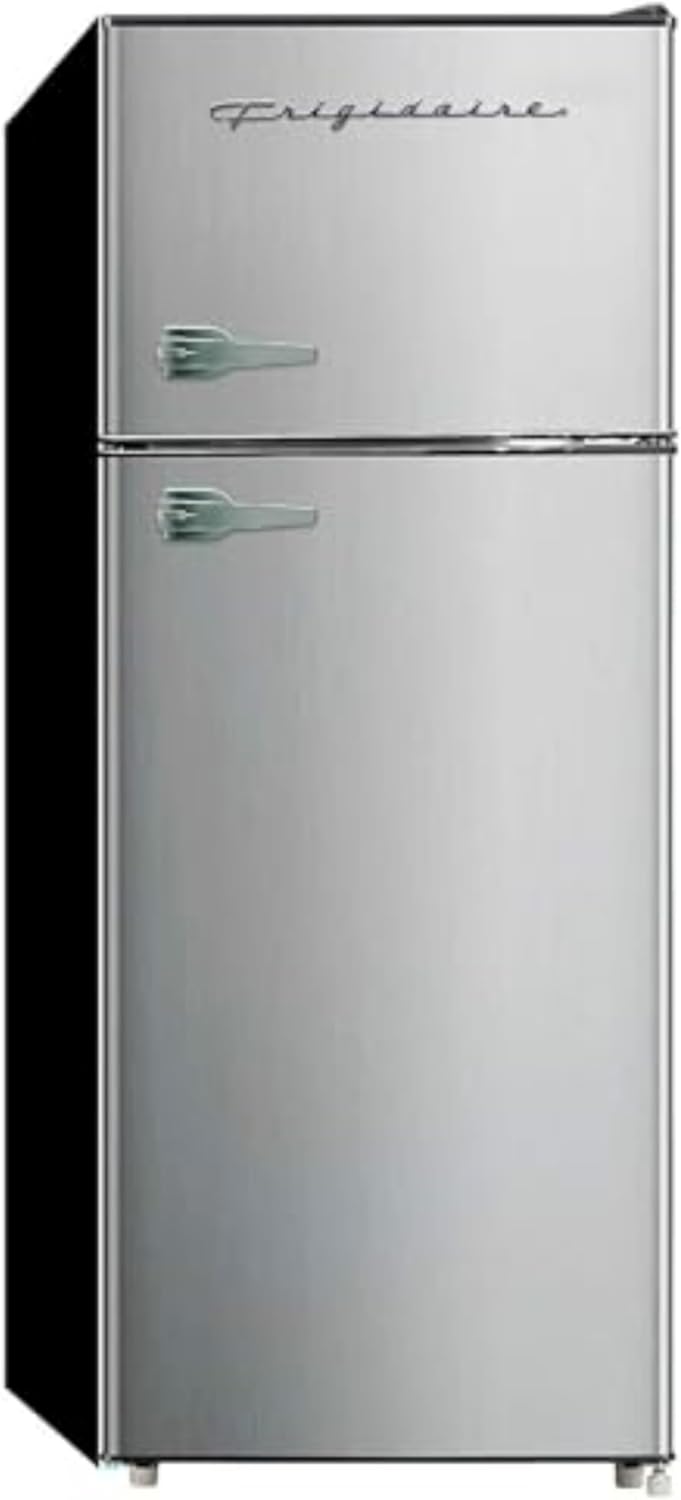
The Frigidaire Retro EFR751 is a compact freestanding refrigerator designed for small kitchens, dorms, and secondary spaces where a water dispenser is not needed. It pairs a 7.5 cubic foot fresh food compartment with a 2 cu ft top freezer and uses a compressor cooling system with manual defrost in the freezer. Inside, three adjustable glass shelves, a transparent crisper, and door bins help keep items organized while removable shelves let you reconfigure for tall bottles or platters. The unit includes mechanical controls and a reversible door hinge for flexible placement, plus front leveling legs and rear castors for easier positioning. Practical benefits include simple, quiet operation and a classic stainless steel finish that fits many interiors. Important limitations are the manual defrost freezer and average annual energy use of 378 kWh, which may be higher than newer energy-rated compact models, and the absence of advanced features like automatic defrost, ice maker, or a water dispenser.
Best for: Buyers who want a stylish, straightforward secondary refrigerator without a water dispenser and who value flexible interior storage and easy placement in small spaces.
Less Ideal for: People who need low-energy certified appliances, automatic-defrost freezers, built-in installation, or features like an ice maker or water dispenser.
- Compact 7.5 cu ft capacity with a separate top freezer for organized storage
- Adjustable, removable glass shelves and clear door bins for flexible interior layout
- Reversible door hinge and castors for easier placement in tight spaces
- Quiet compressor cooling suitable for kitchens, dorms, or offices
- Freezer requires manual defrost rather than automatic defrost
- Annual energy consumption (378 kWh) is relatively high compared with some modern compact models
Verdict: A compact, retro-styled freestanding fridge that delivers flexible storage and straightforward reliability for buyers who do not need a water dispenser.
Upstreman BD75 7.7 cu ft Refrigerator

| Capacity | 7.7 cubic feet |
|---|---|
| Freezer Capacity | 1.5 cubic feet |
| Defrost System Type | Manual Defrost |
| Voltage | 115 volts |
| Cooling Method | Compressor |
The Upstreman BD75 is a compact freestanding refrigerator designed for small apartments, dorms, or offices that need a straightforward cooling solution without a water dispenser. It pairs a 1.5 cu ft top freezer with a 6.2 cu ft fresh food compartment and uses a rotary scroll compressor for standard compressor cooling. The interior has two tempered glass removable shelves, a crisper drawer to preserve produce, five door bins for bottles and condiments, and an automatic interior light that comes on when the door opens. Temperature is controlled manually across five settings for both fresh and freezer zones, which keeps operation simple but means you must adjust it yourself rather than relying on digital precision. The unit is rated at about 346 kWh/year and runs quietly, which helps in small living spaces. Limitations include manual defrosting and the absence of advanced features like precise digital controls or an ice maker, so buyers seeking hands-off temperature management or automatic defrost should look elsewhere.
Best for: Buyers who prioritize a simple, low-noise refrigerator with good usable capacity for small living spaces and who prefer straightforward manual controls over smart features.
Less Ideal for: People who want digital temperature precision, automatic defrost, built-in ice or water capabilities, or advanced connectivity features should consider other models.
- Compact footprint with relatively large 7.7 cu ft total capacity suitable for small spaces
- Top freezer plus multiple door bins and a crisper drawer for organized food storage
- Removable tempered glass shelves allow flexible arrangement for larger items
- Reversible door swing and quiet operation make placement flexible in tight rooms
- Manual defrost requires periodic user maintenance
- Temperature control is manual rather than digital, limiting fine tuning
Verdict: A quiet, no-frills compact refrigerator that delivers generous usable storage for small spaces while avoiding water-dispensing complexity.
Choosing the Right Refrigerator Without Water Dispenser: Key Factors to Consider
Cooling Consistency
Even, reliable temperature control is the single biggest factor for food preservation. Variations inside the cabinet can lead to premature spoilage, freezer burn, or frozen produce in the wrong compartments. Look for units with good airflow management, multiple temperature zones, and features like dedicated drawers or adjustable vents that help stabilize internal temperatures.
Consistent cooling also reduces the workload on the compressor, which can extend lifespan and lower noise. When a refrigerator maintains set temperatures without wide fluctuations, it helps ensure safe storage of dairy, meat, and prepared foods.
Usable Interior Capacity and Layout
A refrigerator's nominal cubic footage does not tell the whole story. Usable capacity depends on shelf shapes, door bin depth, drawer sizes, and how much vertical clearance exists for tall items. Consider how you store groceries most often and whether adjustable shelving, split shelves, or full-width drawers will accommodate those items.
Models without a water dispenser often free up more uninterrupted door storage and a flatter door face which can mean deeper bins and fewer obstructions. Evaluate interior lighting, clear drawer fronts, and whether shelves slide or fold to make loading and cleaning easier.
Energy Efficiency and Operating Cost
Energy use is an ongoing cost that compounds over the life of the appliance. Look for efficient compressors, good insulation, and energy certifications that indicate lower electricity draw. Energy-efficient models often include better door seals and more effective thermal barriers between compartments.
Lower energy consumption also usually correlates with steadier temperatures and less compressor cycling, which benefits both food preservation and long-term reliability.
Noise and Compressor Behavior
Sound levels vary widely between models and become noticeable in open-plan living spaces or small apartments. Pay attention to reported decibel levels and descriptions of compressor cycling. A refrigerator that runs quietly and with longer, less frequent cycles is less intrusive and typically indicates a well-matched compressor and insulation package.
Consider placement in your home as well. If the unit sits near living areas or bedrooms, prioritize models with low operational noise and vibration control features.
Maintenance and Serviceability
Simpler mechanical systems are often easier and cheaper to service. Without a water dispenser, there are fewer hoses, filters, and valves to clog or fail. Assess how accessible the condenser coils, drain troughs, and door gaskets are for routine cleaning and occasional service.
Easy-to-remove bins, corner access panels, and clear user diagnostics reduce the time and cost of upkeep. Also consider warranty coverage and how easy it is to find replacement parts for common wear items like gaskets and shelves.
Why Choose a Refrigerator Without a Water Dispenser
A refrigerator without a water dispenser reduces the number of failure points and eliminates the need for a water line. That lowers both installation complexity and the risk of leaks in the kitchen. Many buyers who do not drink from an integrated tap or who prefer external filtration devices find a non-dispensing door more practical.
Removing the dispenser often improves door storage and gives a cleaner exterior appearance. It can also improve internal layout flexibility since manufacturers do not need to reserve internal space for plumbing or filtration hardware.
- Fewer plumbing connections and leak risk
- More usable door bins and uninterrupted interior space
- Simpler installation with no water line required
Installation and Kitchen Fit Considerations
Measure clearances before you buy, including hinge swing and ventilation space behind the unit. Non-dispensing doors may sit flush with cabinetry more easily, but width, depth, and height still determine how well the refrigerator integrates with counters and islands.
Think about door swing direction and whether a reversible hinge is needed. Also confirm that flooring and electrical access are adequate for the selected unit. Because these refrigerators are simpler mechanically, installation is usually quicker, but proper clearance for airflow and heat rejection is still essential.
- Allow recommended clearance for back and top to ensure proper airflow
- Verify door swing works with your kitchen layout
- Check that the floor is level and electrical outlet placement is convenient
Storage Strategies for Maximum Usability
Organize shelves by frequency of use. Keep daily items at eye level and use clear bins for loose produce. Make use of adjustable shelving to accommodate tall bottles or party platters. Full-width drawers are useful for deli items and prevent small packages from getting lost in deep shelves.
Take advantage of door bin depth and height since refrigerators without a dispenser usually offer less interrupted space. Use stackable containers and narrow organizers to keep the layout tidy and reduce wasted volume.
- Use shallow bins for small items to avoid clutter
- Store raw meats on the lowest shelf to prevent drips
- Label leftovers with dates to avoid food waste
Cleaning and Long-Term Upkeep
Regular cleaning supports performance and sanitation. Wipe spills promptly, clean door gaskets, and vacuum condenser coils every six months to maintain efficiency. Because these units lack water lines and filters, there are fewer specialized maintenance tasks, but basic upkeep remains important.
Inspect gaskets and hinges periodically for wear. Replace cracked or flattened gaskets to preserve cold retention. If frost builds in the freezer, follow the manufacturer's defrost guidance to avoid ice buildup that can impair airflow.
- Clean condenser coils twice yearly
- Wipe gaskets and check for seal integrity
- Defrost according to manufacturer guidance if ice accumulates
When a Water Dispenser Might Still Be Useful
Consider a model with an integrated dispenser if you rely on quick access to chilled water several times a day and do not mind plumbing. For households that prefer filtered water from the fridge, a dispenser can be convenient. However, weigh that convenience against extra maintenance and potential interior tradeoffs.
If you want chilled water but prefer to avoid dispenser plumbing, a countertop filtration pitcher or under-sink filter paired with a non-dispensing refrigerator can provide high-quality water without impacting fridge layout or service complexity.
- Water dispenser benefits: convenience and continuous chilled water
- Non-dispensing alternatives: filtered pitchers or point-of-use filters
- Consider plumbing and filter maintenance commitments before choosing
How We Chose the Best Refrigerator Without Water Dispenser
We selected refrigerators without water dispenser using criteria that reflect real-world ownership and long-term dependability. Cooling consistency was prioritized because even temperature control directly affects food safety and shelf life. Usable capacity and shelf layout were evaluated to ensure the interior design supports common household storage needs rather than relying on headline cubic-foot numbers. Energy efficiency and certified ratings were included to estimate ongoing operating cost and environmental impact. Reliability and serviceability were considered by checking common repair points and the simplicity of mechanical systems in models without integrated water plumbing. Noise and compressor behavior were assessed because quieter operation matters in open-plan homes. We excluded models that required external plumbing or had hidden dispenser options since the focus is strictly on fridges without a water dispenser. The result is a shortlist of units that balance practical storage, steady cooling, and straightforward maintenance.
Our full evaluation process is outlined in our review methodology.
FAQ
Does a refrigerator without a water dispenser save energy?
Often it can, because there is no filter housing or dispenser electronics drawing power. The primary energy differences come from compressor efficiency and insulation rather than the absence of a dispenser alone, so check energy ratings for each model.
How much more usable storage do you get without a water dispenser?
You usually gain deeper, uninterrupted door bins and simpler interior shelving without the plumbing cavity. The exact increase depends on the model, but the layout often feels more flexible for tall containers and larger items.
Are refrigerators without dispensers easier to maintain?
Yes. Without hoses, valves, and filters, there are fewer components to clog or replace. Routine maintenance still includes coil cleaning, gasket inspection, and interior cleaning, but the absence of water plumbing reduces potential leak points.
Can I add an external water dispenser later if I change my mind?
You can add a separate countertop or under-sink filtration and dispensing system, which avoids altering the refrigerator. Converting a non-dispensing refrigerator to include a built-in dispenser typically requires significant modification and is not recommended.
What should I know about door seals and their impact on cooling?
Door seals maintain the cold air barrier. Worn or damaged gaskets let warm air in, causing more frequent compressor cycles and higher energy use. Inspect seals regularly and replace them if they are cracked, loose, or do not form a tight seal.
Final Verdict
If you prioritize simplified maintenance, maximum interior flexibility, and a clean door profile, a refrigerator without water dispenser is a strong option. Focus on models with steady temperature control, sensible interior layouts, and good energy efficiency to minimize operating costs and food waste. Balance the tradeoffs between convenience and maintenance: skipping a dispenser reduces plumbing hassles but means using alternative filtration if you want chilled water. Choose the unit whose cooling stability and usable capacity best match how you store food and how your kitchen is arranged.