
Note: This article contains affiliate links. If you click on these links and make a purchase, we may earn a small commission at no extra cost to you. This helps support our research and content. Read our full affiliate disclosure here.
Choosing the right refrigerator affects food freshness, energy use, and daily kitchen flow. The right unit keeps perishables at safe temperatures, minimizes waste, and fits your storage habits and kitchen footprint. This guide shortlists seven top-rated refrigerators that represent reliable options across common layouts and capacities. We examined cooling performance, usable capacity, and features that matter for everyday life. Read on to see the considerations we used and to find which style of refrigerator best matches how you cook and store food.
Top Picks at a Glance
| Best Overall The best all-around choice for most situations | LG LRFLC2706S 27 cu ft Refrigerator |  |
| Best Quality Built to a higher standard if you want something more solid | GE Profile PVD28BYNFS 36" Refrigerator |  |
| Best Value The sweet spot between price and what you get | Frigidaire Retro Refrigerator EFR751 |  |
| Best Budget The cheapest option that still gets the job done reliably | BLACK+DECKER 2.5 Cu. Ft. Compact Refrigerator |  |
| Top Rated A top-rated pick with lots of positive feedback | Kenmore 33" Top Mount Refrigerator |  |
| Most Popular A crowd favorite that many people choose with confidence | Upstreman BR321 3.2 Cu.Ft Mini Fridge |  |
| Best Seller A high-volume bestseller chosen again and again | Upstreman 7.7 Cu.Ft. Refrigerator BD75 |  |
LG LRFLC2706S 27 cu ft Refrigerator

| Capacity | 26.5 cubic feet |
|---|---|
| Freezer Capacity | 8.6 cubic feet |
| Refrigerant | R-600A |
| Energy Consumption | 632 kilowatt hours per year |
| Installation Type | Built-In |
The LG LRFLC2706S is a counter-depth French door refrigerator that delivers near–standard capacity while keeping a flush, built-in appearance. It provides about 27 cubic feet of storage split between a roomy fresh food section and an 8.6 cu ft freezer, and includes an internal filtered water dispenser and built-in ice maker for everyday convenience. LG's Smart Cooling system, Door Cooling+, and a Cool Guard metal interior are meant to maintain consistent temperatures and reduce spoilage, while adjustable tempered-glass shelves, spacious door bins and a Glide N' Serve drawer make organizing groceries straightforward. The unit is ENERGY STAR rated and uses an R-600A refrigerant for improved efficiency. Expect a fairly quiet rotary scroll inverter compressor and smart features via ThinQ for diagnostics and remote monitoring. Downsides are the counter-depth footprint still requires careful fitting into cabinetry and the internal dispenser means less immediate access than an exterior dispenser; annual energy consumption is on the higher side compared with some compact models. For buyers wanting a built-in look without sacrificing family-sized capacity, this refrigerator balances design and function well.
Best for: Buyers who want a built-in, modern-looking French door fridge that still holds family-sized groceries and values even cooling and smart monitoring over an exterior dispenser.
Less Ideal for: People needing an exterior door dispenser for frequent quick fills or those with very tight installation space who cannot meet counter-depth clearances.
- Largest counter-depth capacity in LG’s lineup for a built-in look with full-size storage
- Internal filtered water dispenser and built-in ice maker for everyday convenience
- Smart Cooling with Door Cooling+ and multiple sensors to help keep food fresher
- Adjustable tempered-glass shelves, ample door bins, and Glide N’ Serve drawer for organized storage
- ENERGY STAR rated and uses low‑GWP R-600A refrigerant for better efficiency
- Internal water dispenser limits quick access compared with exterior dispensers
- Counter-depth installation still requires precise clearances and cabinet planning
Verdict: Choose this LG if you want the look of a built‑in French door refrigerator with nearly full‑size capacity plus smart cooling and internal dispenser convenience.
GE Profile PVD28BYNFS 36" Refrigerator
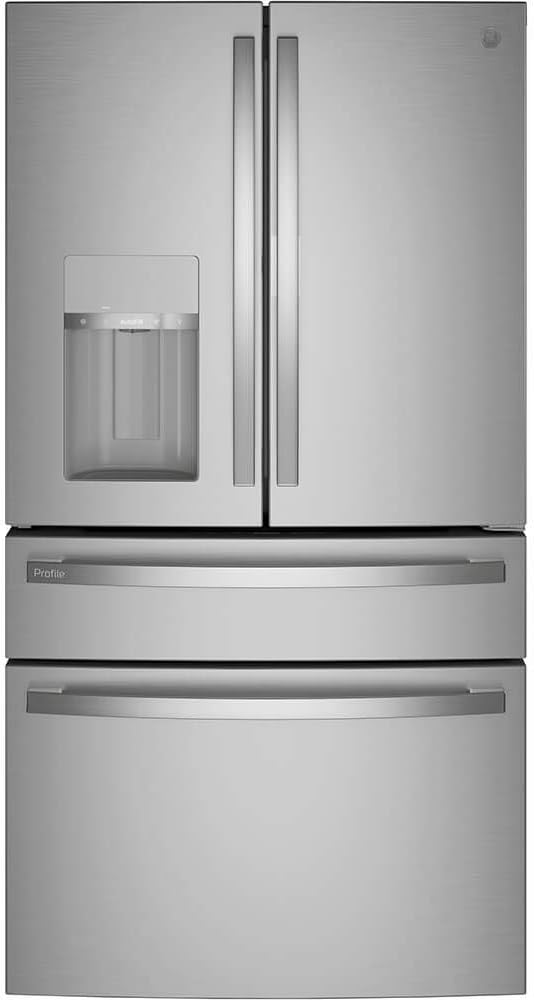
| Configuration | French Door |
|---|---|
| Capacity | 27.9 cubic feet |
| Water Dispenser Dispensed Type | Cold |
| Specification Met | Energy Star |
| Refrigerant | R-600A |
This GE Profile PVD28BYNFS is a large 4-door French door refrigerator built for households that need flexible, high-capacity cold storage. It delivers 27.9 cu ft total capacity with a dedicated custom-flex drawer and multiple glass shelves to organize produce, beverages, and bulk items. TwinChill evaporators and a multi-air flow system help maintain separate fresh-food and freezer climates so flavors and textures last longer, and the Energy Star certification keeps operating costs reasonable for a unit this size. The exterior includes a cold water and ice dispenser and a fingerprint-resistant stainless finish that reduces visible smudges. Practical trade-offs are its substantial footprint and weight, which require planning for delivery and installation, and the advanced compressor types listed can mean higher repair complexity versus simpler models. For buyers focused on cooling performance, organization, and a polished kitchen look, this refrigerator offers strong real-world utility.
Best for: Buyers who prioritize cooling performance, organized storage, and a polished kitchen centerpiece for busy households and families.
Less Ideal for: People with very small kitchens, tight delivery constraints, or those who prefer a compact or lightweight refrigerator solution.
- Large 27.9 cu ft total capacity with flexible storage zones.
- TwinChill evaporators and multi-air flow for more consistent, separate fresh-food and freezer temperatures.
- External cold water and ice dispenser for convenient access.
- Fingerprint-resistant stainless finish reduces visible smudges and maintains appearance.
- Large physical footprint and heavy weight require clear doorways and careful installation.
- Complex compressor types may increase repair complexity and service costs.
Verdict: Choose this GE Profile if you want a high-capacity, performance-focused French door refrigerator that keeps food fresher with separated cooling and organized storage.
Frigidaire Retro Refrigerator EFR751
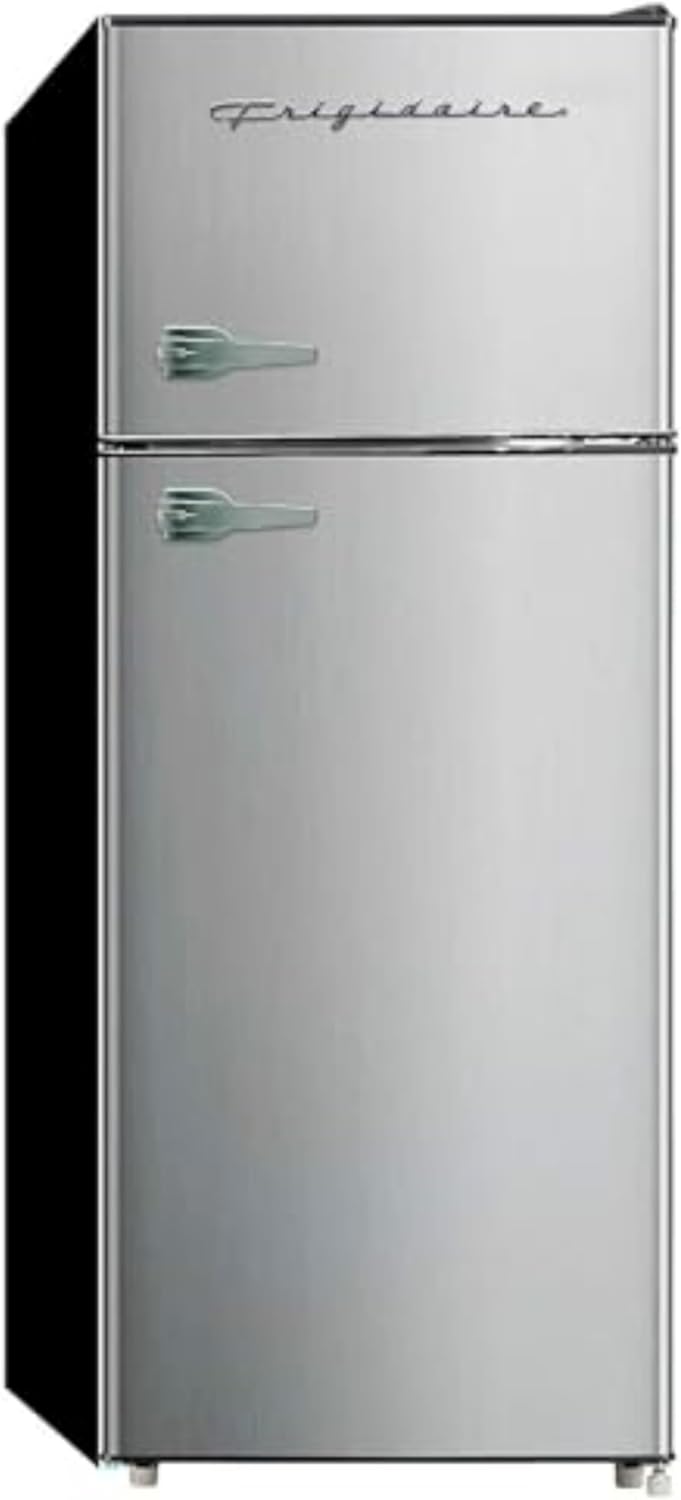
| Capacity | 7.5 cubic feet |
|---|---|
| Freezer Capacity | 2 cubic feet |
| Defrost System Type | Manual |
| Cooling Method | Compressor |
| Power Source | Corded Electric |
This Frigidaire two-door apartment refrigerator pairs a vintage-inspired look with practical, everyday performance for small spaces. It provides 7.5 cubic feet of total capacity with a dedicated 2 cu ft top freezer, adjustable glass refrigerator shelves, a transparent crisper and clear door bins for organized storage. The unit uses a compressor cooling system, manual defrost, mechanical controls and a rotary_scroll compressor for straightforward operation, and front leveling legs plus rear castors make it easier to position. It is most useful in apartments, dorms, garages or secondary kitchens where usable shelving and a separate freezer matter more than advanced features. Expect quiet, simple cooling and basic temperature control, but no automatic defrost or smart connectivity and the interior freezer space is modest compared with full-size units. If you want a compact, attractive fridge that emphasizes usable shelf space and flexible placement, this model delivers without complexity.
Best for: Buyers seeking a practical, no-frills compact refrigerator that maximizes usable shelving and fits small living spaces while offering a separate freezer.
Less Ideal for: People who need large freezer capacity, advanced features like automatic defrost or smart controls, or who plan to store large quantities of frozen food.
- Compact 7.5 cu ft capacity with a separate top freezer for clear separation of fresh and frozen foods
- Adjustable slide-out glass shelves and removable freezer shelf allow flexible interior organization
- Reversible door and built-in leveling legs plus rear castors simplify placement in tight spaces
- Mechanical controls and a compressor cooling system provide straightforward, reliable operation
- Manual defrost freezer requires periodic maintenance
- Limited freezer capacity compared with full-size refrigerators
Verdict: Choose this compact Frigidaire when you want a stylish, space-efficient fridge with flexible shelving and a separate freezer for everyday use.
BLACK+DECKER 2.5 Cu. Ft. Compact Refrigerator

| Capacity | 2.5 cubic feet |
|---|---|
| Freezer Capacity | 0.2 cubic feet |
| Defrost System Type | Automatic |
| Refrigerant | R-600A |
| Specification Met | Energy Star |
This BLACK+DECKER compact refrigerator is a straightforward small fridge designed for tight spaces like dorms, offices, or secondary kitchen areas. It offers 2.5 cubic feet of usable space with two removable glass shelves, door bins sized for cans and a 2-liter bottle, and a full-width chiller compartment with an ice tray for small chilled items. Temperature is set with a simple mechanical dial that provides up to seven settings, and the reversible door and leveling legs make placement flexible. The compressor cooling system and R600a refrigerant help keep energy use low and meet Energy Star certification, which is useful for budget-conscious buyers. Important limitations are that the chiller is not a true freezer for long-term freezing and the unit is a small capacity fridge intended for light to moderate storage rather than a household primary refrigerator. If you need compact, energy-efficient cold storage without extras like digital controls or a full freezer, this model covers the basics reliably.
Best for: Buyers looking for an affordable, energy-efficient secondary fridge for small living spaces who prioritize simple reliable cooling over advanced features.
Less Ideal for: People who need a primary refrigerator with a full freezer, large capacity, or precise digital temperature control should consider larger models instead.
- Compact footprint fits under counters or in small rooms
- Two removable glass shelves and door bins allow flexible internal organization
- Energy Star certified with R600a refrigerant for lower energy use
- Reversible door and adjustable leveling legs for flexible placement
- Chiller compartment is not a true freezer and should not be used for long-term freezing
- Mechanical dial lacks precise digital temperature readout
Verdict: A budget-friendly, energy-efficient compact fridge that delivers reliable basic cooling for small spaces.
Kenmore 33" Top Mount Refrigerator

| Capacity | 25 cubic feet |
|---|---|
| Freezer Capacity | 6.5 cubic feet |
| Configuration | Full-Sized Freezer-on-Top |
| Energy Consumption | 425 kilowatt hours per year |
| Shelf Type | Tempered glass |
The Kenmore 33" Top Mount Refrigerator is a straightforward full-size top-freezer unit aimed at reliable everyday cooling and efficient operation. It provides 25 cubic feet of total capacity with adjustable spill-proof tempered glass shelves and four clear door bins that make organizing groceries and tall items simple. The freezer offers 6.5 cu ft with two full-width bins for small frozen goods, and humidity-controlled crispers plus a covered dairy compartment help keep produce and spreads at stable temperatures. An inverter compressor and ENERGY STAR certification mean it runs quietly and uses less energy than older units, while LED interior lighting improves visibility. Practical touches include reversible doors, a recessed pocket handle for a clean front, and a finish that resists fingerprints. Limitations are typical for a top-freezer design: it lacks a built-in icemaker by default and offers fewer specialized features than higher-end French-door models, but for buyers prioritizing consistent cooling, organization, and energy efficiency this model performs capably.
Best for: Buyers who want a dependable, energy-efficient full-size refrigerator that emphasizes straightforward storage, organization, and quiet operation.
Less Ideal for: Shoppers seeking built-in icemaking, advanced temperature zones, or a premium French-door styling should consider other formats.
- Large 25 cu ft total capacity in a 33-inch-wide footprint for substantial storage without a wider cabinet
- Adjustable spill-proof tempered glass shelves for flexible layout and easier cleanup
- Humidity-controlled crispers and a covered dairy compartment to help keep produce and spreads fresh
- ENERGY STAR certified with an inverter compressor for quieter, more efficient operation
- No factory-installed icemaker included by default
- Top-freezer layout places frequently used fresh foods lower than some modern refrigerator styles
Verdict: Choose this Kenmore if you need a reliable, energy-efficient 33-inch top-freezer refrigerator with roomy, flexible storage and quiet performance.
Upstreman BR321 3.2 Cu.Ft Mini Fridge

| Capacity | 3.2 cubic feet |
|---|---|
| Freezer Capacity | 0.3 cubic feet |
| Cooling Method | Compressor |
| Defrost System Type | Manual Defrost |
| Annual Energy Consumption | 206 kwh |
The Upstreman BR321 is a small freestanding refrigerator aimed at dorms, bedrooms, and offices that balances usable interior space with a compact footprint. It cools with a rotary scroll compressor and offers five adjustable temperature settings (32°F to 50°F) plus a 0.3 cu ft freezer for frozen items and ice alternatives. The interior includes two adjustable glass shelves, a crisper drawer, and three door shelves to organize drinks and snacks, and the reversible door and leveling feet make placement flexible. At about 38 dB it runs quietly and is Energy Star rated, which helps keep operating costs down. Expect manual defrost and a simple mechanical thermostat rather than precise digital controls, so temperature fine-tuning can require occasional checking. The unit does not include a lock and is a basic, function-first design without advanced features like Wi-Fi or automatic defrost, but it delivers straightforward cooling, useful storage layout, and low noise for small living spaces.
Best for: Buyers who prioritize a quiet, energy-efficient compact fridge with straightforward, proven features and want reassurance from a well-reviewed, commonly used model for small living or work spaces.
Less Ideal for: Those who need a high-capacity fridge, precise digital temperature control, or advanced features like automatic defrost and smart connectivity.
- Compact 3.2 cu ft capacity with a 0.3 cu ft freezer suitable for beverages and snacks
- Adjustable thermostat with five temperature levels for seasonal tuning
- Quiet operation around 38 dB, good for bedrooms and offices
- Reversible door and adjustable leveling feet for flexible placement
- Manual defrost requires occasional maintenance
- Basic mechanical controls instead of precise digital temperature management
- No lock or advanced connectivity features
Verdict: A quiet, energy-efficient compact fridge that delivers reliable, no-frills cooling and sensible storage for dorms, bedrooms, or offices.
Upstreman 7.7 Cu.Ft. Refrigerator BD75

| Capacity | 7.7 cubic feet |
|---|---|
| Freezer Capacity | 1.5 cubic feet |
| Defrost System Type | Manual Defrost |
| Door Orientation | Reversible |
| Cooling Method | Compressor |
The Upstreman BD75 is a compact freestanding refrigerator designed for small kitchens, apartments, dorms, or offices where space is limited but a usable freezer is still needed. It combines a 6.2 cu ft fresh food compartment with a 1.5 cu ft top freezer and uses a rotary scroll compressor for standard cooling performance. Everyday features include two tempered glass removable shelves, a crisper drawer for produce, five door shelves, an automatic interior light, and a reversible door hinge for flexible placement. Temperature is set manually across five settings, which keeps controls simple but requires occasional adjustment to suit different loads or ambient conditions. The unit is relatively quiet at about 39 dB and lists modest annual energy use, making it reasonable for continuous operation. Expect straightforward setup and maintenance owing to its manual defrost and basic controls, but do not expect advanced temperature regulation or smart features. For buyers who prioritize straightforward reliability and space-efficient storage, this model delivers sensible capacity and useful shelving at a compact footprint.
Best for: A buyer who wants a straightforward, space-efficient refrigerator that delivers reliable cooling and useful storage without complex electronics or extra features, prioritizing predictable performance and low fuss.
Less Ideal for: Buyers seeking precise temperature control, automatic defrost, or smart-connected appliances should consider higher-end models with those capabilities instead.
- Generous usable capacity for a compact fridge with a 1.5 cu ft freezer and 6.2 cu ft fresh section
- Reversible door and removable tempered glass shelves for flexible placement and easy reconfiguration
- Crisper drawer and five door shelves improve organization for produce and bottles
- Relatively quiet operation (~39 dB) suitable for small living spaces
- Simple manual controls and basic feature set make operation and maintenance straightforward
- Manual defrost requires occasional maintenance and can lead to frost build-up in the freezer
- No digital thermostat or smart features for precise temperature control or remote monitoring
Verdict: Choose this fridge if you want a simple, compact refrigerator with a useful freezer and flexible shelving that reliably meets everyday cooling needs.
Choosing the Right Refrigerator: Key Factors to Consider
Temperature Control and Consistency
Stable, even temperatures are the most important factor for a refrigerator because they directly affect food safety and shelf life. Look for units with reliable thermostats, good cold-air circulation, and separate compartments or dampers that allow different zones to maintain different temperatures.
In practice, poor temperature consistency shows up as frozen produce in one area and warm spots in another. For buyers, that means choosing a refrigerator with clear temperature controls and features that promote even cooling, such as multiple vents, a fan-assisted system, or dedicated crispers for produce.
Usable Interior Capacity
A refrigerator's listed capacity can be misleading; usable interior space depends on shelf layout, door bins, and the footprint of compressors or air channels. Consider how you store food: tall bottles, large platters, or many small containers. Shelves that are adjustable in height and removable drawers make it easier to adapt the interior to changing needs.
Measure commonly stored items in your kitchen and compare them to interior dimensions rather than relying solely on total cubic feet. That approach helps ensure the refrigerator accommodates your typical shopping and meal-prep habits without constant rearranging.
Energy Efficiency and Long-Term Cost
Refrigerators run continuously, so small differences in efficiency translate to meaningful operating cost differences over time. Check official efficiency ratings and compare estimated annual energy use when weighing options. Efficient compressors, better insulation, and smart defrost cycles reduce electric use.
Also consider additional features that affect efficiency, such as adaptive defrost, door alarms, and how well seals hold cold air. A slightly higher upfront investment in an efficient model can reduce energy bills and environmental impact over its lifetime.
Noise Level and Daily Operation
Compressor cycles and fans produce noise that can be noticeable in open-plan living areas or kitchens adjacent to living spaces. If your kitchen is part of the main living area, prioritize models noted for quiet operation. Look for specifications on decibel output when available and read descriptions of compressor type and vibration control.
Placement also matters. A quieter refrigerator reduces background noise and minimizes disturbances during evening hours. Balance noise considerations with cooling performance since quieter units can still be very effective if engineered well.
Storage Flexibility and Organization
How a refrigerator organizes items affects usability more than raw capacity. Features like split shelves, slide-out drawers, door bin adjustability, and dedicated zones for meats or produce let you tailor storage to your routine. Crisper humidity controls are useful for prolonging the life of fruits and vegetables.
Think about common scenarios, such as hosting guests or storing bulk groceries, and whether the interior can be quickly reconfigured. Flexible storage reduces the need to keep secondary coolers or to constantly move items between fridge and pantry.
Warranty, Parts Access, and Serviceability
Refrigerators are long-term appliances, so warranty terms and ease of getting parts or service should influence your decision. Longer coverage on the compressor and sealed system is valuable because those components are costly to repair. Also consider how straightforward basic maintenance is, such as cleaning condenser coils or replacing water filters.
Accessible service information and clear documentation shorten downtime if a problem arises. Buyers should check warranty inclusions and local service options before committing, as those factors affect total ownership experience.
Choosing the Right Layout for Your Kitchen
Refrigerators come in several common layouts that affect how you load items and how the unit fits into the kitchen. Top-freezer, bottom-freezer, French-door, and side-by-side styles each have advantages in access, footprint, and organization. Consider which compartment you access most often and choose a layout that puts frequently used items at a convenient height.
Also think about door swing and clearances. Measure the space the doors need when fully open and ensure there is enough room for drawers and shelves to extend. In tight kitchens, a layout that offers better front access to shelves can reduce the need to stoop or reach into deep compartments.
- French-door units put fresh food at eye level and often provide wide shelves for platters
- Bottom-freezer designs keep fresh items higher and make the freezer less frequent to bend for
- Side-by-side models have narrow shelves but convenient vertical organization for tall items
Interior Organization Tips to Maximize Usable Space
Use clear, stackable containers and adjustable bins to make the most of available volume. Removing unused accessories or shelves can create space for taller items when needed. Position high-use items in door bins or upper shelving to speed meal prep.
Labeling shelves for different food groups and using shallow trays for deli items reduce clutter and help maintain airflow. Proper organization supports better cooling distribution and reduces the frequency of door openings as you search for items.
- Store raw meats on the lowest shelf to prevent cross-contamination
- Keep frequently used condiments in door bins for quick access
- Use drawers for produce with appropriate humidity settings when available
Maintaining Temperature and Food Safety
Set the refrigerator temperature between 35 and 38 degrees Fahrenheit for most perishable items and the freezer at 0 degrees Fahrenheit. Avoid cramming the interior, which restricts airflow and creates uneven temperatures. Periodically check temperatures with a small fridge thermometer for assurance.
Perform routine maintenance such as cleaning door seals, defrosting frost build-up when necessary, and vacuuming condenser coils if accessible. Small preventive tasks keep the system running efficiently and protect food safety over the long term.
- Monitor temperature zones after reorganizing shelves or adding large grocery loads
- Avoid placing hot foods directly into the refrigerator; cool them first
- Replace water filters according to the manufacturer's recommended interval if the unit includes a dispenser
Sizing for Households and Meal Habits
Household size and meal-prep frequency should drive capacity choices. Single adults or couples who shop frequently can often manage with smaller refrigerators, while families or those who batch-cook need larger usable capacity. Think about how often you shop and whether you store bulk items that require wide shelves or deep drawers.
Also consider frozen food habits. If you rely on frozen storage for pre-prepared meals or bulk meat purchases, prioritize freezer capacity and layout that accommodates flat stacks or large bins.
- Estimate needed capacity by counting typical weekly grocery volume
- Factor in seasonal needs, such as extra space for holiday cooking
- Remember that interior layout affects practical capacity more than the headline number
Energy Considerations and Environmental Impact
Look for models with strong insulation and efficient compressor systems to lower energy consumption. Features like adaptive defrost and tighter door seals reduce unnecessary run-time. When possible, review official energy-use estimates and compare annual kilowatt-hour projections among candidates.
Smaller adjustments at purchase can reduce lifetime energy use. Also consider lifecycle impacts such as repairability and availability of replacement parts when thinking about environmental footprint.
- Check estimated annual energy use when comparing models
- Prefer units with serviceable components to extend usable life
- Tighter seals and fewer forced-temperature defrost cycles improve efficiency
How We Chose the Best Refrigerator
Our selection process focused on practical, measurable attributes buyers care about when choosing a refrigerator for home kitchens. We prioritized consistent temperature control and distribution because steady cooling preserves food safety and extends shelf life. Usable storage capacity and shelf flexibility were next, since actual interior space and adjustable shelving determine how well a refrigerator accommodates different containers and bulk items. Energy efficiency and operating cost over time were factored in using official efficiency ratings and typical household usage estimates. Noise level and compressor behavior were included to ensure acceptable performance in open-plan homes. Finally, reliability indicators such as warranty coverage and common serviceability features helped identify models likely to perform well long term. We excluded specialty units aimed solely at commercial kitchens or single-function beverage cooling, and we filtered out models with poor performance data or unclear specifications. The final picks balance cooling accuracy, interior practicality, efficiency, noise, and reliability so buyers can choose based on the priorities most important to their household.
Our full evaluation process is outlined in our review methodology.
FAQ
What is the ideal refrigerator temperature setting?
For most households, set the fresh-food compartment between 35 and 38 degrees Fahrenheit and the freezer at 0 degrees Fahrenheit. Use a small appliance thermometer to verify zones, since internal temperature can vary depending on shelf placement and how often the door is opened.
How much space should I leave around a refrigerator?
Leave at least an inch or two on each side if possible and several inches at the top and back for ventilation, per typical manufacturer guidance. Adequate clearance ensures proper airflow for the condenser and helps the unit run efficiently and quietly.
How often should I clean the coils and seals?
Clean accessible condenser coils once or twice a year, or more often if you have pets or dusty conditions. Wipe door gaskets regularly and inspect them for damage to ensure a tight seal and prevent cold air loss.
Can I store hot food directly in the refrigerator?
It is best to cool food to near room temperature before placing it in the refrigerator to avoid raising internal temperatures. Large hot pots can be cooled in shallow containers or an ice bath first to speed safe cooling.
How do I know if a refrigerator is too noisy?
Noise tolerance varies, but anything that causes noticeable disruption in nearby living areas may be too loud. Look for quieter compressor designs and read manufacturer noise specifications if available. Placement and leveling also affect perceived noise and vibration.
Final Verdict
Prioritize consistent cooling and usable interior layout when choosing a refrigerator. Temperature stability protects food and reduces waste, while adjustable shelves and drawer configurations determine how well the appliance fits your lifestyle. Balance energy efficiency and noise against storage needs and serviceability to find the best match for your kitchen. Focus on the features that will be used most often in your home: reliable temperature control, practical shelving, and adequate capacity. With those tradeoffs in mind, you can select a refrigerator that performs well day to day and fits your household routines.