
Note: This article contains affiliate links. If you click on these links and make a purchase, we may earn a small commission at no extra cost to you. This helps support our research and content. Read our full affiliate disclosure here.
If you want a faster, chemical-free way to keep sealed wood, tile, vinyl, or laminate looking their best, a rotating steam mop can make routine cleaning quicker and less tiring. The right model softens stuck-on grime with controlled steam while the swivel head and rotating pads reduce effort in tight spaces and around furniture. This guide covers our top five rotating steam mops for hard floors, shortlisted for everyday cleaning, surface protection, and ease of use. We evaluated controls, pad systems, and maneuverability to help you pick a mop that fits your home and cleaning habits. Read on for the key evaluation points and practical advice to match a mop to your floors.
Top Picks at a Glance
| Best Overall The best all-around choice for most situations | Shark Steam & Scrub S8001 |  |
| Best Quality Built to a higher standard if you want something more solid | BISSELL SpinWave SmartSteam 3897A |  |
| Best Value The sweet spot between price and what you get | BOJUK Steam Mop F2-01 |  |
| Best Budget The cheapest option that still gets the job done reliably | OLIXIS Steam Mop AS-ZTB42ST |  |
| Most Popular A crowd favorite that many people choose with confidence | Shark Steam & Scrub S8201 | 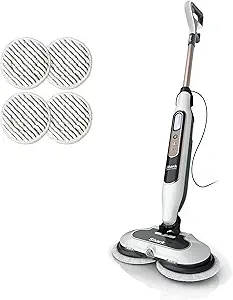 |
Shark Steam & Scrub S8001

| Wattage | 1120 watts |
|---|---|
| Form Factor | Stick |
| Tank Volume | 11.83 fluid ounces |
| Special Features | Lightweight, Portable, Steam Control |
The Shark Steam & Scrub S8001 uses rotating soft-scrub pads plus adjustable steam to remove stuck-on messes and sanitize sealed hard floors without chemicals. It runs at 1120 watts and offers three steam modes—Light, Normal, and Deep—so you can dial back steam for quick touchups or boost it for stained areas while the automatic scrubbing head provides over 150 scrubs per minute to loosen grime. An XL water tank and included filling flask make refills straightforward, and LED headlights help find hidden debris under furniture. The mop is lightweight and swivel-steered for maneuvering around legs and corners, and the dirt-grip pads attach and detach for machine washing. Expect chemical-free sanitization when you follow the owner's guide instructions; however, like other steam mops it requires sealed hard floors only and needs time to heat and dry after use. The rotating pads do much of the physical work, but heavy-duty grout or unsealed surfaces are not appropriate targets.
Best for: Buyers who want a chemical-free, hands-off hard-floor cleaner that combines steam and powered scrubbing for everyday rooms and occasional heavy spots.
Less Ideal for: People with mostly unsealed wood, laminate that warns against steam, or those who need a rapid-dry, no-steam cleaning solution.
- Rotating dirt-grip soft scrub pads deliver aggressive scrubbing without manual effort
- Three steam modes let you match intensity to the mess
- XL water tank and filling flask simplify longer cleaning sessions
- LED headlights and swivel steering improve visibility and maneuverability
- Machine-washable pads reduce ongoing maintenance cost
- Safe only for sealed hard floors and not suitable for unsealed wood or carpeted surfaces
- Requires heating time and leaves floors damp until they dry
Verdict: Choose the Shark Steam & Scrub S8001 if you want a rotating-pad steam mop that removes stuck-on stains and sanitizes sealed hard floors with minimal elbow grease.
BISSELL SpinWave SmartSteam 3897A

| Wattage | 1380 watts |
|---|---|
| Heat Time | 0.33 minutes |
| Power Source | Corded Electric |
| Tank Volume | 0.5 liters |
The BISSELL SpinWave SmartSteam combines rotating scrub pads with steam to remove stuck-on messes from sealed hard floors without chemicals. It uses two spinning microfiber pads (up to 230 RPM) alongside steam that heats in about 20 seconds, and fingertip controls let you pick high steam, low steam, or no steam for delicate finishes. A removable water tank and larger pads mean fewer refills and more coverage per pass, while LED floor-directed headlights and an LED display help target problem spots and show steam readiness. The swivel head and balanced weight make it maneuverable around furniture and baseboards, and BISSELL says the unit runs noticeably quieter than comparable spinning mops. Important limits are typical for steam cleaners: it is corded so you need outlets for larger areas, it is intended for sealed hard floors only, and steam may not replace heavy mechanical scraping on very old grout or cement stains. Replacement pads are washable, but pad life depends on frequency and soil level.
Best for: Buyers who prioritize cleaning performance and want steam plus mechanical scrubbing to tackle pet messes and stubborn spills across sealed hard floors with fewer passes.
Less Ideal for: People who need a cordless solution, want a single machine for both carpets and hard floors, or have unsealed wood floors that are sensitive to steam.
- Rotating dual pads deliver active scrubbing for stuck-on messes
- Steam ready in about 20 seconds for quick spot or whole-room cleaning
- Three steam modes (high, low, no steam) let you match floor type
- Larger removable tank and bigger pads reduce refill and pad-change frequency
- LED headlights and display improve visibility and ease of use
- Corded design limits cordless mobility and requires outlet access for large rooms
- Intended only for sealed hard floors, not suitable for unsealed wood or carpet
Verdict: Choose the SpinWave SmartSteam if you want a high-performance rotating-pad steam mop that scrubs and sanitizes sealed hard floors quickly and with adjustable steam control.
BOJUK Steam Mop F2-01

| Wattage | 1500 watts |
|---|---|
| Heat Time | 40 seconds |
| Power Source | Corded Electric |
| Maximum Temperature | 235 °F |
| Capacity | 15.2 fluid ounces |
The BOJUK Steam Mop combines powered dual rotating scrub pads with steam delivery to remove stuck-on grime from hard floors without bending or heavy scrubbing. It heats in about 30–40 seconds and delivers high-temperature steam (up to 235°F) through a disc rotating head that spins at roughly 230 RPM to tackle dried residues, while a self-propelled motor helps push the mop forward for less arm fatigue. The unit includes LED headlights to reveal hidden debris, swivel steering for around-leg maneuvering, an upright lock for storage, and a generous 15.2 oz water tank that cuts the need for frequent refills. Practical features such as multiple steam modes, a long power cord, and six reusable pads make it suited to regular maintenance across hardwood, vinyl, laminate, and tile. Trade-offs include the corded design that limits range compared with cordless models and the modest tank capacity that may still need a refill for very large spaces. For buyers prioritizing scrubbing power and hands-off floor cleaning, this is a capable, straightforward option.
Best for: Buyers who want a practical, time-saving hard-floor cleaner that combines steam with powered scrubbing to reduce manual elbow grease and speed routine cleaning.
Less Ideal for: If you need cordless operation for large open plans or want an extra-large reservoir for marathon cleaning sessions, consider other formats.
- Dual rotating scrub pads deliver more mechanical agitation than a plain steam mop for stuck-on messes
- Quick 30–40 second heat-up and high maximum temperature for effective steam cleaning
- Self-propelled design reduces user effort when covering larger areas
- LED headlights help find hidden debris in low-light spots
- Includes six reusable pads and a water filling cup for immediate use
- Corded power limits reach and requires outlet access during use
- 15.2 fl oz tank may require refilling for very large homes
Verdict: A powered rotating steam mop that saves effort and scrubbing time for routine hard-floor cleaning.
OLIXIS Steam Mop AS-ZTB42ST

| Wattage | 1200 watts |
|---|---|
| Heat Time | 0.5 minutes |
| Power Source | Corded Electric |
| Voltage | 120 volts |
| Capacity | 13.5 fl oz |
The OLIXIS Steam Mop is an upright corded steamer designed for regular cleaning and deeper stain removal on sealed hard floors. It uses rotating pads with two rotation speeds and two steam-heat settings so you can switch from light maintenance to tougher spots, and the unit warms in about 30–45 seconds for quick use. The 90 degree swivel head and twin LED lights help reach corners and under furniture, while the 13.5 fl oz tank gives a longer run between refills and comes with a measuring cup for easy filling. At 1200 watts the mop generates steady steam and the upright form factor keeps storage simple. Trade-offs include a corded power source and an 8.8 pound weight that may feel bulky for extended carrying, and it is intended only for sealed hard surfaces so it is not suitable for unsealed wood or carpet. For budget buyers this model delivers customizable steam cleaning and useful visibility features without premium extras like cordless operation or advanced self-cleaning systems.
Best for: Shoppers wanting an affordable, no-frills steam mop that still offers adjustable cleaning modes and visibility features for routine maintenance of sealed hard floors.
Less Ideal for: People who need cordless portability, very lightweight equipment for frequent carrying, or a steam cleaner safe for unsealed wood or carpeted surfaces.
- Dual rotation speeds plus two steam-heat levels for adjustable cleaning intensity
- Fast 30–45 second warm-up for quick use
- Twin LED lights and a 90° swivel head improve visibility and reach into corners
- 13.5 fl oz water tank with measuring cup reduces refill frequency
- Corded design limits maneuverability compared with cordless models
- Heavier upright form may be tiring to carry for long tasks
Verdict: A budget-friendly rotating steam mop that gives adjustable steam power and helpful LED visibility for effective sealed hard-floor cleaning.
Shark Steam & Scrub S8201

| Wattage | 1120 watts |
|---|---|
| Form Factor | Stick |
| Power Source | ac_dc |
| Voltage | 120 |
| Tank Volume | 11.83 fluid ounces |
The Shark Steam & Scrub S8201 combines rotating microfiber pads, a targeted Steam Blaster, and selectable steam modes to handle everyday spills and tougher stuck-on messes on sealed hard floors. It is used like a traditional stick mop: fill the onboard tank, select Light, Normal, or Deep mode, and push the mop across floors while the pads spin and radiate steam to loosen soil; the Steam Blaster gives a quick burst of extra steam for concentrated spots. Notable features include LED headlights for low-light areas, swivel steering for maneuvering around furniture, and washable pads that simplify upkeep. Practical benefits are faster removal of sticky residues compared with a basic steam mop, built-in sanitization when used per instructions, and hands-off scrubbing thanks to automatic pad rotation. Important limitations are the relatively small 11.83 fl oz water tank which means more frequent refills for large areas, and the stick form factor may feel less stable for heavy-duty commercial use. The unit performs best as a homeowner-friendly steam mop that targets hygiene and convenience rather than heavy floor restoration.
Best for: Buyers who want a domestic steam mop that combines sanitization and powered scrubbing with simple controls and visible user feedback to match strong social proof for reliability.
Less Ideal for: Not a good choice for users who need to clean very large areas without interruption or require a commercial duty machine built for constant heavy use.
- Rotating microfiber pads provide automatic scrubbing and smooth glide across sealed hard floors.
- Steam Blaster offers a focused burst of steam for stubborn spots.
- Three steam modes let you adjust steam output for quick touchups or deep cleaning.
- LED headlights and swivel steering improve visibility and maneuverability around furniture.
- Washable pads are reusable and simplify ongoing maintenance.
- Small 11.83 fl oz tank requires refilling during longer cleaning sessions.
- Stick form factor may not suit heavy commercial or industrial cleaning needs.
Verdict: Choose the Shark Steam & Scrub S8201 if you want a household steam mop that pairs rotating pads and a Steam Blaster for noticeably better stuck-on stain removal and sanitization with minimal user effort.
Choosing the Right Rotating Steam Mop for Hard Floors: Key Factors to Consider
Steam Control and Heat Settings
Steam level affects cleaning effectiveness and the safety of sealed wood and laminate finishes. Variable steam settings let you dial in lower output for delicate surfaces and higher output for grimy tile grout. Consistent temperature and steady vapor flow matter because intermittent bursts or weak steam reduce cleaning efficiency and can leave streaks.
Also consider how steam is delivered. Some systems provide continuous output, while others require a trigger. Continuous, adjustable steam is usually easier for whole-room cleaning because it maintains a steady vapor blanket under the pad. Look for clear indicators or tactile controls so you can change settings without stopping to read fine print.
Maneuverability and Head Design
A rotating head reduces wrist motion and helps the pad scrub with a gentle centrifugal action. The head profile and swivel range determine how easily you get under furniture and into tight corners. A lower-profile head and a highly flexible neck make it simpler to clean around table legs and along baseboards.
Weight distribution and handle ergonomics affect fatigue during extended use. Lightweight units with a balanced feel put less strain on your arms, while a comfortable pivoting handle makes steering more intuitive. Check how smoothly the head tracks and whether the rotation can be locked for stair or vertical cleaning.
Pad Materials and Attachment System
Pad composition changes how well a unit lifts dirt and how it treats different floor finishes. Microfiber pads generally trap fine dust and hold moisture without abrading surfaces. Some rotating systems use dual pads or textured pads for scrubbing stubborn spots, which is useful on textured tile but may be too aggressive for delicate wood finishes.
The attachment method influences convenience and stability. Hook-and-loop or pocket-style attachments keep pads secure during rapid rotation, while poorly secured pads can bunch or slip. Consider whether pads are machine washable and how many spares are recommended for regular cleaning cycles.
Water Tank Capacity and Refill Convenience
Tank size governs how long you can clean before refilling. Larger tanks reduce interruptions for medium to large rooms, but they can add weight. Conversely, very small tanks force frequent refills and can make covering an entire floor plan cumbersome.
Refill mechanisms matter too. Removable reservoirs are easier to fill at the sink, while tanks that refill through a small opening may be fiddly and spill-prone. Look for clear fill-level indicators and designs that minimize dripping when detaching or reinserting the tank.
Surface Safety and Finish Compatibility
Not all hard floors tolerate the same amount of moisture and heat. Sealed wood and many laminates handle occasional steam if you use the lowest safe setting and avoid pooling water. Excessive heat or prolonged exposure, however, can dull finishes or warp sensitive materials.
Check whether a mop is recommended for your floor type and whether the manufacturer advises using distilled water. Also consider whether the mop's steam pattern concentrates heat in one spot or disperses it evenly across the pad, since concentrated heat increases the risk of localized finish damage.
Storage, Upkeep, and Long-Term Maintenance
Ease of storage and routine maintenance affects how often you actually use the mop. Compact units with upright locks and tidy cord wrap options are easier to stow between uses. Removable parts that are dishwasher-safe or machine-washable lower long-term ownership effort.
Scale buildup in the boiler or steam channels can reduce performance over time. Models with clear descaling instructions, easy access to internal channels, or user-replaceable components require less technical service. Consider availability of replacement pads and filters when evaluating the product's lifecycle cost and convenience.
How Rotating Pads Change Cleaning Technique
Rotating pads add a mechanical scrubbing action that helps lift stuck-on grime without aggressive back-and-forth scrubbing. Instead of relying purely on steam to loosen soils, the pad rotation agitates the surface, which can speed cleaning on tile and textured floors.
When using a rotating steam mop, allow the steam a moment to loosen dirt before passing over an area. For stubborn spots, hold the mop in place for a few seconds while the pad rotates to concentrate cleaning action. Avoid lingering in one place on sensitive finishes and use lower steam settings where appropriate.
- Let steam preheat briefly before starting to mop.
- Use low settings for delicate or sealed wood floors.
- Hold on tough stains for a few seconds to let rotation work.
Prepping Floors for Steam Cleaning
Remove loose debris, dust, and pet hair before steam mopping to keep pads from clogging and to prevent scratches. A quick sweep, vacuum with a hard-floor setting, or dry microfiber pass saves time and improves final results.
Test a small, inconspicuous area first on unfamiliar flooring to confirm the steam setting and pad type do not affect the finish. Address sticky spills or gummy residue with a targeted treatment before using steam to avoid spreading residue across a larger area.
- Sweep or vacuum first to remove grit.
- Spot-test in an inconspicuous area.
- Pre-treat sticky residues before steam.
Daily Maintenance and Pad Care
Regular pad care keeps cleaning performance consistent. Rinse or machine wash pads promptly after use to remove trapped soils. Allow pads to dry fully before storing to prevent mildew and odors.
Inspect pads for wear and replace them when fibers become matted. Rotating systems place extra stress on attachment points, so check that hook-and-loop fasteners or pockets remain secure. Keeping spare pads on hand reduces downtime during frequent cleaning cycles.
- Wash pads after each use and air-dry fully.
- Rotate spares to extend pad life.
- Check attachment points for wear regularly.
Safety Tips for Steam Cleaning Hard Floors
Wear shoes or use caution when walking on freshly steamed floors since the surface can be slippery until fully dry. Keep children and pets away while operating the device and during the brief cooling period afterward.
Follow manufacturer recommendations on water type. Using distilled water where advised reduces mineral deposits inside the steam system. Unplug the unit before emptying the tank or changing pads and allow it to cool to avoid scalding.
- Avoid walking on wet floors until dry.
- Use recommended water type to prevent buildup.
- Unplug and cool before maintenance.
When to Use Steam Vs. Traditional Mopping
Steam mops excel at routine maintenance and sanitizing sealed hard floors without chemicals. They are particularly useful for kitchens, entryways, and high-traffic areas where quick, frequent cleaning reduces grime buildup.
Traditional mopping still has a role for heavy dirt, large spills, or floors with unsealed seams. For oily residues or stubborn adhesive spots, a targeted detergent treatment followed by steam cleaning can be more effective than steam alone.
- Use steam for routine, light-to-moderate soils.
- Switch to wet mopping for heavy, greasy messes.
- Combine methods for best results on tough residues.
How We Chose the Best Rotating Steam Mop for Hard Floors
We focused on features that matter most for safely and effectively cleaning sealed hard floors with a rotating steam mop. First, we evaluated steam control and temperature consistency to ensure enough sanitizing power without risking finish damage. Next, maneuverability was assessed, including swivel range, head profile, and the effectiveness of the rotating pad action for reducing wrist strain and reaching corners. We also prioritized pad system design and materials because absorbency, secure attachment, and compatibility with machine washing affect cleaning performance and upkeep. Water tank capacity and refill convenience were included to gauge uninterrupted cleaning time for typical rooms. Finally, build quality and safety features such as automatic shutoff, child lock, and stable upright storage were considered. We excluded handheld steamers and non-rotating flat mops to keep the comparison focused. Units lacking basic steam control or suitable pad systems for hard floors were not considered. The result is a shortlist of models that balance surface safety, cleaning power, and user convenience.
Our full evaluation process is outlined in our review methodology.
FAQ
Can I use a rotating steam mop on sealed hardwood?
Often you can if the mop has adjustable steam settings and you use the lowest safe output. Test a small, hidden area first and avoid prolonged dwell time to prevent finish damage.
Do I need distilled water for a steam mop?
It depends. Distilled water reduces mineral buildup in the steam channels and prolongs the unit's life, especially in hard-water areas. If the manufacturer recommends distilled water, follow that guidance.
How often should I replace the microfiber pads?
Replace pads when fibers are matted, stained, or no longer pick up dirt effectively. Frequency depends on use but expect to swap pads more often with heavy traffic or if you clean multiple rooms frequently.
Are rotating steam mops safe for laminate floors?
They can be safe if you use low steam settings and avoid excess moisture. Ensure your laminate is sealed and follow the flooring manufacturer's care guidelines before regular steam use.
What maintenance prevents scale buildup?
Regularly descaling per the manufacturer's instructions, using recommended water, and emptying the tank after use help prevent mineral deposits in the boiler and steam channels.
Final Verdict
Choose a rotating steam mop that matches your floor type and cleaning habits by prioritizing adjustable steam control, an effective pad system, and a maneuverable head. Balance tank capacity against weight and favor models with easy pad maintenance and clear safety features. The right pick minimizes effort while protecting sealed hard floors. Focus on settings and pad compatibility first, then consider tank design and upkeep to ensure a reliable, low-fuss cleaning routine.