
Note: This article contains affiliate links. If you click on these links and make a purchase, we may earn a small commission at no extra cost to you. This helps support our research and content. Read our full affiliate disclosure here.
If you want to keep timber floors looking their best without harsh chemicals, a rotating steam mop can cut cleaning time while loosening grime safely. The right model delivers adjustable steam, gentle rotating pads, and enough reach to tackle whole rooms without mopping over-dampening the wood. This guide shortlists the top rotating steam mops specifically for timber floors and explains the features that matter for wood surfaces. Below we cover the picks and the practical evaluation criteria used to choose them, including steam control, pad materials, and usability for finished timber. Read on to find a model that fits your floor finish and cleaning routine.
Top Picks at a Glance
| Best Quality Built to a higher standard if you want something more solid | Shark Steam & Scrub S8201 | 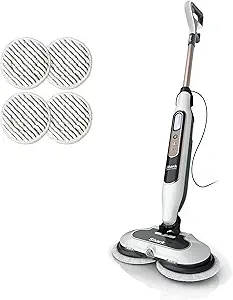 |
| Best Value The sweet spot between price and what you get | Talooz Rotating Steam Mop F6 |  |
| Best Budget The cheapest option that still gets the job done reliably | OLIXIS Steam Mop |  |
| Top Rated A top-rated pick with lots of positive feedback | DEVOAC VM6 Steam Mop |  |
| Most Popular A crowd favorite that many people choose with confidence | Shark Steam & Scrub S8001 |  |
Shark Steam & Scrub S8201

| Wattage | 1120 watts |
|---|---|
| Power Source | ac_dc |
| Voltage | 120 |
| Tank Volume | 11.83 fluid ounces |
| Form Factor | Stick |
The Shark Steam & Scrub S8201 is a stick steam mop that mops, scrubs and sanitizes sealed hard floors using only water and steam. It uses a Steam Blaster for a short, powerful burst of steam to tackle spot stains while rotating microfiber pads provide continuous scrubbing motion for stuck-on grime; Shark claims the pads deliver over 150 scrubs per minute. Three steam modes let you dial back steam for light quick cleans or crank it up for deep, stubborn messes, and LED headlights plus swivel steering make it easier to work around furniture and in low light. The 11.83-ounce tank and 1120-watt heater offer solid performance for typical room-by-room cleaning, though you'll need to refill more often during long sessions. The mop is optimized for sealed hard floors and includes washable pads and a filling flask for easier refills. It is a capable option if you prioritize stain removal and sanitization, but expect periodic refills and to launder pads after heavy use.
Best for: Buyers who prioritize powerful stain removal and sanitization on sealed timber or other hard floors and want a machine that scrubs as it steams.
Less Ideal for: People who need a multi-surface cleaner for carpets or unsealed wood, or users who want very long continuous runtimes without refilling.
- Steam Blaster delivers targeted high-pressure steam for stubborn spots
- Rotating microfiber pads provide continuous scrubbing action for stuck-on stains
- Three steam modes let you match output to quick cleanups or deep cleaning
- LED headlights and swivel steering improve visibility and maneuverability
- Washable pads and included filling flask simplify upkeep and refilling
- Relatively small water tank requires more frequent refills during extended cleaning
- Designed only for sealed hard floors so not suitable for unsealed wood or carpets
Verdict: Choose the Shark Steam & Scrub S8201 if you want a rotating steam mop built to blast and scrub away tough stains on sealed timber floors.
Talooz Rotating Steam Mop F6

| Wattage | 1200 watts |
|---|---|
| Form Factor | Stick Upright |
| Heat Time | 30 seconds |
| Maximum Temperature | 284 °F |
| Tank Volume | 15.22 fluid ounces |
The Talooz F6 is a plug-in rotating steam mop designed to blast and scrub sealed floors with high-temperature steam rather than detergents. It heats in about 30 seconds to a reported 284°F and drives a 360° rotating pad to loosen grease, dried spills, and grime on hardwood, tile, marble, and laminate. Practical features include a 15.22 fl oz water tank and a 23-foot power cord for extended, continuous cleaning across multiple rooms, built-in LED headlights to reveal hidden dirt, an adjustable height handle for user comfort, and reusable washable pads that cut ongoing consumable costs. The unit is stick‑upright and self-standing for easy pauses and storage, and the 1200 W heater gives fast steam recovery for longer sessions. Limitations include the relatively small tank that will still require refills during very large jobs and the need to manage corded operation rather than cordless convenience, and like all steam mops it must only be used on properly sealed wood to avoid damage.
Best for: Buyers who want a chemical-free, time-efficient cleaner for sealed timber and other hard floors and prefer a powered scrubbing head and long cord to cover multiple rooms in a single pass.
Less Ideal for: People who need cordless portability for quick spot jobs or those who frequently clean very large open-plan areas without pausing to refill water.
- Rotating 360° scrubbing head removes stuck-on grime faster than flat steam pads
- High 284°F steam temperature sanitizes without chemicals
- Long 23 ft power cord reduces outlet changes during whole-home sessions
- Washable reusable pads lower ongoing supply costs
- Built-in LED lights help find hidden dirt in corners and under furniture
- 15.22 fl oz tank may require refills for very large areas
- Corded design lacks the mobility of battery models
Verdict: If you want fast, chemical-free deep cleaning for sealed timber floors with a powered rotating head and long reach, this steam mop is a practical, efficient choice.
OLIXIS Steam Mop

| Wattage | 1200 watts |
|---|---|
| Form Factor | Upright |
| Heat Time | 0.5 minutes |
| Power Source | Corded Electric |
| Capacity | 13.5 fl oz |
The OLIXIS Steam Mop is a corded upright steamer designed for routine and deeper cleaning of sealed hard floors including hardwood and tile. It offers four cleaning modes that combine two pad rotation speeds with two steam levels so you can dial back heat for delicate sealed timber or increase power for sticky messes. The unit reaches operating temperature in about 30–45 seconds and includes a 13.5 fl oz tank and measuring cup to reduce refills during medium-length cleaning sessions. Two front LED lights and a 90-degree swivel head help reach corners and under furniture while rotating pads provide light scrubbing action to lift grime without harsh chemicals. At 1200 watts it produces steady steam but remains a basic corded design, so you will need an outlet nearby and occasional refills for larger jobs. The mop ships with a handle, measuring cup, and mop pad and is best used for regular floor maintenance rather than heavy commercial scrubbing.
Best for: Buyers looking for an affordable steam mop that balances adjustable steam and scrubbing for regular maintenance on sealed timber floors and other hard surfaces.
Less Ideal for: Users needing cordless convenience, industrial-strength capacity, or continuous long-run cleaning for very large homes should consider a different solution.
- Dual rotation speeds plus two steam levels for adjustable cleaning intensity
- Quick 30–45 second heat-up for fast use
- LED lights and 90° swivel head improve visibility and reach
- 13.5 fl oz tank and included measuring cup reduce refill frequency
- Corded design limits range compared with cordless models
- Not intended for heavy commercial use or very large spaces
Verdict: A budget-friendly rotating steam mop that gives sealed timber floors adjustable steam and light scrubbing power for reliable at-home maintenance.
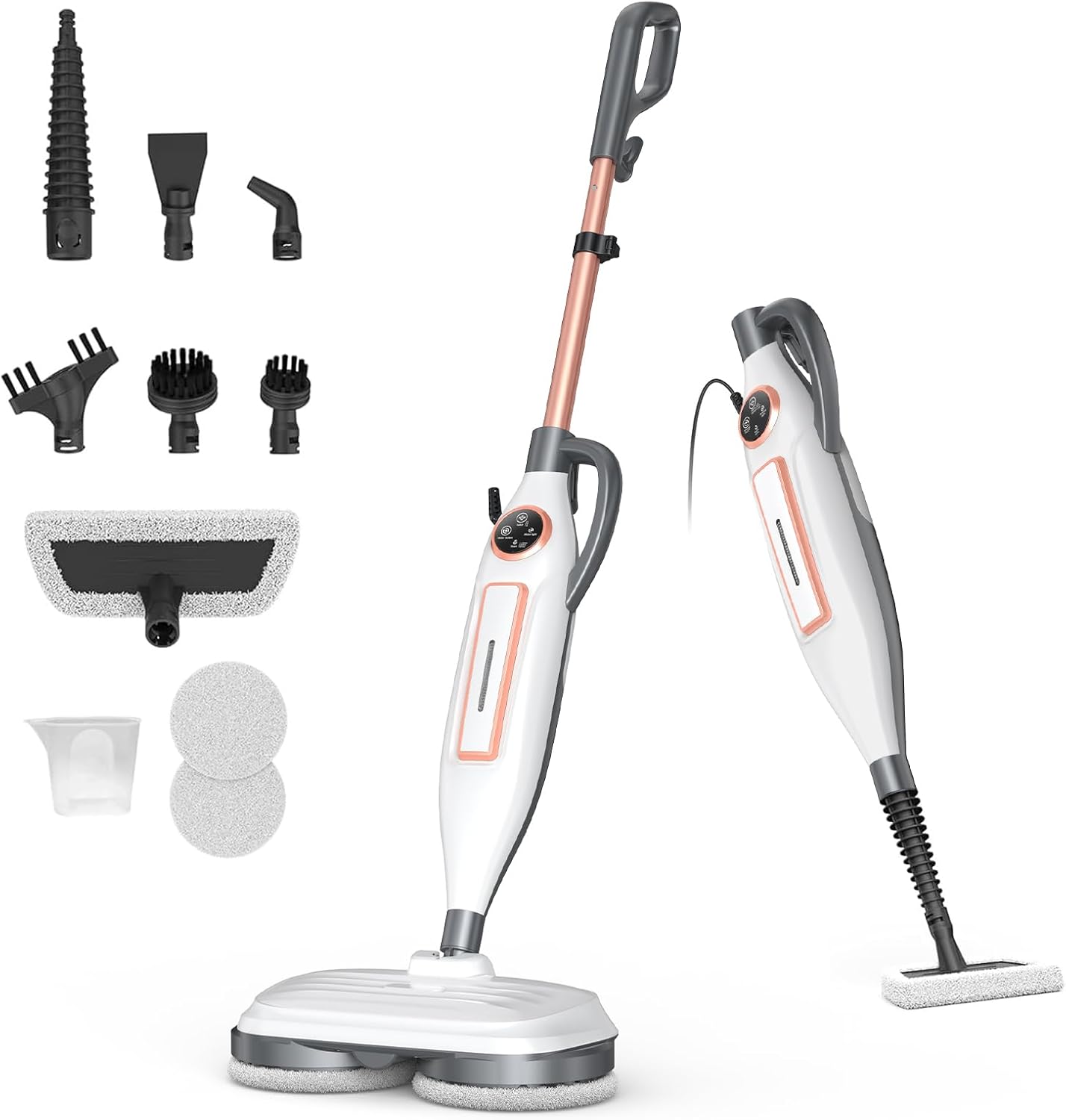
DEVOAC VM6 Steam Mop
| Special Features | 10 in 1 Steam Mop, Lightweight, Rotating Mop Pads, Steam Control |
|---|---|
| Surface Recommendation | Floor |
| Included Components | Crevice Tool |
The DEVOAC VM6 is a lightweight rotating steam mop built to scrub sealed hard floors with a motorized spinning head and adjustable steam output. It uses rotating pads that claim about 230 scrubs per minute and three steam modes — low, medium, and high — so you can dial back steam for quick touchups or increase it for stubborn spots. The swivel head and included crevice and brush attachments help reach baseboards and corners, while washable pads reduce ongoing consumable costs. Practical benefits include faster soil removal than a passive steam pad thanks to the spinning action and simple one-touch controls with a removable refill tank for quick top-ups. On the flip side, the unit is intended for sealed hard floors only, so it is not suitable for unsealed wood, and the scrub-first design means it relies on the pads and steam pressure rather than heavy mechanical agitation for very old, set-in stains. Overall it is a capable rotating steam mop that focuses on ease of use and adaptable steam control for routine maintenance of timber and other sealed floor surfaces.
Best for: Buyers who prioritize a reliable, easy-to-use steam mop for regular upkeep of sealed timber floors and want a machine that simplifies scrubbing and steam control.
Less Ideal for: Owners of unsealed wood floors or those needing heavy-duty restoration for deeply set grime should look at alternative cleaning methods.
- Rotating mop pads provide active scrubbing action to remove stuck-on spots
- Three steam modes let you adjust intensity for quick cleanups or deeper cleaning
- Swivel head and multiple brush attachments improve access to edges and corners
- Washable mop pads are reusable and machine washable to lower running costs
- Designed only for sealed hard floors and not safe for unsealed timber
- May struggle with very old, deeply set stains without extra spot treatment
Verdict: Choose the DEVOAC VM6 if you want a straightforward, rotating-pad steam mop that makes reliable routine cleaning of sealed timber floors faster and easier.
Shark Steam & Scrub S8001

| Wattage | 1120 watts |
|---|---|
| Form Factor | Stick |
| Power Source | ac_dc |
| Voltage | 120 |
| Tank Volume | 11.83 fluid ounces |
The Shark Steam & Scrub S8001 combines steam cleaning with automatically rotating soft scrub pads to tackle stuck-on stains on sealed hard floors. You fill the XL tank, select one of three steam modes—Light, Normal, or Deep—and the mop's rotating head performs over 150 scrubs per minute while steam loosens grime; LED headlights and swivel steering help reach baseboards and under furniture. Practical benefits include chemical-free sanitization when used to the manufacturer's directions, a generous water tank for longer run time between refills, and included Dirt Grip pads that are washable and replaceable. On the downside this is optimized for sealed hard floors rather than unsealed wood, and the rotating pads add mechanical complexity that requires occasional pad replacement and careful storage. In real-world use it speeds up deep cleaning compared with a non-scrubbing steam mop and reveals hidden debris with the headlight, but users should follow sanitization instructions closely and avoid using excess steam on sensitive finishes.
Best for: Buyers who want a steam mop that actively scrubs as it steams to remove stuck-on stains on sealed timber or hard floors and who value visible performance backed by many user reviews.
Less Ideal for: People with unsealed or delicate wood floors or those who prefer a simpler, lower-maintenance steam mop without rotating pads.
- Rotating soft scrub pads deliver over 150 scrubs per minute for better stuck-on stain removal
- Three steam modes let you match heat for quick touchups or deep cleaning
- Large water tank reduces refill frequency during typical sessions
- LED headlights and swivel steering improve visibility and maneuverability
- Designed for sealed hard floors and not suitable for unsealed timber or unfinished wood
- Rotating scrub mechanism increases maintenance needs and may require pad replacement over time
Verdict: Choose the Shark Steam & Scrub S8001 if you want a rotating-pad steam mop that removes stuck-on stains and sanitizes sealed timber floors more effectively than non-scrubbing steam mops.
Choosing the Right Rotating Steam Mop for Timber Floors: Key Factors to Consider
Steam Output and Control
How much steam a mop produces and how precisely you can adjust that output matters because timber floors are sensitive to excess moisture. Finished wood tolerates some steam if it is delivered in short, controlled bursts and evaporates quickly. Variable steam settings or trigger-style delivery let you match intensity to the soil level and the floor's finish.
Too much continuous steam can swell or discolor wood over time. Look for models that list low, medium, and high settings or provide an intermittent steam mode. Also consider whether the unit heats quickly and whether the lowest setting is gentle enough for your finish.
Pad Material and Rotation Mechanics
Pad composition and how the pads rotate determine cleaning action on timber. Soft microfiber pads lift dirt while minimizing abrasion and trapping soil away from the finish. Rotating heads should provide gentle, consistent motion rather than aggressive scrubbing.
Some rotating systems spin faster for hard grout removal, which can be too harsh for delicate wood surfaces. Prefer pads that are labeled non-abrasive and designs that allow easy pad replacement and washing to prevent grit buildup that could scratch floors.
Water Tank Size and Run Time
Tank capacity affects how long you can clean between refills and whether the mop can handle a typical room or an entire floor without interruption. Larger tanks increase runtime but add weight. For timber floors you want a balance: enough water to cover your cleaning area in a single session without carrying an overly heavy unit.
Also check how easy the tank is to refill and whether the model requires cooling before refilling. Faster heat-up times and longer continuous run times make cleaning more efficient while reducing the temptation to over-steam by making multiple short passes.
Maneuverability and Ergonomics
Good maneuverability reduces the need to push and pull excessively, which can cause uneven contact or accidental dings on timber. A swivel or pivoting head helps reach corners and clean around furniture legs without repositioning heavy items. The overall weight and balance of the mop matter because heavier units can press pads harder into the finish.
Handle length and grip comfort affect how long you can clean without fatigue. Cord length or battery runtime also fall under ergonomics since limited reach forces more plugging and unplugging, interrupting workflow and potentially causing you to overwork areas.
Compatibility with Timber Finishes
Timber floors come with a variety of finishes such as polyurethane, oil, or wax, and not all steam mops are suitable for every finish. Confirm that a mop's manufacturer guidance or heating profile is appropriate for finished wood. Even with compatible models, use the lowest effective steam setting and a quick-dry technique to avoid penetrating seams or glue joints.
If your floor has an older or more delicate finish, plan to spot-test a small hidden area first. Also consider whether the mop allows use of accessory pads designed for delicate or oiled surfaces to reduce the risk of finish dulling over time.
Serviceability and Replacement Pads
Over time pads will wear out and require replacement, and some mop components may need servicing. Check that genuine replacement pads and common parts are readily available and easy to fit. Machine-washable pads reduce long-term cost and help maintain cleaning performance.
A simple pad attachment mechanism and clear maintenance steps lower the chance that users will attempt risky shortcuts that could damage a timber finish. Consider how straightforward it is to access the pad area for cleaning trapped grit and whether the design minimizes crevices where debris can accumulate.
Preparing Timber Floors Before Steam Cleaning
Always sweep or vacuum timber floors first to remove loose grit that could abrade the finish when the rotating pad passes over it. Pay special attention to edges and corners where sand and dust congregate.
After dry debris is removed, spot-clean sticky or stubborn stains with a damp cloth and a pH-neutral wood cleaner if needed. Avoid saturating the wood; the goal is to remove surface residue so the steam mop only needs to loosen and lift the remaining soil.
- Sweep or vacuum thoroughly before steaming
- Wipe up spills and sticky spots by hand first
- Check for and remove grit trapped in baseboards or under furniture
Using Steam Mops Safely on Finished Wood
Start on the lowest steam setting and test a small inconspicuous area to confirm the finish tolerates the heat and moisture. Use short passes and let the floor dry between passes to avoid pooling steam in one spot.
Keep the mop moving. Do not linger on seams, edges, or areas near gaps. If your model offers intermittent steam or a trigger control, use it to limit exposure and to apply steam only where needed.
- Begin with the gentlest setting and increase only if needed
- Avoid excessive passes across the same area
- Allow adequate drying time after cleaning
Pad Care and Maintenance
Wash pads regularly according to the manufacturer's instructions to remove embedded grit and oils. Replace pads that show thinning, fraying, or persistent staining. Clean pads preserve the finish and maintain effective cleaning.
Inspect the pad attachment surface after each use and remove debris from the mop head. Accumulated particles under the pad can create localized abrasion on timber floors.
- Machine-wash pads on a gentle cycle when allowed
- Air-dry pads to preserve shape and absorbency
- Replace pads every few months with regular use
When Not to Use a Steam Mop
Avoid using a rotating steam mop on unfinished, waxed, or water-sensitive wood. If the timber shows signs of warping, flaking finish, or if panels are cupping, do not steam until the underlying issue is resolved.
Also skip steam cleaning after recent floor installations or refinishing until the manufacturer-recommended cure time has passed. Excess heat and moisture can interfere with adhesives and newer finishes.
- Do not use on unfinished or water-sensitive wood
- Wait for new finishes to fully cure before steaming
- Seek professional advice for damaged or warped flooring
Accessories That Help Protect Wood Floors
Look for soft, non-abrasive replacement pads labeled for delicate or wood finishes. Some mops include a low-loft pad specifically designed to reduce friction and limit water transfer.
A microfiber bonnet or polishing pad can be useful for a final buffing pass that dries quickly and restores a bit of surface sheen without additional product applications.
- Use low-loft microfiber pads for finished wood
- Consider polishing bonnets for quick buffing and drying
- Keep spare pads on hand so you always start with a clean surface
How We Chose the Best Rotating Steam Mop for Timber Floors
We focused exclusively on rotating steam mops intended for finished timber floors and evaluated candidates against practical, measurable criteria that matter for wood-surface care. Key evaluation dimensions included steam output control, pad material and rotation speed, water tank capacity and run time, maneuverability and reach, and build durability for repeated use on delicate surfaces. For steam output control we looked for models offering variable settings or metered delivery that reduce the risk of over-wetting. Pad material and rotation were assessed for gentle agitation without abrasive action; we favored options with microfiber or soft, non-scratching pads. Tank capacity and run time were checked to ensure a mop can cover common room sizes without frequent refills. Maneuverability considered swivel head performance, weight, and handle ergonomics so users can clean under furniture and around obstacles easily. Durability and serviceability considered robust components and accessible replacement pads. We excluded steam cleaners not designed for finished wood, high-temperature models with no steam adjustment, and devices lacking soft pad options. The final selections are models that balance effective cleaning with features that protect timber finishes.
Our full evaluation process is outlined in our review methodology.
FAQ
Are steam mops safe for all timber floors?
Not always. Finished timber with a durable seal can usually tolerate controlled steam, but unfinished, heavily waxed, or water-damaged wood should not be steamed. Always test a small area first and follow the floor finish guidance.
How often should I steam clean timber floors?
Frequency depends on foot traffic and household conditions. For many homes, a gentle steam clean every few weeks combined with regular sweeping works well. High-traffic areas may need spot cleaning more often.
Will a rotating pad scratch my wood floor?
Rotating pads designed for wood are typically soft microfiber and should not scratch when clean. The risk comes from embedded grit, so remove loose debris before steaming and wash pads frequently.
Can I use cleaning solutions with a steam mop on timber?
Most rotating steam mops are intended for use with water only. Using detergents or harsh cleaners can leave residues or damage finishes. If a gentle wood-specific solution is recommended by the mop's instructions, use it sparingly and follow dilution guidance.
What should I do if my floor shows streaking after steaming?
Allow the floor to fully dry and then buff lightly with a dry microfiber cloth. Streaking often comes from excess moisture or a dirty pad. Clean or replace the pad and reduce steam setting for subsequent passes.
Final Verdict
When choosing a rotating steam mop for timber floors, prioritize adjustable steam control, soft pad materials, and a design that minimizes excess moisture. Balance tank capacity against weight and favor models with easy pad replacement and washable accessories. The right mop will clean efficiently while protecting the finish. Focus on gentle, controlled steam application, routine pad maintenance, and adherence to your floor's finish guidance to keep timber looking its best over time.