
Note: This article contains affiliate links. If you click on these links and make a purchase, we may earn a small commission at no extra cost to you. This helps support our research and content. Read our full affiliate disclosure here.
Choosing the right rust proof can opener matters because a dependable opener saves time, reduces frustration, and avoids metal flaking or staining over years of use. Whether you open cans daily or just occasionally, corrosion resistance affects longevity, hygiene, and maintenance. This guide shortlists the top rust proof can openers across common designs and use cases. We evaluate each pick for corrosion protection, cutting performance, handle comfort, and cleaning ease. Read on to find a durable, easy-to-care-for can opener that fits how you cook and clean.
Top Picks at a Glance
| Best Overall The best all-around choice for most situations | Graceliving Premium Can Opener GR001 |  |
| Best Quality Built to a higher standard if you want something more solid | Edlund S-11 Can Opener |  |
| Best Value The sweet spot between price and what you get | GoodCook Safe-Cut Can Opener |  |
| Best Budget The cheapest option that still gets the job done reliably | Ultrean Manual Can Opener |  |
| Top Rated A top-rated pick with lots of positive feedback | OXO SteeL Can Opener 58081 |  |
| Most Popular A crowd favorite that many people choose with confidence | KitchenAid Classic Can Opener |  |
| Best Seller A high-volume bestseller chosen again and again | Cuisinart CCO-55 Deluxe Can Opener |  |
Graceliving Premium Can Opener GR001
| Material Type | Stainless Steel |
|---|---|
| Blade Material Type | Stainless Steel |
| Operation Mode | Manual |
| Unit Count | 1 Count |
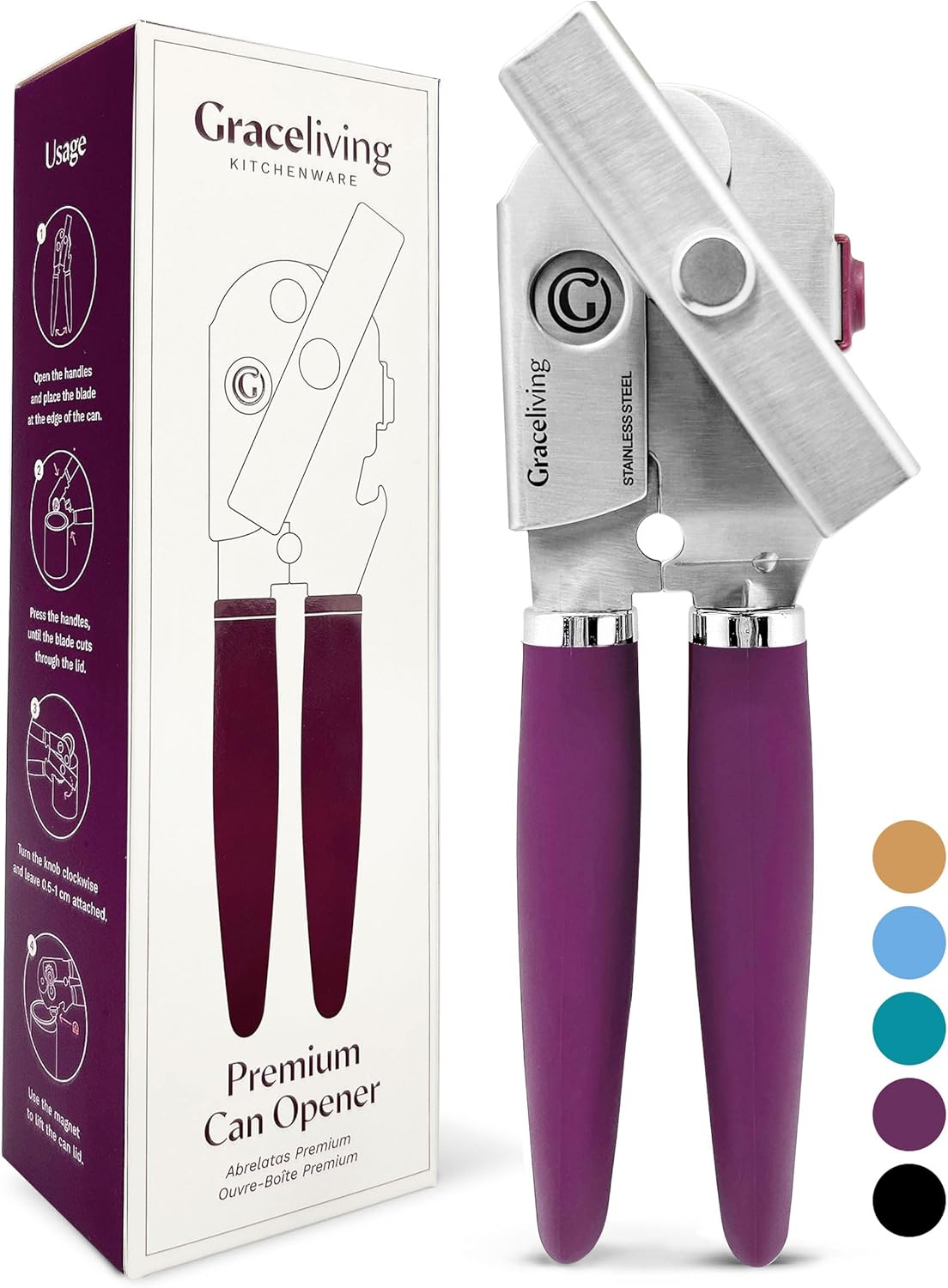
This Graceliving manual can opener is built for frequent kitchen use and focuses on durability and user comfort. Its reinforced stainless steel body and precision gears pair with a razor-sharp blade to produce clean, jag-free cuts and the manufacturer rates it for 300+ uses, which should reduce replacements compared with basic models. The oversized, smooth-turning knob and non-slip soft-touch handle make the opener easy to operate for people with weaker grip strength, while the strong magnet lifts lids away from hands and counters for safer, no-touch removal. A built-in bottle opener adds small but handy versatility. The unit is heavier than lightweight novelty openers, which gives stability but can feel bulky to store. There is also no electric assist, so it remains a manual tool best suited to typical household cans rather than high-volume commercial use. If rust resistance and long service life are your priorities, this stainless steel design and precision components deliver a practical, reliable solution for home kitchens.
Best for: Buyers who want a rust-resistant, long-lasting manual can opener that prioritizes durability and comfortable, safe everyday use in the home kitchen.
Less Ideal for: Those seeking an electric or high-throughput commercial opener or an ultra-compact novelty opener should look elsewhere.
- Reinforced stainless steel construction and precision gears for long-lasting performance
- Rated for 300+ uses, suggesting higher durability than typical manual openers
- Oversized smooth-turning knob and ergonomic non-slip handle for comfortable operation
- Strong magnetic lid lifter keeps sharp lids off hands and counters for safer removal
- Built-in bottle opener adds extra functionality
- Manual operation requires physical effort and is not suited for high-volume commercial use
- Heavier, solid construction can be bulkier to store compared with slim openers
Verdict: Choose this stainless steel can opener if you want a rust-resistant, heavy-duty manual tool built for long life and safe, comfortable everyday use.
Edlund S-11 Can Opener
| Material Type | Stainless Steel |
|---|---|
| Blade Material Type | Stainless Steel |
| Operation Mode | Manual |
| Model Number | S-11 |
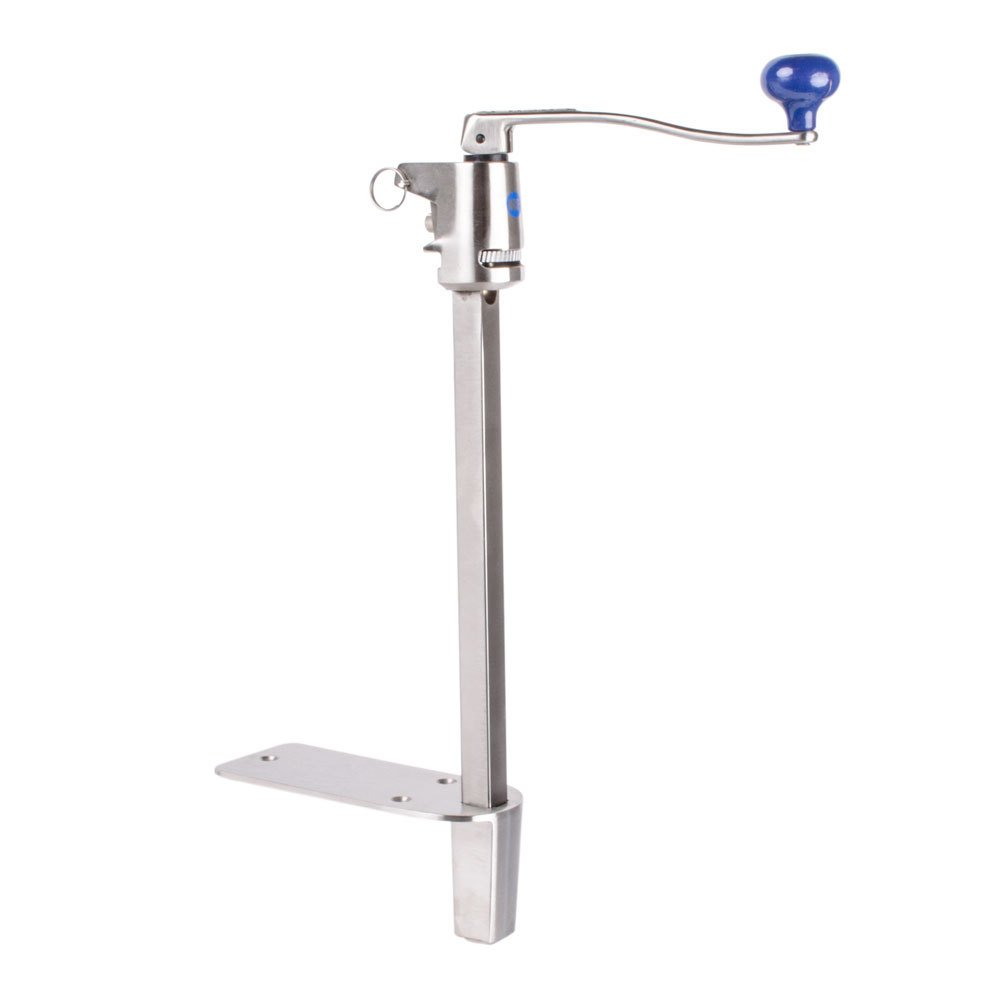
The Edlund S-11 is a commercial-style manual can opener built from stainless steel with a cast stainless steel base and a 16-inch mounting bar, designed for repeated heavy use. It mounts to a counter or wall bar and uses a serviceable cutting wheel and gear to open cans quickly and consistently by hand, which makes it well suited to kitchens that process large volumes of cans. The rust-proof stainless construction and NSF certification mean it resists corrosion and can be safely cleaned, and the parts are dishwasher safe for easier maintenance. Because it is a fixed-bar, manual unit, it delivers reliable leverage and longevity but requires installation and bench space, and it is not intended for occasional countertop use or compact kitchens. For buyers who prioritize durability and daily performance, this model provides a straightforward, no-frills solution that stays in service for heavy workloads.
Best for: Users who need a durable, high-throughput can opener for commercial or busy home kitchens and prioritize corrosion resistance and long service life.
Less Ideal for: Someone seeking a compact, portable, or electric can opener for occasional home use should consider a smaller countertop or cordless electric model instead.
- All-stainless-steel construction resists rust and suits wet commercial kitchens
- 16-inch bar and cast stainless base provide stable, heavy-duty mounting
- Dishwasher-safe components and NSF certification simplify cleaning and compliance
- Manual, serviceable cutting wheel and gear give long-term reliability and easy replacement
- Requires permanent mounting and dedicated counter or wall space
- Not suited for casual or infrequent home use due to commercial footprint
Verdict: Buy this if you need a rust-proof, commercial-grade manual can opener built to withstand frequent heavy use.
GoodCook Safe-Cut Can Opener

| Material Type | Stainless Steel |
|---|---|
| Blade Material Type | Stainless Steel |
| Operation Mode | Manual |
| Included Components | can opener |
The GoodCook Safe-Cut is a manual can opener built around safety and everyday practicality. It uses a hardened stainless steel cutting blade and a thick guide wire to cut cans so the lid has a smooth edge and can be lifted off without touching it, which reduces the chance of cuts and cross-contamination. The opener holds the lid until you pivot the handle to release it into the trash, and the remaining lid can be reused as a temporary cover for short-term storage. A large non-slip turn knob and an ergonomically shaped plastic handle make it simple to operate for most users, and the chrome construction feels sturdy for frequent kitchen use. Because the cutting wheel does not contact the food, messy or oily cans are less likely to contaminate the mechanism. The design is manual, so it requires hand rotation and some grip strength, and it is not suitable for users who prefer electric operation or need hands-free automation.
Best for: Buyers who want a durable, safety-focused manual can opener that prevents sharp edges and minimizes contamination during routine kitchen use.
Less Ideal for: People who need an electric or fully hands-free opener or those who prefer an all-metal construction without plastic components.
- Cuts lids to leave smooth, safe edges for handling or short-term storage
- Guide wire lifts and holds the lid for touch-free disposal
- Hardened stainless steel blade and thick guide wire for durability
- Large non-slip turn knob and ergonomic handle improve grip and control
- Manual operation requires hand rotation and moderate grip strength
- Plastic handle may wear faster than all-metal designs over many years
Verdict: Choose the GoodCook Safe-Cut if you want a reliable, safety-minded manual opener that leaves smooth lids and lifts them away for touch-free disposal.
Ultrean Manual Can Opener

| Blade Material Type | Stainless Steel |
|---|---|
| Operation Mode | Manual |
| Unit Count | 1 Count |
The Ultrean Manual Can Opener is a simple, no-frills handheld tool that cuts can lids cleanly with a stainless steel wheel and provides a comfortable soft-touch handle for repeated use. It operates manually with an oversized turning knob and a puncture mechanism that starts the cut; you clamp the opener on the rim and rotate the knob to cut the lid around the can. The smooth-edge cutting wheel is rust resistant and meant to leave a safer edge than traditional top-cutters, and the compact footprint makes it easy to store or pack for trips. Practical benefits include an ergonomic grip for better leverage, a durable metal body that should stand up to regular kitchen use, and portability for picnics or camping. Limitations are the manual effort required compared with electric openers and the need to reposition if the cutter jams, but for basic household use it is an inexpensive, reliable option that focuses on longevity rather than extra features.
Best for: Buyers looking for an inexpensive, durable manual can opener that resists corrosion and performs reliably for everyday kitchen and outdoor use.
Less Ideal for: Those who need hands-free or faster can opening for high-volume tasks or who prefer electric automatic openers.
- Stainless steel cutting wheel resists rust and provides clean cuts
- Soft-touch ergonomic handle improves grip and reduces hand fatigue
- Compact, lightweight design is easy to store and portable
- Oversized turning knob offers good leverage for manual operation
- Requires manual effort and is slower than electric can openers
- May need repositioning if the blade gets stuck during cutting
Verdict: A budget-friendly, rust-resistant manual opener that reliably delivers clean cuts and a comfortable grip for everyday use.
OXO SteeL Can Opener 58081

| Material Type | Stainless Steel |
|---|---|
| Blade Material Type | Stainless Steel |
| Operation Mode | Manual |
| Included Components | Can Opener |
The OXO SteeL Can Opener is a straightforward manual opener built around rust-resistant stainless steel cutting components and a user-friendly grip. You open cans by seating the stainless blade on the rim, turning the oversized knob to rotate the cutting wheel, and the cushioned, large handles make it comfortable to use for multiple cans without digging into your palms. The stainless construction and blade material reduce corrosion risk and the integrated bottle opener adds a simple convenience for occasional use. It is hand-wash only, so you will need to rinse and dry it after use to keep it in top condition, and because it is a manual tool it requires wrist rotation and some effort on very large or thick-rim cans. For everyday pantry use the design prioritizes durability and ease of turning over flashy extras.
Best for: Buyers who prioritize a durable, rust-resistant kitchen tool and want a comfortable, no-frills manual opener for regular pantry cans.
Less Ideal for: Those who prefer fully hands-off electric can openers or need a tool for commercial kitchens with very high daily volumes.
- Stainless steel blade and body reduce risk of rust and corrosion
- Oversized turning knob makes cutting action easier with less wrist strain
- Large handles with cushioned touch points improve comfort during repeated use
- Built-in bottle opener adds a handy secondary function
- Hand-wash only, so it requires drying after use to prevent water spots
- Manual operation needs physical effort on heavy-gauge or very large cans
Verdict: Choose this stainless steel manual opener if you want a reliable, rust-resistant can opener with comfortable handles and a simple, durable design.
KitchenAid Classic Can Opener

| Material Type | Stainless Steel |
|---|---|
| Blade Material Type | Stainless Steel |
| Operation Mode | Manual |
| Unit Count | 1 Count |
The KitchenAid Classic Can Opener is a simple, manual tool built around a razor-sharp stainless steel cutting wheel and oversized ergonomic handles. You use it by clamping the wheel to the can rim and turning the large knob to slice the lid; the comfortable soft-grip handles help stabilize the opener for smoother operation and reduce hand strain. The unit also includes a built-in bottle opener so it serves two common kitchen tasks without taking extra drawer space. Its stainless steel blade and body materials make it resistant to corrosion when dried after washing, and the compact 8.34-inch profile stores easily. Limitations are those of any manual opener: it requires some wrist rotation and physical turning, and it is hand-wash only rather than dishwasher-safe. For buyers focused on a durable, no-frills opener with a proven design, this delivers reliable everyday performance without extra features.
Best for: Buyers who prioritize a proven, durable manual opener that feels secure in the hand and performs reliably for everyday canned goods and bottles.
Less Ideal for: People who need a hands-free or electric solution for limited mobility or high-volume can opening tasks.
- Razor-sharp stainless steel cutting wheel for smooth, effortless cuts
- Oversized, soft ergonomic handles for comfortable grip and better control
- Large turning knob reduces effort for users with lower hand strength
- Integrated bottle opener adds convenience without extra tools
- Compact form that stores easily in a drawer
- Hand-wash only which requires drying to prevent moisture buildup
- Manual operation requires physical turning and wrist rotation
Verdict: A sturdy, no-frills manual can opener that combines a sharp stainless cutting wheel with ergonomic grips for dependable, everyday use.
Cuisinart CCO-55 Deluxe Can Opener

| Blade Material Type | Stainless Steel |
|---|---|
| Operation Mode | Manual |
| Included Components | Cuisinart CCO-55 Deluxe Can Opener |
| Manufacturer Warranty Description | Limited 3-year |
The Cuisinart CCO-55 Deluxe is a simple electric can opener designed for steady, no-fuss kitchen use. It uses a precision Power Cut stainless steel blade and a quality-engineered motor to open standard and larger cans with one-touch operation while a magnetic lid holder keeps lids secure. The activation lever is removable, which makes rinsing the blade area and base easier than fixed designs, and the sturdy weighted base helps prevent tipping during use. The chrome-accented plastic housing looks modern on the counter and the unit is BPA free. Because the blade is stainless steel and the lid is held by a magnet, the design reduces exposed rust-prone parts and is easy to wipe down after use. On the downside it is a single-task countertop appliance that takes counter space and requires a powered outlet, and the plastic body is less heavy-duty than all-metal professional models.
Best for: Buyers who prioritize a reliable, easy-to-use electric can opener with straightforward cleaning and low maintenance, and who prefer appliances that minimize exposed corrosion risk.
Less Ideal for: Those who need a compact manual opener for travel or a heavy-duty commercial all-metal unit for continuous professional use should consider other options.
- Power Cut stainless steel blade for clean cuts and reduced rust risk
- Single-touch operation for easy, repeatable use
- Removable activation lever simplifies cleaning around the blade
- Sturdy weighted base and magnetic lid holder improve stability and safety
- Includes a limited 3-year warranty
- Plastic housing is not as rugged as full-metal models
- Requires counter space and an electrical outlet
Verdict: Choose this model if you want a dependable, easy-to-clean electric can opener with a stainless steel cutting blade and stable countertop performance.
Choosing the Right Rust Proof Can Opener: Key Factors to Consider
Materials and Finishes
The metals and surface treatments used determine how well an opener resists rust. Stainless steel grades, chrome plating, and other nonreactive finishes slow oxidation and prevent pitting that leads to flaking.
Choosing an opener with clearly specified corrosion-resistant materials reduces the chance of staining or metal taste transferring to food. Also look for sealed joints and coated handles that keep moisture out of moving parts, because exposed gears and rivets are common starting points for rust.
Cutting Mechanism Type
Can openers use different cutting approaches: wheel-and-gear, side-cut, or manual lever styles. The design affects how the lid is removed and whether the cutting surfaces contact food or the can interior.
A side-cut or smooth-edge design can reduce contact between the blade and food and often results in a safer lid edge. Regardless of type, a blade that holds a sharp edge without corroding will give cleaner cuts and require less force.
Handle Comfort and Leverage
Comfortable grips and good leverage matter for both everyday convenience and for users with limited hand strength. Larger, non-slip handles distribute force and reduce wrist strain during use.
Look for handles with soft-touch coatings that are also water resistant. Avoid porous materials that retain moisture, as these can encourage corrosion at the handle-body interface and speed wear on moving parts.
Ease of Cleaning and Maintenance
Openers that are simple to rinse and dry discourage rust formation. Designs with fewer crevices, removable components that can be washed, or stainless surfaces are easiest to keep sanitary.
Regular cleaning after use and thorough drying are key to long life. Consider whether the opener can be disassembled for cleaning around gears and blades, and whether care instructions recommend hand washing or dishwasher safety.
Mechanical Durability
The longevity of gears, rivets, and blade mounts determines how long the opener will perform smoothly. Sealed or rustproofed internal components resist seizing and maintain consistent cutting action.
Inspectors often prefer solid rivets and robust gear trains rather than thin stamped parts. Durable construction reduces wobble and keeps the cutter aligned over years of use, which also limits wear on the cutting edge.
Smooth-Edge Vs. Traditional Cutting Styles
Smooth-edge designs cut the lid from the side, leaving a safer, often cleaner edge while minimizing contact between the blade and the can interior. Traditional over-the-top wheel-and-gear openers remove the lid from the top and can be more compact, but blades often contact the can rim and interior.
- Smooth-edge: Safer lid edges, less contact with food, often side-cut designs
- Traditional wheel-and-gear: Compact and familiar operation, may require more cleaning
Cleaning Routines to Prevent Rust
A quick rinse immediately after use, followed by a thorough dry, is the single most effective routine to prevent corrosion. If the opener disassembles, remove the cutting wheel and use a small brush to clear trapped food and moisture from gears.
- Hand wash and dry immediately when possible
- Use a small brush or toothpick to clear gear teeth and pivots
- Occasional light oiling of non-coated pivots can prevent seizing; use food-safe oil
Accessibility and Ease of Use
Consider who will use the opener most frequently. Larger handles, one-handed operation features, or smooth-turn gears make daily tasks easier for users with limited grip strength or arthritis. Some models provide extended leverage through longer handles or wider grips.
- Test grip diameter and texture for comfortable force application
- Look for smooth, continuous gear action rather than jerky engagement
Storage and Longevity Tips
Store the opener in a dry location away from steam or damp sink areas. If you keep it near the sink, use a hanging hook or drawer organizer that allows airflow to dry the tool between uses. Periodically inspect joints and blades for early signs of discoloration, which can indicate moisture retention. Address any buildup immediately to prolong functional life.
- Keep in a dry cabinet or hung to air dry
- Inspect moving parts periodically and clean as needed
When to Replace or Service an Opener
Replace or service the opener if the cutting wheel becomes dull, gears slip, or rust has compromised moving parts. A sticky or grinding action usually signals corrosion in internal pivots or gear teeth. For openers with replaceable blades or removable cutting assemblies, scheduled blade replacement can restore clean cuts without replacing the entire tool.
- Replace if gears slip or cutting becomes inconsistent
- Service removable blades or pivots to extend lifespan
How We Chose the Best Rust Proof Can Opener
We focused on criteria that directly affect long-term performance and everyday usability for rust proof can openers. Primary evaluation factors included the materials and coatings that determine corrosion resistance, the cutting mechanism and its ability to maintain a sharp, snag-free edge, and ergonomic design elements that influence user comfort and leverage. We also considered maintenance and cleaning—how easy the opener is to rinse, sanitize, and keep rust-free over time—and the durability of moving parts, including gears, rivets, and handles. We excluded products that rely on disposable or single-use parts or that lack clear corrosion-resistant materials in their specifications. Items with unclear maintenance guidance or known rapid wear were filtered out. Our final list emphasizes openers built for repeated home use, with mechanisms and finishes designed to resist rust and minimize long-term upkeep.
Our full evaluation process is outlined in our review methodology.
FAQ
Are rust proof can openers dishwasher safe?
Dishwasher safety varies by design. While some corrosion-resistant finishes tolerate the dishwasher, repeated cycles with high heat and detergents can degrade coatings and trapped moisture can promote corrosion. Hand washing and immediate drying is usually safest.
How should I clean hard-to-reach gears?
Disassemble any removable components following manufacturer guidance, then use a small brush or toothpick to remove debris. Rinse, dry thoroughly, and apply a tiny amount of food-safe oil to bare pivots if recommended.
Do smooth-edge openers reduce the chance of rust?
Smooth-edge designs do not inherently stop rust, but they often minimize blade contact with the can interior and can be easier to clean. Corrosion resistance still depends on the materials and finishes used.
What maintenance extends an opener's life?
Rinse and dry after each use, clean gear teeth periodically, and store in a dry place. If applicable, apply a small amount of food-grade lubricant to moving parts and replace worn blades when possible.
Can I sharpen the cutting wheel myself?
Sharpening a can opener blade is rarely practical because the wheels are small and difficult to resurface accurately. Replacing the cutting assembly or the opener is usually more effective when the blade dulls.
Final Verdict
Focus on corrosion resistance, ease of cleaning, and comfortable leverage when choosing a rust proof can opener. Decide which cutting style suits your safety and cleaning preferences, then prioritize solid construction and sealed or stainless components to reduce the risk of rust. Regular cleaning and proper storage will extend any opener's life. With those tradeoffs in mind, choose the design that matches how often you open cans and how much maintenance you want to perform.