
Note: This article contains affiliate links. If you click on these links and make a purchase, we may earn a small commission at no extra cost to you. This helps support our research and content. Read our full affiliate disclosure here.
When you need dependable supplemental heat during cold spells, choosing a safe propane heater for indoors matters for both comfort and household safety. Indoor-use propane heaters vary in their leak protection, oxygen-sensor shutoffs, and ventilation requirements, so picking the right unit affects how and where you can run it inside your home. This guide shortlists seven top indoor-safe propane heaters and explains the practical features that matter to homeowners. We evaluated units on safety systems, indoor air impact, and ease of use to help you find a heater that matches your living space and ventilation setup. Read on for the criteria we used and the factors to weigh before you buy.
Top Picks at a Glance
| Best Overall The best all-around choice for most situations | GASLAND MHA18B Propane Radiant Heater |  |
| Best Quality Built to a higher standard if you want something more solid | Rinnai FC510P Propane Heater |  |
| Best Value The sweet spot between price and what you get | Heat Hog 9,000 BTU Portable Heater |  |
| Best Budget The cheapest option that still gets the job done reliably | GasBRUH Portable Propane Radiant Heater |  |
| Top Rated A top-rated pick with lots of positive feedback | Mr. Heater Portable Buddy F232000 |  |
| Most Popular A crowd favorite that many people choose with confidence | Mr. Heater Little Buddy F215100 | 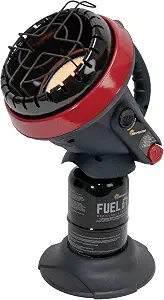 |
| Best Seller A high-volume bestseller chosen again and again | ProCom Ventless 25,000 BTU Fireplace |  |
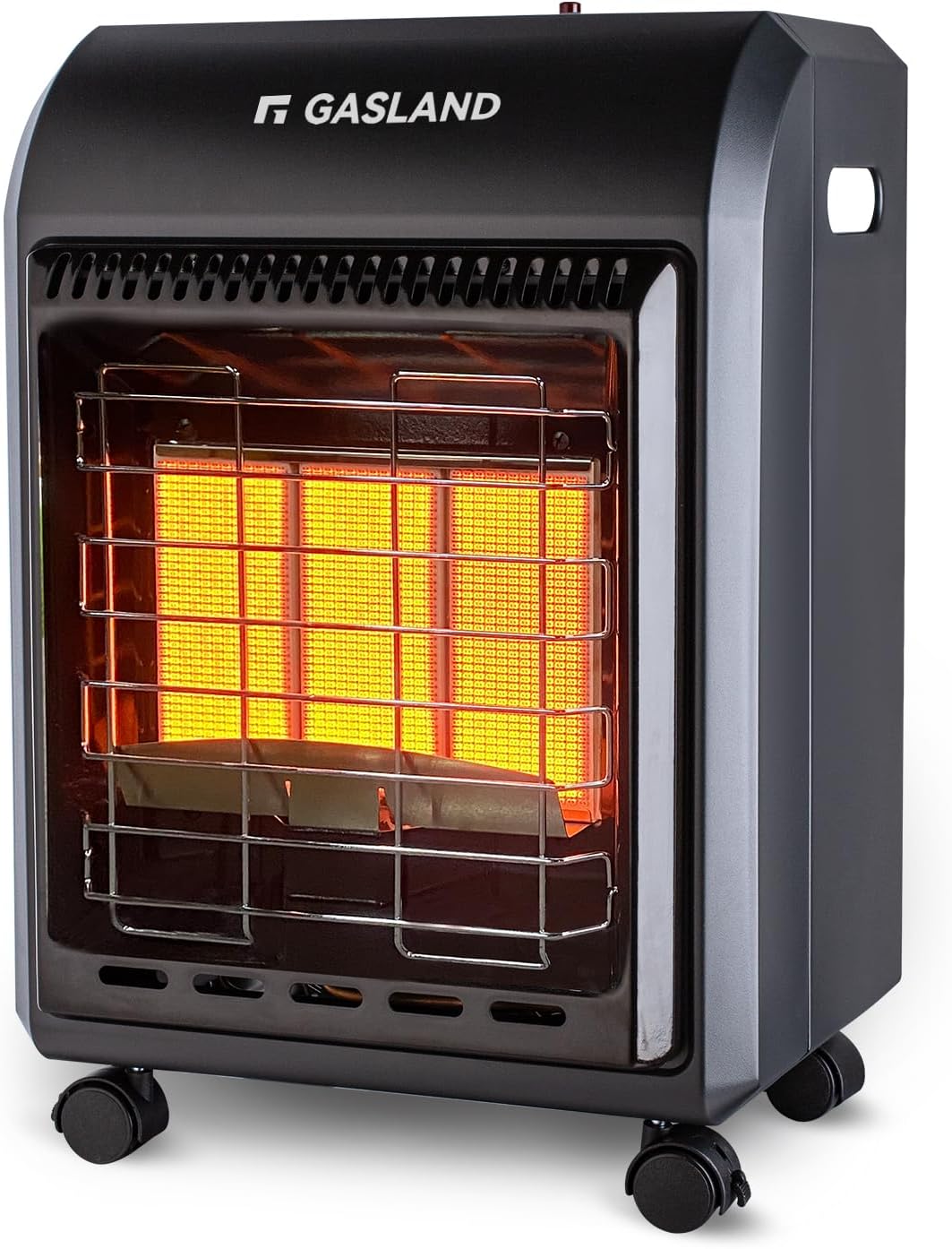
GASLAND MHA18B Propane Radiant Heater
| Heat Output | 18,000 BTU |
|---|---|
| Heating Coverage | Up to 450 sq. ft. |
| Fuel Type | Propane |
| Ignition Type | Piezo |
| Number of Speeds | 3 |
The GASLAND MHA18B is a portable propane radiant cabinet heater that delivers up to 18,000 BTU across three heat settings for use in garages, workshops, patios, and other ventilated spaces. It runs on a 20 lb LP cylinder stored inside the cabinet, includes a regulator and hose, and uses piezo ignition so it needs no electricity. Built-in wheels and a carry handle make it easy to move, and safety features include a tip-over cut-off and an oxygen depletion sensor that shuts the unit down if ventilation is insufficient. In practice the heater provides direct, quiet radiant warmth that is good for spot heating work areas or small gatherings; low mode can run for many hours on a single tank. Important limitations are that it is intended for outdoor or ventilated-area use only and cannot run on natural gas, and like all propane heaters it requires safe tank handling and airflow to avoid combustion byproducts indoors. For buyers wanting a mobile, non-electric heat source for garages or covered outdoor rooms, this unit is straightforward and effective.
Best for: Buyers who want a mobile, non-electric heat source to quickly warm garages, workshops, patios, or other ventilated spaces and prioritize ease of use and basic factory-quality safety features.
Less Ideal for: People seeking a heater for fully enclosed, unventilated indoor rooms or those who prefer electric or natural gas heaters that avoid propane cylinders.
- Provides up to 18,000 BTU with three heat settings for flexible spot heating.
- Runs without electricity using a standard 20 lb propane cylinder and included regulator/hose.
- Tip-over switch and oxygen depletion sensor add safety in ventilated spaces.
- Built-in wheels and handle make it easy to move and store the tank out of sight.
- Designed for outdoor or well-ventilated use only and not safe for unventilated indoor rooms.
- Requires handling and storage of a 20 lb propane cylinder, which adds logistic considerations.
Verdict: A portable, non-electric 18,000 BTU propane cabinet heater that delivers quiet, direct warmth with built-in safety features for ventilated garages and outdoor rooms.
Rinnai FC510P Propane Heater

| Heating Coverage | 285.7 square feet |
|---|---|
| Heat Output | 10000 british thermal units |
| Power Source | propane |
| Mounting Type | Floor Mount |
| Voltage | 120 volts |
The Rinnai FC510P is a wall/floor-mount ventless propane heater designed to deliver steady heat to small-to-medium rooms using convected warm air and a 10,000 BTU output. It is typically installed in a bedroom, office, or modular home and operates with a programmable thermostat and digital adaptive control so you can set temperature schedules rather than running it manually. Notable safety and reliability features include a flame failure device, overheat switch, oxygen depletion sensor, and tilt switch, plus a cool-to-touch cabinet and safety lock that help in households with children. Practical benefits include even room warming through bottom louvers, quiet operation, and self-diagnostics that simplify upkeep. Important limitations are that it runs on propane so professional installation is recommended and it is ventless, which means it relies on indoor combustion and the built-in sensors rather than external venting; placement and local codes should be checked before purchase.
Best for: Buyers who prioritize steady, controllable indoor heating and built-in safety features and who are willing to have a professional install a propane appliance for reliable, scheduled warmth.
Less Ideal for: People who cannot accommodate indoor combustion appliances, lack access to propane, or who prefer electric or vented heating systems should consider alternatives.
- Programmable thermostat with digital adaptive control for scheduled temperature management
- Multiple safety sensors including oxygen depletion sensor, overheat switch, flame failure device, and tilt switch
- Self-diagnostics for easier maintenance and troubleshooting
- Compact ventless design provides even convected heat without ducting
- Requires propane fuel and professional installation for safe operation
- Ventless combustion means indoor air quality depends on sensor function and room ventilation
Verdict: A safety-focused, programmable ventless propane heater that delivers dependable room heating for buyers who want controllable performance and factory-grade safety features.
Heat Hog 9,000 BTU Portable Heater

| Heat Output | 9000 british thermal units |
|---|---|
| Heating Coverage | 225 sq. ft. |
| Fuel Type | Propane |
| Heating Method | Radiant |
| Number of Speeds | 4 |
The Heat Hog 9,000 BTU portable propane heater delivers directed radiant heat for small spaces like garages, tents, and workshops without needing electricity. It runs on a 1 lb disposable cylinder or a 20 lb tank with an accessory hose and offers a tiltable head and curved plaque that widens the heated area for more focused warmth. Safety-minded features include a tip-over switch, Oxygen Depletion Sensor (ODS), and a rugged guard, which makes it suitable for indoor use when ventilation and propane safety practices are followed. Its lightweight pedestal design and built-in handle make it easy to carry and position, while multiple heat settings let you balance run time and output; on the lowest setting a 1 lb cylinder can provide several hours of heat. Limitations are inherent to portable propane: it requires fuel planning, and it is not a substitute for permanent HVAC for whole-house heating or very large spaces.
Best for: Buyers who want a portable, electricity-free heater that prioritizes safe indoor use and easy transport for garages, workshops, tents, and short-term indoor tasks.
Less Ideal for: People seeking a permanent whole-home heating solution or those unwilling to manage propane refills and indoor ventilation should look elsewhere.
- Tiltable head and curved plaque for a wider, directed heating pattern
- Runs without electricity on 1 lb cylinder or 20 lb tank with accessory hose
- Built-in safety features including tip-over switch and Oxygen Depletion Sensor (ODS)
- Lightweight pedestal design with handle for easy transport
- Requires propane fuel and proper ventilation, so ongoing operating considerations are necessary
- Heats up to about 225 sq. ft., so not suitable for large or whole-house heating
Verdict: A compact, safety-focused propane radiant heater that delivers targeted, electricity-free warmth for small indoor spaces and mobile use.
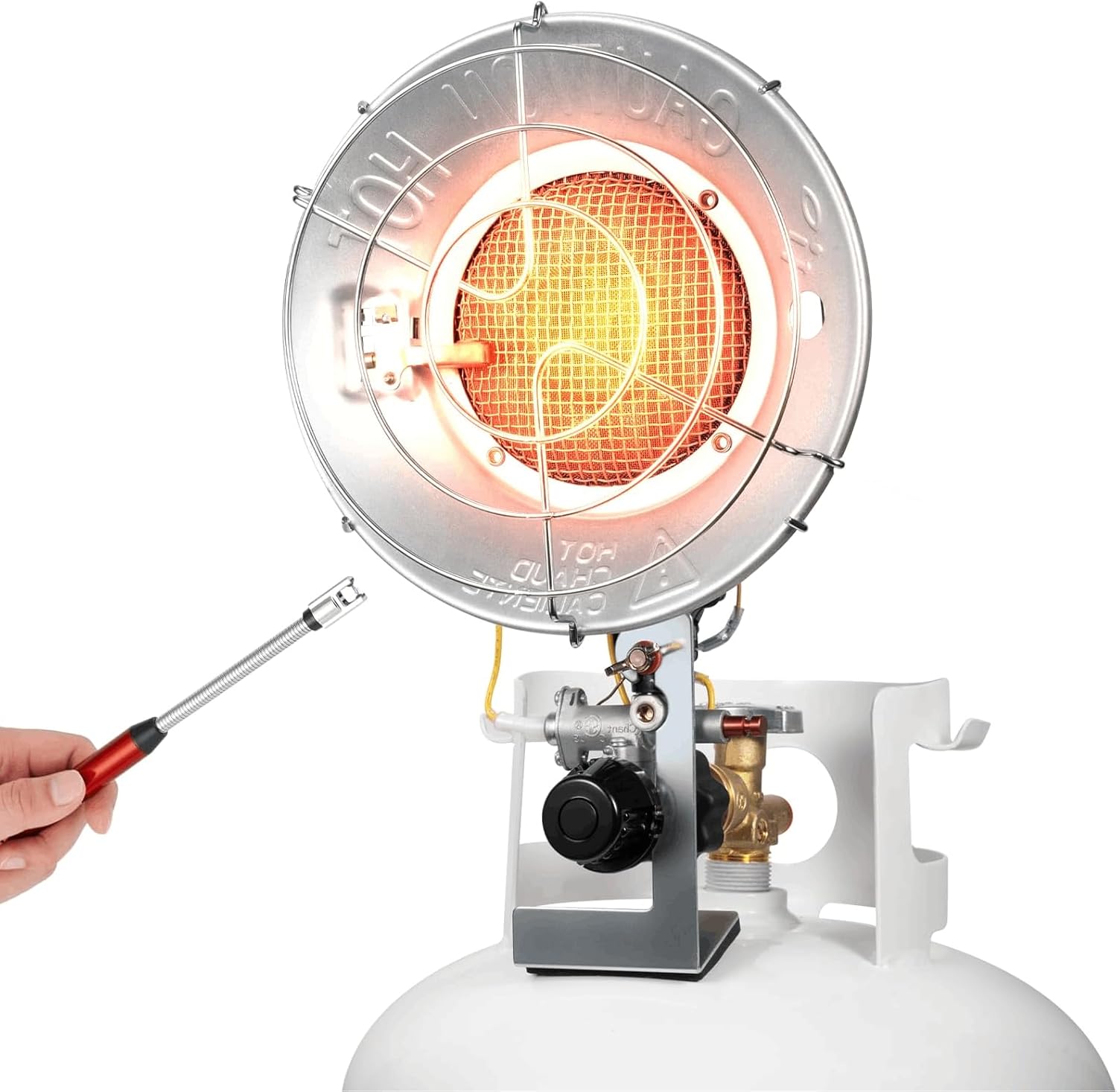
GasBRUH Portable Propane Radiant Heater
| Heat Output | 18000 BTU |
|---|---|
| Fuel Type | Propane |
| Heating Method | Radiant |
| Number of Speeds | 3 |
This compact propane radiant heater is a simple, budget-friendly option for outdoor warmth. It offers three power settings (12,000, 15,000, and 18,000 BTU) and is designed to mount on top of a 20 lb propane cylinder for hours of run time; the listing claims up to 28 hours on high. The unit includes a tip-over switch, a safety shut-off valve, and mesh guards to reduce burn risk, and it ships preassembled for quick setup. Construction is mostly metal with an aluminum reflector and a brass connector at the hose for a more secure fuel connection. It also comes with a USB windproof lighter that works in breezy conditions. On the downside, this model is explicitly for outdoor use only and is not suitable for indoor use or poorly ventilated spaces, and the lightweight pedestal design and small footprint mean it is best for localized spot heating rather than warming large areas evenly.
Best for: Buyers on a tight budget who need a straightforward, no-frills outdoor propane heater for patios, backyard gatherings, camping, or RV use and prioritize safety features and easy setup.
Less Ideal for: Anyone looking for a heater approved for indoor use, whole-patio or large-area heating, or a heavier, freestanding commercial-style patio heater should look elsewhere.
- Three adjustable heat settings for flexible output
- Safety features including tip-over shutoff and gas shut-off valve
- Preassembled design for quick setup and attachment to 20 lb propane tanks
- Durable metal construction with brass connector and aluminum reflector
- Includes a USB windproof lighter for reliable ignition in wind
- Rated for outdoor use only and not safe for indoor or enclosed spaces
- Small pedestal footprint limits how much area it can heat effectively
Verdict: A low-cost, easy-to-use outdoor propane radiator that delivers adjustable heat and basic safety features for small outdoor spaces.
Mr. Heater Portable Buddy F232000

| Heat Output | 9000 BTU |
|---|---|
| Heating Coverage | 225 sq. ft. |
| Fuel Type | Propane |
| Number of Speeds | 2 |
| Power Source | gas_powered |
The Mr. Heater Portable Buddy is a small radiant propane heater built for short-term indoor or outdoor spot heating. It offers two heat settings—about 4,000 and 9,000 BTU—and is typically used to warm garages, patios, or a single room up to roughly 225 square feet. The unit runs on a 1 lb. propane cylinder (with optional adaptors for larger tanks) and includes safety features such as an oxygen depletion sensor, thermal shut-off, and a tip-over switch, which allow safer indoor operation when ventilation is appropriate. Its quick-connect swivel regulator and piezo igniter make it easy to start and move, and run times are several hours on the low setting. Expect straightforward, direct radiant warmth rather than whole-house heating; the heater is light and portable so it will not replace a permanent heating system and requires careful use around flammable materials and in very small, unventilated spaces.
Best for: Buyers who prioritize a reliable, safety-featured portable heater to provide fast spot heat in garages, workshops, or covered outdoor spaces.
Less Ideal for: Homes needing whole-house or continuous heating or users who cannot provide occasional ventilation should look at electric or permanent heating solutions instead.
- Two heat settings for adjustable output up to 9,000 BTU
- Safety systems including oxygen depletion sensor, thermal shut-off, and tip-over switch for indoor use
- Runs on common 1 lb. propane cylinders and connects to larger tanks with accessories
- Portable, lightweight design with easy-grip handle and piezo igniter for quick setup
- Not intended to heat large areas or replace central heating
- Operates on combustible fuel so requires ventilation and careful placement
Verdict: Choose the Portable Buddy when you want a proven, safety-minded propane heater for reliable short-term spot heating indoors and in sheltered outdoor areas.
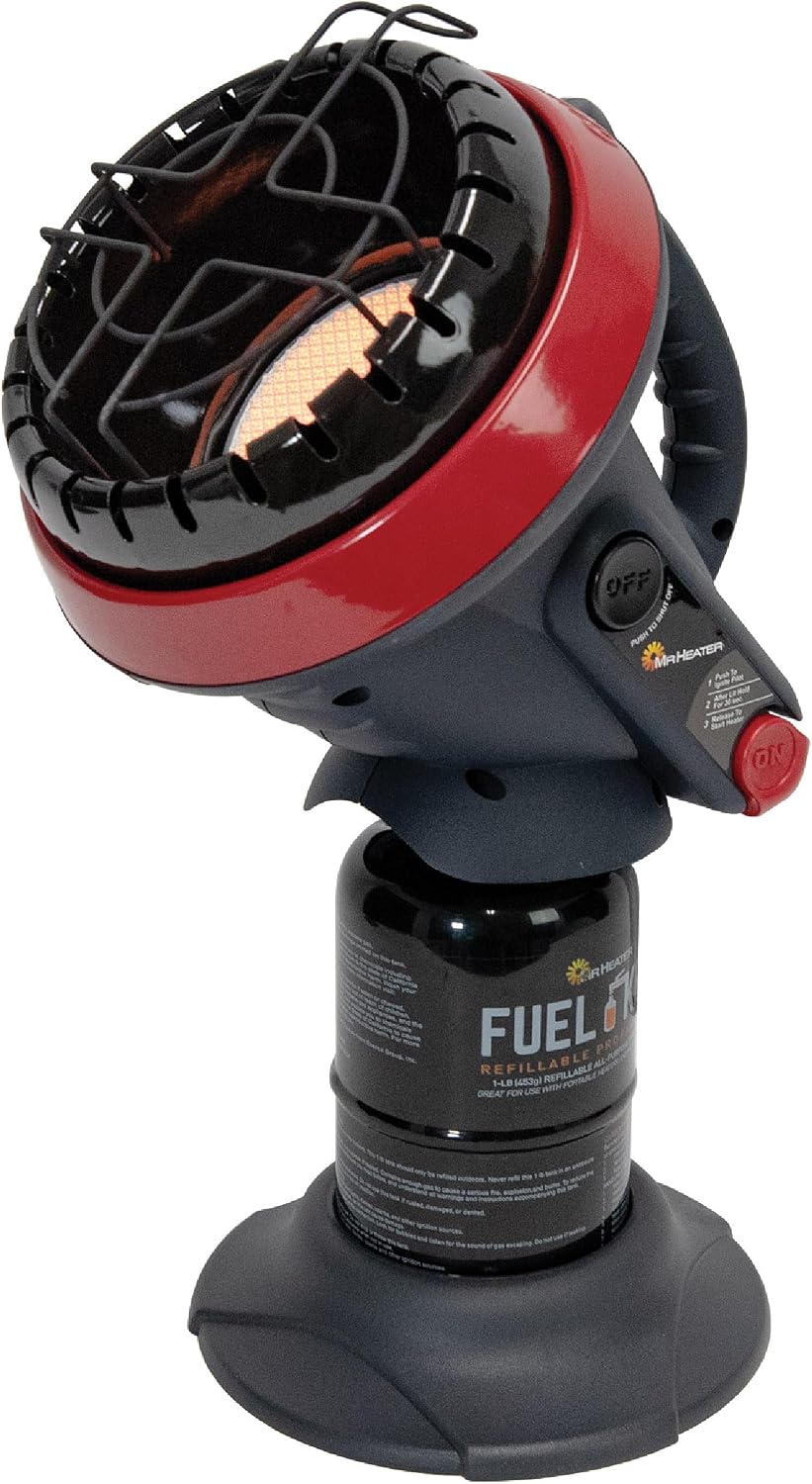
Mr. Heater Little Buddy F215100
| Heat Output | 3,800 BTU |
|---|---|
| Heating Coverage | 95 sq ft |
| Fuel Type | Propane |
| Power Source | gas_powered |
| Safety Features | Oxygen depletion sensor, tip-over shutoff |
The Mr. Heater Little Buddy is a small, lightweight radiant propane heater intended for campsite tents, ice fishing shacks, garages, and other small indoor or semi-enclosed spaces. It runs off a 1 lb propane cylinder and produces 3,800 BTU to warm roughly 95 square feet; ignition is a single button for fast startup. Safety is a clear focus: it includes an oxygen depletion sensor, tip-over shutoff, cross-thread protection, and a thermocouple/self-extinguishing design, which reduce common risks when using propane indoors. The 8-inch round base and ergonomic handle make it easy to position and carry, and its quiet, odor-free operation is well suited to small personal spaces. Limitations are its modest output and short run time on a single 1 lb cylinder, so it is not a whole-room heater for larger living spaces and requires careful ventilation and adherence to indoor propane guidelines. For someone who needs a portable, safety-minded heater for close-range use, the Little Buddy is a practical choice.
Best for: Buyers who prioritize demonstrable safety features and want a portable, easy-to-use propane heater for small enclosed or semi-enclosed spaces like tents, ice shacks, or a single work area.
Less Ideal for: Those seeking to heat larger rooms or provide long unattended run times should consider higher-output or hard-plumbed heating options.
- Compact, lightweight design for easy transport and setup
- Built-in safety features including Oxygen Depletion Sensor and tip-over shutoff
- Simple one-button piezo ignition for quick start
- Radiant heat delivers quiet, odor-free warmth for close-range use
- Runs on a 1 lb propane cylinder so continuous run time is limited
- 3,800 BTU output is only suitable for small areas up to about 95 sq ft
Verdict: If you need a small, safety-focused propane heater for close-range indoor use, the Little Buddy delivers reliable warmth with strong built-in safety protections.
ProCom Ventless 25,000 BTU Fireplace

| Heat Output | 25000 british thermal units |
|---|---|
| Ventilation Type | Vent Free |
| Fuel Type | Gas |
| Coverage | 1,100 square feet |
The ProCom Ventless 25,000 BTU Fireplace is a freestanding dual-fuel unit that runs on natural gas or liquid propane and is designed to heat rooms up to roughly 1,100 square feet. It uses a dual burner to produce two rows of flames behind five lifelike logs and includes a thermostat control and variable heat settings for maintaining a chosen temperature. Ventless operation means you get high usable heat without a chimney or ductwork, and safety features include an Oxygen Depletion Sensor (O.D.S.) and battery-assisted Piezo ignition for straightforward starting. The cast iron construction and detailed refractory logs give it a realistic look while keeping the unit sturdy. The main trade-offs are the vent-free design, which requires adherence to local codes and good room ventilation, and the substantial footprint and weight for a freestanding stove. For buyers prioritizing simple installation and strong heat output, it provides an efficient, attractive heating option when used in appropriate indoor settings.
Best for: Buyers who want a powerful indoor propane heater with built-in safety features and a thermostat for steady, room-sized heating and who prefer a ready-to-install freestanding stove rather than a wall or vented unit.
Less Ideal for: People in homes or jurisdictions that restrict ventless gas appliances, very small apartments with poor ventilation, or buyers who need a lightweight, easily portable heater.
- Dual-fuel capability for natural gas or liquid propane adds installation flexibility
- Thermostat control with variable heat settings keeps room temperature steady
- Oxygen Depletion Sensor provides automatic shutoff for added safety
- High heat output (25,000 BTU) suitable for large rooms up to about 1,100 sq ft
- Realistic cast refractory logs and sturdy cast iron construction
- Ventless design requires compliance with local building codes and adequate indoor ventilation
- Heavier and larger than many portable heaters, making placement and moving more difficult
Verdict: Choose this ProCom ventless dual-fuel fireplace if you need a powerful, thermostat-controlled indoor propane heater with built-in O.D.S. safety for reliably warming large rooms.
Choosing the Right Safe Propane Heater for Indoors: Key Factors to Consider
Certified Safety Features
Look for heaters with certified safety systems such as oxygen depletion sensors, tip-over shutoffs, and automatic shutoff on flame failure. These mechanisms actively prevent dangerous situations if combustion becomes incomplete or the heater is knocked over, which is especially important indoors where people and pets may be nearby.
Certification by a recognized testing agency indicates the design has been evaluated for real-world hazards. Also verify that gas fittings, regulator connections, and valves meet safety standards to reduce leak risk during operation and refueling.
Indoor Emissions and Air Quality
Propane combustion produces water vapor and small amounts of combustion byproducts. Choose heaters engineered for low emissions and, when possible, catalytic or sealed-combustion designs that limit indoor pollutants. Lower emissions reduce the chance of lingering odors and help keep indoor air healthier, particularly in smaller or poorly ventilated rooms.
Even low-emission heaters increase humidity and contribute to CO in confined spaces if ventilation is inadequate. Consider how the heater's combustion efficiency and exhaust handling will affect indoor air, and plan for periodic air exchanges while the unit runs.
Ventilation Needs and Room Size
Every indoor propane heater has a recommended minimum ventilation rate or maximum room size. Running a heater in too small or sealed a room raises carbon monoxide and oxygen-depletion risks and can lead to condensation or excessive humidity. Match heater output to the room's volume and ensure you can provide the required fresh-air intake or intermittent ventilation.
If bedroom or continuous-occupancy use is anticipated, select a unit with explicitly low ventilation requirements and an oxygen-sensing shutoff, or plan for mechanical ventilation to maintain safe air quality.
Fuel Connection and Leak Prevention
How the heater connects to its propane source affects safety. Look for secure regulator designs, built-in overpressure protection, and clear instructions for hose routing and cylinder placement. A well-designed fuel connection reduces the chance of accidental leaks during operation or transport.
Also evaluate how easy it is to inspect and replace hoses or fittings and whether the manufacturer recommends periodic checks. Proper fuel containment and clear maintenance instructions lower long-term risk.
Thermostatic Control and Output Adjustability
Adjustable output or thermostatic control helps avoid unnecessary fuel burn and keeps indoor temperatures comfortable without overshooting. Precise control reduces cycling and minimizes combustion events that could affect air quality. For intermittent use in living spaces, a responsive thermostat improves comfort and can extend run time on a given fuel supply.
Consider how intuitive the controls are and whether the unit maintains stable output at low settings. Simple, reliable controls reduce operator error and improve everyday safety.
Maintenance and Serviceability
Routine maintenance keeps combustion clean and safety systems functioning. Prioritize heaters with accessible components that can be cleaned or replaced without special tools, plus clear service intervals for things like filters, thermocouples, or catalytic cells. Easy maintenance reduces the likelihood that a faulty part will go unrepaired and cause unsafe operation.
Also look for straightforward instructions for winter storage and pre-season checks. Well-documented maintenance requirements help owners keep the heater safe over its lifetime.
How Indoor-Safe Propane Heaters Work
Indoor-safe propane heaters either contain combustion within a sealed system or incorporate safety features that monitor air quality and flame integrity. Sealed-combustion units draw fresh air from outside and expel combustion products outdoors, minimizing indoor contamination. Other designs use oxygen-sensing shutoffs and catalytic burners to reduce emissions while combusting in the room.
Understanding the basic combustion pathway helps you assess the operational risks and ventilation needs for any heater you consider. The more a unit limits its interaction with room air, the lower the demand on indoor ventilation.
- Sealed combustion reduces indoor emissions by isolating the flame.
- Catalytic burners lower flame temperatures and reduce NOx and CO output.
- Sensors and automatic shutoffs intervene when oxygen levels fall or flame is lost.
Placement and Ventilation Best Practices
Placement affects safety and heater performance. Position units on stable, level surfaces away from foot traffic, drapes, and combustible materials. Maintain recommended clearances to walls and furniture to prevent heat buildup and to ensure sensors respond to room conditions rather than localized hot spots.
For ventilation, follow the manufacturer's guidance on fresh-air requirements. If your chosen heater specifies intermittent ventilation, plan windows or doors that can be opened on a schedule, or use mechanical ventilation to supply makeup air during extended operation.
- Keep a clear zone around the heater as specified by the manufacturer.
- Avoid placing heaters in hallways or near exits where they could obstruct movement.
- Use a carbon monoxide monitor in the same room whenever the heater is operating.
Installation, Fuel Handling, and Connection Tips
Correct installation reduces leak risk and ensures regulators operate within their design range. Use approved hoses and fittings, tighten connections to specified torque if provided, and route fuel lines to avoid kinks or contact with hot surfaces. Inspect hoses and fittings before each season or after long storage periods.
When connecting cylinders, ensure the valve and regulator are compatible and undamaged. Replace any hose with visible wear or brittleness. Store spare cylinders upright and secured in a ventilated area away from living spaces.
- Always follow the heater's connection diagram for cylinder placement.
- Perform a soap-test check for leaks after any new connection.
Operational Habits That Improve Safety
Small habitual actions reduce risk while running a propane heater indoors. Keep doors between sleeping areas and the heater open if the heater is in continuous use to encourage air exchange. Avoid leaving the unit running unattended for long stretches, and always run the heater with a working carbon monoxide alarm in the same room.
Refuel or replace cylinders only when the heater is off and cool. Allow adequate cool-down before handling or storing the unit, and follow seasonal inspection steps to catch deteriorating components before they become hazards.
- Run a CO monitor and check battery/backups before each heating session.
- Turn the heater off and ventilate the room briefly before sleeping if continuous operation is not recommended.
Matching Heater Output to Your Space
Match the heater's BTU output to the room's volume and insulation level rather than choosing the largest-sounding unit. Oversized heaters can cycle frequently or create uneven heating and may demand more ventilation. Undersized units may run continuously and strain components.
Calculate approximate required output using room square footage and ceiling height, then choose a heater with adjustable output settings so you can fine-tune the heat and ventilation needs during real use.
- Consider ceiling height and open floor plans when estimating needed capacity.
- Prefer units with adjustable settings to avoid constant full-power operation.
How We Chose the Best Safe Propane Heater for Indoors
We prioritized features that directly reduce combustion risk and indoor air hazards. Key evaluation points included certified safety mechanisms such as oxygen depletion sensors and tip-over shutoffs, verified low-emission combustion or catalytic design, and clear ventilation or air-exchange requirements. We also assessed fuel containment design and leak prevention, manufacturing quality of combustion chambers and fittings, and user-facing controls like adjustable output and straightforward ignition. Practical usability mattered as well: we considered run time at typical BTU settings, ease of refueling and connection safety, noise levels, and maintenance needs such as access to cleanable components. Portability and footprint were weighed for smaller rooms versus larger spaces. Units lacking documented indoor-use certification, without mandatory safety interlocks, or with unclear ventilation guidance were excluded. The final selection focuses on heaters designed for indoor environments and that provide transparent safety documentation and sensible operating limits.
Our full evaluation process is outlined in our review methodology.
FAQ
Is it safe to run a propane heater inside overnight?
It often depends on the heater's safety features and ventilation. Units with oxygen-depletion sensors and clear indoor-use certification are safer for extended use, but you should still run a CO monitor and follow ventilation recommendations. Avoid leaving any combustion heater unattended if it lacks these safety systems.
Do indoor propane heaters need a vent pipe?
Some indoor-rated heaters use sealed combustion and require a vent to the outside, while others are designed to operate without an external flue but need strict ventilation and sensors. Check the unit's installation instructions to confirm whether a vent is required.
What maintenance keeps a propane heater safe indoors?
Regularly inspect hoses, fittings, and valves for wear or leaks, clean accessible combustion areas per the manual, and test sensors and safety shutoffs. Replace components that show corrosion or cracking and follow seasonal service intervals.
Will a propane heater increase indoor carbon monoxide risk?
Any combustion device can raise carbon monoxide levels if ventilation is inadequate or combustion is incomplete. Choosing a heater with low-emission design and oxygen-sensing shutoff reduces that risk, and using a CO monitor provides an added safety layer.
Can I use a propane heater in a small, poorly ventilated room?
Usually you should avoid running a propane heater in a small, sealed room unless the unit is explicitly rated for such conditions and includes robust oxygen-sensing safety systems. When in doubt, provide mechanical or intermittent ventilation.
Final Verdict
Prioritize safety systems and clear ventilation guidance when choosing an indoor propane heater. Certified sensors, secure fuel connections, and manageable ventilation needs should be your top priorities because they directly affect household air quality and operating risk. Balance heater output with room size and prefer models that allow precise control and easy maintenance. With those tradeoffs in mind, you can select an indoor-safe propane heater that delivers dependable warmth without compromising safety.