
Note: This article contains affiliate links. If you click on these links and make a purchase, we may earn a small commission at no extra cost to you. This helps support our research and content. Read our full affiliate disclosure here.
When you open cans frequently, the tool you use affects kitchen safety, speed, and the amount of cleanup you face. A side-cut can opener slices the lid from the side, leaving a smooth rim on both the can and the lid and reducing the risk of sharp edges or metal shavings in food. This guide collects the top shortlisted side-cut can openers across common use cases so you can pick one that fits your routine. We evaluated models for cutting durability, ease of use, and maintenance so you can focus on safe, consistent performance. Read on to see the features we prioritized and which characteristics matter most for different kitchens.
Top Picks at a Glance
| Best Overall The best all-around choice for most situations | Hamilton Beach Smooth Touch Can Opener | 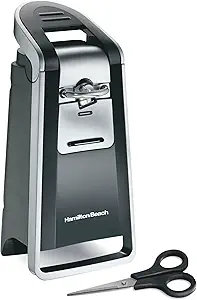 |
| Best Quality Built to a higher standard if you want something more solid | GoodCook Safe-Cut Can Opener |  |
| Best Value The sweet spot between price and what you get | Bellemain Ergonomic Can Opener |  |
| Best Budget The cheapest option that still gets the job done reliably | RICKUNCL Side Cut Can Opener |  |
| Top Rated A top-rated pick with lots of positive feedback | OXO Good Grips Smooth Edge Can Opener |  |
| Best Seller A high-volume bestseller chosen again and again | Cuisinart Electric Can Opener CCO-50BKN |  |
Hamilton Beach Smooth Touch Can Opener

| Included Components | Can Opener, Scissors |
|---|---|
| Operation Mode | Automatic |
| Material Type | Stainless Steel |
The Hamilton Beach Smooth Touch Can Opener is a countertop electric side-cut opener that trims cans along the side to leave smooth, touchable lids. You operate it with a light press of the easy-push lever so one-handed opening is straightforward, and its extra-tall head accommodates pop-top and regular cans. The cutting wheel is designed not to contact the food, which keeps the rim and mechanism cleaner, and the removable scissors store in the back to save counter space. Its plastic and chrome housing looks tidy on the counter and the automatic operation reduces wrist effort compared with manual openers. Limitations are typical for an electric unit: it requires countertop space and a power outlet, and moving or washing the main body is more cumbersome than a simple handheld opener. For buyers who need frequent, safe can opening with reusable lids and minimal hand strain, this model delivers reliable, user-friendly performance.
Best for: Buyers who want a reliable, low-effort electric opener that produces safe, reusable lids and reduces wrist strain during frequent can opening.
Less Ideal for: People who need a highly portable, space-minimal solution or who rarely open cans and prefer a simple manual opener.
- Cuts cans along the side for smooth, reusable lids
- Easy-push lever enables one-handed, low-effort operation
- Extra-tall head fits pop-top and regular cans
- Includes stainless steel scissors that store on the unit to reduce clutter
- Requires countertop space and an outlet, unlike handheld openers
- Main unit is bulkier to clean and move compared with manual openers
Verdict: Choose this Hamilton Beach side-cut electric opener if you want effortless, one-handed can opening with smooth, reusable lids and a built-in pair of scissors.
GoodCook Safe-Cut Can Opener

| Material Type | Stainless Steel |
|---|---|
| Blade Material Type | Stainless Steel |
| Operation Mode | Manual |
| Included Components | can opener |
The GoodCook Safe-Cut is a straightforward manual side-cut can opener built for safe, everyday use. It slices the lid from the side so the cutting wheel never touches can contents, producing a smooth, safe edge that can act as a temporary lid for short-term storage. The opener's thick stainless-steel guide wire grabs and lifts the lid away, and the release knob lets you drop the lid directly into the trash without touching it. A non-slip turn knob and ergonomic plastic handle make it comfortable to operate, and the hardened stainless steel blade and chrome construction feel durable in regular kitchen use. Because it is manual, it requires hand power and is slower than electric models, and very stiff or dented cans can be harder to start. For buyers who prioritize a clean cut, hygiene, and a durable handheld tool, this one performs reliably; if you need one-handed electric operation or the fastest possible opening for high-volume use, consider an electric opener instead.
Best for: Buyers who want a reliable, hygiene-focused handheld opener that produces smooth, safe lids and who are comfortable using a manual tool for everyday kitchen tasks.
Less Ideal for: People who need one-handed or hands-free electric opening for mobility limits or who open large volumes of cans frequently should consider an electric model instead.
- Side-cut design keeps the cutting wheel away from food to reduce cross-contamination
- Lifts and holds the lid for hands-free disposal using the guide wire and release knob
- Produces smooth, safe lid edges that can be reused for short-term storage
- Hardened stainless steel blade and chrome construction for durable daily use
- Manual operation requires physical effort and is slower than electric openers
- Can be harder to start on very dented or stiff metal cans
Verdict: Choose this Safe-Cut opener if you want a durable manual side-cut tool that delivers hygienic, smooth-edged lids and lifts them away for safe disposal or short-term reuse.
Bellemain Ergonomic Can Opener

| Material Type | Stainless Steel |
|---|---|
| Blade Material Type | Stainless Steel |
| Operation Mode | Manual |
| Unit Count | 1 Count |
The Bellemain Ergonomic Can Opener is a compact manual side-cut opener built from stainless steel for everyday kitchen use and travel. It operates by cutting along the side of the can to leave a smooth edge, which reduces the risk of cuts and makes it safer for households with seniors or children. The non-slip, easy-to-turn handle and lightweight construction make it comfortable for people with weaker grip strength or arthritis to use repeatedly, and the unit doubles as a bottle opener for extra utility. Because it is manual, it requires no power and is easy to store or pack for camping, but heavy or stuck lids may need more wrist effort than powered models. The stainless-steel blade and simple mechanism are durable, though there are no extra features like magnetic lid catch or geared cranks. For shoppers who want a reliable, low-fuss side-cut opener that prioritizes safety and ergonomics, this is a sensible choice.
Best for: Buyers who prioritize a simple, safe, and durable manual opener that is easy to use for daily kitchen tasks and for people with limited hand strength.
Less Ideal for: Those who prefer electric convenience, need rapid high-volume can opening, or want additional convenience features like a magnetic lid catcher.
- Side-cut design leaves smooth, safe can edges
- Stainless steel construction for durability
- Non-slip, easy-to-turn handle suited for reduced grip strength
- Compact and lightweight for easy storage and travel
- Manual operation can require more wrist effort on very large or stubborn cans
- Lacks features like a magnetic lid catcher or geared crank for extra leverage
Verdict: A practical, safety-focused manual side-cut can opener ideal for everyday use and users who need an easy-turn handle.
RICKUNCL Side Cut Can Opener

| Operation Mode | Manual |
|---|---|
| Material Type | Acrylonitrile Butadiene Styrene, Stainless Steel |
| Blade Material Type | Stainless Steel |
| Unit Count | 1 Count |
The RICKUNCL side-cut can opener is a manual safety can opener that cuts along the can wall to remove lids without leaving sharp edges. You use it by positioning the side blade on the can rim, turning the large knob to cut around the lid, then reversing to release the opener so the lid can be lifted intact. Notable features include a side-cutting stainless steel blade, a large soft-turn knob for easier rotation, and an ergonomic rubber-coated, non-slip handle that helps reduce hand strain—useful for seniors or anyone with weaker grip strength. The design keeps the cutting wheel mostly hidden, which limits contact with sharp edges and makes rinsing under running water simple. It is compact enough to store in a drawer and the stainless components resist rust. The main limitations are that it is fully manual so very stiff cans require more wrist force, and its performance depends on correct positioning to avoid slipping on unusual can rims.
Best for: Buyers looking for an affordable, safer alternative to top-cut can openers who value easy handling and smooth-edged lids for everyday kitchen use.
Less Ideal for: People who need an electric or battery-powered opener for very frequent use or those who prefer one-handed, push-button operation should consider motorized models instead.
- Side-cut blade leaves smooth, safe lid edges to protect hands and prevent metal shavings
- Large soft-turn knob makes it easier to rotate than small traditional can openers
- Ergonomic non-slip rubber handle improves grip and control
- Stainless steel cutting wheel and parts are easy to rinse and resist rust
- Fully manual operation can be tiring on very stiff or large cans
- Requires correct placement on the can rim for reliable cutting and release
Verdict: A budget-friendly side-cut can opener that delivers safe, smooth lids and comfortable handling for everyday household use.
OXO Good Grips Smooth Edge Can Opener

| Material Type | Stainless Steel |
|---|---|
| Blade Material Type | Stainless Steel |
| Operation Mode | Manual |
| Size | Smooth Edge |
The OXO Good Grips Smooth Edge Can Opener is a side-cut manual opener designed to remove lids without leaving sharp edges on the can or lid. You operate the oversized side-wind mechanism and soft-grip knob to rotate the stainless steel cutting wheel around the can; because it cuts below the rim the lid stays attached to the opener and does not fall into the can. Built-in pliers let you lift the lid contact-free and the non-slip handles provide a comfortable grip, which helps when opening stiff or large cans. The cutting wheel is hardened stainless steel and avoids contact with can contents for cleaner operation, and the unit is dishwasher-safe for easy cleaning. Limitations are those common to manual openers: it requires two-handed operation and is built for right-handed use, and the larger handles may feel bulky for small hands. For buyers prioritizing a consistent, safe cut and long-lasting parts, this model delivers reliable, straightforward performance.
Best for: Buyers who want a reliable, safety-focused manual opener that consistently produces smooth, no-sharp-edge lids and lasts with regular kitchen use.
Less Ideal for: Those who need one-handed or power-assisted operation, or users who require a specifically left-handed design should consider other styles.
- Side-cut design leaves no sharp edges on can or lid
- Hardened stainless steel cutting wheel stays cleaner by minimizing contact with contents
- Soft, non-slip handles and oversized side-wind knob for comfortable operation
- Built-in lid pliers allow contact-free lid removal
- Dishwasher-safe for easy cleaning
- Manual two-handed operation can be slower and requires more effort than electric models
- Designed primarily for right-handed use which may be awkward for left-handed users
Verdict: Choose this OXO side-cut opener if you want a dependable, safety-first manual can opener that consistently delivers no-sharp-edge lids.
Cuisinart Electric Can Opener CCO-50BKN

| Operation Mode | Automatic |
|---|---|
| Wattage | 60 watts |
| Material Type | Stainless Steel |
The Cuisinart CCO-50BKN is a straightforward electric side-cut can opener that opens cans with a single button press and holds lids with a magnetic catcher. It is intended for countertop use and is useful for everyday meal prep where ease and consistency matter, such as opening soup, tomato, and vegetable cans. Key features include an automatic motorized cutting head, a wide nonslip base for stability while opening, a detachable activation lever for cleaning, and stainless steel cutting components for durability. In practice it reduces hand strain and produces clean lid removal without manual twisting, which is helpful for those with limited hand strength or anyone who wants a predictable, hands-free workflow. The unit runs on 60 watts, so it is powerful enough for typical household cans but requires an outlet and counter space. If you need a smaller manual tool, travel-friendly opener, or battery operation this model will not meet those needs, but for a risk-averse buyer wanting reliable, simple performance it is a safe, low-complexity choice.
Best for: Buyers who prioritize a dependable, no-fuss can opener for daily kitchen use and want a device that reduces hand strain and produces consistent results.
Less Ideal for: People who need a compact, portable, or battery-powered opener for travel or limited counter space should consider alternate styles.
- One-touch automatic operation simplifies can opening and reduces hand strain
- Magnetic lid holder keeps removed lids secure and reduces sharp-lid handling
- Wide nonslip base provides stable, consistent performance on countertops
- Detachable activation lever allows easier cleaning of the mechanism
- Stainless steel cutting components for durability and reliable cutting
- Requires countertop space and a mains outlet since it is corded
- Not suitable for travel or cordless use
Verdict: Choose this Cuisinart side-cut electric opener if you want a simple, reliable countertop model that opens cans with one-touch consistency and minimal effort.
Choosing the Right Side-Cut Can Opener: Key Factors to Consider
Cutting Mechanism and Blade Material
The blade and cutting mechanism determine how cleanly a side-cut can opener slices lids. Hardened stainless or coated steel cutters stay sharp longer and resist deformation under repeated use. A precise cutting wheel and gear alignment reduce wobble and prevent the cutter from grabbing the lid unevenly, which can cause jagged edges or require extra passes.
When evaluating blade materials, prioritize corrosion resistance and the ability to be sharpened or replaced. A replaceable cutter is a practical feature for longevity, and a smooth cutting action minimizes effort and reduces wear on both the cutter and the opener's drive gears.
Ergonomics and Required Force
Ergonomics affects fatigue and safety, especially if you open many cans frequently or have limited hand strength. Look for models with long, comfortable handles, non-slip grips, and smooth gear ratios that reduce the number of turns needed per opening. Compact units can be easy to store but sometimes sacrifice leverage, making them harder to operate.
A side-cut opener should require minimal wrist torque and provide steady, predictable resistance. Mechanisms that include larger turning knobs or longer levers translate hand force into easier cutting and help avoid hand strain or slippage during use.
Grip, Clamping, and Stability
A stable fit on the can is essential for consistent, clean cuts. The clamping mechanism should hold the opener securely without denting the can. Some designs use clamping jaws or integrated guides to center the cutter, which keeps the cut path steady and reduces the chance of the opener wandering off-center.
Stability also affects safety. A slipping opener can create uneven cuts or suddenly release, increasing the risk of contact with sharp metal. Consider models with textured or rubberized contact points that resist sliding on smooth can surfaces.
Corrosion Resistance and Materials
Side-cut openers are exposed to moisture and acidic food residues, so material choice matters for durability. Stainless steel and corrosion-resistant alloys reduce rust and staining. Plastic components should be BPA-free and rated for food contact if they touch lids or cans.
Living in humid environments or storing the opener near the sink increases corrosion risk, so prioritize robust finishes, sealed gearing, and materials that tolerate repeated washings without degrading. Long-lasting finishes also help maintain smooth operation as parts are less likely to corrode and bind.
Maintenance and Ease of Cleaning
Food residue can accumulate on cutting wheels and gears, so models that disassemble easily or permit direct cleaning help prevent buildup. Removable parts allow for thorough rinsing and drying. Designs with enclosed gears reduce gunk accumulation but can be harder to dry without disassembly.
Consider whether the opener is dishwasher-safe or hand-wash recommended. Even dishwasher-safe parts should be dried promptly to avoid spotting or corrosion. Simple designs with fewer crevices make sanitation straightforward and reduce the time needed for upkeep.
Safety and Lid Management
The point of a side-cut opener is to improve safety by leaving smooth edges on lids and cans. Look for features that secure the lid after cutting, such as magnetic lids or containment grooves, which reduce the chance of dropped sharp lids. A mechanism that detaches the lid cleanly without creating burrs reduces the need to handle the lid directly.
Also consider whether the opener design prevents metal shavings from entering the can. Sealed cutters or designs that separate the lid outside the food contact area add an extra layer of safety for food handling.
Why Choose a Side-Cut Opener Over a Top-Cut
Side-cut openers remove the lid just below the rim, leaving both the can rim and the lid smooth. That reduces the risk of cuts when handling lids and prevents metal fragments from falling into food. For routine kitchen safety and cleaner presentation of leftovers, the side-cut method is worth considering.
While top-cut openers have been common for decades, side-cut designs are specifically geared toward safer lids and easier storage of removed lids when the design secures them after cutting.
- Leaves smooth rim on can and lid
- Reduces risk of metal shavings in food
- Often easier to store removed lids
Manual Vs. Lever-Assist Designs
Manual side-cut can openers are compact and simple. They rely entirely on hand power and are usually easy to maintain because of fewer moving parts. These are suitable if you open cans occasionally and value compact storage.
Lever-assist or longer-handle designs offer mechanical advantage, reducing wrist torque. These are better for users with weaker grip strength or for heavy use in busy kitchens. They may include larger turning knobs, longer levers, or ratcheting mechanisms to make operation smoother.
- Manual: simpler, smaller, lower maintenance
- Lever-assist: easier operation, better for frequent use
Maintenance Tips to Extend Lifespan
Rinse and dry the cutting area after use to remove acidic residues that accelerate wear. If an opener has removable cutters or an accessible gear housing, periodically disassemble and clean according to manufacturer guidance to prevent buildup.
If the cutter is replaceable, keep a compatible spare on hand. Avoid exposing metal components to prolonged moisture and store the opener in a dry place to minimize corrosion.
- Hand-rinse cutting wheel after each use
- Dry thoroughly to prevent rust
- Replace cutters when cuts become ragged
Accessibility Considerations
If mobility or hand strength is a concern, prioritize models with large turning knobs, extended levers, or ratcheting action. Non-slip handles and ergonomic grips reduce the chance of slippage and make repeated use less fatiguing.
Also consider where you will store the opener. Wall-mounted or drawer-friendly profiles can improve accessibility for users who need the tool within easy reach and at a consistent orientation.
- Look for long levers and large knobs for easier operation
- Non-slip handles improve safety for limited dexterity
Common Misconceptions About Side-Cut Openers
Some buyers assume side-cut openers are more complicated to use. In practice, many designs are intuitive and provide a smoother operation than old-fashioned top-cut models because they require fewer corrective movements.
Another misconception is that side-cutters are more likely to corrode. Material choice matters more than cutting method. A side-cut opener made from quality stainless steel with sealed gearing resists corrosion as well as comparable top-cut tools.
- They are often easier to operate than expected
- Corrosion risk depends on materials and care
How We Chose the Best Side-Cut Can Opener
We shortlisted side-cut can openers that demonstrate reliable cutting and lasting build quality. Our evaluation focused on concrete, category-specific factors buyers care about: blade cutting durability, the stability and grip of the clamping mechanism, ergonomic effort required per opening, corrosion resistance and materials, and ease of cleaning and maintenance. We emphasized products that deliver consistently smooth cuts without bending lids or leaving jagged edges, since safety and food contact cleanliness are primary concerns. Excluded items included traditional top-cut openers and novelty designs that do not use the side-cut mechanism. We also filtered out units with obvious durability issues, poor customer feedback about cutting quality, or materials that are prone to rust. The final list balances mechanical reliability with user ergonomics and long-term upkeep needs, aligning with the scoring metrics used in the product scorecards.
Our full evaluation process is outlined in our review methodology.
FAQ
Are side-cut can openers safer than traditional openers?
Often yes. Side-cut openers leave smooth edges on both the lid and can, which reduces the chance of cutting your fingers when handling the removed lid. They also lower the chance of metal shavings falling into the food.
Can I clean a side-cut opener in the dishwasher?
It depends on the model. Some components are dishwasher-safe, but many manufacturers recommend hand washing and thorough drying to prevent corrosion and preserve gear lubrication. Check the care instructions for the specific unit.
How do I know when the cutter needs replacing?
Replace the cutter when cuts become ragged, require extra turns, or the opener begins to slip on the can. Dulling typically shows up as tearing or deformation of the lid edge rather than a smooth slice.
Do side-cut openers work with all can sizes?
Most side-cut openers accommodate a broad range of common kitchen can sizes, but very small or unusually shaped cans may not seat properly. Confirm that the design has adjustable clamping or compatibility notes if you frequently use atypical cans.
Is maintenance difficult for side-cut designs?
Maintenance is usually straightforward. Regular rinsing, drying, and occasional removal of trapped food particles keep performance consistent. Models with removable cutters are especially easy to service.
Final Verdict
Prioritize cutting durability, ergonomic effort, and stable clamping when choosing a side-cut can opener. These attributes directly affect safety, the smoothness of each opening, and how long the tool will last under regular use. Corrosion resistance and ease of cleaning determine long-term upkeep and hygiene. Choose the model that best balances low operating effort with a robust cutting wheel and secure grip. That combination will deliver the safest, most reliable performance for everyday kitchen tasks.