
Note: This article contains affiliate links. If you click on these links and make a purchase, we may earn a small commission at no extra cost to you. This helps support our research and content. Read our full affiliate disclosure here.
If mold spores are a recurring problem in compact rooms, a focused small air purifier can reduce airborne spores and improve breathing comfort. Choosing the right small air purifier for mold matters because not all compact units have the filtration stages, CADR, or airflow needed to capture microscopic spores across a typical bedroom or bathroom. This guide shortlists five top small air purifiers for mold and explains the performance factors that matter, from true HEPA filtration to coverage area and maintenance. Below you will find concise evaluations and the criteria we used to vet each option, so you can pick a compact unit that fits your space and cleaning routine.
Top Picks at a Glance
| Best Value The sweet spot between price and what you get | AromaRoom AP103-A Air Purifier |  |
| Best Budget The cheapest option that still gets the job done reliably | Rosekm Small Air Purifier AP001R |  |
| Top Rated A top-rated pick with lots of positive feedback | ECOSELF HAP609 Air Purifier |  |
| Most Popular A crowd favorite that many people choose with confidence | Levoit Core Mini-P |  |
| Best Seller A high-volume bestseller chosen again and again | Levoit LV-H132 Air Purifier |  |
AromaRoom AP103-A Air Purifier
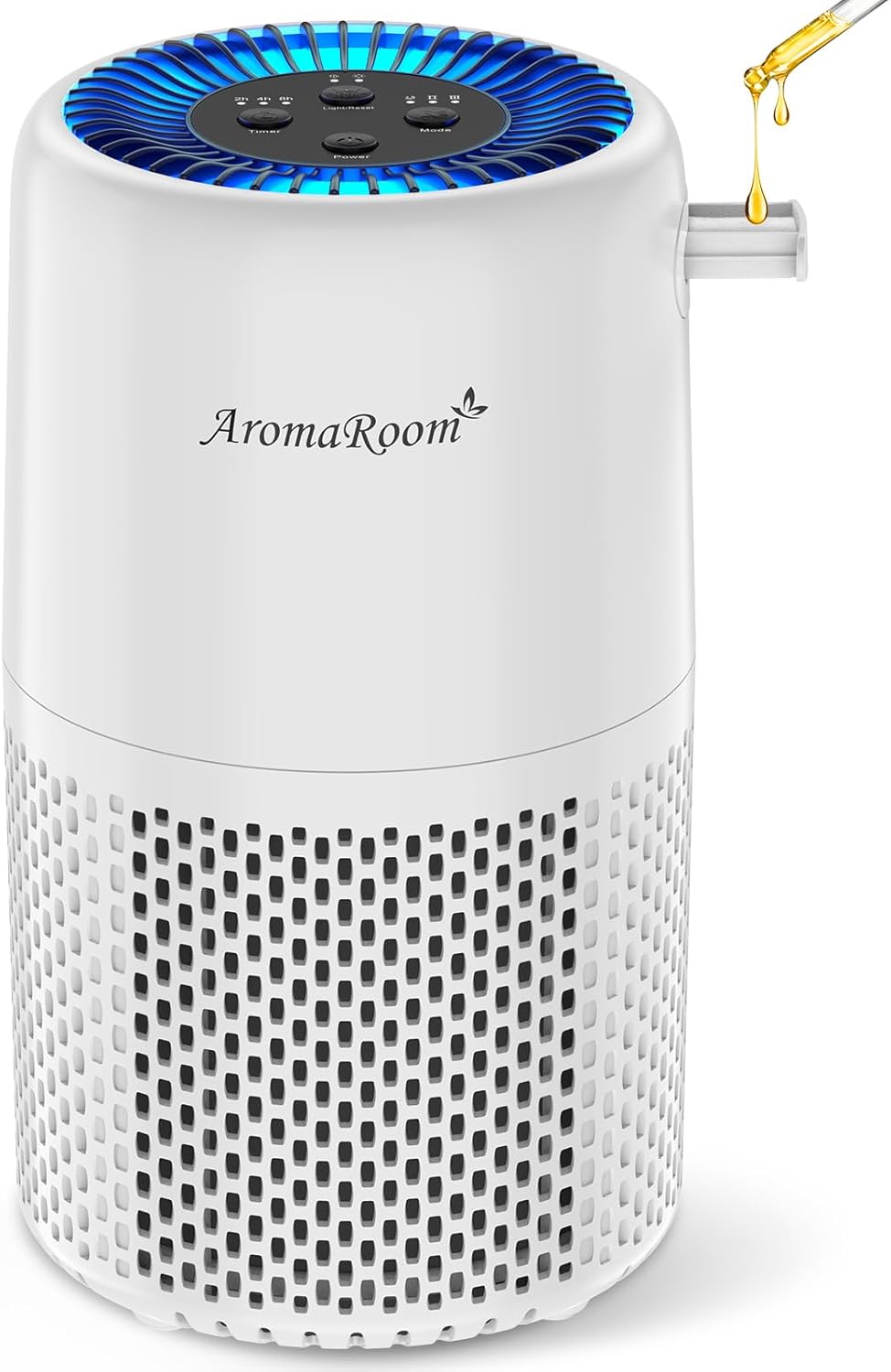
| Filter type | H13 HEPA 3-in-1 |
|---|---|
| Coverage claim | Circulates air twice/hour in 323 ft² (30 m²) |
| Noise (sleep) | 22 dB |
| Timer | 2/4/8 hours |
The AromaRoom AP103-A is a small-room air purifier built around a True H13 HEPA filter and a targeted feature set for bedrooms and other compact spaces. It pulls air through a 3-in-1 filter stack that the manufacturer says captures particles down to 0.1–0.3 microns and includes a smoke-focused layer for fine particulates, making it useful during wildfire season or for smoke-prone homes. The unit is quiet in low/sleep mode (about 22 dB) and offers 2/4/8 hour timers for set-and-forget operation, plus an aroma pad if you want light fragrance with filtration. Its CADR-style claim of circulating air twice per hour in a roughly 323 ft² room indicates reasonable circulation for small to medium rooms, though you should expect slower clearing in larger spaces. Filters are replaceable on a 3–6 month cadence and require removing a protective sleeve before use. The small footprint and low noise make it practical for bedrooms, nurseries, or apartments, while buyers who need whole-house cleaning or higher airflow should look at larger units.
Best for: Buyers who prioritize quiet, compact air cleaning for bedrooms or small living spaces and want a unit that handles smoke and fine particles while offering simple automatic run times.
Less Ideal for: People seeking high airflow for large rooms, whole-house purification, or rapid clearance of heavy smoke events should choose a larger, higher-CADR purifier.
- True H13 HEPA filtration capturing fine particles between 0.1–0.3 microns
- Includes a smoke-targeted filter layer for wildfire and smoke particulates
- Very quiet sleep mode at approximately 22 dB for nighttime use
- Aroma pad option adds light fragrance without extra accessories
- Timer settings (2/4/8 hours) for automated, convenient operation
- Designed for small rooms so air exchange is limited in larger spaces
- Requires filter replacements every 3–6 months to maintain performance
Verdict: A compact, very quiet H13 HEPA purifier that is a sensible, low-noise choice for small rooms and smoke-prone environments.
Rosekm Small Air Purifier AP001R

| Filter Type | H13-grade HEPA Filter |
|---|---|
| Model | AP001R |
| Noise Level | 28 dB (minimum) |
The Rosekm AP001R is a small, portable HEPA air purifier intended for desks, bedrooms, and other tight spaces. It uses an H13 true HEPA filter to capture particles down to 0.3 microns and promises to remove common airborne irritants like dust, pollen, and pet dander, while an aroma pad doubles the unit as a diffuser. The unit is lightweight and corded, so it is easy to move between rooms but requires a nearby outlet. Noise is low — the manufacturer rates it down to about 28 dB — making it suitable for sleep or reading, and an optional soft blue night light adds ambiance. Practical benefits include genuinely compact sizing for crowded desks and straightforward operation with replaceable filters; the brand recommends swapping the filter every 1 to 3 months for sustained performance. The main limitations are its coverage: this is built for very small rooms and will not replace a larger room purifier for mold spore reduction across a whole bedroom, and ongoing filter replacement is necessary to keep efficiency high.
Best for: Buyers who prioritize a low-cost, highly portable purifier for a single small space and want something quiet for bedrooms or desks.
Less Ideal for: People needing whole-room mold remediation or high airflow for larger bedrooms should choose a larger-capacity purifier instead.
- H13 true HEPA filter captures particles down to 0.3 microns
- Very compact and lightweight for easy placement on desks or small nightstands
- Quiet operation rated as low as 28 dB suitable for sleep
- Built-in aroma pad lets it double as a small diffuser
- Designed for very small areas so limited coverage for whole-room mold control
- Corded only with no rechargeable option, so placement depends on an outlet
- Recommended frequent filter replacements to maintain performance
Verdict: If you need an inexpensive, quiet purifier for a single small space or desk that also offers aromatherapy, this compact HEPA unit is a practical choice.
ECOSELF HAP609 Air Purifier

| Model | HAP609 |
|---|---|
| Coverage | Up to 1800 Ft² |
| Noise level (Sleep) | 20 dB |
| Timer | 1–24 hours |
| Sensor | PM2.5 display |
The ECOSELF HAP609 is a small HEPA air purifier built to keep a single room's air cleaner with minimal fuss. It pulls air in from 360 degrees and moves it through a multi-stage filter while the built-in PM2.5 sensor constantly monitors particle levels, automatically raising fan speed when pollution spikes and returning to quiet operation when the air clears. A color ring and numeric PM2.5 display make it easy to see air quality at a glance, and a sleep mode mutes lights and drops noise to about 20 dB for undisturbed rest. The unit also offers a 1–24 hour timer for scheduled use. Practical benefits include hands-off automatic adjustment for variable indoor pollution and a very quiet night mode suitable for bedrooms. Limitations are its small size, which targets single-room coverage rather than whole-house purification, and the need to replace filters periodically to maintain performance.
Best for: Buyers who prioritize a dependable, low-maintenance purifier for a bedroom or small living space and want automatic responses to changing indoor particle levels.
Less Ideal for: Homes needing whole-house purification or very large open-plan rooms should consider a larger-capacity unit or multiple purifiers instead.
- 360° air intake for more even room coverage
- Built-in PM2.5 sensor with real-time display and color ring for instant feedback
- Auto mode that adjusts fan speed to changing pollution levels
- Very quiet sleep mode that turns off lights and runs at about 20 dB
- 1–24 hour timer for scheduled operation
- Designed for single-room use so it may not be effective for large open areas
- Filters require periodic replacement to sustain HEPA performance
Verdict: If you want a compact, reliable bedroom purifier that automatically responds to smoke, pollen, and pet particles while staying whisper-quiet at night, the ECOSELF HAP609 delivers.
Levoit Core Mini-P
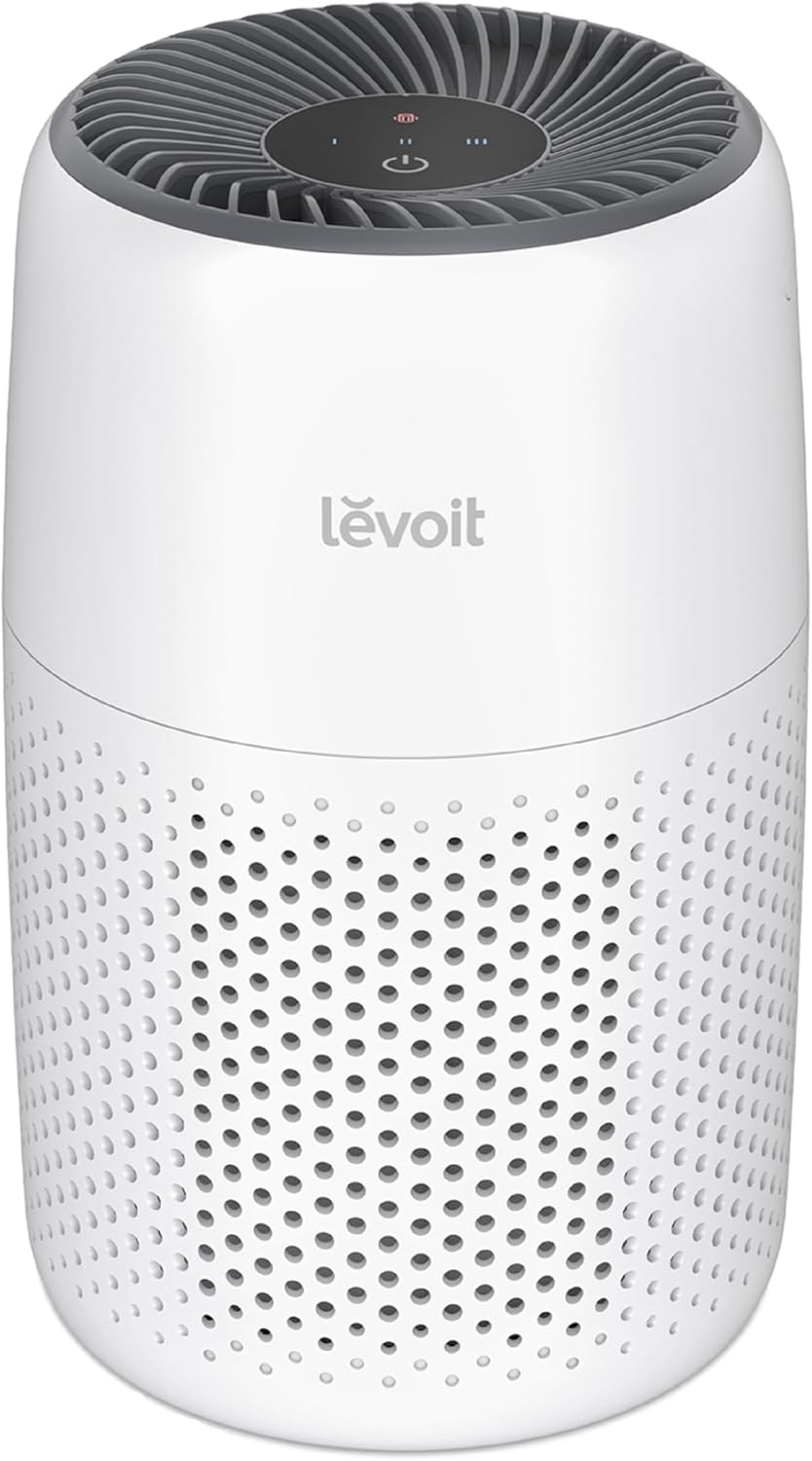
| Rated Power | 7W |
|---|---|
| Noise Level | 27-45dB |
| Particle Retention Size | 0.3 micron |
| Model number | LAP-C161-WUS |
The Levoit Core Mini-P is a small, desktop-focused air purifier built to capture lint, pet dander, smoke and other fine airborne particles using a multi-stage filtration approach (pre-filter plus main filter). It is meant for bedrooms, offices, and other tight spaces where a low-noise unit and small footprint matter. Notable features include a sleep mode and auto-off display for low disruption, an aromatherapy sponge for light scenting, and very low power draw around 7W; the manufacturer also highlights AHAM verification for cleaner-air performance. In practice it clears localized air effectively and runs quietly in night settings, but its coverage is limited to small rooms so it works best as a supplemental unit rather than whole-home mold remediation. You will need to replace genuine filters periodically to maintain capture of fine particles and odors, and avoid overfilling the fragrance pad since excess oil can damage plastic components.
Best for: Buyers who want a proven, quiet purifier to improve air quality in a bedroom, dorm, or office and who prioritize verified performance and strong social proof when choosing small appliances.
Less Ideal for: Homes needing whole-room or whole-house mold treatment or buyers who want a purifier rated for large open floor plans should consider larger-capacity units.
- Compact footprint fits on desks and nightstands
- Very quiet operation with a sleep mode suitable for bedrooms
- Includes aromatherapy sponge for mild scenting
- AHAM-verified performance and low 7W power draw
- Small coverage area not suitable for large rooms or whole-home mold issues
- Aromatherapy requires careful dosing to avoid overflowing and part damage
Verdict: Choose the Levoit Core Mini-P if you need a quiet, AHAM-verified desktop purifier with proven performance for cleaning the air in small rooms.
Levoit LV-H132 Air Purifier
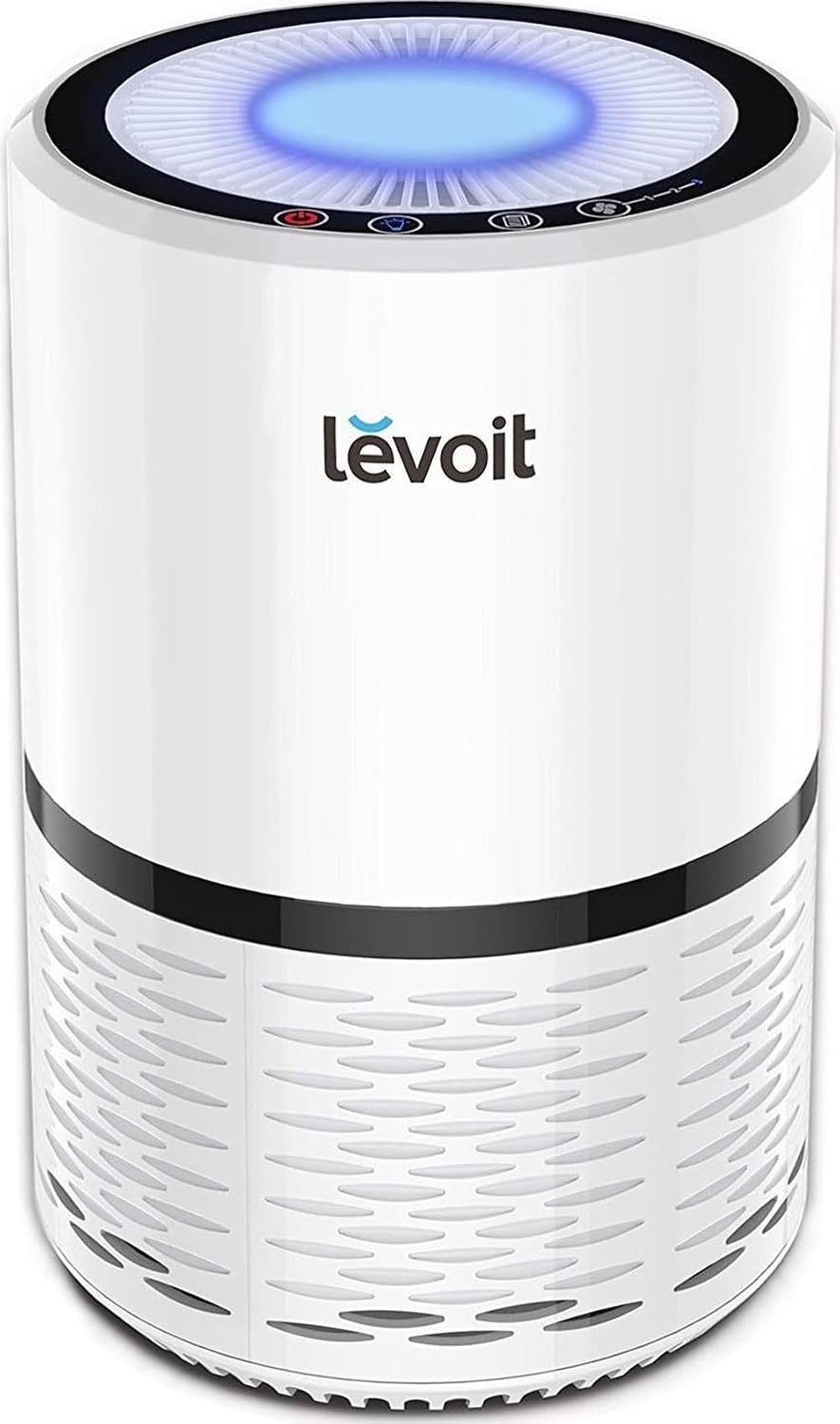
| Model number | LV-H132 |
|---|---|
| Particle retention size | 0.3 micron |
| Noise level | as low as 28 dB |
| Fan speeds | 3 |
The Levoit LV-H132 is a small room air purifier that uses a three-stage filtration system—pre-filter, efficient main filter, and activated carbon—to capture dust, pollen, smoke, odors, and fine particles. It is intended for bedroom, office, or nursery use where space is limited and low noise is important; the unit offers three fan speeds and can run overnight with noise levels reported down to 28 dB while an optional night light provides soft illumination. The compact tower design makes it easy to place on a table or shelf and replacement filters are sold under the LV-H132-RF part number for straightforward upkeep. Practical benefits include AHAM verification and certifications that support reliable performance claims, plus activated carbon to help reduce common household odors. Limitations are inherent to its small size: coverage is best suited to single rooms rather than whole-home cleaning, and very large mold outbreaks or heavy smoke will require a higher-capacity purifier or supplemental remediation rather than relying on this unit alone.
Best for: Buyers who prioritize a quiet, certified purifier for a single bedroom or small living space and want a low-risk, easy-to-use unit with straightforward filter replacement.
Less Ideal for: Homes with large open floor plans, persistent heavy mold growth, or users who need whole-house air cleaning should choose a higher-capacity unit or professional remediation instead.
- Three-stage filtration including activated carbon for odors and VOCs
- AHAM verified and ETL/CARB/FCC certifications supporting reliable performance
- Very quiet operation down to about 28 dB suitable for overnight use
- Compact footprint fits small rooms, bedrooms, and nurseries easily
- Small coverage area not intended for large rooms or whole-home purification
- Will not remove extensive mold contamination or replace source removal and remediation
Verdict: A compact, certified, and whisper-quiet purifier that is a safe, low-risk choice for improving air quality in a single small room.
Choosing the Right Small Air Purifier for Mold: Key Factors to Consider
Filtration Stage and HEPA Rating
A high-quality true HEPA filter is critical because it captures at least 99.97% of particles down to 0.3 microns, which includes many mold spores. Look for units that explicitly state true HEPA performance rather than vague "HEPA-type" marketing. Some compact purifiers add a prefilter to trap larger particles and extend HEPA life, which reduces maintenance frequency.
Beyond HEPA, some small units pair activated carbon to reduce musty odors and volatile organic compounds that often accompany mold issues. While carbon does not remove spores, combining it with HEPA provides a more complete approach to improving perceived air quality in a small room.
Room Coverage and Air Changes Per Hour
A small air purifier must move enough air to reduce airborne spores in the room where mold is present. Check the CADR or the manufacturer's stated coverage and translate that into expected air changes per hour for your room size. For bedrooms and bathrooms, aim for multiple air changes per hour to keep concentrations low.
Undersizing a unit is a common mistake. Even a compact purifier must match the square footage and ceiling height of the space to be effective. Placement matters too; positioning near the mold source or in the breathing zone improves efficiency.
Noise Output for Continuous Use
Many buyers run purifiers continuously, including overnight. Noise becomes a major factor in whether you will actually keep the device on at the needed settings. Look for measured decibel levels at low and high fan speeds or tests that report subjective quietness. Fan speed controls and a true low-noise sleep mode make it practical to run a purifier 24/7 without disturbing sleep.
Also consider how noise varies with maintenance. A clogged prefilter or HEPA can increase fan effort and sound output, so maintenance ties back to noise performance over time.
Filter Replacement Frequency and Cost
Effective mold control requires filters that are replaced on schedule. Check the recommended replacement interval and whether the unit uses proprietary filters or widely available formats. Replacement frequency affects long-term cost and the effort required to maintain optimal filtration.
Consider whether prefilters are washable or reusable to lower recurring expense, and whether indicator lights or timers reliably remind you to change filters. High upfront savings on a compact unit can be negated by frequent, expensive replacements.
Ease of Maintenance and Operation
A small purifier that is simple to operate and maintain is more likely to be used correctly. Look for straightforward controls, clear filter-access points, and accessible parts for cleaning. Features like filter-change indicators, washable prefilters, and tool-free access reduce friction for regular upkeep.
Compact units that are easy to lift and move between rooms offer flexibility for targeted mold mitigation. Consider the clarity of the manual and availability of replacement parts when evaluating long-term usability.
Extra Features That Matter
Extras can improve effectiveness or convenience. Timers, air-quality sensors, and auto modes help the purifier respond to changes in particle levels without constant user input. A reliable sensor-driven auto mode boosts runtime efficiency by increasing fan speed only when needed.
Avoid relying on exotic or unproven technologies. Useful extras include washable prefilters, filter indicators, and multiple fan speeds. Features that require frequent proprietary consumables should be weighed against their real benefits to mold control.
How Mold Spores Behave Indoors
Mold spores are microscopic and can become airborne when disturbed by airflow, foot traffic, or repairs. Once airborne, spores can remain suspended for long periods, especially in rooms with limited ventilation. Understanding this behavior explains why a compact purifier that provides frequent air turnover can lower inhalation risk in small spaces.
Humidity and surface moisture are the underlying causes of most indoor mold growth, so air cleaning is only one part of control. Purification helps reduce airborne spores and limits spread, but addressing moisture sources is essential to prevent recurrence.
- Spores are easily disturbed and travel with household air currents
- Air cleaning reduces airborne concentrations but does not remove mold from surfaces
- Combining dehumidification and targeted cleaning focuses prevention efforts
Placement Tips for Small Rooms
Placement affects performance more than many buyers expect. In a bedroom or bathroom, locate the purifier where airflow is least obstructed and ideally between the expected spore source and your breathing zone. Avoid placing units inside cramped cabinets or directly against walls, which reduces intake and exhaust effectiveness.
For bathrooms, avoid direct splash zones and ensure the unit's electrical rating is suitable for humid environments. In basements, put the purifier where it can circulate air across damp corners rather than tucked behind furniture.
- Keep intake and exhaust unobstructed by at least a few inches
- Elevate units slightly for better circulation in small spaces
- Avoid placing the purifier in corners where air is stagnant
Running Strategy: Fan Speed and Schedules
For mold-prone spaces, run the purifier continuously at a lower fan speed or on an auto mode that reacts to particle spikes. Continuous low-speed operation maintains steady air turnover with minimal noise and energy use. Use higher speeds temporarily during activities that stir dust or spores, like cleaning or remodeling.
If the unit supports timers or scheduled operation, set higher overnight exchange or keep a slightly boosted daytime setting after showering or cooking. Balance runtime with expected filter life to avoid premature filter replacement.
- Continuous low-speed operation for steady control
- Temporary high-speed bursts when spores may become airborne
- Scheduled boosts tied to known moisture or activity times
Combining Purifiers with Moisture Control
Air purifiers reduce airborne spores but do not eliminate the moisture that feeds mold. For lasting results, pair a purifier with humidity control measures. Use exhaust fans in bathrooms and kitchens, run a dehumidifier in damp basements, and repair leaks promptly to remove the conditions that allow mold to grow.
In many small spaces, a coordinated approach prevents relying solely on filtration. Monitoring humidity levels and addressing sources of moisture will reduce the burden on the purifier and lengthen filter life.
- Control humidity to below 50 percent in most living spaces
- Address plumbing and roof leaks rather than only treating airborne spores
- Use localized ventilation to remove moisture at the source
When to Seek Professional Mold Remediation
Air purifiers help control airborne spores but are not a substitute for remediation when visible mold growth or widespread contamination exists. If mold covers large surface areas, returns after cleaning, or you experience health symptoms that persist despite filtration, consult a qualified remediation professional.
Professional assessment can identify hidden sources such as inside walls or under flooring. Use a purifier to reduce airborne exposure while remediation is planned, but treat persistent or extensive growth as an issue that requires more than portable air cleaning.
- Visible or recurring surface growth larger than a small patch
- Persistent odors or health symptoms despite cleaning
- Suspected hidden mold behind walls or under flooring
How We Chose the Best Small Air Purifier for Mold
We evaluated potential picks using a practical combination of performance, suitability for mold control, and everyday usability. Primary filters considered were true HEPA effectiveness at submicron particle capture and any supplemental filtration that targets spores or improves antimicrobial protection. Airflow and CADR or equivalent room-coverage metrics were used to ensure the unit can turn over air often enough in small rooms where mold spores concentrate. Noise levels at common fan speeds were reviewed because many small-unit buyers need nighttime or living-area quiet operation. Ease of filter replacement, filter life, and ongoing maintenance costs were weighed to reflect long-term ownership. We also checked power consumption for continuous operation scenarios common in mold control. We excluded units that rely solely on ionic or ozone-producing technologies because they do not provide verified particulate removal and can introduce other health concerns. Large-room units were excluded because this roundup focuses on compact solutions optimized for bedrooms, bathrooms, and small basements. The final list balances verified particulate filtration, practical coverage for small spaces, low noise for continuous use, and manageable upkeep.
Our full evaluation process is outlined in our review methodology.
FAQ
Will a small air purifier remove mold from surfaces?
No. Small air purifiers reduce airborne mold spores but do not remove mold colonies from surfaces. You need physical cleaning and moisture control to eliminate surface growth.
How often should I run a small unit to control mold spores?
Often continuously at a low or auto setting for steady air turnover, with short high-speed bursts during activities that stir particles. Continuous operation reduces airborne concentrations more effectively than intermittent use.
Can HEPA filters capture all mold spores?
True HEPA filters capture the vast majority of airborne spores because most spores are larger than the HEPA capture threshold. However, no filter removes every single particle, and filter effectiveness depends on proper sizing and maintenance.
Is an air purifier enough if I have a leaky pipe?
No. An air purifier helps reduce airborne spores but will not fix moisture problems. You should stop the leak and dry affected materials to prevent continued mold growth.
Are ozone or ionic purifiers good for mold control?
Ionic and ozone-producing devices do not reliably remove airborne spores and can introduce other indoor air concerns. For mold control, particulate filtration with a true HEPA stage is the recommended approach.
Final Verdict
When controlling mold in small rooms, prioritize a compact unit with a true HEPA stage, enough airflow to provide multiple air changes per hour, and a noise profile you can tolerate for continuous use. Balance filter life and replacement cost with measured filtration performance and practical conveniences like washable prefilters and clear indicators. Pairing a small air purifier with humidity control and source remediation yields the best long-term results. Choose the unit that matches your room size and maintenance preferences so you will run it consistently.