
Note: This article contains affiliate links. If you click on these links and make a purchase, we may earn a small commission at no extra cost to you. This helps support our research and content. Read our full affiliate disclosure here.
If you need extra frozen storage in an unheated or variable-temperature garage, picking the right small chest freezer matters. Garage environments present unique demands: wider temperature swings, limited clearance, and the need to protect food without wasting energy. This guide shortlists the top small chest freezers for garages and explains why each was considered, focusing on reliable temperature stability, insulation, and ease of maintenance. Read on to see the features that matter most and how the finalists meet practical garage-use needs.
Top Picks at a Glance
| Best Overall The best all-around choice for most situations | Frigidaire Chest Freezer 5.0 Cu. Ft. |  |
| Best Quality Built to a higher standard if you want something more solid | Frigidaire Chest Freezer 7 Cu. Ft. |  |
| Best Value The sweet spot between price and what you get | BLACK+DECKER 2.0 Cu. Ft. Chest Freezer |  |
| Best Budget The cheapest option that still gets the job done reliably | Stopsad 3.5 Cu.Ft Chest Freezer |  |
| Top Rated A top-rated pick with lots of positive feedback | Koolatron KTCF99 Chest Freezer |  |
| Most Popular A crowd favorite that many people choose with confidence | Kismile 3.2 Cu Ft Chest Freezer BD-80 |  |
| Best Seller A high-volume bestseller chosen again and again | BODACIOUS 7.0 Cu Ft Chest Freezer |  |
Frigidaire Chest Freezer 5.0 Cu. Ft.
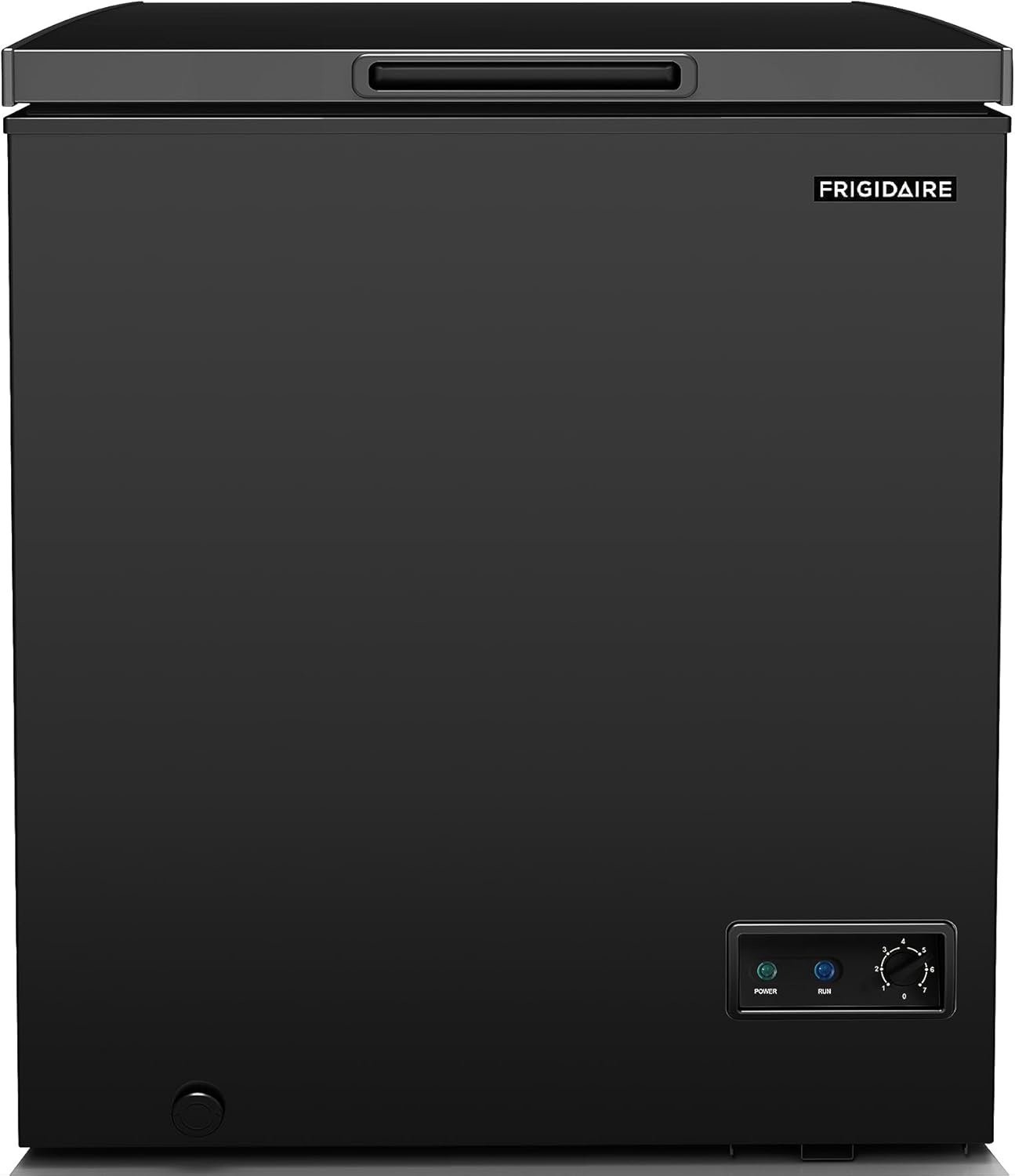
| Capacity | 5 cubic feet |
|---|---|
| Voltage | 120 volts |
| Door Orientation | Top |
| Number Of Shelves | 1 |
| Installation Type | Freestanding |
This Frigidaire chest freezer provides compact yet useful extra freezer space ideal for garages or basements. It is a simple top‑lid chest with a manual adjustable thermostat, a removable vinyl‑coated wire basket for small items, and an exterior defrost drain to make occasional defrosting easier. The unit is freestanding with adjustable legs and a recessed handle for a clean, easy‑to‑use exterior, and an indicator light shows power status. Because it uses a manual defrost design and a front mechanical temperature control, it stays straightforward to operate and maintain, though it requires occasional defrosting and lacks automatic temperature alerts or digital controls. The aluminum interior and basic construction focus on durability and value rather than premium insulation or advanced features. For buyers who want reliable, no‑frills frozen storage in a garage or utility area, this freezer covers the essentials without unnecessary complexity.
Best for: Buyers who want straightforward, reliable extra freezer capacity for a garage or utility area and prefer simple mechanical controls and easy maintenance over advanced features.
Less Ideal for: Shoppers who need automatic defrosting, Wi‑Fi or digital temperature monitoring, or the coldest possible long‑term storage should consider higher‑end upright or chest models.
- Compact 5.0 cu. ft. capacity fits tight garage or utility spaces
- Adjustable mechanical thermostat with seven settings for simple temperature control
- Removable vinyl‑coated wire basket keeps small items organized and accessible
- Exterior defrost drain speeds manual defrost and cleanup
- Adjustable legs and recessed handle make placement and access easier
- Manual defrost requires periodic maintenance and thawing
- No digital controls, alarms, or advanced temperature monitoring
Verdict: A practical, no‑frills 5.0 cu. ft. chest freezer built for dependable extra frozen storage in garages and utility spaces.
Frigidaire Chest Freezer 7 Cu. Ft.

| Capacity | 7 cubic feet |
|---|---|
| Voltage | 120 volts |
| Door Orientation | Top |
| Number Of Shelves | 1 |
| Installation Type | Freestanding |
This Frigidaire 7.0 cu. ft. chest freezer provides straightforward extra freezer capacity for garages, basements, or utility rooms where you need reliable cold storage without bells and whistles. It opens from the top with a single flip-up lid and includes a removable vinyl-coated wire basket that keeps smaller items accessible while the aluminum interior and simple manual thermostat let you control freezing performance across seven settings. The external defrost drain and adjustable leveling legs make maintenance and installation easier in uneven garage floors, and the recessed handle and power-on indicator keep daily use simple. Expect solid basic construction and energy-efficient operation, but be prepared to manually defrost it periodically since it is not frost-free and features only a manual thermostat rather than digital controls. For buyers prioritizing dependable, compact capacity and straightforward controls in a garage environment, this model covers the essentials without extra complexity.
Best for: Buyers who need dependable, no-frills extra freezer space for a garage or utility room and prefer simple manual controls and easy maintenance over smart features.
Less Ideal for: Shoppers who want frost-free operation, precise digital temperature control, or built-in smart monitoring should look at other models.
- Compact 7.0 cu. ft. capacity provides usable extra freezer space without a large footprint
- Removable vinyl-coated wire basket keeps small items organized and easy to reach
- External adjustable thermostat with seven settings gives simple manual temperature control
- Defrost drain and adjustable legs simplify maintenance and installation on uneven floors
- Manual defrost design requires periodic draining and defrosting
- No digital thermostat or advanced temperature monitoring features
Verdict: A straightforward, compact chest freezer that delivers reliable extra storage and easy maintenance for garage use without unnecessary features.
BLACK+DECKER 2.0 Cu. Ft. Chest Freezer

| Capacity | 2 cubic feet |
|---|---|
| Voltage | 115 volts |
| Door Orientation | Top |
| Number Of Shelves | 1 |
This compact BLACK+DECKER chest freezer gives you convenient extra frozen storage for a small kitchen, garage, or basement. It holds about 70 pounds of food in 2.0 cu. ft., and includes a removable storage basket to keep frequently used items accessible. Temperature is adjusted with an exterior mechanical dial offering seven settings and an indicator light so you can change settings without opening the lid. Maintenance is straightforward with manual defrost and an easy-access drain for melting and removing water. The unit is freestanding, runs on 115 volts and uses R600a refrigerant. Expect straightforward operation and simple organization, but plan for manual defrosting rather than an auto-defrost cycle and provide a few inches of clearance for ventilation. For buyers needing a small, no-frills freezer to expand frozen storage in a garage or utility area, this model covers the essentials reliably.
Best for: Buyers who need a practical, space-efficient secondary freezer for a garage or small utility area and prioritize straightforward operation and easy organization.
Less Ideal for: Those who want a hands-off freezer with auto-defrost, larger capacity, or advanced features like digital controls and Wi-Fi monitoring should consider other options.
- Compact 2.0 cu. ft. capacity fits tight spaces while storing up to 70 lbs. of food
- Removable storage basket for easier organization and access
- Exterior mechanical temperature dial with 7 settings and indicator light
- Manual defrost with easy-access drain simplifies cleaning and maintenance
- Manual defrost requires periodic melting and cleanup rather than automatic defrosting
Verdict: A straightforward, space-saving chest freezer that delivers reliable extra frozen storage for garages and small utility spaces.
Stopsad 3.5 Cu.Ft Chest Freezer
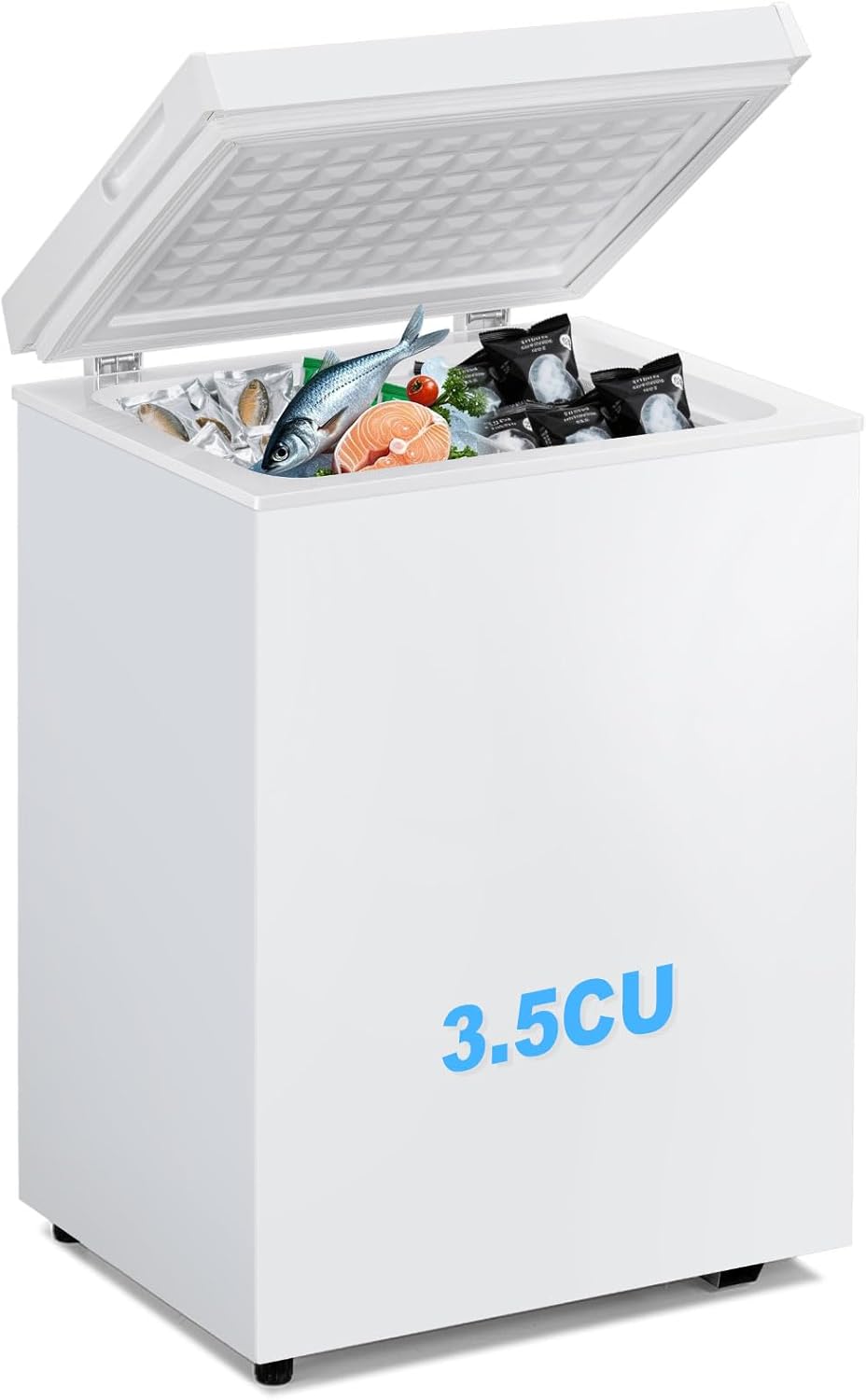
| Capacity | 3.5 cubic feet |
|---|---|
| Wattage | 250 watts |
| Voltage | 120 volts |
| Installation Type | Freestanding |
This Stopsad 3.5 cu.ft chest freezer provides straightforward frozen storage for a garage, apartment, or tight kitchen nook. It is a top-opening, freestanding unit with a removable basket and a seven-step adjustable thermostat that ranges roughly from -22 C to -14 C, so you can set colder or slightly warmer levels depending on food type. The simple hinge and compact footprint make it easy to fit beside other garage gear, and the manufacturer reports a low-noise compressor (<=45 dB) and daily energy use around 0.56 kWh which helps keep running costs down. Setup is minimal — allow the unit to sit upright before plugging in — and the interior is easy to organize for bulk meat, ice cream, or frozen vegetables. Limitations are its small 3.5 cu.ft capacity if you need long-term bulk storage and the basic control panel lacks digital precision or advanced features like auto-defrost or internal lighting. For buyers prioritizing low cost, small footprint, and simple reliable freezing, this chest freezer covers the essentials without extras.
Best for: Shoppers on a tight budget who need a simple, compact secondary freezer for a garage or small home and value low operating cost and easy placement.
Less Ideal for: Those who need large-capacity or feature-rich freezers for heavy bulk storage or precise temperature management should consider larger upright or chest models.
- Compact 3.5 cu.ft footprint fits small garages and apartments
- Adjustable 7-level thermostat for different food types
- Removable basket makes organizing and retrieving small items easier
- Relatively low noise operation (<=45 dB) and modest daily energy use (0.56 kWh)
- No digital controls or internal light
- Limited capacity for large households or bulk long-term storage
Verdict: A no-frills, energy-conscious small chest freezer that delivers affordable extra frozen storage for garages and tight spaces.
Koolatron KTCF99 Chest Freezer

| Capacity | 99 liters |
|---|---|
| Wattage | 125 watts |
| Voltage | 120 volts |
| Number Of Shelves | 1 |
The Koolatron KTCF99 is a small chest freezer built for simple, dependable frozen storage in tight spaces like garages, basements, or apartments. It uses a low-vibration compressor to hold temperatures between 0 and -24°C and has an external mechanical dial for straightforward temperature adjustment. The swing-top stay-open lid and removable wire basket make loading and organizing items easy, while the front-mounted drain with leak-proof plug simplifies manual defrosting and cleaning. Its flat-back design and enclosed evaporator coils help the unit sit close to walls and conserve floor space. Expect quiet operation and fast initial cooling after setup, but know this is a manual-defrost model so occasional defrosting is required and there are no advanced features like automatic defrost or digital controls. For buyers who prioritize straightforward, reliable freezing performance with easy maintenance, this freezer is a practical small-capacity option for garage use.
Best for: Buyers who need a compact, no-frills freezer that consistently holds low temperatures and fits into small or garage spaces and who value reliable compressor cooling over advanced features.
Less Ideal for: Those who want fully automatic defrost, smart controls, or larger capacity for bulk long-term storage should consider other models.
- Dependable compressor cooling with wide temperature range down to -24°C
- Space-saving flat-back design fits close to walls and into corners
- Front-mounted drain and leak-proof plug make manual defrosting cleaner and easier
- Removable hanging wire basket and stay-open lid simplify organization and access
- Quiet, low-vibration operation suitable for living spaces and garages
- Manual defrost requires periodic maintenance and ice removal
- No digital thermostat or advanced temperature monitoring features
Verdict: A compact, dependable chest freezer that delivers quiet, reliable compressor cooling and simple maintenance for garage or small-space use.
Kismile 3.2 Cu Ft Chest Freezer BD-80

| Capacity | 3.2 cubic feet |
|---|---|
| Door Orientation | Top |
| Number Of Shelves | 1 |
| Installation Type | Freestanding |
This Kismile 3.2 cu ft chest freezer is a small, freestanding unit designed to provide extra frozen storage in tight spaces like garages, dorms, or kitchens. It uses a 7-grade adjustable thermostat that covers roughly 6.8°F to -7.6°F so you can choose between normal and deeper freezing, and indicator lights show power and run status. Two removable baskets help keep small items organized while the balanced hinge top lid can hold at fixed angles for easier loading. The compressor is marketed as energy efficient and the unit claims low noise under 40 dB, which makes it suitable for placement near living areas. Practical downsides are its modest freezing range compared with larger freezers and limited overall capacity, so it is best for bulking up frozen goods rather than long-term storage of large volumes. The convenient water drain simplifies defrosting. For buyers prioritizing compact, space-saving freezer capacity with simple mechanical controls, this model covers the basics well.
Best for: Buyers who need a reliable, space-efficient auxiliary freezer for everyday frozen goods in a garage or small space and who value straightforward mechanical controls and easy access.
Less Ideal for: People who need very large capacity, deep temperature freezing for long-term food storage or commercial use should choose a larger upright or chest freezer instead.
- Compact footprint fits tight spaces such as garages or small kitchens
- Seven-level adjustable thermostat for flexible temperature control
- Two removable baskets for organized storage of smaller items
- Balanced hinge lid that can stay open at set angles for easier access
- Integrated water drain makes defrosting and cleaning simpler
- Limited 3.2 cu ft capacity is small for large households or long-term bulk storage
- Temperature range tops out at about -7.6°F, which may be warmer than deep-freeze needs
Verdict: A compact, easy-to-use chest freezer that gives dependable extra frozen storage in tight spaces like garages while keeping operation simple and quiet.
BODACIOUS 7.0 Cu Ft Chest Freezer

| Capacity | 7 cubic feet |
|---|---|
| Voltage | 110 volts |
| Number Of Shelves | 2 |
| Specification Met | ETL |
| Installation Type | Countertop, Freestanding |
This 7.0 cu ft chest freezer is a compact, garage-friendly unit that focuses on energy efficiency and quiet operation. It uses an adjustable six-setting thermostat so you can tailor temperatures for meats, vegetables, or long-term storage, and the removable basket keeps frequently used items accessible while the main compartment holds bulkier packages. Practical touches include a drain for easy defrosting and a top-opening door that works well in tight spaces. The unit is ETL listed and rated for countertop or freestanding installation, and the manufacturer recommends letting it sit 24 hours before first use. Expect generally low daily energy draw and modest noise, though running at the coldest setting continuously will increase compressor activity and power use. For buyers who prioritize straightforward freezing performance and simple maintenance, this freezer delivers sensible features without advanced smart controls or sophisticated shelving.
Best for: Buyers who want a reliable, no-frills chest freezer for extra frozen storage in a garage or small space and who prefer simple mechanical controls and low operating noise.
Less Ideal for: People who need precise digital temperature management, remote monitoring, or an upright freezer layout for shelving and frequent access.
- Energy-efficient design intended to keep operating costs low
- Quiet operation suitable for garages or apartments
- Adjustable 6-setting thermostat for flexible temperature control
- Removable basket and defrost drain make organization and cleaning easier
- Top-open chest layout limits vertical organization compared with upright freezers
- No advanced features like digital controls or Wi-Fi monitoring
Verdict: A compact, energy-conscious chest freezer built for simple, quiet garage storage with easy-to-use mechanical controls.
Choosing the Right Small Chest Freezer for Garages: Key Factors to Consider
Ambient Temperature Range
Garages can experience wide temperature swings seasonally and daily. A freezer rated for garage use or with a compressor that reliably starts and runs at low ambient temperatures reduces the risk of thawed contents. Consider the expected minimum and maximum temperatures in your garage and choose a unit that specifies operation within that range.
Some freezers perform poorly if the surrounding air is too cold because the thermostat may not call for compressor cycles often enough. Conversely, extremely high garage temperatures can overwork the compressor and increase energy use. Matching the freezer's operating envelope to your climate prevents food loss and extends equipment life.
Insulation Thickness and Seal Quality
Thicker insulation and a tight lid seal maintain stable internal temperatures with fewer compressor cycles, which matters when ambient temperatures vary. Good insulation reduces frost buildup and helps the freezer recover temperature after loading fresh items.
Examine the lid gasket design and consider models with reinforced or recessed lids that minimize cold air leakage. In a garage setting where temperature swings and humidity may be higher, superior insulation lowers energy costs and reduces strain on components.
Compressor Durability and Start Mechanism
A freezer used in a garage must have a compressor that can reliably start in cool conditions and handle occasional heavy loads. Look for designs with robust start relays, low-temperature start capability, or compressor models known for durability under variable conditions.
Frequent start-stop cycles due to ambient swings can prematurely wear weaker components. Choosing a unit with proven compressor durability reduces maintenance needs and the chance of sudden failure when you most rely on frozen storage.
Usable Capacity and Interior Layout
Small chest freezers trade vertical space for a deep, horizontal footprint. For garage use, consider the actual usable cubic feet after baskets and interior compartments are accounted for. Deep compartments are efficient for bulk items, but organizing smaller packages can become difficult without removable baskets or dividers.
Assess how you plan to store items. Models with multiple baskets or modular dividers keep frequently used items accessible and reduce the time the lid stays open, which matters for energy efficiency and temperature stability in a garage.
Defrost Method and Maintenance Needs
Manual-defrost chest freezers often deliver better temperature stability and use less energy, but they require periodic defrosting to remove frost buildup. In a garage with higher humidity, frost can accumulate faster, so plan for more frequent maintenance unless you choose a model with frost-reduction features.
Consider how easy the interior is to clean, the location of drain plugs for quick defrosting, and whether baskets and liners are removable. Lower maintenance requirements save time and reduce the chance of food spoilage from poor upkeep.
Footprint, Placement, and Ventilation
A small chest freezer must fit in an often tight garage layout while leaving enough clearance for airflow around the compressor and condenser. Poor ventilation raises internal temperatures and increases energy use and component stress.
Measure floor space and account for hinge clearance and service access. Avoid placing the freezer in a sealed alcove or directly against walls without recommended clearance. Also consider whether the garage floor is level and whether you need a pallet or platform to prevent moisture contact or improve airflow.
Preparing Your Garage for a Chest Freezer
Before installing a small chest freezer, evaluate the specific conditions where it will sit. Check floor level and surface material, ventilation access, and proximity to heat sources or direct sunlight. A slightly raised platform can protect the unit from moisture and improve airflow.
If your garage is subject to extreme cold or humidity, simple preventive steps extend freezer life. Insulate nearby walls if possible, ensure electrical outlets are on dedicated circuits, and keep the area clear to allow service access and regular cleaning.
- Measure doorway and path width to get the unit into place.
- Leave recommended clearance around the back and sides for ventilation.
- Avoid locations near water heaters or direct sun exposure.
Organizing a Small Chest Freezer for Easy Access
Organization is crucial in a chest freezer because items can become buried in deep compartments. Use baskets, clear bins, and labeled zones to keep frequently used foods near the top. Removable baskets make it easy to lift out groups of items without leaving the lid open too long.
Establish a system such as one basket for proteins, one for vegetables, and a top-level tray for quick-access items. Freeze items flat in resealable bags to maximize stackability and speed thawing when needed.
- Use shallow baskets to avoid digging.
- Label packages with contents and freeze date.
- Freeze liquids flat for compact storage.
Managing Energy Use and Long-Term Costs
Energy consumption in a garage-mounted freezer depends on insulation, compressor efficiency, and how often the lid is opened. Position the freezer away from heat sources and keep a consistent fill level; a fuller freezer retains cold better and cycles less often. Regularly defrost manual units to maintain efficiency.
If you expect to run the freezer year-round in variable conditions, factor in expected electricity use when choosing capacity and efficiency. Simple habits like grouping items and minimizing lid-open time deliver measurable savings over a season.
- Keep a moderate fill level for thermal mass benefits.
- Defrost when frost exceeds a quarter-inch to maintain airflow.
- Inspect and replace worn gaskets to prevent air leaks.
Safety and Food-Safety Considerations in Garages
Garages can introduce extra contamination and temperature risks. Protect frozen food by ensuring the freezer maintains stable temperatures and by storing raw meats in sealed, leak-proof packaging. Place delicate items away from the bottom where puddles could collect if defrosting occurs.
Install a temperature alarm or remote thermometer if the garage is unattended for long periods. That early warning can prevent large losses if power outages or compressor failures occur during extreme weather.
- Use sealed containers for items stored near the drain area.
- Keep a thermometer inside to verify temperature stability.
- Avoid storing perishable items that require consistently low temps if the unit is not rated for cold garages.
Installation Tips and Electrical Requirements
Most small chest freezers require a standard dedicated 120V outlet. Verify the garage circuit can handle the continuous load and avoid using extension cords or power strips for permanent installations. If in doubt, consult a qualified electrician to confirm circuit capacity.
Level the freezer and follow manufacturer instructions for initial cooldown time before loading. This ensures the compressor and refrigerant settle correctly and helps achieve target temperatures more quickly.
- Allow the unit to reach temperature for several hours before adding food.
- Use a dedicated outlet on its own circuit where possible.
- Verify local codes if adding new outlets or modifying wiring.
How We Chose the Best Small Chest Freezer for Garages
We selected small chest freezers for garages using practical, appliance-focused filters that matter to buyers who plan to install a freezer in an unconditioned or mildly conditioned garage. Criteria included temperature performance in low and fluctuating ambient temperatures, insulation quality and R-value indicators, compressor durability and low-temperature start capability, and energy efficiency for long-term operating cost. We also evaluated storage layout and organization options, defrosting method, and footprint versus usable capacity to fit tight garage spaces. Noise level and vibration were considered because garages often have different proximity to living spaces. We excluded any units not rated or specified by manufacturers to operate in garage or low-temperature conditions, and we omitted compact refrigerator-style products that lack true freezer performance. The outcome favors models with strong insulation, compressors designed for cooler starts, clear organization features, and manageable maintenance requirements.
Our full evaluation process is outlined in our review methodology.
FAQ
Can I run a small chest freezer in a garage year-round?
Often, yes. It depends on the freezer's rated ambient temperature range and compressor start capability. Choose a unit specified for garage or low-temperature operation and follow recommended placement and ventilation guidelines.
How does manual defrost compare to frost-reduction in a garage setting?
Manual-defrost models typically use less energy and hold temperature more consistently, but they need periodic thawing, which can be more frequent in humid garages. Frost-reduction features cut down maintenance but may slightly increase energy use.
What maintenance should I plan for a chest freezer in a garage?
Plan regular defrosting if the unit is manual, clean the interior and gasket, check drain plugs, and inspect the seal. Also confirm adequate clearance for airflow and monitor for unusual noises that could indicate compressor strain.
Will extreme cold damage a chest freezer in my garage during winter?
It can if the unit is not designed for low-temperature operation. Some thermostats and compressors do not cycle correctly in very cold ambient conditions, which can allow internal temperatures to rise. Select a model rated for the expected winter lows.
How much clearance does a small chest freezer need in a garage?
Clearance requirements vary, but you should leave space behind and on the sides as recommended by the manufacturer to ensure proper ventilation. Also allow room for lid opening and service access.
Final Verdict
When adding a small chest freezer to a garage, prioritize models with reliable low-temperature start capability, strong insulation, and an interior layout that fits how you store food. Balance energy efficiency against maintenance needs like defrosting, and ensure proper placement and ventilation to extend service life. By matching the freezer's operating envelope to your garage conditions and organizing it thoughtfully, you can get dependable frozen storage without unnecessary repairs or high running costs.