
Note: This article contains affiliate links. If you click on these links and make a purchase, we may earn a small commission at no extra cost to you. This helps support our research and content. Read our full affiliate disclosure here.
Choosing the right small meat grinder for home use makes a big difference in meal quality, kitchen convenience, and food safety. Whether you plan to grind beef, pork, chicken, or a mix, the right grinder delivers consistent texture and reduces waste compared with prepackaged ground meat. This guide highlights the top shortlisted small meat grinders for home use and explains the practical tradeoffs between motor strength, material durability, and ease of cleaning. Read on to see which features matter most for your cooking style and how the finalists measure up across key performance and usability criteria.
Top Picks at a Glance
| Best Overall The best all-around choice for most situations | AAOBOSI Meat Grinder MGC04 |  |
| Best Quality Built to a higher standard if you want something more solid | LEM BigBite #5 Meat Grinder |  |
| Best Value The sweet spot between price and what you get | CHEFFANO Life Meat Grinder MG090C |  |
| Best Budget The cheapest option that still gets the job done reliably | LHS Manual Meat Grinder 9303 |  |
| Top Rated A top-rated pick with lots of positive feedback | STX Turboforce 3000 Meat Grinder |  |
| Most Popular A crowd favorite that many people choose with confidence | LHS Manual Meat Grinder JRJ-2 |  |
| Best Seller A high-volume bestseller chosen again and again | Ganiza Food Processor GC10 |  |
AAOBOSI Meat Grinder MGC04

| Wattage | 2800 watts |
|---|---|
| Capacity | 1.5 kg |
| Voltage | 120 volts |
| Material Type | Stainless Steel |
| Power Source | electric |
The AAOBOSI MGC04 is a countertop electric meat grinder built for home use with a stainless-steel body and a high-power motor rated up to 2800 watts (advertised peak) that grinds roughly 1.5 kg per minute through the 7 mm plate. It ships with three grinding plates, two blades, sausage stuffer tubes, a kubbe maker and slicing/grating attachments, so you can handle ground meat, sausages and basic shredding tasks without extra purchases. The unit includes safety features such as a locking knob, overload protection, an automatic thermal cutoff and a reverse function to clear jams, and the casing has multiple heat-dissipation holes to help motor longevity. Most removable parts are stainless or dishwasher-safe blades, and the design emphasizes easy disassembly for cleaning. Expect a sturdy, feature-rich machine for regular home use, though its advertised wattage is a peak rating so continuous heavy commercial use may push the motor harder than intended and the hopper is best used for boneless cuts to avoid clogging.
Best for: Home cooks who want a capable, all-in-one countertop grinder that handles regular batch grinding, sausage making and simple shredding without needing separate tools.
Less Ideal for: People who need a commercial-grade grinder for high-volume continuous use or those wanting to process bones and very tough cuts should choose a heavy-duty professional model instead.
- Comes with multiple accessories (3 plates, 2 blades, sausage stuffer, kubbe maker, slicing/grating blades) for versatile home tasks
- Stainless-steel construction and removable blades make cleaning and durability straightforward
- Safety features include locking knob, overload protection, thermal cutoff and reverse function to clear jams
- Designed heat-dissipation holes help reduce overheating during frequent use
- Advertised wattage is a peak figure so continuous heavy-duty use may strain the motor
- Not suitable for grinding bones, tendons or very tough sinew which can cause jams
Verdict: A well-equipped, safety-minded countertop grinder that gives home cooks versatile grinding and sausage-making capability without buying separate attachments.
LEM BigBite #5 Meat Grinder
| Capacity | 4 pounds |
|---|---|
| Power Source | electric |
| Material Type | Stainless Steel |
| Included Components | Electric Grinder |
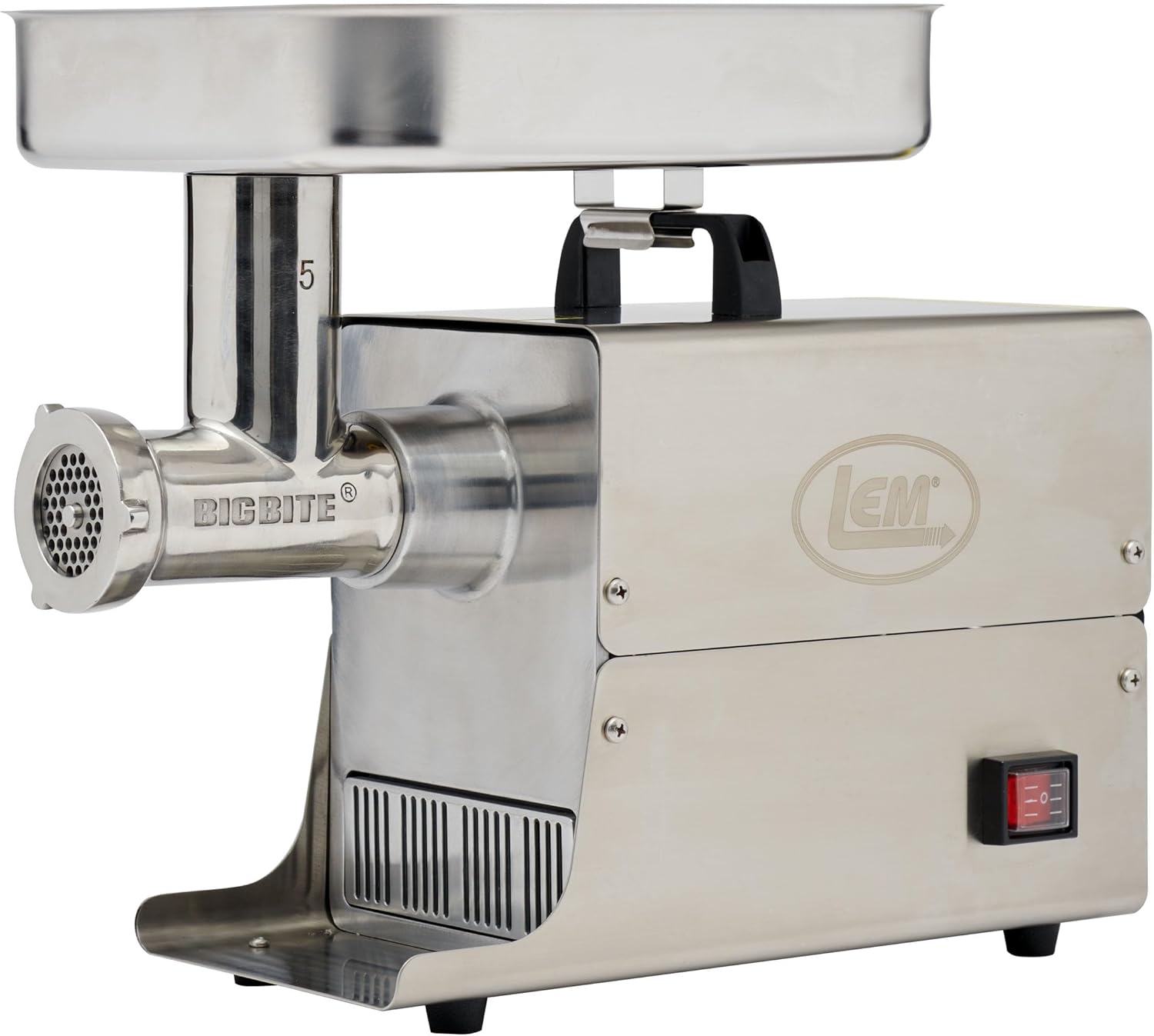
The LEM BigBite #5 is a compact, performance-focused electric meat grinder built for frequent home use. Its BigBite auger pulls larger chunks of meat for faster feeding, and the 0.35 HP motor can grind roughly 4 pounds per minute, making it suitable for burgers, sausages, and processing game. The unit is mostly stainless steel with a large meat pan, stainless knife, coarse and fine plates, and three stuffing tubes so you can switch between coarse grind, fine grind, and sausage stuffing without buying extras. Assembly and disassembly are straightforward and the stainless components clean easily; the permanently lubricated motor and noise-dampening design keep operation smooth and quieter than many consumer models. Limitations: it cannot handle bones and at 29.6 pounds it is a heavier countertop tool that needs a dedicated storage spot. For anyone who wants professional-style throughput and durable metal parts in a small footprint, this grinder delivers reliable, efficient performance for home butchers and avid home cooks.
Best for: Home cooks, hunters, and small-scale processors who prioritize faster throughput and durable metal construction for regular grinding and sausage making.
Less Ideal for: People who need a lightweight, ultra-portable grinder or who require bone-crushing capability should consider other models or specialized equipment.
- BigBite auger design feeds larger chunks for faster, more efficient grinding
- Stainless steel knife, head, auger, and plates for durability and easier cleaning
- Includes coarse and fine plates plus three stuffing tubes for sausage making
- Noise-dampening design and permanently lubricated motor for smoother, quieter operation
- Cannot process chicken bones or other bones
- Relatively heavy for a small countertop appliance, requiring storage space
Verdict: Choose the LEM #5 if you want a small but robust grinder that delivers faster, pro-style feeding and reliable sausage-making capability for home use.
CHEFFANO Life Meat Grinder MG090C

| Wattage | 500 watts |
|---|---|
| Voltage | 120 volts |
| Included Components | 2 blades, 3 cutting plates, sausage tube, kibbe set |
| Power Source | Corded Electric |
This CHEFFANO Life electric meat grinder is a compact, stainless steel unit aimed at home cooks who want control over ground meat texture and to make sausages or kibbe. It uses a copper motor rated at 500W (with a advertised 2000W max) and includes two cutting blades, three plates (7mm, 5mm, 2mm), a sausage stuffer tube, and a kubbe kit, so you can grind coarse to fine and stuff links without buying extras. Controls are simple with an on/off and reverse function to clear jams, and safety features include a locking knob and overload protection that trips on overheating. Removable metal parts make cleaning straightforward though the manufacturer warns against the dishwasher. At this size the unit is suitable for weekly batches and occasional larger jobs, but it is not an industrial machine and heavy continuous use will trigger thermal protection. For cooks who want homemade sausages, kibbe, or fresher ground meat than store options, it provides good functionality in a small footprint.
Best for: Home cooks who want to grind their own meat and make sausages or kibbe at home and value a compact, accessory-ready grinder that handles regular household batches.
Less Ideal for: Those who need a commercial‑grade grinder for continuous large-volume processing or a fully dishwasher‑safe machine should look elsewhere.
- Includes 2 blades and three stainless steel cutting plates for coarse to fine grinds
- Sausage stuffer tube and kubbe kit let you make sausages and traditional kibbe at home
- Copper motor with 500W rated power provides reliable grinding for typical home batches
- Reverse function and locking knob help clear jams and improve safety during use
- Manufacturer advises against dishwasher cleaning for removable parts
- Thermal overload protection limits long continuous runs, so not for heavy commercial use
Verdict: A compact, stainless steel home meat grinder that bundles plates and stuffing accessories to make fresh ground meat, sausages, and kibbe without extra purchases.
LHS Manual Meat Grinder 9303

| Power Source | Manual |
|---|---|
| Material Type | Acrylonitrile Butadiene Styrene, Stainless Steel |
| Included Components | Lid, Sausage Stuffing Tube, Cutting Plates |
This compact manual meat grinder is built for occasional home use when you want fresh ground meat without electricity. You assemble the unit, load chunks of thawed meat into the funnel, and turn the long hand crank to push meat through interchangeable stainless steel blades for coarse or fine grinds. The unit includes a suction-base clamp that locks the grinder to smooth, dry countertops and a clear hopper so you can watch progress, plus a sausage stuffing tube and dough/cookie shaper for added versatility. The heavy duty plastic body keeps weight low while the stainless blades do the cutting, and the longer handle reduces effort when turning by hand. Expect good performance for burgers, meatballs, and small sausage batches, but the plastic housing and manual operation mean it is slower and less durable than metal electric grinders for large volumes. Proper installation of the suction base and correct assembly of the knife and plate are important to avoid leaks and jams.
Best for: Home cooks who want an inexpensive, manual solution for small batches of freshly ground meat and occasional sausage making without buying an electric grinder.
Less Ideal for: People who regularly grind large volumes or need heavy commercial‑grade durability should choose an electric or full-metal grinder instead.
- Includes two cutting plates for coarse and fine grinds for basic recipe flexibility
- Suction-base clamp and non-slip bottom provide stable, hands-on operation on smooth counters
- Stainless steel blades and included sausage tube add practical functionality beyond grinding
- Transparent hopper lets you monitor grinding without disassembly
- Plastic body is less heavy-duty than full-metal grinders and may wear with heavy use
- Suction base requires a smooth, dry counter edge and can fail on porous or wet surfaces
Verdict: A low-cost manual grinder that delivers fresh small‑batch results and basic sausage-making accessories for budget-minded home cooks.
STX Turboforce 3000 Meat Grinder

| Wattage | 1800 watts |
|---|---|
| Voltage | 110 volts |
| Capacity | 3 pounds |
The STX Turboforce 3000 is a home-focused electric meat grinder built to handle regular batch grinding without fuss. It uses a size 12 polished aluminum grinding head, a large hopper that holds about 3 pounds of prepped meat, and an auger with variable intake to feed larger pieces, so it is straightforward to grind for sausages, burgers, kibbe, and similar preparations. The unit ships with three stainless cutting blades, five grinding plates (including a sausage-stuffing plate), three stuffing tubes, a kubbe attachment, and a burger press, which makes it a flexible tool for a range of recipes. In practice it runs between roughly 800 and 1200 watts under load despite a higher peak rating, and the manufacturer estimates 180 to 240 pounds per hour when meat is properly prepped. Important limits: it is not designed to grind bones, tendons, or non-meat items, and it is intended for home rather than commercial use. If you want a robust, well-equipped grinder for frequent home batches and sausage making, this model delivers useful capacity and accessory versatility.
Best for: Home cooks who value a durable, well-equipped grinder for regular batch processing and making sausages, burgers, and similar recipes.
Less Ideal for: People who need a commercial-grade grinder or who plan to process bones, frozen blocks, or non-meat materials should look elsewhere.
- Large hopper holds about 3 pounds for uninterrupted batch grinding
- Comes with multiple plates, stuffing tubes, kubbe attachment, and burger press for varied uses
- Size 12 head and variable-intake auger accept larger portions for faster throughput
- 304-grade stainless steel cutting blades and food-grade polished aluminum head for durability
- Not designed to grind bones, tendons, or non-meat items
- Intended for home use only, so not suitable for commercial heavy-duty workloads
Verdict: A reliable, accessory-rich home grinder that handles frequent batch work and sausage making without stepping into commercial territory.
LHS Manual Meat Grinder JRJ-2

| Material Type | Stainless Steel |
|---|---|
| Power Source | Manual |
| Included Components | Lid |
| Number of Items | 1 |
This manual meat grinder is designed for simple home use: load chunks of meat into the hopper, turn the hand crank, and the stainless steel blades mince meat for burgers, meatballs, sausage filling or baby food without electricity. The enlarged hopper and enclosed blade design make loading and cleaning straightforward while keeping operation safer than exposed blades. The suction base locks the unit to a smooth counter so it stays put during use, and the ergonomic handle reduces hand fatigue for short sessions. Because the body is plastic the unit is lightweight and easy to store, and replacement parts such as blades and stuffer tubes are available if needed. Expect it to handle occasional household batches well but avoid heavy continuous commercial use since the manual crank and plastic housing limit long runs and very dense or frozen meat. Follow the suction-base setup instructions carefully for reliable clamping on nonporous surfaces.
Best for: Buyers who prioritize a compact, no-electricity grinder for occasional home use and want a product with broadly positive user feedback and replaceable parts for long-term value.
Less Ideal for: People who need to grind large volumes frequently or who want an electric, heavy-duty grinder for commercial-style throughput should choose a motorized model instead.
- Stainless steel cutting blades for effective grinding.
- Suction-base clamp keeps the grinder stable on smooth counters.
- Enclosed blade and ergonomic handle improve user safety and comfort.
- Enlarged hopper speeds small-batch feeding and reduces reloading.
- Manual design requires no electricity and is easy to store.
- Plastic body and manual crank are not suited for large or continuous heavy-duty grinding.
- Suction base requires a smooth, dry counter and careful setup to hold reliably.
Verdict: A compact, easy-to-use manual grinder that reliably handles small household batches without electricity and with parts available for upkeep.
Ganiza Food Processor GC10

| Wattage | 450 watts |
|---|---|
| Capacity | 0.95 gallons |
| Voltage | 120 volts |
| Material Type | Stainless Steel, Glass |
The Ganiza GC10 is a compact 450W food processor designed for everyday sauce making, chopping, and light grinding. It comes with two 8-cup bowls—one glass and one stainless steel—so you can keep ingredients separate for savory sauces or meat-based blends, and it includes two sets of S-shaped stainless blades for different textures. The two-speed motor handles softer ingredients and tougher items like cooked meats or nuts, and built-in overheating protection helps prevent motor damage during repeated use. Setup and cleaning are straightforward thanks to removable blades and simple controls, and the glass bowl gives good visibility when puréeing sauces. Limitations to note are the modest 450W power and thermal cutoff, which mean it is best for small to medium batches rather than heavy-duty continuous grinding, and the unit's compact capacity may require multiple batches for larger sauce volumes. For cooks who want a safe, easy-to-use processor for everyday sauce prep and occasional meat grinding, the Ganiza GC10 is a practical choice.
Best for: Home cooks who prioritize reliable, safe operation and want a versatile small processor for daily sauce making and light grinding without professional-level power.
Less Ideal for: Users who need to process very large batches, run long continuous grinding sessions, or require industrial-strength motor performance.
- Two bowls (8-cup glass and 8-cup stainless steel) let you separate ingredients for different sauces and uses
- 450W full-copper motor with two speeds handles a range of textures from soft purées to light grinding
- Overheating protection and spring-loaded blade safety reduce risk during frequent kitchen use
- Removable blades and simple controls make cleanup and everyday operation easy
- Modest power and thermal cutoff limit continuous heavy-duty grinding
- Capacity may require multiple batches for large sauce volumes
Verdict: A safe, easy-to-use two-bowl processor that reliably handles everyday sauce prep and light grinding for risk-averse home cooks.
Choosing the Right Small Meat Grinder for Home Use: Key Factors to Consider
Motor Power and Stall Resistance
Motor power determines how well a small meat grinder handles tougher cuts and longer continuous use. Higher wattage and good torque let the machine process lean or sinewy pieces without frequent jams. Continuous-duty ratings and thermal protection reduce the risk of overheating during typical home batches.
For home use, you do not usually need commercial-grade motors, but a unit with modestly higher torque will save time and reduce frustration. Consider whether the grinder includes a reverse function to clear minor blockages without disassembly.
Build Materials and Food-Safe Surfaces
Materials that contact meat should be durable and nonreactive. Stainless-steel feeding tubes, cutting blades, grinding plates, and casings that are labeled food-safe help prevent corrosion and flavor transfer. Plastic components can be acceptable for noncontact parts, but food-contact plastics should be BPA-free and robust enough to resist cracking.
Solid metal gearing and a robust auger reduce wear and wobble over time. Inspecting material choices gives a sense of longevity and whether parts can be sanitized thoroughly between uses.
Ease of Cleaning and Sanitation
Grinders that disassemble quickly with simple, tool-free parts make cleaning between batches realistic. Smooth surfaces and parts that fit together without hidden crevices help prevent trapped meat and bacteria. Dishwasher-safe components can save time but verify manufacturer guidance for which parts are safe to machine-wash.
Consider whether replacement parts are available and how easy it is to reassemble the unit correctly. A clear cleaning routine reduces food-safety risks and makes regular use more practical.
Throughput and Batch Capacity
Throughput is how much meat a grinder can process per minute. For home cooks, throughput affects how long a typical family-size batch will take and whether the machine needs frequent pauses. Higher throughput reduces prep time, but very fast units may require firmer mounting or more stable feet to prevent walking.
Match throughput expectations to typical batch sizes. If you plan to grind large volumes for curing or canning projects, prioritize models with higher continuous throughput and appropriate cooling features.
Accessories and Versatility
Included plates, knives, and stuffing tubes expand what you can do with a small meat grinder. Multiple plate sizes let you control grind coarseness for burgers, sausages, or chili. Stuffing attachments allow easy sausage making without separate equipment.
Assess the quality of accessories because flimsy plates or thin knives degrade grinding quality. Useful extras can make a basic grinder much more versatile in a home kitchen.
Safety Features and Stability
A secure feed system, overload protection, and stable feet reduce the chance of accidents during operation. Safety interlocks that prevent the motor from running while disassembled help protect fingers during cleaning. Non-slip bases or mounting clamps keep the grinder steady when processing denser cuts.
Prioritizing safety features is important in a busy home kitchen, especially if multiple household members will operate the unit.
Matching Grinder Size to Your Cooking Habits
Small meat grinders come in different capacity classes even within the same footprint. Think about how often you will grind and the typical batch sizes you prepare. If you grind once a week in modest quantities, a compact model optimized for lower throughput may be quieter and take less counter space.
If you grind more frequently or prepare larger batches for freezing or preserving, step up to a unit with higher continuous throughput and better thermal protection to avoid mid-batch shutdowns.
- Weekly light use: choose compact, easy-to-store units
- Frequent medium batches: look for better torque and cooling
- Large or continuous batches: prioritize throughput and durable gears
Cut Selection and Blade Maintenance
The way you trim and chill meat before grinding affects final texture and blade longevity. Cold, partially frozen meat cuts cleaner and reduces smearing compared with room-temperature meat. Remove large sinews and excessive connective tissue when possible to minimize blade wear and jamming.
Sharpening or replacing blades and plates keeps grind consistent. Inspect cutting knives for nicks and keep spare plates on hand if you plan frequent or varied grinds.
- Chill meat for cleaner cuts
- Trim sinew to reduce jams
- Rotate plates and blades to extend life
Cleaning Workflow to Reduce Cross-Contamination
Establish a simple cleaning routine: disassemble immediately after use, rinse warm residue away, and scrub with a brush to reach crevices. Dry parts thoroughly before storage to avoid rust on metal components. If parts are dishwasher-safe, follow manufacturer guidance to avoid warping thin plates.
Use food-safe sanitizers for periodic deep cleaning, especially after grinding different species. Label or color-code parts if you use the grinder for both raw meat and nonmeat processing to avoid accidental cross-contact.
- Disassemble and rinse right away
- Use a brush for hidden crevices
- Dry fully to prevent rust
Noise, Counter Space, and Kitchen Placement
Noise level varies across small meat grinders. If you live in a shared space or prefer quieter morning prep, look for models noted for lower operating noise or plan grinding sessions when noise is less disruptive. Placing the grinder on a stable, dampening mat can reduce vibration.
Consider where the unit will live when not in use. Compact grinders that store vertically may fit small kitchens better. Also assess cord length and whether you need to move the unit between storage and countertop frequently.
- Use a dampening mat to reduce vibration
- Check cord length for your outlet placement
- Plan storage for compact models to save counter space
Sausage Making and Attachments
If you intend to make sausages, confirm the grinder supports stuffing tubes and comes with appropriately sized attachments. Quality stuffing tubes and a dedicated plate help fill casings evenly and reduce air pockets. Some accessories improve efficiency and reduce hand fatigue during longer stuffing sessions.
Even if you do not plan to make sausages immediately, choose a grinder with accessory compatibility so you can expand usage later without replacing the main unit.
- Verify stuffing tube sizes for desired casing diameters
- Prefer thicker metal plates for even stuffing
- Look for included clamps or stands to assist with longer stuffing runs
How We Chose the Best Small Meat Grinder for Home Use
We selected small meat grinders for home use based on practical criteria that matter for everyday cooking and food-safety conscious households. Our evaluation prioritized motor power and sustained torque to ensure the unit can handle typical home batches without stalling. We assessed construction materials and build quality because metal gears and stainless-steel components last longer and resist food contamination. Ease of cleaning and disassembly was a key filter because grinders that are hard to clean invite cross-contamination and add maintenance time. Noise level and ergonomics were considered for user comfort during repeated use. Finally, we looked at accessory usefulness and throughput—how quickly a unit processes typical home quantities and whether it includes plates, stuffing tubes, or reverse functions that expand versatility. We excluded heavy commercial machines and any units designed exclusively for intermittent or decorative food use. Items with inadequate sealing, suspected nonfood-safe finishes, or lacking basic safety features were removed from consideration. The final list reflects units that balance power, durability, and straightforward upkeep for regular home cooking.
Our full evaluation process is outlined in our review methodology.
FAQ
How often should I clean a small meat grinder after use?
Clean the grinder immediately after each use. Disassemble, rinse away residue, brush hard-to-reach areas, and dry parts thoroughly to prevent bacterial growth and rust.
Can I grind frozen meat in a small home grinder?
You can grind partially frozen, firm meat to improve texture and reduce smearing. Avoid fully frozen blocks that can strain the motor. Cut meat into small chunks and chill rather than freeze solid.
What grind plate sizes do I need for common recipes?
A coarse plate is good for stews and chilis, a medium plate suits burgers, and a fine plate works for pâtés or smooth sausage mixes. Many home cooks keep at least medium and fine plates for versatility.
Are replacement parts widely available for small grinders?
Availability varies, but many manufacturers and third-party suppliers offer replacement blades, plates, and augers. Choose models with commonly sized plates to simplify sourcing spares.
Is metal construction always better than plastic?
Metal components are generally more durable and resist staining and odor retention better than plastic. However, high-quality food-safe plastics can be acceptable for noncontact parts and reduce weight.
Final Verdict
Prioritize motor torque, food-safe construction, and ease of cleaning when choosing a small meat grinder for home use. Balance throughput with the batch sizes you typically prepare and verify that accessories meet your planned uses, such as sausage stuffing. Accepting small tradeoffs in size for better build materials or easier maintenance will usually deliver more reliable performance over time. With a clear sense of your cooking habits and these priorities, you can pick a grinder that fits your kitchen and delivers consistent, safe results.