
Note: This article contains affiliate links. If you click on these links and make a purchase, we may earn a small commission at no extra cost to you. This helps support our research and content. Read our full affiliate disclosure here.
Picking the right smoke detector for kitchens matters because cooking areas produce more steam, smoke, and nuisance triggers than other rooms. You need a unit that senses real fire early while ignoring routine cooking events. This guide presents six shortlisted smoke detectors for kitchens chosen for their sensitivity control, false-alarm resistance, and installation flexibility. We evaluate each option across detection accuracy, alarm response time, ease of installation, and resistance to kitchen-specific nuisance triggers. Read on to find a kitchen-focused detector that fits your layout and reduces nuisance alerts without compromising safety.
Top Picks at a Glance
| Best Overall The best all-around choice for most situations | Kidde 30CUD10-V Smoke & CO Detector | 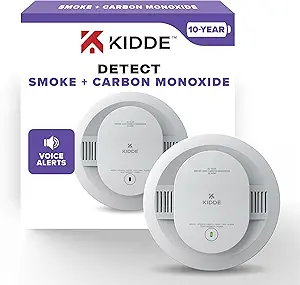 |
| Best Quality Built to a higher standard if you want something more solid | First Alert BRK SC9120B Combination Alarm |  |
| Best Value The sweet spot between price and what you get | X-Sense SC01 Combination Detector |  |
| Best Budget The cheapest option that still gets the job done reliably | SITERWELL GS509A Smoke Detector |  |
| Top Rated A top-rated pick with lots of positive feedback | X-Sense SC07 Combination Detector |  |
| Most Popular A crowd favorite that many people choose with confidence | First Alert SMI100 Smoke Alarm | 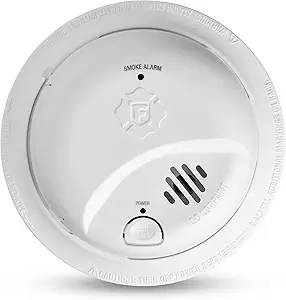 |
Kidde 30CUD10-V Smoke & CO Detector

| Power Source | Battery Powered (built-in 10-year) |
|---|---|
| Alarm | Smoke and Carbon Monoxide Detector |
| Sensor Type | Photoelectric, Electrochemical |
| Operating Humidity | 10 to 95% RH |
| Upper Temperature Rating | 100 °F |
The Kidde 30CUD10-V combines photoelectric smoke sensing with electrochemical CO detection to provide dual-hazard protection for home kitchens. It is designed for permanent installation and uses a built-in 10-year battery so you do not need to change batteries during normal service life; the unit gives clear voice alerts that announce "Fire" or "Warning, Carbon Monoxide," plus an 85 dB alarm and a red LED for visual indication. The detector includes firmware to reduce nuisance alarms from cooking and steam, and it meets UL 217 (10th Edition) and UL 2034 standards. Practical benefits include long-term, low-maintenance protection and faster smoke response compared with older models, while trade-offs are standard for sealed-battery alarms: the unit must be replaced after its service life and it is not a smart, interconnected device without additional compatible Kidde models. Its compact plastic enclosure and straightforward mounting make it suitable for kitchen placement where reliable, low-maintenance detection is a priority.
Best for: Buyers who want dependable, low-maintenance kitchen protection from both smoke and carbon monoxide and value clear voice warnings and reduced nuisance alarms.
Less Ideal for: Users who need networked smart alarms, app notifications, or a system that wirelessly interconnects multiple detectors without additional compatible models should consider alternatives.
- Dual-sensor design detects both smoke and carbon monoxide in one unit
- Built-in 10-year sealed battery eliminates routine battery replacements
- Voice alerts plus 85 dB alarm and red LED provide clear audible and visual warnings
- Reduced nuisance alarm firmware helps avoid false triggers from cooking or steam
- Meets UL 217 10th Edition and UL 2034 standards for tested performance
- Sealed 10-year battery means the whole unit must be replaced at end of life rather than swapping batteries
- Does not include smart/home connectivity or wireless interconnect out of the box
Verdict: A low-maintenance kitchen-focused combination detector that delivers reliable two-hazard protection with a 10-year sealed battery and voice alerts.
First Alert BRK SC9120B Combination Alarm

| Power Source | Battery Powered,Hardwired |
|---|---|
| Alarm | Audible |
| Sensor Type | electrochemical,ionization |
| Operating Humidity | 10-95% RH |
The First Alert BRK SC9120B combines an ionization smoke sensor with an electrochemical carbon monoxide sensor in a hardwired unit that includes a 9V battery backup and plug-in power connector for straightforward installation. It is typically installed on ceilings or walls and can interconnect with up to 18 compatible devices so a single detection triggers all linked alarms, which is helpful for fast notification in larger homes or near kitchens. The unit uses an 85 dB audible alarm, has a single test/silence button for quick checks or temporary nuisance silencing, and includes tamper-resistant mounting and a side-load battery drawer for easy maintenance. Practical benefits include continuous AC monitoring with battery fallback, clear visual indicators for smoke or CO, and automatic internal self-tests to validate functionality. Limitations are that ionization sensors can be more prone to nuisance alarms from regular kitchen smoke or cooking particulates than photoelectric-only units, and it requires hardwiring so it is not a plug-and-play battery-only replacement for non-wired homes.
Best for: Buyers who prioritize reliable, whole-home protection and want a combination smoke and CO alarm that links with other wired detectors for fast, house-wide notification.
Less Ideal for: People who need a battery-only, plug-in solution or those who want a sensor tuned to minimize kitchen cooking nuisance alarms should consider different models.
- Combines ionization smoke detection and electrochemical CO sensing for two-hazard monitoring
- Hardwired with 9V battery backup ensures continuous protection during power outages
- Interconnectable with up to 18 compatible devices so all alarms sound when one is triggered
- Single test/silence button and automatic internal self-tests simplify maintenance and checks
- Ionization smoke sensor is more likely to cause nuisance alarms from normal cooking smoke compared with photoelectric sensors
- Requires hardwiring, so installation needs existing wiring or professional help
Verdict: Choose this hardwired combination alarm when you need factory-quality smoke and CO detection that ties into a wired home alarm network for fast, whole-house alerts.
X-Sense SC01 Combination Detector

| Power Source | 10-Year Sealed Battery |
|---|---|
| Alarm | 85 dB |
| Sensor Type | electrochemical, photoelectric |
| Battery Average Life | 10 years |
The X-Sense SC01 is a basic, standalone smoke and CO combo designed for long-term, low-maintenance protection. It uses a photoelectric smoke sensor and an electrochemical CO sensor, and ships with a sealed 10-year lithium battery so you do not need to replace batteries during the device lifespan. Installation is straightforward: mount the included bracket to a wall or ceiling and attach the unit, making it suitable for quick kitchen installations where hardwiring or network setup is unwanted. The unit reports CO and battery status on an LCD and sounds an 85 dB alarm when hazards are detected. Because it is not interconnectable and has no Wi-Fi, it is best used as an individual room detector rather than part of a linked system. The photoelectric sensor helps reduce nuisance alarms from normal cooking compared with ionization-only alarms, but like any kitchen detector placement matters to balance early detection and fewer false triggers.
Best for: Buyers who want a low-maintenance, standalone kitchen detector that prioritizes long battery life and fewer nuisance smoke alarms without needing network setup.
Less Ideal for: Homes that require interconnected alarms for whole-house notification or users who want smart, app-connected monitoring should choose a different model.
- Sealed 10-year lithium battery eliminates battery changes for the device life
- Combination photoelectric smoke and electrochemical CO sensing in one unit
- LCD shows real-time CO and battery status for quick checks
- Simple bracket mounting with supplied screws and anchors
- Photoelectric sensor reduces cooking-triggered nuisance alarms compared with ionization-only detectors
- Not wirelessly interconnected and lacks Wi-Fi or app control
- 85 dB alarm is audible but not adjustable
Verdict: Choose the SC01 when you want a simple, low-maintenance kitchen smoke and CO detector with a sealed 10-year battery and reduced cooking false alarms.
SITERWELL GS509A Smoke Detector

| Power Source | Battery Powered |
|---|---|
| Alarm | Audible |
| Operating Humidity | 10-95% RH non-condensing |
| Upper Temperature Rating | 37.8 °C |
The SITERWELL GS509A is a photoelectric smoke detector intended to detect slow, smoldering fires and provide loud audible alerts for household safety. It runs on a replaceable 9V battery and includes a magnetic fastening kit and mounting hardware for quick installation on a ceiling or wall. The photoelectric sensor makes it better suited to kitchen-adjacent spaces where smoldering or smoky cooking incidents are more likely than fast flaming fires. A test/mute button lets you verify operation and silence nuisance alarms temporarily, and the unit signals low battery so you know when to replace cells. It is rated louder than 85 dB, meeting common audible requirements, and is UL217 listed which supports its basic safety credentials. Limitations are its reliance on a single replaceable battery rather than a sealed 10-year battery and the lack of smart connectivity or interconnect capability, so it will not automatically notify other alarms or a phone in multi-unit setups.
Best for: Home cooks and apartment dwellers who want an affordable, photoelectric detector near the kitchen that is easy to install and focused on detecting smoky, slow-burning fires.
Less Ideal for: Those who need a maintenance-free sealed 10-year alarm, integrated smart alerts, or a system that wirelessly links multiple alarms across a house.
- Photoelectric sensor better at detecting smoldering, smoky kitchen incidents.
- Includes magnetic fastening kit and mounting hardware for fast, tool-light installation.
- Loud >85 dB audible alarm that is easy to hear throughout a home.
- UL217 listing gives basic third-party safety validation.
- Uses a replaceable 9V battery rather than a sealed 10-year battery.
- No wireless interconnect or smart notifications for multi-alarm systems.
Verdict: A budget-friendly, photoelectric kitchen-area alarm that is easy to install and effective at spotting smoky, slow-burning fires.
X-Sense SC07 Combination Detector

| Power Source | 10-Year Sealed Battery |
|---|---|
| Alarm | 85 dB |
| Sensor Type | Photoelectric, Electrochemical |
| Battery Type | Lithium metal |
The X-Sense SC07 is a basic 2-in-1 wall or ceiling alarm that combines a photoelectric smoke sensor with an electrochemical carbon monoxide sensor and a 10-year sealed lithium battery, so you can install it and forget about battery changes. It is designed for simple household use: mount with the included bracket and screws, check status on the small LCD, and rely on an 85 dB alarm if smoke or CO are detected. The photoelectric sensor is a good fit for kitchen areas because it responds well to slow, smoldering fires and is less prone to triggering on brief cooking fumes than ionization models. The sealed battery and UL 217/2034 certifications reduce maintenance and support code-compliant installations. Limitations: the SC07 is a standalone unit with no wireless interconnect, Wi-Fi, or app features, so it will not talk to other alarms or smart home systems and may require manual testing at the device for status confirmation.
Best for: Buyers who prioritize low-maintenance, reliable kitchen protection and want a certified, all-in-one smoke and CO alarm that you can install once and leave alone.
Less Ideal for: People who need networked alarms, centralized monitoring, or app control for multi-room communication should choose a connected or interconnect-capable model instead.
- 10-year sealed lithium battery provides maintenance-free power and avoids battery-change chirps
- Photoelectric smoke sensor reduces false triggers from brief cooking smoke and detects smoldering fires
- Combines smoke and electrochemical CO detection in one compact standalone unit
- Meets UL 217 and UL 2034 safety standards for reliable, certified detection
- No wireless interconnect or smart features, so alarms do not communicate with other units
- LCD and status checks are local only, requiring manual inspection to verify condition
Verdict: Choose the SC07 when you want a low-maintenance, UL-certified smoke and CO combo that is tuned to reduce kitchen false alarms and lasts a decade without battery changes.
First Alert SMI100 Smoke Alarm

| Power Source | Battery Powered |
|---|---|
| Sensor Type | Ionization |
| Built-In Media | 9V Alkaline Battery |
| Operating Humidity | 10-95% RH |
The First Alert SMI100 is a single-unit, battery-powered ionization smoke alarm intended for straightforward home use and simpler kitchen installations where nuisance alarms from cooking are a concern. It uses First Alert's Precision Detection sensing to cut down on false triggers from regular kitchen smoke while still delivering a loud alarm for real fire events. Installation is simple because it runs on a replaceable 9V alkaline battery and the front-access battery compartment makes swaps quick without removing the unit from its mount. The unit includes a test/silence button and an end-of-life warning to prompt replacement, which helps maintain safety without guesswork. Limitations: it is a basic, non-networked standalone alarm with ionization sensing, so it lacks smart connectivity, interconnect capability, and the combination of photoelectric sensing that some kitchens prefer for better detection of smoldering smoke. For buyers wanting a straightforward, low-maintenance alarm that reduces nuisance tripping in kitchen-adjacent areas, it is a practical option.
Best for: Buyers who prioritize a reliable, easy-to-install standalone alarm that minimizes false kitchen alarms and want simple maintenance rather than smart features.
Less Ideal for: People who need networked or interconnectable alarms for whole-home notification or who prefer photoelectric sensing as the primary detector in cooking areas.
- Precision Detection reduces common cooking nuisance alarms
- Battery-powered with front-access 9V compartment for easy replacement
- Test/silence button and end-of-life warning simplify maintenance and safety checks
- Ionization-only sensor; lacks photoelectric sensor benefits for smoldering smoke detection
- No smart connectivity or interconnect feature for whole-home alerts
Verdict: A straightforward, low-maintenance ionization smoke alarm tuned to cut down kitchen nuisance alerts for buyers who want a dependable standalone detector.
Choosing the Right Smoke Detector for Kitchens: Key Factors to Consider
Sensor Type and How It Affects Kitchen Performance
Different sensor technologies respond differently to cooking particulates and combustion signatures. Photoelectric sensors are generally better at detecting smoldering fires and tend to be less reactive to brief cooking smoke, while ionization sensors respond faster to flaming fires but can be more prone to nuisance tripping from normal kitchen aerosols.
Understanding the sensor type helps you choose a detector that matches the typical risks in your kitchen. For example, if your kitchen often produces light smoke or steam from boiling, a detector with photoelectric sensing or a hybrid sensor with adjustable thresholds will usually reduce false alarms while still providing timely warning.
False-Alarm Resistance and Hush Features
Kitchens are the most common source of nuisance alarms, so look for units that offer multi-level hush or temporary mute features and clear user controls. Practical features include a dedicated hush button, a short mute duration for minor cooking incidents, and automatic reactivation after a set time to preserve ongoing protection.
Beyond mute functions, some detectors use algorithms to ignore brief bursts of non-dangerous smoke or to require persistent readings before sounding a full alarm. Those approaches can dramatically reduce interruptions while maintaining safety, especially in busy households or open-plan kitchens where occasional smoke is normal.
Placement and Installation Considerations
Where you mount a smoke detector in or near the kitchen determines both its usefulness and its tendency to false-alarm. Ceiling-mounted detectors at least 10 feet from active cooking surfaces often reduce nuisance triggers. Alternatively, wall-mounted options positioned at an appropriate height can work in kitchens with high ceilings or obstructing cabinetry.
Installation style matters too. Hardwired detectors that interconnect with other home alarms provide whole-home notification but require wiring access. Battery-powered or rechargeable models offer flexible placement and are simpler to install in retrofit situations. Consider how the detector's mounting and maintenance needs fit your kitchen layout.
Power Source and Maintenance Requirements
Reliable power is critical for continuous protection. Hardwired detectors with battery backup ensure an uninterrupted power supply, but battery-only units simplify installation and can still be very dependable if batteries are replaced regularly. Rechargeable detectors reduce battery waste but require periodic charging and access to a power outlet.
Maintenance also includes regular testing, cleaning to remove grease and dust that can affect sensors, and following manufacturer-recommended replacement intervals. Choose a detector whose power approach matches your willingness to perform routine upkeep.
Connectivity and Integration
Integration with other alarms or smart home systems can provide faster notification and remote alerts when you are away. Some detectors interconnect wirelessly or via hardwired links so that when one alarm triggers, all alarms sound, improving dwell-time response for multi-level homes.
If you plan to use mobile alerts or a central alarm panel, confirm compatibility and whether the unit supports standard interconnect protocols. Keep in mind that added connectivity can increase complexity and may require additional setup or maintenance.
Durability and Environment Resistance
Kitchens expose detectors to heat, humidity, grease, and steam. Look for units designed with protective housings, washable covers, or filter elements that reduce contamination. Durable construction reduces the chance of sensor drift or failure over time due to grease buildup.
Consider detectors with user-replaceable or washable components and clear cleaning instructions. Longevity matters in kitchens where airborne contaminants are common, and durable designs reduce long-term maintenance burdens.
Where to Mount a Kitchen Smoke Detector
Mount detectors so they provide early warning without being triggered by normal cooking activity. The general guidance is to keep the detector at least 10 feet horizontally from cooking appliances and to avoid placing it directly over stoves or ovens. If ceilings are high, mount on the ceiling near the cooking area but offset so drafts and heat plumes are less likely to cause false alarms.
For kitchens with open floor plans, consider interconnecting the kitchen detector with nearby hallway detectors to ensure any alarm wakes sleeping occupants. Wall-mounted detectors can be used in kitchens with obstructing hood vents or beams; follow manufacturer recommendations for mounting height and distance from cooking surfaces.
- Keep at least 10 feet from active cooking surfaces when possible
- Avoid mounting directly above a stove or inside a cabinet
- Use interconnectivity to alert sleeping areas when the kitchen alarm sounds
Reducing Nuisance Alarms Without Sacrificing Safety
To cut nuisance alerts, choose units with adjustable sensitivity or algorithmic filtering that require sustained detection before sounding a full alarm. Use hush or temporary mute functions for minor, non-hazardous cooking smoke, but never disable the alarm entirely when active smoke is present.
Complement detector selection with sensible kitchen habits: run exhaust fans, keep lids on pans when frying, and open windows briefly after heavy smoke. Regularly clean detectors according to instructions to remove grease and dust that can make sensors overly reactive.
- Prefer detectors with multi-level hush or temporary mute
- Maintain ventilation and clean detectors periodically
- Position detectors to avoid direct exposure to steam and fumes
Interconnected Systems and Whole-Home Safety
Interconnecting your kitchen detector with other alarms ensures that a kitchen fire triggers alerts throughout the home. Hardwired interconnects are common and reliable, while wireless interconnectivity can be a practical retrofit option. Confirm that the interconnect method works with the rest of your home's system before installing.
When integrating detectors, plan placement so that alarms reach sleeping areas and main living spaces. Test the system after installation to verify that a single triggered unit causes all connected alarms to sound and that remote alerts work if the unit supports them.
- Interconnect for whole-home alerts
- Choose wireless or hardwired based on installation feasibility
- Test interconnectivity after installation
Smart Features to Consider in Kitchen Detectors
Some detectors offer smartphone alerts, remote silence, and event logs that help you track alarm triggers. These features are useful if you want off-site notifications or integration with a home automation setup. Make sure any smart features are reliable and do not complicate urgent alarm response.
If privacy or network reliability is a concern, favor detectors that provide local audible alerts with optional remote features rather than relying solely on cloud services. Evaluate whether the additional features justify the setup and potential maintenance tradeoffs.
- Smart alerts and remote silence can add convenience
- Verify reliability and compatibility before relying on remote features
- Consider local alarm capability as the primary safety mechanism
Maintenance Tips for Kitchen Smoke Detectors
Regular maintenance keeps detectors performing correctly in a kitchen environment. Test alarms monthly, replace or recharge batteries as recommended, and clean housings gently to remove dust and grease that can interfere with sensors.
Follow the manufacturer's replacement interval for the sensing unit, and replace any detector that shows inconsistent behavior or frequent false alarms despite proper cleaning and placement. Keeping a maintenance schedule reduces the risk of undetected sensor degradation.
- Test monthly and clean regularly
- Replace batteries or recharge per guidelines
- Replace detectors at manufacturer-recommended intervals
How We Chose the Best Smoke Detector for Kitchens
We selected smoke detectors that balance reliable fire detection with reduced nuisance alarms in kitchen environments. Our editorial filters prioritized units engineered to tolerate cooking-related aerosols and steam while still responding quickly to smoldering and flaming fires. We focused on measurable features such as sensor technology and alarm response time, configurable sensitivity or hush features, mounting and placement flexibility, power and battery life, and interoperability with home alarm or smart systems when applicable. Excluded from consideration were general-purpose residential detectors that lack any kitchen-specific sensitivity management or explicit claims about nuisance-alarm reduction. We also ruled out models that require specialized professional installation incompatible with typical kitchen ceilings or cabinets. The resulting shortlist emphasizes detectors that provide adjustable thresholds, clear hush controls, sensible placement options, and long-term reliability in environments with frequent cooking activity.
Our full evaluation process is outlined in our review methodology.
FAQ
Can I install a smoke detector directly above my stove?
You should avoid mounting a detector directly above a stove because heat, steam, and cooking particulates can trigger nuisance alarms. Place the detector at least 10 feet away or offset it so normal cooking does not cause frequent triggers.
Are photoelectric sensors better for kitchens than ionization sensors?
Photoelectric sensors generally handle cooking smoke and smoldering fires with fewer false alarms compared to ionization sensors. However, hybrid units or units with adjustable sensitivity can offer broader protection while reducing nuisance triggers.
How often should I clean and test a kitchen smoke detector?
Test alarms monthly and clean housings every few months or as needed to remove grease and dust. More frequent cleaning may be necessary in heavy-use kitchens to prevent sensor contamination and false alarms.
Is it okay to silence a kitchen detector when it goes off from cooking?
Temporarily using a hush feature for minor cooking smoke is acceptable, but ensure you monitor the situation and allow the detector to resume normal operation. Do not disable or remove the detector while smoke or flames are present.
Should kitchen detectors be hardwired or battery-powered?
Both options can work. Hardwired detectors with battery backup provide continuous power and interconnectivity, while battery-powered or rechargeable models offer simpler installation. Choose based on your home's wiring, desired placement, and willingness to perform battery maintenance.
Final Verdict
When choosing a smoke detector for kitchens, prioritize reliable detection of real fires while minimizing nuisance alarms from routine cooking. Focus on sensor type, false-alarm resistance, sensible placement, and maintenance requirements to find a detector that fits your kitchen layout and lifestyle. Balance features such as interconnectivity and power source against installation complexity and upkeep. With the right tradeoffs, you can achieve dependable kitchen fire protection without constant interruptions.