
Note: This article contains affiliate links. If you click on these links and make a purchase, we may earn a small commission at no extra cost to you. This helps support our research and content. Read our full affiliate disclosure here.
Picking the right smooth-edge can opener matters for everyday kitchen safety and convenience. A good smooth-edge model trims the lid so it leaves a blunt rim, reducing the risk of cuts while making lids easier to handle and discard. You also want something that cuts cleanly, grips different can sizes securely, and is straightforward to keep sanitary. This guide shortlists the top smooth-edge can openers available and explains the criteria used to evaluate them, including cutting reliability, ergonomics, and ease of cleaning. Below are our top picks and the factors to consider to help you choose the best opener for your kitchen.
Top Picks at a Glance
| Best Overall The best all-around choice for most situations | OXO Good Grips Smooth Edge Can Opener |  |
| Best Quality Built to a higher standard if you want something more solid | Kuhn Rikon LidLifter Auto Can Opener |  |
| Best Value The sweet spot between price and what you get | GoodCook Safe-Cut Can Opener |  |
| Best Budget The cheapest option that still gets the job done reliably | Ultrean Manual Can Opener |  |
| Top Rated A top-rated pick with lots of positive feedback | Graceliving Premium Can Opener GR001 |  |
| Most Popular A crowd favorite that many people choose with confidence | Kitchen Mama Electric Can Opener CO1100-R |  |
| Best Seller A high-volume bestseller chosen again and again | Hamilton Beach Smooth Touch Can Opener 76607 | 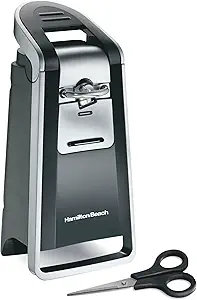 |
OXO Good Grips Smooth Edge Can Opener

| Material Type | Stainless Steel |
|---|---|
| Blade Material Type | Stainless Steel |
| Operation Mode | Manual |
| Size | Smooth Edge |
The OXO Good Grips Smooth Edge Can Opener is a side-cut manual opener that slices below the can rim so lids and cans have no sharp edges. You operate it by turning the oversized side-wind knob while the stainless steel cutting wheel engages the can; built-in lid pliers lift the lid away so you do not touch the exposed edge. The large, non-slip handles and soft-grip knob make the motion smooth and comfortable, which helps if you open multiple cans in one session or have reduced hand strength. The cutting wheel is hardened stainless steel and designed to avoid contact with can contents, and the unit is dishwasher-safe for easy cleanup. Limitations are typical for manual openers: it requires two-handed operation and is right-hand oriented, and the larger handles may be awkward for very small hands.
Best for: Buyers who want a reliable, easy-to-use manual opener that prioritizes safe, no-sharp-edge lid removal and comfortable grips for frequent kitchen use.
Less Ideal for: People who prefer one-handed or fully automatic can opening or need a left-handed specific design should consider alternative styles.
- Cuts on the side to leave lids and can edges smooth and safe
- Soft, non-slip handles and oversized knob for comfortable turning
- Hardened stainless steel cutting wheel that minimizes contact with can contents
- Built-in lid pliers permit no-touch lid removal
- Dishwasher-safe for easy cleaning
- Designed for right-handed use which may be awkward for left-handed users
- Requires manual effort and two-handed operation unlike electric models
Verdict: Choose this OXO model if you want a durable manual opener that consistently produces safe, smooth-edge lids with comfortable grips.
Kuhn Rikon LidLifter Auto Can Opener

| Operation Mode | Manual |
|---|---|
| Material Type | Plastic |
| Blade Material Type | Stainless Steel |
The Kuhn Rikon LidLifter Auto is a Swiss-engineered manual can opener that cuts along the can's outer edge to leave a smooth, safe rim and lifts the lid away so it does not contact the contents. You attach the unit to a standard can, turn the large ergonomic knob to engage the precision gears and cutting wheel, and the built-in LidLifter grips and raises the lid for hygienic, touch-free removal. The opener also includes a ring-pull tool for pop-tab cans and a comfortable handle that reduces wrist strain, making it easier for users with reduced hand strength. Because it is a side-cut design, there are no sharp edges on the removed lid, and the stainless steel blade plus plastic body are intended for long-term everyday use. The manual operation means no batteries or electricity are required, but it does rely on the user to turn the knob evenly and fits standard cans rather than specialty sizes.
Best for: Buyers who prioritize reliable, safe cutting and hygienic lid removal and want a durable manual opener that eases hand strain during frequent kitchen use.
Less Ideal for: People who need a fully automatic or electric opener for one-handed operation or who routinely open oversized or nonstandard cans.
- Side-cut design produces smooth, safe rim with no sharp edges
- Built-in LidLifter lifts lids without touching food for improved hygiene
- Large ergonomic knob and precision gears reduce hand strain during use
- Includes ring-pull tool for opening pop-tab cans
- Manual operation requires continuous turning and may be slower than powered models
- Designed for standard cans and may not fit very large or specialty cans
Verdict: Choose the Kuhn Rikon LidLifter Auto when you want a durable, hygienic smooth-edge can opener that minimizes hand effort and leaves no sharp rim.
GoodCook Safe-Cut Can Opener

| Material Type | Stainless Steel |
|---|---|
| Blade Material Type | Stainless Steel |
| Operation Mode | Manual |
| Included Components | can opener |
The GoodCook Safe-Cut Can Opener is a handheld manual opener built to remove can lids without leaving sharp edges and to lift the lid away for safe disposal. You use it like a traditional turn-knob opener, but its guide wire holds and then releases the lid so you do not have to touch sharp metal; the knob and ergonomic handle give a secure grip during use. The unit pairs a hardened stainless steel cutting blade with a thick stainless guide wire and chrome-plated construction for durability and smooth operation. Practical benefits include reduced risk of cuts, the ability to reuse lids temporarily as covers, and minimized food contact because the cutting wheel does not touch the contents. It is simple to clean and sturdy enough for daily kitchen use, though it remains a manual tool so it requires wrist motion and is not ideal for users seeking electric convenience or one-handed operation.
Best for: Buyers who prioritize safe, durable kitchen tools and want a straightforward manual opener that prevents sharp edges and reduces contamination risk.
Less Ideal for: People who need an electric or fully one-handed solution, or those with limited wrist mobility should consider alternative openers.
- Design cuts lids with smooth, non-sharp edges for safer handling and short-term storage
- Guide wire lifts and holds the lid for hands-free disposal
- Hardened stainless steel blade and thick guide wire for durability
- Ergonomic handle and non-slip turn knob for secure, comfortable use
- Manual operation requires wrist strength and repeated turning for many cans
- Not suitable for buyers who prefer electric or one-handed openers
Verdict: Choose this for a reliable manual can opener that creates smooth, safe lids and lifts them away to minimize cuts and contamination.
Ultrean Manual Can Opener

| Blade Material Type | Stainless Steel |
|---|---|
| Operation Mode | Manual |
| Unit Count | 1 Count |
The Ultrean Manual Can Opener is a compact, manual can and bottle opener designed for everyday kitchen use and occasional outdoor trips. It uses a stainless steel cutting wheel and an oversized easy-turn knob to rotate around the lid and create a smooth edge cut, which reduces sharp lid fragments and makes disposal safer. The soft-touch ergonomic handle gives a secure grip and helps when opening multiple cans in a row, while the compact, lightweight design stores easily in a drawer or picnic kit. Because it is manual, it requires no power and is simple to clean and maintain, but heavy or rust-prone use could shorten longevity despite the stainless steel blade. The opener also doubles as a bottle opener, adding small convenience for barware or camping. For buyers on a tight budget this model delivers core smooth-edge performance and comfortable handling without extra bells or electronics.
Best for: Buyers seeking an affordable, no-frills smooth-edge can opener for everyday home use or occasional outdoor use who prioritize comfort and basic reliability over electric convenience.
Less Ideal for: People who open large numbers of cans regularly or who prefer hands-free electric models should consider a powered smooth-edge opener instead.
- Smooth-edge cutting wheel reduces sharp lid fragments for safer disposal
- Ergonomic soft-touch handle provides a comfortable, non-slip grip
- Compact and lightweight for easy storage and travel
- Stainless steel blade intended for durable cutting performance
- Manual operation requires physical effort and may be tiring for frequent heavy use
- Not explicitly rated as rustproof despite stainless steel components
Verdict: A budget-friendly, comfortable manual smooth-edge can opener that delivers safe, compact performance without needing power.
Graceliving Premium Can Opener GR001

| Material Type | Stainless Steel |
|---|---|
| Blade Material Type | Stainless Steel |
| Operation Mode | Manual |
| Included Components | Can Opener |
This Graceliving manual can opener is built for repeated, comfortable use and aims to deliver smooth, safe can opening. Its stainless steel INOXCORE body and precision gears pair with a high-carbon cutting blade to produce clean, jag-free edges, while the weighted, solid feel helps steady the tool during use. The oversized, easy-turn knob and soft-touch non-slip handle reduce hand strain, making it simple to turn cans for users who open many jars or have limited grip strength. A strong built-in magnet lifts lids away from hands for touch-free removal and the integrated bottle opener adds occasional versatility. The unit is advertised as lab-tested for 300+ uses, suggesting longer life than basic openers, and the teal finish gives it a visible, kitchen-friendly look. Trade-offs are typical of manual openers: it requires two-handed operation and some physical rotation compared with electric models, and its heavier construction means it takes up a bit more drawer space than slim designs.
Best for: Buyers who prioritize a long-lasting, reliably sharp manual opener and want a comfortable, safe tool for frequent kitchen use.
Less Ideal for: People who need fully hands-free or one-button electric operation or those seeking the most compact, space-saving opener.
- Stainless steel INOXCORE body and precision gears for rust resistance and durability
- High-carbon razor-sharp blade designed for clean, jag-free cuts
- Oversized easy-turn knob and soft-touch non-slip handle reduce hand strain
- Strong magnetic lid lifter for touch-free, hygienic lid removal
- Built-in bottle opener adds multifunction convenience
- Manual operation requires physical turning and two-handed use
- Heavier, bulkier construction takes more drawer space than slim models
Verdict: Choose this solid, ergonomically designed manual opener if you want a durable, smooth-edge can opener built for frequent, reliable use.
Kitchen Mama Electric Can Opener CO1100-R

| Operation Mode | Automatic |
|---|---|
| Blade Material Type | Stainless Steel |
| Material Type | ABS Plastic |
| Included Components | Electric can opener, Instruction manual |
| Unit Count | 1 Count |
The Kitchen Mama electric can opener is a cordless, battery-powered device designed to make opening cans effortless and safer by cutting along the side for a smooth edge. You use it by placing the opener flat on the can rim, pressing the start button and letting the unit rotate and cut automatically; it typically finishes in about 30–40 seconds depending on can size. The opener is compact and lightweight, which makes it convenient for small kitchens, travel, or camping, and the ABS plastic housing plus stainless steel blade are easy to wipe clean (do not submerge). Notable features include one-touch start/stop, side-cut smooth-edge design that reduces finger cuts, and a hands-free operation mode that helps users with limited hand strength. Limitations are that it requires four AA batteries rather than a built-in rechargeable cell, very small or certain large sloped cans may need manual assistance, and it should not be run under water or placed in a dishwasher. For buyers who prioritize simple, low-effort can opening and safer lids, this is a practical option.
Best for: Buyers who want a low-effort, safety-focused can opener—especially caregivers, seniors, or anyone with limited hand strength—seeking a compact, portable solution.
Less Ideal for: People who prefer a plug-in or rechargeable model or who frequently open very small or unusually shaped cans should consider other designs.
- One-touch automatic operation for hands-free use
- Side-cut blade produces smooth, safer can edges
- Lightweight and cordless for portability and small kitchens
- Stainless steel blade with ABS plastic body is easy to wipe clean
- Uses 4 AA batteries instead of built-in rechargeable power
- May struggle with very small or unusually shaped cans that need manual positioning
Verdict: A simple, portable one-touch opener that prioritizes hands-free use and smooth-edge safety for everyday kitchen convenience.
Hamilton Beach Smooth Touch Can Opener 76607

| Included Components | Can Opener, Scissors |
|---|---|
| Operation Mode | Automatic |
| Material Type | Stainless Steel |
| Unit Count | 1 Count |
The Hamilton Beach Smooth Touch electric can opener is a simple countertop appliance that makes opening pop-top and regular cans quick and safe. You align a can, press the easy-touch lever and the motor-driven cutting wheel slices the lid along the side so the removed lid has no sharp edge, letting you reuse lids for storage without handling jagged metal. Its extra-tall design fits taller cans and the cutting wheel is positioned so it does not contact the food, which reduces mess and cleaning. The unit stores a stainless steel pair of scissors in the back for occasional box or bag cutting, keeping the counter neater. Because the operation is automatic and requires only a light push, it is well suited to one-handed use and for people who prefer a low-effort solution. The can opener does add a small footprint to the counter and, as a motorized device, it requires occasional cleaning and is not as compact as a manual opener, but it replaces the step of twisting or struggling with stubborn lids and eliminates sharp rim handling.
Best for: Buyers who want a reliable, low-effort can opener that eliminates sharp lid edges and is easy to use one-handed, especially those who value safety and straightforward operation.
Less Ideal for: People who need a very compact, travel-friendly tool or prefer a manual opener with no motor maintenance should consider alternatives.
- Cuts lids along the side to leave smooth, touchable edges for safer handling and lid reuse
- Easy-touch lever and automatic operation enable one-handed, low-effort can opening
- Extra-tall design accommodates pop-top and taller cans
- Includes stainless steel scissors that store in the unit to reduce countertop clutter
- Takes more countertop space than a manual opener
- Motorized unit requires occasional cleaning and is more complex than a simple handheld opener
Verdict: Choose this if you want a no-fuss electric can opener that produces safe, smooth lids and works with taller and pop-top cans.
Choosing the Right Smooth-Edge Can Opener: Key Factors to Consider
Cut Quality and Edge Safety
How the opener severs the lid determines whether the resulting rim is safe to handle. A true smooth-edge design cuts along the side of the can to remove the lid without leaving a sharp burr. Consistent, burr-free results matter because an uneven or partially cut lid can still leave sharp edges that defeat the safety purpose.
When evaluating models, consider how well the mechanism maintains constant pressure and alignment across different can thicknesses. Some openers are better at thin soup cans but struggle with thicker steel food cans. The smoother and more uniform the cut, the less chance of accidental cuts when handling lids or the can mouth.
Grip, Alignment, and Stability
A smooth-edge opener must hold the can firmly and align the cutting wheel precisely to produce the intended rim. If the grip slips or the opener wanders during rotation, the cut can become jagged or incomplete. Look for clamp or jaw designs that center the can and prevent rocking during use.
Stability matters most on taller or dented cans. Effective alignment mechanisms reduce the need for corrective force and help the opener create the same safe edge every time, which is particularly important for users who open cans frequently.
Ergonomics and Required Hand Effort
Because can openers require repetitive hand motion, handle design and gearing directly affect comfort and accessibility. Smooth-edge openers often use a geared mechanism that reduces the turning force needed. Larger, cushioned handles and high-leverage cranks make operation easier for people with arthritis or weak grip strength.
Consider both the crank resistance and the hand footprint. Compact openers trade portability for longer cranks and potentially more effort. If multiple family members will use the tool, prioritize models with low mechanical resistance and comfortable grips.
Cleaning and Sanitation
Openers contact food and are exposed to sticky residues and juices, so cleaning matters for hygiene. Designs with removable cutting heads or easily wiped surfaces reduce the risk of dried-on food and bacterial buildup. Some components are dishwasher-safe, which simplifies maintenance.
Sealed or enclosed gear housings help keep internal parts free of debris, extending lifespan and reducing cleaning frequency. Avoid designs with many small crevices that trap food; these increase the effort required to keep the opener sanitary.
Durability and Materials
Materials and construction affect how long an opener will work without parts wearing out or corroding. Stainless steel components resist rust and maintain sharpness longer than plated or low-grade metals. Plastic parts can reduce weight and cost but may wear faster under heavy use.
Pay attention to the quality of the cutting wheel and the gearing. Hardened cutting wheels and metal gears typically last longer and provide more consistent cuts over time. Durable construction also reduces wobble and alignment drift that can degrade cut quality.
Compatibility With Different Can Types
Not all smooth-edge openers perform equally across the variety of can sizes and thicknesses you may encounter. Some designs are optimized for standard soup and vegetable cans, while others can handle tall or oddly sized cans without slipping. Consider whether you need broad compatibility for varied can diameters or primarily a standard household set.
Also consider special cans such as those with thicker rims or slight manufacturing variances. A forgiving opener that tolerates small differences without failing to produce a smooth edge will be more reliable in day-to-day use.
Manual Vs. Electric Smooth-Edge Openers
Manual smooth-edge openers remain popular because they are compact, inexpensive, and simple to maintain. They rely on a hand crank and mechanical gearing to rotate the can while the cutting mechanism trims the lid. Manual units give you direct control over the cut but require more physical effort.
Electric smooth-edge openers reduce hand effort and are useful for users who open cans frequently or have limited strength. They tend to be slightly bulkier and need a power outlet, but they can produce consistent smooth cuts with minimal user input.
- Manual: portable, fewer parts to clean, more hand effort required
- Electric: low effort, consistent cutting, requires power and more cleaning of housing
Maintaining Your Smooth-Edge Opener
Regular cleaning prevents food buildup and preserves cutting performance. Wipe surfaces after each use and remove any detachable parts for a thorough wash. If the opener has a removable cutting wheel, clean and dry it completely before reassembly to prevent corrosion.
Occasional lubrication of moving joints with food-safe oil can keep gears turning smoothly. Avoid getting oil on cutting surfaces or areas that contact food directly. Replace worn cutting wheels or gears as needed to maintain safe, burr-free edges.
- Wipe and dry after each use
- Wash removable parts according to manufacturer guidance
- Use food-safe lubricant sparingly on gears
Features That Improve Accessibility
Look for large, soft-grip handles, low-effort gearing, and non-slip bases if accessibility is a priority. Some openers include extended cranks or oversized knobs to reduce required hand force. Models with one-touch electric activation eliminate turning entirely, which is helpful for those with limited dexterity.
Non-slip feet or suction bases add stability on countertops and can prevent the opener from rotating around the can during use. Together, these features make the tool safer and more comfortable for a wider range of users.
- Large handles and low-effort gearing reduce strain
- Electric activation removes the need to crank
- Non-slip bases increase stability
What to Expect From Higher-End Models
Higher-end smooth-edge openers often use premium materials such as hardened stainless cutting wheels and robust metal gearing. These components produce cleaner cuts over a longer service life and reduce the chance that the edge will become jagged with repeated use.
You can also expect more refined ergonomics and sometimes additional features such as removable heads for easier cleaning or integrated lid lifters. While these models may cost more, they can reduce maintenance and provide better long-term reliability.
- Hardened cutting wheels for longer life
- Removable parts for easier cleaning
- Improved ergonomics and build stability
Common Mistakes That Affect Performance
Applying excessive lateral force or misaligning the opener at the start can lead to uneven cuts or slipped grips. Begin with a steady clamp and ensure the can is centered in the jaws before cranking. If the opener feels wobbly, stop and realign rather than forcing the cut.
Failing to clean the opener regularly can cause food residue to jam gears or dull the cutting wheel. Periodic inspection and maintenance help avoid unexpected failures and keep the opener producing safe, smooth edges.
- Start with proper alignment to prevent jagged cuts
- Do not force the crank if the opener slips
- Keep the mechanism clean to maintain performance
How We Chose the Best Smooth-Edge Can Opener
We focused on features that directly affect safety, daily usability, and maintenance for smooth-edge can openers. Our evaluation prioritized cutting reliability across common can sizes and materials, the consistency of the smooth-edge finish left on lids, and how well each opener maintains grip and alignment during operation. Ergonomics and user comfort were measured by handle design, turning leverage, and ease of use for people with limited hand strength. We also assessed cleaning and maintenance requirements, including whether removable parts or dishwasher-safe components make it easier to keep the tool sanitary. Durability and build quality were considered through construction materials and the quality of cutting components. Excluded items included manual openers that do not produce a smooth rim and specialty electric units outside the typical household form factors. We omitted novelty designs that prioritize appearance over reliable cutting. The final shortlist reflects models that consistently achieve safe, burr-free lids, are simple to clean, and remain comfortable during repeated use.
Our full evaluation process is outlined in our review methodology.
FAQ
Do smooth-edge can openers work on all can sizes?
Most smooth-edge openers handle standard household can diameters reliably, but performance can vary on very small or very large cans. Check that the design specifies compatibility with a range of diameters if you open atypical cans regularly.
Are smooth-edge openers harder to clean than traditional ones?
They are not necessarily harder to clean. Models with removable cutting heads or enclosed gear housings are easier to sanitize. Avoid designs with many crevices where food can accumulate.
Can people with arthritis use smooth-edge can openers comfortably?
Yes, many smooth-edge models are designed with low-effort gearing and larger handles to reduce strain. Electric smooth-edge openers remove manual cranking entirely and are a good option for people with limited hand strength.
How long do cutting wheels usually last?
Lifespan depends on frequency of use and the material of the wheel. Hardened stainless steel wheels last longer than plated or softer metals. Replace wheels when cuts become uneven or the mechanism begins to require more force.
Is it safe to touch the removed lid after using a smooth-edge opener?
Smooth-edge openers are designed to create a blunt rim that is safer to handle, but you should still handle lids with care. Inspect the lid after opening; if any rough spots remain, avoid direct contact with bare skin.
Final Verdict
When choosing a smooth-edge can opener, prioritize consistent cut quality and stable grip first, because these factors most directly affect safety. Next, consider ergonomics and the amount of hand effort required, especially if accessibility is a concern. Cleaning and build materials determine long-term sanitation and durability, so favor designs that allow easy disassembly or have enclosed gears. Balance these tradeoffs based on how often you open cans and the range of can types you use. Focusing on smoothness, ease of cleaning, and comfortable operation will help you select an opener that minimizes risk and stays dependable over time.