
Note: This article contains affiliate links. If you click on these links and make a purchase, we may earn a small commission at no extra cost to you. This helps support our research and content. Read our full affiliate disclosure here.
If you need reliable outdoor surveillance where Wi-Fi is weak or unavailable, a solar cellular security camera can keep an eye on your property without running power or ethernet lines. These devices combine solar charging, on-board batteries, and cellular data to deliver continuous monitoring for remote buildings, job sites, or rural properties. Choosing the right camera matters because run-time, connection stability, and motion-detection accuracy determine whether the system actually records important events or drains in poor weather. This guide covers seven shortlisted solar cellular security cameras that meet common installation needs. We evaluated models for signal reliability, solar and battery performance, image and detection quality, and installation flexibility to help you pick the best option for your site. Read on for the decision factors that matter and practical tips for deployment.
Top Picks at a Glance
| Best Overall The best all-around choice for most situations | REOLINK Go PT Plus Solar 5MP |  |
| Best Quality Built to a higher standard if you want something more solid | REOLINK TrackMix LTE+Solar Panel 2 |  |
| Best Value The sweet spot between price and what you get | HOSAFE RBX-S50 2K Solar 4G Camera |  |
| Best Budget The cheapest option that still gets the job done reliably | TOAIOHO Solar 4G Security Camera |  |
| Top Rated A top-rated pick with lots of positive feedback | eufy Security 4G LTE Cam S330 |  |
| Most Popular A crowd favorite that many people choose with confidence | SEHMUA S40 4G Solar Camera |  |
| Best Seller A high-volume bestseller chosen again and again | TACTACAM Defend 360 | 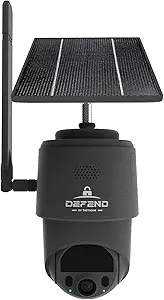 |
REOLINK Go PT Plus Solar 5MP

| Video Capture Resolution | 2K 5MP |
|---|---|
| Field Of View | 360 degrees |
| Night Vision | Night Color |
| Waterproof Rating | IP65 |
| Memory Storage Capacity | 32 GB |
The REOLINK Go PT Plus Solar pairs a rechargeable battery and included solar panel with 4G LTE connectivity to deliver truly wireless outdoor monitoring where Wi-Fi or mains power are unavailable. You control the 2K+ pan (355°)/tilt (140°) camera from the Reolink app to scan a full 360° area, trigger the built-in auto-tracking when motion is detected, and stream color night vision footage. On-device AI filters person/vehicle/animal motion to cut down false alerts, and two-way audio plus customizable siren lets you interact or deter visitors in real time. Recordings store locally to the preinstalled 32GB microSD card with overwrite and optional 7-day cloud history for backup. The camera is built for outdoor use with an IP65/IP64-class weather rating and supports major US carriers over its cellular link. Trade-offs include reliance on cellular service for remote alerts and the need to position the solar panel for steady charging in shaded locations.
Best for: Buyers who need reliable, maintenance-light outdoor monitoring for remote, off-grid, or hard-to-wire locations and want wide-area coverage with smart detection and local backup.
Less Ideal for: Users who have consistent high-speed Wi-Fi everywhere or who prefer always-on wired power and local network cameras for unlimited bandwidth and lower cellular dependency.
- True off-grid operation via 4G LTE and included solar panel for continuous charging
- High-resolution 2K+ (5MP) video with pan/tilt for full 360° coverage and auto-tracking
- On-device AI detection reduces false alerts and supports customizable motion zones
- Preinstalled 32GB microSD with local recording plus optional 7-day cloud history
- Two-way audio and programmable siren for remote interaction and deterrence
- Functionality depends on cellular signal quality and carrier compatibility
- Solar charging performance varies with mounting location and sun exposure
Verdict: Buy this if you want a truly wireless solar cellular camera that delivers 2K+ pan-tilt coverage with smart detection for remote and off-grid properties.
REOLINK TrackMix LTE+Solar Panel 2

| Connectivity Technology | 3G/4G LTE |
|---|---|
| Video Capture Resolution | 4k |
| Optical Zoom | 6 x |
| Night Vision | Night Color |
| Flash Memory Supported Size Maximum | 512 GB |
The REOLINK TrackMix LTE+Solar Panel 2 is a solar‑assisted, battery camera that uses a built‑in 4G SIM to deliver 4K dual‑lens video, 355° pan and 90° tilt, and 6x hybrid zoom for simultaneous wide and close views on one screen. It is mainly used outdoors where Wi‑Fi is unavailable or unreliable; the included solar panel plus battery power lets the camera run continuously while the LTE connection sends live alerts and footage to your phone. Notable features include dual‑lens dual view, auto PTZ tracking that follows moving objects, person/vehicle/pet detection for smarter alerts, color spotlight night vision plus IR, and local microSD storage up to 512 GB. Practical benefits are easy placement in remote areas, high resolution detail at distance thanks to hybrid zoom, and reduced wiring thanks to solar and cellular connectivity. Important limitations are reliance on a compatible LTE signal and potential carrier/SIM setup steps, plus a 15 fps frame rate which is lower than some wired systems and may affect very fast motion clarity.
Best for: Buyers who need a high‑resolution, off‑grid surveillance solution for remote properties, job sites, or areas without reliable Wi‑Fi and who prioritize detailed footage and automatic tracking.
Less Ideal for: Users who have consistent wired power and strong local networks and prefer the highest frame rates or lower ongoing cellular management for multi‑camera home systems.
- Dual‑lens 4K capture with simultaneous wide and close views for better situational awareness
- Auto PTZ tracking with 355° pan and 90° tilt to follow moving targets across a large area
- Solar plus battery power enables off‑grid continuous operation without external power cabling
- Built‑in 4G LTE and included SIM card remove the need for local Wi‑Fi networks
- On‑device storage up to 512 GB and smart person/vehicle/pet detection reduce false alerts and preserve relevant footage
- Depends on cellular coverage and may require SIM activation or carrier checks
- 15 fps frame rate is modest and can blur very fast motion compared with higher‑frame wired systems
Verdict: Choose this solar LTE camera when you need detailed 4K dual‑lens coverage and automatic PTZ tracking in locations with no reliable Wi‑Fi.
HOSAFE RBX-S50 2K Solar 4G Camera

| Wireless Technology | 4G LTE Cellular |
|---|---|
| Video Capture Resolution | 2k |
| Night Vision Range | 50 feet |
| Waterproof Rating | IP66 |
| Flash Memory Supported Size Maximum | 128 GB |
The HOSAFE RBX-S50 is a self-contained outdoor security camera that uses a preinstalled 4G SIM and solar power to run without local Wi-Fi. It provides 2K video, 270° pan and 90° tilt PTZ control with 4x digital zoom, 110 degree viewing angle, and color night vision backed by four spotlights for clearer nighttime footage. The camera is mounted on a wall or ceiling, records to a MicroSD card (up to 128 GB) or optional cloud storage, and sends PIR-triggered push alerts to your phone through the Ubox app where you can view live feed, talk two-way, and play back clips. Practical installation is straightforward since it is wire-free and includes a solar panel and rechargeable battery for continuous power, but the unit is tied to the included SIM and is intended for U.S. use only, so mobile data must be maintained to keep it online. For jobsites or remote properties where running power or broadband is impractical, this camera delivers flexible, weatherproof surveillance with a clear, app-driven workflow.
Best for: Buyers who need reliable outdoor surveillance in locations without power or Wi-Fi and want a plug-free, app-controlled solution for monitoring remote sites or properties.
Less Ideal for: Users who prefer cameras that connect to existing home Wi-Fi networks or those who want full control over choosing their own cellular provider without vendor assistance.
- Completely wire-free operation with included solar panel and rechargeable battery
- Preinstalled 4G LTE SIM enables cellular connectivity without local internet
- PTZ control (270° pan, 90° tilt) and 4x zoom for wide coverage
- Color night vision with spotlights improves nighttime image clarity
- Supports local MicroSD storage up to 128 GB and optional cloud backup
- Designed to work only with the preinstalled SIM and U.S. service, limiting SIM portability
- Requires purchasing or maintaining cellular data for continuous remote access
Verdict: If you need a truly wire-free outdoor camera for remote or temporary locations, this solar-powered 4G unit delivers PTZ control, color night vision, and straightforward app access without Wi‑Fi.
TOAIOHO Solar 4G Security Camera

| Connectivity Protocol | Cellular |
|---|---|
| Power Source | Battery Powered |
| Waterproof Rating | IP66 |
| Video Capture Resolution | 1296p |
| Flash Memory Supported Size Maximum | 128 GB |
This TOAIOHO solar security camera is designed for locations without WiFi or power by using a built-in SIM for 4G connectivity and a 3W solar panel that keeps its 7800mAh battery topped up. It records 1296p video, offers 336° pan and 90° tilt for wide coverage, and provides color night vision using a floodlight plus PIR motion detection that triggers alerts and recording. The camera supports two-way audio so you can speak through the app, and it saves footage to a microSD card (up to 128 GB) or the vendor cloud service. Practical benefits include flexible placement anywhere with cellular signal, minimal maintenance thanks to solar charging, and active deterrence with an audible/visual alarm. Important limitations are the reliance on a paid data plan after the trial and dependence on cellular signal strength for live view and notifications, which can affect responsiveness in remote spots.
Best for: Buyers who need a low-maintenance outdoor camera for properties without reliable WiFi or power and who prioritize affordable, self-powered remote monitoring.
Less Ideal for: People who have strong on-site WiFi and want to avoid any cellular data plans, or users in areas with poor mobile coverage should consider wired or WiFi alternatives.
- Works without WiFi using built-in 4G SIM for remote placement
- Solar panel plus 7800mAh rechargeable battery reduces need for manual recharging
- Pan 336° and tilt 90° give broad coverage for single-camera monitoring
- Color night vision with floodlight and PIR detection improves night-time identification
- Supports local microSD storage up to 128 GB and cloud backup option
- Requires subscription for data after the free trial to continue remote access
- Performance depends on cellular signal quality at the installation site
Verdict: A self-powered 4G solar camera that delivers wide PTZ coverage and color night vision for budget-conscious users who need surveillance away from WiFi and mains power.
eufy Security 4G LTE Cam S330

| Connectivity Protocol | Wi-Fi or 4G LTE |
|---|---|
| Video Capture Resolution | 4k (2160 pixels) |
| Memory Storage Capacity | 32 GB |
| Power Source | Solar Powered |
| Waterproof Rating | IP55 |
The eufy 4G LTE Cam S330 is designed to provide continuous outdoor surveillance where Wi‑Fi is unreliable by combining a 9,400 mAh battery with a 4.5 W solar panel and built-in 4G LTE plus 2.4 GHz Wi‑Fi duo-mode. It records in 4K color at 30 fps, offers pan and tilt for near 360-degree coverage, and includes AI-based human and vehicle detection plus AI tracking to follow activity. Practical features include two-way audio, a 100-lumen spotlight and sound alarm to deter threats, and a 32 GB microSD card for local storage; voice assistant support (Alexa and Google) adds hands-free checks. The camera is ruggedized for outdoor use with IP55 weather resistance and wide operating temperatures, and the included EIOTCLUB SIM aims to simplify cellular setup. Important limitations are that NAS support and HomeKit are not supported, some advanced integrations require Wi‑Fi/HomeBase, and cellular data usage will vary with frequent live views or long recordings. For off-grid or poor-Wi‑Fi locations the S330 offers a robust, mostly self-contained solution for reliable monitoring.
Best for: Buyers who need a durable outdoor camera that stays connected and recording even without reliable home Wi‑Fi and prioritize continuous, self-powered monitoring.
Less Ideal for: Users who require deep local network storage options, HomeKit compatibility, or those who want to avoid any cellular data usage altogether.
- Solar plus large internal battery provides extended off-grid runtime and can sustain the camera indefinitely with regular sun
- 4G LTE and 2.4 GHz Wi‑Fi duo-mode with automatic switching keeps the camera online during network interruptions
- 4K color video with 30 fps, AI person/vehicle detection and tracking for clear, actionable footage
- Built-in 100-lumen spotlight, two-way audio, and sound alarm help deter intruders and allow remote interaction
- 32 GB microSD included for local recording and immediate storage without cloud dependency
- Does not support NAS storage and is limited to working with HomeBase S380 only under Wi‑Fi mode
- Cellular data use can increase quickly with frequent live views or long motion recordings
- Not compatible with Apple HomeKit which may limit smart home integration for some users
Verdict: A solar-powered, cellular-capable outdoor dome camera built to stay online and recording in places where Wi‑Fi is unreliable.
SEHMUA S40 4G Solar Camera

| Connectivity Technology | 4G LTE Cellular |
|---|---|
| Video Capture Resolution | 2k |
| Waterproof Rating | IP65 |
| Power Source | Solar Powered |
| Battery Power | 10400 |
The SEHMUA S40 is a battery-backed solar security camera that uses a built-in 4G LTE SIM to deliver live video and alerts where Wi-Fi or mains power are unavailable. It records at 2K (1440p) with 4x digital zoom and offers a rotating wide-angle lens for near 360 degree coverage, while full-color night vision and an app-controlled spotlight improve low-light visibility. The camera charges from its integrated solar panel and a 10400mAh battery to enable long-term, cordless operation after an initial wired charge. Motion-triggered PIR detection pushes mobile alerts and supports multiple simultaneous viewers through the companion Ubox app, and two-way audio lets you speak through the unit. Important caveats are that cellular service runs on the included SIM only and the free trial expires, so continued remote access requires a paid subscription and reliable 4G coverage at the install site; the camera also relies on digital zoom rather than optical zoom. Practical uses include remote properties, farms, RVs, and job sites where running power or Wi-Fi is impractical.
Best for: Buyers who need a genuinely wireless surveillance solution for remote or temporary locations and who prioritize straightforward mobile access and solar endurance over avoiding a cellular subscription.
Less Ideal for: Users who have stable Wi-Fi and prefer cameras with no ongoing service fees, or buyers who need optical zoom and ultra-fine detail for nearby subjects.
- True wireless operation with built-in solar panel and large internal battery for off-grid sites
- Works on 4G LTE so it functions without Wi-Fi or wired power
- 2K/1440p video with color night vision and 4x digital zoom for clearer remote monitoring
- PIR motion detection with real-time mobile alerts and multi-user viewing via the app
- Two-way audio lets you communicate through the camera remotely
- Requires the camera’s SIM subscription after the trial to maintain cellular service
- No optical zoom and video uses digital zoom which can reduce detail at high zoom levels
Verdict: If you need reliable off-grid surveillance, this solar 4G camera delivers cordless, app-driven monitoring where Wi‑Fi and mains power are not available.
TACTACAM Defend 360

| Connectivity Technology | Wireless (LTE cellular) |
|---|---|
| Battery Power | 10000 milliamp_hours |
| Indoor Outdoor Usage | Outdoor |
| Other Special Features of the Product | 360° remote pan/tilt/zoom; solar + battery power; 4K photo, 1080p video |
The TACTACAM Defend 360 is a self-contained outdoor security camera designed for locations without WiFi or power. It connects over LTE cellular, so you can place it at a remote gate, cabin, or job site and receive instant motion alerts and live view through the companion app. The unit combines a solar panel with a rechargeable internal battery to stay charged off-grid, and its pan, tilt, and zoom controls let you scan a wide area from your phone instead of installing multiple fixed cameras. Imaging captures 4K stills and 1080p video for clear evidence, and the housing is built to tolerate rain and temperature swings. Important limitations are dependency on a cellular plan and signal at your site and the need to manage any subscription for advanced cloud features; also, continuous high-usage live view will draw more battery and data. For typical remote surveillance tasks the camera reduces installation complexity and provides flexible coverage, but expect ongoing cellular costs and to verify signal strength before committing a location.
Best for: Buyers who want turnkey outdoor surveillance in locations without power or WiFi and prioritize reliability and simple remote monitoring via a phone app.
Less Ideal for: Users who have strong on-site WiFi and want to avoid recurring cellular or cloud subscription costs or who need true continuous 24/7 local recording without data charges.
- Operates over LTE so no WiFi or local network setup is required
- Solar panel plus 10000 mAh rechargeable battery enables off-grid, continuous use
- 360° remote pan/tilt/zoom covers large areas from one installation
- 4K photo capture and 1080p video provide usable evidence quality
- Weather-resistant housing suited for outdoor exposure
- Requires an active cellular data plan and depends on local LTE coverage
- Advanced AI features and cloud services may need a paid subscription
Verdict: A self-contained solar LTE security camera that delivers wide-area remote monitoring where WiFi and power are unavailable.
Choosing the Right Solar Cellular Security Camera: Key Factors to Consider
Cellular Coverage and Carrier Support
Cellular connectivity is the core benefit of these cameras, so confirm the device supports the bands and network types used in your location. In many rural areas, 4G LTE coverage varies by band and provider, and some cameras work only with specific carrier profiles or eSIM arrangements. A camera with broader band support and clear documentation about carrier compatibility reduces the chance of dead zones after installation.
Also consider roaming and data-plan options. Some devices rely on dedicated IoT data plans, while others allow user-provided SIMs. Data usage depends on recording settings and event frequency, so evaluate how the vendor reports typical monthly data use. Finally, assess fallback behavior: good cameras minimize background data and maintain essential alerts when signal strength fluctuates.
Solar Panel Size and Charging Efficiency
Solar panel capacity and placement determine how reliably a camera stays charged. Look beyond panel size to consider power draw from sensors, heaters, and night-vision LEDs. A larger panel or higher-efficiency panel helps maintain battery levels through cloudy periods, but mounting angle and shade from trees or structures are equally important.
Also check whether the panel is integrated or detachable. Detachable panels allow you to place the panel in an optimal, sun-rich location separate from the camera body. Examine recommended orientation and expected full-sun charging times in the manufacturer documentation to estimate how many sunless days the system can tolerate.
Battery Capacity and Cold-Weather Performance
Internal battery size sets the baseline runtime when solar input is limited. Battery chemistry affects how well the system holds charge in cold temperatures, where capacity can drop significantly. For installations in colder climates, prioritize cameras with larger battery capacity and explicit low-temperature performance specifications.
Also consider battery accessibility. Removable batteries simplify winter swaps or upgrades, whereas sealed batteries require more downtime or replacement by a technician. Look for systems that include power-saving modes and configurable recording windows to extend runtime during extended periods of low sunlight.
Image Quality and Night Performance
High-resolution sensors capture more usable detail for identification and evidence, but they also increase data use. Balance resolution needs with available cellular bandwidth and storage. Check low-light performance and the type of night illumination used. Infrared lighting preserves stealth at night but can limit range or produce monochrome images, while color night vision requires more power but provides more context in many scenes.
Detection algorithms matter as much as sensor resolution. Accurate motion detection reduces false alarms and unnecessary recordings, which saves data and battery. Cameras that offer adjustable detection zones and sensitivity settings let you tailor triggers to avoid passing vehicles, branches, or small wildlife.
Mounting Options and Weather Resistance
A flexible mounting system widens placement choices and helps ensure reliable sun exposure for the panel. Look for adjustable brackets that allow the solar panel to tilt independently of the camera. Pole mounts, corner mounts, and extension arms may be necessary depending on your site.
Weather resistance ratings indicate the camera's ability to survive rain, dust, and temperature extremes. Choose cameras with robust ingress protection and corrosion-resistant mounting hardware for exposed sites. Cable routing and sealed connections also reduce long-term maintenance in harsh environments.
Data Management and Local Storage
Cellular plans add recurring data considerations, so local storage options provide a safety net for recordings during outages or to limit cloud usage. Look for cameras that support microSD cards or local network backup when connectivity is available. Encryption and secure access controls protect stored footage, especially when devices are deployed in public or semi-public spaces.
Consider how firmware updates and clip retrieval are handled. Efficient on-device compression and scheduled upload windows reduce data spikes and help keep monthly cellular usage predictable.
Where Solar Cellular Cameras Shine
Solar cellular security cameras are ideal for locations without reliable Wi-Fi or where running power is impractical. They provide continuous monitoring for remote cabins, rural driveways, construction sites, and agricultural properties. The combination of solar charging and cellular connectivity reduces installation complexity and permits deployment far from buildings.
These systems excel when you need periodic alerts, snapshots, or short video clips rather than continuous high-bitrate streaming. Thoughtful placement of the solar panel and configuration of motion settings are key to maximizing uptime and reducing data consumption.
- Remote properties and outbuildings
- Job sites and temporary installations
- Perimeter surveillance where power is unavailable
- Trailheads, parks, and other outdoor monitoring
Installation Best Practices
Plan the solar panel placement first. Even a strong camera will fail if its panel is shaded by trees or angled away from the sun. Mount the panel where it receives the most direct sunlight year-round and use adjustable brackets to fine-tune tilt.
Test cellular signal strength at the intended mount location before final installation. Use a mobile device that supports the same bands when possible. If signal is marginal, consider repositioning the camera or panel, or using an external antenna if the system supports it.
- Aim panels south in the northern hemisphere; north in the southern hemisphere where practical
- Avoid nearby obstructions that create intermittent shadow
- Secure mounts against wind and theft with tamper-resistant hardware
Managing Data Use and Recording Settings
Cellular data can be the largest ongoing cost and operational constraint for these cameras. Reduce data consumption by favoring event-triggered recording over continuous streaming. Lowering resolution for continuous monitoring while enabling high-res clips for events strikes a practical balance.
Use motion schedules and detection zones to limit recordings to meaningful activity. Where available, configure upload windows to prioritize off-peak data or scheduled batch uploads to conserve real-time bandwidth.
- Prefer event clips with short pre- and post-roll over continuous video
- Use adaptive bitrate or resolution settings when available
- Regularly review recorded clip frequency to refine sensitivity
Maintenance and Winter Care
Regular inspection keeps solar systems reliable. Clean panels periodically to remove dust, pollen, and bird droppings that reduce charging efficiency. Check mounts and seals for corrosion or loosening after storms or high winds.
In cold climates, expect reduced battery capacity. If the installation is in an area with prolonged snow cover, plan for auxiliary charging or temporary battery swaps. Some systems include heater modes that draw extra power; use those sparingly to preserve runtime.
- Wipe panels quarterly or after heavy debris events
- Schedule winter inspections and test power reserves
- Keep firmware updated for efficiency and security fixes
Legal and Privacy Considerations
When installing any outdoor camera, be aware of local laws and privacy norms. Avoid pointing cameras at neighbors' private spaces, bedrooms, or areas where people expect privacy. Signage in public-facing installations can also reduce complaints and clarify that recording is occurring.
Secure access credentials and enable encryption where supported to protect footage. If you plan to share clips with authorities, ensure timestamps and device identification are intact for evidentiary use.
- Check local regulations on surveillance and data retention
- Use strong passwords and two-factor authentication when available
- Keep a record of camera placement and legal notices if required
How We Chose the Best Solar Cellular Security Camera
We focused on features that directly affect real-world performance for off-grid and weak-Wi-Fi surveillance. First, we prioritized connection reliability, measuring support for widespread cellular bands and robust fallback behavior during fluctuating signal conditions. Second, we evaluated solar charging and battery capacity so cameras can sustain multi-day operation during poor sun. Third, we considered detection and image quality, including resolution, low-light performance, and the accuracy of motion-triggered recording. Fourth, we assessed installation flexibility: mounting options, adjustable solar panel angles, and cable-free setups. Lastly, we looked at software features that affect usability, such as configurable motion zones, local storage options, and power-saving modes. We excluded cameras that require constant AC power or hardwired ethernet, those lacking any solar charging option, and devices with undocumented cellular compatibility. The resulting shortlist emphasizes units that balance dependable cellular connectivity, proven solar autonomy, and practical deployment features for remote or rural security tasks.
Our full evaluation process is outlined in our review methodology.
FAQ
How much cellular data does a solar cellular security camera use?
Data use varies widely depending on resolution, recording mode, and event frequency. Event-triggered clips use far less data than continuous streaming. Many vendors publish typical monthly estimates, but expect usage to rise with higher resolution and frequent motion triggers.
Will a solar panel keep the camera charged through cloudy periods?
That depends on panel size, battery capacity, and the length of overcast conditions. Larger panels and higher-capacity batteries handle cloudy stretches better. Proper panel orientation and minimal shading are critical to maintaining charge across multiple low-sun days.
Can I install a solar cellular camera myself?
Most systems are designed for DIY installation with basic tools. Key tasks include securing mounts, aiming the solar panel, and verifying cellular signal. For complex pole mounts or locations with high theft risk, professional installation may be worthwhile.
How do these cameras perform at night?
Night performance depends on sensor sensitivity and the type of night illumination. Infrared yields reliable monochrome images with good range, while color night vision uses more power but can provide more context. Adjust detection sensitivity to reduce false triggers from insects or headlights.
Are there ways to reduce false alarms from wildlife or passing cars?
Yes. Use adjustable motion zones, lower sensitivity, and object-class detection if available. Position the camera higher and angle it slightly downward to minimize detection of nearby vegetation. Scheduling active detection windows during times of interest also helps.
What maintenance is required for a long-term installation?
Regularly clean the solar panel, inspect mounts and seals, and verify battery health. Check firmware updates and review recorded clip frequency to fine-tune detection. In cold climates, plan for seasonal capacity loss and more frequent checks.
Final Verdict
Prioritize cellular reliability and solar autonomy when choosing a solar cellular security camera. Match the camera's band support and data strategy to your site's signal environment, and size the solar panel and battery for the expected weather and seasonal sun angles. Balance image resolution with data limits by using event-based recording and configurable detection zones. Focusing on robust connectivity, sensible power management, and flexible mounting will yield a dependable off-grid surveillance setup that minimizes maintenance while maximizing useful footage and alerts.