
Note: This article contains affiliate links. If you click on these links and make a purchase, we may earn a small commission at no extra cost to you. This helps support our research and content. Read our full affiliate disclosure here.
Outdoor security cameras that run on solar power remove a lot of the installation hassle and give you longer runtimes between maintenance visits. Picking the right Solar Wi-Fi Security Camera matters because panels, battery capacity, wireless reliability, and imaging performance all affect how consistently the system records and alerts. This guide shortlists the top Solar Wi-Fi Security Cameras for typical homes and small properties. We tested for image quality, day and night coverage, battery endurance, and weather resistance to surface the most practical options. Read on for the evaluation criteria and what each type of setup delivers.
Top Picks at a Glance
| Best Overall The best all-around choice for most situations | eufy SoloCam S220 | 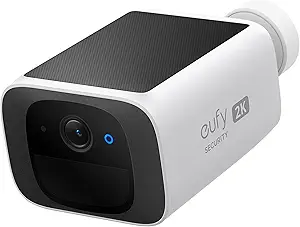 |
| Best Quality Built to a higher standard if you want something more solid | Fociey 4K Solar 4‑Cam Kit |  |
| Best Value The sweet spot between price and what you get | SEHMUA RBX-S40 Solar PTZ Camera |  |
| Best Budget The cheapest option that still gets the job done reliably | GALAYOU R6 Solar WiFi Camera |  |
| Top Rated A top-rated pick with lots of positive feedback | eufy SoloCam S340 |  |
| Most Popular A crowd favorite that many people choose with confidence | REOLINK Argus PT Solar Camera |  |
| Best Seller A high-volume bestseller chosen again and again | Tapo MagCam 4K C460 KIT |  |
eufy SoloCam S220

| Video Capture Resolution | 2k |
|---|---|
| Field Of View | 135 degrees |
| Power Source | Solar Powered |
| Night Vision | Night Color |
| Flash Memory Installed Size | 8 GB |
The eufy SoloCam S220 is a small, wire-free outdoor bullet camera designed for easy DIY installation and low maintenance solar operation. It captures 2K video with a wide 135 degree field of view and an f/1.6 aperture that helps nighttime clarity, while four IR LEDs and color night vision improve detail after dark. The camera uses built-in AI to distinguish humans and can create two detection zones to reduce false alerts, and it supports two connection modes: direct Wi‑Fi or pairing with HomeBase 3 for enhanced features like face recognition. Onboard 8 GB storage removes the need for cloud subscriptions or extra devices, and two-way audio plus Alexa and Google Assistant compatibility add convenience. Important limitations are that it does not support cloud or NAS storage, it cannot record 24/7, and HomeBase features require HomeBase 3 compatibility. For buyers who want a low-maintenance solar camera with local storage and solid daytime and night performance, the S220 is a sensible all-around choice.
Best for: Buyers who want a low-maintenance, solar-powered outdoor camera that records locally and prioritizes clear daytime and night footage with smart human detection.
Less Ideal for: People who need cloud backup, continuous 24/7 recording, or who want a camera that works with HomeBase models older than HomeBase 3.
- Integrated solar panel for continuous, maintenance-free power with about 3 hours of daily sun recommended
- 2K resolution and 135° field of view provide clear wide-angle daytime footage
- Built-in 8 GB storage eliminates mandatory cloud subscriptions
- AI human detection and configurable detection zones reduce false alarms
- Simple wire-free installation and compatibility with Alexa and Google Assistant
- No cloud or NAS storage options and no 24/7 continuous recording
- Some advanced features require HomeBase 3 and are not available standalone
Verdict: A compact, solar-powered outdoor camera that delivers 2K local recording and reliable human-aware alerts without recurring fees.
Fociey 4K Solar 4‑Cam Kit

| Video Capture Resolution | 4k |
|---|---|
| Effective Video Resolution | 8 MP |
| Night Vision Range | 33 feet |
| Flash Memory Installed Size | 32 GB |
| Power Source | Solar Powered |
This Fociey kit pairs 4K 8MP PTZ bullet cameras with a local storage base and solar panels for near-continuous outdoor monitoring without mandatory cloud fees. Each camera pans, tilts and rotates 360 degrees and supports automatic motion tracking plus cross-camera follow, which makes it useful for covering yards, driveways, and multi-zone properties while reducing blind spots. The system records motion-triggered clips to the included base (32 GB built-in, expandable to 128 GB) so footage is stored locally and accessible through the Koocam app, and it supports both 2.4 GHz and 5 GHz networks via the base station for a stable connection. Night vision, AI motion filtering to cut false alerts, app control, two-way talk and IP65 weather resistance round out practical features. Expect the solar panels and battery to handle typical sun exposure but plan for occasional manual USB charging after prolonged cloudy periods. Setup is straightforward because cameras come pre-paired to the base, but relying on a base station means you must run an Ethernet connection to your router and place the base within range of all cameras.
Best for: Buyers who prioritize high-resolution, continuous outdoor coverage and want a solar-powered system that stores footage locally to avoid subscription fees.
Less Ideal for: People who need a totally cloud-only solution or who cannot run an Ethernet connection to a base station near their router should consider alternatives.
- True 4K/8MP resolution for detailed live view and zoomed-in inspection
- 360° pan/tilt/rotate with automatic tracking and cross-camera follow to eliminate blind spots
- Solar-powered cameras with rechargeable batteries reduce wiring and charging chores
- Local storage base with 32 GB built-in and optional expansion to 128 GB so no required monthly fees
- Works with dual-band Wi‑Fi through the base and integrates with voice assistants
- Battery can deplete after extended periods of poor sunlight and may need occasional USB charging
- System depends on the included base station and an Ethernet connection to the router for reliable network access
Verdict: Choose this kit if you want high-resolution, PTZ-capable solar cameras with local storage so you can get detailed, subscription-free outdoor surveillance.
SEHMUA RBX-S40 Solar PTZ Camera

| Video Capture Resolution | 2k |
|---|---|
| Power Source | Solar Powered |
| Field Of View | 360 degrees |
| Night Vision | Night Color |
| Memory Storage Capacity | 128 GB |
The SEHMUA RBX-S40 is a wire-free outdoor PTZ camera designed for continuous solar-powered surveillance. It records in 2K resolution, pans and tilts for near 360-degree coverage, and uses a spotlight to enable color night vision when needed. Setup is app-driven over 2.4 GHz Wi‑Fi and the camera supports PIR motion alerts, two-way talk, and local plus cloud storage options. In practical use the solar panel and rechargeable battery remove the need for frequent wiring, making installation flexible on walls and eaves, while pan/tilt control in the app helps track activity across driveways or large yards. The IP65 rating and operating temperature range suit a range of outdoor conditions, but the camera relies on sunlight and a 2.4 GHz network so placement and router compatibility matter. The spotlight-based color night mode requires manual activation for best results and advanced cloud storage needs a paid subscription. For buyers who want a mostly self-sufficient, wide‑area solar camera, the RBX-S40 delivers useful imaging and sensible smart features with a few real‑world caveats about placement and storage costs.
Best for: Buyers who prioritize low-maintenance, flexible outdoor surveillance and want the convenience of solar power plus pan/tilt coverage for larger yards or driveways.
Less Ideal for: Those who need guaranteed 24/7 cloud recording without subscriptions or who cannot position the camera where it receives reliable sunlight and 2.4 GHz Wi‑Fi.
- Solar powered for wire-free placement and reduced maintenance
- 2K resolution with PTZ for wide coverage and clearer detail
- Color night vision via built-in spotlight for improved low-light identification
- PIR motion sensor and two-way audio for interactive alerts and communication
- IP65 weatherproofing for outdoor use in varied conditions
- Requires adequate sunlight and correct placement to maintain continuous power
- Only supports 2.4 GHz Wi‑Fi, so it will not connect to 5 GHz networks
- Advanced cloud storage may require a paid subscription
Verdict: A mostly self-sustaining solar PTZ camera that gives wide 2K coverage and color night vision for buyers who want low-fuss outdoor monitoring.
GALAYOU R6 Solar WiFi Camera

| Video Capture Resolution | 1296p |
|---|---|
| Power Source | Battery Powered, Solar Powered |
| Connectivity Protocol | Wi-Fi (2.4 GHz) |
| Waterproof Rating | IP65 |
| Night Vision Range | 26 feet |
The GALAYOU R6 is a solar-capable outdoor security camera designed for flexible, wire-free installs where mains power is impractical. It connects to 2.4 GHz Wi‑Fi, runs on a rechargeable battery supplemented by a detachable solar panel, and records motion-activated video to an SD card or optional cloud service. The camera captures 1296p video, offers 344° pan and 85° tilt tracking with PIR and human-detection to reduce false alerts, and provides color night vision using a fill light. Two-way audio and a built-in siren let you communicate or deter visitors, while IP65 weatherproofing and a Type-C port for backup charging make it suitable for yards, garages, and farms. Limitations to note: it does not support 5 GHz Wi‑Fi and it does not offer continuous 24/7 recording unless you use local storage and manage power; reliance on motion-only recording helps battery life but can miss non-triggered events. For buyers who need a mostly wireless, solar-friendly camera with pan/tilt coverage and clear day/night footage, the R6 is a practical value option.
Best for: Buyers looking for an affordable, mostly wireless outdoor camera that minimizes installation work and uses solar charging to reduce maintenance while still offering pan/tilt coverage and color night video.
Less Ideal for: Users who require constant continuous recording, need 5 GHz Wi‑Fi compatibility, or who must integrate the camera into 5 GHz-only networks should look elsewhere.
- Solar panel plus battery power lets you install without nearby mains wiring
- Pan/tilt tracking with PIR and human-detection reduces false motion alerts
- 2K (1296p) video and color night vision provide clear day and night footage
- Two-way audio and built-in siren enable live communication and deterrence
- Only supports 2.4 GHz Wi‑Fi, so it will not connect to 5 GHz networks
- Does not support continuous 24/7 recording by default, relying on motion-activated capture
Verdict: A budget-friendly solar and battery outdoor camera that delivers pan/tilt coverage, clear 2K day/night video, and easy wireless installation for locations without mains power.
eufy SoloCam S340

| Video Capture Resolution | 3K |
|---|---|
| Effective Video Resolution | 2160 |
| Power Source | Solar Powered, battery powered |
| Battery Power | 10000 milliamp_hours |
| Memory Storage Capacity | 128 GB |
The eufy SoloCam S340 is a battery-backed outdoor dome camera designed for continuous perimeter coverage with minimal maintenance. It pairs a 3K main camera and a secondary lens to deliver detailed 2160p video and up to 8x hybrid zoom, and the removable solar panel extends run time so the unit can operate for months between charges under normal use. The motorized pan and tilt give true 360 degree monitoring with motion tracking and AI-enhanced detection, and local 8GB storage avoids subscription fees. Setup is straightforward for wall or ceiling mounting and the camera connects over Wi-Fi for live viewing and alerts on a smartphone, plus it supports voice control via Alexa. Limitations include no 24/7 continuous recording on battery power and a relatively short IR night vision range compared with spotlight-equipped models, so full-time high-resolution recording requires a wired power or compatible HomeBase connection. For buyers prioritizing low maintenance and local storage, the S340 balances image quality and solar convenience but is not a plug-and-play replacement for always-on NVR setups.
Best for: People who want a low-maintenance outdoor camera that combines high-resolution imaging with solar charging and local storage for reliable, subscription-free monitoring.
Less Ideal for: Users who need constant 24/7 high-resolution recording or the brightest nighttime illumination should consider wired or spotlight-equipped systems instead.
- High-resolution 3K main camera with hybrid 8x zoom for detailed identification
- Removable solar panel and 10000 mAh battery for extended, low-maintenance operation
- Motorized pan and tilt enable 360° coverage and motion-following to remove blind spots
- Local built-in storage (8GB) with no required monthly subscription
- Wi‑Fi connectivity and smartphone app control with Alexa voice support
- Does not support 24/7 continuous recording on battery power
- Night vision range is limited compared with spotlight-equipped models
Verdict: Buy this if you want a high-resolution, solar-powered outdoor camera that delivers reliable, low-maintenance monitoring without monthly fees.
REOLINK Argus PT Solar Camera

| Video Capture Resolution | 1440p (5MP) |
|---|---|
| Night Vision Range | 33 feet |
| Connectivity Protocol | 2.4/5GHz Wi‑Fi |
| Video Encoding | H.265 |
| Flash Memory Supported Size Maximum | 512 GB |
The REOLINK Argus PT Solar Camera is a battery-powered outdoor dome camera that pairs a solar panel with a rechargeable battery to deliver continuous wire-free surveillance. It pans 355 degrees and tilts 140 degrees to give near-360 degree coverage, records 5MP (listed as 1440p/5MP) video at up to 15 fps, and offers color night vision up to about 33 feet. Setup and live view are handled through the Reolink app over 2.4/5 GHz Wi‑Fi, and the camera supports local microSD storage up to 512 GB and H.265 video encoding to save space. Smart motion filtering (person, vehicle, animal) with customizable motion zones and PIR scheduling reduces false alerts, and a customizable siren can be triggered when motion is detected. Practical limits include a modest frame rate that can make fast action look slightly choppy and reliance on Wi‑Fi for remote access, and while the solar panel extends run time, placement and sunlight will affect charging performance. For buyers who want flexible, subscription-free local storage and broad coverage from a single, wire-free outdoor unit, this model balances features and convenience well.
Best for: Buyers who want a subscription-free, truly wire-free outdoor camera that covers large areas with pan/tilt motion and prioritizes local storage and smart alerts.
Less Ideal for: Users needing high-frame-rate or professional-grade video for fast-action capture, or those who cannot mount the camera where it receives consistent sunlight for solar charging.
- True wire-free operation with included solar panel and rechargeable battery for continuous outdoor use
- Pan and tilt range gives nearly full 360 degree coverage from one camera
- 5MP video with H.265 encoding and color night vision for clearer day/night images
- Smart detection (person/vehicle/animal), motion zones and PIR scheduling reduce false alarms
- Supports local microSD storage up to 512 GB so you can avoid subscription fees
- Frame rate is limited to 15 fps, which can make fast motion less smooth
- Solar charging performance depends on placement and sun exposure, so reliability varies
Verdict: A convenient, subscription-free solar-powered pan/tilt camera that delivers wide-area coverage and smart local recording for homeowners wanting wire-free outdoor monitoring.
Tapo MagCam 4K C460 KIT

| Video Capture Resolution | 4K 8MP |
|---|---|
| Power Source | Battery Powered |
| Battery Power | 10000 milliamp_hours |
| Connectivity Protocol | Wi-Fi |
| Waterproof Rating | IP65 |
The Tapo MagCam 4K C460 KIT pairs a 4K 8MP bullet camera with a dedicated monocrystalline solar panel and magnetic mount to deliver largely worry-free outdoor monitoring. It records crisp 3840 x 2160 video, supports starlight color night vision and an 18x digital zoom, and runs on a 10,000 mAh battery that the solar panel recharges to extend runtime. Built-in AI detects people, vehicles, and pets on-device to cut false alerts, and you can store footage locally on a microSD card or opt into cloud backup. The camera offers two-way audio, a siren/alarm, IP65 weather resistance, and dual-band Wi‑Fi for flexible placement. Practical limits to keep in mind are that 4K streaming needs a solid upload speed and the solar charging claim assumes adequate sunlight and temperatures within the specified range; continuous 24/7 capture is available but may affect battery life and storage use. For buyers who prioritize clear imagery, autonomous charging, and subscription-free local storage, this kit is a strong, user-friendly option.
Best for: Homeowners who want a low-maintenance outdoor security camera that emphasizes clear 4K imagery, long battery life through solar charging, and the ability to keep recordings locally without mandatory subscriptions.
Less Ideal for: Users with unreliable or low-bandwidth upload connections, or those who plan to rely on continuous high-frame-rate cloud streaming in low-sunlight locations should consider other powered options.
- True 4K (8MP) video for detailed daytime and nighttime captures
- Bundled solar panel plus 10,000 mAh battery supports long unattended run times
- On-device AI detects people, vehicles, and pets to reduce false alerts
- Local storage option (microSD) with optional cloud backup for flexible privacy and cost choices
- Magnetic mount and included accessories make placement and installation straightforward
- 4K live streaming and uploads require a reliable, reasonably fast internet upload speed
- Solar charging performance depends on sunlight and temperature conditions and may vary in shade or winter months
Verdict: Choose this kit if you want a high-resolution outdoor camera with bundled solar charging and practical local-storage options for low-maintenance, subscription-optional security.
Choosing the Right Solar Wi-Fi Security Camera: Key Factors to Consider
Battery Capacity and Runtime
Battery capacity determines how long a solar camera can operate during stretches of low sun such as winter or overcast weeks. Larger battery storage provides longer autonomy but increases weight and charging time. When evaluating capacity, think about the number of daily motion events and whether continuous recording is required, because those usage patterns dramatically change runtime.
Also consider battery chemistry and replacement options. Some systems use sealed rechargeable packs that are user-replaceable, while others are harder to service. If you live in a climate with long periods of limited sunlight, prioritize higher capacity batteries and efficient power management features.
Solar Panel Output and Placement
Solar panel charging efficiency is about more than wattage on paper. Panel angle, location relative to shade, and cable length all affect real-world charging. A panel with adjustable tilt or a pigtail long enough to reach an optimal sunny location gives more consistent charging than a higher-rated panel locked into a shaded spot.
Check whether the camera's panel is dedicated to that model and matched to its battery voltage. Panels that come integrated with flexible mounting options simplify installation. If you have tree cover or limited sun exposure, plan for panel placement that maximizes direct sunlight during the day.
Image Resolution and Night Vision
High resolution improves identification at typical mounting distances but only if the camera's lens and sensor quality support clean, usable detail. For many homeowners, 1080p resolution balances file sizes and clarity. Night vision technology matters too; look for systems with effective infrared illumination or color night modes that maintain contrast without overexposure from porch lights.
Also assess how the camera handles backlit scenes and motion blur. Cameras that apply excessive compression may reduce detail when you need it most, so firmware processing is part of the real-world image quality equation.
Wi-Fi Reliability and Connectivity
Solar Wi-Fi Security Cameras depend on a stable wireless link for live view, notifications, and remote file transfers. Consider the camera's supported Wi-Fi bands and whether it can handle longer-range signals through walls and foliage. Dual-band support and robust antenna design help with reliability when the router is not nearby.
Also look at the software behavior for reconnection after outages and whether the camera stores events locally during temporary network loss. Cameras that frequently drop connections undermine their utility, so prioritize units with proven stability in home networking conditions.
Weather Resistance and Durability
Outdoor gear must withstand rain, temperature swings, and dust. An IP weather rating and corrosion-resistant materials indicate a camera will last through seasonal exposure. Thermal management matters too because extreme heat or cold can reduce battery efficiency and shorten component life.
Consider mounting hardware quality and whether the unit seals around cable entries. Durable connectors and weather boots on panel cables prevent moisture ingress that can otherwise cause failures over time.
Installation Flexibility and Maintenance
How easy the camera and panel are to install affects the total time and effort to get a reliable setup. Adjustable mounts, included hardware, and clear routing for panel cables simplify placement. Consider whether the camera can be temporarily removed for battery servicing or firmware updates without losing mount alignment.
Also think about long-term maintenance: how simple is it to replace the battery, clean the panel, or update the software? Systems designed for easy upkeep reduce the chance of downtime and extend the useful life of the installation.
Choosing the Right Mounting Location
Placement determines both solar exposure and the quality of the surveillance field. Mount the camera where it gets a clear view of entry points while positioning the solar panel to receive several hours of direct sunlight each day. Avoid spots that will be shaded by trees for large portions of the day.
If you cannot place the panel adjacent to the camera, use a longer-rated cable and mount the panel in the sunniest location. Keep the panel at an angle that matches your latitude for best year-round performance.
- Aim camera about 8 to 12 feet high for balanced coverage and reduced false triggers.
- Tilt solar panels toward true south in the northern hemisphere or true north in the southern hemisphere when possible.
- Avoid pointing cameras directly at bright light sources which can wash out images.
Balancing Continuous Recording and Motion-Only Modes
Continuous recording uses more power and fills storage faster but ensures nothing is missed. Motion-only recording conserves battery and reduces data transfer by capturing events when they occur. Choose the recording strategy that matches your priority: uninterrupted footage or maximized battery life.
Many systems offer hybrid options such as pre- and post-event buffering that limit the length of recordings while still capturing important context. Use motion sensitivity and zone settings to reduce false positives from trees, cars, or passing animals.
- Enable motion zones to focus recording on doors and driveways.
- Set event length and cooldowns to conserve battery without losing sequence context.
- Consider event-based uploads to cloud or local storage to reduce wireless bandwidth usage.
Network Considerations and Router Placement
Strong Wi-Fi is essential for real-time alerts and video streaming. If the camera is at the edge of your network, consider a mesh node or bridge to improve signal strength rather than relocating the whole system. Evaluate whether the camera supports 2.4 GHz for greater range or 5 GHz for higher throughput, depending on your router.
Account for network security: configure strong passwords, keep firmware current, and isolate cameras on a guest network if your router supports VLANs to reduce exposure to other devices on the home network.
- Run a Wi-Fi speed and signal test at the intended mounting location before final installation.
- Place the router or a mesh satellite closer to the camera if signal levels are weak.
- Disable universal plug-and-play if you want tighter network control and monitoring access.
Maintaining Your Solar System for Reliability
Routine maintenance improves charging performance and camera uptime. Clean panels periodically to remove dust, pollen, and bird droppings that reduce output. Inspect cable connections and mounting hardware seasonally to ensure nothing has loosened or degraded.
During extended low-sun periods, reduce motion sensitivity or recording length to preserve battery. If the camera has a removable battery, consider swapping in a charged spare for critical monitoring needs during lengthy cloudy stretches.
- Wipe panels with a soft cloth and mild soap as needed.
- Check firmware updates quarterly to benefit from power management improvements.
- Inspect seals and gaskets after extreme weather events.
Local Storage Vs Cloud Options
Many Solar Wi-Fi Security Cameras offer a choice between local storage and cloud-based recording. Local storage reduces recurring fees and keeps footage on site, but it can be lost if the camera is stolen. Cloud storage provides off-site backups and easier access but depends on consistent upload bandwidth.
Consider a hybrid approach where important events are uploaded to the cloud while routine footage stays on a removable memory card. Confirm whether the camera writes continuously to local media or only stores motion-triggered clips.
- Verify supported memory card sizes and file formats for local storage.
- Check upload requirements for cloud backups to ensure your data plan can handle it.
- Ensure encryption and account security for cloud-stored footage.
How We Chose the Best Solar Wi-Fi Security Camera
We selected Solar Wi-Fi Security Cameras based on measurable, user-focused dimensions that matter for real-world outdoor surveillance. Primary screening eliminated units without a sealed weather rating or those that require constant wired power. From there we prioritized cameras with dedicated solar charging designed for the device rather than generic third-party panels. Key evaluation criteria included battery capacity and charge efficiency, because insufficient storage or slow charging causes missed recordings. We assessed imaging performance across daytime and night scenes for usable detail at common mounting distances. Wireless reliability and range were tested against typical home Wi-Fi coverage to ensure stable live view and alert delivery. Installation flexibility and mounting hardware were reviewed for ease of aiming and panel placement. Lastly, firmware features such as motion zones, smart alerts, and local storage options were weighed for practical day-to-day use. We excluded cameras that rely on third-party power adapters only or that lack clear IP weatherproof ratings. We also set aside devices with very limited software controls or without documented battery specifications. The final list reflects products that met our durability, autonomy, and usability thresholds.
Our full evaluation process is outlined in our review methodology.
FAQ
How much sunlight does a solar camera need each day?
Most solar cameras perform well with several hours of direct sunlight. Exact needs vary by panel wattage and battery size, but plan for at least 3 to 6 peak sun hours daily for reliable charging under moderate use.
Can a solar security camera work in winter or cloudy climates?
Solar cameras can work year-round but will have reduced charging in low-light seasons. Choose larger battery capacity and efficient charging hardware if you expect long cloudy stretches, and adjust recording settings to conserve power.
Will a solar camera connect to any Wi-Fi router?
Most connect to common home routers, especially on 2.4 GHz networks that offer longer range. However, network security settings, distance, and obstacles affect reliability. Testing signal strength at the mounting location is recommended.
Is local storage safer than cloud storage for footage?
Local storage keeps footage onsite and avoids recurring fees, but it can be lost if the camera is tampered with. Cloud storage provides off-site backups and remote access but requires reliable uploads and account security measures.
How often should I clean the solar panel?
Check and clean panels every few months or after visible accumulation of dirt or bird droppings. Regular light cleaning maintains charging efficiency without aggressive chemicals that could damage the surface.
Final Verdict
When choosing a Solar Wi-Fi Security Camera, prioritize battery capacity and panel placement first because they determine how consistently the system will stay online. Next, confirm the camera's imaging performance and night capabilities for the distances you need to cover, and make sure your Wi-Fi can reliably reach the mounting location. Tradeoffs are inevitable: maximizing continuous recording reduces runtime, while aggressive power saving may miss context. Balance your priorities by choosing a unit with good charging hardware, stable wireless behavior, and flexible recording modes to match your monitoring needs.