
Note: This article contains affiliate links. If you click on these links and make a purchase, we may earn a small commission at no extra cost to you. This helps support our research and content. Read our full affiliate disclosure here.
Stairs collect dirt, dust, and spills in narrow, awkward spaces that typical floor cleaners struggle to reach. Choosing the right steam cleaner for stairs means getting the balance of compact size, effective steam control, and the right attachments so you can sanitize treads and risers without lugging a large machine up and down each flight. This guide presents the top five steam cleaners shortlisted for stair use and explains the practical features that matter for real-world cleaning. We evaluate steam output and control, tool reach and maneuverability, reservoir and run time, and how easy each unit is to maintain. Read on to find a stair-friendly option that fits your cleaning routine and living space.
Top Picks at a Glance
| Best Overall The best all-around choice for most situations | McCulloch MC1375 Canister Steam Cleaner |  |
| Best Quality Built to a higher standard if you want something more solid | Dupray Neat Steam Cleaner |  |
| Best Value The sweet spot between price and what you get | Bissell PowerFresh Deluxe 1806 |  |
| Best Budget The cheapest option that still gets the job done reliably | Rvwsx Steam Mop C228 |  |
| Most Popular A crowd favorite that many people choose with confidence | LABIGO Steam Mop KS-7883 |  |
McCulloch MC1375 Canister Steam Cleaner

| Wattage | 1500 watts |
|---|---|
| Heat Time | 12 minutes |
| Tank Volume | 48 fluid ounces |
| Form Factor | Cannister |
| Power Source | Corded Electric |
The McCulloch MC1375 is a canister steam cleaner built for extended, versatile cleaning sessions around the home and vehicle. It heats in about 12 minutes and delivers up to 90 minutes of continuous steam from a 48-ounce tank, with variable steam control and an optional steam lock for hands-free operation. The unit produces high-pressure steam (up to 58 PSI) and comes with 20 accessories including a floor mop, brushes, angled nozzle, extension wands, scrub pads, and a squeegee, so it can handle tile, grout, upholstery, carpet spotting, and auto detailing. A long power cord and 7-foot steam hose improve reach when cleaning stairs, corners, and car interiors. The trade-offs are its canister size and 10.8 pound weight, which make it less nimble than a small handheld for very tight stair treads, and the maximum temperature listing that appears conservative compared with its pressure rating. For anyone who needs a full-capacity steam system that tackles floors, grout, and upholstery as well as staircases, the MC1375 offers strong performance and useful accessory coverage.
Best for: Buyers who want a powerful, full-capacity steam system that handles whole-house cleaning and occasional car detailing, and who prioritize long run time and accessory versatility over ultra-light portability.
Less Ideal for: People who need an ultra-compact handheld steam cleaner for quick spot cleaning on narrow or steep staircases should consider smaller, lighter alternatives.
- Long continuous run time up to 90 minutes from a 48-ounce tank
- High steam pressure (up to 58 PSI) with variable control and steam lock
- Includes 20 accessories for floors, grout, upholstery, and car detailing
- Extra-long power cord and 7-foot hose for better reach on stairs and vehicles
- Canister form and 10.8 pound weight reduce portability for tight stair climbs
- Listed maximum temperature seems low relative to its pressure spec
Verdict: Choose the MC1375 when you need a long-running, accessory-rich steam cleaner that can deep-clean stairs, floors, upholstery, and vehicles with professional-level pressure.
Dupray Neat Steam Cleaner
| Wattage | 1500 watts |
|---|---|
| Form Factor | Handheld |
| Heat Time | 8 minutes |
| Maximum Temperature | 275 °F |
| Tank Volume | 54 fluid ounces |
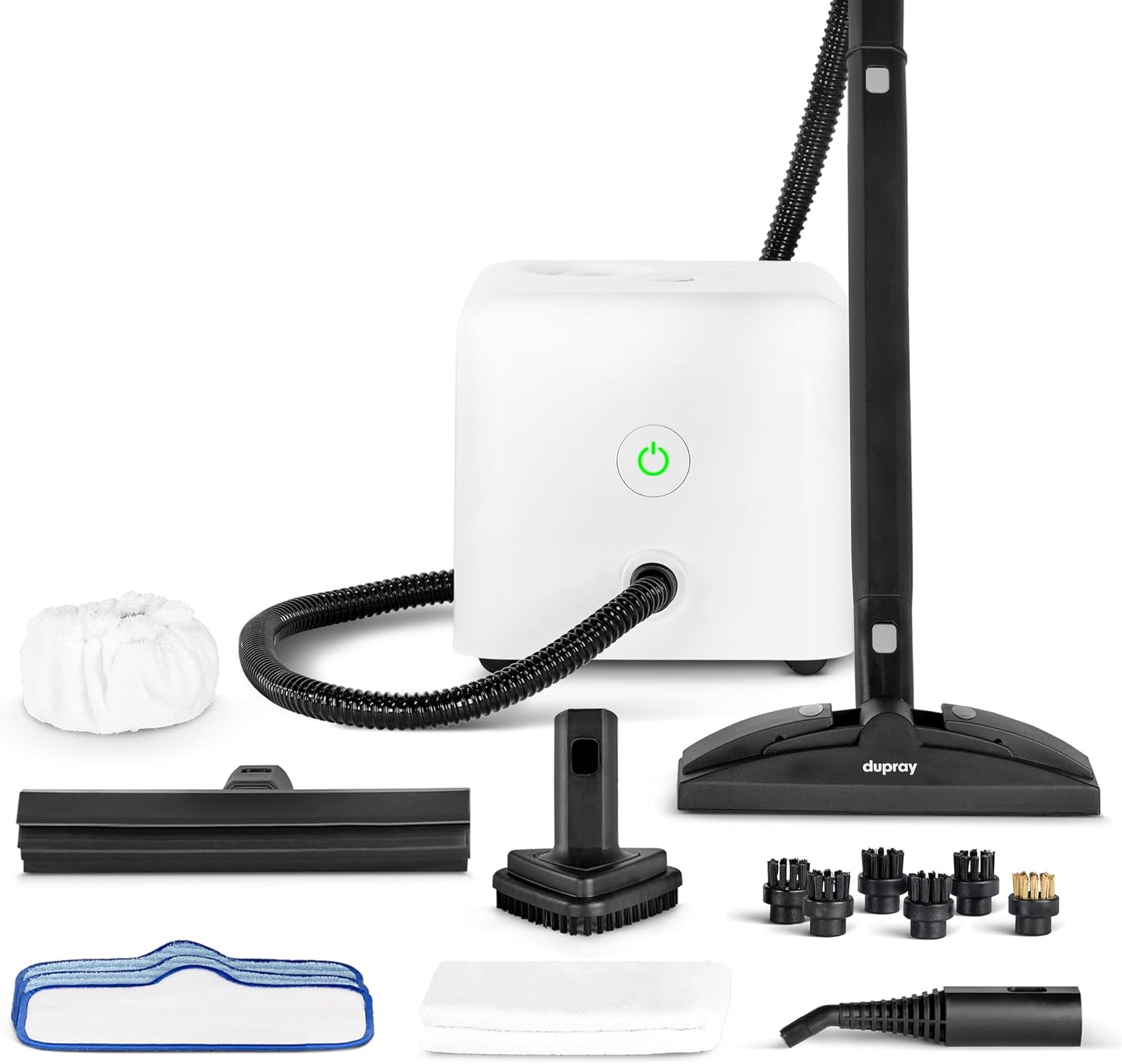
The Dupray Neat is a wheeled steam cleaner built for whole-home cleaning tasks where heat and agitation replace detergent. It heats to about 275°F and delivers continuous steam from a 54-ounce tank for up to roughly 50 minutes per fill, and the kit includes a floor tool, window tool, triangle bonnet, multiple brushes and microfiber pads so you can switch between floors, grout, upholstery and car interiors. In practice the long hose and extension tubes make it easy to leave the unit parked while you work, and the microfiber bonnets pick up loosened dirt and pet dander as you steam. The high temperature means the steamer sanitizes hard surfaces and helps loosen dried grime and pet stains without chemicals. Expect an 8 minute warm-up and occasional refills for marathon jobs, and the unit is heavier than a handheld but more stable for floor work. For sticky, deeply embedded carpet messes you will still need a carpet extractor, but for routine pet hair, surface stains and sanitizing floors and upholstery the Neat is a versatile, durable option.
Best for: Buyers who prioritize deep, chemical-free cleaning and sanitizing across floors, upholstery and vehicle interiors and want a durable unit with a long single-fill runtime.
Less Ideal for: People who need a lightweight, grab-and-go handheld for quick spot steaming or those who require a dedicated carpet extractor for embedded pet hair and heavy wet stains.
- High maximum temperature (275°F) for effective sanitizing and loosening grime
- Large 54 fl oz tank providing long steam runs (about 50 minutes) per fill
- Comprehensive 17-piece accessory kit for floors, grout, upholstery and detailing
- Long hose and extension tubes for good reach without moving the base unit
- Microfiber pads/bonnets that help lift dirt and pet dander while steaming
- Unit is relatively heavy compared with handheld steamers
- Warm-up time of about 8 minutes before steam is ready
Verdict: A powerful, accessory-rich steam cleaner that delivers long, high-temperature steam runs to sanitize and remove pet hair and surface grime without chemicals.
Bissell PowerFresh Deluxe 1806

| Tank Volume | 0.56 liters |
|---|---|
| Heat Time | 0.5 minutes |
| Cleaning Path Width | 12 inches |
| Power Source | Corded |
| Special Features | 3-in-1 With Handheld Steam Cleaner |
The Bissell PowerFresh Deluxe 1806 is a handheld-capable steam mop designed to sanitize sealed hard floors without chemicals by using high-temperature steam and a microfiber pad. It heats in about 30 seconds and offers selectable high and low steam settings so you can dial steam output for light cleaning or stuck-on messes, while the included SpotBoost brush detaches for concentrated scrubbing. A small fragrance disc tray adds a light scent during cleaning, and the refillable 0.56 liter tank is filled with the supplied measuring cup for convenience. Swivel steering and a 12-inch cleaning path make it easy to navigate around furniture and cover floor area efficiently, and the unit is intended for use on sealed hardwood, tile, linoleum, marble, granite, and similar hard surfaces. Trade-offs to note are the modest tank capacity that may need refilling during longer jobs and the corded design that limits range unless you use a different outlet, but for routine sanitizing and spot work this model is practical and straightforward to operate.
Best for: Buyers who want a straightforward steam solution to sanitize and refresh sealed hard floors regularly and value fast heat-up and an included spot-scrubbing tool.
Less Ideal for: Large homes or cleaners who need long runtimes between refills or a cordless, highly mobile unit should consider other options.
- Sanitizes floors with steam to reduce germs without chemical cleaners
- Detachable SpotBoost brush for loosening stubborn, stuck-on messes
- Quick 30-second warm-up and selectable steam levels for faster use and control
- Swivel steering and 12-inch cleaning path improve maneuverability and coverage
- Small 0.56 liter water tank may require refills during extended cleaning sessions
- Corded operation limits reach compared with cordless alternatives
Verdict: A fast-heating, chemical-free steam mop with a detachable scrub brush that makes sanitizing sealed hard floors quick and convenient.
Rvwsx Steam Mop C228
| Heat Time | 15 seconds |
|---|---|
| Maximum Temperature | 260 °F |
| Capacity | 350 ml |
| Power Source | Corded Electric |
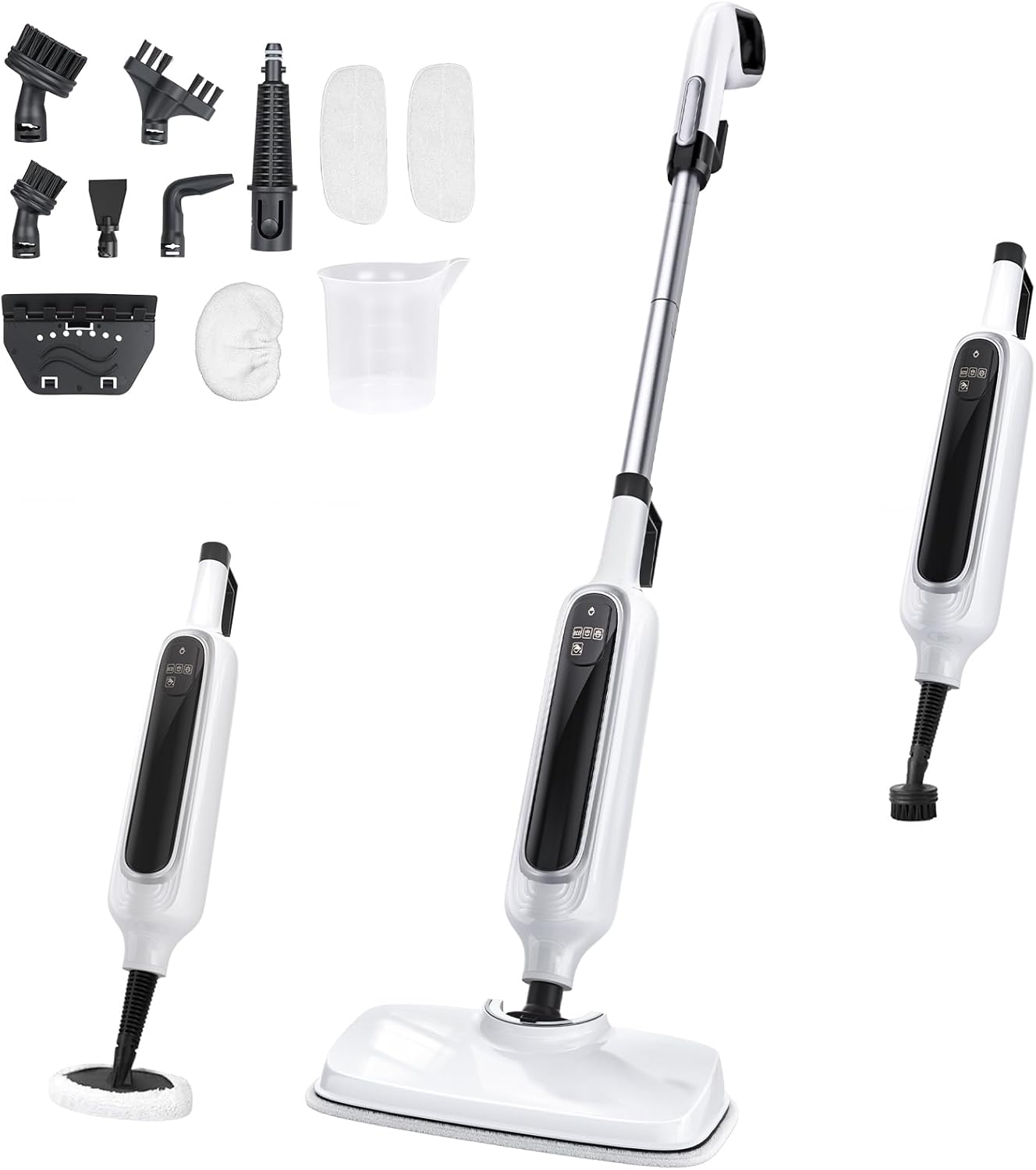
The Rvwsx C228 is a budget-minded steam mop that doubles as a handheld steamer for spot cleaning. It heats in about 15 seconds and can reach up to 260°F, delivering adjustable steam output across three settings so you can switch from light touch-ups on sealed hardwood to higher steam for tile grout or stubborn spots. A 350 ml reservoir powers continuous steam and the LED display keeps steam level and water status visible while you work. The mop head flexes and swivels to reach under furniture and the included carpet glider lets you freshen low-pile rugs. Practical touches like a 23 foot cord, self-standing design, and built-in cord wrap make larger rooms easier to cover without unplugging. On the downside the water tank is modest so you may refill during long jobs and the unit is a basic, no-frills model that lacks advanced accessories or heated drying features. For straightforward chemical-free cleaning of hardwood and tile on a budget, this unit covers the essentials well.
Best for: Buyers seeking an affordable, chemical-free cleaning solution for sealed hardwood and tile who prioritize quick startup, simple controls, and a long power cord over premium features.
Less Ideal for: Users who need heavy-duty commercial cleaning, long runtime without refills, or a steam system with an extensive accessory set should consider more feature-rich models.
- Fast 15-second heat-up for quick cleaning sessions
- Three adjustable steam levels and 260°F max for tackling both sealed hardwood and grout
- 23 foot power cord and swivel mop head for easier reach around large rooms and furniture
- Digital LED display shows steam setting and water status
- 350 ml water tank may require refills during extended cleaning
- Basic accessory set and no advanced drying or extra cleaning tools included
Verdict: A cost-conscious steam mop that delivers fast heat-up, strong steam, and easy reach for routine hardwood and tile cleaning without extra frills.
LABIGO Steam Mop KS-7883
| Wattage | 1500 watts |
|---|---|
| Heat Time | 10 seconds |
| Maximum Temperature | 248 °F |
| Tank Volume | 350 ml |
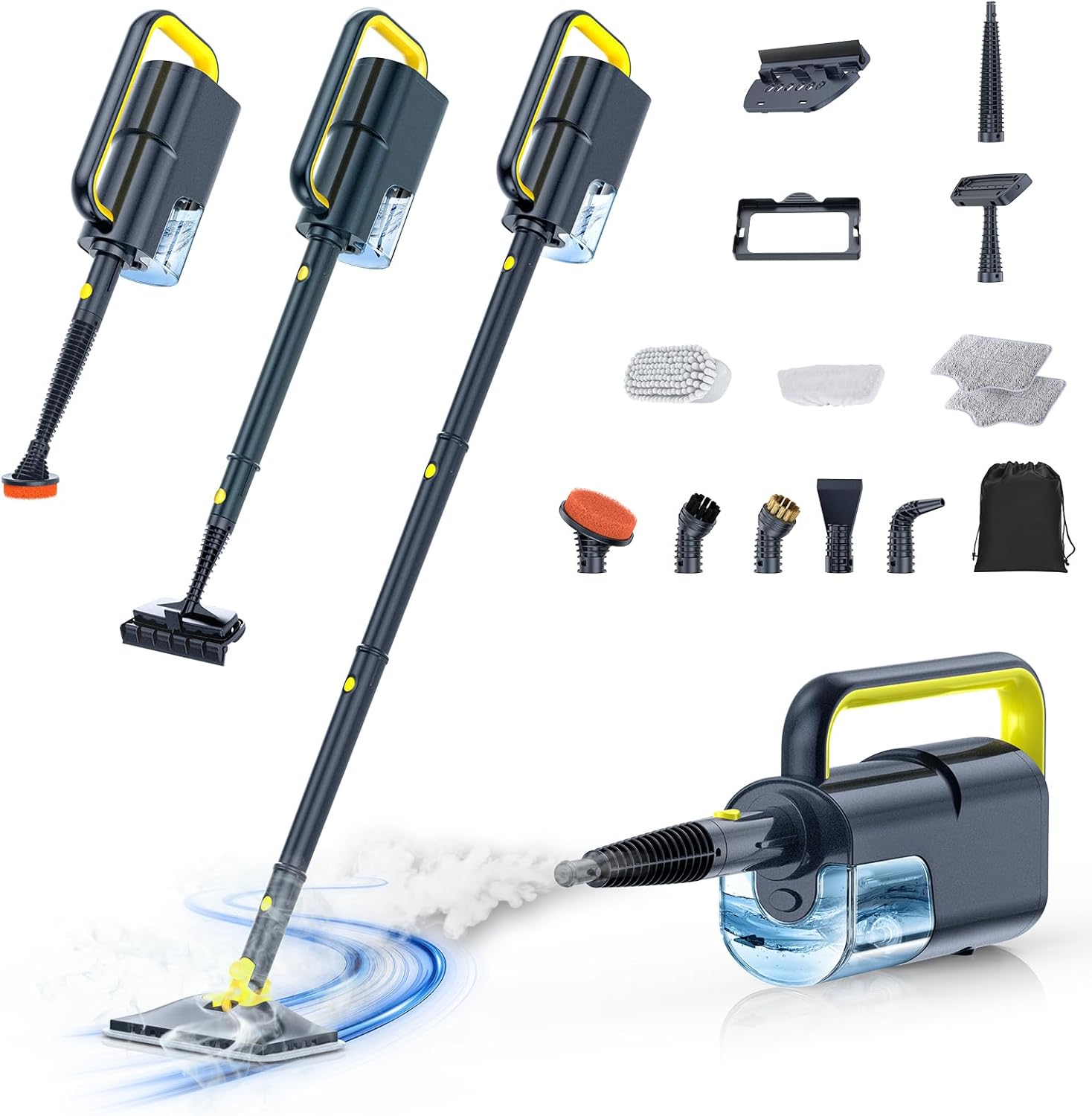
The LABIGO KS-7883 is a lightweight steam mop that doubles as a detachable handheld steamer for cleaning tile, hardwood, carpet, windows, upholstery, and grills. It heats up in about 10 seconds and delivers steam up to 248°F with two steam levels so you can use a lower setting for delicate surfaces and a higher setting for tougher grout or grease. The 350 ml tank runs roughly 12 to 15 minutes per fill and the unit includes a carpet glider, multiple nozzles and brushes, microfiber pads, and a squeegee for windows, which makes it useful across rooms. Safety features include an auto shut-off and a low-water beep, and the 4 m power cord gives good reach without swapping outlets. Expect practical performance for routine deep-cleaning and sanitizing, though the run time per fill is limited and heavy-duty grime may require multiple passes or the handheld brush attachments for concentrated work.
Best for: Buyers who want a safe, easy-to-use steam solution for regular cleaning of tile and hardwood and who prioritize quick heat-up and multiple attachments for whole-home use.
Less Ideal for: Users who need long continuous run time for very large homes or who want a heavy-duty steam cleaner for industrial-strength degreasing.
- Fast 10-second heat-up for near-instant use
- Two steam levels for adapting to delicate hardwood or tougher tile grout
- Includes a wide set of attachments for floors, carpets, windows, upholstery, and grills
- Auto shut-off and low-water alert improve safety during use
- 350 ml tank gives only about 12–15 minutes of continuous steam per fill
- May need multiple passes or handheld brushes for very stubborn, baked-on grime
Verdict: A versatile, safety-focused steam mop that heats almost instantly and covers tile and hardwood cleaning with useful attachments for everyday home use.
Choosing the Right Steam Cleaner for Stairs: Key Factors to Consider
Steam Control and Temperature
Adjustable steam control matters because stairs often combine hard finishes, textile runners, and painted wood. Being able to reduce steam prevents damage to sensitive surfaces while sufficient temperature is required to sanitize and loosen grime. Look for models that provide multiple steam settings or variable triggers so you can match output to each stair surface.
Consistent temperature across the cleaning session is important. Some compact machines spike in heat then drop off quickly, which forces short passes and reduces effectiveness on sticky spills. Reliable control reduces the chance of over-wetting and shortens drying time on steps.
Tool Variety and Reach
Stairs present tight corners, vertical risers, and narrow treads that require specialized tools. A slim handheld wand, angled brushes, and narrow jet nozzles help you access edges and grout lines. Rotating or pivoting joints can improve access on curved or winder stairs.
Attachments should be easy to switch without tools so you can move from vacuuming or sweeping to steam cleaning quickly. The ability to attach microfiber pads or brushes that trap loosened dirt will reduce recleaning and prevent debris from being pushed into corners.
Weight, Form Factor, and Portability
If you need to carry the unit up and down stairs, overall weight and the balance of the machine are critical. Lightweight handhelds or compact canisters with comfortable handles reduce fatigue and make it safer to move between floors. A unit with a concise footprint is easier to store in a closet near stairways.
Also consider hose and cord length. Too-short cords force awkward handling, while an overly long hose can be bulky. A balanced combination of a manageable hose length and a long enough power cord or battery run time keeps the cleaning flow efficient without needing frequent repositioning.
Tank Size and Continuous Run Time
Tank capacity directly affects how many steps you can clean between refills. Larger tanks reduce interruptions but add weight. For stair cleaning, a moderate tank that supports continuous steaming for several minutes is often more practical than a heavy, full-capacity reservoir that is hard to carry.
Consider refill ease and whether the model allows quick top-ups without cooling. Continuous steam systems or quick-boil designs shorten total job time. If you have long staircases or multiple flights, prioritize run time over minimal weight so you do not need to stop frequently.
Surface Safety and Fabric Compatibility
Stairs often include mixed materials such as wood, laminate, stone, and textiles. A steam cleaner should offer settings and accessories that let you clean each surface safely. Low-steam modes, protective pads, and soft brush attachments reduce the risk of finish damage and fabric shrinkage.
Check for clear guidance on fabric-safe use and whether the unit's steam is dry enough for textiles. Too much moisture can warp wood or loosen adhesives under runners. Good models provide clear instructions and adjustable output to maintain surface integrity while delivering effective cleaning.
Storage, Maintenance, and Longevity
Easy storage is especially useful for stair-focused cleaners because you will likely keep the unit in a closet or landing. Compact designs with onboard accessory storage keep everything together and make the unit easy to grab for quick touch-ups.
Maintenance features such as simple descaling, removable filters, and washable pads extend useful life and reduce running costs. Choose machines whose maintenance steps are straightforward and do not require specialized service tools.
Preparing Stairs for Steam Cleaning
Clear loose dirt and debris before using a steam cleaner. Dry debris can be pushed into corners or create a paste when steam is applied, which makes cleaning harder. A quick sweep or vacuum will remove grit that could scratch finishes when brushed during steaming.
Check for delicate finishes or loose materials. Remove small objects, secure runners, and inspect painted edges. If you are unsure how a surface will react, test steam on a hidden area with a low setting first and wait for the surface to dry to confirm no discoloration or warping occurs.
- Sweep or vacuum treads and risers first
- Remove or secure loose mats and runners
- Test steam on a hidden patch at low output
Techniques for Efficient Stair Steaming
Work top to bottom so loosened dirt falls to lower steps that will be cleaned later. Use short, overlapping passes rather than prolonged steaming in one spot to avoid over-wetting. Hold the wand at a slight angle and move steadily to lift grime without soaking the surface.
Use appropriate attachments for edges and grout. Small brushes and triangular pads reach corners more effectively than wide floor heads. For fabric runners, apply only brief bursts of steam and follow with a microfiber pad to blot moisture.
- Clean from top step down
- Use short, steady passes instead of long bursts
- Match attachments to the surface and task
Safety Tips When Working on Stairs
Steam cleaners produce very hot vapor that can scald if misdirected. Always keep the nozzle pointed away from skin and ensure hands are dry when switching tools. Wear non-slip shoes and maintain a stable stance while working near edges.
Avoid placing the unit on steps where it could shift or fall. If carrying the machine between floors, empty excess water to reduce weight and risk of spills. Unplug or switch off the unit before changing accessories.
- Keep nozzles pointed away from body
- Use stable footing and non-slip shoes
- Do not set the unit on an unstable step
Maintaining Results Between Deep Cleans
Quick weekly touch-ups prevent buildup that requires heavy steaming. Spot steam stains as they appear and vacuum crumb-prone zones regularly. For textile runners, use a handheld brush attachment to lift dust without saturating fibers.
Wipe wooden or laminate steps dry after steaming to prevent moisture from sitting on the surface. Regularly swap or wash microfiber pads so they do not redeposit dirt during subsequent passes.
- Spot steam weekly to prevent heavy buildup
- Dry hard surfaces after steaming
- Keep microfiber pads clean and ready
When to Call a Professional
If stairs have stubborn stains, water damage, or delicate historic finishes, professional cleaning or restoration may be safer than aggressive steaming. Professionals can assess substrate condition and apply specialized treatments that protect value and appearance.
Large-scale issues such as persistent mold, deep-set grease, or structural concerns warrant professional attention. Use a consumer steam cleaner for routine maintenance and small stain removal, not for major restoration jobs.
- Seek pros for water-damaged or historic finishes
- Use consumer steamers for routine maintenance only
How We Chose the Best Steam Cleaner for Stairs
We focused on features that directly affect stair cleaning performance and day-to-day usability. Key evaluation criteria included how finely steam output can be controlled and sustained, the reach and variety of handheld tools for narrow treads and vertical risers, and how compact and lightweight the unit is for carrying between floors. We also considered reservoir capacity and continuous run time to avoid frequent refills mid-job, plus how easy it is to empty, refill, and descale the tank for long-term reliability. Units were excluded if they lacked a true handheld mode or did not offer attachments suitable for narrow or vertical surfaces. We prioritized practical ergonomics and safety features such as stable handgrips, cool-touch handles, and simple trigger controls because stairs require extra caution. Durability and ease of maintenance rounded out the selection filters, focusing on models that deliver consistent steam performance with minimal upkeep.
Our full evaluation process is outlined in our review methodology.
FAQ
Can I use a steam cleaner on carpeted stair runners?
Often you can if the unit offers low-steam settings and a fabric-safe attachment. Use short bursts and a microfiber pad to blot excess moisture. Test an inconspicuous area first and avoid over-wetting to prevent mold or adhesive damage.
How often should I steam clean my stairs?
It depends on foot traffic. For busy homes, a weekly spot-steam and a monthly deeper pass is common. Low-traffic stairs may only need monthly attention. Regular vacuuming reduces the need for heavy steaming.
Will steam damage wood stair finishes?
It can if too much steam or prolonged exposure is used. Use lower steam settings, quick passes, and dry the surface afterward. When in doubt, test a hidden area or avoid steaming sealed or delicate finishes.
Do I need special attachments for tight stair corners?
Yes, narrow nozzles, angled wands, and triangular brushes improve access to corners and vertical risers. Attachments that hold microfiber pads help lift and trap loosened dirt without pushing it into crevices.
Is it better to use distilled water in a steam cleaner?
Distilled water reduces mineral buildup and extends the life of the steam system. It also helps maintain consistent steam performance and lowers the frequency of descaling maintenance.
Final Verdict
For stair cleaning, prioritize a steam cleaner that balances controlled steam output with a compact, easy-to-carry form and the right selection of narrow, angled tools. Expect tradeoffs between tank size and portability; choose the combination that matches your staircase size and how often you clean. Focus on safety features, easy maintenance, and attachments that let you work quickly without over-wetting. With those priorities, you can confidently select a stair-friendly steam cleaner that keeps steps sanitary and looking their best.