
Note: This article contains affiliate links. If you click on these links and make a purchase, we may earn a small commission at no extra cost to you. This helps support our research and content. Read our full affiliate disclosure here.
If you have ceramic tile and grout, the right steam mop makes routine cleaning faster and reduces the need for harsh chemicals. You want enough continuous steam to loosen dirt in grout lines, reliable pad contact for even cleaning, and controls that let you match heat to tile finish. This guide shortlists the top steam mops specifically for ceramic tile and grout, focusing on real-world usability and how well each unit tackles grout without damaging tile. Below you will find our top picks and a clear explanation of the evaluation criteria used to choose them, so you can pick a model that fits your floor type and cleaning habits.
Top Picks at a Glance
| Best Overall The best all-around choice for most situations | Dupray Neat Steam Cleaner |  |
| Best Quality Built to a higher standard if you want something more solid | McCulloch MC1385 Canister Steam Cleaner |  |
| Best Value The sweet spot between price and what you get | Bissell PowerFresh Deluxe 1806 |  |
| Best Budget The cheapest option that still gets the job done reliably | Rvwsx C228 Steam Mop |  |
| Top Rated A top-rated pick with lots of positive feedback | BISSELL PowerFresh Steam Mop 1940A |  |
| Most Popular A crowd favorite that many people choose with confidence | PurSteam Therma Pro 211 Steam Mop |  |
| Best Seller A high-volume bestseller chosen again and again | Shark Steam Mop S1000 |  |
Dupray Neat Steam Cleaner
| Wattage | 1500 watts |
|---|---|
| Heat Time | 8 minutes |
| Maximum Temperature | 275 °F |
| Tank Volume | 54 fluid ounces |
| Run Time per Fill | 50 minutes |
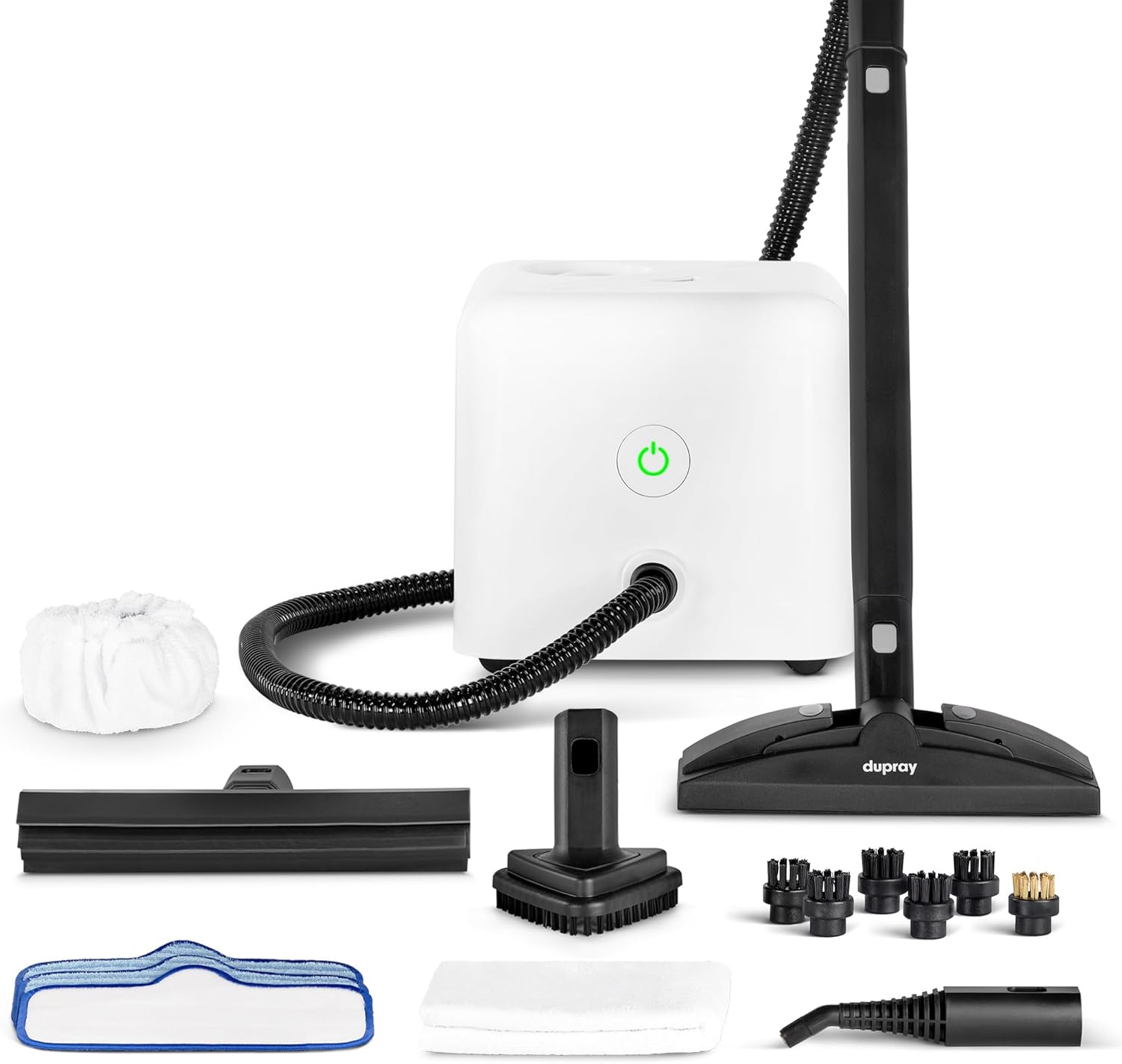
The Dupray Neat is a wheeled steam cleaner designed for whole‑home cleaning with a long hose, extension tubes and a 54‑oz water tank that delivers up to 50 minutes of continuous steam per fill. It generates superheated steam up to 275°F to lift grease, grime and stains from ceramic tile and grout, sealed floors, windows, ovens and car interiors without chemicals. The kit includes 17 accessories — floor tool with microfiber pads, triangle tool and multiple brushes — so you can scrub grout lines, blast window streaks and refresh upholstery by swapping attachments. Practical benefits include a reasonable 8 minute heat time, a carry handle and steam‑on‑demand trigger for controlled bursts, plus a universal clip that holds regular cloths or the supplied bonnets. Limitations: the unit weighs about 9 pounds and needs an AC outlet, so it is not cordless, and using high heat on unsealed surfaces could be risky without testing first.
Best for: Buyers who want a balanced, all‑around steam cleaner for regular deep cleaning of ceramic tile, grout and multiple home surfaces without chemicals will appreciate its long run time and accessory kit.
Less Ideal for: If you need a lightweight handheld steamer for quick spot jobs or a cordless unit for mobile detailing, this bulkier corded model is not the best choice.
- High maximum steam temperature (275°F) for effective sanitizing and grease removal
- Large 54‑oz tank supports up to 50 minutes of continuous steam per fill
- Comes with 17 accessories including floor tool, triangle tool and several brushes for grout and detail work
- Wheeled, compact design with long hose and extension tubes improves reach and reduces bending
- Requires an AC outlet and is not cordless, limiting portability in outdoor or car use
- At roughly 9 pounds it is heavier than handheld steamers and may be less convenient for long overhead tasks
Verdict: For reliable chemical-free deep cleaning of ceramic tile and grout, the Dupray Neat pairs high-temperature steam with a large tank and a wide accessory set to get the job done without fuss.
McCulloch MC1385 Canister Steam Cleaner

| Wattage | 1500 watts |
|---|---|
| Heat Time | 12 minutes |
| Power Source | Corded Electric |
| Maximum Temperature | 200 °F |
| Tank Volume | 64 fluid ounces |
The McCulloch MC1385 is a performance-focused canister steam cleaner built to tackle stubborn dirt on ceramic tile, grout, sealed floors, and many household surfaces without chemicals. It heats water to about 200°F in roughly 12 minutes and delivers up to 58 PSI of steam with variable steam control and an optional steam lock for continuous output, which makes it effective for deep cleaning grout lines and degreasing grout and tile edges. The 64-ounce tank supports long runs—manufacturer claims up to 120 minutes—while an 18-foot power cord and 7-foot steam hose give good reach for larger rooms or moving between work areas. Twenty-three included accessories, from a floor mop head and pads to angled nozzles, utility brushes, and a squeegee, make it versatile for grout, countertops, appliances, and car detailing. Trade-offs are its canister size and weight compared with lightweight steam mops, and it requires storage space for the unit and accessories, but for buyers prioritizing raw steam pressure and long run time for heavy-duty grout and tile cleaning, it performs well.
Best for: Buyers who prioritize strong steam output and long run times for deep cleaning ceramic tile and grout and who need a versatile tool for heavy-duty home and auto detailing.
Less Ideal for: People who want a lightweight, grab-and-go steam mop for quick daily touch-ups or those with very limited storage space should consider more compact options.
- High steam pressure (up to 58 PSI) for deep cleaning and loosening grout grime
- Large 64 fl oz tank that minimizes refills for extended cleaning sessions
- Comes with 23 accessories including floor mop head, brushes, and angled nozzle for grout-specific tasks
- Rapid heat-up (about 12 minutes) and variable steam control with steam lock for continuous use
- Long power cord and steam hose increase maneuverability across rooms
- Bulkier and heavier than stick steam mops, requiring more storage space
- Not as quick to deploy for small touch-ups due to heat-up time and setup
Verdict: Choose the MC1385 when you need high-pressure, long-runtime steam performance for thorough ceramic tile and grout cleaning.
Bissell PowerFresh Deluxe 1806

| Heat Time | 0.5 minutes |
|---|---|
| Power Source | Corded |
| Tank Volume | 0.56 liters |
| Cleaning Path Width | 12 inches |
The Bissell PowerFresh Deluxe 1806 is an upright steam mop designed for sealed hard floors including ceramic tile and grout. It heats in about 30 seconds and offers high and low steam settings so you can dial steam output for light maintenance or more stubborn, stuck-on messes. The built-in SpotBoost brush detaches to scrub grout lines and concentrated spills, while the 12-inch cleaning path and swivel steering make it easy to cover room floors and maneuver around furniture. A small fragrance disc tray adds a fresh scent as you clean, and the refillable water tank is filled with the included measuring cup. Practical touches include onboard storage for the cup and a long 25-foot power cord for reaching multiple rooms without unplugging. Be aware the tank is small so continuous heavy cleaning will require refills, and steam mops like this depend on sealed floors only and will not replace deep grout restoration tools. For everyday tile and grout maintenance the unit balances speed, targeted scrubbing, and sanitizing without chemicals.
Best for: Buyers who want a practical, no-chemical way to sanitize and maintain ceramic tile and grout regularly and prefer a tool that combines quick heat-up with a built-in scrubbing attachment.
Less Ideal for: People needing heavy-duty grout restoration, large commercial spaces, or cleaning on unsealed or sensitive floor surfaces should look for more specialized or larger-capacity equipment.
- Fast warm-up time (about 30 seconds) for quick cleaning sessions
- Detachable SpotBoost brush for targeted grout and stubborn spots
- Variable steam levels let you adjust intensity for different soils
- 12-inch cleaning path and swivel steering cover floors efficiently
- Built-in fragrance disc tray for a fresh scent while cleaning
- Small water tank means frequent refills during extended use
- Not suitable for unsealed or delicate flooring types
Verdict: A fast-heating steam mop with a detachable scrub brush that makes regular ceramic tile and grout maintenance efficient and chemical-free.
Rvwsx C228 Steam Mop
| Heat Time | 15 seconds |
|---|---|
| Power Source | Corded Electric |
| Maximum Temperature | 260 °F |
| Capacity | 350 ml |
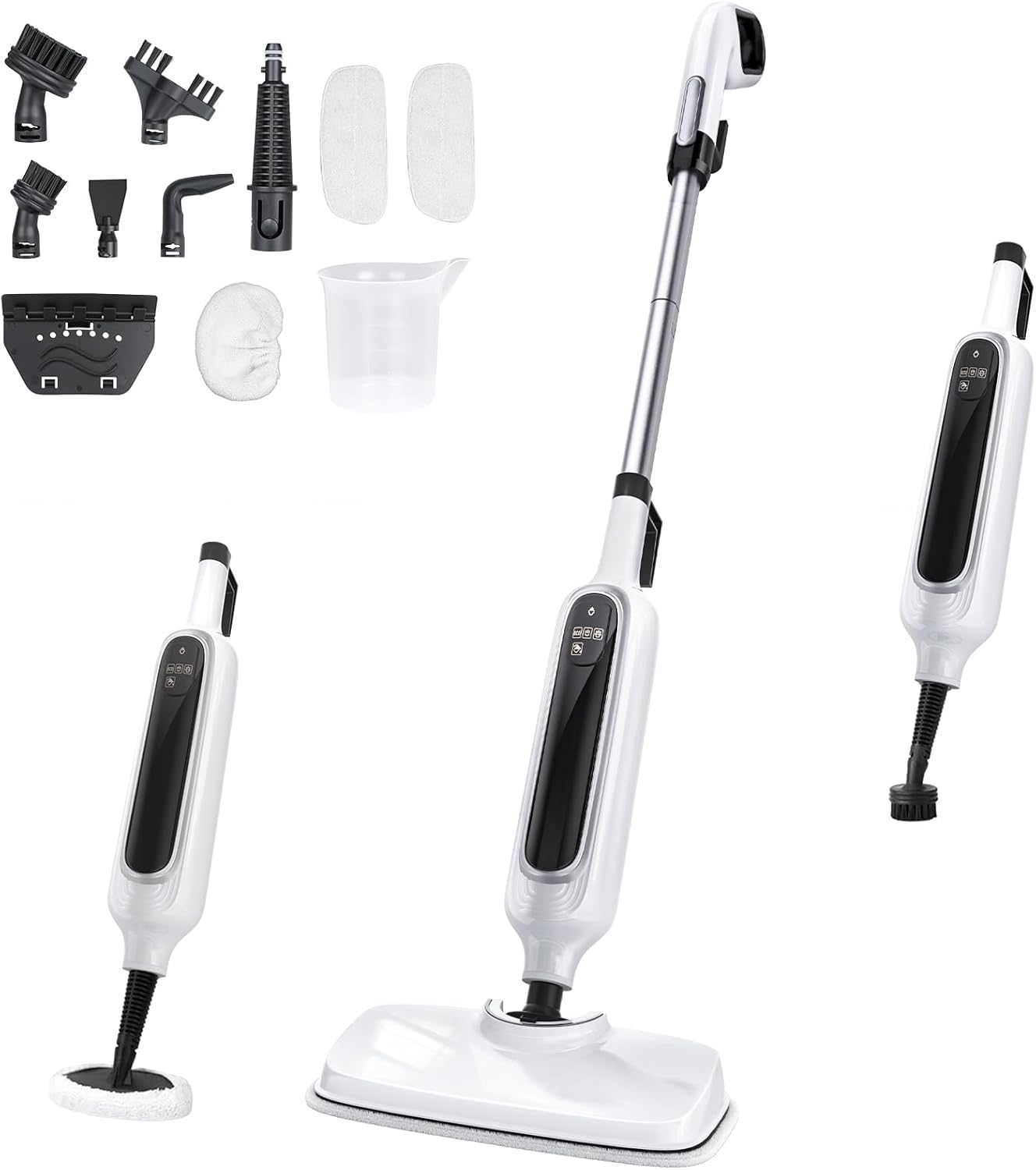
The Rvwsx C228 is a 2-in-1 steam mop that heats in about 15 seconds and produces high-temperature steam up to 260°F for chemical-free cleaning of ceramic tile, grout, sealed hardwood, vinyl, and carpets with the included glider. It runs from a 350 ml tank and offers three steam settings shown on a digital LED so you can match output to light maintenance or tougher grout and stains. The mop head swivels and tilts for access under furniture and the 23 foot cord reduces the need to swap outlets when cleaning large rooms. The unit also detaches into a handheld steamer for grout lines, countertops, and upholstery. Practical limits include the relatively small water tank that will need refilling during longer sessions and a corded design that is less convenient than cordless models, and you should follow surface recommendations to avoid damage on unsealed floors. For ceramic tile and grout the combination of high temperature steam, adjustable output, and the handheld mode make it a useful, budget-friendly choice for periodic deep cleaning and spot work.
Best for: Buyers who want an affordable steam mop that can handle periodic deep cleaning and grout work and who prioritize fast heat-up, adjustable steam, and a handheld option over long runtime.
Less Ideal for: Those who need continuous long-session cleaning without refills or who prefer the convenience of cordless models and very large homes should consider other options.
- Heats in about 15 seconds for quick use
- 260°F steam and up to 30 g/min steam output for deep cleaning and sanitizing
- Digital LED display and three steam levels for precise control
- 23 foot power cord and a swivel mop head for easier reach and maneuvering
- Detachable handheld steamer expands use to grout, upholstery, and small spots
- 350 ml water tank requires frequent refills during extended cleaning
- Corded design limits mobility compared with cordless steamers
Verdict: A budget-friendly steam mop with fast heat-up, high-temperature steam, and a handheld mode that makes grout and tile cleaning efficient for occasional deep cleans.
BISSELL PowerFresh Steam Mop 1940A

| Wattage | 1500 watts |
|---|---|
| Heat Time | 30 seconds |
| Power Source | Corded Electric |
| Maximum Temperature | 212 °F |
| Tank Volume | 16 fluid ounces |
The BISSELL PowerFresh 1940A is a corded upright steam mop designed for routine cleaning and sanitizing of sealed hard floors like ceramic tile and grout. It produces steam in about 30 seconds and offers three steam settings so you can match output to light refreshes or tougher stuck-on spills, while the flip-down Easy Scrubber breaks up dried grime and grout buildup without extra tools. The XL removable 16-ounce water tank and 23-foot power cord reduce interruptions when cleaning larger rooms, and washable microfiber pads and optional scent discs simplify maintenance and leave a fresh fragrance. At 1500 watts it reaches water boil temperature and BISSELL says steam eliminates 99.9% of germs when used with the pads as directed. Practical limitations are its reliance on a corded power source and the need to refill the tank for extended sessions, and like all steam mops it must only be used on sealed surfaces to avoid moisture damage to susceptible flooring.
Best for: Buyers who prioritize a dependable, straightforward steam cleaner for daily maintenance and occasional deep cleaning of sealed ceramic tile and grout will appreciate this model's fast heat-up and scrubber feature.
Less Ideal for: People who need cordless portability or very long continuous runtime without refills should consider other cleaning options.
- Three steam settings let you control steam output for light cleaning or tough spills
- Flip-down Easy Scrubber handles dried-on messes and grout buildup without extra tools
- 23-foot power cord and XL removable water tank reduce stops for refills and outlet changes
- Reusable washable microfiber pads lower ongoing costs and are machine washable
- Corded design limits mobility compared with cordless models
- 16-ounce tank requires refilling for longer cleaning sessions
Verdict: A reliable steam mop with adjustable steam and a built-in scrubber that makes sanitizing sealed ceramic tile and grout fast and straightforward.
PurSteam Therma Pro 211 Steam Mop

| Wattage | 1200 |
|---|---|
| Heat Time | 30 seconds |
| Tank Volume | 380 ml |
| Maximum Temperature | 212 °F |
| Power Source | ac_dc |
The PurSteam Therma Pro 211 is a 10-in-1 steam mop that doubles as a handheld steamer for verticals and upholstery, offering chemical-free cleaning for sealed floors like tile, laminate, and sealed hardwood. It heats in about 30 seconds and uses a 380 ml tank to deliver continuous steam with a swivel mop head and a carpet glider for refreshing rugs. The unit ships with a wide assortment of accessories—brushes, angled nozzle, steamer jet, grout brush, squeegee, scrape tool, and two microfiber pads—that make it flexible for grout lines, stove tops, glass, and fabric care. Practical benefits include rapid startup, foldable handle and cable hooks for compact storage, and the ability to deep-clean grout and tight areas with concentrated steam attachments. Limitations to note are the mid-size water tank that will require refills during long jobs, and guidance to avoid using it on unsealed wood surfaces; power and steam output are adequate for home use but not marketed for heavy commercial schedules.
Best for: Buyers who want a versatile, household steam cleaner that handles tile grout, sealed floors, and occasional fabric or upholstery steaming while relying on established user feedback to pick a dependable, all-purpose model.
Less Ideal for: Anyone needing a heavy-duty commercial steam system or users who must clean large square footage without interruptions for refilling should look at larger-capacity or commercial-grade units.
- Detachable handheld steamer for curtains, upholstery, and vertical steaming
- Heats in about 30 seconds for fast start-up
- Includes a range of 10 accessories targeted at grout, grout lines, glass, and grease
- Swivel mop head and carpet glider improve maneuverability and let you refresh area rugs
- Foldable handle and integrated cable hooks make storage compact and tidy
- 380 ml tank may need frequent refills during larger cleaning sessions
- Not suitable for unsealed wood or certain delicate floor finishes
Verdict: A quick-heating, accessory-rich steam mop that excels at ceramic tile and grout cleaning for typical household jobs.
Shark Steam Mop S1000
| Wattage | 1050 watts |
|---|---|
| Heat Time | 30 seconds |
| Power Source | Electric |
| Tank Volume | 12.68 fluid ounces |
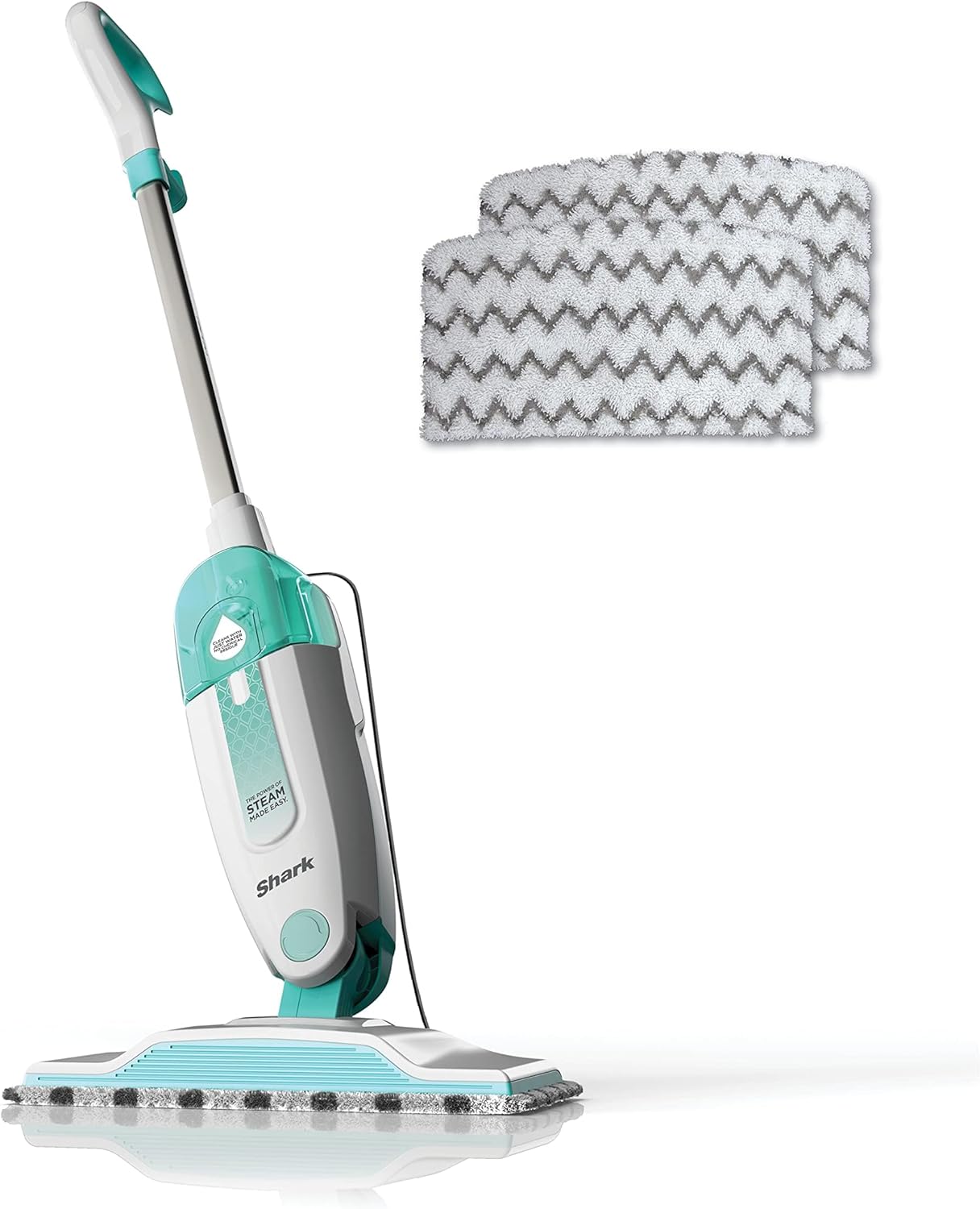
The Shark S1000 is a compact steam mop designed for quick cleaning of sealed hard floors such as ceramic tile and grout. It heats in about 30 seconds and produces on-demand steam to loosen dirt and sanitize without chemicals, while the Dirt Grip textured microfiber pads add light scrubbing power and are machine washable. The removable water tank makes refilling simple during longer cleaning sessions and the swivel steering plus low weight make it easy to maneuver around furniture and into tight spaces. Because it is a corded upright unit with a modest 12.68-ounce tank, expect short runs between refills for large areas, and plan to move furniture or pre-treat heavy grout stains before steaming for best results. The S1000 is straightforward to use, stores easily, and is practical for regular maintenance cleaning of tile floors and grout when you want a chemical-free option.
Best for: Buyers who want a low-effort, chemical-free way to maintain ceramic tile and grout on a regular basis and prefer a lightweight, easy-to-store cleaner.
Less Ideal for: Homes with very large floor areas or heavy grout staining that require long continuous run times or adjustable high-power steam settings.
- Chemical-free sanitization using steam only
- Quick 30-second heat-up for fast start
- Lightweight and maneuverable design for easy handling
- Removable water tank simplifies refills
- Machine-washable Dirt Grip pads for reusable scrubbing
- Small water tank limits continuous cleaning time for large rooms
- No variable steam settings for heavier soil or delicate surfaces
Verdict: A fast-heating, lightweight steam mop that delivers chemical-free cleaning and easy maneuverability for routine tile and grout maintenance.
Choosing the Right Steam Mop for Ceramic Tile and Grout: Key Factors to Consider
Steam Output and Temperature Control
Steam output determines how effectively a mop loosens grime from grout lines and porous tile surfaces. Higher continuous steam and the option to adjust temperature let you match cleaning intensity to different tile finishes, reducing the risk of thermal shock or damage to delicate glazes.
A model with a sustained steam flow is also easier to use because you spend less time reapplying steam and more time wiping. Look for machines that report steam rate or offer variable settings rather than a single on/off output.
Pad Design and Surface Contact
The cleaning pad delivers the steam to the floor and provides mechanical action to lift dirt. Microfiber pads with a textured or scrubby strip help pull grime from grout without scratching ceramic surfaces. Pad size and shape influence how much contact pressure the head applies and how evenly steam is distributed.
Replaceable or reversible pads extend service life, and machine-washable pads reduce ongoing costs and odor buildup. Consider whether the mop head design allows effective contact in grout grooves and along tile edges.
Tank Capacity and Run Time
Tank capacity directly affects how long the unit can operate before needing a refill. Larger tanks are helpful for medium to large rooms because refilling interrupts workflow and cools the unit. However, very large tanks add weight and can make the mop harder to maneuver.
Evaluate expected cleaning area versus advertised run time. Fast heat-up and quick refill designs can offset smaller tanks for users who prefer lighter tools or only clean small spaces.
Maneuverability and Head Articulation
Good maneuverability makes it easier to follow grout lines, get into corners, and clean around fixtures. A swivel head and low-profile design help reach under cabinets and along baseboards. The weight distribution of the unit affects hand fatigue during longer sessions.
Also consider cord length or hose reach for corded models and whether the handle and head allow comfortable posture while cleaning. A mop that requires awkward wrist angles will make detailed grout work more difficult.
Safety Features and Material Compatibility
Steam can be hot enough to damage some tile surfaces or grout finishes, so safety features matter. Variable steam settings, trigger locks, and clear water-level indicators allow safer operation. Materials used in the mop head and pads should be nonabrasive and compatible with ceramic finishes.
Check that the manufacturer provides guidance for tile and grout use. Built-in safety controls reduce the chance of accidental scalding during refills or storage.
Ease of Maintenance and Consumables
A steam mop that is easy to maintain will stay hygienic and perform consistently. Removable, machine-washable pads, accessible water tanks, and simple descaling procedures keep the unit working well. Availability and cost of replacement pads or filters factor into long-term value.
Consider how simple it is to change pads or clear blockages without tools. Models with dishwasher-safe parts or clear maintenance instructions reduce friction for regular upkeep.
How Steam Cleans Tile and Grout
Steam loosens and dissolves grime by applying heat and moisture to soils trapped in grout and on tile surfaces. The high temperature breaks down oils and softens dried residues, while the mop pad lifts and traps particles.
Effectiveness depends on dwell time, steam concentration, and mechanical action from the pad. Short, hot bursts can disinfect surfaces, but longer, gentler steam exposure often works better for stubborn grout stains without stressing grout fillers.
- High-temperature steam sanitizes by denaturing microbes.
- Mechanical agitation from the pad dislodges particles loosened by steam.
- Multiple passes may be necessary for deep grout lines.
Preparing Ceramic Tile and Grout for Steam Cleaning
Sweep or vacuum first to remove loose debris that would otherwise smear. A dry pass prevents abrasive grit from scratching tile during steaming.
Test a small, inconspicuous area before treating the whole floor. Some tile finishes and grout formulations are sensitive to heat or moisture; a quick trial ensures no discoloration or damage occurs.
- Remove rugs and obstacles before steaming.
- Ensure grout is intact; repair cracked or missing grout prior to heavy steam use.
Best Techniques for Tackling Grout Lines
Work in small sections and make a slow pass along the grout line to allow steam to penetrate. For heavily soiled grout, follow with a focused scrub using a detachable scrub nozzle or a specialized pad attachment when available.
Avoid over-saturating grout with water after steaming; blot or wipe dry to prevent prolonged moisture exposure that could weaken grout over time.
- Use steady, overlapping passes for even cleaning.
- Apply additional agitation only where needed to avoid unnecessary abrasion.
Maintenance Tips to Keep Your Steam Mop Performing
Rinse and machine-wash microfiber pads after each use to remove trapped soils and prevent staining. Follow descaling recommendations based on your water hardness to prevent mineral buildup inside the boiler or steam nozzle.
Store the unit upright with the tank drained if you will not use it for extended periods. Regularly inspect the steam nozzle and hose connections for blockages or wear to maintain consistent steam flow.
- Replace pads when they show permanent staining or fraying.
- Use filtered or distilled water if your tap water is hard to reduce scale.
When Not to Use a Steam Mop on Tile
Avoid steam cleaning on unsealed grout or tile installations where moisture can penetrate subflooring or adhesive layers. Excessive steam can loosen some types of adhesive or cause discoloration on sensitive grout pigments.
Do not use steam on tiles that the manufacturer explicitly warns against. When in doubt, consult the flooring documentation or perform a careful test patch.
- Skip steam cleaning on antique or delicate glazed tiles.
- Avoid prolonged steam exposure on recently installed grout until it has fully cured.
How We Chose the Best Steam Mop for Ceramic Tile and Grout
We prioritized features that directly affect how well a steam mop cleans ceramic tile and grout. First, steam output and temperature control were key because sufficient steam concentration is necessary to loosen embedded dirt in grout lines without scalding tiles. Second, pad design and contact pressure were evaluated since a mop needs consistent surface contact and appropriate agitation for grout cleaning. Third, tank capacity and run time mattered for practical use; frequent refills interrupt cleaning and reduce efficiency on larger areas. Fourth, maneuverability and head articulation were considered to ensure units can reach corners and follow grout lines. Fifth, ease of maintenance and pad replacement affect long-term ownership and hygiene. We excluded handheld steamers and multi-surface machines that do not offer stable floor-cleaning performance on ceramic tile. We also excluded models lacking temperature control or with insufficient continuous steam. Our selections favor designs and specs that balance grout-cleaning effectiveness with everyday convenience.
Our full evaluation process is outlined in our review methodology.
FAQ
Can a steam mop remove deep grout stains?
Steam helps loosen many surface and moderately embedded stains, but deeply set discoloration may require targeted grout cleaning or professional restoration. Multiple treatments and some mechanical agitation often improve results.
Will steam damage ceramic tile or grout?
Most glazed ceramic tile tolerates steam when used correctly, but unsealed grout or sensitive finishes can be affected. Use lower steam settings and test an inconspicuous spot first.
How often should I steam clean ceramic tile floors?
Frequency depends on traffic and soil levels. For typical homes, a steam cleaning every 1 to 4 weeks helps maintain cleanliness, with spot-treating as needed for spills and high-traffic areas.
Do I need to use cleaning chemicals with a steam mop?
Steam cleaning reduces the need for chemicals because heat and moisture dissolve many soils and sanitize surfaces. For stubborn stains, a gentle grout cleaner used before or after steaming can help, but avoid harsh chemicals during steaming.
Is distilled water necessary for steam mops?
Distilled or filtered water reduces mineral scale buildup and can extend the mop's life, especially in areas with hard tap water. Follow the manufacturer's guidance for water type and descaling intervals.
Final Verdict
When choosing a steam mop for ceramic tile and grout, prioritize consistent steam output, a pad system that provides good contact and agitation, and a tank size that matches the area you clean. Balance maneuverability and head articulation against tank capacity so you can clean efficiently without fatigue. Keep safety and maintenance needs in mind to protect tile finishes and prolong the machine's life. Focus on the features that help you remove grime from grout lines while avoiding excessive heat or moisture exposure. That approach will help you pick a steam mop that cleans effectively and stays reliable over time.