
Note: This article contains affiliate links. If you click on these links and make a purchase, we may earn a small commission at no extra cost to you. This helps support our research and content. Read our full affiliate disclosure here.
If you want fast, chemical-free maintenance for engineered hardwood, choosing the right steam mop matters. Engineered floors tolerate moisture differently than solid hardwood, so a tool that delivers controlled steam, quick drying, and a soft contact surface will keep boards looking their best while avoiding cupping or finish damage. This guide presents six shortlisted steam mops chosen specifically for engineered hardwood floors and explains the practical tradeoffs buyers face. We focus on real-world factors like steam output control, pad materials, and moisture management so you can find a model that cleans effectively without risking the floor. Read on for the key criteria we used and clear guidance to match a steam mop to your routine and finish type.
Top Picks at a Glance
| Best Quality Built to a higher standard if you want something more solid | Dupray Neat Steam Cleaner |  |
| Best Value The sweet spot between price and what you get | PurSteam Therma Pro 211 Steam Mop |  |
| Best Budget The cheapest option that still gets the job done reliably | Amazon Basics Steam Mop DS-HSM10-NA |  |
| Top Rated A top-rated pick with lots of positive feedback | BISSELL PowerFresh Steam Mop 1940A |  |
| Most Popular A crowd favorite that many people choose with confidence | Shark Steam Mop S1000 |  |
| Best Seller A high-volume bestseller chosen again and again | Shark SteamSpot Steam Mop S2001 |  |
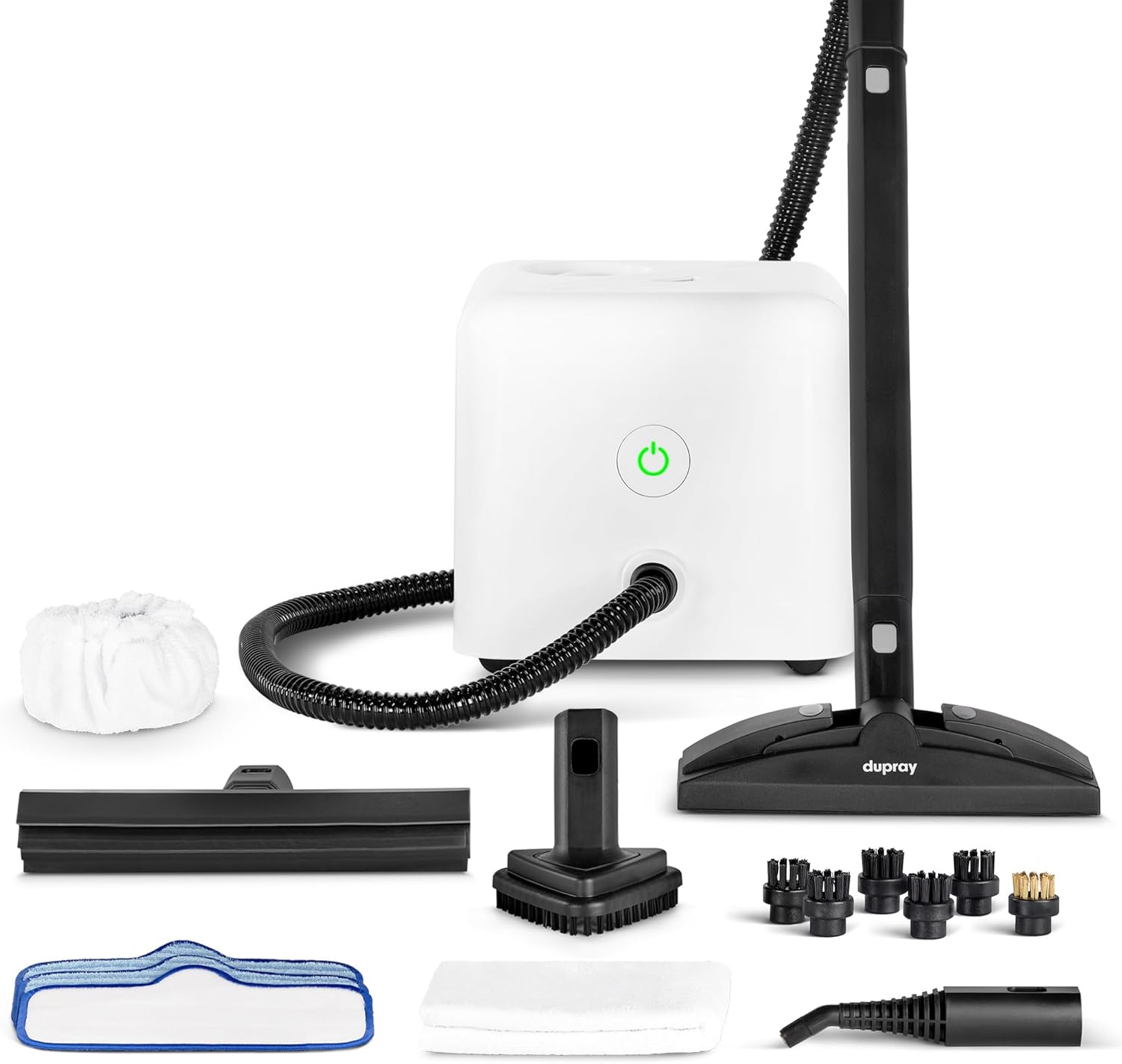
Dupray Neat Steam Cleaner
| Wattage | 1500 watts |
|---|---|
| Heat Time | 8 minutes |
| Maximum Temperature | 275 °F |
| Tank Volume | 54 fluid ounces |
| Run Time | 50 minutes |
The Dupray Neat is a versatile canister steam cleaner built around high-temperature steam and a long run time for thorough home cleaning. It heats to about 275°F and runs for up to 50 minutes per fill, letting you tackle sealed hardwood, tile grout, windows, upholstery and car interiors using the floor tool, window tool, brushes and microfiber bonnets included in the 17-piece kit. The wheeled, compact design and long hose make it easy to move across rooms without bending, while the universal clip accepts different cloths for flexibility. Practical advantages include chemical-free sanitizing on contact and a variety of brushes for scrubbing stubborn grime. Trade-offs are that it is a steam canister rather than a lightweight upright mop, so it needs storage space and a brief heat-up time, and steam cleaning requires care on delicate or unsealed wood floors to avoid excess moisture. For engineered hardwood owners who follow manufacturer guidelines for sealed floors, the Neat delivers strong hot-steam cleaning power and useful accessory coverage for both floors and detailed cleaning tasks.
Best for: Buyers who prioritize strong steam performance and deep cleaning capability for sealed engineered hardwood and want a machine that also handles grout, upholstery and detailing.
Less Ideal for: People seeking a lightweight, quick‑use upright steam mop for daily surface touchups or those with unsealed or delicate wood floors that cannot tolerate high heat and moisture.
- Generates superheated steam up to 275°F for effective sanitizing and grease removal
- Long continuous steam time (about 50 minutes) per tank fill for extended cleaning sessions
- Comes with 17 accessories including floor tool, brushes, microfiber bonnets for versatile cleaning tasks
- Wheeled, compact design with long hose and extension tubes reduces bending and improves reach
- Not a lightweight upright steam mop so it occupies more storage space and is less grab-and-go
- Steam can be risky on unsealed or moisture-sensitive flooring if used improperly
Verdict: If you want high-temperature steam and a full accessory kit to deep-clean sealed engineered hardwood and detailed surfaces, the Dupray Neat delivers powerful, chemical-free results.
PurSteam Therma Pro 211 Steam Mop

| Wattage | 1200 |
|---|---|
| Heat Time | 30 seconds |
| Tank Volume | 380 ml |
| Maximum Temperature | 212 °F |
| Form Factor | Handheld |
The PurSteam Therma Pro 211 is a versatile steam mop that pairs a standing mop head with a detachable handheld steamer, letting you clean sealed hardwood, tile, laminate, and rugs without chemicals. It heats in about 30 seconds and uses a 380 ml tank for extended steaming between refills, while a swivel mop head and collapsible handle make reaching under furniture and storing the unit simple. The included carpet glider, microfiber pads, steamer jet, squeegee, and brush attachments extend the mop beyond floors to grout, upholstery, grills, and glass. On engineered hardwood the mop's surface-optimized steam output lets you refresh sealed floors and tackle spots without saturating the wood, but you should avoid unsealed planks and always test a small area first. The unit is lightweight and maneuverable for everyday touchups, though corded operation and the need to refill the tank limit uninterrupted runtime compared with larger standalone steamers. Overall it is a practical, multiuse option for homes that want chemical-free cleaning and occasional garment or upholstery steaming alongside floor care.
Best for: Buyers who want a compact, multiuse steam cleaner to maintain sealed engineered hardwood and also handle occasional upholstery, grout, and garment steaming without chemicals.
Less Ideal for: If you need heavy-duty continuous steaming for large homes or professional cleaning, a larger-capacity or cordless commercial unit would be a better fit.
- Detachable handheld steamer expands use to fabrics and upholstery
- Heats in about 30 seconds so you can start quickly
- Multiple accessories (brushes, squeegee, carpet glider) for varied tasks
- Swivel mop head and collapsible handle improve maneuverability and storage
- 380 ml tank requires periodic refills during long cleaning sessions
- Corded design limits range unless you use an extension cord
Verdict: A quick-heating, multiaccessory steam mop that lets you safely refresh sealed engineered hardwood and tackle multiple cleaning tasks without chemicals.
Amazon Basics Steam Mop DS-HSM10-NA

| Wattage | 1200 watts |
|---|---|
| Heat Time | 30 seconds |
| Maximum Temperature | 100 °C |
| Capacity | 15 ounces |
This Amazon Basics steam mop is a straightforward steam cleaner for sealed hard floors that uses 1200 watts to heat tap water to steam in about 30 seconds. It is intended for routine cleaning of engineered hardwood, tile, laminate, vinyl, and similar sealed surfaces where chemical-free sanitizing is desired. The mop offers three steam levels so you can dial down steam for delicate finishes or use higher output for greasy grime, and a 15-ounce tank lets you clean several rooms before refilling. Included are three washable microfiber pads, a filling flask, and a small plastic scrubber for stuck-on spots, and the unit stays light enough for quick touchups and easy self-standing storage. Practical conveniences include a 20-foot cord with cord wrap and a washable filter, but the mop relies solely on steam so it does not scrub as aggressively as powered scrubbers and requires sealed floors only to avoid moisture damage. For basic, budget-focused maintenance of engineered hardwood this is a capable, no-frills option that balances quick heat-up and simple pad cleaning with the usual limits of steam-only floor care.
Best for: Buyers who want an affordable, simple steam cleaning routine for engineered hardwood and other sealed hard floors and prefer quick heat-up and washable pads over advanced features.
Less Ideal for: Homes needing heavy-duty grout or deep-deep cleaning, unsealed or water-sensitive wood floors, or users who want powered scrubbing and advanced attachments.
- Fast 30-second heat-up for quick cleaning sessions
- Three steam levels let you reduce moisture for sensitive sealed floors
- Includes three washable microfiber pads for repeated use
- Long 20-foot cord and self-standing design make operation and storage easier
- 15-ounce water tank may need refilling during longer cleaning sessions
- Steam-only action does not replace mechanical scrubbing for heavy grime
Verdict: A budget-friendly steam mop that delivers fast, chemical-free cleaning for engineered hardwood with simple controls and washable pads.
BISSELL PowerFresh Steam Mop 1940A

| Wattage | 1500 watts |
|---|---|
| Heat Time | 30 seconds |
| Power Source | Corded Electric |
| Maximum Temperature | 212 °F |
| Tank Volume | 16 fluid ounces |
The Bissell PowerFresh 1940A is a corded upright steam mop built for regular floor sanitizing and spot scrubbing on sealed hard surfaces. It heats in about 30 seconds and offers three steam settings so you can dial back steam for quick refreshes or increase it for stuck-on spills, while the flip-down Easy Scrubber tackles dried grime and grout. The XL removable 16-ounce water tank and 23-foot power cord extend cleaning time and reach without frequent refills or outlet switching, and washable microfiber pads handle routine cleaning and can be laundered for reuse. It also supports scent discs for a fresh-smelling finish. Because it uses only steam and microfiber, it avoids chemical cleaners, which is useful if you prefer low-chemical maintenance. The mop is intended for sealed hardwood and other sealed floors; it will not be suitable for unsealed wood and requires following manufacturer guidance to avoid excessive moisture. The unit is straightforward to operate and maintain, making it a practical choice for homeowners who want reliable, repeatable steam cleaning for engineered hardwood and tile.
Best for: Buyers who prioritize a dependable, repeatable cleaning tool for sealed engineered hardwood and other sealed hard floors and want straightforward maintenance without chemicals.
Less Ideal for: Homes with unsealed wood floors or buyers seeking a cordless, ultra-compact cleaning tool should look elsewhere.
- Three steam settings let you match steam output to task intensity
- Flip-down Easy Scrubber breaks up dried-on messes and grout buildup
- Large removable 16 oz tank and 23-foot cord reduce refills and outlet changes
- Reusable, machine-washable microfiber pads cut ongoing supply costs
- Not suitable for unsealed or water-sensitive wood floors
- Requires upright storage space and a corded outlet during use
Verdict: A reliable steam mop for engineered hardwood owners who want fast heat-up, adjustable steam, and an integrated scrubber for consistent, chemical-free floor care.
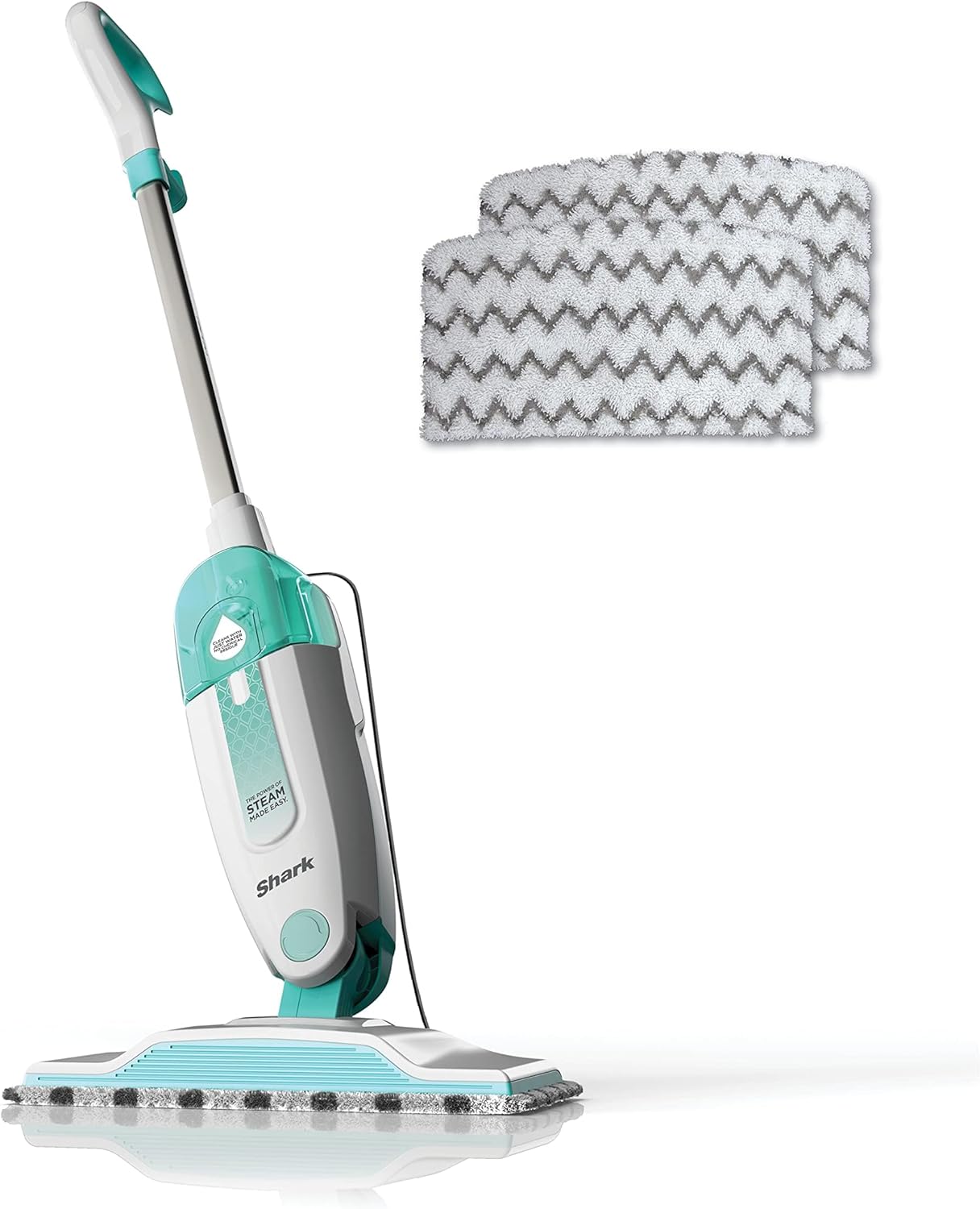
Shark Steam Mop S1000
| Wattage | 1050 watts |
|---|---|
| Heat Time | 30 seconds |
| Power Source | Electric |
| Tank Volume | 12.68 fluid ounces |
The Shark S1000 is a simple, purpose-built steam mop for sealed hard floors that heats in about 30 seconds and uses only water to loosen grime and sanitize surfaces. Its removable 12.68 fl oz tank makes refills straightforward during longer sessions and the sub-5 lb body plus swivel steering keeps the mop easy to push and maneuver around furniture and into corners. The included dirt-grip microfiber pads are machine washable and add mild scrubbing power for stuck-on spots without harsh chemicals. Because it is a corded upright with a compact tank, runtime is effectively unlimited but you will refill more often than with larger-capacity steam cleaners. The S1000 is best for regular maintenance and quick touch-ups on sealed wood, laminate, vinyl, and tile rather than heavy-duty deep cleaning or large areas where a larger-capacity unit would save time. Overall, it delivers fast, chemical-free cleaning for engineered hardwood when used according to manufacturer guidance about sealed floors and limited steam exposure.
Best for: Buyers who prioritize a lightweight, easy-to-use steam mop for regular, chemical-free maintenance of sealed engineered hardwood and other sealed hard floors and who value social proof and established brand reliability.
Less Ideal for: Homes with very large floor areas or users who need heavy-duty steam extraction or deep-cleaning capability should consider larger-capacity or commercial-style steam cleaners instead.
- Heats up in about 30 seconds for quick cleaning sessions
- Lightweight design and swivel steering for easy maneuvering
- Removable water tank allows convenient refills without disassembling the unit
- Machine-washable dirt-grip pads provide reusable scrubbing power
- Uses only water for sanitization so no chemical residues are left behind
- Small tank capacity requires more frequent refills during extended cleaning
- Not intended for unsealed wood or heavy extraction-style deep cleaning
Verdict: Choose the Shark S1000 if you want a lightweight, fast-heating steam mop that makes chemical-free maintenance of sealed engineered hardwood simple and reliable.
Shark SteamSpot Steam Mop S2001

| Wattage | 1200 watts |
|---|---|
| Heat Time | 25 seconds |
| Tank Volume | 500 ml |
| Form Factor | Stick |
The Shark SteamSpot S2001 is a compact steam mop designed for routine cleaning and spot treatment on sealed hard floors. It combines continuous steam with a Steam Blaster burst for targeted power on stuck-on spots, and the three steam modes let you dial back for quick touch-ups or ramp up for deep cleanups. The XL removable water tank and 25 second heat time make it practical for longer sessions without frequent refills, while the included Dirt Grip and Scrub washable pads handle both light soil and textured scrubbing. Because it uses only water for sanitization, there is no chemical residue left behind, which is helpful for homes with sensitive finishes. As a lightweight, maneuverable stick unit it is easy to store and carry, though stick mops do not replace a vacuum for heavy debris and require sealed wood floors to prevent moisture issues. For everyday maintenance and occasional stubborn spots this model offers a straightforward, low-fuss cleaning solution.
Best for: Buyers who prioritize a low-risk, easy-to-use floor cleaner for regular maintenance of sealed engineered hardwood and other sealed hard floors and who want chemical-free sanitizing with minimal setup.
Less Ideal for: Homes that need heavy debris pickup, unsealed or water-sensitive flooring, or users who prefer a combined vacuum-steam appliance.
- Steam Blaster delivers targeted bursts for stuck-on spots
- Three steam modes (Light, Normal, Deep) for adjustable cleaning
- XL removable water tank reduces refill frequency and is easy to refill
- Two machine-washable pads (Dirt Grip and Scrub) for different soils
- Heats up in about 25 seconds for quick use
- Not a replacement for vacuuming since it does not pick up dry debris
- Requires sealed hard floors to avoid potential moisture damage to wood
Verdict: A simple, low-fuss steam mop that delivers adjustable steam power and targeted blasts for safe, chemical-free upkeep of sealed engineered hardwood floors.
Choosing the Right Steam Mop for Engineered Hardwood Floors: Key Factors to Consider
Steam Output and Adjustable Settings
Engineered hardwood is more sensitive to heat and moisture than many hard surfaces, so being able to reduce steam intensity is critical. Select a steam mop that offers multiple output settings or a variable trigger so you can use a low setting for finished planks and a higher setting only on tiles or grout lines adjacent to wood.
Consistent delivery matters too. A mop that cycles steam unpredictably risks overexposing a single spot. Look for models that provide steady, controllable steam bursts and let you pause steam flow when repositioning the mop head.
Pad Material and How It Contacts the Floor
The pad is the mop's contact layer and affects both cleaning performance and finish protection. Soft, low-lint microfiber pads lift soils without scratching finishes and absorb residual moisture that would otherwise soak the wood. Some pads have additional backing that prevents direct hot-plate contact with the floor, which is useful on delicate finishes.
Attachment method matters as well. Secure hook-and-loop or pocketed pads reduce slipping and bunching. Removable, machine-washable pads are preferred because they maintain cleaning effectiveness over time and avoid depositing grit that can abrade the floor.
Water Tank Capacity and Runtime
Tank size influences how long you can clean between refills but also affects weight and balance. For most homes, a medium-capacity tank that provides 20 to 40 minutes of runtime is a good compromise; it limits the need to stop frequently while keeping the mop light enough to avoid heavy pressure on the floor.
Also consider how easy it is to refill without spilling near the wood. A well-sealed, easy-to-open tank that detaches for filling helps minimize accidental drips and lets you control the exact amount of water used.
Maneuverability and Head Design
Engineered hardwood floors often include tight transitions, narrow gaps, and furniture legs that require precise steering. A swivel head with a low-profile design makes it easier to reach under sofas and around baseboards while avoiding prolonged contact on a single plank.
Weight distribution and handle length matter for control. A lightweight head reduces the temptation to press down, which can force moisture into seams. Consider whether the mop has an articulated joint, a long reach pole, or extension accessories that match the layout of your rooms.
Surface Safety Features
Features that reduce the chance of damage are especially important for engineered hardwood. Look for automatic shutoff when the unit sits idle, steam-lockout settings, or pulse-steam operation that prevents continuous high heat on one spot.
Some models include steam diffusers or layered heads that lower plate temperature at the floor interface. These features reduce finish stress and help protect the thin wear layer of engineered boards.
Ease of Cleaning and Ongoing Care
A steam mop must be maintained to avoid mineral buildup and microbial growth, which can affect performance and leave residues on floors. Models that use simple descaling steps, have removable tanks, and accept washable pads will be easier to keep in safe working order.
Consider whether serviceable parts are readily accessible and whether routine cleaning tasks require tools. The simpler the maintenance, the more likely the mop will perform as intended and remain safe for engineered hardwood over years of use.
Why Steam Mops Can Work on Engineered Hardwood
When used correctly, steam mops can remove surface soils and sanitize without chemical cleaners. Engineered hardwood tolerates some moisture, but only in controlled amounts because the layered construction can react to excessive wetting. The right steam mop reduces the need for soaking and combines heat with microfiber absorption to lift dirt while minimizing exposure.
Understanding how steam interacts with finishes and edges will help you adapt technique. Using low steam, keeping the mop moving, and pairing steam with absorbent pads are all practical steps that reduce risk while taking advantage of steam cleaning benefits.
- Low, intermittent steam reduces penetration into seams
- Microfiber pads trap loosened soils and moisture
- Quick-dry contact and limited dwell time protect finishes
Best Practices for Using a Steam Mop on Engineered Floors
Start on the lowest steam setting and test in an inconspicuous corner or threshold to confirm finish compatibility. Work in small sections and keep the mop moving steadily to avoid concentrating heat and moisture on any single board. Wring out or replace pads if they become saturated.
Avoid using steam along loose edges or unsealed seams. For sticky spots, use the mop's lowest steam setting combined with light agitation from the pad rather than prolonged steaming. After cleaning, allow good air circulation so residual moisture evaporates quickly.
- Always pre-vacuum or sweep to remove grit before steaming
- Use short passes rather than lingering over one spot
- Change or launder pads regularly to avoid redepositing dirt
When Not to Use a Steam Mop
Do not use steam on engineered floors with loose, lifting, or delaminating boards. Excess moisture can make those conditions worse. If the finish is compromised or the floor is already cupping, opt for dry or low-moisture cleaning alternatives until repairs are made.
Also avoid steam on unfinished or waxed wood. Those surface treatments are not designed for heat and moisture exposure and can be damaged by even brief contact with steam.
- Avoid steaming near seams with visible separation
- Skip steam cleaning on unsealed or waxed surfaces
- Inspect suspect areas before attempting steam maintenance
Pad Care and Replacements
Pad maintenance directly affects cleaning results and floor safety. Rinse or launder microfiber pads after each use following manufacturer guidelines. Replace pads when fibers thin or when they no longer absorb effectively.
Keep spare pads on hand so you can swap out saturated pads during long cleaning sessions. Using a clean pad avoids redistributing grime and reduces friction that can dull finishes over time.
- Machine-wash on gentle cycle without fabric softener
- Air-dry or tumble low to preserve microfiber
- Rotate pads to extend overall lifespan
Dealing with Hard Water and Mineral Buildup
Hard water can cause mineral deposits that clog steam nozzles and reduce steam output. If you have mineral-heavy water, use filtered or distilled water when possible and follow regular descaling steps outlined in the manual.
Periodic maintenance will keep steam consistent and protect internal components from scale, which improves reliability and reduces the chance of uneven steam that could concentrate heat on small areas of flooring.
- Follow the manufacturer's descaling schedule
- Use distilled water when recommended
- Flush the system after extended idle periods
How We Chose the Best Steam Mop for Engineered Hardwood Floors
We selected models that are appropriate for engineered hardwood floors by prioritizing features that reduce moisture exposure and give the user precise control. Key evaluation criteria included steam output control, pad surface material and attachment, water tank design and runtime, maneuverability on narrow joints and transitions, and safety features that reduce accidental over-steaming. We also considered build quality and ease of maintenance so the mop stays reliable through repeated use. We excluded any devices that lack adjustable steam settings or cannot accept low-lint microfiber pads, since those traits increase risk to engineered finishes. Units with unsealed electrical components or poorly secured water tanks were also removed from consideration. Our shortlist emphasizes tools that let you dial down steam, steam only when moving, and combine absorbent pads with quick-dry contact to protect multilayer wood constructions.
Our full evaluation process is outlined in our review methodology.
FAQ
Is it safe to use a steam mop on engineered hardwood every week?
Often it is safe if you use the lowest steam setting and a clean microfiber pad, but frequency depends on your floor's finish and seam integrity. Weekly light steam cleaning can work for durable finishes, while delicate or older finishes may need less frequent use.
Can steam damage the finish on engineered hardwood?
It can if used improperly. Excessive heat, high continuous steam, or prolonged dwell time can soften or dull some finishes and drive moisture into seams. Use low settings, keep the mop moving, and test a small area first.
Should I use distilled water in my steam mop for engineered floors?
Using distilled water often reduces mineral buildup and helps maintain consistent steam output. If your tap water is hard, distilled water will extend component life and reduce the chance of nozzle clogging that can create uneven steam.
What type of mop pad is best for engineered hardwood?
Low-lint microfiber pads with a soft backing layer are best because they lift soils without scratching and absorb residual moisture. Avoid abrasive pads or anything that can trap grit against the finish.
Can I steam right up to baseboards and thresholds?
Be cautious near baseboards and thresholds. Keep the mop moving and avoid concentrating steam along transition seams. Use a low setting and shorter passes in these sensitive zones to prevent moisture intrusion.
Final Verdict
Prioritize adjustable steam control, a soft absorbent pad, and features that limit moisture dwell time when choosing a steam mop for engineered hardwood floors. Those elements give you the best balance of effective cleaning and finish protection. Match the mop to your routine and the condition of your floors, test in an inconspicuous spot, and adopt conservative technique to reduce risk while maintaining a clean surface.