
Note: This article contains affiliate links. If you click on these links and make a purchase, we may earn a small commission at no extra cost to you. This helps support our research and content. Read our full affiliate disclosure here.
If you have tile floors with visible grout lines, a steam mop can cut cleaning time and reduce the need for harsh chemicals. The right steam mop loosens stuck-on dirt, sanitizes surfaces, and helps restore grout appearance when used correctly. This guide collects seven shortlisted steam mops designed for tile floors and grout and evaluates them on practical factors like steam control, grout cleaning effectiveness, pad design, and maneuverability so you can pick the right tool for your home. Read on for the criteria we used and the features that matter most.
Top Picks at a Glance
| Best Overall The best all-around choice for most situations | Shark Steam & Scrub S8001 |  |
| Best Quality Built to a higher standard if you want something more solid | Dupray Neat Steam Cleaner |  |
| Best Value The sweet spot between price and what you get | LABIGO Steam Mop KS-7883 |  |
| Best Budget The cheapest option that still gets the job done reliably | NEWBULIG Steam Mop |  |
| Top Rated A top-rated pick with lots of positive feedback | Wotaste Steam Mop XR-01 |  |
| Most Popular A crowd favorite that many people choose with confidence | BISSELL PowerFresh Steam Mop 1940A |  |
| Best Seller A high-volume bestseller chosen again and again | Shark SteamSpot Steam Mop S2001 |  |
Shark Steam & Scrub S8001

| Wattage | 1120 watts |
|---|---|
| Form Factor | Stick |
| Power Source | ac_dc |
| Voltage | 120 |
| Tank Volume | 11.83 fluid ounces |
The Shark Steam & Scrub S8001 combines steam cleaning with motorized rotating pads to tackle stuck-on messes on sealed hard floors. In use you fill the XL tank, select one of three steam modes—Light, Normal, or Deep—and the head automatically scrubs over the floor at more than 150 scrubs per minute while steam loosens grease and residue. LED headlights and swivel steering make it easier to spot debris and navigate around furniture, and the included Dirt Grip soft scrub pads are intended to lift tough stains without harsh chemicals. Practical benefits include faster stain removal than typical steam mops and a hands-off scrubbing action that reduces elbow grease. Important limitations are that it is for sealed hard floors only, requires following sanitization instructions to meet sanitizing claims, and the stick form factor and tank capacity mean occasional refills for larger areas. The S8001 is a good middleweight option if you want deeper cleaning on tile and grout surfaces without using cleaners or a separate scrub brush.
Best for: Buyers who want a step up from a basic steam mop for tile and grout cleaning and prioritize automated scrubbing and visible results without chemical cleaners.
Less Ideal for: People who need an appliance for unsealed floors, heavy commercial use, or who prefer lightweight handheld steamers for spot cleaning.
- Automatic rotating pads provide hands-off scrubbing at over 150 scrubs per minute
- Three steam modes let you match steam output to light cleanups or stuck-on stains
- LED headlights and swivel steering improve visibility and maneuverability around obstacles
- Large refillable water tank reduces how often you need to stop during cleaning
- Safe only on sealed hard floors so it is not suitable for unsealed stone or some finished woods
- Tank capacity still requires refilling for very large areas
Verdict: Choose the Shark Steam & Scrub S8001 when you want motorized scrubbing and adjustable steam to remove tough stains from sealed tile and grout without chemicals.
Dupray Neat Steam Cleaner
| Wattage | 1500 watts |
|---|---|
| Heat Time | 8 minutes |
| Maximum Temperature | 275 °F |
| Tank Volume | 54 fluid ounces |
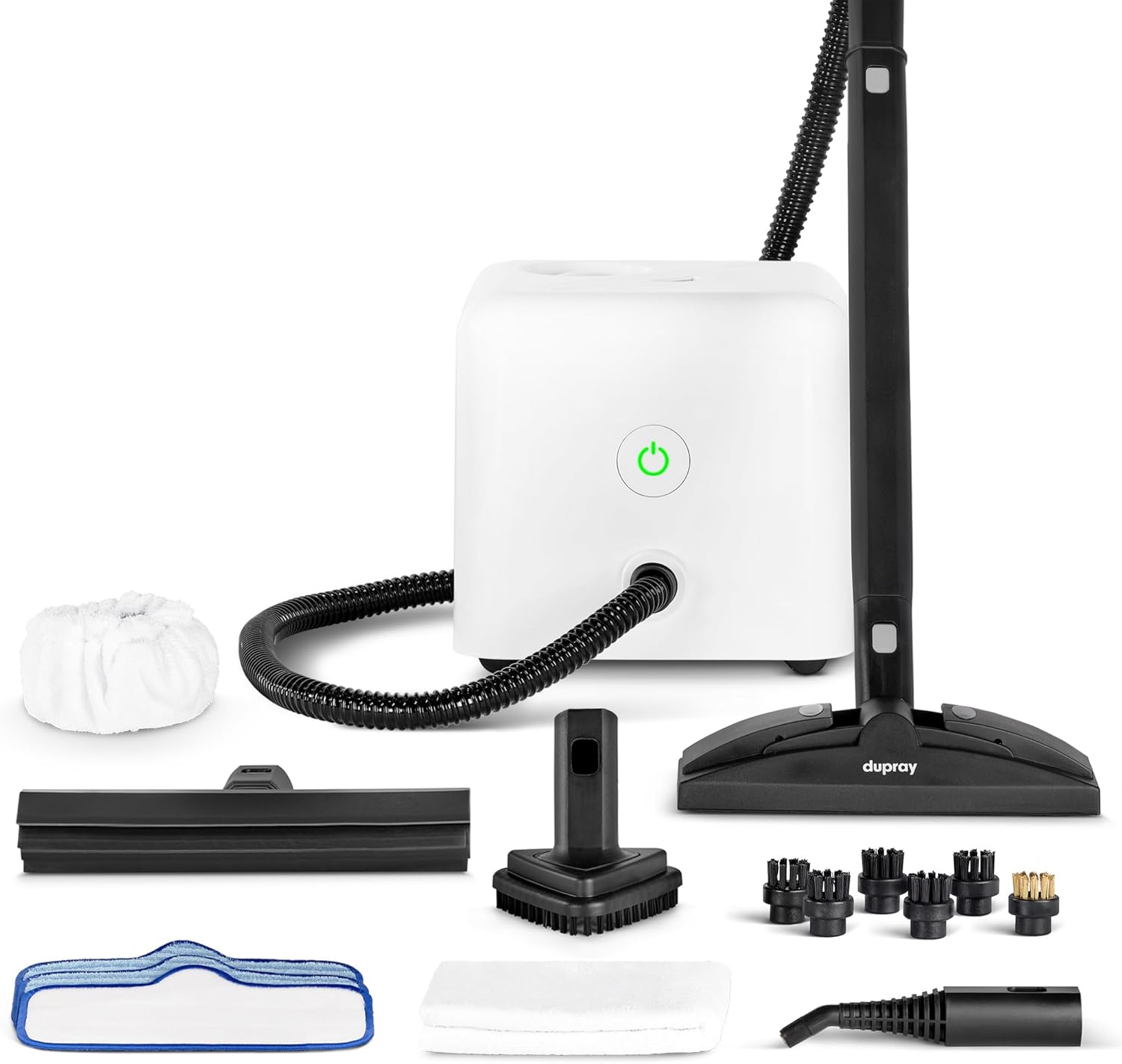
The Dupray Neat is a canister steam cleaner built for whole-home jobs with a focus on floors, grout, and hard surfaces. It heats to about 275°F and produces high-pressure steam that loosens grease and grime so you can scrub or mop it away with the included floor tool and microfiber pads. The long hose and extension tubes let you keep the unit stationary while you work, which helps when cleaning tile floors and baseboards or detailing a car interior. A 54 fl oz tank delivers up to roughly 50 minutes of continuous steam per fill, so you can clean a full room without refilling. The kit includes a wide selection of brushes and a window tool for grout, grout lines, and glass. Setup and heat-up are straightforward, though the eight minute warm-up is longer than quick steam mops. The unit is heavier than handheld steamers, so it is best used as a push-around canister rather than a lightweight daily mop. For tile and grout the Neat gives strong, chemical-free cleaning power with versatile attachments, but it is bulkier and takes longer to heat than slim, dedicated steam mops.
Best for: Buyers who prioritize cleaning performance and want a chemical-free steam cleaner for deep-cleaning tile, grout, and multiple house surfaces rather than a lightweight daily mop.
Less Ideal for: If you need a lightweight, fast-heating mop for quick daily touch-ups or small apartments, a slim steam mop or handheld steamer will be a better fit.
- High maximum steam temperature (275°F) for effective grease and grime removal
- Large 54 fl oz tank that provides long run time (about 50 minutes) per fill
- Comes with 17 accessories including floor tool, microfiber pads, and multiple brushes for grout and detail work
- Long hose and extension tubes let you clean floors, walls, and car interiors without moving the base unit
- Eight minute heat-up time is longer than compact steam mops
- Heavier canister design makes it less convenient for quick, everyday mopping
Verdict: For tile and grout cleaning where raw steam power and versatile attachments matter, the Dupray Neat delivers long run time and strong chemical-free cleaning performance.
LABIGO Steam Mop KS-7883
| Wattage | 1500 watts |
|---|---|
| Form Factor | Handheld |
| Heat Time | 10 seconds |
| Maximum Temperature | 248 °F |
| Tank Volume | 350 ml |
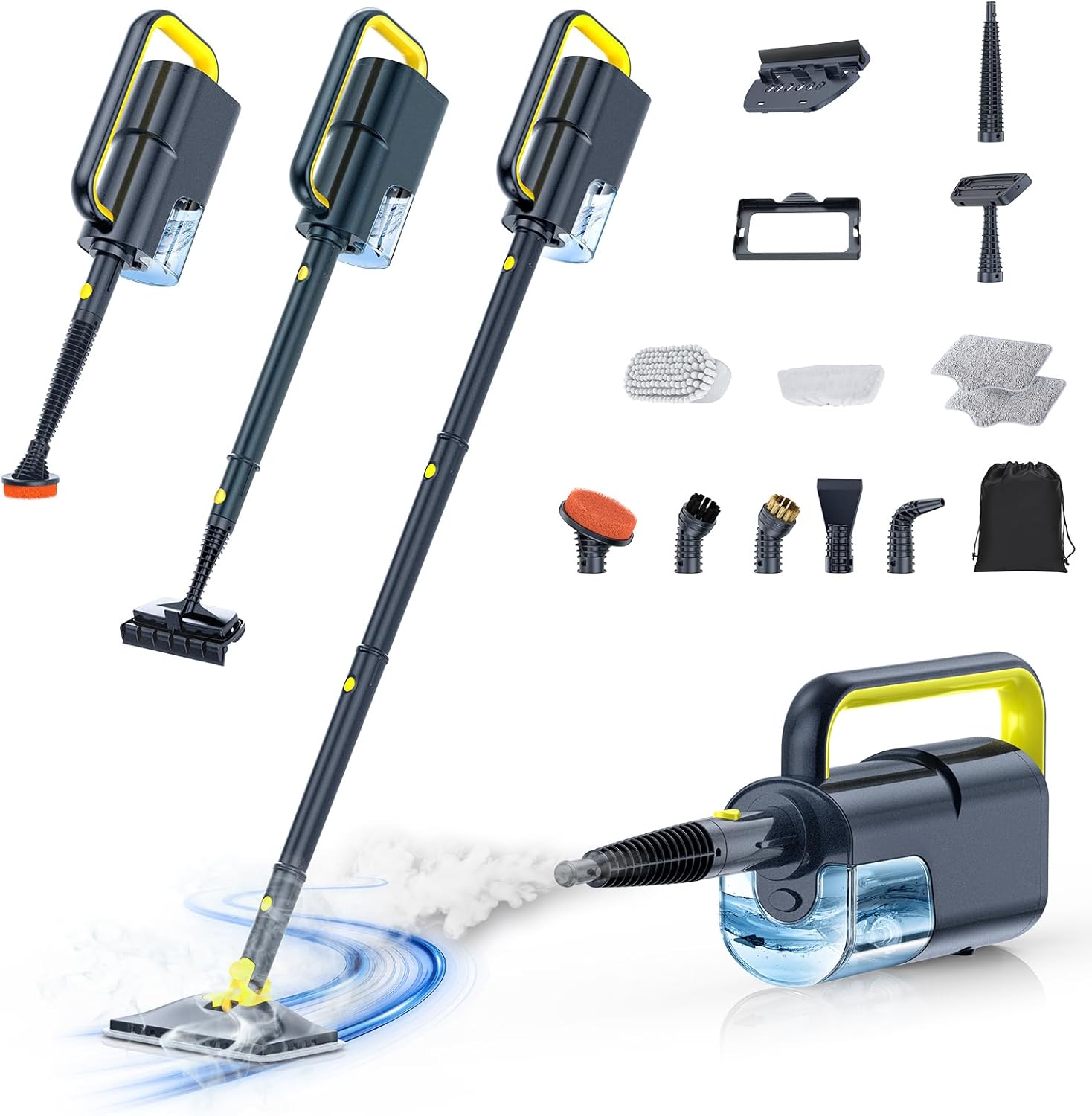
The LABIGO KS-7883 is a versatile steam mop that converts between a stick mop and a handheld steamer for cleaning tile, grout, carpets, windows, upholstery, and grills. It heats to about 248°F in roughly 10 seconds and offers two steam settings so you can choose gentler steam for sealed tile and grout or higher steam for greasy kitchen messes and grout lines. The 350 ml tank delivers roughly 12 to 15 minutes of continuous steam per fill, which is enough for medium rooms without constant refills. Included attachments such as a carpet glider, nylon and metal brushes, angled nozzles, squeegee, and microfiber pads make it practical for grout and detailed tile work. The unit is lightweight and has an auto shut-off safety beep when the tank runs dry, but the short continuous runtime and need to refill for larger jobs are real limits compared with full-size steam cleaners. Also avoid adding detergents, which the manufacturer warns can clog the nozzle. For tile and grout cleaning this model brings quick heat-up, focused steam control, and a useful set of tools for targeted scrubbing and sanitizing.
Best for: Buyers who want a compact, multi-purpose steam cleaner that tackles tile and grout with quick heat-up and a set of scrubbing attachments for targeted cleaning.
Less Ideal for: Homes with very large tile floors or professional cleaning needs that require long, uninterrupted runtime and larger water capacity.
- Very fast 10-second heat-up for near-instant steam cleaning
- Two steam levels for delicate surfaces or tougher grout and grease
- Detachable handheld unit and multiple attachments for precise grout, tile, and upholstery work
- Lightweight design with safety auto shut-off when the tank runs dry
- 350 ml tank gives only about 12–15 minutes per fill, requiring refills for larger areas
- Not intended for use with chemical cleaners because they can clog the nozzle
Verdict: A fast-heating, multi-attachment steam mop that delivers targeted grout and tile cleaning for medium-sized homes where quick, chemical-free steam cleaning is the priority.
NEWBULIG Steam Mop

| Wattage | 1555 watts |
|---|---|
| Form Factor | Handheld, Upright |
| Power Source | Corded Electric |
| Maximum Temperature | 212 °F |
The NEWBULIG Steam Mop is a budget-friendly, versatile steam cleaner that works as an upright mop and a detachable handheld steamer for spot cleaning. It heats to 212°F and produces continuous steam to lift dirt and sanitize hard floors, tile grout, and other surfaces, while the swivel head and adjustable height make it easy to maneuver around furniture and into corners. The unit includes washable microfiber pads, a carpet glider for light carpet refreshes, and a suite of 14 attachments for grout, windows, crevices, and more, so it covers a lot of tasks without extra purchases. Safety features include anti-dry protection and an auto shutoff when the tank is empty. Trade-offs are its corded operation and a modest tank that needs occasional refills during extended sessions, and at 1555 watts it performs well but does not replace heavy-duty commercial steamers. For tile and grout cleaning it offers targeted steam and accessory options that help loosen grime without harsh chemicals.
Best for: Tile and grout owners looking for an affordable, multipurpose steam cleaner that sanitizes and loosens grime without buying separate tools and who prioritize value over pro-grade performance.
Less Ideal for: People who need continuous heavy-duty steam for large commercial jobs or those who want a cordless, fully hands-free solution should consider higher-capacity or professional models instead.
- Detachable handheld steamer and upright mop in one for flexible use
- Rapid heat-up to 212°F for sanitizing and loosening dirt
- Includes 14 attachments plus washable microfiber pads for grout, windows, and crevices
- Swivel head and adjustable height improve reach and maneuverability
- Built-in anti-dry protection with auto shutoff for safety
- Corded design limits reach compared with cordless models
- Tank capacity requires refilling during longer cleaning sessions
Verdict: A cost-conscious, all-in-one steam mop that delivers effective steam cleaning for tile and grout with a helpful set of attachments.
Wotaste Steam Mop XR-01

| Maximum Temperature | 260 °F |
|---|---|
| Heat Time | 15 seconds |
| Wattage | 1000 watts |
| Capacity | 16.9 oz |
The Wotaste XR-01 is a compact steam mop designed for quick, chemical-free cleaning of tile, grout, hardwood, vinyl and countertops. It heats to about 260°F in roughly 15 seconds and delivers continuous steam from a 16.9 oz tank, so you can clean several rooms before refilling. The mop head rotates 135 degrees and tilts 90 degrees to reach corners and under low furniture, and the adjustable-height handle plus self-standing design make operation and storage easier. Included accessories — two washable pads, angled nozzle, detail brush and scraping tool — expand use for grout lines and small spots. At 1000 watts it produces strong steam that can loosen grease and many common stains without detergent, which is handy for households with kids or pets. Limitations are typical of handheld steamers: it is not a heavy-duty commercial machine and you will need to periodically refill the tank during long sessions, and delicate unfinished hardwood may still require caution. For tile and grout cleaning it offers practical steam power and useful accessories in a small, easy-to-store package.
Best for: Buyers who prioritize a reliable, fast-starting steam cleaner for regular home floor and grout maintenance and want a compact, easy-to-store tool that avoids chemical cleaners.
Less Ideal for: Those who need a commercial-grade or whole-house steam system for very large spaces or continuous professional use should consider larger-capacity machines.
- Heats to 260°F in about 15 seconds for fast spot and floor cleaning
- 16.9 oz water tank supports continuous steaming across multiple rooms
- 135° rotating mop head and 90° tilt reach corners and under furniture
- Includes washable pads and multiple accessories for grout and detail work
- Lightweight, adjustable-height design with self-standing storage
- Handheld form and tank size require refills for very large areas
- Not intended as a commercial heavy-duty steamer
Verdict: A fast-heating, compact steam mop that reliably tackles tile and grout cleaning at home without chemical cleaners.
BISSELL PowerFresh Steam Mop 1940A

| Wattage | 1500 watts |
|---|---|
| Heat Time | 30 seconds |
| Power Source | Corded Electric |
| Maximum Temperature | 212 °F |
| Tank Volume | 16 fluid ounces |
The BISSELL PowerFresh 1940A is an upright steam mop built for routine cleaning and tougher stuck-on spills on sealed hard floors and tile grout. It heats in about 30 seconds and offers three steam settings so you can dial back steam for light refreshes or increase it for grime and grout work, while the flip-down Easy Scrubber brush helps break up dried-on messes without extra tools. The XL removable 16-ounce tank and 23-foot cord let you cover larger rooms with fewer refills and outlet changes, and reusable microfiber pads handle everyday dirt while supporting the steam sanitizing claim. Practical limits include its corded design and modest tank capacity, which means occasional stops to refill on very large jobs, and like all steam mops it should only be used on sealed floors. For tile and grout cleaning it performs well when used with the scrubber and higher steam settings, giving a chemical-free sanitizing option for buyers who prioritize visible results and household germ reduction.
Best for: Buyers who want a proven steam mop that sanitizes sealed hard floors and removes grout grime with a scrubber, and who value visible cleaning performance backed by strong customer feedback.
Less Ideal for: People needing cordless, continuous large-area cleaning without refills or those with unsealed wood and sensitive floor surfaces should consider other options.
- Three steam settings let you adjust heat for light cleaning or tough stuck-on messes
- Flip-down Easy Scrubber brush targets dried-on grime and grout without extra attachments
- 16 oz removable water tank with 30-second heat-up minimizes downtime between uses
- 23-foot power cord provides extended reach across rooms without changing outlets
- Reusable microfiber mop pads are washable and suitable for repeated use
- Corded design and 16 oz tank require refills and limit uninterrupted cleaning on very large areas
- Safe for sealed hard floors only, so not suitable for unsealed wood or some delicate surfaces
Verdict: A dependable steam mop for tile and grout that combines adjustable steam and a built-in scrubber to sanitize and tackle stuck-on messes effectively.
Shark SteamSpot Steam Mop S2001

| Wattage | 1200 watts |
|---|---|
| Heat Time | 25 seconds |
| Form Factor | Stick |
| Tank Volume | 500 ml |
The Shark SteamSpot S2001 is a lightweight stick steam mop designed for sealed hard floors and grout cleaning that combines constant steam with a targeted Steam Blaster burst for stubborn spots. It heats in about 25 seconds and offers three steam modes—Light, Normal, and Deep—so you can dial back steam for quick touchups or use max output on stuck-on stains. The XL removable 500 ml tank reduces refill interruptions and the package includes a textured Dirt Grip pad plus a scrub pad that are machine washable. In use the Steam Blaster concentrates steam to loosen grime in grout lines and textured tile while the textured pads lift residue without chemicals, and Shark claims 99.9% removal of common household bacteria with just water. Trade-offs are typical for steam mops: it is intended for sealed floors only and requires some physical effort to move across very rough grout, and you may still need a brush for extreme buildup. For risk-averse buyers it delivers predictable, chemical-free sanitizing and convenient refills via the removable tank.
Best for: Buyers who want a straightforward, chemical-free steam mop that reliably sanitizes and removes everyday stuck-on messes from sealed tile and grout with minimal fuss.
Less Ideal for: Those needing a heavy-duty grout restoration tool or a device for unsealed floors should consider purpose-built grout cleaners or non-steam options instead.
- Targeted Steam Blaster burst for loosening stubborn spots
- Three steam modes for controlled cleaning intensity
- XL removable 500 ml tank reduces the need for frequent refills
- Includes machine washable Dirt Grip and scrub pads
- Only safe for sealed hard floors and not suitable for unsealed surfaces
- May require extra scrubbing for very deep grout buildup
Verdict: A reliable, easy-to-use steam mop for sealed tile and grout that delivers targeted steam power and longer run time through an XL removable tank.
Choosing the Right Steam Mop for Tile Floors and Grout: Key Factors to Consider
Steam Control and Variable Settings
Tile and grout cleaning benefits from precise steam control because different tile materials and grout types tolerate heat and moisture differently. Variable steam settings let you dial down output on delicate glazed tiles to avoid damage while using higher output to tackle porous grout and stubborn stains.
Consistent steam delivery matters more than peak temperature alone. Units with poor steam regulation can alternate between weak steam and short bursts that do not effectively loosen grime. Look for models that offer multiple settings or continuous adjustment and responsive valves that maintain steady output during use.
Grout Access and Specialized Attachments
Grout lines are narrow and often recessed, so a flat mop head alone may not reach soil packed deep in the joints. Attachments such as narrow scrub brushes, grout-cleaning nozzles, or concentrate steam wands make it easier to agitate and penetrate grout.
Consider whether the steam mop includes a triangular or narrow head option and whether it has small brushes or concentrated steam tips. These features let you target grime without excessive scrubbing and reduce the need for separate handheld tools.
Pad Design, Material, and Changeability
Pad material affects how well the mop picks up loosened soil and protects tile surfaces. Microfiber pads are common because they absorb dirt and distribute steam evenly, but heavier or layered designs may trap more grit for grout cleaning. Removable, machine-washable pads reduce long-term costs and keep performance consistent.
Pay attention to how the pad attaches and whether replacement pads are reusable rather than disposable. Pads that trap abrasive particles against the tile can scratch finishes, so designs that hold debris away from contact points are preferable.
Maneuverability, Weight, and Head Articulation
Tile rooms often include tight corners, grout transitions, and furniture legs. A mop that is easy to steer and has a swivel head will let you clean along grout lines and around obstacles without excessive effort. Lightweight units reduce fatigue during larger jobs, while a stable handle and balanced weight distribution make controlled passes more effective.
Also consider cord length or cordless runtime if you need to cover large areas without frequent battery swaps or outlet changes. A mop that is hard to steer or too heavy will discourage frequent use and reduce overall cleaning effectiveness.
Tank Capacity, Heat-Up Time, and Runtime
Water reservoir size determines how much continuous steaming you can do before refilling. For larger tiled areas, a bigger tank reduces interruptions, but it can add to the unit weight. Short heat-up times are convenient because they let you start cleaning quickly, whereas long waits reduce practicality for quick touch-ups.
Runtime should align with typical room sizes in your home. If a mop has a small tank but quick refill and short heat-up cycles, it can still work well. Consider your cleaning patterns and whether you prefer longer uninterrupted sessions or short, frequent bursts.
Maintenance and Durable Construction
Routine maintenance affects long-term performance. Models with removable, easy-to-clean water tanks, simple descaling access, and machine-washable pads will stay effective longer. Materials that resist corrosion and wear extend service life, especially where hard water could cause mineral buildup.
Check how easy it is to replace wear items like brushes and pads, and whether the unit design exposes moving parts to dust and grit. A mop that is difficult to maintain will lose steam pressure and cleaning power over time.
Preparing Tile and Grout Before Steaming
Preparing the floor helps the steam mop work more effectively and prevents redistributing loose dirt. Start by sweeping or vacuuming to remove loose debris and larger particles that could become abrasive during steaming.
Spot-treat heavily soiled grout areas first with a gentle scrub to remove surface buildup. Allow the floor to dry if you used a wet cleaning step; then follow the steam mop manufacturer guidelines on surface temperature and waiting times before steaming to avoid trapping excess moisture.
- Remove grit and small stones to avoid scratching pads and tile.
- Work from the far corner of the room toward the exit to avoid walking over cleaned areas.
- Test a small, inconspicuous area first to confirm tile and grout tolerate the chosen steam setting.
Techniques for Getting Grout Lines Clean
For best results, use concentrated steam along grout lines rather than broad passes. Move slowly to give the steam time to penetrate and loosen trapped soil. When your steam mop has a narrow attachment or brush, apply a focused pass and then follow with a microfiber pad to lift the loosened residue.
Avoid excessive overlap or repeated steaming in one spot, which can over-saturate grout and prolong drying times. After steaming, use a dry microfiber pad or a small towel to absorb residual moisture and carry away dislodged particles.
- Use a back-and-forth motion along the grout line for better agitation.
- Pair steam with a scrubbing brush for stubborn stains, using the steam to soften and the brush to agitate.
- Dry grout promptly to reduce the chance of discoloration or mildew growth.
Dealing with Sealed Versus Unsealed Grout
Sealed grout resists staining and repels moisture better than unsealed grout, but steam can still lift surface dirt. For sealed grout, use lower steam settings and shorter passes to maintain the sealant. Avoid prolonged exposure that could degrade some sealers over time.
Unsealed grout will accept more moisture and can darken when wet. Use moderate steam settings and take care to dry grout thoroughly after cleaning to prevent moisture-related issues. If grout is very porous or fragile, minimal steaming combined with light mechanical scrubbing is often safer.
- Check grout condition before regular steaming and reseal grout as part of periodic maintenance if needed.
- Reduce steam intensity on newly grouted or recently sealed floors until the sealant fully cures.
Water Quality and Descaling Considerations
Hard water can leave mineral deposits inside the steam system that reduce performance. When mineral buildup occurs, steam output drops and distribution becomes uneven, which hampers grout cleaning. Using filtered or distilled water where practical extends time between cleanings and prolongs steam consistency.
Follow the unit maintenance instructions for descaling intervals and methods. Regularly empty and dry the tank after use to minimize stagnant water and minerals. For areas with high mineral content, plan more frequent descaling to maintain consistent steam pressure and temperature.
- Consider using distilled water if your tap water is hard to reduce scale.
- Empty the tank after each session when possible and store the unit dry to prevent odors and buildup.
Safety Tips and Surface Protection
Steam mops deliver high-temperature vapor that can cause burns or damage sensitive surfaces if misused. Keep children and pets away during operation and wear protective gloves if you need to work close to the steam output. Avoid directing steam at grout that is crumbling or loose because steam can further dislodge failing material.
Protect nearby baseboards and wood trim by keeping the mop head moving and avoiding prolonged steaming near vulnerable materials. Use caution on decorative or aged tiles that may have fragile finishes and consider a lower heat setting or alternative cleaning method for those surfaces.
- Do not use steam on floors with known moisture-sensitive materials adjacent to grout without testing.
- Allow floors to dry before walking to avoid slips and track marks.
How We Chose the Best Steam Mop for Tile Floors and Grout
We selected steam mops that demonstrate concrete performance for tile floors and grout rather than general-purpose models. Our editorial filters prioritized models with precise steam control, attachments or pad designs suited for grout lines, and stable water-to-steam delivery for consistent cleaning. We also considered durability of construction, ease of maintenance, and how manageable the unit is during routine cleaning sessions. Evaluation criteria included steam temperature and adjustable output, presence and type of grout-focused tools or narrow pad options, pad materials and changeability, reservoir capacity versus runtime, and how easy the mop is to maneuver and store. We excluded units without verifiable steam control or those relying solely on single-use pads that increase waste. We also screened out handheld-only steam units that lack a dedicated floor cleaning path. The final shortlist balances steaming power, grout access, and everyday usability to reflect real home cleaning needs.
Our full evaluation process is outlined in our review methodology.
FAQ
Can I use a steam mop on all types of tile?
It depends. Porcelain and glazed ceramic tiles usually tolerate steam well at moderate settings. Natural stone tiles and some older or fragile finishes may be sensitive to heat and moisture. Test a small area and use lower steam settings for delicate surfaces.
How often should I steam my tile floors and grout?
Frequency depends on foot traffic and soil levels. For busy households, a weekly steam pass keeps grout looking fresher, while lower-traffic areas can be steamed less often. Avoid oversteaming which can increase drying time and moisture exposure in grout.
Will steaming whiten discolored grout?
Steaming can remove surface dirt and lighten some discoloration, but deep staining or ingrained color changes may not fully come out. For persistent stains, targeted scrubbing or a grout refresher product may be necessary after steam loosening.
Is distilled water necessary for a steam mop?
Distilled water reduces mineral scale and prolongs consistent steam performance, especially in areas with hard tap water. It is helpful but not always required; follow the manufacturer maintenance recommendations if you use regular tap water.
Can steam mops damage grout or tile?
Steam can damage fragile grout or weaken poorly bonded grout if applied aggressively. Use appropriate steam settings, avoid prolonged steaming in one area, and ensure grout is in good condition before starting regular steam cleaning.
Final Verdict
For tile floors and grout, prioritize a steam mop that balances adjustable steam output with attachments or narrow heads that can reach grout lines. Consider pad design, maneuverability, and reservoir size relative to the rooms you clean most often. Weigh the tradeoffs between larger tanks and added weight, and plan for routine maintenance like descaling and pad care to preserve performance. Choose a model that fits your floor type and cleaning habits so you get effective grout cleaning without risking surface damage.