
Note: This article contains affiliate links. If you click on these links and make a purchase, we may earn a small commission at no extra cost to you. This helps support our research and content. Read our full affiliate disclosure here.
If you have timber floors, choosing the right steam mop matters because too much heat or moisture can dull finishes and warp boards. You need a model that delivers controlled steam, even heat distribution, and a soft cleaning pad to lift soils without abrading the wood. This guide focuses on the top steam mops suited for timber floors and explains the features that keep wood looking its best. Below are our shortlisted top picks. We evaluated models for steam control, floor safety, and real-world usability to help you find an option that fits how you clean and care for your timber floors.
Top Picks at a Glance
| Best Overall The best all-around choice for most situations | Shark Steam & Scrub S8001 |  |
| Best Quality Built to a higher standard if you want something more solid | Tineco Floor One S6 Stretch Steam |  |
| Best Value The sweet spot between price and what you get | Shark Steam Mop S1000 |  |
| Best Budget The cheapest option that still gets the job done reliably | NEWBULIG Steam Mop |  |
| Top Rated A top-rated pick with lots of positive feedback | Wotaste Steam Mop XR-01 |  |
| Most Popular A crowd favorite that many people choose with confidence | BISSELL PowerFresh Steam Mop 1940A |  |
| Best Seller A high-volume bestseller chosen again and again | LABIGO 10-in-1 Steam Mop KS-7883 |  |
Shark Steam & Scrub S8001

| Wattage | 1120 watts |
|---|---|
| Power Source | ac_dc |
| Voltage | 120 |
| Tank Volume | 11.83 fluid ounces |
| Form Factor | Stick |
The Shark Steam & Scrub S8001 combines steam cleaning with automatic rotating pads to remove stuck-on stains on sealed hard floors. It offers three steam modes—Light, Normal, and Deep—so you can switch from quick touch-ups to heavy-duty cleaning, and LED headlights help reveal dust along baseboards. The mop's rotating Dirt Grip soft scrub pads deliver over 150 scrubs per minute, which reduces manual effort and makes it easy to lift greasy residue and dried spills. An XL water tank lets you clean longer between fills, and the stick form factor with swivel steering makes it maneuverable around furniture. Because it relies on steam, it sanitizes without chemicals when used according to the instructions, but it is intended only for sealed hard floors and requires you to follow sanitization directions carefully. The unit is moderately heavy for a stick mop and needs access to an outlet during use, so it is best for regular whole-room cleaning rather than tiny quick jobs where a cordless option might be preferred.
Best for: Buyers who want a powerful, chemical-free floor cleaner that lifts stuck-on stains and sanitizes sealed timber and other hard floors during regular whole-room cleaning sessions.
Less Ideal for: Avoid this if you need a lightweight cordless spot cleaner or if your floors are unsealed, delicate, or explicitly not rated for steam exposure.
- Automatic rotating pads deliver strong scrubbing power with minimal user effort
- Three steam modes let you match steam output to soil level
- LED headlights reveal hidden debris in corners and along edges
- XL water tank reduces frequency of refills during larger cleaning sessions
- Intended only for sealed hard floors so not suitable for unsealed wood or some specialty flooring
- Corded design requires an outlet and limits runtime around large spaces
Verdict: If you want a motorized steam mop that scrubs as it steams for better stuck-on stain removal on sealed timber floors, the Shark Steam & Scrub S8001 is a strong choice.
Tineco Floor One S6 Stretch Steam

| Power Source | Corded Electric |
|---|---|
| Maximum Temperature | 320 °F |
| Tank Volume | 0.72 liters |
| Capacity | 1 liters |
| Heat Time | 1 minutes |
The Tineco Floor One S6 Stretch Steam is a corded upright cleaner that sprays high-temp steam while simultaneously vacuuming and scrubbing hard floors. It uses BoostSteam technology to heat steam up to 320°F and an active water/dirty-tank system so you mop and extract in a single pass, which is useful for kitchens and sealed timber floors that need both sanitizing and soil removal. The unit includes a DualBlock anti-tangle brush and a lay-flat design that reaches under low furniture, plus an LED headlight for spotting dirt. One-touch self-cleaning simplifies maintenance and larger tanks reduce interruptions during longer sessions. Because it is corded with a long reach and rapid initial heat-up (about 60 seconds), it delivers consistently strong steam and suction without runtime limits of battery models. Expect the unit to be bulkier than a slim steam mop and to require access to a plug and occasional emptying of tanks, but for serious floor maintenance it combines steam power and wet-dry extraction in a single tool.
Best for: Buyers who prioritize cleaning performance and want a single machine that both steams and extracts stubborn soil from sealed timber and hard floors for deep, frequent maintenance.
Less Ideal for: Those seeking the lightest, most portable steam mop for quick touch-ups or users who need cordless operation for long unplugged cleaning sessions.
- High-temperature BoostSteam up to 320°F for strong steam cleaning and sanitizing.
- Combined steam, scrubbing and suction lets you clean and extract in one pass on sealed timber and hard floors.
- DualBlock anti-tangle brush handles hair and pet fur without frequent snags.
- 180° lay-flat design and LED headlight improve reach and visibility under low furniture.
- One-touch self-cleaning and larger water tanks reduce downtime and maintenance.
- Corded design requires a nearby outlet and is less maneuverable than cordless models.
- Larger upright form is bulkier than a simple handheld or slim steam mop.
Verdict: If you want powerful steam sanitizing plus vacuum extraction in one tool for serious timber-floor cleaning, this Tineco unit delivers consistent, high-temperature performance.
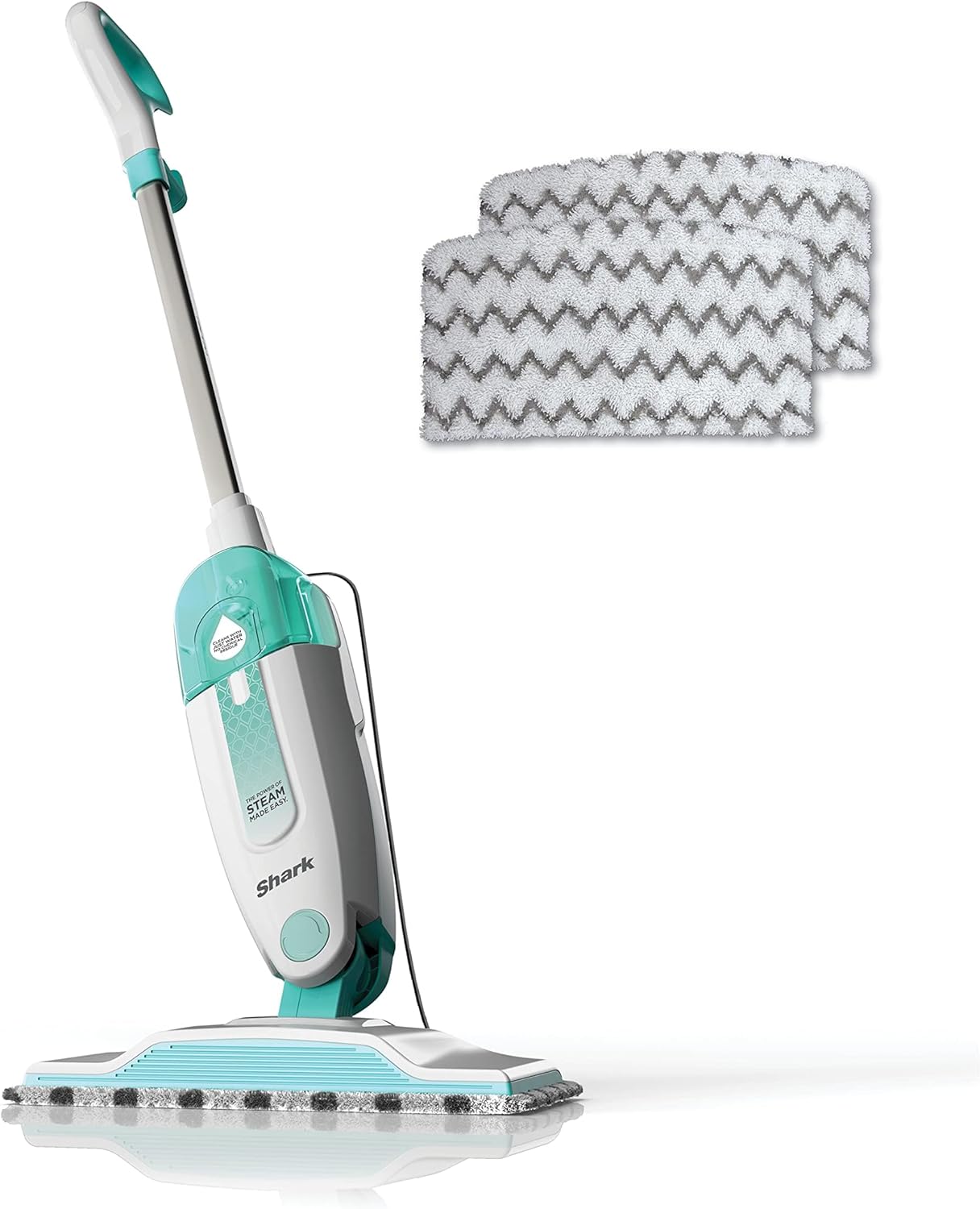
Shark Steam Mop S1000
| Wattage | 1050 watts |
|---|---|
| Heat Time | 30 seconds |
| Power Source | Electric |
| Tank Volume | 12.68 fluid ounces |
The Shark S1000 is a straightforward steam mop for sealed hard floors that heats up in about 30 seconds and uses only water to loosen dirt and sanitize surfaces. It is used like a typical upright steam mop: fill the removable 12.68 oz tank, wait for steam, then glide across timber or other sealed flooring with the swivel head and washable Dirt Grip microfiber pads for light scrubbing and absorption. Notable features include a very light 4.6 lb design for easy carrying between rooms, quick heat time for short cleanups, and machine-washable pads that extend reusable life. Practical benefits for timber floors include chemical-free cleaning and gentle steam that removes grime without leaving residue when used on properly sealed wood. Limitations are the small tank which requires refilling during larger jobs and the corded power, which restricts reach compared with cordless options; it also is not intended for unsealed or water-sensitive wood. For routine maintenance and quick refreshes on sealed timber, the S1000 delivers effective, low-effort cleaning in a compact package.
Best for: Buyers who want a no-fuss, lightweight steam mop for regular maintenance cleaning of sealed timber floors and value fast heat-up and easy storage.
Less Ideal for: Homes with large floor areas where long continuous cleaning is needed without interruption or for owners of unsealed or water-sensitive wood floors.
- Heats in about 30 seconds for fast, on-demand steam cleaning
- Lightweight at under 5 pounds for easy carrying and storage
- Removable water tank simplifies refills during cleaning
- Machine-washable Dirt Grip microfiber pads provide absorption and scrubbing power
- Swivel steering improves maneuverability around furniture
- Small 12.68 fl oz tank means more frequent refills for larger areas
- Corded design limits reach compared with cordless alternatives
Verdict: Choose the Shark S1000 if you want a lightweight, quick-heating steam mop for chemical-free maintenance cleaning on sealed timber floors.
NEWBULIG Steam Mop

| Wattage | 1555 watts |
|---|---|
| Power Source | Corded Electric |
| Voltage | 120 volts |
| Maximum Temperature | 212 °F |
The NEWBULIG Steam Mop is a versatile corded steam cleaner that heats to 212°F and converts between an upright mop and a detachable handheld steamer for spot jobs. It is typically used on hardwood, tile, laminate and grout with washable microfiber pads and a carpet glider for light refreshes; the swivel head and adjustable height make it easy to reach baseboards and under furniture. The 16.4 foot power cord and 14 included attachments expand its usefulness to windows, grout lines and small crevices without needing separate tools. Practical benefits include rapid heat-up, an anti-dry safety feature that stops heating when the tank is empty, and a lightweight design that reduces bending and fatigue during longer sessions. Important limitations are that steam cleaners require cautious use on unfinished or sensitive timber and you may need to refill the tank for larger spaces; like most steam mops it is best for maintenance cleaning rather than heavy stripping or restoration of floors.
Best for: Buyers who need an affordable, all-in-one steam cleaner for regular maintenance of sealed timber floors and occasional above-floor tasks and value versatility over a single-purpose mop.
Less Ideal for: People seeking a commercial-grade floor renovator or those who need intensive floor stripping and drying solutions should consider purpose-built machines instead.
- Detachable handheld unit and 14 attachments for multi-surface cleaning
- Rapid heat-up to 212°F for effective steam cleaning
- Swivel head and adjustable height for easier reach and maneuvering
- Anti-dry protection that auto-shuts the heater to prevent burn damage
- Steam may be unsuitable for unfinished or water-sensitive timber without caution
- Tank capacity requires periodic refills during larger cleaning jobs
Verdict: A budget-friendly, multi-attachment steam mop that delivers practical steam cleaning for sealed timber floors and spot cleaning around the home.
Wotaste Steam Mop XR-01

| Maximum Temperature | 260 °F |
|---|---|
| Heat Time | 15 seconds |
| Wattage | 1000 watts |
| Capacity | 16.9 oz |
The Wotaste XR-01 is a compact steam mop built for quick, chemical-free floor cleaning around the home. It reaches a reported 260°F in about 15 seconds and uses pressurized steam from a 16.9 oz tank to loosen grease and set-in stains, which makes it useful for short, targeted cleaning sessions and spot treatments on hardwood and tile. The mop includes two washable pads and several small accessories for grout, corners, and detail work, and its 135° rotating head and 90° tilt help reach under furniture and into tight spaces. Lightweight construction, adjustable height, and a self-standing design make it easy to store and maneuver for regular upkeep. Important limitations are typical for handheld steamers: the water tank will need refilling for larger jobs, and steam cleaning requires caution on some finished hardwoods—follow your floor manufacturer's guidance to avoid damage. This model is best for routine maintenance and quick deep-clean bursts rather than whole-house heavy-duty steaming sessions.
Best for: Buyers who prioritize dependable, fast-starting steam cleaning for regular maintenance of timber and hard floors and who want a simple, easy-to-store tool for spot deep cleaning.
Less Ideal for: Homes that require long continuous steaming for very large areas or professional heavy-duty restoration work should consider larger-capacity commercial steamers instead.
- Heats up very quickly (about 15 seconds) so you can start cleaning fast
- High steam temperature (260°F) for more effective stain and grease removal
- Includes washable mop pads and multiple accessories for grout and detail cleaning
- 135° rotating head and 90° tilt improve reach under furniture and into corners
- Self-standing, lightweight, and adjustable height for easy storage and handling
- 16.9 oz water tank limits continuous runtime for very large rooms
- Handheld/compact form is geared toward spot and routine cleaning rather than long whole-floor sessions
Verdict: A fast-heating, compact steam mop that delivers reliable, chemical-free spot and routine cleaning for timber and other hard floors.
BISSELL PowerFresh Steam Mop 1940A

| Wattage | 1500 watts |
|---|---|
| Heat Time | 30 seconds |
| Power Source | Corded Electric |
| Maximum Temperature | 212 °F |
| Tank Volume | 16 fluid ounces |
The Bissell PowerFresh 1940A is an upright steam mop built to refresh and sanitize sealed hard floors such as finished timber, tile, and stone. It heats in about 30 seconds and offers three steam settings so you can dial back output for delicate sealed wood or increase it for stubborn grout and stuck-on spills, while the flip-down Easy Scrubber breaks up dried messes without extra elbow grease. An XL removable 16-ounce tank and a 23-foot power cord let you cover more floor between refills and outlets, and microfiber pads are reusable for routine cleaning. The mop is corded only and reaches boiling temperature for steam sanitization, which the manufacturer says eliminates 99.9% of common household germs when used with the pads. Practical limits include the need to pre-vacuum larger debris and the ongoing task of refilling and drying pads after use; it also must be used only on sealed timber floors as recommended. For owners wanting a simple, proven steam mop that balances sanitize power with a gentle low-steam option for finished wood, the PowerFresh is a solid choice.
Best for: Buyers who prioritize proven performance and social proof for a steam mop that sanitizes sealed hardwood while offering adjustable steam control for safer, regular use.
Less Ideal for: Those who need a cordless or lightweight travel-friendly steamer or who want a device for unsealed or heavily damaged wood floors.
- Three steam settings let you adjust output for delicate sealed timber or tougher spills
- Flip-down Easy Scrubber helps remove dried-on grime and grout buildup
- Large removable 16 oz water tank and 23-foot cord reduce frequent refills and outlet changes
- Reusable microfiber pads clean without chemicals and support steam sanitization
- Corded design limits mobility compared with cordless options
- Requires pre-cleaning of loose debris and regular pad washing to avoid streaking
Verdict: Choose the PowerFresh 1940A if you want a reliable, adjustable steam mop that sanitizes sealed timber floors and tackles stuck-on messes with a built-in scrubber.
LABIGO 10-in-1 Steam Mop KS-7883

| Wattage | 1200 watts |
|---|---|
| Heat Time | 10 seconds |
| Maximum Temperature | 248 °F |
| Tank Volume | 350 ml |
| Power Source | Corded Electric |
The LABIGO 10-in-1 Steam Mop is a hybrid floor steamer and handheld cleaner designed for routine home cleaning across hard floors, carpets and upholstery. It heats up in about 10 seconds and delivers steam up to 248°F, with two steam settings so you can use gentler steam on finished timber or higher steam for grout and grills. The 350 ml tank provides roughly 12 to 15 minutes of continuous run time per fill, and the unit converts to a handheld pod for spot jobs like windows, car interiors or stove tops. Included accessories such as a carpet glider, microfiber pads, brushes and a squeegee broaden its use without needing extra purchases. Practical safety features include an auto shut-off and an audible warning when the tank runs dry. Limitations to note for timber floors: high-temperature steam and excess moisture can affect some sealed wood finishes, so use the lower steam setting, move the mop steadily, and test an inconspicuous area first; runtime also means refills during longer jobs.
Best for: Buyers who prioritize a versatile, ready-to-use steam cleaner for weekly maintenance and spot cleaning on mixed surfaces, and who prefer a product with built-in safety features.
Less Ideal for: Households that need continuous, whole-house mopping without interruptions or owners of delicate, unfinished timber floors that cannot tolerate steam cleaning.
- Quick 10-second heat-up for nearly instant use
- Two steam levels let you choose gentler or stronger steam
- Detachable handheld pod and many accessories increase versatility
- 350 ml tank gives about 12–15 minutes of continuous cleaning per fill
- Auto shut-off and low-water audible warning improve safety
- Relatively short runtime per fill may require refilling for large rooms
- High steam temperature could be too aggressive on some timber finishes if not used carefully
Verdict: A versatile, fast-heating steam mop that gives risk-averse buyers a safe, multi-surface option for routine cleaning when used on timber with the low steam setting.
Choosing the Right Steam Mop for Timber Floors: Key Factors to Consider
Steam Control and Variable Output
Timber floors require precise steam delivery because finishes and plank stability vary widely. A mop with multiple steam settings or a trigger-style control lets you use minimal moisture on sensitive finishes while increasing output for stubborn grime. Consistent low-output steam reduces the risk of cupping, warping, or finish dulling.
Look for steam controls that are easy to adjust while cleaning so you can respond to different floor conditions without stopping the job. Instant on/off control and clearly marked settings help you avoid accidentally blasting a delicate area with excessive steam.
Pad Type and Surface Softness
The cleaning pad is the interface between the steam and your timber finish, so material and construction matter. Microfiber pads are common because they trap dirt while being gentle on finishes. Some mops include terry or padded layers to further cushion the contact area and reduce abrasion.
Also consider how the pad attaches and whether replacement pads are available. A secure but gentle attachment prevents fibers or seams from snagging in board gaps, and washable pads support ongoing maintenance without leaving residues that could dull the floor over time.
Moisture Control and Drying Behavior
Effective timber-floor steam cleaning is as much about minimizing residual moisture as it is about heat. A good steam mop should deliver short, controlled bursts or a low continuous output that evaporates quickly rather than soaking the wood. Fast heat-up and evenly distributed steam help reduce wet spots that can seep into seams.
Consider the mop head design and how it channels steam. Wide, flat heads that spread steam across a larger surface area help thin the moisture layer for faster drying. Also think about room ventilation and how long the floor typically needs to dry after cleaning; models with variable output help you tailor drying times to your environment.
Weight, Shape, and Maneuverability
You will be pushing and steering the mop across rooms, around furniture, and along baseboards, so weight and head flexibility affect both comfort and control. Lighter systems reduce fatigue and the chance of accidentally pressing too hard on boards. A swivel head or articulated joint helps you reach tight corners without dragging the body of the mop across the floor.
Ergonomic handle height and reachable steam controls matter for longer cleaning sessions. Also consider the length and management of the power cord or whether a cordless design fits your home, since stopping to reposition cables can lead to uneven cleaning patterns.
Tank Size, Refill Frequency, and Runtime
Tank capacity impacts how often you need to pause and refill during a cleaning session. For medium to large rooms, a larger tank or quick refill access reduces interruptions. At the same time, very large tanks add weight and can make the unit harder to maneuver when full.
Balance capacity against your typical cleaning area. Check how the manufacturer suggests runtime at low and high steam settings so you know whether a single fill will cover the room sizes in your home. Quick-fill designs and wide openings that accept filtered or demineralized water make maintenance easier and cut down on downtime.
Build Quality and Maintenance Needs
Durable construction and easy maintenance lengthen the useful life of a steam mop and help protect timber floors. Metal or reinforced plastic components in stress points reduce wear. Removable and machine-washable pads simplify cleaning and prevent abrasive debris from building up on the pad surface.
Also check whether the unit has accessible descaling or filter elements. Hard water can leave mineral deposits that affect steam delivery and leave residues on floors, so simple maintenance procedures are important for long-term performance on timber.
Preparing Timber Floors Before Steam Cleaning
Always sweep or vacuum timber floors to remove grit and loose debris before using steam. Particles trapped under a pad can act like sandpaper and scratch the finish when you move the mop across boards.
Check for cracked or unfinished areas, gaps between planks, and failing sealant. Steam should not be used on unsealed or badly damaged timber because moisture can penetrate and cause swelling or staining.
Test a small, inconspicuous area with the mop on the lowest steam setting to confirm the finish reacts well. Wait for the test patch to dry fully before evaluating any change in sheen or color.
- Sweep with a soft-bristle broom or use a vacuum attachment safe for hard floors
- Inspect and spot-repair loose boards or broken finish before steaming
- Keep nearby windows or doors open briefly to speed drying if safe to do so
Best Practices for Using a Steam Mop on Timber
Move the mop slowly and evenly to allow short bursts of steam to lift soil while letting moisture evaporate. Avoid lingering in one spot to prevent over-wetting.
Use the lowest effective steam setting and operate in passes with overlapping strokes rather than long repeated passes over the same area. If you encounter sticky spots, apply a bit more steam briefly and then dry the area with a soft cloth if needed.
Change or wash pads frequently during a cleaning session if they become heavily soiled. Dirty pads can redeposit grime and create micro-abrasions on the finish.
- Operate on low steam for routine cleaning and raise output only for stubborn dirt
- Follow with a dry microfiber cloth for any areas that seem damp afterward
- Avoid steam on unfinished, worn, or hollow-sounding boards
Water Quality and Descaling for Consistent Performance
Hard water can leave mineral deposits in steam systems and on floor surfaces. If your home's water is mineral-rich, use distilled or demineralized water where recommended to reduce spotting and scale buildup.
Regular descaling and following the manufacturer maintenance steps extend the life of steam components. Units with simple-access reservoirs and clear descaling instructions require less time to maintain and help sustain consistent low-temperature steam delivery.
- Check local water hardness and consider filtered or distilled water for sensitive finishes
- Perform descaling at manufacturer-recommended intervals to avoid reduced steam flow
- Rinse and dry removable water tanks between uses to inhibit deposits
When Not to Use a Steam Mop on Timber Floors
Avoid steam cleaning on solid timber that is unfinished, poorly sealed, or excessively worn. Steam can penetrate gaps and settle under the finish, causing expansion and long-term damage.
Do not use steam on wood floors that have permanent water damage or structural problems until they are repaired and properly sealed. In those cases, traditional dry cleaning or targeted repairs are safer options.
Refrain from steam cleaning if the room has limited ventilation and humidity is already high, since slow drying increases the risk of moisture absorption into the boards.
- Skip steam on newly sanded or freshly finished floors until they are fully cured
- Avoid steam after floor repairs until surface sealants have hardened
- Choose an alternative cleaning method if boards have loose or missing finish
Routine Care After Steaming
After steaming, allow floors to dry fully and inspect for streaks or residue. Wipe any remaining damp spots with a dry microfiber cloth to restore sheen and remove loosened soils.
Rotate and launder pads regularly to maintain cleaning power and prevent redeposition. Store the mop in a dry area and empty the tank when not in use for extended periods.
Schedule periodic deep cleanings that do not rely on steam alone, such as a professional maintenance cycle or a gentle low-moisture cleanser recommended for your finish type.
- Dry-press problem areas immediately after steaming to avoid water absorption
- Wash pads inside out to remove trapped debris more effectively
- Keep a maintenance log if you treat large areas frequently to note any finish changes
How We Chose the Best Steam Mop for Timber Floors
Our selection process prioritized specs and design details that directly affect timber-floor safety and cleaning effectiveness. We focused on steam control systems that allow low and variable output, because timber finishes and wood types vary in moisture tolerance. Water tank capacity and heat-up time were weighed for realistic cleaning sessions versus frequent refills. Mop head materials and attachment systems were assessed for gentleness and coverage to avoid scratching or leaving residues. Ergonomics and weight matter for maneuvering across rooms without stressing joints or dragging the mop across boards. We also considered filtration or water-treatment features that reduce mineral spotting and residue on finished wood. We excluded steam mop designs that only offer high, single-stage steam output or lack a low-heat setting, since those present an unacceptable risk to many timber finishes. We also excluded units intended solely for heavy-duty tile or industrial use that lack soft-pad accessories. Final selections represent a balance of adjustable steam control, soft cleaning surfaces, appropriate heat and moisture management, and user-focused features that make regular timber-floor maintenance practical.
Our full evaluation process is outlined in our review methodology.
FAQ
Can you use any steam mop on timber floors?
Not all steam mops are appropriate. Look for models with adjustable low-heat settings and soft, nonabrasive pads. Avoid single-setting high-output industrial mops that can over-wet or overheat timber finishes.
How often should I steam my timber floors?
Frequency depends on foot traffic and finish durability. For regular maintenance, light steaming every 1 to 4 weeks often suffices. High-traffic areas may need more frequent care, while delicate finishes should be steamed less often.
Will steam damage my floor finish?
Steam can damage finishes if used improperly or on unsealed wood. Using low steam settings, quick passes, and ensuring good ventilation reduces risk. Always test a small area first and avoid steaming damaged or unsealed planks.
Is distilled water necessary for steam mops?
Distilled water is recommended in hard-water areas to reduce mineral buildup and spotting. Many users in soft-water regions can use tap water, but following the mop maker's guidance on water type and descaling is important.
Can I use cleaning solutions with a steam mop on timber?
Most steam mops are designed to run on water only; adding chemicals can leave residues or harm finishes. If a model allows cleaning solutions, use manufacturer-approved products sparingly and only when safe for timber finishes.
Final Verdict
When choosing a steam mop for timber floors, prioritize precise steam control, a gentle pad system, and effective moisture management. Balance tank size and weight against the size of areas you clean, and favor units that are easy to maintain to avoid mineral buildup. Always test in an inconspicuous spot and avoid steam on unsealed or damaged boards. With careful selection and correct technique, a steam mop can be a convenient tool for maintaining timber floors while protecting finish and dimensional stability.