
Note: This article contains affiliate links. If you click on these links and make a purchase, we may earn a small commission at no extra cost to you. This helps support our research and content. Read our full affiliate disclosure here.
If you work with polymer clay, the right toaster oven makes the difference between evenly cured pieces and items that are soft or scorched. A dedicated toaster oven for baking polymer clay gives you more control than a kitchen oven for small runs, test bakes, and detailed projects. This guide covers six shortlisted toaster ovens that suit polymer clay curing, focusing on temperature accuracy, interior volume, and reliable heat distribution. Below you will find straightforward guidance on the most important features to check, plus practical tips for safe, repeatable bakes. Read on for the evaluation criteria we used and what to consider before you commit to a small oven for polymer clay work.
Top Picks at a Glance
| Best Overall The best all-around choice for most situations | Cuisinart Chef's Convection Toaster Oven TOB-260N1 |  |
| Best Quality Built to a higher standard if you want something more solid | Breville Mini Smart Oven BOV450XL |  |
| Best Value The sweet spot between price and what you get | Hamilton Beach Easy Reach Toaster Oven 6-Slice |  |
| Best Budget The cheapest option that still gets the job done reliably | DASH Mini Toaster Oven |  |
| Most Popular A crowd favorite that many people choose with confidence | Elite Gourmet ETO236 Toaster Oven |  |
| Best Seller A high-volume bestseller chosen again and again | BLACK+DECKER Crisp 'N Bake TO1787SS |  |
Cuisinart Chef's Convection Toaster Oven TOB-260N1

| Wattage | 1800 watts |
|---|---|
| Capacity | 0.95 cubic feet |
| Control Type | Knob Control |
| Number of Shelves | 2 |
The Cuisinart Chef's Convection Toaster Oven is a roomy, well-equipped countertop oven built around 1800 watts and a speed-convection system that heats quickly and holds steady temperatures. Its 15 functions cover everything from bake and pizza to dual cook and speed convection, and the interior is large enough for a 13" pizza, a 9"x13" pan, or a full-size roasted chicken. Controls are knob-driven with a large blue backlit display and features like Even Toast control and door-sensor activation make operation straightforward. Included accessories — a 13" pizza stone, two racks, a 9"x13" baking pan and broiling pan — make it easy to set up for baking projects right away, and the nonstick interior simplifies cleanup. The oven's precise temperature control and convection mode are useful for small-batch baking tasks that need even heat. Trade-offs are its substantial countertop footprint and heavier weight compared with compact toaster ovens, and the knob interface lacks the fine-grain programming you might get from fully digital models.
Best for: Bakers who want a versatile, full-size countertop oven that delivers consistent convection heat and comes ready for small-batch or hobby baking projects.
Less Ideal for: People with very limited counter space or those who need a lightweight, highly portable oven should consider smaller or more compact models instead.
- Large 0.95 cu ft interior fits 13" pizza or 9"x13" pan
- Speed-convection and 1800W power for faster, more even heating
- 15 cooking functions including dual cook and pizza presets
- Includes pizza stone, two racks and a 9"x13" baking pan for baking projects
- Nonstick interior and removable crumb tray make cleanup easier
- Relatively heavy and occupies a sizable amount of counter space
- Knob controls provide less precise programming than some fully digital ovens
Verdict: Choose this oven if you need a roomy, convection-capable toaster oven that comes with baking accessories and reliable, even heat for small-batch baking projects.
Breville Mini Smart Oven BOV450XL

| Wattage | 1800 watts |
|---|---|
| Control Type | Knob Control |
| Temperature Range | 50-250 °C |
| Number of Shelves | 1 |
| Capacity | 440 cubic inches |
The Breville Mini Smart Oven BOV450XL is a high-performance compact toaster oven that brings precision heating to small kitchens. It uses the Element iQ system with five quartz elements and smart algorithms to direct heat where it is needed, which shortens preheat time and helps produce even browning for toast, pizza, cookies, and small roasts. The 1800 watt heater and convection-style airflow let you bake and broil faster than a basic toaster oven, while the LCD and knob controls make selecting one of the eight preset functions straightforward. The interior fits up to an 11" pizza or four slices of toast and includes a 10×10 enamel baking pan, a removable crumb tray, and three rack positions for flexible cooking. The nonstick cavity simplifies cleanup but the compact capacity limits batch baking for larger families, and the single shelf means you cannot do multiple large trays at once. For cooks focused on fast, accurate results in a small footprint, this model packs professional-style heat control into a space-saving package.
Best for: Bakers who prioritize precise, fast heating and even results in a small countertop unit and who need a capable oven for single-tray baking, snacks, and small pizzas.
Less Ideal for: People who regularly bake large batches, full-size sheet pan meals, or need multi-rack cooking for family-sized portions should choose a larger oven instead.
- Element iQ system with five quartz elements for targeted, even heating
- 1800 watt power for fast preheat and efficient baking
- Eight preset cooking functions for toast, bagel, bake, broil, pizza, roast, cookies and reheat
- Included 10"x10" enamel baking pan and removable crumb tray for convenience
- Nonstick cavity coating makes interior cleanup easier
- Compact internal capacity limits cooking multiple or large trays at once
- Single shelf configuration reduces simultaneous batch cooking flexibility
Verdict: If you want fast, consistent baking and browning from a compact countertop oven, the Breville Mini Smart Oven delivers professional-style heat control in a space-saving package.
Hamilton Beach Easy Reach Toaster Oven 6-Slice

| Wattage | 1400 watts |
|---|---|
| Temperature Range | 150 – 450 °F |
| Capacity | 0.36 cubic feet |
| Control Type | Knob Control |
The Hamilton Beach Easy Reach 6-slice toaster oven uses a roll-top door to keep the front of the countertop clear while making it simple to load and remove food. It heats with 1400 watts and offers three basic cooking modes—bake, broil, and toast—across a 150 to 450°F range, and fits a 9 x 11 inch pan or a 12 inch pizza. Controls are manual knobs with a 30-minute timer and a Stay On function, so it is straightforward to use without learning menus. The roll-top design helps keep drips off the front door and the removable crumb tray and door make cleaning easier. On the downside there are no digital presets, convection fan, or advanced precision controls, so baking performance is more hands-on and may require monitoring for exact results. The oven is best for everyday toasting, quick baking tasks, reheating, and small family meals where dependable, simple operation is the priority.
Best for: Buyers who prioritize straightforward, reliable countertop cooking and prefer a familiar, low-risk appliance that is easy to operate and maintain.
Less Ideal for: Users seeking advanced features like convection baking, programmable digital controls, or precise temperature presets should look elsewhere.
- Roll-top door keeps the front countertop clear and stays up for easy access.
- Fits a 9 x 11 inch pan, six slices of toast, or a 12" pizza for flexible cooking.
- Simple knob controls and a 30-minute timer are easy to operate.
- Removable crumb tray and door simplify cleaning.
- 1400 watts provides quick, even heating for common tasks.
- No digital controls, presets, or convection fan for precision baking.
- Manual operation means finer temperature or timing adjustments require user attention.
Verdict: Choose this toaster oven if you want a simple, dependable 6-slice countertop oven with an easy-access roll-top door and fuss-free manual controls.
DASH Mini Toaster Oven

| Wattage | 550 watts |
|---|---|
| Temperature Range | 400 °F |
| Control Type | Knob Control |
| Power Source | AC adapter or DC power supply |
The DASH Mini Toaster Oven is a tiny, straightforward countertop oven aimed at small kitchens, dorms, and RVs. It heats to 400 F using 550 watts and is controlled with a single knob that sets a 15-minute timer and triggers auto shutoff, so short bakes and quick warm-ups are simple set-and-forget jobs. The unit includes a removable cooking tray, one oven rack, and a slide-out crumb catcher that make cleanup easy, and the clear dropdown glass door lets you watch small items as they bake. Because it is compact and low-wattage, it uses little power and reaches temperature fast for very small projects, but its 15-minute timer and limited internal volume mean you cannot run long bakes or larger batches. For polymer clay specifically, the precise top/bottom heat control and long bake cycles some crafters prefer are absent, so this oven works best for tiny pieces or short, low-temperature cures where a small footprint and budget are priorities.
Best for: Crafters on a tight budget or with very limited workspace who need a small, easy-to-use oven for short, low-temperature polymer clay bakes and occasional tiny pieces.
Less Ideal for: People who cure larger batches, require precise temperature control or long continuous bake cycles should choose a larger oven or a dedicated polymer clay curing device.
- Very compact footprint fits dorms, apartments, and small craft stations
- 550-watt low-power operation heats quickly for small items
- Simple knob control and 15-minute timer with auto shutoff for easy one-step use
- Removable tray and slide-out crumb catcher simplify cleaning after projects
- Limited internal capacity restricts baking to tiny pieces or single items
- No precise temperature control or long-timer option for extended low-temperature cures
Verdict: A budget-friendly, ultra-compact toaster oven suitable for tiny polymer clay pieces and short bakes when workspace and cost are the top priorities.
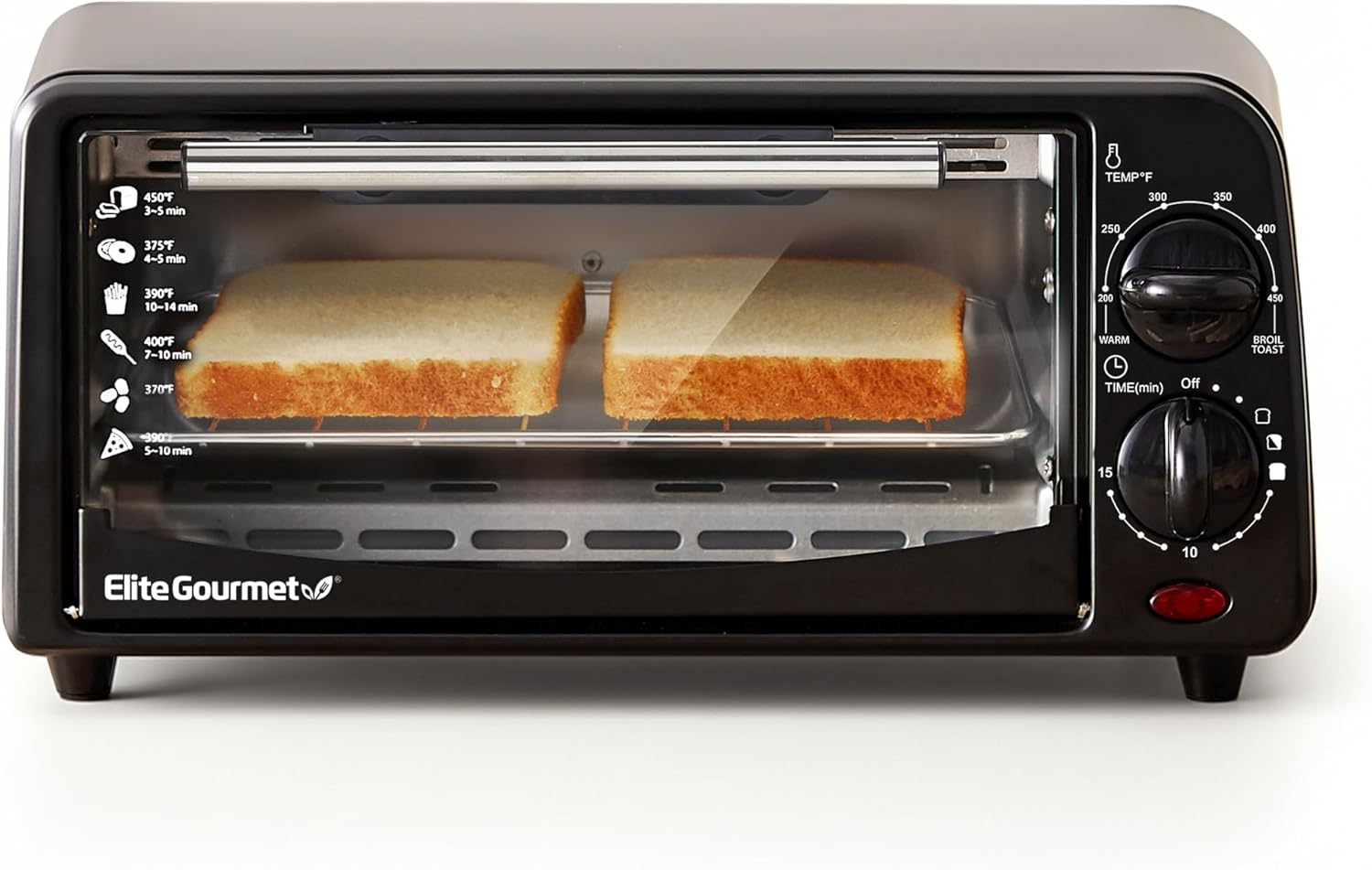
Elite Gourmet ETO236 Toaster Oven
| Wattage | 650 watts |
|---|---|
| Control Type | Knob Control |
| Temperature Range | 200 – 450 °F |
| Number of Shelves | 1 |
The Elite Gourmet ETO236 is a small, budget-focused toaster oven designed for simple cooking tasks in tight spaces. It heats with a 650-watt element and offers bake, broil, and toast modes with an adjustable temperature range from 200 to 450 F and a 15-minute manual timer, making it suitable for reheating slices of pizza, melting cheese, or crisping a small personal pizza. The unit includes a removable wire rack and a nonstick baking pan that slide into a single shelf position, and knob controls keep operation straightforward. Because it is compact and lightweight it fits dorms, RVs, and small kitchens easily and uses minimal counter space. Trade-offs are its limited interior capacity and single shelf, which restricts it to personal or small pizzas rather than large pizzas or multiple items, and the relatively low 650-watt power means it will take longer to reach and recover cooking temperatures compared with larger ovens. For buyers who want a no-frills, inexpensive oven to warm or crisp pizza slices and small personal pizzas, this is a practical choice.
Best for: Buyers looking for the cheapest practical toaster oven to reheat or crisp single slices and small personal pizzas in a tiny kitchen, dorm, or RV.
Less Ideal for: Anyone who needs to cook full-size pizzas, multiple items at once, or wants faster preheat and higher sustained power.
- Compact footprint fits small counters, dorms, and RVs
- Simple knob controls and 15-minute timer for easy use
- Adjustable temperature up to 450 F for baking and broiling
- Includes removable wire rack and nonstick baking pan for quick cleanup
- Only one shelf and small interior limit it to personal or small pizzas
- 650 watts provides slower heat-up and recovery than higher-powered ovens
Verdict: A very affordable, compact toaster oven that reliably reheats and crisps small pizzas and slices when counter space and budget are the top priorities.
BLACK+DECKER Crisp 'N Bake TO1787SS

| Wattage | 1150 |
|---|---|
| Temperature Range | 250-450 °F |
| Control Type | Knob Control |
| Number of Shelves | 2 |
| Included Components | Rack, Pan and Mesh Basket |
The BLACK+DECKER Crisp 'N Bake is a straightforward countertop toaster oven that combines air frying, baking, broiling, toasting, and keep-warm functions in a compact footprint. It uses an included mesh air-fry tray so hot air circulates around food for crisp results with little to no oil, and EvenToast technology helps produce more uniform toasting. Controls are simple two knobs for time and function, and the 30-minute timer plus removable crumb tray make day-to-day use and cleanup easy. The interior holds up to a 9-inch pizza or four slices of bread, which suits small households or quick snacks but limits larger dishes. At 1150 watts the oven heats quickly but lacks digital presets or a large timer window, so it is best for cooks who prefer manual control. Included rack, pan, and mesh basket give decent starter accessories. For shoppers focused on value and basic multifunction cooking, this model delivers the essentials without complexity, though those wanting larger capacity or advanced digital controls should look elsewhere.
Best for: Buyers who prioritize an affordable, no-frills multifunction countertop oven for snacks, small meals, and healthier fried-food alternatives.
Less Ideal for: Those who need large-capacity cooking, precise digital controls, or advanced preset cooking programs for frequent full-meal preparation.
- Air fry function with mesh tray for crisp results using little to no oil
- EvenToast technology for more uniform toasting
- Simple knob controls and 30-minute timer make operation easy
- Includes rack, bake pan, and mesh basket for immediate use
- Compact interior only fits up to a 9-inch pizza, limiting larger meals
- No digital display or programmable presets for precision cooking
Verdict: A budget-friendly, compact 5-in-1 toaster oven that adds air-fry capability for buyers wanting simple, healthier frying and basic multifunction cooking.
Choosing the Right Toaster Oven for Baking Polymer Clay: Key Factors to Consider
Temperature Accuracy and Stability
Polymer clay cures at specific temperatures for set times, and a toaster oven that runs consistently within a tight range prevents undercured or burned pieces. Look for ovens with verified thermostats or digital temperature control that hold set temperatures with minimal fluctuation. A unit that overshoots or dips repeatedly will change curing chemistry and can cause tacky surfaces or discoloration.
Small temperature differences matter more on delicate components and detailed finishes. If you regularly bake thin slices, small beads, or mixed-media pieces, prioritize stability over raw power. Temperature probes or external oven thermometers let you confirm actual internal temperatures before committing valuable pieces to a full bake.
Even Heat Distribution
Uneven heating creates hotspots that can brown or distort edges while leaving other areas undercured. Seek toaster ovens with multiple heating elements or proven convection systems that produce uniform airflow without blasting light items. The ability to reposition racks and use trays helps manage how close pieces sit to heating elements.
Test bakes with sample tiles or scrap clay are a practical way to evaluate distribution. Consider an oven where racks and accessories let you create a buffer between direct elements and delicate parts to reduce the risk of localized overheating.
Interior Size and Usable Layout
The usable interior volume determines how many pieces you can bake at once and what shapes will fit without crowding. Measure the maximum usable height if you work with tall figurines or multi-layered projects, and check width and depth for baking trays, storage racks, or mold plates.
An oven that appears large externally can have awkward rack spacing that limits usable space. Prefer models with multiple rack positions and removable crumb trays to maximize flexibility. For frequent small runs, a compact interior with consistent heat may be better than a larger cavity with uneven temperature zones.
Control Precision and User Interface
Controls affect how easily you set exact curing temperatures and times. Digital controls with clear temperature readouts and timer functions make repeatable bakes easier, while simple dials can be adequate if they offer fine-grain adjustment. Some ovens include preheat and keep-warm modes that are unnecessary for polymer clay and can add confusion.
Reliable timers and readable displays reduce mistakes during longer cure cycles. Consider how intuitive the interface is if you bake frequently or switch between different recipes and clay brands that may require different times and degrees.
Safety and Ventilation
Polymer clay releases small amounts of fumes when overheated, so a toaster oven used for curing should be operated in a well-ventilated area and on a stable, heat-resistant surface. Built-in safety features such as automatic shutoff on overheating, cool-touch exteriors, and stable door latches reduce risk when you are working in a small studio.
Check user guidance for recommended ventilation practices and avoid enclosed spaces. Proper placement, regular maintenance of vents, and avoiding overfilling the oven will help maintain safe operating conditions during repeated bakes.
Ease of Cleaning and Maintenance
Residue from craft materials, spilled glazes, or stray bits of clay can burn and affect future bakes. Choose an oven with accessible interiors, removable crumb trays, and surfaces that wipe clean. A glass door that provides a clear line of sight reduces the need to open the oven during a bake, which can disturb temperature stability.
Routine maintenance also includes checking seals and vents for dust and ensuring racks do not accumulate sticky residues. Easier cleaning helps extend the unit's useful life and keeps bakes consistent over time.
Why a Dedicated Toaster Oven Helps Polymer Clay Work
Using a small oven dedicated to polymer clay reduces the risk of cross-contamination with food and makes it easier to control small-batch bakes. A personal toaster oven reaches curing temperatures quickly, uses less energy for short cycles, and is more convenient for hobbyists who do not need or want to preheat a full-size oven.
Because polymer clay projects are often small and detailed, a compact interior with predictable heat behavior gives more consistent results. You can run test tiles and iterate quickly without tying up a kitchen range.
- Faster preheat for short bakes
- Lower energy use for small batches
- Less risk of exposing food to craft residues
Safe Setup and Ventilation Tips
Place the toaster oven on a stable, heat-resistant surface with several inches of clearance all around. Avoid enclosing the unit in tight cabinetry while in use. Position a small fan or work near a window when curing multiple pieces to disperse any faint fumes that may occur if clay is overheated.
Never leave an unattended bake if you are unsure about the oven's thermostat behavior. Use an external oven thermometer for first-time procedures to confirm that set temperatures match internal readings before baking important pieces.
- Allow at least 4 inches clearance on all sides
- Use an external thermometer for verification
- Ventilate the work area during extended curing runs
Accessory Choices That Improve Results
A few simple accessories can make baking polymer clay more reliable. Thin aluminum baking trays create a flat work surface and help buffer pieces from direct heat. Oven-safe racks and ceramic tiles provide stable platforms for small parts. Silicone mats are useful for shaping and transferring pieces to the oven without warping them.
Avoid using materials that could melt or off-gas at clay cure temperatures. Keep accessories dedicated to craft use to prevent cross-use with food preparation.
- Aluminum trays for even support
- Ceramic tiles for flat, stable baking
- Silicone mats for transferring delicate items
Performing Test Bakes and Developing a Workflow
Before baking a full run, create small test tiles or sample pieces from the same clay and thickness as your final items. Bake these at the recommended temperature and inspect them for uniform curing, discoloration, or brittleness. Adjust time or rack position based on results.
Keep a simple log of temperature, time, rack position, and outcome so you can reproduce successful bakes. This habit is especially helpful when switching clay brands, changing piece thickness, or using new tools.
- Test with same thickness and finish
- Log bake parameters to repeat successes
- Adjust rack position before committing full batches
Managing Larger Projects and Multi-piece Bakes
If you need to cure many pieces at once, arrange them with space for airflow and consider multiple shorter cycles rather than one long overloaded bake. Rotating trays or switching rack positions between cycles helps combat hot spots in ovens that are not perfectly uniform.
For larger items, pre-plan the interior layout and check clearance from heating elements. Using heat-resistant props to elevate pieces can allow better circulation and more even curing.
- Space pieces for airflow
- Use multiple short cycles if necessary
- Rotate trays to even out heating
How We Chose the Best Toaster Oven for Baking Polymer Clay
We focused on features that directly affect polymer clay curing and workshop safety. Primary evaluation criteria were temperature accuracy, heat distribution, interior usable volume, and dial or digital control precision. We prioritized ovens that allow close adherence to manufacturer curing temperatures and that avoid wide temperature swings that can soften or scorch cured clay. Usability factors such as rack positions, ease of cleaning, and door visibility were included because they affect workflow and the ability to monitor small pieces. We also examined build quality, safety features, and the presence of consistent airflow without forced convection that can deform lightweight shapes. Units lacking reliable temperature control, accessible interiors, or clear temperature readouts were excluded. We did not include toaster ovens intended solely for high-temperature cooking tasks or models without adjustable temperature settings. The final selections reflect a balance of precise temperature management, enough usable space for typical polymer clay projects, and practical shop-friendly features.
Our full evaluation process is outlined in our review methodology.
FAQ
What temperature should I use to bake polymer clay in a toaster oven?
Follow the clay manufacturer's recommended cure temperature and time. Because toaster ovens can vary, verify that the oven holds the target temperature with an oven thermometer and make small time adjustments if you see undercured or browned results.
Can I use a toaster oven that has a convection fan for polymer clay?
Convection can improve heat distribution but the airflow may disturb very light or detailed pieces. If using convection, monitor the first bakes closely and use trays or tiles to shield delicate elements from direct air currents.
Is ventilation necessary when baking polymer clay?
Good ventilation is recommended, especially during extended or slightly over-temperature bakes. Proper ventilation disperses any faint emissions from overheated clay and keeps your workspace comfortable.
How can I prevent tiny pieces from warping during a bake?
Bake on flat ceramic tiles or metal trays that provide stable support, avoid placing items directly on wire racks, and ensure they have even heat exposure. If thin edges tend to darken, move the tray lower in the oven or add a buffer between pieces and the top element.
Should I dedicate one toaster oven solely for polymer clay?
Dedicating an oven to craft use reduces the chance of contaminating food and keeps residues from affecting bake outcomes. If that is not possible, keep a clear cleaning routine and never use contaminated cookware for food preparation without thorough cleaning.
Final Verdict
Choosing the right toaster oven for baking polymer clay comes down to controlling temperature precisely and getting even, consistent heat across your pieces. Prioritize models that hold set temperatures accurately, offer flexible rack positions, and let you verify internal conditions with a thermometer. Balance usable interior space with reliable distribution rather than assuming larger is always better. With careful setup, routine test bakes, and a few dedicated accessories, a small oven can deliver repeatable, studio-quality cures that protect your work and keep your workflow efficient. Focus on stability, safety, and usability to make confident bakes every time.