
Note: This article contains affiliate links. If you click on these links and make a purchase, we may earn a small commission at no extra cost to you. This helps support our research and content. Read our full affiliate disclosure here.
If you rely on an undercounter ice maker to supply chilled beverages or stock a home bar, ice that clumps or melts too quickly defeats the purpose. Choosing an undercounter ice maker that keeps ice frozen matters for parties, food prep, and consistent drink quality. This guide shortlists the top models built to maintain solid, well-formed cubes and to minimize melt during normal use. We evaluated machines for steady production capacity, effective insulation and storage, and factors that affect how long ice stays frozen in the bin. Below are the top picks and a clear explanation of the features that matter when long hold time is a priority.
Top Picks at a Glance
| Best Overall The best all-around choice for most situations | EUHOMY Commercial Ice Maker CIM012-100-0402 |  |
| Best Quality Built to a higher standard if you want something more solid | Scotsman Legacy DRCG033A-1SS |  |
| Best Value The sweet spot between price and what you get | Mojgar CIM-360F Commercial Ice Maker |  |
| Best Budget The cheapest option that still gets the job done reliably | Stopsad Commercial Ice Maker 407 |  |
| Top Rated A top-rated pick with lots of positive feedback | TAZPI KM45B 120lb/Day Ice Maker |  |
| Most Popular A crowd favorite that many people choose with confidence | EUHOMY Commercial Under-Counter Ice Maker |  |
| Best Seller A high-volume bestseller chosen again and again | VEVOR Commercial Ice Maker CIM-360T |  |
EUHOMY Commercial Ice Maker CIM012-100-0402

| Ice Production per Day | 120 pounds |
|---|---|
| Ice Basket Capacity | 33 pounds |
| Wattage | 255 watts |
| Voltage | 115 volts |
| Refrigerant | R290a |
This EUHOMY undercounter ice maker is built for steady, frequent use in small commercial settings or busy homes. It makes up to 120 lb of clear cube ice per day, producing individual cubes every 8–12 minutes and storing about 33 lb in the removable bin. The unit uses a copper compressor and stainless-steel exterior for durability, includes a water filter for clearer ice, and offers a digital LCD control panel with two cube-size options, a 24-hour timer and an auto-clean program to simplify maintenance. Practical touches include a viewing window, adjustable feet, interior light and an infrared sensor that stops production when the bin is full. Expect typical trade-offs for this capacity: it requires a water supply and gravity drain, needs daily or regular draining and cleaning, and it is a freestanding undercounter-sized appliance so it will need the assigned space and correct ventilation. For venues that need reliable, clear cube ice on demand, this model balances output, features and commercial-grade build without moving into large industrial capacity.
Best for: Buyers who want a reliable undercounter machine that delivers commercial-style clear cube ice for bars, cafes, or busy home kitchens and prioritize steady daily output and easy electronic controls.
Less Ideal for: Those who need nugget or specialty ice, minimal-installation countertop units, or very large industrial-scale production above 120 lb/day should look elsewhere.
- 120 lb/day production supports steady small commercial peak use
- Stainless steel body and copper compressor for durability and commercial use
- Built-in water filter for clearer, safer ice
- Digital control panel with timer, auto-clean and adjustable cube size for flexible operation
- 33 lb removable storage bin and full-bin sensor to prevent overflow
- Requires gravity drainage and regular daily draining and cleaning
- Undercounter footprint needs proper ventilation and dedicated plumbing access
Verdict: A compact undercounter ice maker that reliably delivers clear, commercial-grade cube ice and easy electronic controls for steady daily service.
Scotsman Legacy DRCG033A-1SS
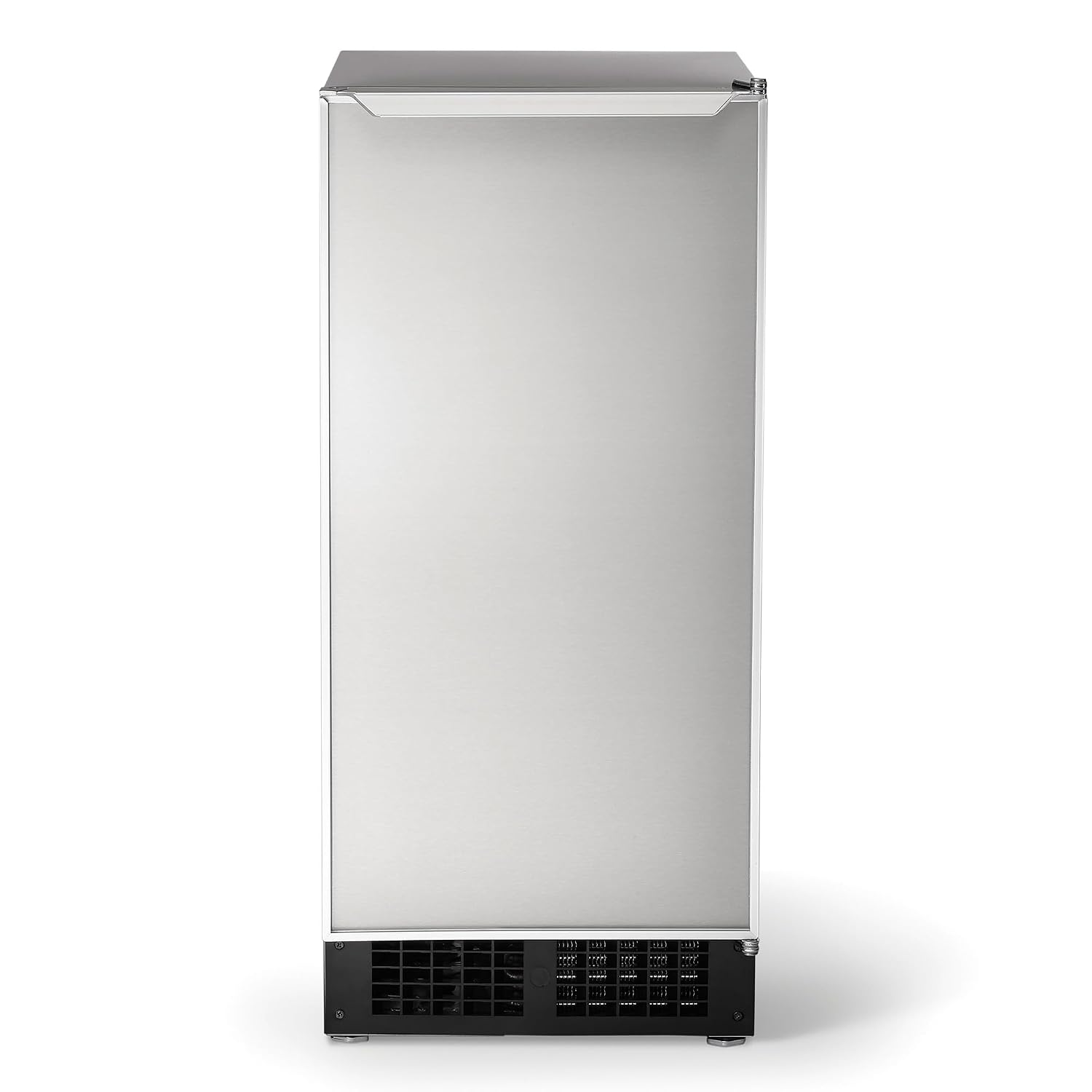
| Ice Production per Day | 85 pounds |
|---|---|
| Capacity | 26 pounds |
| Wattage | 115 watts |
| Voltage | 115 volts |
| Refrigerant | R134a |
The Scotsman Legacy DRCG033A-1SS is an undercounter ice machine designed to deliver a steady supply of extra-large cubes for small commercial or high-use home settings. It produces up to 85 pounds of ice per day (rated) while commonly described production is about 30 pounds of extra-large cubes daily, and stores ice in a 26-pound bin that automatically shuts off and restarts to maintain fill levels. The unit uses an air-cooled condenser with R290 refrigerant and a gravity drain for passive water removal, which simplifies installation and reduces service points. A brushed stainless steel exterior and field-reversible door let you fit the cabinet into tight bar or undercounter layouts. Practical limits include the modest bin capacity, so it will cycle frequently under heavy continuous use, and the compact 15-inch width means it is sized for smaller footprints rather than high-volume back-of-house needs. Expect reliable, factory-quality operation when the goal is consistent daily ice with a compact footprint.
Best for: Buyers who prioritize reliable daily ice production in a compact undercounter package and need consistent, large-format cubes for drinks or a small bar setup.
Less Ideal for: Businesses or events that require continuous high-volume ice production or much larger on-site storage should choose a larger commercial unit.
- Produces extra-large cubes with steady daily output suitable for beverages
- 26 lb bin with automatic shutoff and restart maintains supply without constant monitoring
- Air-cooled R290 condenser and gravity drain reduce installation complexity and service points
- Field-reversible door and 15" width fit tight undercounter spaces
- Bin capacity is limited for continuous high-volume service
- Compact footprint means it is not intended for large commercial ice demand
Verdict: Choose this undercounter unit when you need dependable, large-format cube production in a compact, install-friendly package.
Mojgar CIM-360F Commercial Ice Maker

| Ice Production per Day | 100 pounds |
|---|---|
| Capacity | 33 pounds |
| Wattage | 290 watts |
| Voltage | 110 volts |
| Refrigerant | R290a |
The Mojgar CIM-360F is a compact commercial-grade undercounter ice maker designed for home bars, small cafes, and light commercial use. It makes up to 100 pounds of ice per day (under ideal conditions) and stores about 33 pounds in its insulated but non-refrigerated bin, producing the first batch in roughly 10 to 18 minutes. Setup is straightforward: connect the 1/2" male threaded water line, route a gravity drain, and plug in the unit; front air venting allows true undercounter placement without side clearance in many cabinets. Notable features include one-touch self-cleaning, adjustable ice thickness, LED bin lighting, and an R290 compressor that improves energy efficiency. Practical benefits are steady high output for parties or back-of-house use and durable stainless steel construction for frequent operation. Important limitations are that the storage bin is not a freezer so ice will slowly melt if left long-term, and the drain requires either a floor drain or an external condensate pump for setups without a lower drain point.
Best for: Buyers who want a compact, reliable undercounter machine that delivers large daily output and low operating costs for steady entertaining or small commercial service.
Less Ideal for: Anyone who needs long-term frozen storage of ice in the machine or who cannot provide a gravity drain or install a condensate pump should consider alternatives.
- High daily production up to 100 lbs suitable for parties and light commercial use
- Compact undercounter footprint with front ventilation for built-in or freestanding installation
- One-touch self-cleaning simplifies maintenance and reduces scale buildup
- Adjustable ice thickness and fast first-cycle time for flexible service needs
- R290 compressor offers improved energy efficiency compared with older refrigerants
- Storage bin is insulated but not refrigerated so ice will slowly melt during extended storage
- Requires a gravity drain or separate condensate pump which can limit placement options
Verdict: Choose this unit if you need a durable, energy-efficient undercounter ice maker that reliably produces large volumes for parties or light commercial use.
Stopsad Commercial Ice Maker 407

| Capacity | 90 pounds |
|---|---|
| Ice Production per Day | 90 pounds |
| Wattage | 200 watts |
| Voltage | 110 volts |
| Refrigerant | R600a |
This Stopsad 407 undercounter ice maker is a straightforward, high-capacity unit aimed at steady ice production for small commercial or busy home use. It makes up to 90 pounds of ice in 24 hours and stores about 20 pounds in its built-in bin, so it keeps a reasonable buffer for parties or bar service. The stainless steel cabinet is durable and easy to wipe down, and the LED digital display provides temperature readout plus adjustable ice-size and timer controls for scheduled operation. A self-cleaning function simplifies maintenance, though the unit needs a water supply and should be left upright before first use. Refrigerant R600a and a 200 W motor help keep power use moderate for the output level, but the machine is still best suited where frequent ice turnover or a chilled holding area is available since the internal storage is limited. Installation as a freestanding undercounter unit is simple, and its compact footprint fits tight spaces common under counters.
Best for: Buyers who need a budget-friendly undercounter machine that reliably produces large amounts of ice for small bars, home entertaining, or light commercial use and value straightforward controls and durable construction.
Less Ideal for: Large venues that require long-term frozen storage or very high reserves of ice should choose a unit with a bigger storage bin or separate ice storage solution.
- High production rate of up to 90 pounds of ice per 24 hours
- Durable stainless steel exterior that is easy to clean
- LED digital display with adjustable ice size and timer
- Built-in self-cleaning function for easier maintenance
- Only about 20 pounds of on-board ice storage, so frequent use may need continual production
Verdict: If you need an affordable undercounter ice maker that delivers heavy daily output in a compact, durable package, the Stopsad 407 is a solid pick.
TAZPI KM45B 120lb/Day Ice Maker

| Capacity | 120 pounds |
|---|---|
| Wattage | 220 |
| Voltage | 110 |
| Ice Production per Day | 120 pounds |
| Material Type | Stainless Steel |
This TAZPI KM45B is an under-counter commercial ice maker designed for high-demand settings that need a steady supply of ice. It produces up to 120 pounds of ice per day on 6–15 minute cycles and offers three selectable ice sizes plus block or nugget options, so it can handle cocktails, display cases, or blended drinks. The stainless steel cabinet and included removable feet suit kitchen and bar environments, and the reversible door and adjustable legs simplify installation under a counter. Practical features include an internal drain pump and a 24-hour timer plus an advertised thermal-insulation door to help keep ice frozen longer. Expect reliable daily output when the unit is plumbed and maintained correctly, though it uses R404a refrigerant and requires proper ventilation and servicing like other commercial machines. For buyers prioritizing uptime, factor in routine cleaning and the 1-year warranty with 24-month technical support for assistance if issues arise.
Best for: Buyers who need a dependable under-counter machine that delivers consistent, large daily ice production for bars, restaurants, or frequent entertaining and value built-in installation features and support.
Less Ideal for: Casual home users with low ice demand or buyers who prefer units using more common eco-friendlier refrigerants should consider other options.
- High daily output rated at 120 pounds to meet busy commercial or event needs
- Selectable ice sizes and block/nugget options for versatile uses
- Stainless steel construction and reversible door for under-counter installations
- Built-in drain pump and adjustable feet simplify installation and drainage
- Uses R404a refrigerant which may require technician service for repairs or recharges
- Requires routine cleaning and proper ventilation like most commercial machines to maintain reliability
Verdict: Choose the KM45B when you need an under-counter ice maker that reliably produces large daily volumes and offers flexible ice types to keep ice available and usable longer.
EUHOMY Commercial Under-Counter Ice Maker

| Ice Production per Day | 100 pounds |
|---|---|
| Capacity | 120 pounds |
| Ice basket capacity | 33lbs |
| Wattage | 253 watts |
| Voltage | 110 volts |
This EUHOMY undercounter ice maker is built for small commercial use or serious home entertaining, producing up to 120 pounds of clear cube ice per day with roughly 45 cubes every 10–15 minutes and a 33-pound storage bin. It uses a copper compressor and stainless-steel body for durability and includes an upgraded water filter, adjustable ice thickness, and an LCD control panel with a 24-hour timer and one-button self-clean. The machine also has a curved viewing window and a three-layer insulation system to help keep ice cold in the bin longer, and it supports gravity drainage. Practical benefits include steady high-volume production for bars or busy kitchens, programable runtime to match shifts, and a built-in cleaning program for easier maintenance. Important limitations are that it requires a dedicated water supply and gravity drain plumbing and needs regular cleaning and daily draining to maintain performance, and its 33 lb bin can fill quickly under heavy service so you may need a secondary storage solution during peak periods.
Best for: Buyers who want a compact undercounter machine that reliably produces commercial quantities of clear cube ice and prefer visible safety and performance features before committing.
Less Ideal for: People who need a fully self-contained countertop unit without plumbing or those who require very large onboard storage capacity for continuous high-volume service.
- High production rate up to 120 lbs of cube ice per day suitable for small commercial settings
- Stainless-steel body and pure copper compressor designed for long-term reliability
- Integrated 33 lb storage bin with three-layer insulation to keep ice colder longer
- LCD control panel with adjustable ice thickness, 24-hour timer, and one-touch self-clean
- Requires a dedicated water supply and gravity drain, which may need plumbing modifications
- 33 lb storage capacity is modest and may require extra storage during peak demand
Verdict: Choose this EUHOMY undercounter ice maker if you need a durable, programmable unit that reliably makes commercial amounts of cube ice and keeps it cold in a well-insulated bin.
VEVOR Commercial Ice Maker CIM-360T

| Ice Production per Day | 120 pounds |
|---|---|
| Wattage | 290 watts |
| Voltage | 110 volts |
| Capacity | 54 kg |
| Refrigerant | R290a |
This VEVOR undercounter ice maker is built for high-volume home bar or small commercial use, making roughly 36 square ice cubes every 8–10 minutes and up to 120 pounds per day. It is offered as a freestanding or built-in unit with a stainless-steel exterior, integrated cyclopentane foam insulation, and a 30 lb storage bin that the seller says will keep ice frozen for several hours when powered off. The front LED panel lets you adjust ice thickness, set a production timer, and run an automatic self-clean function, and the machine supports both tap and bottled water inlets with included hoses. Practical benefits include fast production for parties or a busy café and a removable scoop and intuitive alerts for full-ice and low-water conditions. Limitations to consider are the bulk and weight for tight cabinetry, the need to clear condenser dust for reliable operation, and the typical service and setup needs of R290a refrigerant systems in commercial units.
Best for: Buyers who prioritize reliable, high-volume ice production for a home bar or small commercial setting and want straightforward digital controls and built-in insulation to hold ice between uses.
Less Ideal for: People who need a compact countertop unit or who prefer a maintenance-free, plug-and-play personal ice maker for occasional home use.
- High daily output: up to 120 pounds of ice per day for heavy use
- Integrated insulation and stainless-steel body help preserve ice for hours when powered off
- LED controls with adjustable ice thickness, timer, and one-touch self-cleaning
- Dual water inlet supports both tap connection and bottled water setups
- Physically heavy and relatively large, which can complicate tight undercounter installs
- Requires regular condenser cleaning and basic maintenance for consistent production
Verdict: Choose this undercounter model when you need a factory-quality, high-output ice maker with insulation and digital controls to keep ice ready through busy shifts or parties.
Choosing the Right Undercounter Ice Maker That Keep Ice Frozen: Key Factors to Consider
Bin Insulation and Design
A well-insulated storage bin slows melting by limiting heat transfer from the room into the ice. Look for thick-walled bins, gasketed lids, or integrated refrigerated bins that maintain temperatures below freezing for longer stretches. Bin shape and internal airflow also affect how ice packs together; a design that discourages clumping helps individual cubes stay cold and makes dispensing easier.
Poor insulation forces the compressor to run more often to maintain the ice, which raises energy use and increases wear. When hold time is a priority, the storage compartment is as important as the ice-making cycle itself.
Ice Density and Cycle Time
Denser ice with less internal air melts slower than porous, flaky ice. Cycle time and harvest method influence density: slightly longer freeze cycles generally produce harder, clearer cubes that resist melting. Consistent harvest cycles ensure each batch has similar density, so you do not get soft ice that rapidly collapses in storage.
Consider whether the unit allows adjustments to cycle length or harvesting intervals. Even small tweaks can improve hold time for the storage bin without significantly reducing daily output.
Production Capacity Versus Usage Pattern
Match the maker's daily production and storage capacity to how you actually use ice. High production with a tiny storage bin can lead to frequent melting and refreezing cycles that reduce ice quality. Conversely, low production with a large refrigerated bin may be wasteful if you often need fresh ice quickly.
Estimate peak needs during gatherings and regular daily use, then choose a unit whose steady-state production plus insulated storage provides a buffer so you are not constantly running the compressor to top up melted ice.
Refrigeration and Airflow Management
The type and layout of the refrigeration system affects how evenly cold is distributed through the bin and evaporator. Units that circulate cold air across the storage area prevent warm pockets where ice can melt first. Fans, ducting, and well-placed vents help maintain uniform temperatures, which improves overall hold time.
Avoid systems that rely solely on passive cooling in areas with higher ambient temperatures unless the bin is very well insulated.
Controls, Sensors, and Automation
Reliable sensors for bin level and temperature reduce unnecessary harvests and compressor cycles. Automation that pauses production when the bin is full prevents melting from repeated cycling. Temperature setback options and programmable run cycles let you tune the machine for standby periods, which conserves energy and can help preserve ice during low-use stretches.
Simple, clear controls are preferable to overly complex menus that obscure basic adjustments related to hold time and production scheduling.
Maintenance and Water Quality Considerations
Scale buildup and clogged drains reduce cooling efficiency and can create warmer spots in the evaporator or bin, accelerating melt. Regular cleaning access and clear service points make it easier to keep the system running optimally. Water filtration or softened supply helps produce clearer, denser ice and reduces scale, both of which improve how long ice stays frozen.
Plan for routine descaling and filter changes as part of the ownership cost and to preserve the unit's ability to produce and store ice effectively.
How Hold Time Differs From Production Rate
Hold time and production rate are related but separate concerns. Production rate tells you how much ice a unit can make in a given period, while hold time measures how long produced ice stays frozen and usable in the storage bin. A balance between the two is essential: a fast maker with poor storage will still leave you with melted, unusable ice, while a machine with excellent hold time but inadequate production may run out during use.
When assessing models, prioritize the combination that matches your pattern of use. For steady daily use, moderate production with excellent bin insulation may be ideal. For entertaining, you may want a higher production rate with a refrigerated bin so fresh ice remains available throughout the event.
- Production rate matters for replenishment speed
- Hold time determines usable supply between cycles
- Storage capacity moderates the need for continuous production
Practical Installation Tips to Preserve Ice
Installation location affects ambient heat load. Avoid placing an undercounter ice maker next to heat-generating appliances or in direct sunlight, as extra heat increases compressor runtime and reduces bin hold time. Leave adequate clearance for ventilation per the manufacturer's guidance so the refrigeration system can shed heat efficiently.
Plumbing and water quality influence ice clarity and scale accumulation. Use a dedicated water line with a recommended filter to reduce mineral buildup. Proper drain slope and unobstructed condensate paths help the unit maintain stable operating temperatures and prevent warm spots that accelerate melting.
- Allow sufficient ventilation clearance
- Keep the unit away from ovens or heat sources
- Install a water filter to minimize scale
Energy and Noise Tradeoffs
Stronger insulation and refrigerated storage can improve hold time but may increase upfront energy use or require a more powerful compressor. Evaluate energy consumption ratings alongside expected usage to determine the likely operating costs. Some units use intermittent fans to circulate cold air in the bin which helps hold time but can add low-level noise.
If the unit will live in an open kitchen or entertainment area, weigh the benefit of better hold time against any fan or compressor noise. Many modern machines manage this balance well, but placement and ambient noise tolerance should influence your selection.
- Insulation can mean modest energy increase
- Fans improve uniformity but may add noise
- Run schedules can lower energy usage during idle periods
Simple Upgrades to Extend Ice Life
Small habits and add-ons can significantly extend how long ice stays frozen. Using insulated scoopers or a cover when accessing the bin reduces warm air infiltration. Keeping the bin organized so ice is not overpacked prevents internal heating from compaction.
Consider adding a small block of dry ice or pre-cooled inserts only when needed for long events. Regularly removing old, frosted ice and replacing it with fresher batches prevents progressive quality degradation that shortens hold time.
- Use a gasketed lid or insulated scoop
- Avoid overpacking the bin
- Rotate out old ice to maintain air gaps
Common Signs Your Ice Is Melting Too Quickly
Watch for clumping, thin or hollow cubes, and frequent compressor cycling as indicators that bin temperatures are rising or that ice density is low. If the machine seems to run more often without producing usable ice, the insulation or airflow may be compromised.
Routine checks during warm weather or heavy use periods help you spot problems early. Addressing the root cause, whether it is inadequate insulation, clogged condensers, or poor installation, will restore hold time more effectively than simply buying more production capacity.
- Clumping and thin cubes signal melt issues
- Increased run time with low yield suggests efficiency loss
- Regular inspection prevents minor issues from becoming major
How We Chose the Best Undercounter Ice Maker That Keep Ice Frozen
We focused on features that directly affect how long ice stays frozen and how reliably an undercounter unit performs in everyday home use. Our selection filters prioritized machines with insulated storage bins or integrated refrigerant circulation, consistent cycle lengths that produce dense ice, and production capacity matched to typical household or entertaining demands. We also considered energy efficiency under continuous operation and controls that allow scheduling or temperature adjustments. Excluded from the list were countertop or portable ice machines and units meant solely for commercial heavy-duty use, since those have different storage and insulation tradeoffs. We favored units with documented durable refrigeration components and straightforward maintenance access, because serviceability affects real-world uptime. Final choices balance hold-time-enhancing design, consistent production, and sensible energy and maintenance profiles.
Our full evaluation process is outlined in our review methodology.
FAQ
How much ice should an undercounter machine produce daily for a household?
It depends on household size and entertaining frequency. Many homes are well served by a unit producing enough to fill the bin several times a day. For occasional entertaining, aim higher so the machine can recover quickly during peak demand.
Will a refrigerated bin keep ice frozen if the compressor cycles off?
A refrigerated or well-insulated bin will retain cold for longer when the compressor is idle, but extended off periods will eventually allow warming. Good insulation and minimal lid openings extend the time before melting becomes noticeable.
Does water quality affect how long ice stays frozen?
Yes. Hard water can create scale that reduces heat transfer efficiency in the evaporator and produces cloudy, porous ice that melts faster. Using appropriate filtration and routine descaling improves ice density and the unit's cooling performance.
Can adjusting harvest cycle length improve ice retention?
Often it can. Slightly longer freeze cycles tend to create denser ice that resists melting. Check whether the unit allows cycle adjustments and test small changes to balance production rate with ice hardness.
What maintenance keeps an undercounter ice maker holding ice longer?
Regular cleaning, timely filter replacements, and keeping condensers and vents free of dust preserve cooling efficiency. Inspect gaskets and lids for proper seals and remove frost buildup in the bin to maintain even temperatures.
Final Verdict
When hold time is your priority, focus on insulated or refrigerated storage, dense ice production, and installation that minimizes ambient heat. Match production capacity to your usage so the maker does not have to run constantly to maintain supply. Prioritize units with good bin insulation, reliable refrigeration, and easy maintenance access. By balancing production rate, storage design, and routine upkeep, you can choose an undercounter ice maker that reliably keeps ice frozen for everyday use and entertaining.