
Note: This article contains affiliate links. If you click on these links and make a purchase, we may earn a small commission at no extra cost to you. This helps support our research and content. Read our full affiliate disclosure here.
If you run central heating and cooling, integrating a UV air purifier for HVAC can cut microbial growth in the ductwork and improve overall indoor air quality. You want a solution that fits your system, will treat the airflow effectively, and is easy to maintain so benefits persist over time. This guide shortlists the top options we vetted for HVAC installations and explains the practical tradeoffs buyers face. Below you will find our top picks followed by the criteria we used to evaluate germ-kill performance, installation fit, durability, and upkeep. Read on to find a unit that matches your airflow, access, and maintenance preferences.
Top Picks at a Glance
| Best Overall The best all-around choice for most situations | Bio Shield UV-C 17" Lamp |  |
| Best Quality Built to a higher standard if you want something more solid | Fresh-Aire UV APCO HVAC Air Purifier |  |
| Best Value The sweet spot between price and what you get | Pure Air UV R-18D HVAC UV Light | 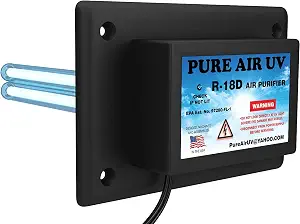 |
| Best Budget The cheapest option that still gets the job done reliably | briidea UV-C HVAC Light 18W |  |
| Top Rated A top-rated pick with lots of positive feedback | TURBRO 72W HVAC UV Light UV72PA |  |
| Most Popular A crowd favorite that many people choose with confidence | UV Light HVAC Duct Dual Lamp |  |
| Best Seller A high-volume bestseller chosen again and again | REKO R2000 UV-C Duct Light |  |
Bio Shield UV-C 17" Lamp

| Wattage | 20 watts |
|---|---|
| Light Source Type | Ultraviolet (UV) |
| Bulb Base | E26 |
| Voltage | 110 volts |
| Light Type | CFL |
The Bio Shield UV-C 17" Lamp kit installs inside HVAC systems to continuously irradiate coils and duct surfaces with germicidal UV-C light, which helps reduce mold, bacteria, and biofilm that can impair airflow and indoor air quality. Typical use is a fixed, in-duct installation near the evaporator coil so the lamp can treat air and keep coil surfaces cleaner over time, which the manufacturer says can improve A/C efficiency and cut down on duct cleanings. The unit uses a 20W UV-C tubular lamp with an E26 base and runs on standard 110V AC, so it draws little power while operating continuously. Practical benefits include straightforward DIY installation, a simple push-button controller and infrared connectivity for basic control, and a compact tubular design that fits common HVAC access points. Limitations are that it is a point-source HVAC treatment rather than a whole-home air purifier, so performance depends on placement and duct airflow, and it does not replace filtration for particulates. Also the lamp is glass and requires safe handling and periodic replacement to maintain effectiveness.
Best for: Homeowners looking for a low-maintenance HVAC add-on that reduces microbial growth on coils and improves system hygiene without major upgrades.
Less Ideal for: People who need active particulate filtration or whole-house air cleaning solutions should consider mechanical filters or dedicated whole-home purifiers instead.
- Designed for in-duct installation to target coils and biofilm buildup
- Low continuous power draw using a 20W UV-C lamp
- Straightforward DIY installation with standard E26 base
- Includes a 17-inch germicidal lamp suitable for common HVAC units
- Treats air locally at the coil and duct area rather than filtering particulates
- Glass lamp requires careful handling and periodic replacement
Verdict: A simple, energy-efficient in-duct UV-C lamp that helps keep HVAC coils cleaner and reduces microbial growth with minimal installation effort.
Fresh-Aire UV APCO HVAC Air Purifier

| Item model number | TUV-APCO-ER |
|---|---|
| Power | 18-32 VAC, 60 Hz, 0.68 Amps, 16 VA |
| Includes | 1-Year water-resistant shielded UV-C lamp |
| Manufacturer | Fresh-Aire UV |
The Fresh-Aire UV APCO HVAC unit is an in-duct air purifier designed to mount inside furnaces or air handlers and treat whole-house airflow with a carbon cell matrix activated by a UV-C lamp. Air passing through the unit contacts activated carbon cells that capture odors, VOCs and microbes while the UV lamp helps catalyze and break them down; the manufacturer highlights reduced biofilm on coils and lower pollutant loads that can improve HVAC efficiency. It ships as a complete pre-wired unit with a water-resistant shielded UV-C lamp and is intended for professional installation on 18-32 VAC power. The carbon cells are described as self-cleaning and the system needs little regular maintenance beyond lamp replacement on the stated service interval. Important limitations are that this is an in-duct, hardwired HVAC component requiring a licensed installer and planned lamp replacements, and it does not replace filter maintenance or address particles in the same way a mechanical filter does.
Best for: Buyers who prioritize in-duct, whole-house pollutant reduction and want a performance-focused HVAC add-on that targets odors, VOCs, and microbial contaminants rather than a portable room purifier.
Less Ideal for: People who need a plug-and-play or portable solution, renters without access to HVAC modifications, or those seeking primary particle filtration without installing ductwork components.
- In-duct design provides whole-house air treatment through the HVAC system
- Activated carbon cell matrix captures odors and VOCs while UV-C helps catalyze breakdown
- Ships as a complete pre-wired unit with shielded UV-C lamp for straightforward professional installation
- Manufacturer cites reduced biofilm on coils which can help maintain HVAC efficiency
- Requires licensed professional installation and 18-32 VAC power connection
- Periodic UV lamp replacement is required to maintain effectiveness
- Does not substitute for mechanical filtration of particulate matter
Verdict: Choose this in-duct APCO unit when you want a performance-oriented HVAC add-on that actively reduces odors, VOCs, and microbial load across your whole home.
Pure Air UV R-18D HVAC UV Light

| Voltage | 120V |
|---|---|
| Lamp output | 253.7 nm UVC |
| Rated lamp life | 10,000 hours |
| Compatible system size | 1-5 tons |
| Power cord length | 9 ft |
The Pure Air UV R-18D is a dual-lamp UV-C air sanitizer made for installation inside HVAC ducts to inactivate mold, mildew, and airborne microbes. It runs on 120V with a 9 ft power cord and an electronic ballast plus an LED indicator so you can confirm the unit is powered. Installation uses a simple cut-and-mount method with a template and aluminum strips, and the manufacturer rates the lamps at about 10,000 hours. In daily use the unit continuously exposes duct airflow to 253.7 nm UVC, which is effective at reducing biological growth on duct surfaces and lowering the amount of viable microbes passed through the system. The product is compact and intended for 1 to 5 ton systems, so it fits typical residential HVAC setups. Limits to consider are that its performance depends on duct layout, airflow speed, and placement, and it does not filter particulates or replace regular coil cleaning and filter maintenance.
Best for: Buyers who want a straightforward, hard-mounted UV-C solution to reduce biological growth inside a single-home HVAC system and prioritize continuous germicidal treatment over particulate filtration.
Less Ideal for: Those seeking a standalone air cleaner for particulates or users who need whole-home multi-system coverage without modifying ductwork should consider alternative approaches.
- Dual UVC lamps output 253.7 nm for germicidal effectiveness against mold and many airborne microbes
- Designed for in-duct installation with a template and mounting hardware for faster fitment
- Electronic ballast and LED power indicator simplify operation checks
- Rated lamp life around 10,000 hours for long service between replacements
- Effectiveness depends on correct placement, duct configuration, and airflow speed
- Does not remove dust, pollen, or other particulates from the airstream
- Requires cutting into the duct and basic electrical connection, so professional installation may be needed
Verdict: A practical in-duct UV-C dual-lamp unit that provides continuous germicidal treatment for a single residential HVAC system to help control mold and microbial growth.
briidea UV-C HVAC Light 18W

| Wattage | 18 watts |
|---|---|
| Power source | 110V with 10 ft cord |
| UV wavelength | 253.7NM |
| Bulb life | 8000h |
The briidea UV-C HVAC Light is a compact duct-mounted air purifier that uses two 9W 253.7 nm UV-C bulbs to reduce biological contaminants and odors as air moves through an HVAC system. It installs by cutting two 1.4 inch holes in the duct, slipping the lamp through, fastening the included screws and plugging the 10 foot cord into a nearby outlet, so it is a fairly simple DIY add-on for return air, coil or blower cabinet locations. The unit is built from galvanized sheet with added rubber wool for improved sealing and corrosion resistance, and the bulbs are replaceable with an expected service life of about 8,000 hours. Its low 18W power draw keeps operating costs low, but it is a point-treatment device that does not filter particles the way a mechanical filter does and requires annual bulb replacements to remain effective. For buyers seeking a low-cost, low-power UV option to supplement HVAC hygiene, this model is straightforward and easy to install, but it should be used alongside proper filtration and safe electrical installation practices.
Best for: Buyers on a tight budget who want an economical in-duct UV-C supplement to improve HVAC microbial control without major system changes.
Less Ideal for: Users who need particle filtration, whole-home certified installation services, or those unwilling to modify ductwork and replace bulbs regularly.
- Designed for in-duct installation to treat circulating air directly
- Two 9W UV-C bulbs with 253.7 nm wavelength and about 8,000 hour life
- Low power consumption at 18W and 10 ft power cord for flexible placement
- Galvanized housing and extra rubber wool for better sealing and corrosion resistance
- Does not remove particulate matter like a mechanical filter
- Requires cutting holes in ductwork and basic electrical access for installation
- Bulbs need annual replacement to maintain effectiveness
Verdict: A low-cost, low-power in-duct UV-C lamp that offers straightforward microbial control for budget-focused HVAC upgrades.
TURBRO 72W HVAC UV Light UV72PA

| Wattage | 72 watts |
|---|---|
| Light Type | Fluorescent |
| Bulb Base | B15D |
| Accepted Voltage Frequency | 100 to 240 Volts and 60 Hertz |
| Power Source | Corded Electric |
The TURBRO 72W HVAC UV Light is an in-duct UV-C sanitizer kit intended to reduce mold, bacteria, and other contaminants on HVAC coils and inside ductwork. It installs through a duct wall using the included mounting template and connects to a nearby 120V socket or wiring depending on your unit, and the ballast provides a visual indicator to show lamp status. Notable features include two 2G11 quartz glass lamps with ceramic bases for stable placement, an airflow sensor that powers the lamps only when air is moving to save energy and improve safety, and ozone-free operation at the germicidal 253.7 nm wavelength. In practice it is suited for continuous HVAC maintenance in commercial or large residential systems and helps keep coils cleaner between service visits. Important limits are that the kit requires a minimum duct depth and a proper installation location, and effectiveness depends on lamp placement and maintenance over time because UV output declines and lamps will need eventual replacement.
Best for: Buyers who prioritize dependable, maintenance-oriented HVAC sanitation and want a robust, factory-style UV-C solution integrated into ducted systems for continuous coil protection.
Less Ideal for: Homes or systems with very limited duct depth or no accessible power near the intended mount, or buyers seeking a portable or whole-home standalone air purifier rather than an in-duct solution.
- High germicidal output at 72W for stronger in-duct disinfection
- Airflow sensor lets the unit run only when the system is running, saving energy
- Quartz glass tubes with ceramic 2G11 bases for secure mounting and good UV transmission
- Includes installation template and ballast with status indicator to simplify setup
- Ozone-free operation compliant with common ozone limits for safe in-duct use
- Requires sufficient duct depth and a nearby power source for proper installation
- UV lamps lose output over time and require periodic replacement to remain effective
Verdict: A high-output, airflow-activated in-duct UV-C kit built for reliable, continuous HVAC coil and duct sanitation in systems with adequate space and power.
UV Light HVAC Duct Dual Lamp

| Power | 120 Volts 50/60Hz |
|---|---|
| Application | For 1-5 ton air systems |
| Bulb wavelength | 253.7 nm UVC |
| Includes | 2 replacement bulbs + 9 ft cord |
This inline UV-C dual-lamp unit installs directly into HVAC ductwork to expose passing air and interior duct surfaces to germicidal ultraviolet light. It is designed for 1–5 ton air systems and ships with bulbs and a 9-foot cord; installation uses a simple cut-and-screw template so a competent DIYer or HVAC tech can fit it in about 15 minutes. The unit uses electronic ballast and includes a sight glass so you can verify the lamps are operating, and the bulbs emit 253.7 nm UVC, the wavelength commonly used for germicidal effect. Practical benefits include continuous in-duct disinfection without taking up living space and two replacement bulbs included in the box for extended service life. Important limitations are that a duct-mounted UV unit reduces microbes on surfaces and in passing air but is not a standalone air cleaner for particulates, it requires correct placement and periodic bulb replacement to remain effective, and it must be installed so the wiring and lamp access meet electrical and safety codes. The product is ozone-free, fits 1–5 ton systems, and is best applied as part of a broader HVAC maintenance plan rather than as the only indoor-air intervention.
Best for: Buyers who want a duct-mounted germicidal UV solution to reduce microbial growth and are comfortable coordinating a simple HVAC installation or hiring a technician.
Less Ideal for: People seeking a standalone device that removes dust, pollen, or smoke should choose a mechanical or electronic air cleaner instead.
- Designed for in-duct mounting to continuously treat air and duct surfaces
- Includes two replacement bulbs and a 9-foot power cord for extended use
- Electronic ballast with sight glass lets you confirm lamps are running
- Ozone-free design and germicidal 253.7 nm UVC output
- Does not filter or remove particulates, so a separate filter is still needed
- Requires correct duct placement and periodic bulb replacement to stay effective
Verdict: A compact, ozone-free in-duct UV-C twin-lamp unit that provides continuous germicidal treatment for 1–5 ton HVAC systems and includes spare bulbs for extended service.
REKO R2000 UV-C Duct Light

| Power | 120V |
|---|---|
| UV wavelength | 253.7 nm |
| Cord length | 9–10 ft |
| System fit | Rated for 1–5 ton air systems |
The REKO R2000 is an inline UV-C air purifier built to fit directly into HVAC ductwork and run from a standard 120V outlet. Installation requires cutting two small holes in the duct, inserting the dual UVC lamps into the included sleeve using the template and self-drilling screws, and plugging in the 9 to 10 foot cord; the manufacturer rates it for 1 to 5 ton air systems. In use it delivers continuous 253.7 nm UVC exposure to the airstream, which helps reduce microbial loads on coil surfaces and in the moving air without adding filters or chemicals. The unit is compact and straightforward, with replaceable bulbs sourced from Europe and a plug-in power design that avoids hardwiring for most installs. Important limitations are that UVC reduces microbes but does not filter particulates, it must be placed correctly in the duct to be effective, and it requires periodic bulb replacement and safe handling because of UV exposure. For buyers seeking a simple, plug-in factory-style UV-C option for HVAC microbial control, this is a practical choice.
Best for: Buyers who prioritize straightforward, factory-style microbial control in their HVAC system and want a plug-in UV-C solution that installs directly in the duct without complex electrical work.
Less Ideal for: People who need particle filtration or allergy-focused removal should choose a filtration-based solution instead, and renters who cannot modify ductwork may find installation impractical.
- Dual UVC lamps provide continuous 253.7 nm germicidal exposure to HVAC airflow
- Plug-in 120V design with long power cord avoids complex hardwiring
- Compact inline form installs with a simple 15-minute procedure and included template
- Bulbs are replaceable and sourced from Europe
- Does not remove dust or particles since it is not a mechanical filter
- Requires cutting into ductwork and correct placement to be effective
Verdict: A simple, plug-in inline UV-C unit that provides continuous germicidal exposure for HVAC systems without requiring hardwiring.
Choosing the Right UV Air Purifier for HVAC: Key Factors to Consider
Germicidal Output and UV Dose
The core function of a UV air purifier for HVAC is to deliver sufficient UV dose to inactivate or damage microorganisms. Dose depends on lamp intensity, wavelength, and exposure time. Higher intensity lamps and wavelengths optimized for germicidal action increase the chance of neutralizing bacteria, viruses, and mold spores passing through the treatment zone.
When evaluating units, look for specified UV-C output in microwatts per square centimeter at a stated distance or a published dose figure. Remember that faster airflow reduces exposure time, so dose figures should be interpreted relative to the system's cubic feet per minute. A unit that lists dose without context is less useful than one that ties output to an expected airflow range.
Airflow Compatibility and Placement
Where the unit installs in the HVAC system determines how effectively it treats passing air. Typical locations are the return plenum, the air handler near the coil, or inside the duct upstream of the blower. Each location has different airflow velocities and turbulence levels that affect exposure time and UV distribution.
Match a unit's rated airflow range to your system's typical operating CFM. If a purifier is rated for lower airflow than your system pushes, airborne microbes will not receive a full germicidal dose. Conversely, overspecifying capacity can add unnecessary cost and complexity. Also consider whether the unit requires straight duct runs or minimal turbulence for best performance.
Installation Access and Physical Fit
Physical fit and the labor required to install the device are practical constraints for most homeowners. Measure the available space at the intended installation spot and confirm the unit's dimensions and mounting method. Some units mount directly to the air handler housing or duct face while others need internal duct access or custom brackets.
Ease of access affects future lamp replacement and maintenance. A unit tucked behind tight panels or in cramped plenums may work technically but increase service time and costs. Verify whether electrical connections are field-wirable or need a qualified technician and whether the unit includes clear installation instructions.
Durability, Materials, and Service Life
Long-term value depends on enclosure durability, lamp life, and component quality. Corrosion-resistant housings and robust lamp sockets reduce failure risk in moist HVAC environments. Lamp life is typically specified in hours and should be considered alongside expected system runtime; higher wattage or longer-life lamp options can change replacement intervals.
Also check whether the unit uses standardized lamps or proprietary modules. Standardized lamps are easier and often less expensive to replace. Ballast and driver quality also influence overall reliability, particularly in systems that cycle frequently or experience voltage variations.
Maintenance Requirements and Ongoing Costs
UV purifiers require periodic lamp replacement and occasional cleaning of quartz sleeves or lamp covers. Maintenance frequency depends on lamp life ratings and how continuously the HVAC system runs in your climate. Factor in both parts cost and the time or service fee for replacing lamps.
Also consider whether the unit signals end-of-life or has simple visual indicators so you do not unknowingly run an ineffective lamp. Units that make maintenance straightforward reduce the likelihood of neglected lamps and lost germicidal performance.
Safety Features and Serviceability
Because germicidal UV can damage skin and eyes, safe installation and convenient service features matter. Look for models with interlocks or automatic shutoffs when panels are opened, and for clear labeling that warns service technicians. Proper shielding for duct or plenum installations prevents stray UV leakage into occupied spaces.
Serviceability also includes how lamps are accessed, whether replacement parts are readily available, and whether the design minimizes the chance of accidental exposure during routine maintenance.
Where to Install a UV Unit in Your HVAC System
Selecting the right installation point affects both effectiveness and ease of service. Common choices are the return-duct near the filter, the air handler plenum upstream or downstream of the coil, and inside larger duct runs where there is more air residence time. The return-duct location treats air before it reaches the coil and is often the easiest place to access for maintenance.
Air-handler and coil-mounted installations target microbial growth on the coil surface and drain pan in addition to airborne organisms. Treating the coil can reduce biofilm buildup, improve heat-transfer efficiency, and reduce odors. However, these locations can be tighter to access and may require brief system shutdown for safe installation.
- Return-duct: easier access and treats air entering the system.
- Air-handler/coil: best for controlling coil and drain pan growth.
- In-duct runs: useful where there is longer residence time and lower velocity.
Matching UV Dose to System Airflow
A UV unit's published output must be interpreted relative to your system's CFM. Higher CFM means air spends less time in the irradiation zone, so you either need stronger output or additional exposure length. Some manufacturers provide dose charts or recommended maximum airflow to help choose the right size.
If you cannot find clear dose-versus-flow documentation, prefer units with conservative airflow ratings or consult an HVAC professional who can estimate exposure times based on duct geometry. Multiple smaller units placed to create longer exposure can be an alternative in high-airflow systems.
- Check CFM ratings and manufacturer dose guidance.
- Consider multiple-treatment points for high airflow systems.
- Avoid undersized units that cannot deliver adequate exposure time.
Electrical and Control Integration
UV purifiers require power and sometimes integrate with the HVAC control system. Decide whether you want the unit to run only with the fan or continuously. Running the lamp only when the fan is on saves lamp hours but reduces treatment for standby periods. Continuous operation maximizes germicidal effect but shortens lamp life and increases replacement frequency.
Some units offer simple line-voltage wiring, while others need low-voltage control connections or a dedicated relay. Verify that your system's electrical capacity and controls can support the unit, and plan for safe wiring practices or professional installation if needed.
- Determine preferred operating mode: fan-only or continuous.
- Confirm electrical requirements and control wiring.
- Plan for safe disconnects or interlocks for servicing.
Maintenance Best Practices
To keep a UV air purifier for HVAC effective, establish a maintenance schedule. Typical tasks include lamp replacement at manufacturer-recommended intervals, cleaning quartz sleeves if present, and inspecting seals and mounts. Keeping the surrounding duct area clean helps lamps work without obstruction from heavy dust loads.
Record lamp installation dates and set calendar reminders for replacement. If your system lacks clear lamp-life indicators, consider a yearly visual check and change lamps proactively based on hours of expected operation rather than waiting for visible degradation.
- Replace lamps on schedule and clean sleeves as needed.
- Log lamp install dates and set reminders.
- Inspect mounts and wiring during regular HVAC service visits.
Common Installation Pitfalls to Avoid
Avoid installing a unit in locations with extreme turbulence or downstream of heavy particulate loads that will reduce UV transmission. Poor placement can make a technically capable unit ineffective. Also avoid inaccessible locations that make lamp replacement dangerous or time-consuming.
Do not rely on devices that fail to provide clear installation guides or documented UV output metrics. Units without these details increase the risk of improper installation and poor long-term performance.
- Do not place in highly turbulent or particulate-heavy air paths.
- Avoid locations that are difficult to access for lamp changes.
- Insist on documentation for UV output and recommended airflow ranges.
How We Chose the Best UV Air Purifier for HVAC
We focused on features and performance factors that directly affect real-world HVAC integration and airborne microbial control. Primary evaluation criteria included germicidal output and spectrum, measured or specified UV dosage and exposure time, and how that maps to typical HVAC airflow rates. We also prioritized installation compatibility, including mount type and whether the unit fits at common treatment points such as air handler plenums or return-duct locations. Durability and service life were judged by enclosure quality, lamp replacement ease, and available lifespan ratings. Maintenance and operating cost factors included lamp replacement frequency and whether lamps or ballasts are proprietary. Finally, we assessed safety features such as interlocks and shielding to prevent UV exposure during service. We excluded portable room devices and in-duct options that require significant duct modifications beyond standard access panels. We also avoided units without verifiable UV output specifications or clear installation guidance. The resulting list balances germicidal effectiveness with practical installation and upkeep demands for typical residential and light-commercial HVAC systems.
Our full evaluation process is outlined in our review methodology.
FAQ
Will a UV air purifier for HVAC stop mold in my ductwork?
UV treatment can reduce viable mold and limit future growth on surfaces exposed to the lamp. Effectiveness depends on how well the unit irradiates the surfaces and whether lamps are run long enough to provide a sufficient dose.
How often do I need to replace the UV lamp?
Lamp replacement intervals vary but are commonly specified in thousands of operating hours. Replacement depends on how often the HVAC fan runs and whether you operate the lamp continuously. Check the manufacturer's recommended hours and plan replacements accordingly.
Can I install a UV unit myself?
Some units are designed for homeowner installation if you are comfortable with basic electrical wiring and have safe access to the duct or air handler. For less accessible locations or units requiring control integration, professional installation is advisable.
Will UV treatment affect my HVAC system performance?
A properly sized and installed UV unit has minimal impact on airflow and system performance. However, poorly placed units that constrict ductflow or accumulate dust may impede airflow. Choose units matched to your system's airflow and ensure they do not obstruct the duct path.
Are there safety concerns with UV in HVAC systems?
Yes. Direct UV-C exposure is harmful to skin and eyes, so units should be fully enclosed or shielded with interlocks that disable lamps during service. Correct mounting and warning labels reduce the risk of accidental exposure.
Final Verdict
Choose a UV air purifier for HVAC by prioritizing germicidal output matched to your system's airflow and by picking a mounting location that balances treatment effectiveness with maintenance access. Factor in lamp life and ongoing replacement costs, and prefer designs that make routine service straightforward and safe. If your system has high airflow or unusual duct geometry, plan for multiple treatment points or consult an HVAC professional to ensure adequate exposure. Ultimately, the best option for your installation will be the one that delivers a verifiable UV dose at your operating CFM, fits without complex duct modification, and keeps maintenance predictable so the unit remains effective over time.