
Note: This article contains affiliate links. If you click on these links and make a purchase, we may earn a small commission at no extra cost to you. This helps support our research and content. Read our full affiliate disclosure here.
If you or someone in your household reacts to dust, pollen, or pet dander, picking the right vacuum cleaner matters. The right machine removes more airborne and surface allergens, reduces redistribution of particles, and makes allergy management easier between deeper cleaning sessions. This guide lists seven shortlisted vacuum cleaners for allergies that excel at trapping fine particles, minimizing dust escape, and offering practical upkeep features. Below you will find concise product summaries and practical buying guidance. We evaluated each option for filtration performance, suction behavior on common home surfaces, and how easy the unit is to maintain and use.
Top Picks at a Glance
| Best Overall The best all-around choice for most situations | Dyson Ball Allergy Upright Vacuum |  |
| Best Quality Built to a higher standard if you want something more solid | Miele Classic C1 Turbo Team |  |
| Best Value The sweet spot between price and what you get | Eureka PowerSpeed NEU182B |  |
| Best Budget The cheapest option that still gets the job done reliably | Eureka Blaze NES215A Stick Vacuum |  |
| Top Rated A top-rated pick with lots of positive feedback | Zemmio ZM001 Cordless Vacuum |  |
| Most Popular A crowd favorite that many people choose with confidence | Bissell CleanView Swivel Pet 3836 |  |
| Best Seller A high-volume bestseller chosen again and again | Shark Navigator NV360 |  |
Dyson Ball Allergy Upright Vacuum

| Filter Type | HEPA Filter |
|---|---|
| Recommended Uses For Product | Carpet, Hard Floor |
| Noise Level | 82 db |
| Form Factor | Upright |
The Dyson Ball Allergy is an upright, bagless vacuum built to pull deep from carpet while still working on hard floors. It uses Radial Root cyclone technology and a motorized brush bar with stiff nylon bristles to dislodge ground-in dirt, while the self-adjusting cleaner head automates height changes between rugs and bare floors. Ball steering makes it easy to maneuver around furniture and into awkward corners, and the whole-machine HEPA filtration seals and traps fine dust and allergens rather than recirculating them. Included tools such as a carbon fiber soft dusting brush, reach-under tool, and mattress tool extend cleaning to upholstery and tight spaces. Expect strong suction and straightforward hygienic bin emptying, but note the reported noise level is relatively high and the unit is a traditional upright which takes more storage space than a stick. For someone focused on allergy control and deep carpet cleaning this is a capable, well-equipped machine, though households prioritizing quiet operation or ultra-compact storage may prefer other formats.
Best for: Buyers seeking reliable allergy control and strong carpet cleaning in a single upright unit who value filtration performance and maneuverability over ultra-compact storage.
Less Ideal for: People who need a very quiet vacuum, extremely compact storage, or a lightweight cordless option for quick cleanups should consider other formats.
- Whole-machine HEPA filtration captures and seals fine dust and allergens
- Self-adjusting cleaner head transitions automatically between carpets and hard floors
- Ball steering improves maneuverability around furniture and tight spots
- Includes targeted tools for mattresses, dusting, and hard-to-reach areas
- Relatively loud operation at around 82 dB
- Upright form factor requires more storage space than compact stick or cordless models
Verdict: Choose this vacuum if your priority is powerful suction plus whole-machine HEPA filtration for meaningful allergy control in carpeted homes.
Miele Classic C1 Turbo Team

| Capacity | 4.5 quarts |
|---|---|
| Wattage | 1200 watts |
| Power Source | Corded Electric |
| Filter Type | Miele AirClean Filter |
| Noise Level | 60 db |
The Miele Classic C1 Turbo Team is a compact bagged canister vacuum built for everyday deep cleaning on hard floors and low- to medium-pile carpet. It provides up to 1200 watts of suction with six power settings, and comes with a TurboTeQ brush for carpets plus a parquet floorhead for delicate hard floors, making it easy to switch between surfaces. The vacuum uses Miele AirClean filterbags plus a motor protection filter and exhaust AirClean filter for three-stage filtration that traps fine dust and allergens. Practical features include a long 29.5 ft operating radius, a set of tools clipped to the wand for upholstery and crevices, and push-button controls for quick setting changes. Being a bagged design, it contains dust more hygienically during disposal compared with many bagless models, but you will need to keep replacement AirClean bags and filters on hand. It is reasonably quiet at about 60 dB but not lightweight compared with stick vacuums, and the unit is corded so it is best for whole-home cleaning rather than quick cordless touch-ups.
Best for: Buyers prioritizing strong, enclosed filtration and consistent suction for whole-home allergy control who plan regular full cleaning sessions and prefer hygienic bagged containment.
Less Ideal for: People who want a lightweight, cordless spot-cleaning tool or who prefer a bagless model with no ongoing bag purchases.
- Three-stage AirClean filtration with genuine filterbags captures fine dust and allergens
- TurboTeQ brush plus parquet floorhead handle both low‑medium pile carpet and hard floors
- Six power settings let you tailor suction for surfaces and delicate cleaning
- Long 29.5 ft operating radius reduces the need to change outlets during cleaning
- Requires replacement AirClean bags and filters over time
- Corded design limits quick grab-and-go convenience compared with cordless models
Verdict: Choose this bagged canister if you want factory-quality enclosed filtration and reliable suction to reduce household allergens during regular whole-home cleaning.
Eureka PowerSpeed NEU182B
| Capacity | 2.6 liters |
|---|---|
| Wattage | 960 watts |
| Power Source | Corded Electric |
| Filter Type | Foam |
| Hose Length | 7 feet |
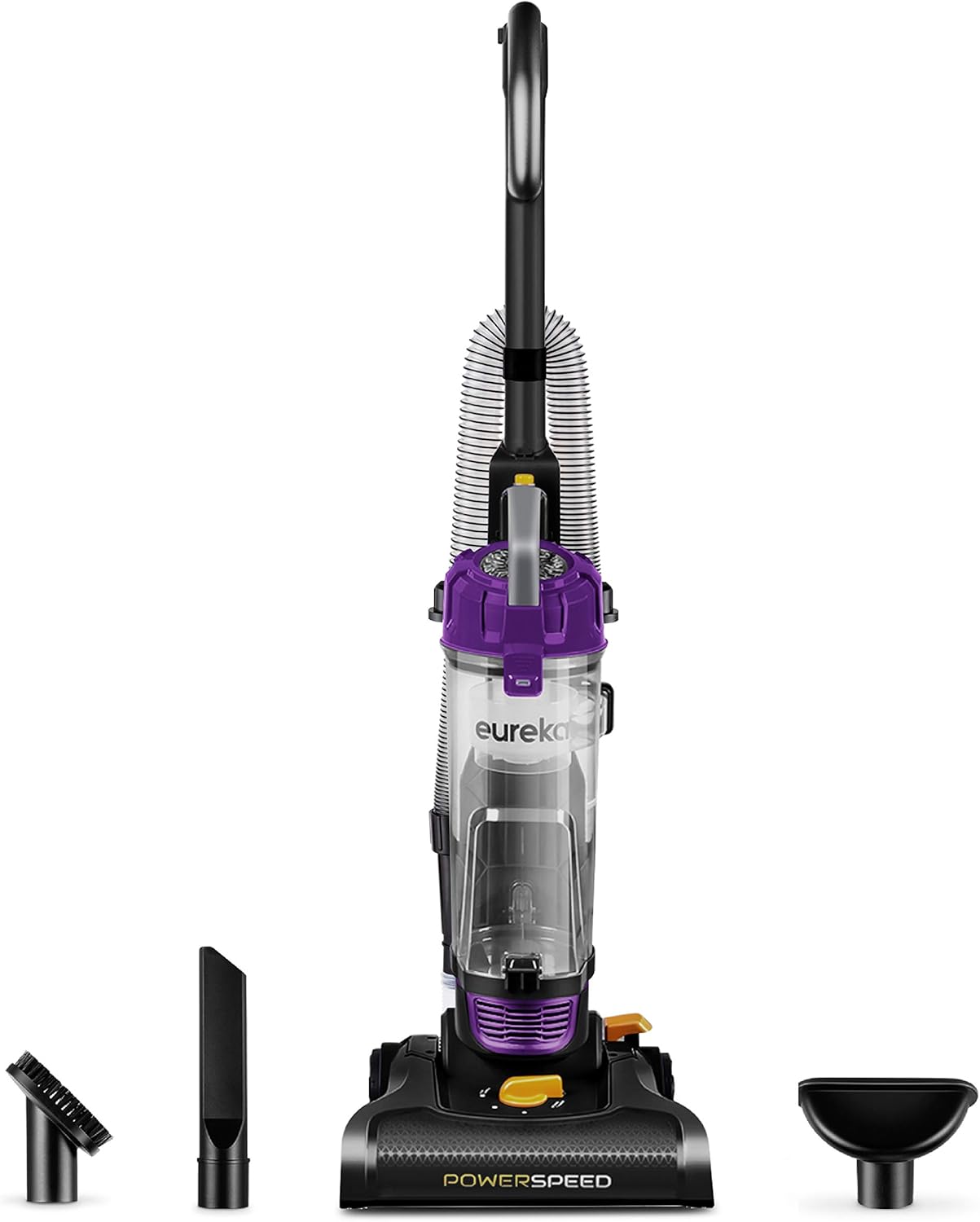
The Eureka PowerSpeed NEU182B is an entry-level upright that combines strong suction with a 12.6-inch cleaning path and a lightweight 10 lb body to make routine whole-home cleaning quick. It works on carpets, area rugs and hard floors and offers five height adjustments so you can set the brush roll for different pile heights; the wide nozzle covers more floor with each pass. The vacuum is bagless with an XL 2.6 L dust cup and a washable foam filter, and it stores a crevice tool, dusting brush and upholstery tool on board for above-floor cleaning. Practical buyers will appreciate the corded 120 V power and simple hand-control operation, though the foam filter is not a true HEPA filter so it will not capture the smallest allergens the way certified HEPA systems do. Noise is noticeable at around 88 dB and the single-speed motor limits suction control. For routine maintenance cleaning and homes without severe allergy sensitivity, it delivers solid performance and easy upkeep.
Best for: Buyers who want a practical, easy-to-use upright for fast whole-home cleaning and straightforward maintenance without premium filtration demands.
Less Ideal for: People with moderate to severe allergy or asthma concerns who need certified HEPA filtration and sealed systems should consider vacuums engineered specifically for allergen containment.
- Lightweight 10 lb upright is easy to maneuver and carry
- 12.6-inch wide nozzle cleans more floor per pass for faster cleaning
- Five height adjustments let you adapt the brush roll to carpets, rugs and hard floors
- Washable foam filter and XL 2.6 L dust cup reduce running costs and emptying frequency
- Onboard tools (crevice, dusting and upholstery) provide simple above-floor cleaning without extra storage
- Filter is foam rather than certified HEPA so it may not trap the finest allergy particles
- Single speed motor offers no suction control for delicate surfaces
- Relatively loud operation at about 88 dB
Verdict: A lightweight, budget-friendly upright that speeds up routine whole-home cleaning but does not replace HEPA-grade allergen filtration.
Eureka Blaze NES215A Stick Vacuum

| Power Source | Corded Electric |
|---|---|
| Wattage | 240 watts |
| Capacity | 0.55 liters |
| Noise Level | 84 db |
| Surface Recommendation | Hard Floor |
The Eureka Blaze NES215A is a 3-in-1 corded stick vacuum that converts to a handheld for spot cleaning and stairs, and it weighs about four pounds for easy carrying. It uses a 240-watt, 2-amp motor with a 9.5-inch cleaning path and a capture nozzle intended to pick up larger debris on hard floors and low-pile rugs. The bagless dust cup (0.55 L) and washable foam filter reduce running costs and make maintenance straightforward, and swivel steering helps the head maneuver around furniture. Because it is corded, runtime is unlimited but mobility is limited by the 18-foot power cord. Noise level is relatively high at 84 dB and the single power level means suction cannot be boosted for embedded dirt. For someone on a tight budget who needs a light, easy-to-store cleaner for daily crumbs, pet hair, and quick touch-ups, the Blaze is a practical choice, though deep-cleaning thick carpets or quiet operation are not its strengths.
Best for: Buyers prioritizing a low-cost, easy-to-use vacuum for quick daily cleanups in small homes, apartments, or dorms who value portability and low maintenance.
Less Ideal for: People who need a quiet machine, strong adjustable suction for deep carpet cleaning, or a large dust capacity for big homes should consider more powerful alternatives.
- Very lightweight and portable for carrying between rooms or up stairs
- 3-in-1 design converts to handheld for spot and stair cleaning
- Bagless dust cup with washable foam filter lowers replacement costs
- Swivel steering and a capture nozzle improve maneuverability and pickup on hard floors and low-pile rugs
- Single power level limits deep-cleaning performance on high-pile carpet
- Relatively loud at about 84 dB during use
Verdict: If you want an affordable, ultra-light stick that handles quick touch-ups and spot cleaning with low upkeep, the Eureka Blaze NES215A delivers practical value.
Zemmio ZM001 Cordless Vacuum

| Filter Type | HEPA Filter |
|---|---|
| Capacity | 1.8 liters |
| Noise Level | 55 db |
| Battery Life | 90 minutes |
| Wattage | 650 watts |
The Zemmio ZM001 is a cordless stick vacuum built for whole-home cleaning with a focus on suction and filtration. It pairs a 650W brushless motor and a V-shaped anti-tangle roller head to handle pet hair and embedded debris on carpets and hard floors, while a multi-cyclonic, washable HEPA system claims up to 99.99% particle capture to reduce airborne dust during use. Practical touches include a 1.8L dust cup with one-touch release, an OLED touch display to monitor battery and mode, a height-adjustable telescopic wand, and a freestanding wall-mount charger that recharges the removable battery in about three hours. Runtime varies by mode (up to 90 minutes in low/ECO), so longer sessions on high power will shorten that considerably. The unit is relatively quiet at around 55 dB and includes LED lighting and multiple tools for edges, upholstery, and cars. For allergy-conscious homes the washable HEPA filter and sealed multi-stage system are strong positives, though users should plan filter maintenance and expect shorter runtime in the strongest suction modes.
Best for: Buyers who prioritize reliable suction and high-efficiency filtration to reduce household allergens and want a cordless, easy-to-store stick vacuum for regular whole-home cleaning.
Less Ideal for: People who need very long runs at maximum suction for large homes without recharging or who prefer a lighter handheld-only design for primarily quick spot-cleaning.
- High 55 kPa suction from a 650W brushless motor for effective debris and pet hair pickup
- Washable multi-cyclonic HEPA filtration rated to capture up to 99.99% of fine particles
- Long removable-battery runtime up to 90 minutes in low mode with 3-hour recharge
- Large 1.8L dust cup with one-touch emptying to reduce handling of captured dust
- OLED touch display and LED headlights improve monitoring and cleaning in dark areas
- Runtime drops significantly on max power, limiting continuous use at highest suction
- Requires regular filter maintenance to preserve filtration performance
Verdict: A powerful cordless stick vacuum with washable HEPA filtration that suits allergy-conscious households seeking strong suction and easy maintenance.
Bissell CleanView Swivel Pet 3836

| Capacity | 1 liters |
|---|---|
| Power Source | Corded Electric |
| Voltage | 120 volts |
| Form Factor | Upright |
| Other Special Features | HEPA Filter, Swivel Steering, Extension Wand, Scatter-Free Technology, Multi-Cyclonic Suction System, Washable Filter |
The Bissell CleanView Swivel Pet 3836 is an upright vacuum aimed at homes with pets and heavy carpet use. It uses a Triple Action brush roll and Scatter-Free technology to lift embedded dirt and capture dry messes on hard floors while a multi-cyclonic suction system maintains consistent performance as the tank fills. Swivel steering and a 12-foot reach extension wand make it easy to maneuver around furniture and clean high or tight spots, and the XL easy-empty dirt tank reduces how often you stop to empty. The unit includes washable and foam filters and a HEPA filter is listed among special features, which helps reduce airborne allergens when used with proper filter maintenance. As a corded electric upright with a single speed setting, it delivers steady cleaning power but lacks variable suction control and may be heavier than stick or canister alternatives for users who prefer a lighter unit. Expect strong pet-hair and carpet performance, with a focus on convenient maintenance rather than compact storage.
Best for: Buyers who prioritize proven pet-hair and carpet cleaning performance with easy upkeep and want a vacuum backed by widespread positive feedback.
Less Ideal for: People who need a lightweight cordless cleaner for quick pickup jobs, frequent stair cleaning, or variable suction control should consider different formats.
- Triple Action brush roll and Scatter-Free technology that improves pickup of embedded dirt and dry messes
- Multi-cyclonic suction system designed to sustain suction as the tank fills
- XL easy-empty dirt tank reduces how often you need to empty the container
- Swivel steering and 12-foot active extension wand for easier reach around furniture and into high spots
- Includes washable filter and HEPA filter listed among special features to help reduce airborne particles
- Single speed control offers no suction-level adjustment for delicate surfaces
- Corded upright form is heavier and less maneuverable for long stair or quick clean sessions compared with cordless models
Verdict: Choose this Bissell if you want a reliable, pet-focused upright that combines strong carpet pickup and practical features to reduce allergens and maintenance time.
Shark Navigator NV360
| Capacity | 0.9 liters |
|---|---|
| Filter Type | HEPA |
| Power Source | Corded Electric |
| Wattage | 1200 watts |
| Hose Length | 5 feet |
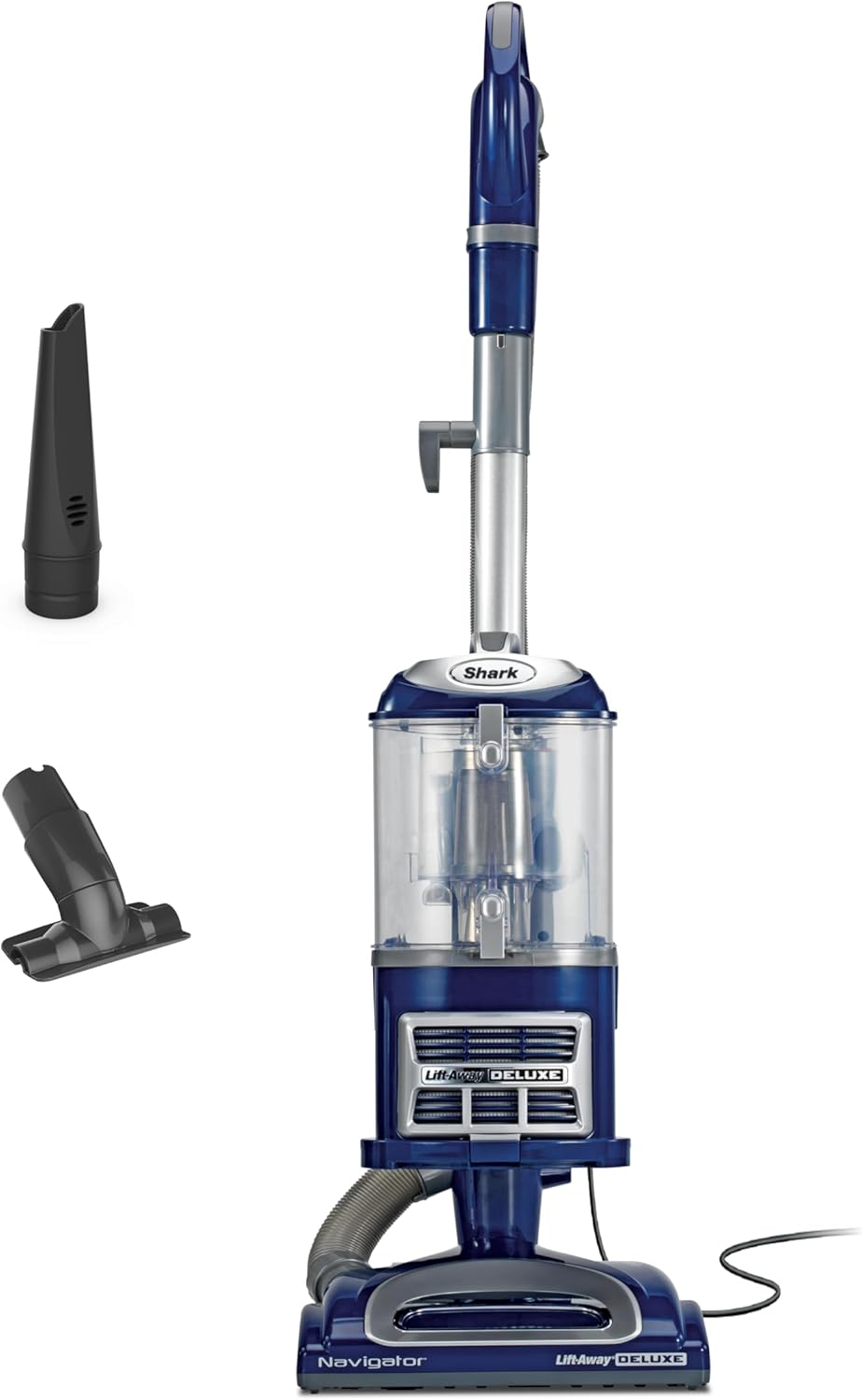
The Shark Navigator NV360 is a 2-in-1 upright vacuum that detaches into a portable pod for above-floor cleaning while keeping full upright power for carpets and hard floors. In everyday use you push a button to Lift-Away the pod to clean stairs, upholstery, and tight spots using the included crevice and upholstery tools, or use the upright mode with swivel steering to navigate around furniture. The sealed HEPA system traps dust and allergens inside the machine, which is useful for allergy-conscious households, and the 0.9 liter dust cup reduces how often you need to stop and empty it. Practical benefits include strong multi-surface suction, a brushroll shutoff for changing floor types, and a compact, maneuverable form factor. Expect some noise during operation and the corded design limits range compared with cordless models, but you get consistent suction without battery concerns. For buyers who prioritize reliable filtration and a familiar upright workflow, the NV360 balances performance and convenience.
Best for: Buyers who want a dependable, familiar upright vacuum with reliable HEPA filtration and a detachable pod for cleaning stairs and furniture without worrying about battery life.
Less Ideal for: People who need very quiet operation or the freedom of a cordless cleaner for frequent quick pickups throughout a large home.
- Completely sealed HEPA system captures dust and allergens
- Lift-Away pod converts to a lightweight handheld for stairs and upholstery
- Strong multi-surface suction suitable for carpets and hard floors
- Swivel steering improves maneuverability around furniture
- Corded design restricts reach compared with cordless vacuums
- Noise level around 80 dB may be noticeable in small homes
Verdict: Choose the NV360 if you want a reliable upright with sealed HEPA filtration and a detachable pod to reduce allergen exposure during home cleaning.
Choosing the Right Vacuum Cleaner for Allergies: Key Factors to Consider
Filtration Efficiency
High-efficiency filtration is the single most important factor for people with allergies. Look for true HEPA or equivalent multi-stage filters that capture particles down to 0.3 microns or smaller. Better filters remove pollen, fine dust, and pet dander from the air that passes through the vacuum, reducing the amount of irritants that remain in your home.
Filter replacement intervals and accessible pre-filters also matter because clogged filters reduce cleaning performance and can let particles escape. Consider both the initial filter rating and the ongoing costs and availability of replacements when evaluating long-term effectiveness.
Sealed System Design
A sealed system ensures that all air drawn into the vacuum passes through the filter before exiting the machine. Without a proper seal, fine particles can bypass filters through gaps or around bags, negating filtration benefits even with a high-efficiency filter.
Check for clear seals at the dust bin, filter housing, and tool connections. A truly sealed path paired with HEPA filtration significantly reduces the chance of re-releasing allergens into the room while you vacuum.
Suction Performance on Multiple Surfaces
Homes are a mix of rugs, carpets, and hard floors, and suction must be effective across these surfaces to remove embedded allergens. Strong, consistent suction removes dirt from carpet fibers and lifts dust from grout and baseboards on hard floors.
Variable suction settings and brush-roll control are useful because too-aggressive brushes can fling particles into the air on delicate surfaces, while insufficient power leaves debris behind. Evaluate how a vacuum maintains suction when a dust bin starts to fill, because declining performance over a session reduces overall allergen removal.
Ease of Maintenance
Maintenance directly affects whether a vacuum remains effective. Easy-empty dust bins that minimize contact with trapped dust, simple filter access, and washable pre-filters reduce the friction of upkeep and lower the risk of accidental exposure to allergens during maintenance tasks.
Complex disassembly, hard-to-clean brush rolls, or filters that require frequent professional servicing increase the chance owners will delay care, which reduces filtration performance and allergen control over time.
Tooling and Reach
Accessory tools matter for allergy-focused cleaning because many allergen hotspots are in upholstery, curtains, mattress seams, and tight corners. A quality crevice tool, upholstery nozzle, and an extendable wand let you clean those problem areas without stirring up dust unnecessarily.
Consider hose length and wand reach for cleaning beds and drapes without dragging a heavy body around. Tools that are easy to swap and that store onboard increase the likelihood you will use them for targeted allergen removal.
Noise Level and Daily Usability
Noise affects how often people vacuum, especially in households with children, shift workers, or noise-sensitive individuals. Quieter machines encourage more frequent cleaning, which helps keep allergen levels down.
Ergonomic factors such as weight, swivel steering, and cord length also influence daily use. If a vacuum is cumbersome, owners may skip routine cleaning, undermining any filtration advantages the machine offers.
Why HEPA and True Filtration Matter
HEPA or equivalent filtration is designed to trap very small particles that commonly trigger allergies. The key is not just the label but how the filter is integrated into the vacuum system. A true HEPA filter combined with a sealed airflow path minimizes the chance that captured particles will be released back into the room.
When shopping, ask about filter ratings and whether pre-filters or carbon layers are included to prolong HEPA life. Better filtration reduces airborne irritants and the frequency of intensive cleanings.
- HEPA captures particles around 0.3 microns and smaller.
- Pre-filters extend HEPA lifespan and protect motor components.
- A filter label alone is not enough without sealed containment.
Cleaning Bedrooms and Mattresses Safely
Bedrooms and mattresses are major reservoirs for dust mites and dander. A vacuum with a dedicated upholstery tool or a motorized mini-head helps extract allergens from seams and fabric without overly agitating the surface.
Use short, overlapping passes and finish with a soft-bristled tool on delicate fabrics. For mattresses, focus on edges and seams where dust accumulates and consider routine vacuuming as part of a weekly allergy-management plan.
- Target mattress seams, headboards, and under-bed storage.
- Avoid harsh brush-roll settings that can damage fabrics.
Maintaining Filters and Reducing Exposure
Routine filter care is a practical step that sustains allergen control. Washable pre-filters should be rinsed and thoroughly dried before reinstalling. For disposable HEPA or HEPA-style cartridges, replace them according to the manufacturer schedule or sooner if you notice reduced performance or odors.
When emptying dust bins, do it outdoors or over a trash bag to limit indoor dust clouds. Wear a mask if you are highly sensitive when performing maintenance tasks.
- Rinse washable pre-filters monthly or as recommended.
- Replace HEPA cartridges on the recommended interval.
- Empty dust bins carefully to avoid stirring settled dust.
Practical Tips for Allergy-Focused Vacuuming
Vacuum high-traffic and allergy-prone zones more often—at least twice weekly if someone has significant sensitivities. Focus on entryways, living-room seating, pet areas, and bedrooms. Use attachments to reach crevices and upholstery.
Combine vacuuming with other strategies such as frequent bedding washes and using mattress encasements for a layered approach to allergen reduction.
- Schedule short, frequent sessions rather than rare deep cleans.
- Use a methodical pattern to avoid missing edges and corners.
- Clean tools and hoses periodically to prevent transfer of allergens.
When to Consider Professional Deep Cleaning
If routine vacuuming and targeted cleaning do not noticeably reduce symptoms, professional carpet or upholstery cleaning can remove deeply embedded allergens. These services use hot water extraction and high-powered suction that household vacuums cannot match.
Schedule professional cleaning for carpets and large upholstery pieces annually or as needed based on household allergy severity, and after events that may introduce large amounts of dust or pollen into the home.
- Professional cleaning is a complement, not a replacement for regular vacuuming.
- Consider professional service after renovations or heavy contamination.
How We Chose the Best Vacuum Cleaner for Allergies
We prioritized machines that demonstrably reduce airborne and settled allergen loads through effective filtration and containment. Key evaluation criteria included filtration efficiency under standardized HEPA or equivalent ratings, sealed-system design to prevent particle bypass, and suction performance across common floor types. We also weighed cleaning and maintenance needs that affect real-world performance, such as canister emptying, filter replacement intervals, and brush-cleaning accessibility. Usability features like maneuverability, weight, and hose/tool versatility were included because they determine how often people actually vacuum high-allergen zones. Noise level and accessory storage were considered secondary but relevant for daily use and for users sensitive to loud operation. Excluded from the shortlist were units lacking sealed filtration paths or those with only basic dust bags that allow fine particles back into the room. We filtered out vacuum types that cannot reasonably handle both hard floors and carpets, or that require frequent, difficult maintenance that undermines long-term allergen control. The resulting picks balance tested filtration performance with practical upkeep, consistent suction across surfaces, and features that make regular allergen-focused cleaning realistic.
Our full evaluation process is outlined in our review methodology.
FAQ
Does a HEPA filter in a vacuum stop all allergens?
HEPA filters capture a large portion of fine particles, including many common allergens, but no single step removes all triggers. A properly sealed system plus routine cleaning is needed to significantly reduce allergen levels.
How often should I replace vacuum filters if I have allergies?
Replacement frequency depends on usage and filter type. Many HEPA cartridges last several months to a year under typical use, but inspect filters monthly and replace them sooner if you see clogging or reduced suction.
Are bagged vacuums better for allergy sufferers than bagless models?
Bagged systems can reduce dust exposure during emptying, but a bagless vacuum with a well-designed, easy-empty bin and sealed filtration can also be effective. The key is how contained the dust is during disposal.
Will stronger suction always mean better allergy control?
Stronger suction helps remove embedded dirt, but it must be balanced with appropriate brush action and filtration. Excessive agitation on delicate surfaces can release particles into the air, so adjustable settings are useful.
Can vacuuming make allergies worse immediately after cleaning?
Yes, vacuuming can temporarily stir up dust if the machine lacks proper filtration or if filters and bins are clogged. Using a sealed HEPA system and maintaining filters minimizes this risk.
Final Verdict
Prioritize filtration and containment when choosing a vacuum cleaner for allergies. A true HEPA or equivalent filter paired with a sealed system will have the largest impact on reducing airborne and surface allergens. Balance that filtration with consistent suction across your home surfaces and features that make maintenance and targeted cleaning straightforward. Ultimately, choose a machine you will use regularly: quieter operation, easy-empty bins, and accessible filters encourage frequent cleaning and sustained allergen reduction. Focus on systems that make upkeep simple and support the cleaning habits that keep symptoms under control.