
Note: This article contains affiliate links. If you click on these links and make a purchase, we may earn a small commission at no extra cost to you. This helps support our research and content. Read our full affiliate disclosure here.
When you are cleaning up concrete dust, the right vacuum makes a big difference for cleanliness and safety. Concrete dust contains fine particles that settle into cracks, damage finishes, and can become airborne during follow-up work. Using a machine designed for construction debris and fine particulates helps control dust, protect indoor air quality, and reduce cleanup time. This guide covers seven shortlisted vacuum cleaners for concrete dust that meet common jobsite and workshop needs. We evaluate each option on filtration performance, suction and debris handling, ease of use, and durability so you can choose the best machine for your workspace and workflow.
Top Picks at a Glance
| Best Overall The best all-around choice for most situations | DEWALT DWV010 Dust Extractor |  |
| Best Quality Built to a higher standard if you want something more solid | Festool CT 15 HEPA Dust Extractor |  |
| Best Value The sweet spot between price and what you get | DEWALT 6 Gallon Shop Vac DXV06P |  |
| Best Budget The cheapest option that still gets the job done reliably | Vacmaster VOC508S 5-Gallon Wet/Dry Vac |  |
| Top Rated A top-rated pick with lots of positive feedback | CRAFTSMAN 16 Gallon Shop Vac CMXEVBE17595 |  |
| Most Popular A crowd favorite that many people choose with confidence | STANLEY SL18116P Wet/Dry Vacuum |  |
| Best Seller A high-volume bestseller chosen again and again | Amazon Basics 4-Gallon Wet/Dry Vac |  |
DEWALT DWV010 Dust Extractor

| Capacity | 8 gallons |
|---|---|
| Filter Type | HEPA Filter |
| Hose Length | 15 feet |
| Wattage | 300 watts |
| Amperage | 15 A |
The DEWALT DWV010 is an 8-gallon HEPA dust extractor built for heavy-duty cleanup on jobsites and in workshops. It uses a 15-amp motor to produce strong airflow (listed as about 150–155 CFM) and a 15-foot anti-static hose to handle extended reach for concrete and construction debris. The unit's automatic filter cleaning pulses every 30 seconds to reduce downtime from clogs during continuous operation, and the included HEPA filter captures fine particulate that concrete sanding and cutting produce. Controls include power tool actuation so the extractor can switch on with connected tools, and its wheeled canister design makes it reasonably portable around a site. Expect typical compressor-level noise (around 80 dB) and a single-speed motor, so fine tuning suction is not available. The extractor is corded only and is a purpose-built machine rather than a light household vacuum, so it excels at collection of concrete dust but can be louder and heavier than consumer vacuums.
Best for: Buyers who need a jobsite-capable dust extractor that captures fine particulate from concrete work and runs continuously with minimal filter maintenance.
Less Ideal for: Consumers seeking a quiet, lightweight household vacuum or a cordless, highly portable cleaner should consider other options.
- HEPA filtration captures fine concrete dust and meets RRP requirements when specified filters are used
- Automatic filter clean pulses every 30 seconds to maintain airflow during prolonged use
- Power tool actuation allows the extractor to turn on with connected tools for hands-free operation
- 15-foot anti-static hose and universal swivel connector give good reach and secure tool hookups
- Sturdy wheels and casters make it portable across a jobsite despite its size
- Single-speed motor offers no adjustable suction settings
- Noise level is relatively high at about 80 dB during operation
- Corded power limits mobility compared with battery solutions
Verdict: Choose the DWV010 when you need a rugged, HEPA-equipped dust extractor that keeps airflow steady during long concrete dust collection tasks.
Festool CT 15 HEPA Dust Extractor
| Filter Type | HEPA Filter |
|---|---|
| Power Source | Corded Electric |
| Form Factor | Cannister |
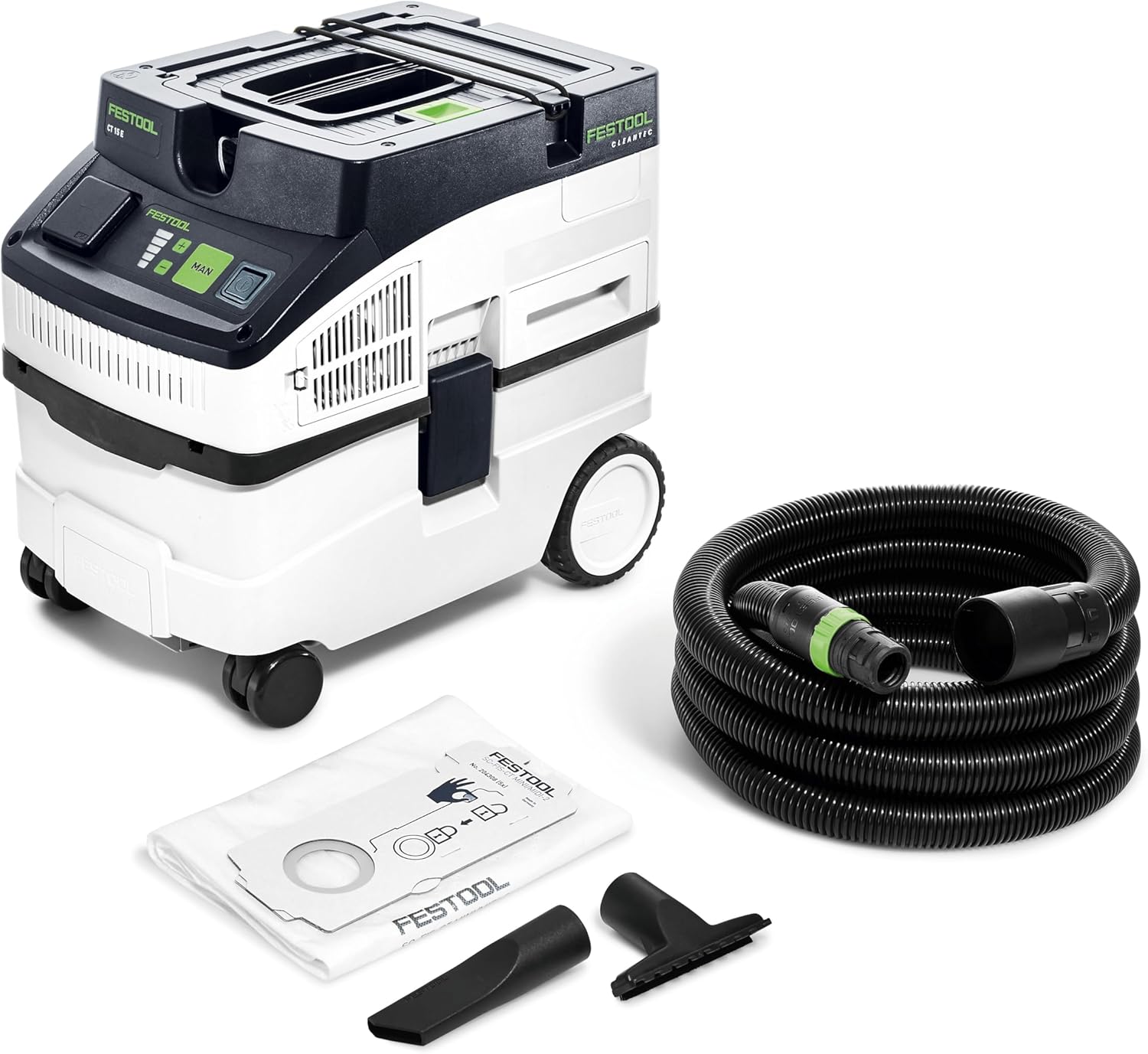
| Included Components | suction hose 27/32 x 3.5 m; SELFCLEAN filter bag; Crevice nozzle; Upholstery brush |
The Festool CT 15 HEPA is a compact, worksite-focused dust extractor built to capture fine dust and keep a small jobsite or bench area clean. It pairs a HEPA-certified filter with a high-performance adjustable turbine and a 3.96 gallon (15 L) container so you can run longer without dumping. Built-in storage for the crevice and upholstery nozzles and a flat top for tools make it handy on the move, and the touch controls plus automatic tool-start integration let it power on with connected tools to simplify one-person work. The chassis and steel-axle wheels feel durable for transport between sites, and Festool includes a SELF-CLEAN filter bag and cleaning accessories to maintain suction. For concrete dust specifically, the HEPA filtration and robust suction help control respirable particles, but the unit is compact so it is best for moderate concrete cleanup rather than heavy demolition where a larger capacity or dedicated dust shroud system would be preferable.
Best for: Buyers who prioritize effective fine-dust capture and reliable suction on small to medium concrete jobs and who want a compact, durable extractor that integrates with handheld tools.
Less Ideal for: Contractors handling heavy demolition, large slabs, or continuous high-volume concrete grinding should choose a higher-capacity or industrial extractor instead.
- HEPA-certified filtration captures fine and respirable dust for cleaner air
- Automatic tool-start integration reduces setup and ensures synchronized extraction
- Generous 3.96 gallon (15 L) container for longer runtime between emptying
- Compact, durable chassis with onboard tool/nozzle storage for jobsite mobility
- Smaller capacity and compact footprint limit continuous use on large concrete demolition tasks
- Not Bluetooth capable or designed for integration with multi-unit systems
Verdict: For performance-focused users needing a portable HEPA dust extractor for small to medium concrete dust tasks, the CT 15 delivers reliable suction and filtration in a compact, jobsite-ready package.
DEWALT 6 Gallon Shop Vac DXV06P

| Capacity | 6 gallons |
|---|---|
| Maximum Suction | 50 inches |
| Hose Length | 7 feet |
| Noise Level | 77 db |
| Power Source | Corded Electric |
The DEWALT 6 Gallon Shop Vac DXV06P is a compact wet/dry vacuum built for shop and garage tasks where portability and strong suction matter. It uses a 4 HP heavy-duty motor to deliver the suction needed to pull up sawdust, concrete dust, and small debris from hard floors and work surfaces, and the included cartridge filter and dust bag help contain fine particles during dry pickup. The unit also doubles as a blower via the built-in port for clearing dust and debris from benches or concrete surfaces. Its 7-foot hose, two extension wands, and multiple nozzles make it easy to reach corners and crevices, and rubberized casters improve maneuverability on workshop floors. Noise level is listed at 77 dB, so it is noticeable during operation but typical for shop vacs. The 6 gallon tank is convenient for small-to-medium jobs but will require more frequent emptying on heavy concrete dust cleanup compared with larger shop vacs. Overall, it is a durable, portable option for routine concrete dust management in a garage or small jobsite where a balance of power and mobility is needed.
Best for: Buyers who prioritize a durable, portable shop vac that delivers strong suction for routine concrete dust and workshop cleanup and who value maneuverability in a garage or small jobsite.
Less Ideal for: Contractors or users handling large-volume concrete cleanup who need longer runtime between dumps should consider larger-capacity or commercial-grade extractors instead.
- Powerful 4 HP motor provides strong suction for sawdust and fine debris
- Built-in blower port helps clear dust from workbenches and concrete surfaces
- Includes cartridge filter, dust bag, and multiple nozzles for versatile cleaning
- Rubberized casters and a 7-foot hose improve maneuverability and reach
- 6 gallon tank fills quickly during heavy concrete dust cleanup
- Noise level around 77 dB is loud for indoor use
Verdict: A compact, durable shop vac that delivers strong suction and a blower function for keeping concrete dust under control in garages and small jobsites.
Vacmaster VOC508S 5-Gallon Wet/Dry Vac

| Capacity | 5 gallons |
|---|---|
| Filter Type | Cartridge |
| Hose Length | 6 feet |
| Noise Level | 77 db |
| Wattage | 960 watts |
The Vacmaster VOC508S is a compact wet/dry vac built around a stainless steel tank and a motor rated at roughly 960 watts (listed as 4 peak HP). It is intended for everyday wet and dry pickup in homes, garages, and small job sites and includes both a cartridge filter for dry debris and a foam filter for wet pick-up. Typical use covers sweeping concrete floors of dust, debris, and occasional liquid spills, with six accessories and a 6-foot hose plus the power cord giving about 16 feet of reach. The unit has a blowing port for clearing tight spots and rolls on four wheels for easy repositioning. Practical benefits include durable tank construction, straightforward hand controls, and decent suction for its size that handles light-to-moderate concrete dust and debris. Important limitations are its modest 5-gallon capacity and relatively short hose diameter (1-1/4 inch) which may clog faster with heavy gritty material, and a 77 dB noise level that is noticeable during operation.
Best for: Buyers who want an affordable, durable shop vac for occasional concrete dust cleanup in garages, workshops, or small job sites and who prioritize compact storage and basic wet/dry functionality.
Less Ideal for: Contractors or users tackling large areas of heavy concrete dust, grout, or frequent high-volume cleanup should choose a larger-capacity shop vacuum with wider-diameter hose and industrial filtration.
- Stainless steel tank offers durable construction for workshop use
- Includes cartridge and foam filters to switch between dry and wet pickup
- Compact 5-gallon size is easy to store and maneuver on four wheels
- Blower port adds versatility for clearing debris in corners
- Smaller 5-gallon capacity means more frequent emptying on heavy concrete cleanup
- Narrow 1-1/4-inch accessory diameter and hose can clog with large or gritty debris
Verdict: A durable, budget-friendly 5-gallon wet/dry vac that handles light-to-moderate concrete dust and small shop tasks while staying compact and easy to store.
CRAFTSMAN 16 Gallon Shop Vac CMXEVBE17595

| Capacity | 16 gallons |
|---|---|
| Maximum Suction | 46 inches |
| Hose Length | 7 feet |
| Power Source | Corded Electric |
| Wattage | 1440 watts |
The CRAFTSMAN 16 Gallon Shop Vac is built for large-scale wet and dry jobs where power and capacity matter. It pairs a 6.5 peak HP motor with a 2.5-inch Dual-Flex hose and a 16-gallon drum, letting you pull heavy debris, fine dust, or liquids from garages and jobsite concrete. Onboard storage for the hose, extension wands and nozzles keeps accessories tidy, while the Qwik Lock filter system makes swapping filters and switching between wet and dry tasks quick. The oversized drain speeds liquid emptying and the rear blowing port doubles as a yard blower for leaves or sweeping debris out of a workspace. Practical limitations include a single speed control so you cannot dial back suction for delicate surfaces and a relatively loud noise level typical for a motor this size, which may be noticeable during extended use. Its size and weight also mean it is less convenient for tight spaces compared with compact vacs. For heavy concrete dust and renovation cleanup it delivers the capacity and suction needed to cut down on trips emptying the tank.
Best for: Buyers who prioritize dependable, high-capacity cleaning for renovation or concrete dust work and want a durable machine that minimizes downtime for tank emptying and filter changes.
Less Ideal for: Those needing a lightweight, quiet unit for frequent small indoor chores or tight spaces should consider a smaller, more portable vacuum instead.
- High peak motor power suited for heavy debris and concrete dust pickup
- Large 16-gallon tank reduces frequency of emptying during big jobs
- Dual-Flex 2.5-inch hose resists kinks and improves maneuverability
- Onboard accessory and cord storage keeps attachments organized
- Oversized drain and Qwik Lock filter speed wet/dry transitions and maintenance
- Single-speed control limits suction modulation for delicate tasks
- Bulkier and heavier than portable shop vacs, less handy in tight areas
- Noise level is relatively high during heavy use
Verdict: Choose this shop vac when you need a reliable, high‑power, high‑capacity cleaner that handles heavy concrete dust and renovation debris without frequent emptying.
STANLEY SL18116P Wet/Dry Vacuum

| Capacity | 6 gallons |
|---|---|
| Maximum Suction | 85 inches |
| Hose Length | 6 feet |
| Power Source | Corded Electric |
| Wattage | 1200 watts |
The STANLEY SL18116P is a compact wet/dry shop vacuum built for general-purpose cleanup around garages, workshops, and vehicles. It uses a corded 1200-watt/4 peak HP motor and 6-gallon stainless steel tank to handle both wet spills and dry debris, and it converts to a blower via a rear port for loosening and moving dust and debris. The package includes a 6-foot flexible hose, three extension wands, a floor nozzle, crevice and gulper nozzles, a foam filter and a reusable dry filter, which makes setup for concrete or jobsite cleanup straightforward. Swiveling casters and an integrated cord and accessory wrap help maneuver and store the unit without much fuss. Expect solid suction for everyday concrete dust, small drywall or masonry cleanup, but know that peak HP is a marketing metric and runtime specs shown are not operational measures. The unit runs relatively loud at about 80 dB and offers a single speed only, so fine control for very dusty, delicate tasks is limited compared with variable-speed commercial vacuums.
Best for: Buyers who prioritize a proven, no-frills wet/dry vacuum with included accessories and clear customer feedback for routine concrete and jobsite cleanups.
Less Ideal for: If you need low-noise operation, adjustable suction for delicate finishing work, or certified HEPA filtration for hazardous silica dust, choose a specialized commercial dust extractor instead.
- Wet and dry capability plus blower port for versatile cleanup and clearing dust.
- Comes with a broad accessory kit including extension wands, floor and crevice nozzles for reach and detail work.
- Stainless steel 6-gallon tank and caster base make it stable and easy to move on jobsite floors.
- Includes both foam and reusable dry filters and a disposable dust bag option for different debris types.
- Single-speed motor limits suction control for very fine concrete dust or sensitive surfaces.
- Noise level around 80 dB is fairly loud during operation.
Verdict: A well-equipped, worksite-ready wet/dry vacuum that delivers dependable suction and accessories for everyday concrete dust and debris cleanup.
Amazon Basics 4-Gallon Wet/Dry Vac

| Capacity | 4 gallons |
|---|---|
| Motor | 3 HP |
| Wattage | 960 watts |
| Hose Length | 72 inches |
| Power Source | Corded Electric |
The Amazon Basics 4-gallon wet/dry vacuum is a small, workhorse-style shop vac meant for routine cleanups in the home, garage, or car. It switches between wet and dry modes and pulls debris and dirty water into a stainless steel tank, with on-board tool storage for the included nozzle, extension wands, and cloth and foam filters. The 72-inch hose and 8-foot cord give reasonable reach for cleaning concrete floors, benches, and vehicle interiors without constantly moving the unit. Its four wheels and single-handle design make it easy to roll around and store when finished. Practical benefits include a reusable cloth filter for dry debris, a foam wet filter for liquid pickup, and a durable tank that withstands rough use. Limitations are its modest 4-gallon capacity, which means heavier concrete dust jobs will require frequent emptying, and its single power level so you cannot dial suction down for delicate tasks. For standard concrete dust cleanup around a garage or small job site it performs reliably, but expect to empty and check filters more often during heavy-duty sanding or grinding work.
Best for: A cautious buyer who wants a simple, durable shop vacuum for routine garage or small job-site concrete dust cleanup and values easy maintenance and on-board tool storage.
Less Ideal for: Contractors or users tackling large-scale concrete grinding or prolonged heavy dust generation should choose a larger-capacity, higher-power industrial vacuum with variable suction and larger filtration.
- Wet and dry capability for both liquid spills and dry debris
- Stainless steel tank built for repeated use
- Includes reusable cloth filter plus foam wet filter and multiple nozzles
- Long hose and cord for extended reach and on-board tool storage
- Lightweight, wheeled design for easy maneuvering
- 4-gallon tank requires frequent emptying during large concrete-dust jobs
- No variable suction settings for adjusting power
Verdict: A compact, dependable wet/dry vac that handles routine concrete dust and spills well while prioritizing durability and simple maintenance.
Choosing the Right Vacuum Cleaner for Concrete Dust: Key Factors to Consider
Filtration Level and Certification
Filtration matters because concrete dust includes very fine particles that can become airborne and pose respiratory hazards. Look for vacuum systems with high-efficiency filters designed to trap submicron particles and that maintain performance as the filter loads. A sealed system that prevents leaks around the motor and tank improves captured-dust retention and reduces the risk of re-entrainment during operation.
Certification or standardized ratings for particulate capture are useful signals of real-world performance. Consider whether filters are replaceable and how easy it is to inspect or clean them without releasing dust back into the workspace.
Suction Power and Horsepower Ratings
Strong suction is necessary to pick up both large grit and the fine dust that hides in pores and crevices. Pay attention to both airflow (CFM) and pressure (inches of water lift) where available; a balance of the two delivers sustained pickup on flat surfaces and inside tool ports. Machines that maintain suction as the tank fills or the filter loads are preferable for longer tasks.
Also consider whether the motor is cooled and protected from abrasive dust. Motors designed for continuous, heavy-duty operation will tend to last longer in construction environments.
Dust Containment and Disposal
How a vacuum contains and disposes of collected concrete dust affects cleanup time and exposure during service. Options include bagged collection, cartridge filters with sealed access, and cyclonic pre-separation. Bagged systems can make disposal cleaner, while sealed cartridge systems reduce contact with captured dust during filter changes.
Check how filters are accessed and whether emptying the canister or replacing a bag requires exposing dust to the air. Systems that allow tool-free, contained removal are easier and safer to manage on a jobsite.
Hose, Attachments, and Tool Integration
Concrete cleanup often involves connecting the vacuum to power tools or reaching tight corners and trenches. A compatible hose diameter, secure couplings, and a selection of rigid and flexible attachments improve effectiveness. Consider whether the vacuum can be adapted to common power tools for dust extraction and whether extra-length hoses or accessory kits are available.
Quick-release couplings and durable, abrasion-resistant hoses reduce downtime and failures when working with gritty material.
Tank Capacity and Portability
Tank size influences how long you can work between empties. Larger tanks reduce interruption but increase weight and storage footprint. For portable jobsite use, a balance of capacity and manageable weight or wheeled mobility is important. Look at how the tank design affects stability and whether the unit can be transported easily up and down jobsite stairs.
Also factor in how full-tank weight impacts handling and whether emptying procedures are practical on busy sites.
Serviceability and Filter Maintenance
Filters exposed to abrasive concrete dust will eventually need replacement or cleaning. Easy access to filters, clear maintenance intervals, and availability of replacement parts extend the useful life of a vacuum. Consider whether the design allows for field-servicing the motor, hose, or seals without specialized tools.
Long-term maintenance costs and the ability to inspect seals and hose wear are important for owners who expect heavy, repeated use.
Why Concrete Dust Is Different
Concrete dust is composed of a mix of coarse grit and very fine particulate matter that behaves differently from household dust. The fine fraction can stay suspended longer and is more likely to be inhaled, while the coarse fraction abrades hoses and seals. Both aspects require a vacuum designed for the task.
Because of the abrasive nature and health implications, a vacuum for concrete dust must combine strong suction, robust materials, and a sealed filtration path to prevent re-entrainment when you change filters or empty the tank.
- Fine particles increase airborne exposure risk.
- Grit accelerates wear on hoses and intake components.
- Poor containment leads to dust escaping during service.
Filtration Options: Bags, Cartridges, and Cyclone
There are several common containment strategies. Bagged systems capture dust directly into disposable bags, simplifying disposal and reducing exposure during emptying. Cartridge filters offer high surface area and can be easier to clean or replace without a separate bag.
Cyclonic pre-separation reduces the load on the final filter by spinning out larger particles first. Combining a cyclone stage with a sealed final filter can extend service intervals and preserve suction power.
- Bagged: cleaner disposal but recurring consumable cost.
- Cartridge: high filtration surface, reusable in some systems.
- Cyclone: extends filter life by removing larger particles early.
Connecting to Power Tools and On-Tool Extraction
If you plan to do grinding, cutting, or chiseling, consider vacuums designed to integrate with power tools. On-tool extraction reduces airborne dust at the source and can improve overall cleanup efficiency. Check the vacuum's inlet size, available adapters, and whether the unit maintains suction when connected to a tool.
Some systems provide automatic activation when the tool starts, which is convenient for intermittent tasks. If that is important for your workflow, verify compatibility and available accessory kits.
- Verify inlet size and adapter availability.
- Automatic tool activation reduces manual switching.
- Longer hoses increase reach but may reduce suction slightly.
Practical Jobsite Considerations
Durability features such as reinforced housings, metal fittings, and abrasion-resistant hoses pay off on rough jobs. Mobility is equally important: look for secure storage for accessories, stable wheelbases, and handles that make transport easier.
Think about where you will store and maintain the vacuum. Units with readily available replacement parts and clear maintenance guidance minimize downtime over the long run.
- Reinforced hoses resist cuts and wear from grit.
- Accessory storage reduces setup time.
- Stable base prevents tipping when pulling tools or hoses.
Reducing Silica Exposure and Best Practices
Concrete dust can contain crystalline silica, which has health risks when inhaled over time. Beyond selecting a high-filtration vacuum, use basic control measures: ventilate the area when possible, use wet-cut methods where appropriate, and wear proper respiratory protection during prolonged exposure.
Empty and service filters outdoors or in a well-ventilated area using safe practices to avoid generating a secondary dust cloud. Regularly inspect seals and gaskets to maintain a sealed system.
- Use high-efficiency filters and sealed disposal methods.
- Perform maintenance outdoors or in ventilated areas.
- Combine vacuuming with other dust control methods for best results.
How We Chose the Best Vacuum Cleaner for Concrete Dust
We prioritized machines built to handle fine, abrasive construction dust and ordinary jobsite debris. Key evaluation criteria included filtration efficiency under load, suction consistency on coarse and fine materials, and the durability of the intake and hose system when exposed to sand and grit. We also assessed dust containment methods to limit re-entrainment, hose and attachment compatibility for common tools, and practical usability features such as tank capacity and mobility. We excluded general household vacuums and models lacking sealed filtration or rated for fine particulates to focus on units appropriate for concrete dust. We also filtered out equipment intended only for liquid pickup or very light household debris. Our selection favors units with replaceable high-efficiency filters, robust motor cooling, and serviceability to handle abrasive wear over time.
Our full evaluation process is outlined in our review methodology.
FAQ
Can I use a regular household vacuum for concrete dust?
Usually not. Household vacuums are not designed to handle abrasive grit or the fine particulate load from concrete dust. They typically lack sealed filtration and may clog quickly or suffer motor damage.
How often should I change or clean filters when vacuuming concrete dust?
It depends on usage intensity. For heavy jobsite use, inspect filters daily and clean or replace according to manufacturer guidance. Frequent checks prevent loss of suction and reduce motor strain.
Is bagged collection better than canister systems for concrete dust?
Bagged systems can make disposal cleaner and reduce direct contact with dust, but they incur consumable costs. Canister or cartridge systems with sealed removal and pre-separation are viable alternatives if designed for fine dust.
Do I need a specific hose type for abrasive dust?
Yes. Abrasion-resistant hoses and reinforced couplings are advisable because fine grit will wear standard hoses quickly. Durable materials prolong hose life and reduce leaks.
Can these vacuums handle both dry concrete dust and wet slurry?
Some vacuums are rated for both wet and dry pickup, but not all. If you expect to encounter slurry or liquids, choose a model explicitly specified for wet recovery to avoid damage and safety hazards.
Will a cyclone pre-separator help with concrete dust?
A cyclone pre-separator can be helpful by removing larger particles before they reach the main filter, extending filter life and maintaining suction. It is a useful addition for heavy, continuous cleanup.
Final Verdict
Prioritize filtration performance, dust containment, and abrasion-resistant construction when choosing a vacuum cleaner for concrete dust. Strong, sustained suction and a sealed path from nozzle to filter reduce airborne particles and protect the motor. Balance tank capacity and portability against how you work on site to minimize interruptions and maintenance needs. Choosing a machine with clear service access and replaceable filters simplifies upkeep and extends service life. Focus on the tradeoffs that matter for your workflow and pick the unit whose features match the scale and intensity of your cleanup tasks.