
Note: This article contains affiliate links. If you click on these links and make a purchase, we may earn a small commission at no extra cost to you. This helps support our research and content. Read our full affiliate disclosure here.
If you work around renovation debris, a standard household vacuum will struggle with jobsite dust and abrasive particles. A vacuum cleaner for construction dust is designed to collect heavy loads of drywall dust, sawdust, and fine particulates while protecting filters and motors from premature wear. This guide covers seven shortlisted options that perform well in demanding cleanup scenarios, focusing on suction, filtration, and durability. You will find practical evaluation criteria and guidance to match a machine to the scale of your projects and the types of debris you handle.
Top Picks at a Glance
| Best Overall The best all-around choice for most situations | DEWALT 10 Gallon Wet Dry Vacuum DXV10P |  |
| Best Quality Built to a higher standard if you want something more solid | Bosch VAC090AH 9-Gallon Dust Extractor |  |
| Best Value The sweet spot between price and what you get | DEWALT DXV05P 5-Gallon Wet/Dry Vac | 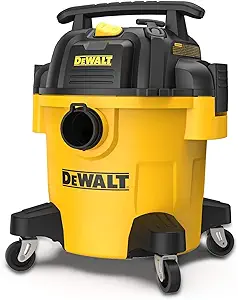 |
| Best Budget The cheapest option that still gets the job done reliably | CRAFTSMAN 2.5 Gallon Shop Vacuum |  |
| Top Rated A top-rated pick with lots of positive feedback | CRAFTSMAN 16-Gallon Shop Vac |  |
| Most Popular A crowd favorite that many people choose with confidence | STANLEY SL18116P 6-Gallon Wet/Dry Vacuum |  |
| Best Seller A high-volume bestseller chosen again and again | Eureka Canister Vacuum 3670M |  |
DEWALT 10 Gallon Wet Dry Vacuum DXV10P

| Capacity | 10 gallons |
|---|---|
| Filter Type | HEPA Filter |
| Noise Level | 80 db |
| Power Source | Corded Electric |
| Wattage | 1200 watts |
The DEWALT DXV10P is a compact 10-gallon wet/dry vacuum built for workshop and jobsite cleanup. It uses a quiet two-stage motor that DEWALT says runs up to 50% quieter while delivering the suction needed for typical construction debris, and it arrives with a cartridge filter and dust bag for dry pickup plus the ability to handle wet spills. Practical touches include an accessory bag, onboard tool storage, a 7-foot hose with extension wands, large water-resistant power switch, swiveling casters for maneuvering, a built-in blower port, and a 20-foot cord for reach. For construction dust it benefits from the HEPA-style cartridge filter and a solid 1-7/8" hose diameter that handles sawdust and drywall dust without frequent clogging. Limitations are the single power level and modest peak horsepower rating relative to larger shop vacs, so heavy-duty industrial tasks may need a higher-capacity unit, and the plastic tank trades durability for lighter weight compared with steel-bodied vacs.
Best for: Buyers who want a durable, jobsite-ready shop vacuum for routine construction dust and mixed wet/dry cleanup with convenient onboard storage and quieter operation.
Less Ideal for: Contractors who need continuous high-capacity suction for large-scale industrial cleanup should consider larger commercial vacuums instead.
- Quiet two-stage motor reduces noise during prolonged cleanup
- Included cartridge filter and dust bag make dry dust pickup easier and cleaner
- Onboard accessory bag and wand storage keep tools organized on site
- Built-in blower port and 20-foot cord increase versatility and reach
- Swiveling casters and carry handle improve maneuverability around a workshop
- Single fixed power level limits suction control for delicate or extremely heavy tasks
Verdict: A versatile, jobsite-focused 10-gallon wet/dry vac that balances quieter operation and practical accessories for routine construction dust and workshop cleanup.
Bosch VAC090AH 9-Gallon Dust Extractor
| Capacity | 4488.32 quarts |
|---|---|
| Filter Type | HEPA Filter |
| Maximum Suction | 97 inches |
| Power Source | Corded Electric |
| Noise Level | 60 db |
The Bosch VAC090AH is a jobsite-focused dust extractor that pulls high airflow and sustained suction to control dust from grinders, sanders, and other power tools. It delivers up to 150 CFM with a maximum static water lift of 97 inches and uses a HEPA filter that captures 99.97% of particles down to 0.3 microns, making it suitable for improving dust containment and helping toward OSHA silica compliance. The unit includes an automatic on-board filter-cleaning system that pulses every 15 seconds to keep suction steady and a fleece filter bag to protect the HEPA element and simplify debris containment. Power tool activation and a Power Broker dial let you match suction to the task and have the vac turn on with the tool, which is practical for continuous tool work. The extractor is corded, mounted on wheels with handles for portability, and offers three power levels, but it is a dedicated dust collector rather than a general-purpose shop vacuum and requires appropriate hoses and fittings for some tools. Noise is moderate at about 60 dB, and the design favors contractors and serious hobbyists who need sustained performance on concrete and woodwork debris.
Best for: Buyers who prioritize sustained, high-performance dust control on construction or concrete jobsites and need a unit that integrates with power tools for continuous operation.
Less Ideal for: Casual users who want a lightweight household vacuum or those who need cordless or multi-purpose shop vac functions.
- High airflow up to 150 CFM for effective dust extraction during tool use
- HEPA filter captures 99.97% of particles 0.3 microns and larger for better air quality
- Automatic filter-cleaning system activates frequently to maintain suction
- Power tool activation and adjustable suction make it convenient for continuous tool workflows
- Portable canister design with wheels and handles for jobsite mobility
- Corded design limits use to locations with AC power
- Primarily a dust extractor rather than a multi-purpose shop vacuum
- Fleece filter bag needs periodic replacement to maintain containment
Verdict: Choose the VAC090AH when you need a portable, HEPA-equipped extractor that delivers sustained CFM and tool-activated suction for serious construction dust control.
DEWALT DXV05P 5-Gallon Wet/Dry Vac

| Capacity | 5 gallons |
|---|---|
| Motor | Single Stage 4 Peak HP |
| Air Flow | 80 CFM |
| Hose | 1-7/8 in. x 7 ft. |
| Power | 120 V / 60 Hz / 8 A |
The DEWALT DXV05P is a compact shop vacuum aimed at light-to-medium jobsite and home cleanup. It combines a 5-gallon poly tank with a single-stage motor rated at 4 peak horsepower and delivers about 80 CFM of airflow for collecting dust, debris, and small amounts of liquid. Typical use cases include sweeping up wood chips, drywall dust, and workshop debris or using the blower function for clearing leaves and dust from work areas. The unit ships with a 7-foot, 1-7/8-inch hose, two extension wands, a 10-foot power cord, and a vacuum bag, and it supports HEPA-style filtration for finer particulates. Practical benefits are its portability, four wheels for mobility, and a compact footprint that fits in a truck or tool closet. Limitations are the modest 5-gallon tank that requires frequent emptying on larger jobs and peak horsepower ratings that overstate continuous performance, so heavy commercial use will push the motor harder and may require a larger-capacity vacuum. Noise is noticeable during operation but typical for this class.
Best for: Buyers who want a portable, jobsite-ready vacuum for frequent small-to-medium cleanup tasks and who prioritize easy transport and efficient pickup of construction dust and debris.
Less Ideal for: Contractors who need continuous heavy-duty cleanup on large jobs or teams requiring larger-capacity, commercial-grade vacuums should consider higher-capacity models.
- Compact 5-gallon tank that is easy to carry and store
- 4 peak HP motor with about 80 CFM airflow suitable for drywall dust and shop debris
- Includes 7-foot hose, 2 extension wands, and 10-foot cord for decent reach on small sites
- HEPA filter option and vacuum bag for cleaner dust capture
- Four wheels and lightweight design improve portability to and from job areas
- 5-gallon capacity requires frequent emptying on larger cleanup jobs
- Peak horsepower is not sustained operational power for extended heavy-duty use
Verdict: A portable, jobsite-friendly 5-gallon shop vac that balances strong suction and transportability for everyday construction dust and small cleanup tasks.
CRAFTSMAN 2.5 Gallon Shop Vacuum

| Capacity | 2.5 gallons |
|---|---|
| Maximum Suction | 50 inches |
| Noise Level | 69 db |
| Hose Length | 5 feet |
| Power Source | Corded Electric |
This compact CRAFTSMAN 2.5-gallon wet/dry vac is built for quick, portable cleanups in garages, vans, and small jobsite spots where space and budget are limited. It uses a 2.5 peak HP motor and a 5-foot friction-fit hose to pick up dry debris and liquids, and it doubles as a blower for clearing loose dust from workbenches or outboard corners. The included crevice tool and utility nozzle help reach tight gaps and vehicle interiors, while the filter bag simplifies dusty pickups. Practical benefits include easy storage, a low weight for moving between sites, and decent suction for its size thanks to a listed 50-inch lift. Important limitations for construction dust: the small 2.5-gallon drum fills quickly with heavy debris, and the 1-1/4-inch accessory diameter and short hose make large-area cleanup slower than larger shop vacs. For heavy-duty or continuous concrete and drywall dust pickup you will want a larger-capacity unit with larger hose diameter or a dedicated HEPA dust extractor, but for spot cleanup and light to moderate dust this Craftsman is an affordable, portable option.
Best for: Buyers who need a low-cost, highly portable shop vac for spot cleaning, vehicle interiors, and small workshop or light jobsite tasks where mobility and storage are priorities.
Less Ideal for: Contractors or users tackling continuous heavy-duty concrete, drywall, or large-area dust removal who need larger capacity, wider hose diameters, or HEPA-rated dust extraction.
- Portable, lightweight design with carry handle for easy transport
- 2.5 peak HP motor and up to 50 inches lift for respectable suction on small jobs
- Includes crevice tool, utility nozzle, filter bag and 5-ft hose for tight spaces
- Converts to a blower to clear loose dust and debris from surfaces
- Small 2.5-gallon drum fills quickly when collecting heavy construction debris
- 1-1/4-inch accessory diameter and short hose slow large-area cleanup compared with larger shop vacs
Verdict: A budget-friendly, highly portable shop vac that handles spot cleanup and light construction dust well but is not a substitute for a larger HEPA-rated dust extractor.
CRAFTSMAN 16-Gallon Shop Vac

| Capacity | 16 gallons |
|---|---|
| Maximum Suction | 46 inches |
| Hose Length | 7 feet |
| Wattage | 1440 watts |
| Noise Level | 69 db |
The CRAFTSMAN 16-Gallon Shop Vac is built for big, dirty jobs around the garage or jobsite and pairs a large drum with a powerful 6.5 peak HP motor to move debris and liquid quickly. Typical uses include post-demo cleanup, construction dust collection, liquid spills and blowing out leaves or sawdust using the rear blower port. Practical features that help on sites are the kink-resistant 2.5-inch Dual-Flex hose, onboard accessory and cord storage for quick setup, a large drain for emptying liquids, and a Qwik Lock filter system that simplifies filter changes. Included tools cover basic tasks without immediate additional purchases. Expect strong suction and high airflow suited to heavy debris, though the unit is a single-speed blower so fine tuning airflow requires changing attachments or distance. At 69 dB it is loud but not unusually so for shop vacs of this class, and the 16-gallon capacity reduces how often you stop to empty during large jobs.
Best for: Workers and homeowners who need a durable, no-nonsense vacuum that handles large volumes of construction dust, debris, and workshop liquids with minimal fuss and easy maintenance.
Less Ideal for: People who need a quiet, finely variable suction vacuum for finished interiors or precision cleaning of delicate surfaces should consider lighter, low-noise models instead.
- High peak motor power (6.5 HP) for strong suction suited to heavy construction debris
- Large 16 gallon drum reduces emptying frequency on big jobs
- Dual-Flex 2.5-inch hose resists kinks and crushing for reliable operation
- Onboard storage for hose, wands and cord keeps accessories organized at the site
- Rear blower port converts the unit to a detachable blower for clearing debris
- Single-speed operation limits fine control of suction for delicate tasks
- Relatively loud during heavy use compared with quieter shop vac designs
Verdict: Choose this CRAFTSMAN 16-gallon shop vac when you want a rugged, high-power unit that makes quick work of heavy construction dust and large cleanups.
STANLEY SL18116P 6-Gallon Wet/Dry Vacuum

| Capacity | 6 gallons |
|---|---|
| Maximum Suction | 85 inches |
| Hose Length | 6 feet |
| Noise Level | 80 db |
| Power Source | Corded Electric |
The STANLEY SL18116P is a compact wet/dry canister vacuum intended for jobs that mix wet spills and coarse dry debris. It uses a 4 peak HP motor and claims 85 CFM airflow to pull sawdust, drywall dust, and general workshop debris, and it converts to a blower via a rear port for clearing light waste. The unit ships with a 6-foot hose, three extension wands, a 10-inch floor nozzle, crevice and gulper nozzles, a foam filter, and disposable dust bags so you can switch between wet pickup and dry dust collection. Four swivel casters and an integrated cord and accessory wrap make it easy to move around a site and keep tools organized. Expect basic, single-speed performance rather than variable suction control, and routine filter or bag changes when tackling fine construction dust to keep airflow steady. Noise is noticeable at around 80 dB, and the 6-gallon tank limits runtime between empties on large jobs, so it suits spot cleanup and smaller work areas more than continuous heavy-duty site use.
Best for: Buyers who prioritize proven performance and visible user feedback and need a portable wet/dry unit for spot cleanup around renovation or small jobsite tasks.
Less Ideal for: Not a great fit for contractors who need continuous, high-capacity dust extraction for large renovation projects or dedicated HEPA-rated dust containment systems.
- Includes multiple tools and extension wands for crevices and floors, ready for a variety of cleanup tasks
- Rear blower port lets you convert the vacuum into a blower for clearing debris
- Compact 6-gallon stainless steel tank with onboard cord and accessory storage for portability
- Supplies both foam filter and disposable dust bag options for wet or dry pickup
- Single-speed motor without variable suction limits fine control for delicate dust collection
- 6-gallon capacity requires frequent emptying on larger construction jobs
Verdict: A compact, tool-ready wet/dry vacuum that reliably handles spot cleanup and light construction dust with familiar, well-reviewed performance.
Eureka Canister Vacuum 3670M

| Capacity | 2.5 liters |
|---|---|
| Wattage | 1200 watts |
| Power Source | Corded Electric |
| Filter Type | Foam |
| Noise Level | 90 db |
The Eureka 3670M is a compact canister vacuum built for general whole-house cleaning on carpets and hard floors. It uses a bagged 2.5-liter dust container and a 1200-watt, 12-amp motor to deliver steady suction for routine debris and pet hair, and it includes a crevice tool, brush and nozzle for corners and upholstery. Its lightweight 8.6-pound body and two-wheeled canister make it easy to carry between rooms and climb stairs, and the replaceable dust bags reduce direct contact with dust when emptying. Practical benefits include a blower port for clearing debris, foam filtration that is washable, and simple push-button controls. Important limitations for the construction-dust context are its relatively short hose length and lack of specialized HEPA filtration or dedicated dust-separation features, so very fine silica dust may escape finer capture standards needed on job sites. Noise is also on the louder side at about 90 dB, which matters for prolonged use on a worksite.
Best for: Buyers who prioritize a proven, easy-to-use canister vacuum for routine cleanup and who prefer the hygiene of bagged collection and simple maintenance rather than industrial dust-control solutions.
Less Ideal for: Contractors or remodelers who need certified HEPA containment, long-reach extraction, or tools specifically rated for silica and heavy construction debris should choose a commercial wet/dry or HEPA-rated shop vac instead.
- Bagged 2.5 L collection reduces direct contact when disposing dust
- Lightweight 8.6 lb canister makes it easy to carry between rooms and up stairs
- 1200-watt / 12 A motor provides steady suction for general debris and pet hair
- Includes basic attachments (crevice tool, brush, nozzle) for detail cleaning
- Foam filter is reusable and simple to clean with water
- No HEPA-rated filtration or certified fine-dust capture for silica or very fine construction dust
- Hose length is short which limits reach without frequent repositioning
- Noise level around 90 dB is high for extended jobsite use
Verdict: A lightweight, bagged canister that is convenient for everyday cleanup and hygienic dust disposal but not a substitute for HEPA-rated construction dust control.
Choosing the Right Vacuum Cleaner for Construction Dust: Key Factors to Consider
Suction Power and Airflow
Suction rating alone does not tell the whole story. Airflow, measured in cubic feet per minute or similar terms, determines how effectively a vacuum can lift and transport settled sawdust and dense debris. For construction dust, prioritize machines with high continuous airflow and consistent suction under load.
Sustained power matters because jobsite cleanup often involves long runs and clogs. Motors and impellers designed to maintain airflow when handling abrasive materials will reduce the need for repeated passes and speed up cleanup on larger projects.
Filtration and Dust Containment
Fine drywall dust and silica particles pose respiratory risks and can clog mechanical parts. Look for sealed systems with multi-stage filtration and a final HEPA-class or certified fine particulate filter to prevent re-entrainment of particles into the air.
Consider whether filters are washable or replaceable and how accessible they are. Machines that allow cartridge swaps without exposing the user to collected dust reduce cleanup time and improve safety on site.
Tank Capacity and Waste Handling
Larger tank capacity reduces downtime on big jobs, but size adds weight and can make emptying awkward. Choose a capacity that matches your typical workload and transport constraints.
Pay attention to how the tank empties. Top and side ports, quick-release latches, or dump-ready designs speed waste disposal and limit dust clouds when transferring collected debris to a bin.
Hose, Tooling, and Accessory Durability
Construction debris can be abrasive and may include nails or fasteners that strain hoses and attachments. Reinforced hoses and metal-ended wands last longer under jobsite conditions.
Also consider whether the machine supports rugged floor nozzles, crevice tools, or dust shrouds for power tools. Accessories that resist wear and mount securely reduce the chance of failure during heavy-duty use.
Portability and Onsite Usability
You will often move the vacuum between rooms, floors, or vehicles. Weight, wheel design, and carry points affect how easy that is. A compact, wheeled unit can save time when you need frequent repositioning.
Cord and hose length matter for reach. Longer cords or integrated cord management and accessory storage reduce the need to relocate the machine mid-job and keep your workflow efficient.
Maintenance and Serviceability
Frequent cleaning, filter changes, and occasional replacement parts are normal for jobsite vacuums. Machines with easy access to the motor compartment, clear filter indicators, and widely available consumables will cost less in downtime.
Consider how straightforward routine tasks are, such as shaking or washing pre-filters, replacing primary cartridges, and clearing clogs. Tools that minimize exposure to dust during maintenance improve safety and speed.
Why Construction Dust Is Different
Construction dust includes a mix of coarse debris and extremely fine particulates that behave differently from household dirt. Fine dust can pass through ordinary filters and settle on surfaces or re-enter the air if a vacuum lacks proper containment.
Because of its abrasiveness, construction dust can accelerate wear on hoses and impellers, and heavier debris like nails or screws can damage intake components. Understanding these differences helps you pick features that address the specific challenges of renovation and jobsite cleanup.
- Fine particulate requires multi-stage or HEPA-class filtration
- Abrasion-resistant hoses extend service life
- Sealed collection systems reduce airborne re-entrainment
Jobsite Versus Shop Versatility
Decide whether you need a vacuum primarily for moving between sites or one that stays in a central workshop. Jobsite units tend to prioritize portability, integrated storage, and ruggedness, while shop systems can offer larger capacity and quieter operation.
Think about transport and storage. Wheels, fold-down handles, and compact profiles will make site-to-site work simpler, whereas a heavier shop unit may be acceptable if it reduces emptying frequency and connects directly to power tools.
- Portability features for frequent relocation
- Larger tanks for stationary shop use
- Accessory storage impacts on-the-go efficiency
Filters, Filter Maintenance, and Cost Over Time
Filter type affects both performance and operating cost. Washable pre-filters reduce consumable expenses and are good for catching large debris, while replaceable fine filters ensure consistent containment of respirable dust.
Plan for how often filters will need attention. More aggressive jobs increase filter loading and will require more frequent cleaning or replacement. Choose machines where filters are easy to access and replace to minimize downtime.
- Washable pre-filters cut consumable spend
- Final filters should be HEPA-class for fine dust
- Accessible filter housings reduce maintenance time
Using a Vacuum with Power Tools
For many renovation tasks, you will connect a vacuum to power tools to capture dust at the source. Confirm that the vacuum supports shrouds or has appropriate fittings and enough sustained airflow to take dust from a grinder, sander, or saw.
Source-capture reduces cleanup time and improves air quality. Ensure the vacuum's motor can handle continuous loading when attached to a tool and that the hose and fittings form a secure, low-leak connection.
- Check for tool-compatible fittings and shrouds
- Sustained airflow is required for continuous capture
- Secure connections minimize leaks and loss of suction
Practical Tips to Reduce Filter Clogging
Pre-clean larger debris with a brush or broom before vacuuming to keep filters from loading with bulky material. Using tool shrouds and pre-separators can capture heavy solids before they reach the filter, extending filter life.
Regularly tap or wash washable pre-filters between jobs, and keep replacement filters on hand if you expect heavy continuous use. These small routines reduce downtime and maintain suction performance throughout long projects.
- Pre-separate large debris when possible
- Maintain a filter-cleaning schedule
- Keep spare filters accessible during big jobs
How We Chose the Best Vacuum Cleaner for Construction Dust
We prioritized features and performance characteristics that matter specifically for construction cleanup. Key evaluation criteria included suction power and airflow to move heavy and settled debris, sealed multi-stage filtration to capture fine respirable dust, and filter longevity plus ease of maintenance for frequent, heavy use. We also looked at debris capacity and tank design to minimize downtime during large jobs, hose and accessory robustness for abrasive materials, and overall build durability for jobsite conditions. Editors excluded lightweight consumer vacuums that lack commercial-grade filtration or abrasion-resistant components. We also removed units without replaceable or washable HEPA-class elements when fine dust containment was required. The resulting shortlist emphasizes machines that balance raw pickup with reliable dust containment, straightforward cleanup, and components sized for professional workflows.
Our full evaluation process is outlined in our review methodology.
FAQ
Do I need a HEPA filter for construction dust?
Often yes. HEPA-class or equivalent fine-particle filters are important when you need to capture respirable dust such as drywall dust or silica. They reduce airborne particles but require maintenance and may need a pre-filter to protect the HEPA element from rapid clogging.
Can I use a regular shop vacuum for drywall dust?
Sometimes, but standard shop vacuums without sealed, fine-particle filtration can release dust back into the air. Choose a unit with proper containment or an added HEPA-stage if you expect a lot of fine dust.
How often should I clean or replace filters?
It depends on job intensity. For frequent heavy use, inspect pre-filters daily and washable elements after every few jobs. Replace fine filters according to manufacturer guidance or when airflow noticeably drops.
Are wet-dry vacuums suitable for construction dust?
Wet-dry vacuums can handle mixed debris, but only those designed with proper fine-dust filtration are appropriate for dry construction dust. Using a wet-dry machine without adequate containment risks blowing fine particles back into the workspace.
How can I prevent damage from nails and screws?
Use metal or reinforced intake nozzles and hose guards, and sweep larger metal debris before vacuuming. Some operators fit a pre-separator or screen to capture heavy metallic items before they reach the impeller.
Final Verdict
For construction dust, prioritize sustained suction and a sealed multi-stage filtration system that captures fine particulates without sacrificing airflow. Balance tank capacity and portability to match how you work: larger tanks reduce emptying but make transport harder, while compact units improve mobility. Ultimately choose a machine with durable hoses and accessories, straightforward filter access, and a maintenance routine you can support on-site. That approach minimizes downtime, protects equipment, and helps keep airborne dust under control so you can focus on the job.