
Note: This article contains affiliate links. If you click on these links and make a purchase, we may earn a small commission at no extra cost to you. This helps support our research and content. Read our full affiliate disclosure here.
Post-construction cleanup is a different kind of chore than everyday vacuuming. You need a machine that pulls up coarse debris, collects fine dust without clogging, and keeps hazardous particles from recirculating in the home. The right vacuum cleaner for post construction cleaning saves you time, reduces follow-up work, and protects indoor air quality during demolition, drywall sanding, and remodel tasks. This guide presents seven shortlisted options that are suitable for heavy-duty cleanup. We evaluated machines for suction and debris handling, filtration, hose and tool versatility, and durability so you can find the right unit for your cleanup needs. Read on to compare the features that matter and decide which style fits your workflow.
Top Picks at a Glance
| Best Overall The best all-around choice for most situations | Nilfisk Aero 5 Gal HEPA Wet/Dry Vac |  |
| Best Quality Built to a higher standard if you want something more solid | Bosch VAC090AH 9-Gallon Dust Extractor |  |
| Best Value The sweet spot between price and what you get | DEWALT 12 Gallon Wet/Dry Vac DXV12P |  |
| Best Budget The cheapest option that still gets the job done reliably | STANLEY SL18116P Wet/Dry Vacuum |  |
| Top Rated A top-rated pick with lots of positive feedback | CRAFTSMAN 16 Gallon Shop Vac |  |
| Most Popular A crowd favorite that many people choose with confidence | Oreck Commercial XL Upright |  |
| Best Seller A high-volume bestseller chosen again and again | Eureka Canister Vacuum 3670M |  |
Nilfisk Aero 5 Gal HEPA Wet/Dry Vac

| Capacity | 5 gallons |
|---|---|
| Maximum Suction | 127 feet |
| Noise Level | 64 db |
| Wattage | 1000 watts |
| Filter Type | Cartridge (HEPA) |
The Nilfisk Aero 5 Gal HEPA wet/dry vac is a compact contractor-style canister designed for heavy cleanup after construction work. It combines a 1000 W corded motor with 127 CFM airflow and 84 inches waterlift to handle dust, debris, and small amounts of liquid while its certified HEPA cartridge captures 99.97% of 0.3 micron particles for safer hazardous-material collection. The unit includes an automatic push-and-clean filter system that helps maintain suction during long jobs, onboard accessory storage and an accessory kit so you can switch between hard floors, carpets, and upholstery quickly. At 64 dB it runs noticeably quieter than many shop vacs, which makes it easier to use for extended periods on occupied sites. Limitations include a modest 5 gallon tank that requires more frequent emptying on very large jobs and a single power/suction level rather than variable control for delicate tasks. For post-construction cleanup it balances performance, filtration, and durability in a compact package.
Best for: Buyers who want a durable, well-filtered wet/dry canister that performs consistently on post-construction dust and small debris and value sustained suction and quieter operation during long cleanup sessions.
Less Ideal for: Not the best choice for crews who need very large-capacity debris handling or variable suction control for sensitive restoration work.
- Certified HEPA cartridge filter captures 99.97% of 0.3 micron particles
- Automatic push-and-clean filter system maintains suction during extended use
- Contractor-grade construction with onboard accessory storage and kit included
- Relatively low noise level at 64 dB for prolonged operation
- 5 gallon capacity means more frequent emptying on very large jobs
- Single power level limits fine control of suction for delicate surfaces
Verdict: A compact contractor-grade wet/dry canister that pairs certified HEPA filtration and automatic filter cleaning for reliable post-construction cleanup.
Bosch VAC090AH 9-Gallon Dust Extractor
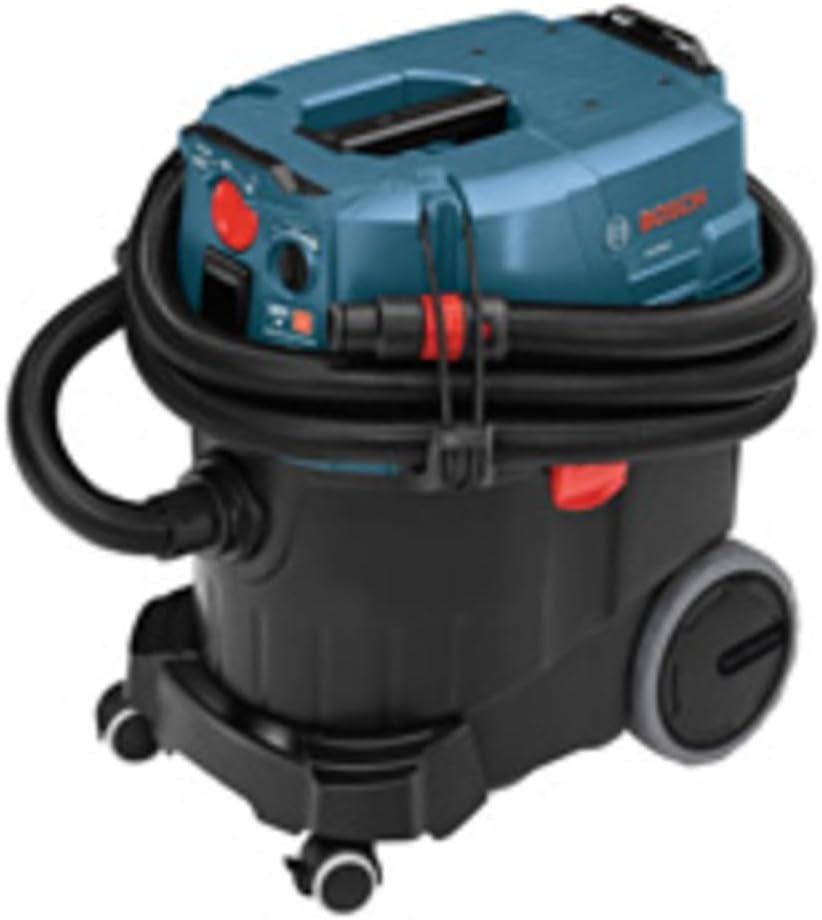
| Capacity | 9 gallons |
|---|---|
| Filter Type | HEPA Filter |
| Maximum Suction | 97 inches |
| Power Source | Corded Electric |
| Noise Level | 60 db |
The Bosch VAC090AH is a jobsite-focused dust extractor built to capture and contain heavy dust from grinders, sanders, and other power tools. It pairs a 9-gallon collection canister with a HEPA filter that captures 99.97% of particles 0.3 microns and larger and an on-board fleece bag to protect the filter and simplify debris removal. The unit delivers up to 150 CFM and a sustained 97 in. static water lift for strong suction, and a Power Broker dial lets you match suction to the tool or task while power-tool activation automatically turns the vac on with the connected tool. An automatic filter-clean cycle pulses every 15 seconds to help keep airflow consistent during extended use. Practical limits are its corded power requirement and the relatively large size for tight spaces, but its HEPA filtration, automatic cleaning, and tool-integration make it well suited to contractors and serious remodelers needing consistent, high-performance dust control for post-construction cleanup.
Best for: Buyers who prioritize reliable, high-capacity dust control on renovation or construction jobs and need integrated power-tool activation and HEPA-level filtration.
Less Ideal for: Casual household users who only need occasional light vacuuming or those who need a compact, battery-powered portable vacuum for small spaces.
- HEPA filter captures 99.97% of 0.3 micron particles for effective containment of fine dust
- Automatic on-board filter-cleaning pulses every 15 seconds to maintain suction during long jobs
- Power tool activation and adjustable Power Broker dial for hands-free operation and matched suction
- High airflow (up to 150 CFM) and strong static lift (97 in.) for reliable extraction with sanders and grinders
- Fleece filter bag protects the HEPA element and simplifies disposal of dry debris
- Corded design requires nearby power and may limit placement on some jobsites
- 9-gallon canister and cannister form factor make it less maneuverable in very tight spaces
Verdict: Choose the Bosch VAC090AH when you need a contractor-grade dust extractor with HEPA filtration, automatic filter cleaning, and power-tool integration for efficient post-construction cleanup.
DEWALT 12 Gallon Wet/Dry Vac DXV12P

| Capacity | 12 gallons |
|---|---|
| Peak Horsepower | 5.5 HP |
| Air Flow | 105 CFM |
| Hose Diameter | 2.5 inches |
| Cord Length | 20 ft |
The DEWALT DXV12P is a straightforward shop vacuum built for heavy cleanup tasks after construction work. It pairs a 5.5 peak HP motor with a 12-gallon poly tank to handle large volumes of debris and liquids, and it ships with a 2.5" x 7' hose, extension wands, multiple nozzles, and a cartridge filter for dry pickup. The unit includes a built-in blower port for clearing sawdust, a 20-foot power cord and onboard accessory storage so you can keep tools handy while moving around a jobsite, and a large drain for easy emptying of liquids. Rubberized casters and a sturdy handle make repositioning simple on uneven surfaces. Expect solid suction for construction debris but remember peak horsepower is a lab measurement and real-world power depends on airflow and attachments. Noise is noticeable at around 80 dB, and it has a single speed control, so there is no low-power setting for quieter tasks. For post-construction work it is durable, easy to service, and designed to minimize downtime during large cleanups.
Best for: Buyers who prioritize reliable, heavy-duty cleanup and want a durable, ready-to-use shop vacuum that minimizes interruptions during large post-construction jobs.
Less Ideal for: People needing a multi-speed or low-noise vacuum for small indoor spaces or those who prefer a compact, lightweight unit for quick household tasks.
- 12-gallon tank reduces the frequency of emptying during large cleanups
- Includes a range of accessories (hose, wands, floor, crevice, and utility nozzles) for common jobsite tasks
- Built-in blower port and 20-foot power cord increase versatility and reach on-site
- Durable poly construction with rubberized casters for easy movement on work surfaces
- Single speed only, so no lower-power or quieter operating mode
- Noise level around 80 dB can be loud for prolonged indoor use
Verdict: A robust, no-nonsense shop vacuum made to handle large post-construction cleanups with durable construction and jobsite-friendly features.
STANLEY SL18116P Wet/Dry Vacuum

| Capacity | 6 gallons |
|---|---|
| Maximum Suction | 85 inches |
| Hose Length | 6 feet |
| Power Source | Corded Electric |
| Wattage | 1200 watts |
The STANLEY SL18116P is a straightforward 6-gallon wet/dry vacuum designed for garage, workshop, and light post-construction cleanup. It pairs a 4 peak horsepower motor with an 85 CFM airflow and a rear blower port so you can switch between vacuuming debris and blowing leaves or dust out of corners. The unit includes a 6-foot hose, extension wands, floor and crevice nozzles, foam and reusable filters, and a disposable dust bag so you can handle both wet spills and dry sawdust. Swiveling casters and a top handle make it easy to move across a worksite, and the built-in cord wrap and accessory holder keep tools organized on the machine. Expect a basic one-speed, corded operation and a louder motor at around 80 dB, so plan hearing protection for extended use. The 6-gallon tank is roomy for small to medium cleanup but will need more frequent emptying on heavier construction jobs. For buyers who want a reliable, no-frills wet/dry vac for post-construction touchups, it covers the essentials without unnecessary extras.
Best for: Buyers who need an affordable, utilitarian wet/dry vacuum for post-construction touchups, workshop cleanup, and vehicle cleaning and who prioritize basic power and included accessories over advanced features.
Less Ideal for: Do not choose this if you need variable suction control, a very large capacity tank for continuous heavy debris, or a quiet unit for indoor finished spaces.
- Powerful peak motor and 85 CFM airflow suitable for picking up sawdust and debris
- Includes a range of accessories (hose, extension wands, floor and crevice nozzles) for versatile cleanup
- Rear blower port converts unit to a blower for clearing dust from corners
- Swiveling casters and handle improve mobility on job sites
- Accessory holder and cord wrap keep tools organized on the unit
- Single speed limits control over suction for delicate tasks
- 6-gallon tank requires frequent emptying during heavy construction cleanup
- Noise level around 80 dB can be loud during extended use
Verdict: A budget-friendly, no-frills wet/dry vacuum that delivers the power and basic accessories needed for post-construction touchups and workshop cleanup.
CRAFTSMAN 16 Gallon Shop Vac

| Capacity | 16 gallons |
|---|---|
| Maximum Suction | 46 inches |
| Hose Length | 7 feet |
| Noise Level | 69 db |
| Power Source | Corded Electric |
This CRAFTSMAN 16-gallon wet/dry vac is built for large post-construction and garage cleanups where power and capacity matter. Its 6.5 peak HP motor and 2-1/2-inch Dual-Flex hose deliver strong suction and resistance to kinking while the oversized tank and drain let you collect and empty liquids more easily. Onboard storage for the hose, wands, and nozzles keeps accessories organized and the rear blowing port doubles the unit as a blower for clearing debris. The Qwik Lock filter fastening system simplifies switching between wet and dry work, and the package includes practical tools like a car nozzle, utility nozzle, wet nozzle, extension wands, cartridge filter, and dust bag. Noise is moderate at the listed level and the unit is corded only, so you need access to power for jobsite use. Its single-speed control limits fine-tuning for delicate tasks, and the 7-foot hose and two-wheel base mean mobility is good but not optimized for tight indoor maneuvering. For heavy renovation debris and occasional liquid cleanup this vac is a solid, worksite-ready choice.
Best for: Buyers who prioritize a durable, no-nonsense vac that can handle heavy post-construction messes and occasional wet cleanup with minimal fuss.
Less Ideal for: If you need quiet, variable-speed suction for delicate interiors or an extra-long hose for wide open sites, consider other models tailored to those needs.
- High peak motor power suitable for large renovation debris and heavy-duty cleanup
- Large 16-gallon drum and oversized drain for easy liquid collection and emptying
- Dual-Flex 2.5-inch hose resists kinks and crushing for uninterrupted use
- Onboard accessory and cord storage keeps attachments organized on job sites
- Built-in blowing port adds a secondary blower function for yard and garage debris
- Single-speed control offers no low-power setting for delicate surfaces or quieter operation
- 7-foot hose length may limit reach on larger jobs without moving the unit
Verdict: Choose this shop vac when you need a powerful, well-equipped, jobsite-ready unit that handles large renovation debris and wet pickups reliably.
Oreck Commercial XL Upright

| Filter Type | HEPA Filter, Bagged |
|---|---|
| Surface Recommendation | Carpet, Hard Floor |
| Capacity | 9 quarts |
| Wattage | 870 watts |
| Hose Length | 35 feet |
The Oreck Commercial XL Upright is a compact, bagged upright built for heavy use where speed and portability matter. It combines a high-speed brush roll and side edge brushes to agitate and lift deeply embedded dirt from carpet while remaining usable on hard floors thanks to automatic height adjustment. At roughly 9 pounds and with a long hose, it is easy to carry between rooms and up stairs, and the large cleaning path and cord guard speed up work in large or post-construction areas. The top-fill, disposable bag system and HEPA-filtered exhaust simplify maintenance and contain fine dust better than many bagless units. Expect louder operation around the listed 80 dB and a single-speed motor without suction control, so users must manage attachments and passes for delicate surfaces. For rough, debris-heavy jobs it delivers reliable, commercial-grade cleaning, but it is not a quiet or highly adjustable consumer model.
Best for: Buyers who prioritize proven, commercial-grade cleaning performance and easy maintenance for heavy-duty or post-construction jobs and who value social validation from established models.
Less Ideal for: Home users seeking a quiet, feature-rich consumer vacuum with variable suction or those who prefer bagless models for lower ongoing costs should consider alternatives.
- Lightweight 9-pound design makes it easy to carry and maneuver
- High-speed brush roll and side edge brushes lift embedded dirt from carpets
- Bagged system with HEPA filter helps contain fine dust and debris
- Automatic height adjustment and long hose improve efficiency across surfaces
- Single-speed motor with no suction settings limits control on delicate surfaces
- Around 80 dB noise level can be loud for long sessions
Verdict: A lightweight, durable commercial upright that quickly clears heavy dirt and fine dust, making it a solid choice for post-construction cleanup.
Eureka Canister Vacuum 3670M

| Capacity | 2.5 liters |
|---|---|
| Filter Type | Foam |
| Wattage | 1200 watts |
| Power Source | Corded Electric |
The Eureka 3670M is a compact, bagged canister vacuum aimed at easy whole-house cleaning. It pairs a 1200W (12 A) motor with a 2.5 liter dust bag so you can move between carpets, hard floors, stairs, and upholstery without frequent emptying. The unit is lightweight at 8.6 pounds and ships with basic attachments including a brush, crevice tool, nozzle and two extension wands that help reach under furniture and into corners. A reusable foam filter and replaceable bags keep maintenance straightforward and reduce airborne dust during disposal. Practical features for post-construction tidying include a blower port for clearing loose debris and a compact canister that stores easily when not in use. Expect typical canister limitations: a 20 foot cord (listed in comparisons) and a relatively loud 90 dB operating level, so prolonged use on large sites can be tiring and noisy. The single-speed design keeps operation simple but limits adjustable suction for heavy-duty drywall dust or larger debris, where a commercial wet/dry machine might perform better.
Best for: Buyers who prioritize a reliable, easy-to-use vacuum that reduces dust exposure and is simple to maintain for regular post-construction touchups and household cleanup.
Less Ideal for: Professional contractors or users who need a heavy-duty shop vacuum for large volumes of construction debris, wet pickup, or adjustable high-suction cleaning.
- Lightweight and portable for carrying between rooms and stairs
- Bagged dust collection reduces dust exposure when emptying
- Includes multiple tools and extension wands for crevices, upholstery and tight spots
- Powerful 1200W motor suitable for routine deep cleaning on carpets and hard floors
- Blower port adds utility for clearing loose debris and sawdust from work areas
- Single-speed control with no suction adjustment for variable debris types
- Reported noise level is high at around 90 dB during operation
Verdict: A lightweight, bagged canister that makes post-construction touchups and routine whole-house cleaning easier while minimizing dust exposure.
Choosing the Right Vacuum Cleaner for Post Construction Cleaning: Key Factors to Consider
Suction Power and Airflow
Strong, sustained suction is essential for post-construction cleanup because jobsite debris includes heavy grit, nails, and compacted dust. Look for vacuums specified with high airflow (CFM) and reliable suction under load rather than peak numbers that drop quickly.
High airflow helps move bulky debris through hoses and reduces the chance of clogs. If you plan to pick up wet materials occasionally, confirm the unit's wet pickup capability and any required filter or setup changes before use.
Debris Capacity and Emptying Method
Construction cleanup creates large volumes of mixed debris. A larger canister or tank reduces interruptions for emptying and keeps work moving. Consider whether the unit uses disposable bags, removable drums, or quick-release buckets and how easy those systems are to empty without spilling dust back into the area.
Also check whether the design isolates the filter and collection path during dumping so you do not reintroduce fine dust into the environment. For frequent heavy use, a top-access removable drum or bottom-dump design can save time and reduce exposure to dust.
Filtration and Dust Containment
Fine dust from drywall, concrete, and sanding can be harmful and will spread quickly if not contained. High-efficiency filtration reduces airborne particulates and protects downstream components from abrasion. Look for multi-stage filtration with a primary trap for large debris and a secondary fine filter or certified high-efficiency media for respirable dust.
Assess how filters are cleaned or replaced on the unit. Washable prefilters and tool-free filter access reduce downtime. If you need to meet indoor air quality concerns, prioritize units that make filter maintenance straightforward without contact with captured dust.
Hose, Wand, and Tool Versatility
A vacuum is only useful where its tooling reaches. Long, reinforced hoses and extendable wands help access ceilings, studs, and tight cavities. Interchangeable nozzle heads, crevice tools, and powered brush options improve performance across different materials like coarse rubble, fine powder, and embedded sawdust.
Check compatibility with common accessory fittings and whether specialized tools are included. Rigid metal wands and abrasion-resistant hoses last longer on jobsite tasks compared with thin plastic components.
Durability and Serviceability
Jobsite vacuums face impact, abrasion, and frequent startups. Durable housings, reinforced wheels, and rugged handles extend service life. Consider how easy it is to replace wear items—hoses, filters, belts, and seals—so small failures do not convert into long shop time.
Look for units designed with user-serviceable parts and accessible motor compartments. A machine that is simple to disassemble for routine maintenance will save time and keep projects on schedule.
Portability and Storage
You may need to move the vacuum across uneven surfaces, up stairs, or into vehicles. Compact footprint, balanced weight distribution, and large wheels make transit easier. Also consider whether the unit breaks down for storage, nests with accessories, or has onboard storage for tools to reduce setup time at each jobsite.
If you frequently work in confined spaces, a smaller but still capable unit might outperform a larger capacity model because it allows quicker positioning and less handling time.
Wet Vs Dry Pickup Considerations
Some post-construction vacuums handle both wet and dry materials, but using one machine for both requires attention to setup and filter protection. Wet pickup typically demands removing or sealing delicate filters and switching to a liquid-safe collection mode to avoid damage.
If your work includes spill-prone tasks or occasional water intrusion, verify the manufacturer's instructions for transitioning between modes. Using the wrong filter for wet pickup can ruin the media and reduce dust containment effectiveness.
- Confirm the vacuum has a dedicated wet mode or compatible liquid collection container.
- Use washable or easily replaceable filters when alternating between wet and dry use.
- Empty the tank promptly after wet pickup to prevent odor and corrosion.
Managing Fine Dust and Health Risks
Fine respirable dust from sanding and demolition can aggravate respiratory conditions and contaminate HVAC systems. Prioritize vacuums with multi-stage filtration and sealed airflow paths to minimize particle escape.
Combine vacuuming with local source control such as HEPA-filtered air scrubbers and using tack cloths or damp methods where appropriate. Personal protective equipment remains important when working around fine dust.
- Choose units with high-efficiency secondary filters for respirable dust.
- Look for sealed connections between hoses and tool fittings to prevent leaks.
- Plan regular filter maintenance to preserve capture efficiency.
Noise, Duty Cycle, and Worksite Impact
High-power vacuums can be noisy and may not be suitable for occupied or noise-sensitive environments. Consider the expected duty cycle—how long the vacuum will run continuously—and whether cooling features or duty ratings support extended operation.
If you need to work near occupied spaces, look for units designed with quieter motors or that permit intermittent use without overheating.
- Compare duty cycle ratings or recommended continuous run times where available.
- Use extension cords and power setups sized to the machine's electrical needs to avoid voltage drop and motor stress.
- Consider sound-dampening enclosures or scheduling noisy tasks for off-hours if noise is a concern.
Setup Tips for Efficient Jobsite Cleanup
Plan your workflow before operating the vacuum: clear large items by hand, rough-sweep or blow down dust into accessible piles, then vacuum from the highest points down. This approach prevents premature clogging and speeds overall cleanup.
Keep extra filters, prefilters, and a spare hose or fittings on hand to avoid downtime. Mark clean and dirty tools to avoid cross-contamination between finished and unfinished areas.
- Use the appropriate nozzle for each surface to maximize pickup and reduce wear.
- Empty collection drums in a contained area or outside to limit indoor dust exposure.
- Rotate tasks so the vacuum runs at steady load rather than sudden heavy bursts that could clog the intake.
Maintaining Filters and Extending Service Life
Regular filter maintenance preserves suction and filtration performance. Follow the recommended cleaning schedule and replace worn filters promptly. For washable filters, rinse and dry thoroughly before reinstalling to avoid mold or odors.
Inspect hoses and seals for cracks or clogs after each heavy use session. Simple upkeep such as removing embedded debris from tool heads and checking cuff seals can prevent loss of suction and premature component wear.
- Keep a maintenance log for busy projects to track filter changes and repairs.
- Use correct replacement parts and avoid jury-rigging seals that can leak dust.
- Lubricate moving parts if recommended to reduce friction and wear.
How We Chose the Best Vacuum Cleaner for Post Construction Cleaning
We focused on attributes that matter for construction-scale cleanup rather than everyday household dirt. Primary evaluation criteria included sustained suction power under load, debris capacity and ease of emptying, filtration performance for fine dust, and accessory/tooling compatibility for reaching corners and crevices. We also judged build quality and durability features such as reinforced hoses, metal tool fittings, and motor cooling to ensure reliable operation on heavy workloads. We excluded lightweight household uprights and purely decorative models that lack high-capacity collection or industrial-grade filtration. Units were filtered for minimum rated airflow and dust-laden pickup capability, then prioritized by how well their design reduced clogging and simplified maintenance. Final selections balanced practical tradeoffs: larger capacity and filtration versus maneuverability and storage footprint. The editorial process favored machines that delivered consistent performance on coarse debris and fine dust while minimizing downtime for cleaning filters or emptying canisters.
Our full evaluation process is outlined in our review methodology.
FAQ
Can I use a standard household vacuum for post-construction cleanup?
Household vacuums often lack the debris capacity, filtration, and rugged hoses needed for heavy construction cleanup. They may clog quickly and can allow fine dust to escape, so they are usually not the best choice for extensive post-construction work.
Do I need a HEPA filter for drywall dust?
A HEPA or high-efficiency secondary filter is recommended for drywall and other fine dust to reduce airborne respirable particles. While not always required, high-efficiency filtration improves indoor air quality and protects downstream components.
How often should filters be cleaned or replaced during a renovation?
Filter care depends on workload, but for heavy renovation jobs check prefilters daily and inspect fine filters every few days. Replace or deep-clean filters as soon as you notice a drop in suction or visible buildup to maintain performance.
Is wet pickup necessary for post-construction vacuums?
Wet pickup capability is useful if your project involves water, plaster slurry, or spill cleanup. If you do not expect liquids, dry-only units can suffice and may offer simpler filtration systems tailored for dust capture.
What hose length and accessories should I prioritize?
Prioritize a long, reinforced hose and a selection of nozzles including a crevice tool, wide floor head, and telescoping wand. These items extend reach and versatility for cleaning walls, ceilings, and tight cavities where debris accumulates.
Final Verdict
For post-construction cleaning prioritize machines that combine sustained suction with large debris capacity and reliable filtration. Expect tradeoffs between capacity and maneuverability: larger drums reduce emptying frequency but add weight, while compact units are easier to move but may need more frequent service. Decide which features matter most for your projects—wet pickup, long hose reach, or sealed HEPA filtration—and focus on durability and serviceability so the vacuum stays productive across multiple jobs. With those priorities in mind, you can confidently choose a unit that balances performance and uptime for efficient construction cleanup.