
Note: This article contains affiliate links. If you click on these links and make a purchase, we may earn a small commission at no extra cost to you. This helps support our research and content. Read our full affiliate disclosure here.
If you dehydrate fruits, vegetables, jerky, or herbs, proper packaging makes the difference between crisp, flavorful results and stale, degraded food. A vacuum sealer for dehydrated food removes air and creates a tight barrier that slows oxidation and moisture reabsorption. The right sealer preserves texture, aroma, and nutrients so your home-dried goods last longer in pantry storage. This guide presents seven shortlisted vacuum sealers chosen for home dehydrating needs. We focused on machines and features that control residual moisture, deliver consistent seal strength, and work with common pouch sizes used for dehydrated products. Read on to see which features matter most and how we evaluated each option.
Top Picks at a Glance
| Best Overall The best all-around choice for most situations | FoodSaver FM2100 Vacuum Sealer |  |
| Best Quality Built to a higher standard if you want something more solid | VEVOR Chamber Vacuum Sealer YJ-300TV1 |  |
| Best Value The sweet spot between price and what you get | FoodSaver PowerVac VS0150 |  |
| Best Budget The cheapest option that still gets the job done reliably | MEGAWISE Vacuum Sealer VS6611 |  |
| Top Rated A top-rated pick with lots of positive feedback | Gasbye VS5166 Vacuum Sealer |  |
| Most Popular A crowd favorite that many people choose with confidence | Bonsenkitchen Vacuum Sealer VS2100 |  |
| Best Seller A high-volume bestseller chosen again and again | LOVE MOMENT Mason Jar Vacuum Sealer VP05 | 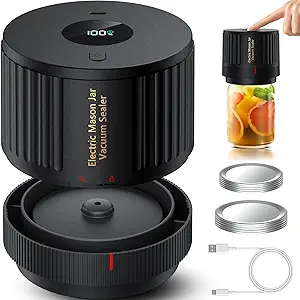 |
FoodSaver FM2100 Vacuum Sealer

| Operation Mode | Automatic |
|---|---|
| Wattage | 120 watts |
| Voltage | 110 volts |
| Included Components | 3 qt, 2 gal Bags, 11 in x 10 ft Roll and Accessory Hose |
The FoodSaver FM2100 is a midrange vacuum sealer designed for everyday kitchen use and occasional sous vide or dehydration prep. It removes air from FoodSaver bags and containers using an automatic Vac/Seal mode, plus separate Seal and Dry/Moist settings to match different foods, and a built-in roll cutter lets you make custom-size bags to reduce waste. Dual heat sealing strips create consistent airtight seals while a removable drip tray makes cleanup easier after vacuuming wet items. The unit also accepts an accessory hose so you can use it with containers or the handheld sealer. For dehydrated food, the consistent seals and bag customization help reduce residual moisture and protect fragile items during long-term storage, though you will still need to ensure proper dehydration before sealing. The FM2100 is compact and backed by a five-year limited warranty, but it is a plastic-bodied consumer unit rather than a commercial-grade vacuum pump, so it may be slower on very large batches or bulky jars.
Best for: Buyers who want a reliable, easy-to-use vacuum sealer for everyday preservation, sous vide prep, and storing dried or dehydrated foods in moderate quantities.
Less Ideal for: People who routinely process large-scale or commercial dehydration batches or need a heavy-duty, professional vacuum pump should consider a higher-end or commercial model.
- Automatic bag detection and multiple sealing modes for different food types
- Built-in roll cutter minimizes bag waste by allowing custom bag lengths
- Dual heat sealing strips provide consistent, airtight seals
- Accessory hose port enables use with containers and handheld sealer
- Removable drip tray simplifies cleanup after vacuuming moist items
- Plastic consumer-grade build may be less durable than commercial units
- Not optimized for very large batch jobs or heavy-duty continuous use
Verdict: A practical, user-friendly sealer that balances convenience, consistent seals, and accessory compatibility for home dehydrated food storage.
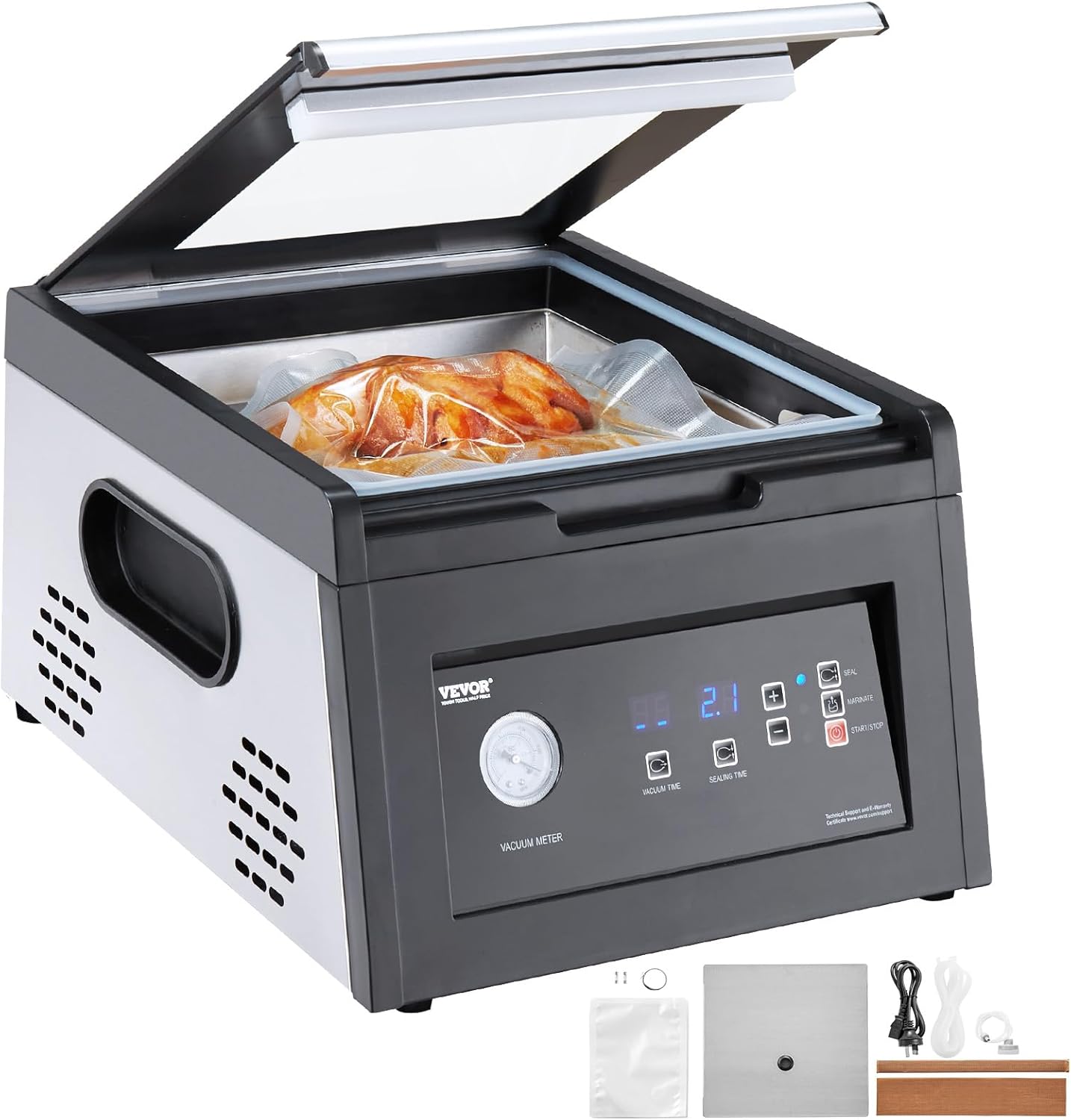
VEVOR Chamber Vacuum Sealer YJ-300TV1
| Sealing length | 11.5 in |
|---|---|
| Wattage | 1200 watts |
| Voltage | 120 volts |
| Material | Metal |
This VEVOR chamber vacuum sealer is built to handle frequent, performance-focused jobs in a kitchen that needs reliable, high-vacuum packaging. It uses a powerful vacuum pump (listed at 380W and capable of better than -95 kPa) and a wide 11.5-inch sealing bar to remove air quickly and produce strong seals, which is useful when prepping dehydrated or high-surface-area foods that must stay dry. The machine supports adjustable vacuum and seal times plus dedicated modes for marinating, single seal, and jar vacuuming, so you can tailor cycles for delicate dehydrated fruit slices or denser jerky pieces. The stainless steel chamber and full-glass lid make it easy to clean and monitor runs, and the unit is rated whisper-quiet at about 78 dB during operation. Expect a heavy, commercial-feel footprint—this is suited to batch processing rather than occasional countertop snacking packs. It excels at removing air for long-term storage but requires a dedicated space and power and is heavier and larger than consumer external vacuum systems.
Best for: Buyers who prioritize strong, repeatable vacuum performance for batch preservation and need a machine that handles liquids and varied bag types reliably.
Less Ideal for: If you only seal occasional single meals or need a compact, lightweight countertop sealer for sporadic home use, a smaller external vacuum sealer would be a better choice.
- High vacuum capability (better than -95 kPa) for extended shelf life
- Adjustable vacuum and seal times plus modes for marinate and jar vacuuming
- Stainless steel chamber and full-glass lid for easy cleaning and visual monitoring
- Robust pump and wide sealing bar enable batch processing of large or multiple bags
- Heavy and bulky compared with consumer external vacuum sealers
- Requires dedicated counter space and mains power for frequent use
Verdict: Choose this chamber sealer when you need pro-level vacuum strength and batch throughput for reliably preserving dehydrated foods.
FoodSaver PowerVac VS0150

| Wattage | 110 watts |
|---|---|
| Voltage | 230 volts |
| Operation Mode | Automatic |
| Included Components | One 11" x 8' roll, 3 quart bags, 2 gallon bags |
The FoodSaver PowerVac VS0150 is a compact vacuum sealer built for everyday kitchen use and for preserving dehydrated and other dry foods. It stores vertically to save countertop or pantry space and uses a sealed vacuum channel with built-in bag alignment for consistent placement and sealing. Two settings, Dry and Moist, let you tailor the seal to dehydrated herbs and fruit or to slightly moist items, and the unit is compatible with standard FoodSaver bags, rolls, and accessories so you can switch to rolls for long strips of jerky or fruit leather. FoodSaver says the design produces about 35% less bag waste than earlier models, which helps when you seal many small batches. Limitations include a modestly powered vacuum suited to home-sized portions rather than commercial volumes, and the compact form means fewer bells like integrated roll storage or advanced external container adapters built into larger models.
Best for: Buyers who want a space-efficient, reliable home vacuum sealer for preserving batches of dehydrated fruit, herbs, jerky, or pantry items and who prioritize less bag waste and simple operation.
Less Ideal for: Not a good fit for users who need commercial-level throughput or continuous high-volume sealing for a small business or large-scale dehydration projects.
- Vertical storage saves countertop space and makes stowing the unit easier
- Dry and Moist settings let you optimize seals for dehydrated goods versus slightly moist items
- Compatible with all FoodSaver bags, rolls, and accessories for flexible packaging options
- Built-in bag alignment helps ensure consistent, reliable seals
- Designed for home use so vacuum strength and throughput are not aimed at commercial or high-volume sealing
- Compact layout limits integrated extras like large roll storage or multi-size internal holders
Verdict: A compact, space-saving vacuum sealer that makes consistent, low-waste seals for home dehydration and pantry preservation.
MEGAWISE Vacuum Sealer VS6611

| Operation Mode | Semi-Automatic |
|---|---|
| Wattage | 80 watts |
| Voltage | 220 |
| Material | Acrylonitrile Butadiene Styrene (ABS) |
The MEGAWISE VS6611 is a compact semi-automatic vacuum sealer aimed at everyday kitchen use. It pulls a strong vacuum (advertised 80 kPa) and offers dedicated Dry and Moist modes so you can seal both solid and slightly wet foods without messy seals. A built-in sliding cutter and a 12-inch sealing wire make it simple to create custom bag lengths and seal multiple small bags in sequence, and the package includes an accessory hose for sealing compatible containers plus ten vacuum bags to get started. Typical use is straightforward: place the bag in the chamber, choose Dry or Moist, press the one-touch vacuum/seal cycle, then cut the bag to size. For dehydrated food specifically, the unit's quick vacuum cycle and tight seals help reduce oxidation and moisture re-entry, which preserves texture and flavor. Limitations are its 220V voltage spec and compact footprint, which may restrict very large or commercial batches, and it lacks advanced timed vacuum settings found on higher-end models. Overall it is a practical, budget-focused sealer that handles home dehydrating and short-term freezer storage well.
Best for: Buyers looking for an inexpensive, easy-to-use sealer to preserve home-dried fruits, jerky, and small batches of dehydrated snacks will appreciate this model.
Less Ideal for: Users who need continuous sealing for large volumes, commercial food-drying, or variable-voltage compatibility should consider a more heavy-duty or feature-rich unit.
- Dedicated Dry and Moist modes for different food types
- Built-in cutter for custom bag lengths
- Includes accessory hose to seal containers as well as bags
- One-touch automatic vacuum and seal cycle simplifies operation
- Designed for household scale rather than large commercial batches
- Requires 220V power which may not match all outlets
Verdict: A compact, budget-friendly sealer that delivers quick, reliable seals for home dehydrated foods and small-batch preservation.
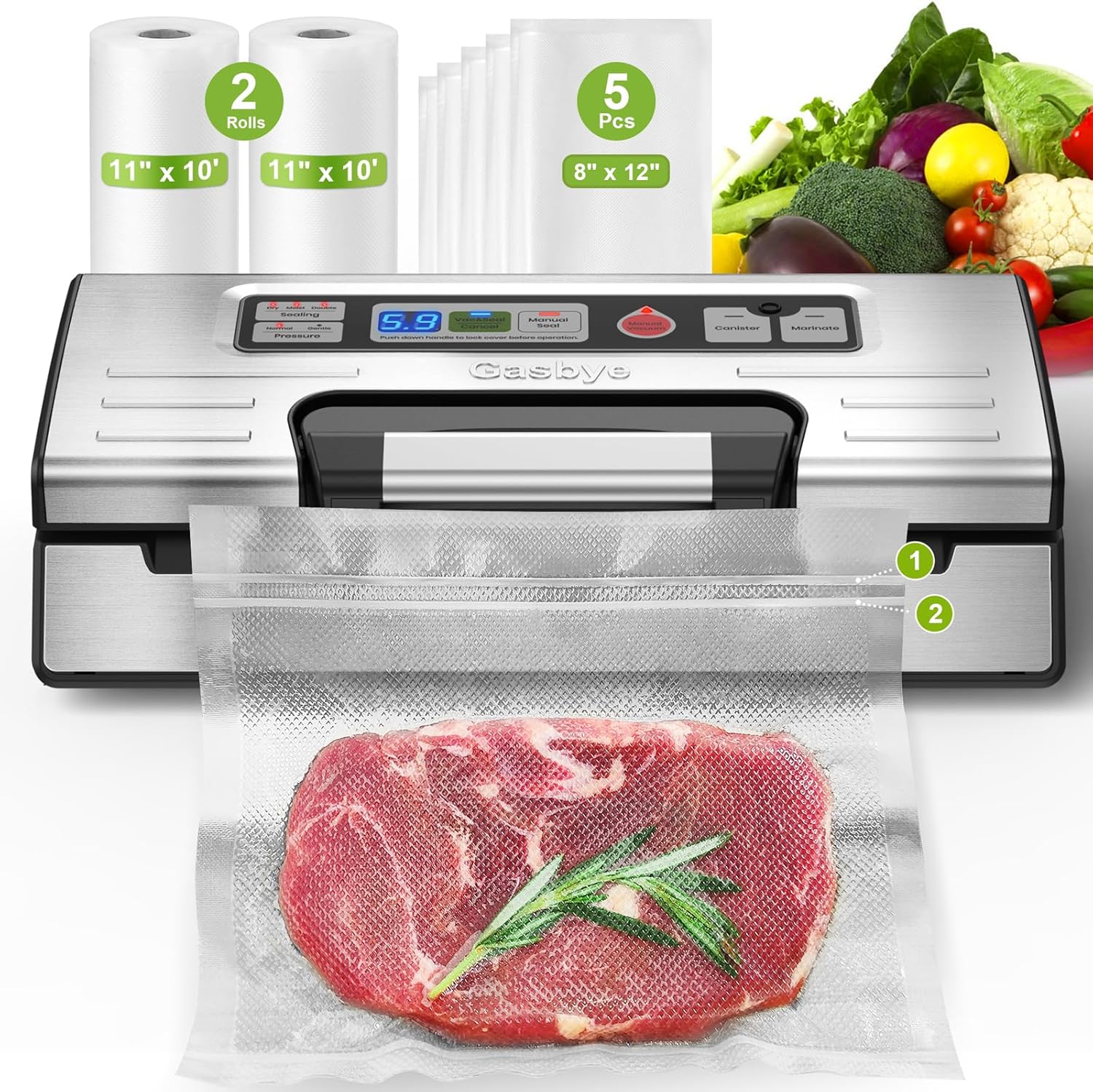
Gasbye VS5166 Vacuum Sealer
| Power Source | 95kPa Dual Pump |
|---|---|
| Operation Mode | Automatic |
| Wattage | 130 watts |
| Voltage | 120 volts |
The Gasbye VS5166 is a robust countertop vacuum sealer designed for everyday home use and light commercial tasks like meal prep and food preservation for sous vide and dehydration. It uses a 95kPa dual-pump system for strong, consistent vacuuming and a double heat-seal strip to form reliable seals for dry and moist foods, which helps reduce freezer burn and keeps dehydrated ingredients airtight. The unit includes pulse mode for gentle vacuuming of delicate items and has integrated roll storage plus a built-in cutter to size bags quickly and reduce waste. A removable drip tray and washable components make cleanup easier, and the package includes replacement foam gaskets and starter bags so you can start sealing right away. Practical limits include its countertop footprint and 130W power draw, and while it offers strong suction it requires compatible textured/embossed bags for best results; very thin or nonembossed bags may leak. For dehydration users, the double seal and strong pump help maintain long-term dryness in packed items, though careful bag selection is important for optimal longevity.
Best for: Buyers who prioritize a reliable, serviceable vacuum sealer that produces strong, repeatable seals for long-term food storage and dehydration will appreciate this unit's robust pump and replaceable parts.
Less Ideal for: If you need a pocket-sized or ultra-low-power sealer for occasional single-bag use or want to rely on non-textured reusable zipper bags, this model is more than necessary and less suitable.
- Powerful 95kPa dual-pump suction for consistent air removal
- Double heat-seal strips create secure seals suited to sous vide and long-term storage
- Pulse mode allows controlled vacuuming for fragile or moist foods
- Built-in roll storage and cutter reduce bag waste and speed prep
- Includes replacement gaskets, starter bags, and removable drip tray for maintenance and convenience
- Requires textured/embossed vacuum bags for best seals, limiting bag choices
- Relatively high wattage and countertop footprint compared with ultra-compact models
Verdict: Choose the VS5166 when you want a dependable, serviceable sealer with strong suction and double seals that keep dehydrated foods dry and long-lasting.
Bonsenkitchen Vacuum Sealer VS2100

| Operation Mode | Automatic |
|---|---|
| Wattage | 135 |
| Voltage | 120 volts |
| Power Source | ac |
The Bonsenkitchen VS2100 is a compact countertop vacuum sealer built for everyday kitchen preservation and sous-vide prep. It offers four modes — full automatic Vac & Seal, Pulse Vac for delicate or moist items, Seal-only for bag tops, and an Accessory mode that works with the included hose for jars or external containers. The unit is lightweight and stores easily in a drawer, and Bonsenkitchen bundles five vacuum bags, an air-suction hose, and extras to get you started. In real use the sealer handles continuous runs reasonably quickly — the listing claims up to 30 bags in 15 minutes — and Pulse Vac gives control when you are working with dehydrated or fragile foods that can crush under full vacuum. Limitations include a small footprint that implies a narrow sealing channel and relatively modest motor power at 135 watts, so very large bags or industrial volumes are not its strength. It is a good value for home cooks who want flexible vacuuming options and a simple starter kit, but expect a consumer-grade machine rather than a commercial sealer.
Best for: Buyers who rely on user reviews and want a proven, compact home sealer that offers both automatic and manual vacuum control for preserving batches of dried or dehydrated foods.
Less Ideal for: People who need a heavy-duty or commercial-grade sealer for large-volume processing or very wide bags should look at higher-power machines.
- Multiple operating modes including Pulse Vac for delicate or moist foods
- Compact, lightweight design that stores easily in a drawer or cabinet
- Includes starter kit with vacuum bags and an air suction hose for accessory use
- Automatic one-touch Vac & Seal for quick everyday sealing
- Modest 135W power and narrow sealing area limit heavy-duty or high-volume sealing
- Starter kit includes a small number of bags so frequent users will need to buy more
Verdict: A compact, review-backed home vacuum sealer with multiple modes that is well suited for cautious buyers preserving dehydrated foods at small to moderate volumes.
LOVE MOMENT Mason Jar Vacuum Sealer VP05

| Power Source | Battery Powered |
|---|---|
| Operation Mode | Electric |
| Wattage | 4 watts |
| Material | Acrylonitrile Butadiene Styrene (ABS) |
This compact cordless mason jar vacuum sealer is built for quick jar sealing without a countertop appliance. It works with both wide and regular mouth lids using a supplied converter and seals jars automatically in about 40 seconds by pressing a single button, which makes it convenient for small-batch preserving, dehydrated ingredients, and soups when you leave headspace. The rechargeable USB-C battery and 4-watt electric pump keep the unit portable for camping or kitchen use, and the ABS housing is easy to wipe clean and store. The kit includes multiple wide and regular lids so you can start sealing right away, but the small form factor means it is limited to jars only and not suitable for vacuum bags or large-volume sealing. Buyers should also note the sealing time and reliance on battery charge for repeated use during large projects.
Best for: Home cooks who want a low-effort way to preserve small batches of dehydrated ingredients, spices, or prepared sauces in mason jars and value portability and simplicity.
Less Ideal for: People who need a machine for high-volume food preservation, vacuum bags, or continuous sealing tasks should consider a countertop or chamber vacuum sealer instead.
- Works with both wide-mouth and regular-mouth mason jars using included converter
- Cordless, rechargeable design with USB-C charging for portable use
- Simple one-button operation that seals jars automatically in about 40 seconds
- Includes multiple mason jar lids so you can begin sealing out of the box
- Designed only for mason jars so it cannot vacuum-seal bags or large containers
- Battery-powered pump may need recharging during extended sealing sessions
Verdict: A compact, rechargeable mason-jar sealer that makes preserving small batches of dehydrated food simple and portable.
Choosing the Right Vacuum Sealer for Dehydrated Food: Key Factors to Consider
Seal Strength & Consistency
A robust, even seal is essential because any pinhole or weak joint lets air and humidity back into the package. For dehydrated food, seals should remain airtight for months to years depending on your storage environment. Consistent heat distribution across the sealing bar and a reliable clamping mechanism reduce the risk of failed seals.
When evaluating seal strength, consider repeated sealing cycles. Frequent use can wear gaskets and heating elements, so look for machines with replaceable sealing strips and accessible service parts. A consistent seal also makes it easier to repack or portion dried goods without wasting bags.
Moisture Control & Vacuum Precision
Dehydrated foods are sensitive to residual moisture. Too much vacuuming can crush delicate crisps, while too little leaves trapped air and humidity that promote spoilage. Machines that offer adjustable vacuum levels or pulse modes let you remove enough air without crushing fragile items.
Precision vacuum control also helps when using external canisters or jar adapters for spices and small batches. For longer storage, the goal is a deep vacuum that minimizes remaining oxygen while avoiding bag collapse for items with fragile texture.
Bag Compatibility & Flexibility
Not all vacuum sealers work with every bag type. For dehydrated food, you will often use textured bags, double-seal pouches, or resealable roll stock to customize sizes. Confirm the unit accepts thicker bags if you plan long-term storage, and check whether it supports embossed (channel) bags that help air escape during sealing.
Flexibility also means compatibility with accessory ports and canisters. Jar sealers or accessory hoses allow you to package herbs and small spices without flattening them. Finally, consider available bag widths and whether the machine can handle continuous rolls for batch sealing.
Ease of Use & Controls
Simple, reliable controls are vital when you are processing many batches. Look for clear button layouts with dedicated modes for dry and moist items, a pulse function for fragile contents, and indicator lights that confirm when a seal is complete. A hands-free latch or locking mechanism speeds up repetitive work and reduces user fatigue.
Maintenance-friendly design elements such as removable drip trays, visible seals, and an accessible heating strip make routine cleaning faster. User manuals that explain settings for dehydrated goods can shorten the learning curve for achieving optimal results.
Durability & Maintenance
Vacuum sealing for dehydrated food often means frequent cycles and occasional exposure to dust or fine particles from dried herbs. A durable exterior, robust pump, and easy-to-replace gaskets and sealing elements extend operational life. Metal components in the sealing bar and a well-shielded vacuum motor resist wear better than cheaper plastic constructions.
Consider maintenance demands such as how often to replace gaskets, whether the unit has a washable drip tray, and the availability of spare parts. Units with clear service access and straightforward disassembly save time and expense over years of regular use.
Packaging Tips for Dehydrated Foods
Proper packing technique multiplies the benefit of a good vacuum seal. Start with fully cooled, completely dry pieces to avoid trapping residual heat and moisture that would cause condensation in the bag. For items that are fragile or powdery, pre-freeze or use a rigid support to maintain shape during vacuuming.
- Leave a small headspace when you want to reseal and open the bag later.
- Use roll-stock to cut custom-length bags for minimal wasted air space.
- Insert a desiccant packet for long-term storage of highly hygroscopic items.
Choosing Between Chamber and External Vacuum Sealers
Chamber-style machines equalize pressure inside the chamber, allowing for stronger vacuums without crushing delicate dry products. They excel with powders and fragile crisps when you need deep, reliable vacuums. External or external-style units are more common for home use and are typically less expensive and more compact. They work well for most dehydrated fruits and jerky if used with care and pulse modes.
- Chamber units handle bulk and powders better.
- External units are space-saving and often adequate for home batches.
- Consider frequency and batch size when deciding between types.
Using Accessories: Jars, Canisters, and Desiccants
Accessory ports let you seal jars and canisters without compressing contents, which is useful for spices, tea leaves, and brittle crisps. Desiccant packs or oxygen absorbers are a helpful complement for long-term dried storage; they capture residual moisture and oxygen after vacuuming to extend shelf life further.
When using canisters, confirm the sealing pressure is appropriate for the container type. For foods that remain somewhat pliable, oxygen absorbers are typically preferable because they target the remaining oxygen without further reducing structure.
- Use jar seals for small quantities of spices.
- Add oxygen absorbers for multi-year pantry storage.
- Choose canisters with compatible valve sizes for your unit.
Safe Storage Practices After Sealing
Store vacuum-sealed dehydrated food in a cool, dark, and dry place to minimize oxidation and temperature-driven quality loss. Clear labeling with dehydration date and original moisture level helps manage rotation and quality checks. Periodically inspect seals for bulging, sticky spots, or punctures that indicate failed integrity and possible moisture exposure.
- Avoid direct sunlight and heat sources.
- Rotate older packs to the front and use within recommended shelf windows.
- Check humidity and temperature where you keep long-term stores.
How We Chose the Best Vacuum Sealer for Dehydrated Food
We prioritized features that directly affect how well dehydrated food stays dry, crisp, and flavorful over time. Selection emphasized consistent seal integrity, precise moisture control, and compatibility with common pouch sizes and materials used for dried goods. We also considered usability for repeated batch sealing, durability of sealing components, and whether the unit supports accessory hoses or external canisters that help with fragile dry products. Concrete evaluation criteria included measured seal strength and consistency across multiple bag thicknesses; the machine's ability to limit residual moisture and prevent rehydration; cycle control and modes for gentle or pulse vacuuming; ease of maintenance including removable drip trays and replaceable gaskets; and build quality for frequent use. We excluded units that are strictly single-use hand pumps or that lack adjustable vacuum control, since those options do not meet the needs of serious dehydrated-food storage. Units with unclear accessory compatibility or poor customer service histories were also screened out.
Our full evaluation process is outlined in our review methodology.
FAQ
Can I vacuum seal dehydrated fruit without damaging texture?
Yes, but use pulse or low-vacuum modes and avoid over-compression. If your sealer lacks gentle modes, support fragile pieces with a rigid tray or pre-freeze them briefly to protect structure during air removal.
Should I use oxygen absorbers with vacuum-sealed dehydrated food?
Often yes for long-term storage. Oxygen absorbers remove remaining oxygen inside a sealed pack and are particularly helpful for fatty or hygroscopic items. Use the correctly sized absorber for the bag volume and ensure the bag material is oxygen-impermeable for best results.
Which bag types are best for dehydrated foods?
Textured or embossed roll-stock and thicker multilayer bags are generally best because they release air efficiently and form strong seals. For long-term storage choose bags rated for barrier protection against oxygen and moisture.
How do I prevent mold or spoilage after sealing?
Start with fully dehydrated, cooled pieces and avoid sealing warm or moist items. Use desiccants or oxygen absorbers for extra protection, and store sealed packs in a cool, dry area. If a seal shows signs of moisture or bulging, dispose of or re-dry the contents.
Can I use a vacuum sealer to pack powders from dehydrated foods?
You can, but powders can be pulled into the sealing channel and contaminate the pump. Use accessory canisters or jar attachments for powders, or pre-freeze and use a filter or support to keep particulates out of the sealing area.
Final Verdict
For dehydrated food, prioritize machines that combine reliable seal strength with precise vacuum control. The right combination preserves crisp texture and prevents moisture reabsorption while keeping fragile items intact. Balance bag compatibility and accessory support against durability and maintenance needs so you can process batches efficiently. Focus on adjustable vacuum modes, replaceable sealing parts, and support for the bag types you plan to use. With those priorities in mind you can choose a sealer that delivers predictable, long-lasting storage for your dried foods.