
Note: This article contains affiliate links. If you click on these links and make a purchase, we may earn a small commission at no extra cost to you. This helps support our research and content. Read our full affiliate disclosure here.
If you preserve soups, marinated proteins, or wet produce, a vacuum sealer made to handle liquids keeps your kitchen cleaner and food fresher longer. Choosing the right model matters because ordinary sealers can pull liquids into the pump or create weak seals that leak during storage. This guide highlights seven shortlisted vacuum sealers designed to manage wet contents safely and reliably. We evaluated machines for seal strength, liquid-handling features, and ease of use to help you pick a model that fits your typical wet-food tasks. Below are our top picks followed by practical buying guidance and answers to common user questions.
Top Picks at a Glance
| Best Overall The best all-around choice for most situations | NutriChef Vacuum Sealer PKVS18SL |  |
| Best Quality Built to a higher standard if you want something more solid | Avid Armor USV32 Chamber Vacuum Sealer |  |
| Best Value The sweet spot between price and what you get | Potane Precision Vacuum Sealer VS5736 |  |
| Best Budget The cheapest option that still gets the job done reliably | MEGAWISE Vacuum Sealer VS6611 |  |
| Top Rated A top-rated pick with lots of positive feedback | Avid Armor USV20 Chamber Vacuum Sealer |  |
| Most Popular A crowd favorite that many people choose with confidence | Anova Precision Vacuum Sealer Pro | 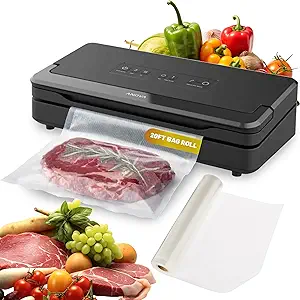 |
| Best Seller A high-volume bestseller chosen again and again | FoodSaver PowerVac VS0150 |  |
NutriChef Vacuum Sealer PKVS18SL

| Power Source | Corded Electric |
|---|---|
| Operation Mode | Automatic |
| Wattage | 120 watts |
| Voltage | 120 volts |
The NutriChef PKVS18SL is a countertop vacuum sealer designed for everyday meal prep and longer-term food storage, with separate modes for dry and moist foods. It seals pre-cut bags or a custom roll using an automatic suction cycle and a standard seal function, and the included vacuum hose lets you connect to compatible canisters or accessories. Controls are soft-touch LED buttons that make switching modes and running a seal straightforward, and the unit's compact ABS housing fits easily under cabinets or in a drawer. In practice it handles moist leftovers and marinated items better than basic sealers because of the dedicated moist-food mode, but very liquid-heavy containers still require partial freezing or careful positioning to avoid suctioning fluids into the unit. The starter kit of medium bags and a long roll is convenient for trying different bag sizes right away, and the 120 watt motor provides reliable suction for household portions. If you want a simple, space-saving sealer that manages wet foods with more control than entry-level models, this is a practical choice.
Best for: Home cooks who want an easy-to-use, compact sealer that can handle both dry snacks and moist leftovers for meal prep and reduced food waste.
Less Ideal for: People who need a commercial-grade machine for heavy daily sealing or those who routinely seal fully liquid containers without pre-freezing.
- Selectable dry and moist modes for better handling of wet or marinated foods
- Automatic vacuum and seal cycles with soft-touch LED controls for easy operation
- Includes a variety of starter accessories: medium bags, long bag roll, and vacuum hose
- Compact, lightweight design that stores easily on countertops or in drawers
- May draw liquid into the pump if sealing very liquid-heavy items without pre-freezing
- Not sized for large commercial volumes or heavy-duty continuous use
Verdict: Choose this compact automatic sealer if you want a user-friendly unit that gives better control for sealing moist and marinated foods at home.
Avid Armor USV32 Chamber Vacuum Sealer

| Power Source | AC |
|---|---|
| Operation Mode | Automatic |
| Wattage | 380 watts |
| Voltage | 110 volts |
| Material | Stainless Steel |
The USV32 is a chamber-style vacuum sealer built for sealing soups, sauces, marinated meats and other liquid-rich foods without mess. It uses true chamber vacuum technology and an 11.5" dual-wire sealing bar so you can vacuum and seal pouches containing liquids or high-moisture items far more reliably than external bag sealers. Typical use is straightforward: place food in a chamber pouch, close the tempered glass lid, then run the one-touch automatic cycle or adjust vacuum/seal times through the digital controls for precise results. A rapid marinate function speeds infusion for sous-vide or prep work, and an accessory port lets you hook up canisters or jars. The stainless-steel construction and heavy-duty seal bar make it suitable for frequent, heavy use in home or small commercial kitchens, but it is a relatively heavy countertop unit and requires dedicated counter space and power. If you need dependable, restaurant-grade seals for wet foods and large portions, the USV32 delivers performance-oriented results.
Best for: Buyers who prioritize reliable, restaurant-grade sealing for wet foods, large cuts, and sous-vide prep and who plan to use the machine frequently in a home or small commercial kitchen.
Less Ideal for: Casual users who only seal occasional dry goods or who need a highly portable, lightweight bag sealer should consider simpler external models instead.
- True chamber vacuum design handles liquids and prevents mess when sealing soups, sauces and marinated items.
- Large 11.5" dual-wire seal bar accommodates wide pouches and family-size portions.
- One-touch automatic cycles plus adjustable digital controls let you fine-tune vacuum and seal times.
- Stainless-steel build and tempered glass lid provide durable, easy-to-monitor operation.
- Accessory hose port supports sealing jars and canisters for added versatility.
- Relatively heavy and requires dedicated counter space for regular use.
- Higher wattage and commercial-capable build may be overkill for occasional sealing of small, dry items.
Verdict: Choose the USV32 when you need a durable, chamber-style sealer that reliably handles liquids, large portions and sous-vide prep.
Potane Precision Vacuum Sealer VS5736

| Operation Mode | Automatic, Manual, Dry, Moist |
|---|---|
| Wattage | 120 watts |
| Voltage | 110 volts |
| Included Components | Cutter Bar, Slide cutter, Foam Gasket Replacement, Hose for canisters, Start Kit bags, two bags rolls |
The Potane VS5736 is a compact countertop vacuum sealer designed for frequent household use and bulk sealing. It offers both automatic and manual operation plus preset food modes for dry and moist items, and includes two bag rolls, a cutter bar and built-in bag storage so you can cut and seal custom lengths without extra accessories. Its C-type half-wrapped chamber, one-handed pull-down handle and extra foam gasket improve durability and make repeated sealing easier, and the wider 8 mm sealing element and brushless-style motor support stronger, more reliable seals—useful when handling wet or moist foods where a clean, full seal matters. The unit also has an accessory port for canisters and jar sealing. Expect straightforward daily use: place the bag, choose the moist or dry mode, then seal; manual mode lets you stop vacuuming early for delicate items. Limitations include modest continuous duty despite claims and a small footprint that could constrain very large bags or industrial use, so it is most appropriate for home kitchens rather than commercial operations.
Best for: Home cooks who want a durable, easy-to-use sealer that handles wet and moist foods reliably and saves space by storing and cutting bag rolls onboard.
Less Ideal for: Users needing a heavy-duty, industrial-capacity sealer or frequent large-batch commercial vacuuming should consider larger chamber machines built for continuous commercial use.
- Built-in cutter and bag storage for custom bag lengths
- Preset dry and moist modes plus manual control for delicate foods
- Wider 8 mm sealing element for stronger, cleaner seals
- Accessory port supports sealing canisters and jar stoppers
- Compact chamber may limit very large bags or bulk commercial sealing
- Instructions note gasket condition is critical and may require occasional attention
Verdict: A compact, user-friendly sealer with cutter and moist-food presets that gives home cooks stronger, cleaner seals for wet foods without extra accessories.
MEGAWISE Vacuum Sealer VS6611

| Operation Mode | Semi-Automatic |
|---|---|
| Wattage | 80 watts |
| Voltage | 220 |
| Material | Acrylonitrile Butadiene Styrene (ABS) |
The MEGAWISE VS6611 is a budget-minded tabletop vacuum sealer designed to keep food fresher longer with simple one-touch operation. It uses an 80 kPa suction pump and a 12-inch sealing wire to vacuum and seal bags in roughly 10 to 20 seconds, and offers separate Dry and Moist modes so you can seal juicy foods and liquids more reliably when the bag edge is kept dry. The unit includes an accessory hose for sealing compatible containers and ten BPA-free vacuum bags to get started, and the built-in sliding cutter makes custom bag lengths easy. Because it is semi-automatic and compact, it works well for routine kitchen tasks like bulk meat portioning, sealing cooked or marinated items for freezing, and preserving produce. Limitations to note are the 220 V voltage specification and modest suction compared with higher-end chamber sealers, so do extra drying for very wet foods and avoid overfilling bags to prevent failed seals.
Best for: Buyers on a tight budget who want a simple, compact vacuum sealer to extend freezer life and seal moist or marinated foods with minimal fuss.
Less Ideal for: Professional kitchens, sous-vide enthusiasts, or anyone who needs heavy-duty chamber sealing for large liquid volumes or industrial throughput should look at higher-end chamber models.
- Separate Dry and Moist modes for better handling of wet foods when edges are kept dry
- Includes accessory hose for external containers and ten starter vacuum bags
- Built-in sliding cutter lets you size bags quickly without extra tools
- Compact one-touch design is easy to store and straightforward to use
- 12-inch sealing wire can seal multiple small portions in sequence
- Rated for 220 V operation only, limiting use without a compatible outlet or transformer
- Suction (80 kPa) and sealing are modest compared with commercial or chamber models, so very liquid-heavy items may need prep
Verdict: A low-cost, easy-to-use sealer with wet/dry modes and included bags that makes sealing occasional liquids and moist foods practical for budget-minded home cooks.
Avid Armor USV20 Chamber Vacuum Sealer

| Chamber volume | 4L |
|---|---|
| Seal bar length | 11.5" |
| Wattage | 300 watts |
| Power source | AC |
| Operation mode | Automatic |
The Avid Armor USV20 is a chamber vacuum sealer built to handle liquids, marinades, and bulk portions without the messy suction issues common to external vacuum sealers. It uses a full-chamber design and adjustable vacuum time (15 to 60 seconds) and seal controls so you can protect delicate items while pulling deep vacuums on wet game, soups, and sous vide packs. The stainless steel 4L chamber and 11.5-inch seal bar take family-size cuts and multiple pouches at once, and the clear lid makes it easy to monitor sealing. Practical touches include an accessory port for canisters, a user-replaceable seal bar, and touch-style controls that simplify repeated runs for meal prep. At roughly 300 watts and a compact countertop footprint, it balances power with space efficiency, but it is heavier than small external units and requires chamber-style bags for operation. For anyone prioritizing clean, reliable seals on liquids and wet foods, the USV20 delivers consistent, repeatable results for home and serious food prep.
Best for: Home cooks and food preppers who need a dependable, mess-free way to vacuum seal liquids, marinades, and large portions for sous vide or long-term storage.
Less Ideal for: Buyers who want a lightweight, portable external sealer for dry-only bags or who need the absolute smallest footprint for tight storage spaces.
- Full-chamber vacuum prevents liquid pull into the pump, making it ideal for soups, marinades, and wet foods
- Adjustable vacuum time and seal controls for repeatable results across delicate and liquid-rich items
- Stainless steel 4L chamber and 11.5-inch seal bar accommodate family-size portions and multiple bags
- Accessory port and canister compatibility add versatility for jars and non-pouch storage
- User-replaceable seal bar reduces long-term maintenance costs
- Requires chamber-style bags, which differ from standard external sealer rolls
- Heavier and bulkier than compact external models, taking more counter or storage space
Verdict: Choose the USV20 when you need a reliable chamber sealer that consistently handles liquids and wet foods without messy suction or ruined seals.
Anova Precision Vacuum Sealer Pro

| Power Source | AC |
|---|---|
| Operation Mode | Automatic |
| Wattage | 120 watts |
| Voltage | 220 volts |
| Included Components | Vacuum Sealer, Vacuum Sealer Roll |
The Anova Precision Vacuum Sealer Pro is a compact countertop machine built for frequent sous-vide and long-term food storage tasks. It pumps a strong vacuum, applies a reliable double seal, and includes a wet mode that reduces suction to safely seal juicy or marinated foods. The unit stores a full roll of bags inside the body and has a sliding cutter and cord storage, which keeps the counter tidy. An accessory port lets you use a hose to seal compatible containers, jar lids, or reseal bottles, adding flexibility beyond bag sealing. Controls are simple and the design supports one-handed operation for clamping, vacuuming, and sealing, which speeds routine use. Limitations include its plastic construction instead of heavier-duty metal and a reliance on included bags or compatible roll film for best results, and the machine is not explicitly rated for continuous commercial-duty cycles. For home cooks who seal meats, liquids, and marinades for sous vide or freezer storage, it offers a practical, feature-rich balance of power and convenience.
Best for: Home cooks who prioritize reliable vacuum strength and need a sealer that can handle wet or marinated foods for sous vide and freezer storage, while valuing neat storage and easy one-handed operation.
Less Ideal for: Users needing a heavy commercial-grade sealer for constant, high-volume sealing or those who prefer a metal-bodied, industrial machine.
- High-power vacuum extraction with a double sealer for secure seals
- Wet/moisture mode that safely seals juicy or marinated foods
- Built-in roll storage and cutter for neat, ready-to-use bag handling
- Accessory port for sealing containers, jar lids, and external vacuum accessories
- One-handed operation simplifies repeated sealing tasks
- Plastic housing rather than metal chassis may feel less durable
- Not specified for continuous commercial use which may limit heavy-duty workflows
Verdict: Choose this sealer if you want strong vacuuming and a dedicated wet mode for reliably sealing liquids and juicy foods for sous vide and freezer storage.
FoodSaver PowerVac VS0150

| Operation Mode | Automatic |
|---|---|
| Wattage | 110 watts |
| Voltage | 230 volts |
| Included Components | 11" x 8' roll, 3 quart bags, 2 gallon bags |
The FoodSaver PowerVac VS0150 is a compact, space-saving vacuum sealer designed for regular kitchen use where preserving fresh and frozen foods matters. It seals with dedicated Dry and Moist settings so you can safely vacuum wet foods, marinated items, and soups without compromising the seal, and it pairs with all FoodSaver bags, rolls, and accessories for flexible storage options. The unit stores vertically to free up counter space and includes an alignment tool and locking lid to make bag placement and sealing straightforward. Compared with prior models it advertises roughly 35% less bag waste, and the included roll and bags let you start sealing right away. Limitations include its compact footprint, which means a smaller sealing channel than commercial machines and occasional need to cut custom bag lengths from the roll for larger items. The PowerVac is best for home cooks who want a reliable, user-friendly sealer for wet and dry foods without a steep learning curve.
Best for: Home cooks who prioritize reliable, easy-to-use food preservation and want a sealer that handles wet foods and marinades without fuss.
Less Ideal for: Users who need a heavy-duty or commercial-scale vacuum sealer for frequent bulk sealing or very large items should consider a larger-capacity machine.
- Moist and Dry settings let you vacuum foods with liquid or high moisture safely
- Stores vertically to save countertop or cabinet space
- Compatible with all FoodSaver bags, rolls, and accessories
- Includes starter roll and bags so you can begin sealing immediately
- Smaller compact design means a narrower sealing channel than larger models
- Not intended for heavy commercial use or very large volume sealing tasks
Verdict: A compact, user-friendly vacuum sealer built to handle wet and dry foods and save counter space for cautious home cooks who value dependable preservation.
Choosing the Right Vacuum Sealer for Liquids and Wet Foods: Key Factors to Consider
Seal Strength & Consistency
A reliable, heat-consistent sealing bar matters because wet foods can interfere with an otherwise solid seam. In practice, a strong and even seal prevents leaks during freezing, sous-vide cooking, and storage. Look for machines with wide, reinforced sealing strips or dual-seal technology that maintain pressure and temperature across the entire bag edge.
Weak or uneven seals are the most common cause of bag failure with liquids. Inspect how a machine forms its seal and whether it includes cooling cycles or extra sealing passes to accommodate moisture that would otherwise create gaps.
Liquid Handling and Drip Control
Effective liquid handling reduces the chance of fluids being drawn into the vacuum pump or blocking the sealing channel. Features that help include built-in moist-food settings, pulse vacuum modes, and external drip trays or removable channels for easy cleaning. Machines that isolate the sealing area or offer vacuum-stop sensors can prevent messy backups.
Consider whether the sealer includes accessories such as canister attachments or a hose for sealing jars. These let you remove most liquid from bags before sealing or transfer wet contents into containers better suited for vacuum packing.
Vacuum Power and Control
The strength and adjustability of the vacuum influence how aggressively liquid is drawn toward the seal. High suction is useful for removing air from bulky items, but too much force without control can pull liquids into the pump. Look for units with variable vacuum levels, a pulse feature, or soft-vacuum modes that let you extract air in stages to avoid sudden suction on wet items.
Precise control is especially important when sealing delicate foods that release juices under pressure. Adjustable vacuum settings offer a balance between maximum air removal and keeping liquids in the bag where they belong.
Cleaning and Maintenance
Machines that handle wet foods need easier cleaning access because spilled juices and marinades can build up in channels and around the sealing element. Removable drip trays, detachable sealing strips, and serviceable gaskets simplify routine maintenance and reduce odor buildup. Consider the availability of replaceable parts in the design to extend service life.
Regular cleaning also protects internal pumps and valves from corrosion or contamination. A sealer with a clear maintenance path reduces downtime and the likelihood of cross-contamination between different batches of food.
Size, Bag Compatibility, and Accessories
Bag width compatibility determines what you can seal in one pass. Longer sealing bars let you package larger cuts or multiple items at once. Confirm the machine supports thicker vacuum bags or roll stock intended for wet foods, as some bags have special textured surfaces to improve liquid handling.
Useful accessories include jar or canister adapters, ported lids, and built-in bag cutters and roll holders. These extras improve workflow when switching between dry and wet tasks and reduce the need for separate equipment.
Safety Features and Usability
Safety mechanisms such as automatic shutoffs, indicator lights for seal completion, and pressure-release functions protect both the food and the user. For wet-food applications, a clear status indicator for moist-food mode and a well-marked control panel reduce operator mistakes that can lead to leaks.
Ergonomic considerations matter when you use the sealer frequently. Look for straightforward controls, easy bag alignment guides, and accessible power switches that let you operate the machine confidently while handling slippery items.
Preparing Liquids and Wet Foods for Sealing
Start by chilling hot liquids and patting down very wet surfaces to reduce free-flowing juices at the time of sealing. Pour sauces and broths into a shallow container and refrigerate briefly so surface liquid sets; this reduces the amount drawn toward the sealing area.
Use absorbent paper or a small amount of thickening agent where appropriate to minimize splashing during vacuuming. For marinated proteins, drain excess marinade and reserve a small amount inside the bag to maintain flavor without overwhelming the seal.
- Pre-freeze soups or sauces in a tray until partially set before vacuum-bagging.
- Leave a small headspace so the bag mouth sits above liquid level while sealing.
- Use a canister or jar attachment for thin liquids when possible.
Techniques to Prevent Liquid Migration
Use pulse vacuuming to extract air in short bursts rather than a continuous deep vacuum. This staged approach lets you stop suction before liquids reach the sealing channel. If your unit has a moist-food setting, enable it to let the machine compensate automatically.
Position the bag so the mouth is elevated above the product. Folding the bag edge or tucking a corner up can act as a simple barrier that keeps juices away from the heated seal during vacuuming.
- Fold or clip the bag to keep liquids away from the sealing edge.
- Seal in two passes if needed: a quick initial tack seal, then a full seal after checking for leaks.
When to Use Canisters, Jars, or Alternative Containers
For very thin liquids or high-juice items, consider sealing into rigid canisters or jars with a vacuum port rather than flexible bags. These containers prevent liquids from being pulled into the vacuum pump and are easier to handle when transferring hot or very wet contents.
Canisters also let you vacuum-pack foods while leaving them upright, which further reduces the risk of spills and makes storage neater in refrigerators and freezers.
- Use jar lids with an adapter hose for sauces and dressings.
- Reserve bags for thicker or partially solidified liquids.
Maintenance Tips After Sealing Wet Foods
Clean the sealing channel, drip tray, and gaskets after handling wet items. Remove and wash any detachable parts with warm, soapy water and dry thoroughly before reassembly. This prevents residue buildup and unpleasant odors.
Check the condition of sealing strips and gaskets regularly. Replace worn parts to maintain seal integrity. If your machine has a removable pump filter, inspect and change it according to the manufacturer guidance to avoid contamination from food particles.
- Wipe down the exterior after each session to remove splashes.
- Run a test seal on an empty bag occasionally to verify even heat distribution.
Using Vacuum Sealers for Sous-Vide and Freezing
A proper vacuum of wet foods reduces freezer burn by removing air pockets that promote ice crystallization. For sous-vide, ensure the seal is secure and that any residual liquid is away from the seam to prevent seal failure during long cooks.
When vacuum-packing for sous-vide, consider double-sealing the bag or using a clip to keep liquids from migrating while you perform the final seal. Label bags with cook times and temperatures so wet items are handled consistently in water baths.
- Double-seal or use an overlap to protect seams during prolonged sous-vide.
- Cool cooked items before sealing for freezing to limit steam and condensation.
How We Chose the Best Vacuum Sealer for Liquids and Wet Foods
We prioritized machines with features that specifically reduce the risks of sealing liquids and wet foods. Key evaluation dimensions included reliable seal strength under moist conditions, built-in liquid or moist-food settings, and mechanisms that minimize fluid migration into the pump or sealing channel. We also judged ease of setup and operation because straightforward controls reduce user error when handling messy contents. Durability and serviceability were considered to ensure long-term performance in kitchens that frequently vacuum-pack broths, marinades, and wet produce. We assessed sealing bar length and consistency because uneven heat or pressure increases leak risk. Finally, we looked at accessory options such as canisters, hose attachments, and drip trays that help contain liquids during sealing. Exclusions: We excluded compact units without any moist-food settings and models that lack a reliable way to prevent liquid ingestion into internal components. Units intended solely for dry goods or very light moisture were not considered. The resulting list focuses on machines and systems that balance strong seals, liquid control, and everyday usability.
Our full evaluation process is outlined in our review methodology.
FAQ
Can I vacuum-seal hot soups or broths directly?
Usually you should cool hot liquids before vacuum sealing. Sealing hot contents can create steam that interferes with the seal and may damage internal components. Partially chilling or pre-freezing liquids reduces these risks.
What vacuum setting should I use for marinated meats?
Use a gentle or pulse vacuum setting if available to avoid drawing marinade into the pump. Remove excess marinade before sealing and leave a small amount to maintain flavor. Adjust the seal time if the bag material is thicker.
How do I prevent the sealer from sucking liquids into the pump?
Use moist-food or liquid-handling modes, a pulse vacuum strategy, and keep the bag mouth elevated above the product. Accessories such as drip trays, canisters, and hose attachments further reduce the chance of liquid migration.
Are special bags required for wet foods?
Bags with textured or embossed channels often work better because they allow air to flow while keeping liquids from pooling at the seal. Thicker, multi-layer bags also resist punctures and provide a more reliable barrier for wet and frozen items.
Can I use a vacuum sealer for sous-vide if the food contains juices?
Yes, with precautions. Cool items before sealing, use pulse vacuuming, and consider double seals. For long cooks, ensure seams are secure and that residual liquids are kept away from the sealing edge.
Final Verdict
Choose a vacuum sealer that balances strong, consistent seals with specific liquid-handling features if you plan to package soups, marinated proteins, or other wet foods. Prioritize units with adjustable vacuum control, moisture settings, and easy-to-clean components to reduce leaks and maintenance. Accept tradeoffs between raw vacuum power and gentle control: machines that let you fine-tune suction and use accessories for liquids will deliver the most reliable results. Focus on seal integrity and cleaning accessibility to pick a sealer that performs well for wet-food tasks over the long term.