
Note: This article contains affiliate links. If you click on these links and make a purchase, we may earn a small commission at no extra cost to you. This helps support our research and content. Read our full affiliate disclosure here.
If you make stocks, broths, sauces, or batch soups, the right vacuum sealer can extend freshness, cut freezer burn, and reduce spills when storing liquids. Choosing equipment built to handle soups and other high-moisture foods matters because standard vacuum cycles can draw out liquids and clog pumps, while purpose-minded features let you seal chilled or partially frozen soups cleanly. This guide presents seven top vacuum sealers optimized for soups and similar liquids. We shortlisted units with liquid-mode controls, compatible bag formats, and durable sealing systems. Below you will find practical criteria we used to evaluate performance, handling of hot or chilled liquids, and ease of use to help you pick the right sealer for your kitchen needs.
Top Picks at a Glance
| Best Overall The best all-around choice for most situations | Avid Armor USV20 Chamber Vacuum Sealer |  |
| Best Quality Built to a higher standard if you want something more solid | Avid Armor USV32 Chamber Vacuum Sealer |  |
| Best Value The sweet spot between price and what you get | Gasbye VS5166 Vacuum Sealer |  |
| Best Budget The cheapest option that still gets the job done reliably | MEGAWISE Vacuum Sealer VS6621 |  |
| Top Rated A top-rated pick with lots of positive feedback | Gasbye Chamber Vacuum Sealer CV4520 |  |
| Most Popular A crowd favorite that many people choose with confidence | Bonsenkitchen Vacuum Sealer VS2100 |  |
| Best Seller A high-volume bestseller chosen again and again | FoodSaver FM2100 Vacuum Sealer |  |
Avid Armor USV20 Chamber Vacuum Sealer

| Wattage | 300 watts |
|---|---|
| Voltage | 110 volts |
| Power Source | AC |
| Operation Mode | Automatic |
| Material | Stainless Steel |
The Avid Armor USV20 is a chamber-style vacuum sealer built specifically to handle soups, marinades, and other liquid-rich foods without the mess common to edge-seal machines. You place items inside the stainless steel chamber, set vacuum time and seal length using the simple controls, and the unit evacuates the whole cavity so liquids stay contained and seals come out consistent. Notable features include an 11.5-inch seal bar that accommodates family-size bags, a 4L chamber volume for larger portions, an accessory port for canisters or jars, and a marinate function that speeds flavor infusion. The compact footprint and clear lid make it easy to monitor and store on a busy countertop. Trade-offs are typical of chamber units: it is heavier and takes more counter space than handheld models, and chamber bags are a different style from external baggers so you may need a supply change. For anyone who wants reliable, repeatable seals on wet foods and sous-vide prep, this model makes liquid sealing simple and dependable.
Best for: Buyers who want a reliable, kitchen-ready sealer that handles soups, sauces, and wet foods cleanly for regular meal prep and sous-vide use.
Less Ideal for: If you need an ultra-compact or lightweight solution for occasional dry-food sealing on the go, a handheld or external bag sealer would be a better match.
- True chamber vacuum design seals liquids and marinades without messy suction at the seal.
- Adjustable vacuum time and seal controls for delicate items and repeatable results.
- 11.5-inch seal bar and 4L chamber let you process family-size portions and bulk cuts.
- Accessory port for canisters and mason jars expands storage and marination options.
- Stainless steel chamber and clear lid for easy monitoring and durable countertop use.
- Heavier and bulkier than external bag vacuum sealers, requiring more counter or storage space.
- Uses chamber-style pouches which differ from standard external vacuum bags and may require new supplies.
Verdict: Choose the USV20 if you need a compact chamber sealer that reliably handles soups, marinades, and liquid-rich foods for regular home use.
Avid Armor USV32 Chamber Vacuum Sealer

| Power Source | AC |
|---|---|
| Operation Mode | Automatic |
| Wattage | 380 watts |
| Voltage | 110 volts |
| Material | Stainless Steel |
The USV32 is a chamber vacuum sealer built for handling soups, sauces, marinades, and large cuts of meat without the mess of external bag sealers. It uses true chamber technology and a heavy-duty 11.5" dual-wire sealing bar to produce consistent, bubble-free seals, and the clear tempered glass lid makes it easy to monitor the vacuum cycle. Controls are digital and one-touch, letting you set vacuum and seal times precisely and use a dedicated marinate function to drive flavor into proteins quickly. The unit is aimed at high-volume home cooks and small commercial users who need reliable performance for sous vide prep and long-term storage of liquid-rich foods. Drawbacks are its substantial weight and countertop footprint compared with handheld or external suction models, and the machine requires chamber-compatible bags and some storage space, which adds to operating cost. For preserving soups and sous vide packs the USV32 delivers professional-grade seals and repeatable results.
Best for: Buyers who prioritize professional sealing performance for soups, sauces, sous vide prep, and large portions and want a machine that delivers consistent, restaurant-grade seals.
Less Ideal for: People who need a lightweight, highly portable, or budget handheld vacuum sealer for occasional dry-food sealing should consider simpler external models instead.
- True chamber vacuum design seals liquid-rich foods and marinades without spillage
- Heavy-duty 11.5" dual-wire seal bar for wide bags and thick pouches
- One-touch digital controls with adjustable vacuum and seal times for repeatable results
- Stainless steel build and tempered glass lid for durability and easy monitoring
- Includes accessory hose port for sealing jars and canisters
- Relatively heavy and takes significant countertop/storage space
- Requires chamber-compatible bags which increase ongoing cost
Verdict: If you need a countertop chamber sealer that reliably locks in liquids and delivers professional sous vide and soup-friendly seals, the USV32 is a top performance choice.
Gasbye VS5166 Vacuum Sealer
| Power Source | 95kPa Dual Pump |
|---|---|
| Operation Mode | Automatic |
| Wattage | 130 watts |
| Voltage | 120 volts |
| Material | Stainless Steel |
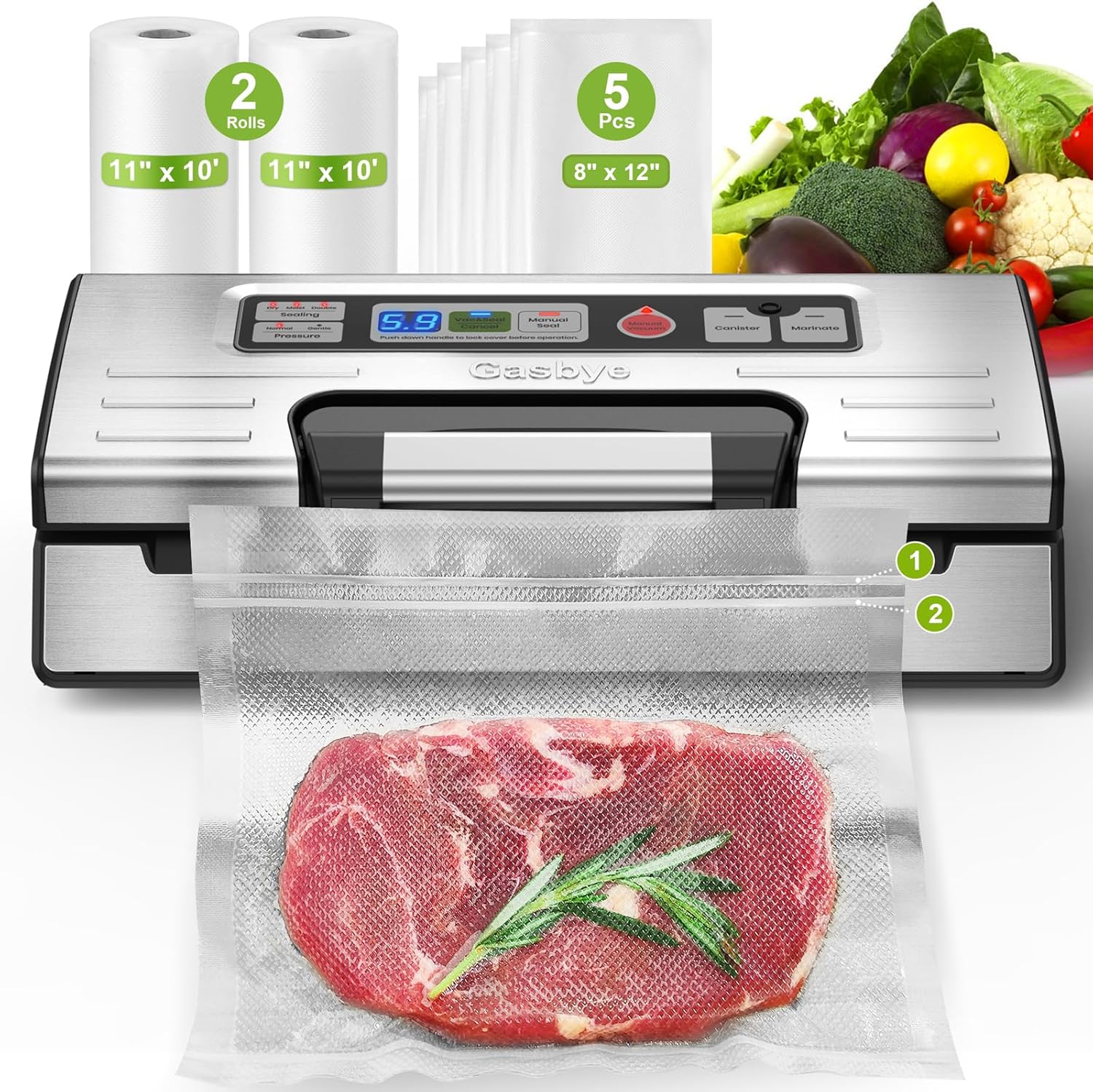
The Gasbye VS5166 is an automatic vacuum sealer designed for everyday kitchen use and handling moist foods. It uses a 95kPa dual-pump system for strong suction and offers a pulse mode for gentle control when sealing delicate items or when you want to avoid sucking out liquids. Dual heat-seal strips produce a double seal that helps prevent leaks during long sous-vide cooks, and the removable drip tray plus external air suction hose make it practical for soups, marinades, and other wet contents. Built-in roll storage and a cutter reduce bag waste and speed prep, and the starter kit includes bags and spare foam gaskets so you can start sealing right away. The unit is relatively compact and finished in stainless steel, but its power and features are aimed at countertop use rather than heavy industrial workloads. Replacement parts are available separately, which is useful for long-term ownership, though users who need commercial throughput may find this consumer model limiting.
Best for: Buyers who want a durable, feature-rich countertop sealer that handles wet foods and sous-vide prep reliably while keeping long-term maintenance simple.
Less Ideal for: Users who need a commercial-grade machine for continuous high-volume sealing should consider heavier duty models instead.
- Strong 95kPa dual-pump suction for consistent air removal
- Pulse mode lets you control vacuum strength for delicate or wet foods
- Double heat seal provides reliable, sous-vide-ready seals
- Removable drip tray and external air suction hose help manage liquids
- Built-in roll storage and cutter reduce bag waste and speed prep
- Designed as a consumer countertop unit so not ideal for high-volume commercial use
- Some useful accessories like the vacuum food container are sold separately
Verdict: Choose the VS5166 if you need a countertop sealer that reliably handles soups, marinades, and sous-vide bags with strong suction, pulse control, and double seals.
MEGAWISE Vacuum Sealer VS6621
| Operation Mode | Automatic |
|---|---|
| Wattage | 110 watts |
| Voltage | 230 |
| Power Source | ac |
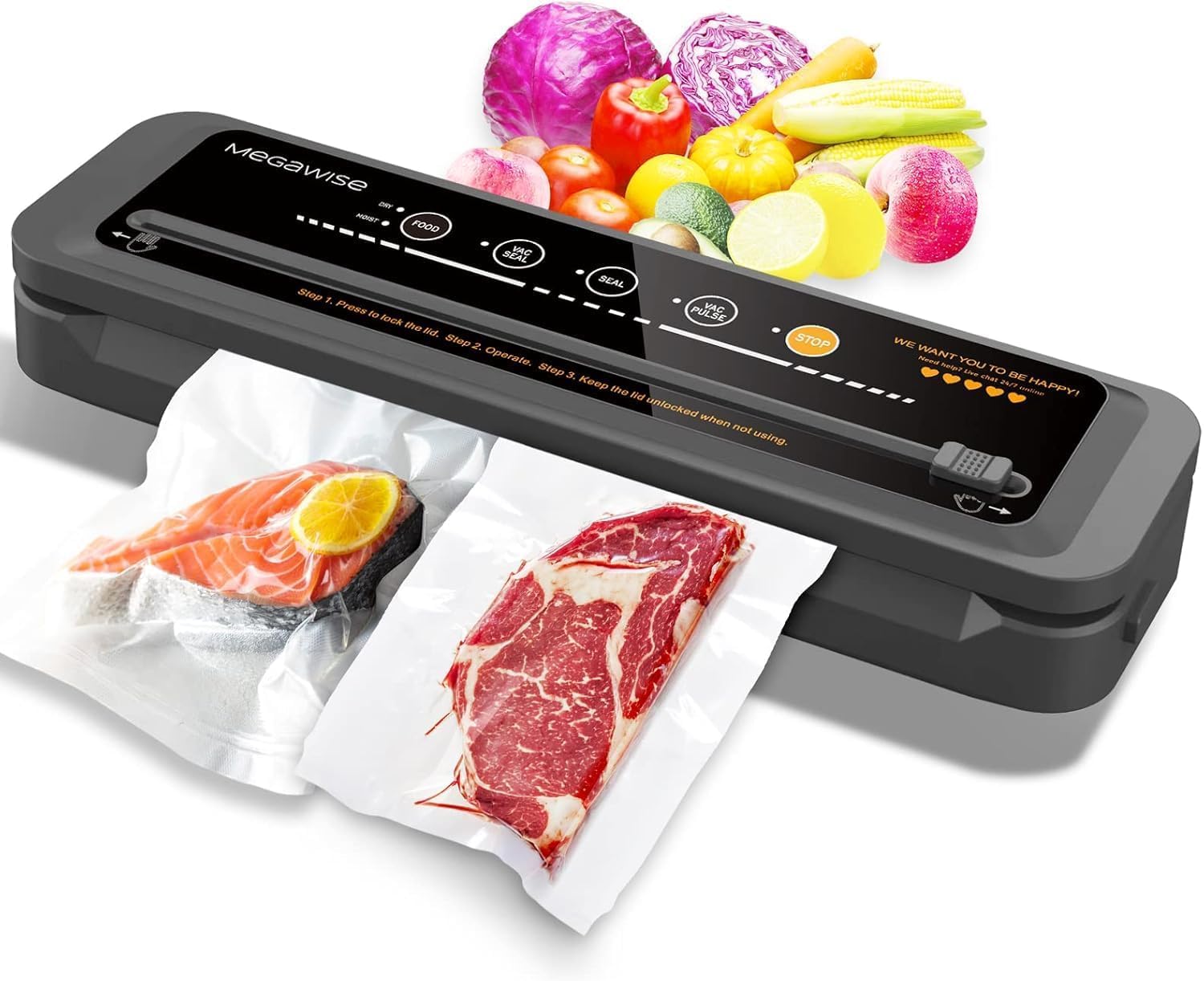
The MEGAWISE VS6621 is a slim, one-touch vacuum sealer made for everyday home use and basic meal prep. It pulls air out using an 80 kPa-rated suction system driven by a DC motor and offers Dry, Moist, Vac Pulse, and Seal settings so you can handle dry items, wet foods, and delicate marinated proteins without crushing them. The 11.8-inch sealing bar and built-in sliding cutter let you customize bag length and seal typical bags quickly, and the unit includes a vacuum hose for jars and bottles. Operation is straightforward: place the bag end in the chamber, press the button, and the machine vacuums and seals in about 10 to 20 seconds. Practical benefits include compact storage, a starter kit of bags and cutter, and an updated design claimed to run 50+ cycles without overheating. Limitations are its 230V voltage specification, which matters outside compatible regions, and that stronger or commercial workloads will outpace this consumer model's capacity and longevity. For soups specifically, the moist mode and Vac Pulse help reduce liquid pull but sealing hot liquids still requires cooling or pre-freezing to avoid spills.
Best for: Buyers on a budget who want an easy-to-use home vacuum sealer that handles both dry and moist foods and fits small kitchens for occasional meal prep and bulk storage.
Less Ideal for: Commercial kitchens or households that seal large volumes daily or need a unit rated for 110V without a step-down converter.
- One-touch automatic vac/seal cycle for quick sealing in 10–20 seconds
- Dry, Moist, Vac Pulse, and Seal modes that cover dry items, wet foods, and delicate marinated items
- Built-in sliding cutter and 11.8-inch sealing bar for custom bag lengths and multiple seals
- Includes vacuum hose for jars and bottles and a starter kit of bags and cutter
- Compact, slim design that stores easily and is rated for extended cycles without overheating
- Voltage set to 230V which is not compatible with 110V regions without a transformer
- Not intended for heavy commercial use and may wear faster under very high-volume sealing
- Handling hot soups requires extra care—pre-cool or partially freeze liquids before vacuum sealing to avoid spills
Verdict: A compact, budget-friendly automatic sealer with moist and pulse modes that makes short work of home meal prep and wet foods when used with proper cooling for soups.
Gasbye Chamber Vacuum Sealer CV4520

| Chamber capacity | 5.3QT |
|---|---|
| Sealing bar length | 11.5 inches |
| Pump power | 300W |
| Operation mode | Automatic |
| Voltage | 115 volts |
The Gasbye CV4520 is a compact chamber vacuum sealer built to handle both liquids and solids for home kitchens. With a 5.3QT chamber and a 11.5-inch sealing bar it removes air from the entire chamber so soups, sauces, marinades, and chunky foods seal cleanly without drawing liquid into the pump. The automatic 300W pump and double-seal, replaceable heating wires aim to deliver consistent, leak-free seals and let you extend the unit's life by replacing worn wires instead of the whole machine. It ships with a filler plate, external suction hose, and 30 pre-cut 11×11 bags so you can start sealing right away. In practical use the unit is well suited for meal prep, sous-vide portioning, and preserving wet foods; its stainless steel exterior is easy to wipe down. Expect the best performance on batches that fit the 9.7-inch chamber width and note that chamber capacity limits very large containers or whole roasts; for strictly dry-only sealing lower-cost external units may be more economical.
Best for: Buyers who prioritize reliable, repeatable seals for soups, sauces, and wet foods and want a durable chamber unit that reduces the risk of liquid-related failures.
Less Ideal for: People who mainly seal large whole roasts, oversized containers, or only dry goods and want the lowest-cost option should consider a different sealer.
- Chamber design safely seals liquids and marinades without pulling liquid into the pump
- Replaceable 11.5-inch sealing bar with double-seal wires for longer service life
- Automatic 300W pump provides strong vacuum for bubble-free seals on chunky foods
- Includes starter kit of 30 pre-cut bags plus filler plate and external hose
- 5.3QT chamber limits the size of items and containers that can be sealed
- Larger or commercial-scale batches may require a bigger, higher-capacity chamber model
Verdict: Choose this chamber sealer if you need a reliable, liquid-safe machine that delivers consistent, long-lasting seals for soups, sauces, and marinades.
Bonsenkitchen Vacuum Sealer VS2100

| Operation Mode | Automatic |
|---|---|
| Wattage | 135 |
| Voltage | 120 volts |
| Included Components | Air suction hose, Vacuum Bags x5 |
The Bonsenkitchen VS2100 is a compact automatic vacuum sealer designed for everyday kitchen preservation and sous‑vide prep. It offers four modes — Vac & Seal for one‑touch vacuuming and sealing, Pulse Vac for manual control on soft or moist foods, Seal only, and an Accessory mode for external hose use with jars or sous‑vide bags. In practice the machine handles continuous sealing well; the listing claims up to 30 bags in 15 minutes which matches its 135W motor and automatic operation. The compact footprint and included starter kit (five bags and an air suction hose) make it easy to tuck into a drawer or use on a small counter. For soups and other liquids the Pulse Vac and Accessory hose give more control to avoid drawing liquid into the pump, but you should still use partial vacuuming or pre‑freeze soups to get reliable results. The ABS housing feels lightweight, and the unit runs on standard 120V household power. If you want a simple, low‑cost sealer for batch sealing, sous‑vide and occasional liquid work, this model covers those bases with practical controls and useful accessories.
Best for: Buyers who prioritize proven customer satisfaction and want a compact, easy‑to‑use sealer for sous‑vide and regular meal prep with some occasional liquid or soft‑food vacuuming.
Less Ideal for: Those who need heavy‑duty, commercial‑grade sealing or frequent hot liquid sealing without pre‑freezing should consider more robust models designed for intensive liquid handling.
- Four operation modes including Pulse Vac and Accessory hose for controlled vacuuming of soft or moist foods
- Compact, lightweight design that stores easily in a drawer or small kitchen
- Comes with a starter kit of vacuum bags and an air suction hose for immediate use
- Automatic operation and 135W power support continuous sealing for batch food prep
- Not fully optimized for handling large volumes of hot liquids without pre‑freezing or careful pulse use
- Plastic ABS body may feel less durable than higher‑end metal models
Verdict: A compact, user‑friendly sealer with controlled vacuum modes and starter accessories that fits cooks who want reliable sous‑vide prep and everyday food preservation with low risk.
FoodSaver FM2100 Vacuum Sealer

| Operation Mode | Automatic |
|---|---|
| Wattage | 120 watts |
| Voltage | 110 volts |
| Included Components | 3 qt, 2 gal Bags, 11 in x 10 ft Roll and Accessory Hose |
| Warranty Description | 5 year manufacturer limited |
The FoodSaver FM2100 is a compact automatic vacuum sealer designed for everyday kitchen use and longer-term freezer storage. It removes air from FoodSaver bags and rolls, then applies a dual-heat seal to lock out moisture and prevent freezer burn, and includes a built-in roll cutter and drip tray for easier cleanup. Controls offer Vac/Seal, Seal only, and Dry/Moist modes so you can tailor the process for liquids, soups in flat-frozen pouches, or dry goods, and an accessory hose port makes it compatible with handheld sealing tools and containers. The unit ships with a starter kit of bags and an 11-inch roll so you can make custom-sized pouches, and the automatic bag detection simplifies repeated use. Expect reliable seals and good bag optimization, though you will need to freeze soups flat before sealing to avoid messy pulls and the machine is a countertop appliance that requires some storage space. Backed by a five-year limited warranty, it is built for consistent home use rather than heavy commercial workloads.
Best for: Buyers who prioritize a dependable, easy-to-use sealer for home food preservation and want straightforward controls and consistent seals for freezer storage and sous-vide prep.
Less Ideal for: Large-volume or commercial kitchens that need heavy-duty continuous sealing or users who require direct wet-liquid sealing without freezing and pre-prep steps.
- Automatic bag detection simplifies repeated sealing jobs
- Vac/Seal and Dry/Moist modes let you adjust for liquids or dry foods
- Built-in roll cutter reduces bag waste and lets you make custom pouches
- Dual heat sealing strips provide consistent, airtight seals
- Includes starter bags, a roll, and an accessory hose for added versatility
- Not designed to vacuum-seal hot or liquid soups directly without pre-freezing
- Countertop footprint requires storage space when not in use
- Handheld power source listed as HandHeld may confuse users expecting plug-and-play wording
Verdict: A reliable, user-friendly countertop sealer that delivers consistent airtight seals and useful modes for home cooks preserving soups and freezer meals when soups are pre-frozen.
Choosing the Right Vacuum Sealer for Soups: Key Factors to Consider
Liquid-Handling Modes
A vacuum sealer that offers dedicated liquid or moist modes makes sealing soups practical and less risky. These modes slow the pump or use partial vacuum so liquids do not boil or get sucked into the mechanism. When sealing hot or just-warm soups, look for clear instructions and an option to let steam escape before final sealing.
Without a liquid-handling mode, you will often need to chill soups until partially frozen or use barrier techniques that add steps and mess. Machines that provide multiple vacuum strengths or a pulse function give you much more control with viscous sauces and chunky stews.
Bag Format and Compatibility
Bag type determines how easily you can fill, position, and seal soups. Wide rolls and large pouch sizes allow room for liquids plus headspace for expansion. Some systems accept vacuum-safe containers or canisters that let you avoid sealing free liquids directly, which is helpful for very hot stocks.
Also check whether the sealer works with standard heat-seal bags or requires proprietary cartridges. Usability, long-term cost, and convenience all depend on how flexible the machine is with full-size bags and cutting/rolling accessories.
Seal Strength and Reliability
A strong, even seal prevents leaks and freezer burn. For soups, the seal must clamp down across wet edges without skipping or creating weak spots where liquid can escape. Look for machines that form ribbed or double seals and that indicate when the seal cycle is complete.
Consistency matters because a single failed seal can mean a ruined batch and a messy cleanup. Durable heating elements and well-aligned sealing bars contribute to dependable performance over many uses.
Ease of Cleaning and Maintenance
Dealing with soups means occasional spills, steam, and splatter. Machines with removable drip trays, washable sealing channels, or accessible pump housings cut the time needed to clean after use. Materials that resist staining and corrosion will keep the unit hygienic and extend service life.
Maintenance also includes simple access to replacement seals or gaskets and clear instructions for preventing liquid from entering the pump. If a unit requires special tools or lengthy disassembly to clean, it will not be convenient for regular soup batching.
Size, Storage, and Counter Impact
Consider where the sealer will live in your kitchen. Larger models often have more power and accessory ports but take up more counter or cabinet space. If you batch soups frequently, a countertop unit with dedicated liquid features may be worth the footprint; occasional users may prefer a compact sealer that still supports roll bags.
Also evaluate cord length, weight for seasonal storage, and whether the unit's shape allows vertical storage when not in use. Practical storage considerations affect how often you will use the sealer for soups rather than letting it sit idle.
Safety and Temperature Handling
Hot liquids present safety risks. A sealer that includes guidance for sealing warm or boiling soups and that supports cooling or pre-freeze recommendations helps avoid burns and damaged units. Some machines specify maximum food temperatures for safe sealing.
Additionally, look for features like heat shields, insulated handles on bag clamps, and clear warnings about steam. These elements reduce the chance of scalding and make the process safer when you are working with large pots of hot stock.
Preparing Soups for Sealing
Chill or partially freeze hot soups whenever possible before attempting a vacuum seal. Cooler temperatures reduce steam and prevent liquids from being drawn into the pump. For best results, portion soups into shallow containers and pop them in the freezer for 30 to 60 minutes until a firm surface forms, then transfer to bags for final sealing.
- Portion into meal-sized servings to speed cooling and thawing.
- Use a ladle to avoid splashing when filling bags or containers.
- Leave at least one inch of headspace to allow for bag handling and seal formation.
Using Containers or Canisters Instead of Bags
If you frequently seal very hot or chunky soups, consider vacuum-safe containers or canisters that attach to the sealer. These let you remove air without subjecting the pump to free liquids and are ideal for delicate textures and sauces that might escape during a direct bag seal. Canisters also make reheating and serving simpler because you can reheat the container directly when appropriate.
- Choose canisters with a tight-fitting lid and clear vacuum port.
- Use canisters for hot or thin liquids to avoid clogging the sealer.
- Confirm compatibility and recommended vacuum levels for liquids.
Avoiding Clogs and Pump Damage
Preventative steps protect the unit and maintain performance. Use filters or foam plugs if provided, and wipe bag mouths before sealing to remove drips. If the sealer includes a drip tray, empty it after every session with liquids to prevent buildup and staining.
- Run the sealer on lower vacuum settings for liquids.
- Use partial freeze method for best balance of safety and seal quality.
- Clean drip trays and sealing channels immediately after use.
Best Practices for Freezer Storage and Reheating
Label bags or containers with the date and contents, and lay sealed flat to maximize freezer space and accelerate thawing. For reheating, transfer frozen soups to a pot and thaw gently on low heat rather than microwaving directly in sealed plastic. When microwaving is necessary, open the seal to vent and avoid pressure buildup.
- Freeze flat for quicker, even thawing and space-saving.
- Store at the back of the freezer to avoid temperature fluctuations near the door.
- Reheat in a pot for best texture and even heating.
How We Chose the Best Vacuum Sealer for Soups
We selected models that address the specific challenges of sealing soups and other high-moisture foods. Primary evaluation criteria were liquid-handling features, sealing consistency with wet and viscous contents, build durability for regular kitchen use, and ease of cleaning after liquids are processed. We prioritized units with adjustable vacuum strength or dedicated moist/soft modes, bag- or roll-compatible configurations that prevent spillage, and simple maintenance steps that reduce downtime. We excluded basic snack-oriented units that lack liquid controls or require complex workarounds. Units that depend on fragile accessories or single-use components were deprioritized. In short, we favored machines that combine reliable seal integrity for wet foods, robust construction for frequent use, and straightforward cleanup procedures. The scoring metrics reflect those same dimensions so readers can compare how each model handles soups in real-world kitchen scenarios.
Our full evaluation process is outlined in our review methodology.
FAQ
Can I seal hot soup directly with a vacuum sealer?
Usually you should avoid sealing piping hot soup directly. Allow the liquid to cool or partially freeze first, or use a container method if the machine supports it. Sealing very hot liquids increases the risk of steam entering the pump and can cause spillback.
What is the best way to prevent liquid from being sucked into the pump?
Use a liquid-mode or pulse vacuum setting, or pre-freeze soups until the surface firms. Clearing excess liquid from bag edges and using drip trays or canisters also helps prevent spillback into the pump.
Are special bags required for sealing soups?
You can often use standard heat-seal bags or rolls, but wide, sturdy bags are better for soups because they provide more headspace and reduce handling leaks. Some systems support reusable canisters as an alternative for liquids.
How long will vacuum-sealed soups last in the freezer?
Vacuum sealing reduces freezer burn and extends quality, but actual shelf life depends on the soup's ingredients and freezer stability. Vacuum sealing helps maintain flavor and texture longer than loose storage, but perishable ingredients still have finite safe storage windows.
How do I clean a sealer after sealing several soups?
Empty and wash removable drip trays and wipe the sealing channel with a damp cloth. Follow the manufacturer guidance for cleaning gaskets and exterior surfaces, and allow internal components to dry thoroughly before next use to prevent mold or corrosion.
Final Verdict
For sealing soups, prioritize machines with liquid-handling modes, solid seal bars, and easy-clean features. Expect to trade some convenience for better protection: larger, more robust models usually offer stronger seals and accessory support that make handling hot or high-moisture foods simpler. Decide whether you need container compatibility for very hot liquids or if you will use partial freezing and wide bags. Focus on reliable seal integrity, accessible cleaning, and safety features to get the most consistent results when preserving broths, stews, and sauces.