
Note: This article contains affiliate links. If you click on these links and make a purchase, we may earn a small commission at no extra cost to you. This helps support our research and content. Read our full affiliate disclosure here.
If you bake layer cakes, bundts, or delicate sponges regularly, the right wall oven makes a clear difference in bake consistency and finished texture. A wall oven for baking cakes should deliver accurate, even temperatures, stable convection options when needed, and rack layouts that let you use multiple pans without hot spots. This guide covers our top shortlisted wall ovens for baking cakes and explains the specific features we focused on for home bakers. Below you will find concise evaluations of six carefully chosen units, followed by practical buying guidance and answers to common questions about baking performance and installation.
Top Picks at a Glance
| Best Overall The best all-around choice for most situations | Zomagas 24-Inch Wall Oven |  |
| Best Quality Built to a higher standard if you want something more solid | COSMO Haven 30in Double Wall Oven |  |
| Best Value The sweet spot between price and what you get | Garvee 24 Inch Single Wall Oven |  |
| Best Budget The cheapest option that still gets the job done reliably | AMZCHEF 24" Single Wall Oven | 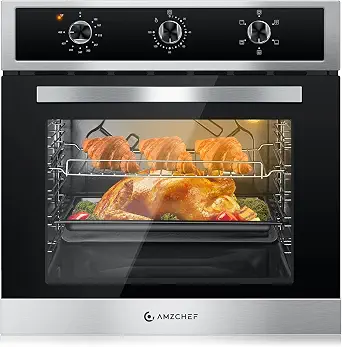 |
| Top Rated A top-rated pick with lots of positive feedback | Empava 24" Single Electric Wall Oven |  |
| Most Popular A crowd favorite that many people choose with confidence | ThermoMate 24" Wall Oven ESMB605 |  |
Zomagas 24-Inch Wall Oven

| Heating Method | Convection |
|---|---|
| Wattage | 3220 watts |
| Installation Type | Built-In |
| Additional Features | Rotisserie, Convection |
| Voltage | 220 volts |
The Zomagas 24-inch built-in electric oven is a convection wall oven sized for family meals and holiday baking, offering a 2.8 cu.ft (80 L) cavity and a 3220W heating element for faster preheating and steady temperatures. It provides nine cooking modes including convection bake and roast plus a 360° rotisserie kit for evenly roasted poultry and large cuts, while the convection fan promotes more even browning and shorter bake times—useful when baking multiple cake layers or sheet trays. Controls combine mechanical knobs for direct temperature selection with a three-button digital 24-hour timer for delayed starts and longer roasts. The triple-layer glass door and enamel interior make the oven safer to touch and easier to wipe clean after frosting or spills. Limitations include mandatory 240V hardwired installation and the need to confirm cabinet cutout dimensions before purchase, and some buyers may prefer more advanced touchscreen controls or built-in smart features. For home bakers who want a roomy convection oven with a rotisserie option and straightforward controls, this model is a practical choice.
Best for: Home bakers who want a roomy, convection-capable built-in oven that speeds preheating and produces even browning for cakes, sheet trays, and family-sized bakes while keeping controls simple.
Less Ideal for: Buyers who need a plug-and-play 120V appliance, want integrated smart features, or prefer touchscreen-heavy controls and connected kitchen management.
- Large 2.8 cu.ft capacity fits a 14 lb turkey or multiple cake pans
- 3220W heating for faster preheat and consistent temperatures up to 480°F
- Convection fan for even browning and quicker bake times
- Includes 360° rotisserie kit for evenly roasted poultry
- Triple-layer tempered glass door and enamel interior for easier cleaning and safer exterior temperatures
- Requires 220–240V hardwired installation, not a simple plug-in
- No smart connectivity or advanced touchscreen controls
Verdict: A spacious, high-power built-in convection oven that speeds preheating and delivers even browning, making it a strong choice for serious home bakers focused on reliable, roomy performance.
COSMO Haven 30in Double Wall Oven
| Heating Method | Convection |
|---|---|
| Fuel Type | Electric |
| Installation Type | Built-In Wall |
| Wattage | 4800 watts |
| Capacity | 5 cubic feet |
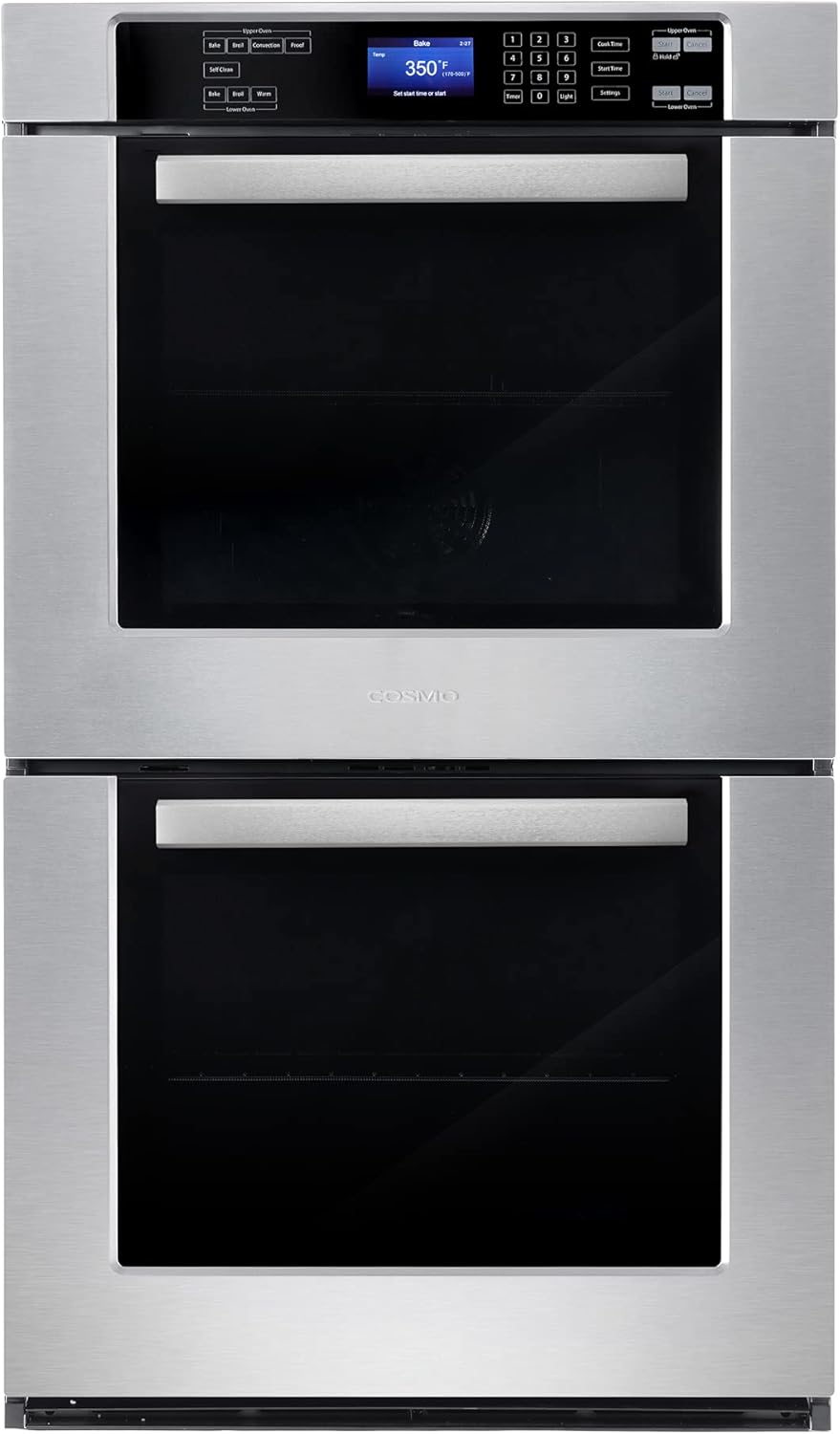
This 30-inch Cosmo double electric wall oven pairs a Turbo True European convection top oven with a standard bottom oven to give a baker clear performance advantages and flexible staging. The upper oven's convection and automatic conversion make it easier to bake evenly at lower temperatures and shorter times, which is helpful for cakes that need consistent heat and browning, while the bottom oven provides a second full-size cavity for proofing, warming, or simultaneous bakes. Practical features include seven cooking modes, a temperature probe, interior lighting, six rack positions, and a self-cleaning cycle that simplifies maintenance. Installation is built-in hardwired electric at 240V and the unit ships with three racks and a broiler pan. Expect professional-style capacity and useful safety features like cavity cooling and a cool-touch handle, though it is a heavy, full-size built-in that requires proper electrical and cabinet planning. For bakers who prioritize consistent results and need to run multiple batches, this double oven delivers versatile, convection-driven performance.
Best for: Bakers focused on consistent, professional-style results who need large capacity and the ability to run multiple cakes or recipes at once.
Less Ideal for: Casual bakers with limited kitchen space, renters, or anyone who cannot accommodate a hardwired 240V built-in appliance.
- True European convection in the top oven for faster, more even baking
- Two full 5 cu. ft. oven cavities let you bake separate items at different temperatures
- Automatic convection conversion removes the need to recalculate recipes
- Self-cleaning cycle and hidden bake element simplify cleanup
- Includes three racks, a probe, and interior lighting for practical baking use
- Requires 240V hardwired installation and professional cabinet planning
- Large, heavy built-in unit may be difficult to retrofit into smaller kitchens
Verdict: If you bake frequently and need two full-size ovens with reliable convection performance, this double wall oven delivers the capacity and even baking top bakers want.
Garvee 24 Inch Single Wall Oven

| Capacity | 2.5 cubic feet |
|---|---|
| Wattage | 3000 |
| Heating Method | Convection |
| Installation Type | Built-In |
| Voltage | 240 |
This Garvee 24-inch single wall oven is a compact built-in appliance aimed at delivering even baking results thanks to a 3000W power rating and 3D convection circulation. It is used like a conventional wall oven but leans on its convection fan and multiple cooking modes to bake, roast, and broil with more uniform heat across racks, which is helpful when baking layer cakes or multiple trays. The oven includes smart touch controls, 8 cooking functions plus 108 presets for one-touch programs, a triple-glass cool-touch door, and an enamel interior that wipes clean easily. For baking, the strong convection and preset modes help achieve consistent browning and reliable rise without frequent tray rotation, though the 2.5 cubic-foot cavity is modest so very large sheet cakes or multiple full-size pans may require smaller pans or batch baking. Installation requires a 240V built-in hookup and the oven's stainless-black styling fits modern kitchens. If you prioritize even heat and easy cleanup in a smaller footprint, this oven delivers practical performance for home bakers.
Best for: Home bakers who need reliable, even convection baking in a compact built-in oven and who value preset programs and easy cleaning for repeated cake batches.
Less Ideal for: People who regularly bake very large sheet cakes, multiple full-size pans at once, or need a portable countertop solution should consider larger capacity or alternative ovens.
- Powerful 3000W convection system for even heat distribution across racks
- 3D convection technology reduces the need to rotate trays during baking
- 108 one-touch presets and 8 functions simplify common baking tasks
- Enamel interior that resists grease and is easy to wipe clean
- Cool-touch triple-glass door improves safety and reduces external heat
- 2.5 cu ft capacity is relatively small for very large or commercial-size cakes
- Requires 240V built-in installation which limits plug-and-play placement
Verdict: A compact built-in convection oven that gives home bakers even, reliable results and easy cleanup in a smaller kitchen footprint.
AMZCHEF 24" Single Wall Oven
| Capacity | 2.65 Cu.ft. |
|---|---|
| Power | 2200W |
| Installation Type | Built-In |
| Additional Features | Rotisserie |
| Temperature Range | 122–482°F |
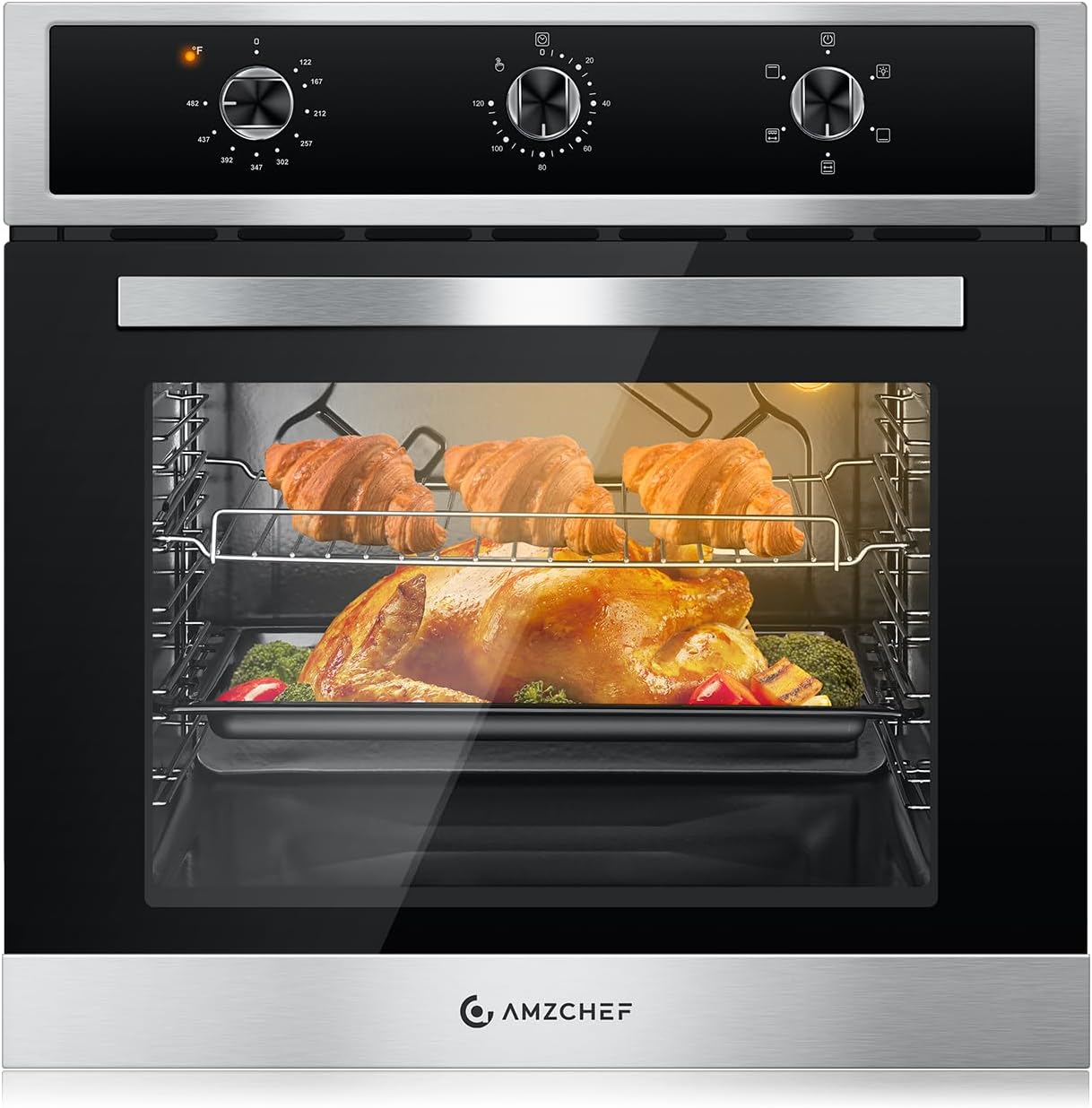
This AMZCHEF 24" single wall oven is a straightforward, budget-friendly built-in electric oven designed for everyday baking and roasting. It offers a 2.65 cubic foot interior that fits family-sized sheet pans and a 360 degree rotisserie for roasting whole birds. Temperature ranges from 122 to 482 F and knob controls make setting time and mode simple, while the enamel interior and removable door ease cleanup. The oven lacks a true convection fan, so baking multiple layers or large sheets may require rotating pans for even browning, but for single-rack cake bakes it provides reliable heat and a wide temperature spread. Practical touches include five cooking modes, an internal halogen light, and five rack positions to adjust spacing for cakes or taller roasts. Expect basic, tactile controls rather than digital precision and a modest power rating that still handles standard baking tasks without frills.
Best for: Bakers who want an affordable built-in oven that handles everyday cake recipes and family roasts without premium features, and who prefer simple, tactile controls over smart interfaces.
Less Ideal for: Serious bakers who need convection-assisted even baking for multi-rack batches or precise digital controls should consider higher-end models with true convection and programmable settings.
- Generous 2.65 cu ft cavity fits full-size cake pans and sheet trays.
- Wide temperature range (122–482 F) suitable for slow bakes and higher-heat finishes.
- Rotisserie option expands roasting capability for whole poultry and large cuts.
- Enamel liner and removable door simplify cleaning after baking.
- Five rack positions let you place pans at optimal heights for cakes and layers.
- No convection fan listed, so heat may be less even for multi-rack baking.
- Knob-only controls limit precise digital temperature/timer programming.
Verdict: A practical, budget-friendly built-in oven that reliably bakes single-rack cakes and roasts without premium convection features.
Empava 24" Single Electric Wall Oven

| Capacity | 2.5 cubic feet |
|---|---|
| Wattage | 2950 watts |
| Voltage | 240 volts |
| Cooking Functions | Bake, Keep Warm, Pizza, Broil |
This Empava 24" single electric wall oven is a compact built-in unit aimed at everyday home baking and roasting. It offers a roomy 2.5 cubic foot porcelain-lined interior that fits multiple trays or a large cake pan, and four cooking modes — bake, broil, keep warm, and a pizza setting — driven by 2950W heating elements and a combination of conduction, convection, and radiant heat. Controls are mechanical knobs and a 10-to-120-minute timer, which keep operation straightforward and dependable without a steep learning curve. The halogen interior light and large tempered glass window make it easy to monitor cakes without opening the door, and hidden heating elements plus a porcelain finish simplify cleanup. Installation requires 240V hardwiring for built-in use, and the drop-down door with triple-layer glass helps retain heat while staying cool to the touch. Expect a reliable, no-frills baking experience well suited to families or small kitchens, though it lacks advanced digital controls and convection fan details that some pro bakers prefer.
Best for: Buyers who prioritize dependable, easy-to-use baking equipment for family cakes and everyday desserts and who want a roomy built-in oven without complicated digital interfaces.
Less Ideal for: If you need precise digital controls, multi-speed convection baking, or a plug-in countertop solution, this built-in unit is not the best choice.
- Spacious 2.5 cu ft interior fits large cake pans and multiple racks
- Simple, durable mechanical knob controls and 10–120 minute timer
- Porcelain ceramic interior with hidden heating elements for easier cleaning
- Large tempered glass door with halogen light for easy visual monitoring
- Requires 240V built-in installation, not plug-and-play for all kitchens
- No advanced digital controls or clearly stated convection fan speed settings
Verdict: A reliable, roomy built-in electric oven that delivers straightforward, family-friendly baking performance without digital complexity.
ThermoMate 24" Wall Oven ESMB605

| Fuel Type | Electric |
|---|---|
| Wattage | 2200 watts |
| Voltage | 240 volts |
| Capacity | 2.8 cubic feet |
| Installation Type | Built-In |
The ThermoMate 24" ESMB605 is a compact built-in electric wall oven aimed at home bakers who need straightforward, reliable performance for everyday baking. It offers five cooking modes including bake and broil, a 2.8 cu ft cavity that fits standard cake pans, and a 2200 W heater that reaches high temperatures quickly. The oven uses a three-layer tempered glass door and an enamel cavity for easier cleaning, and the door is removable which helps when deep-cleaning after sticky cake spills. Controls are mechanical knobs with an anti-mistouch design and a white light ring that makes settings visible at night, though there is no convection mode so you will need to rely on rack placement and rotation for even browning. The unit also provides five rack positions and includes two oven racks for flexible pan placement. For bakers focused on consistent, simple baking rather than advanced convection-driven results, this oven is a practical fit, but pastry professionals who need convection or precise digital controls may find it limiting.
Best for: Bakers who prioritize a reliable, easy-to-clean built-in oven for everyday cakes and desserts and who value simple mechanical controls over advanced convection features.
Less Ideal for: Serious pastry bakers who rely on convection for uniform rise and browning or users who want precise digital programming and temperature presets.
- 2.8 cu ft interior can accommodate standard cake pans and multiple rack positions
- Removable three-layer tempered glass door improves heat retention and simplifies cleaning
- Anti-mistouch mechanical knob with light ring reduces accidental changes and is easy to read
- Enamel cavity and included racks are durable and straightforward to maintain
- No convection function, which can limit even baking and faster browning
- Mechanical knob controls lack the precision timing and temperature programming of digital models
Verdict: A practical built-in electric oven that delivers easy-to-clean, roomy baking space and simple controls for home bakers who do not require convection features.
Choosing the Right Wall Oven for Baking Cakes: Key Factors to Consider
Temperature Accuracy and Stability
Accurate temperature is essential for cakes because small deviations change rise and texture. Look for ovens with verified calibration capability and minimal overshoot when preheating.
Stability during long bakes matters as much as the setpoint. Ovens that cycle wildly can cause doming or collapse in delicate batters. Consider how quickly the oven recovers after opening the door, since many cake recipes call for short door openings to check or rotate pans.
Heat Distribution and Hot Spots
Even heat distribution prevents uneven browning and lopsided rises. The internal heating element layout and any convection fan design determine whether heat concentrates near a wall or spreads evenly across racks.
If you plan to bake multiple pans at once, check how consistent temperatures are between rack positions. Some wall ovens offer bake modes or shielded elements that reduce direct heat on top or bottom to lower hot-spot risk.
Interior Size and Rack Configuration
Interior volume affects the largest pan you can use and whether you can bake multiple cake layers simultaneously. Measure the usable cavity height and width against typical cake pan dimensions you use.
Adjustable racks and the number of usable shelf positions give flexibility. More positions let you move pans to less intense zones or stack several sheet pans or cake rounds without crowding.
Convection Options and Control
Convection can speed bakes and improve browning, but for delicate cakes the fan can create too much surface drying or uneven rise. Prefer models with variable convection intensity or an option to disable the fan while maintaining even heat.
Also consider specialty convection modes that distribute air more gently or combine fan and traditional elements. That enables you to use convection for sturdier bakes and switch to conventional baking for tender sponges.
Control Precision and Baking Modes
Precise temperature input, clear displays, and programmable timers make repeatable recipes easier to achieve. Controls that allow setting fractional temperatures or provide preheat completion alerts help with timing and batter handling.
Dedicated baking modes, delayed start, and probe-based bake features assist advanced recipes and multi-step bakes. Intuitive menus reduce the chance of accidentally starting a self-clean or broil cycle mid-recipe.
Installation and Venting Considerations
Wall ovens must fit the cabinet opening and have compatible electrical and venting arrangements. A tight fit or improper venting can alter thermal performance and reduce cooling airflow required after long bakes.
Consider whether the unit vents from the rear or the front and whether that suits your existing cabinetry. Also verify required clearances and electrical service to avoid installation compromises that might affect oven behavior.
How Convection Affects Cake Texture
Convection moves hot air around the cavity and can produce faster browning and shorter bake times. For sturdy cakes like pound cakes or loaf cakes, that is often advantageous because it helps form a consistent crust without overbaking the interior.
For delicate sponge cakes and chiffon-style batters, convection can be too aggressive. Bakers often reduce temperature by 20 degrees Fahrenheit or disable the fan entirely for these bakes. Choosing an oven that gives you nuanced convection control helps tailor the environment to each recipe.
- Use convection for sturdier, dense cakes to improve color and uniformity.
- Lower set temperature or disable fan for delicate sponges to avoid surface drying.
- Look for models that allow subtle fan speed or direction options for more control.
Calibrating and Verifying Oven Temperature
An inexpensive oven thermometer is one of the best tools for verifying consistent temperature. Place it at the center of a middle rack and confirm the reading after the oven has fully preheated.
If you find consistent offsets, many wall ovens allow user calibration through the control panel. Document any adjustment so you can apply the same correction across recipes and maintain repeatability.
- Check temperature in multiple rack positions to detect hot spots.
- Allow full preheat and avoid opening the door during the initial rise period.
- Re-check calibration seasonally or after long self-clean cycles.
Rack Setup Strategies for Multiple Layers
When baking multiple cake layers at once, stagger pans on separate racks and leave ample clearance between them to promote airflow. Rotating pans halfway through a bake can equalize browning when temperatures differ between racks.
If the oven cavity is tall enough, using three rack positions lets you bake two layers with an empty rack between for better heat circulation. Adjustable or telescoping racks make safe access easier when moving pans for rotation.
- Stagger pans instead of stacking directly above each other.
- Rotate positions halfway through long bakes to reduce variance.
- Use an oven thermometer per rack if you frequently bake multiple layers.
Maintaining Interior Surfaces and Seals
A well-sealed door and clean interior improve thermal consistency. Gasket wear, grime, or warped racks can change how heat circulates and increase preheat times.
Routine cleaning prevents smoke and residue that can affect flavor and browning. Use manufacturer-recommended cleaning modes sparingly and verify gasket condition after any high-heat cleaning cycles.
- Inspect door gaskets for gaps at least twice a year.
- Clean spills promptly to avoid burnt residues that alter heat transfer.
- Avoid abrasive tools that can damage interior coatings and affect heat reflection.
Power and Electrical Requirements
Wall ovens typically require a dedicated circuit and a suitable voltage supply. Ensuring proper electrical service supports steady heating element performance and reduces the chance of tripped breakers during long bakes.
If you are replacing an existing unit, confirm that the available circuit matches the new oven's requirements. Inadequate wiring can limit element wattage and affect how quickly the oven recovers after door openings.
- Verify voltage and amp requirements before installation.
- Avoid using shared circuits that might introduce power interruptions.
- Consult a licensed electrician when in doubt about compatibility with existing wiring.
How We Chose the Best Wall Oven for Baking Cakes
We focused on features that directly affect cake-baking results in a home kitchen. First, temperature accuracy and stability were prioritized because small temperature swings will alter crumb, rise, and moisture in cakes. Second, internal volume and rack configuration matter for baking multiple layers or large pans at once. Third, convection design and control were examined to see how well forced-air options can be softened or turned off for delicate batters. Fourth, heating element layout and bake mode options were considered to reduce hot spots and encourage even browning. Fifth, control precision and program memory were weighed so timers and repeatable presets support consistent results. We excluded units that lack accessible temperature calibration, poorly documented rack positions, or minimal bake-mode control. We also filtered out ovens with installation constraints that make them unsuitable for typical kitchen wall-cabinet fittings. Overall, we selected models that balance dependable thermal performance, useful interior capacity, and practical user controls for home cake bakers.
Our full evaluation process is outlined in our review methodology.
FAQ
Should I use convection when baking layer cakes?
Often convection helps with even browning and shorter bake times on denser cakes, but for delicate sponge or chiffon cakes it can dry the surface and reduce rise. If you use convection, lower the temperature slightly and monitor closely.
How can I tell if my wall oven has hot spots?
Place oven thermometers on different racks and run a preheat test to compare readings. Visible uneven browning on sheet pans or inconsistent rise across pans during identical bakes also indicate hot spots.
How important is rack adjustability for cake baking?
Very important. Adjustable racks let you position pans to maximize airflow and avoid overcrowding. More usable shelf levels increase flexibility for baking multiple layers or tall bundt pans.
Does a self-clean cycle affect baking performance?
Self-clean cycles expose the cavity to very high heat and can accelerate wear on gaskets and some components. After a self-clean, check gasket condition and re-verify temperature calibration before critical bakes.
How do I reduce dome formation on cakes?
Use consistent oven temperature, avoid excessive initial heat, and center pans on the rack. Some bakers lower the initial temperature slightly or use an insulated cake strip to slow edge set while the center rises.
Final Verdict
For home bakers, prioritize an oven that provides accurate temperature control, even heat distribution, and flexible rack layouts. Decide whether convection is a must by considering the mix of cake styles you bake most often and prefer models with adjustable or disableable convection for versatility. Balance interior size and installation constraints against the types of pans and batch sizes you use. If repeatable results are important, favor ovens with precise controls and documented calibration options so you can build consistent recipes with confidence.