
Note: This article contains affiliate links. If you click on these links and make a purchase, we may earn a small commission at no extra cost to you. This helps support our research and content. Read our full affiliate disclosure here.
Picking the right washing machine for home use matters more than most people expect. Your choice affects how well clothes get clean, how long garments last, and how much energy and water your household uses each month. A good home washing machine balances strong stain removal, gentle fabric handling, sensible capacity, and efficient operation. This guide shortlists the top options for home laundry and explains what makes each type practical for everyday family use. Below you will find our best picks, plus clear criteria we used to evaluate them and the most important factors to consider when choosing a machine for your household.
Top Picks at a Glance
| Best Overall The best all-around choice for most situations | BLACK+DECKER Portable Washer BPW30MW |  |
| Best Quality Built to a higher standard if you want something more solid | Kenmore Front Load Washer 4.5 cu ft |  |
| Best Value The sweet spot between price and what you get | COMFEE' Portable Washer CLV09N1AMG |  |
| Best Budget The cheapest option that still gets the job done reliably | SUPER DEAL Mini Twin Tub Washer |  |
| Top Rated A top-rated pick with lots of positive feedback | Panda Portable Washer PAN638MH1 |  |
| Most Popular A crowd favorite that many people choose with confidence | Giantex Twin Tub Portable Washer |  |
| Best Seller A high-volume bestseller chosen again and again | BLACK+DECKER Portable Washer BPWM09W |  |
BLACK+DECKER Portable Washer BPW30MW

| Capacity | 3 cubic feet |
|---|---|
| Load capacity | 26.5 lbs |
| Number of cycles | 6 |
| Operation mode | Fully Automatic |
| Installation type | Freestanding |
The BLACK+DECKER BPW30MW is a freestanding portable washer aimed at households that need a full-featured machine without permanent hookups. It handles up to about 26.5 pounds per load in a 3.0 cubic foot stainless steel tub and offers six cycles (Normal, Heavy, Delicate, Quick, Bulky, and Spin Only) with hot, warm, and cold water options. Practical touches include an LED display with cycle indicators, auto unbalance detection and auto shutoff for safety, a 24-hour delay start, child lock, and a transparent quiet-close lid so you can monitor loads. Installation is simple: the unit ships with a drain hose and quick-connect sink adapter and rolls into place on two wheels. Because it uses an impeller rather than an agitator, it is gentler on delicates and baby clothing. Trade-offs are its relatively high noise listing and the size and weight that make it less convenient to move frequently, but for a balanced home washer that avoids permanent plumbing, it offers straightforward performance and useful safety and convenience features.
Best for: Households seeking a capable, non-permanent washing solution that balances capacity, useful safety features, and simple setup without installing dedicated plumbing.
Less Ideal for: People who need a whisper-quiet machine or who plan to move the washer frequently between rooms should consider smaller or lighter portable models or a dedicated built-in washer instead.
- 3.0 cu. ft. stainless steel tub resists rust and handles medium to large loads
- Six cycle choices plus hot/warm/cold water and spin-only option for versatile cleaning
- Includes drain hose and quick-connect sink adapter for easy temporary installation
- Safety features such as auto unbalance detection, auto shutoff, and child lock
- Transparent quiet-close lid and LED cycle indicators for easy monitoring
- Noise rated at 72 sones may be noticeable compared with quieter home washers
- Unit is heavy and bulky for a portable model, which reduces ease of frequent relocation
Verdict: Choose this BLACK+DECKER portable washer if you want a full-featured, easy-to-install home washer that balances capacity and safety without permanent plumbing.
Kenmore Front Load Washer 4.5 cu ft

| Capacity | 4.5 cubic feet |
|---|---|
| Access Location | Front Load |
| Additional Features | Hygiene Steam |
| Number of Standard Cycles | 12 |
| Display | LED |
This Kenmore front-load washer is built to handle full household laundry with a 4.5 cu ft drum and high-efficiency operation. It uses Accela Wash to shorten full-load cycle times and an Express Wash option for smaller loads, while a Steam Treat function targets everyday stains without pre-soaking. The control panel combines a knob and light-touch buttons with an LED display to make cycle selection and status monitoring straightforward. Multiple specialized cycles including Kids Wear, Cold Clean, Sanitize, and Heavy Duty let you tailor water and agitation for different fabrics, and dispenser ports for detergent, bleach, and fabric softener simplify dosing. Being ENERGY STAR certified and offering a Cold Clean mode helps reduce energy use on many loads. Trade-offs are typical for a feature-rich front-loader: it is a large, heavy freestanding unit that requires space for installation and proper leveling, and advanced cycles add complexity compared with very simple washers. For buyers who prioritize cleaning performance and flexible cycles, this model delivers practical tools to speed and improve laundry results.
Best for: Buyers who want fast, effective cleaning and flexible cycle control for varied household loads and who value performance improvements that reduce overall laundry time.
Less Ideal for: People with very tight laundry spaces, or those who prefer a minimal-control, low-complexity washer for basic wash needs.
- Large 4.5 cu ft capacity handles bedding and bigger loads
- Accela Wash and Express Wash reduce cycle time for faster turnaround
- Steam Treat option targets tough stains without extra products
- Wide range of cycles and options for fabric-specific cleaning
- ENERGY STAR certified with Cold Clean option to save energy
- Physically large and heavy, requiring adequate space and proper installation
- Multiple cycle options add complexity compared with simple top-load washers
Verdict: Choose this Kenmore if you want a performance-focused front-load washer that speeds cleaning with Accela Wash and adds steam stain treatment for tougher soils.
COMFEE' Portable Washer CLV09N1AMG

| Capacity | 0.9 cubic feet |
|---|---|
| Programs | 5 |
| Max Rotational Speed | 840 rpm |
| Noise | 62 db |
| Display | LED |
The COMFEE' 0.9 cu.ft portable washer is a space-saving top-load machine aimed at apartments, RVs, and dorms that need a simple, standalone laundry solution. It runs fully automatically and offers five programs — Heavy, Gentle, Normal, Rapid, and Soak — plus three water levels and adjustable wash/rinse/spin times so you can tailor cycles for different loads. The stainless steel inner tub, LED display, and see-through lid make it easy to monitor runs, and included wheels and handles simplify moving and storage. Practical safety features such as Auto Unbalance Detection help prevent excessive vibration and accidental leaks by adjusting water levels or alerting you when intervention is required. At a reported spin of up to 840 RPM and a noise spec around 62 dB, it balances decent extraction with moderate sound for indoor use. Limitations are its small 0.9 cu.ft capacity, which means multiple loads for families, and its lightweight, plastic-heavy construction that favors portability over heavy-duty longevity. For someone prioritizing compact convenience and customizable cycles, it handles everyday small-batch laundry reliably.
Best for: Buyers who need a reliable, space-saving washer for small living spaces or mobile use and who prioritize easy setup, configurable cycles, and portability over large capacity.
Less Ideal for: Those who do lots of family-sized laundry or want a heavy-duty, long-lifespan replacement for a full-size washer should consider a full-size machine instead.
- Compact footprint fits tight spaces and includes wheels and handles for easy relocation
- Fully automatic top-load operation with five preset programs and adjustable wash/rinse/spin times
- Stainless steel inner tub resists rust and includes a lint filter for cleaner results
- Auto Unbalance Detection reduces vibration and alerts user if manual intervention is needed
- Small 0.9 cu.ft capacity requires frequent loads for larger households
- Build uses substantial plastic which may not match durability of full-size machines
Verdict: Choose this COMFEE' model when you need a compact, fully automatic washer that delivers configurable cycles and easy portability for small-space living.
SUPER DEAL Mini Twin Tub Washer

| Capacity | 9.9 pounds |
|---|---|
| Operation Mode | Fully Automatic |
| Max Rotational Speed | 1300 rpm |
| Voltage | 110 volts |
| Installation Type | Countertop |
This SUPER DEAL mini twin-tub washer combines a 5.5 lb wash compartment with a 4.4 lb spin dryer in a countertop, top-load package designed for small loads. It works by filling the wash tub, selecting one of the timed wash cycles (up to 15 minutes), and using the separate spinner timer for quick spin drying (up to 5 minutes), so you can run a wash and a spin at the same time to save time. The unit uses a 1300 rpm motor for effective agitation and quick spins, includes inlet and gravity drain hoses for easy hookup and emptying, and a transparent lid so you can monitor cycles. Practical benefits include low water and energy use compared with full-size machines, portability for apartments, dorms, RVs and camping, and a lightweight, rust-resistant plastic drum that keeps maintenance simple. Limitations are small capacity that requires more frequent cycles for larger households and a basic control layout with knob/buttons and limited program options, and the spinner only provides a basic spin-dry so items will usually need air drying afterward.
Best for: Buyers prioritizing low cost and space savings who need an affordable, portable machine for small, frequent loads in apartments, dorms, RVs or while traveling.
Less Ideal for: Households that do regular medium or large loads, need a full dry cycle, or want advanced wash programming and larger-capacity machines.
- Washer and separate spin dryer let you wash and spin at the same time for faster turnaround
- Compact, countertop design that is portable for apartments, RVs and travel
- Includes inlet and gravity drain hoses for simple hookup and draining
- Transparent lid so you can watch the wash process
- Very small wash and spin capacities are only suitable for light loads
- Basic controls and limited program variety compared with full-size machines
- Spinner provides only basic spin-dry so clothes will still need air drying
Verdict: A budget-friendly, space-saving twin-tub washer that delivers quick small-load washes and basic spin-drying for apartments, dorms, and travel.
Panda Portable Washer PAN638MH1

| Capacity | 1.38 cubic feet |
|---|---|
| Operation Mode | Fully Automatic |
| Number of Standard Cycles | 8 |
| Access Location | Top Load |
| Voltage | 110 volts |
The Panda PAN638MH1 is a space-saving portable washer designed for apartments, RVs, dorms, or as a secondary home machine. It offers eight standard cycles including bulky, delicates, heavy duty, normal, and spin, plus three water-level settings, delay start and a child lock for flexible scheduling and safer operation. The stainless steel drum resists rust and provides durability for regular use, while push-button controls make cycle selection straightforward. Installation is freestanding and the unit includes cold and hot inlet hoses plus a faucet adapter for temporary hookup, and a built-in drain hose for easy water removal. At about 1.38 cubic feet capacity it handles small loads efficiently but is best for single-person or small-household laundry rather than large family loads. Noise and vibration are modest given its size, though heavier items can make the machine feel less settled during spin. For buyers prioritizing a reliable, no-frills portable washer, this model balances durable materials and practical features, but expect typical capacity and stability limits of compact washers.
Best for: People who need a dependable, compact washer for small spaces and regular daily use and who value a durable drum and straightforward controls.
Less Ideal for: Large households or anyone who routinely washes large bulky bedding and oversized loads should choose a full-size washer instead.
- Stainless steel drum for durability and rust resistance
- Eight cycle options plus three water levels for flexible cleaning
- Includes inlet hoses and faucet adapter for easy hookup
- Child lock and delay start add safety and scheduling convenience
- 1.38 cu ft capacity limits load size for larger households
- Freestanding compact design can be less stable on very heavy loads
Verdict: Choose this Panda portable washer if you want a reliable, durable compact machine for small-space, everyday laundry needs.
Giantex Twin Tub Portable Washer
| Capacity | 20 pounds (12 lb wash / 8 lb spin) |
|---|---|
| Operation Mode | Semi Automatic |
| Wash Power | 300W |
| Spin Power | 110W |
| Spinner RPM | 1350 rpm |
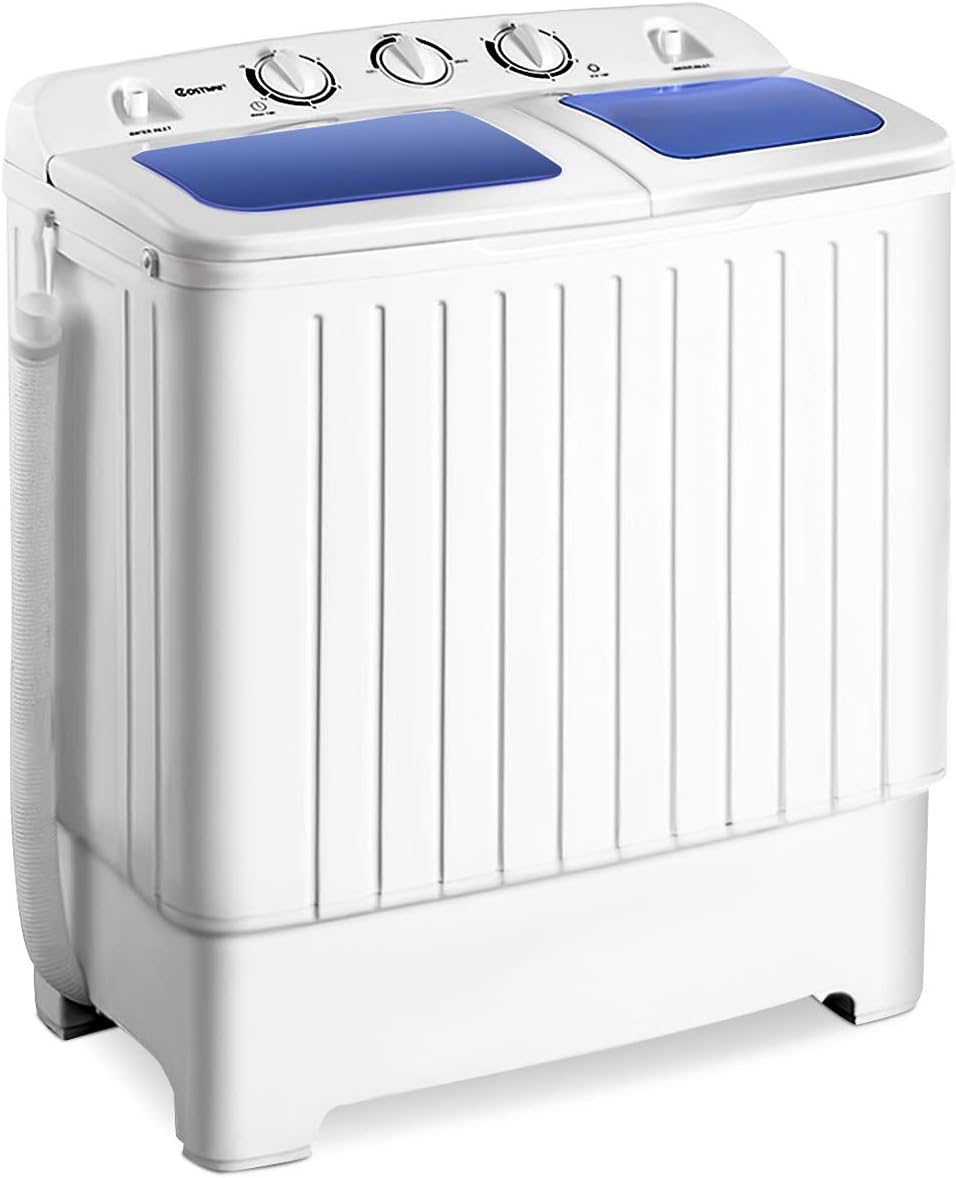
The Giantex twin-tub portable washer pairs a 12 lb washing tub with an 8 lb spinner to handle small loads in apartments, dorms, RVs, or other tight spaces. It is a semi-automatic unit with simple knob controls for a 15-minute wash timer and a separate spin timer, so you set cycle lengths based on fabric type and desired soil removal. The washer runs on 120 V with a 300 W wash motor and a 110 W spin motor and the spinner reaches up to 1350 RPM to remove most moisture before air drying. Practical touches include two water inlet holes for flexible faucet placement, a removable lint filter for easy cleaning, and a gravity drain hose that hangs to empty the tub. The compact freestanding design and light construction make it easy to move and store, but capacity and semi-automatic operation mean you still need to load, time cycles, and transfer clothes between tubs and finish drying in sunlight or a dryer for complete results.
Best for: Buyers who want a low-cost, space-saving laundry solution and are comfortable with simple, hands-on controls for frequent small loads.
Less Ideal for: Households that need full automatic operation, large-capacity cycles, or hands-off laundry automation should consider larger automatic machines instead.
- Separate wash and spin tubs let you wash and spin at different intervals for flexibility.
- Compact, freestanding design suits small spaces and is easy to move or store.
- Simple knob controls and short timers make operation straightforward for quick loads.
- Removable lint filter and dual water inlets improve maintenance and hookup options.
- Semi-automatic design requires manual transfer and monitoring between wash and spin tubs.
- Gravity drain limits placement unless you can hang the drain hose to a lower drain point.
Verdict: Choose this if you need an affordable, compact twin-tub washer for quick small-load laundry and don't mind doing simple manual cycle steps.
BLACK+DECKER Portable Washer BPWM09W

| Capacity | 0.9 cubic feet |
|---|---|
| Wash Capacity | 6.6 lb |
| Number of Programs | 5 |
| Noise | 64 db |
| Voltage | 120 volts |
The BLACK+DECKER BPWM09W is a compact, fully automatic portable washer designed for small homes and apartments where a full laundry room is unavailable. It accepts a quick-connect sink adapter for easy hookup, runs five wash programs (Heavy, Gentle, Normal, Rapid, Soak) and offers three cold-water level settings to handle light loads up to about 6.6 pounds. The stainless steel drum and LED display give it a more durable, modern feel, while child lock and auto unbalance detection add practical safety when used in shared spaces. Its portability features include side handles and two rollers for moving and an installation option for a permanent water connection. Expect noticeable machine noise during cycles, and remember it is cold-water only and sized for small batches like shirts, a few jeans, or a set of sheets rather than full family loads. For buyers who need a small, easy-to-install washer for apartments or seasonal use, this unit provides straightforward, reliable washing without complex setup.
Best for: Buyers who prioritize a dependable, easy-to-install washer for tight spaces and want a straightforward machine that handles occasional small loads with minimal fuss.
Less Ideal for: Households that need to wash large or frequent loads, require hot-water cycles, or expect low-noise operation during spin cycles.
- Compact footprint for apartments or closets
- Simple quick-connect faucet hookup for temporary or permanent installation
- Five wash cycles and three water levels let you tailor cleaning to small loads
- Stainless steel tub resists rust and gives longer service life
- Safety features like child lock and auto unbalance detection
- Cold-water wash only limits stain removal options for some fabrics
- Small 6.6 lb capacity requires frequent loads for households with more laundry
Verdict: A compact, easy-to-install portable washer that reliably handles small cold-water loads for apartment and occasional use.
Choosing the Right Washing Machine for Home: Key Factors to Consider
Capacity and Drum Size
Capacity determines how much laundry you can clean per cycle and directly affects how often you run the machine. Larger drums are helpful for families with bulky items like towels and bedding, while smaller households often benefit from a compact drum that saves water and energy.
Consider the typical load types you wash most often. Frequent large loads favor higher-capacity machines, but if you mostly run small loads, a machine with adaptable smaller-cycle options will reduce waste. Also think about the physical space and how bulky a machine you can fit into your utility area.
Wash Performance and Fabric Care
Effective stain removal and gentle treatment of fabrics are primary reasons to choose one machine over another. Look for models with proven cleaning cycles for common soils, adjustable agitation or drum motion, and options for lower-temperature washes that still remove stains using extended cycles or targeted soak settings.
Good fabric care features include variable spin speeds, delicate cycles, and sensors that adjust water and motion based on load composition. Those reduce wear on garments while ensuring thorough cleaning when needed.
Energy and Water Efficiency
Efficiency affects both operating cost and environmental impact. Machines rated for low water and electricity use can save significant money over years of regular use. Efficiency also ties into cycle length and temperature options: cooler, longer cycles often use less energy than repeated hot washes.
When comparing models, consider certified efficiency metrics and whether the machine offers eco cycles, automatic load-sensing, and quick-wash options that actually reduce resource usage without compromising cleaning for lightly soiled items.
Cycle Options and Control Simplicity
A wide range of cycles is valuable only if the controls are intuitive and the presets match your laundry habits. Useful cycle options include quick wash, heavy duty, delicates, bedding, and allergen or sanitize settings. The ability to customize spin speed, temperature, and soil level helps tailor performance to each load.
Ensure controls are easy to use and that frequently used settings are accessible without digging through menus. Connectivity features can be helpful but should not complicate basic operation for everyday use.
Installation and Space Requirements
Where the machine will live affects the type and size you can choose. Consider door swing, clearance for hoses and connections, and whether the unit will fit into closets, alcoves, or stacked arrangements. Some homes require compact or front-load units to make the most of limited space.
Also plan for proper venting if required, floor leveling, and access to electrical and water hookups. Easy installation reduces the risk of leaks, noise, and vibration problems down the road.
Maintenance and Reliability
Regular upkeep affects long-term reliability and performance. Look for machines with accessible filters, easy-to-clean seals, and clear instructions for descaling or drum-clean cycles. Warranty coverage and the availability of replacement parts are practical considerations for long-term ownership.
Machines designed for simple maintenance reduce downtime and the complexity of repairs. Consider how easy it is to inspect hoses, clean detergent drawers, and run periodic self-clean cycles.
Top Capacity Choices for Family Laundry
If you frequently wash large loads, comforters, or a mix of bulky items, prioritize machines with higher drum capacities and robust spin options. Larger drums let items tumble freely, which improves cleaning and reduces creasing compared with crammed loads.
Also look for machines that offer adjustable load-sensing so small loads do not use the same amount of water and energy as full loads. A machine that scales resources to the actual load size will save money and reduce wear on fabrics.
- Choose higher spin speeds to reduce drying time for heavy loads.
- Ensure the machine supports bedding or bulky cycles with gentle drum motion.
- Confirm the physical footprint fits your laundry area before selecting a large-capacity model.
Energy-Saving Settings That Still Clean Well
Eco modes and lower-temperature cycles cut energy use but vary in effectiveness. Look for machines that combine longer low-temp cycles with strong mechanical action to maintain stain removal without relying on hot water.
Automatic load sensors and targeted rinse options help avoid wasting water. Quick cycles are useful for lightly soiled items but make sure they provide sufficient agitation and rinse action for the fabrics you commonly wash.
- Prefer models with verified efficiency ratings and load-sensing features.
- Use eco and cold-water cycles for lightly soiled garments to save energy.
- Reserve hot or sanitize cycles for heavily soiled or allergen-prone loads.
Noise, Vibration, and Placement Considerations
Noise and vibration matter if the machine sits near living areas. Look for units with anti-vibration systems, direct-drive motors, or reinforced frames. Proper leveling and isolation pads reduce the transmission of vibration to the floor.
Placement affects accessibility for loading and maintenance. A front-loading machine may require more clearance for the door, while top-loading options need vertical space to lift the lid. Plan for routine access to hoses and the filter area.
- Check for anti-vibration or balancing features in specifications.
- Allow clearance around the machine for airflow and door opening.
- Consider sound ratings if the laundry area is adjacent to living spaces.
Smart Features and When They Matter
Connectivity and smart controls can add convenience through cycle monitoring, remote start, and diagnostic alerts. These features are useful if you want notifications or automated maintenance prompts, but they are not essential for core washing performance.
If you value simple, reliable operation, prioritize machines with straightforward physical controls and clearly labeled cycles. Smart features should complement, not complicate, regular laundry tasks.
- Use smart features for timing washes around your schedule or receiving maintenance reminders.
- Avoid models where app-based controls replace basic onboard functionality.
- Ensure firmware or app support is available if choosing a connected model.
Detergent, Additives, and Water Hardness
Detergent type and local water hardness affect cleaning and machine longevity. High-efficiency detergents are recommended for modern machines to reduce sudsing and ensure proper rinsing. If you have hard water, periodic descaling and water-softening measures improve performance and prevent buildup.
Some machines offer compartmentalized dispensers for prewash, main wash, and fabric softener, which helps dosing and timing. Check whether the machine supports liquid or powder detergents and follow manufacturer guidance for additives to avoid damage.
- Match detergent type to machine recommendations to prevent excess suds.
- Plan for regular descaling if your water is hard to maintain efficiency.
- Use dispenser trays properly to avoid staining or residue on garments.
How We Chose the Best Washing Machine for Home
We focused on features that directly affect everyday laundry results, long-term running costs, and user experience for typical home use. Key evaluation criteria included wash performance across common soil types and fabric care settings, energy and water efficiency ratings, cycle variety and usability, drum capacity and load handling, reliability indicators such as build quality and warranty coverage, and ease of maintenance including filter and door access. Products were excluded if they lacked clear efficiency data, offered only a narrow set of wash cycles, or had poor accessibility for loading and cleaning. We prioritized machines that balance cleaning power with gentle handling for mixed household loads, and that provide measurable savings through lower water or electricity consumption. The selected machines represent a range of capacities and designs suited to different home layouts while meeting our practical durability and convenience thresholds.
Our full evaluation process is outlined in our review methodology.
FAQ
How large a washing machine do I need for a family of four?
For a family of four, a medium-to-large capacity machine is usually best. Aim for a drum size that accommodates bulky items like towels and bedding to reduce the number of cycles, while ensuring the unit fits your available space.
Are front-loaders better than top-loaders for home use?
Both types work well depending on priorities. Front-loaders typically use less water and offer better spin extraction, while top-loaders can be more convenient to load and may have shorter cycle times. Choose based on capacity needs, space constraints, and personal preference.
Do eco cycles really save money without compromising cleanliness?
Eco cycles can reduce energy use, especially when washing in colder water and using longer cycle times. Their effectiveness depends on load soil level and machine design. For heavily soiled items, a hotter or more intensive cycle may still be necessary.
How often should I run maintenance on a home washing machine?
Perform simple maintenance like cleaning filters and door seals every few months, and run a drum-clean cycle or descaling as recommended by the manufacturer. Frequency depends on usage patterns and water hardness, but regular upkeep prevents buildup and maintains performance.
What features reduce drying time after a wash?
Higher spin speeds and efficient extract cycles remove more water, reducing drying time. Choosing a cycle with adjustable spin or a dedicated high-extract option helps, and ensuring loads are balanced prevents reduced spin efficiency.
Final Verdict
Prioritize the features that match how you do laundry most often. If you handle large, bulky loads choose higher capacity and robust spin extraction. If running many small loads prioritize machines with good load-sensing and efficient eco cycles to save water and energy. Balance wash performance, maintenance needs, and fit for your space to make a confident choice. Focus on the tradeoffs: capacity versus footprint, efficiency versus cycle time, and advanced features versus simple reliability to find the best washing machine for home use.