
Note: This article contains affiliate links. If you click on these links and make a purchase, we may earn a small commission at no extra cost to you. This helps support our research and content. Read our full affiliate disclosure here.
Installing a washing machine on an upper level introduces extra considerations beyond standard laundry setup. You need a washer that runs quietly, controls vibration, and distributes weight safely so floors, ceilings, and neighbors are not affected. This guide narrows the field to the top seven options suited to second-floor installations and walks through the features that matter for upstairs use. You will find shortlists focused on noise mitigation, vibration isolation, load stability, and delivery/installation considerations. Read on for a practical summary of what to expect and how each shortlisted model addresses common upstairs concerns.
Top Picks at a Glance
| Best Overall The best all-around choice for most situations | GE Profile 28-Inch Front Load Washer |  |
| Best Quality Built to a higher standard if you want something more solid | Kenmore Top Load Washer 4.5 cu ft |  |
| Best Value The sweet spot between price and what you get | BLACK+DECKER Portable Washer BPW30MW |  |
| Best Budget The cheapest option that still gets the job done reliably | KRIB BLING 17.7 lb Top-Load Washer |  |
| Top Rated A top-rated pick with lots of positive feedback | Panda Portable Washing Machine PAN638MH1 |  |
| Most Popular A crowd favorite that many people choose with confidence | COMFEE' 2.4 Cu.ft Portable Washer |  |
| Best Seller A high-volume bestseller chosen again and again | ROVSUN 25lb Portable Washing Machine | 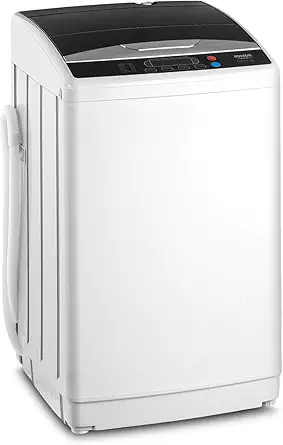 |
GE Profile 28-Inch Front Load Washer

| Capacity | 4.8 cubic feet |
|---|---|
| Access Location | Front Load |
| Max Rotational Speed | 1300 rpm |
| Number of Standard Cycles | 10 |
| Display | LED |
This GE Profile front-load washer is aimed at families and busy households that need a roomy, feature-rich machine on an upper floor. The 4.8 cu. ft. drum handles large and bulky loads so you can do fewer cycles, and the UltraFresh Vent System with OdorBlock plus a Microban-protected stainless drum help keep the interior from developing smells between washes. Built-in WiFi and SmartHQ integration let you start, stop, and monitor cycles remotely and receive cycle alerts, which is handy when you are away from the laundry room. Practical cycles include Quick Wash (20 minutes) and Time Saver (35 minutes) for fast turnaround, and the washer offers options for bulky, delicates, normal, and more. Controls use buttons and a dial with an LED display, and standard dispenser ports accept detergent, softener, and bleach. Limitations to consider for a second-floor installation are the machine's weight and required clearances for the door swing, and you will want to confirm floor load capacity and transport/installation access before buying. For everyday cleaning performance and smart remote control, this washer covers a broad set of household needs.
Best for: Buyers who want a roomy, smart-capable washer that reduces laundry frequency and offers remote control and freshness features for everyday family use on an upper floor.
Less Ideal for: Homes with narrow staircases, weak second-floor joists, or locations where moving and installing a heavy freestanding washer would be difficult should consider lighter or smaller alternatives.
- Large 4.8 cu. ft. capacity handles bulky loads and reduces the number of cycles
- UltraFresh Vent System and Microban-protected stainless drum reduce odor between washes
- Built-in WiFi with SmartHQ enables remote start, stop, and cycle monitoring
- Quick Wash and Time Saver cycles provide fast options for lightly soiled or mixed loads
- Heavy unit and sizable door swing require planning for second-floor transport and floor load
- No stacked-dryer configuration specifics provided, so matching with a dryer may need measurement verification
Verdict: Choose this GE Profile washer if you need a large-capacity, smart-connected front-load machine with built-in odor control for a busy second-floor laundry setup.
Kenmore Top Load Washer 4.5 cu ft

| Capacity | 4.5 cubic feet |
|---|---|
| Access Location | Top Load |
| Additional Features | Triple Action Impeller |
| Controls Type | Knob & Touch |
| Display | LED |
This Kenmore top-load washer is built for fast, effective cleaning of everyday and heavy loads. Its Triple Action Impeller combines spraying action, basket motion, and impeller rotation to loosen dirt, and the washer offers Accela Wash and an Express Wash option to shorten cycle times for full and small loads respectively. Users choose from about 10 cycles and multiple temperature settings via a mix of knobs and touch controls, and the LED display shows cycle status and remaining time. Practical features include a stainless steel drum, a soft-close tempered glass lid, and dispensers for detergent and fabric softener. For a second-floor laundry setup the freestanding design and top-load access simplify installation and loading without requiring extra clearance in front. Limitations: it is not ENERGY STAR certified and does not list high spin speeds like some front-loaders, so long-term energy and water savings may be lower than more efficient models.
Best for: Buyers who prioritize powerful, time-saving cleaning and need a machine that handles large and bulky loads efficiently on an upper-floor laundry location.
Less Ideal for: Shoppers focused primarily on maximum energy and water efficiency or the fastest spin-dry performance should consider high-efficiency front-load models instead.
- Triple Action Impeller that targets stains with multiple cleaning motions
- Accela Wash and Express Wash reduce cycle times for full and small loads
- 4.5 cu ft capacity handles bedding and bulky items
- Stainless steel drum and soft-close tempered glass lid for durability and easier loading
- Not listed as ENERGY STAR certified so it may use more water or energy than high-efficiency models
- Spin speed not highlighted, so drying times may be longer compared with faster-spinning washers
Verdict: Choose this Kenmore if you want a robust top-load washer that cuts wash time and handles large, heavy loads on a second-floor laundry setup.
BLACK+DECKER Portable Washer BPW30MW

| Capacity | 3 cubic feet |
|---|---|
| Number of Programs | 6 |
| Operation Mode | Fully Automatic |
| Voltage | 120 volts |
| Included Components | Drain Hose with Quick Connect Sink Adaptor |
The BLACK+DECKER BPW30MW is a portable top-load washer built for small- to medium-sized households that need a movable laundry option on upper floors. It delivers a 3.0 cu. ft. interior and supports up to 26.5 lb. loads with six cycle choices (Normal, Heavy, Delicate, Quick, Bulky, Spin Only) and hot/warm/cold water settings. Installation is temporary or semi-permanent using the included drain hose and quick-connect sink adapter, and two rollers plus side handles make moving it easier when space or storage is a concern. The stainless steel tub and impeller design are gentler on delicates and reduce tangling, while features like 24-hour delay start, auto unbalance detection, auto shutoff, child lock, and an LED display add convenience and safety. Expect noticeable operating noise at times given the listed 72 sones, and the unit is fairly heavy for a portable machine which affects how easily one person can carry it between floors. For second-floor use, the quick-connect plumbing and rollers help, but plan for a stable, level spot and consider routing the drain appropriately.
Best for: Buyers who prioritize practical, space-saving laundry on upper floors and want a feature-rich portable washer that can be moved into service when needed.
Less Ideal for: People who need an ultra-quiet machine or expect to frequently carry the washer between floors by a single person should consider alternatives.
- 3.0 cu. ft. stainless steel tub resists rust and handles larger small-loads up to 26.5 lb.
- Six selectable cycles plus hot/warm/cold water for flexible fabric care.
- Includes drain hose and quick-connect sink adapter for easy temporary hookup.
- Impeller design is gentler on delicates and baby items and avoids agitator tangling.
- Built-in safety and convenience features: auto unbalance detection, auto shutoff, 24-hour delay start, and child lock.
- Listed noise level (72 sones) indicates it can be loud during operation.
- At about 99 lb., the unit is heavy for a portable washer and not ideal for frequent solo moves.
Verdict: A practical portable washer that balances larger small-load capacity and useful safety features, making it a strong choice for second-floor apartments or rooms where temporary hookup and occasional mobility matter.
KRIB BLING 17.7 lb Top-Load Washer

| Capacity | 17.7 pounds |
|---|---|
| Operation Mode | Fully Automatic |
| Number of Standard Cycles | 10 |
| Max Rotational Speed | 1300 rpm |
| Noise | 59 db |
This KRIB BLING compact washer is a full-automatic top-load machine aimed at small spaces like apartments, dorms, and RVs. You select one of 10 preset programs, pick one of the water-level settings, and the machine handles soaking, washing, rinsing, spinning and draining via the included drain hose and pump. Its stainless steel honeycomb drum and touch/button controls simplify routine loads, and the LED panel with child lock and delay options adds basic convenience. Practical benefits include a relatively large capacity for a compact unit, straightforward setup with included hoses, and a freestanding design that fits into tight laundry areas. Expect typical compromises of small washers: a 59 dB noise rating that can be noticeable on upper floors, and spin speed and drum size that may not match full-size machines for bulky bedding. The unit is lightweight to move and good for frequent small loads, but it is not a substitute for a full-size family washer when you need large or heavy items cleaned quickly.
Best for: Buyers looking for an inexpensive, space-saving machine to handle frequent small to medium loads in tight laundry areas who prioritize ease of use and included plumbing accessories.
Less Ideal for: Households that need to wash large bedding, heavy blankets, or frequent oversized loads should look at full-size machines with higher capacity and stronger spin performance.
- Full-automatic operation with 10 preset programs for hands-off washing
- Compact freestanding design that fits small spaces like apartments and RVs
- Includes drain pump and necessary hoses for simple setup and drainage
- Stainless steel drum for better durability and gentler fabric care
- Multiple water level selections and child lock for flexible, safer use
- 59 dB noise level may transmit through floors in multi-story homes
- Not suited for very large or bulky items compared with full-size washers
Verdict: A budget-friendly, compact automatic washer that delivers easy setup and reliable small-load performance for upstairs apartments and tight laundry spaces.
Panda Portable Washing Machine PAN638MH1

| Capacity | 1.38 cubic feet |
|---|---|
| Operation Mode | Fully Automatic |
| Number of Standard Cycles | 8 |
| Voltage | 110 volts |
The Panda PAN638MH1 is a space-saving, fully automatic top-load portable washer designed for small homes, apartments, RVs, and second-floor laundry setups. It handles everyday loads using eight standard cycles including bulky, delicates, heavy duty, normal, and spin, and offers three water level settings so you can match water use to load size. The stainless-steel drum and freestanding installation make it durable and simple to place where a full-size machine would not fit, and included inlet hoses plus a faucet adapter let you hook it up without permanent plumbing. Controls are push-button with delay start and a child lock for safety in shared spaces. Expect practical benefits like smaller loads finished quickly and the ability to use it where space or plumbing are limited. Trade-offs are capacity and throughput compared with full-size machines and the unit is better suited to frequent small loads rather than large family wash days.
Best for: Buyers who need a reliable, space-conscious washer for small to medium loads on an upper floor or in a compact laundry area and prioritize simple, durable operation over large capacity.
Less Ideal for: Those who wash large household loads regularly, need fast high-volume throughput, or prefer a stacked dryer-washer setup on the second floor should consider a full-size machine instead.
- Compact footprint fits tight spaces and second-floor laundry areas
- Stainless-steel drum resists rust and improves durability
- Eight wash cycles and three water levels for flexible cleaning
- Includes cold and hot inlet hoses plus a faucet adapter for easy hookup
- 1.38 cu ft capacity limits load size compared with full-size washers
- Not intended for high-volume family loads or continuous heavy use
Verdict: Choose this Panda portable washer when you need a reliable, durable top-load machine that fits tight second-floor spaces and handles frequent small to medium loads efficiently.
COMFEE' 2.4 Cu.ft Portable Washer

| Capacity | 2.4 cubic feet |
|---|---|
| Operation Mode | Fully Automatic |
| Max Rotational Speed | 780 rpm |
| Number of Programs | 8 |
| Noise | 62 db |
This COMFEE' portable washer is built for small-space laundry: a 2.4 cubic foot top-load machine with an LED display, eight wash programs, and a stainless steel inner tub. It uses Turbo Wash and Water Magic Flow technologies to increase water circulation and rinsing, and a Hygiene+ mode gives extra rinses for tougher loads. The unit is fully automatic and offers a soft-close glass lid, child lock, and built-in wheels that make positioning easier on a second-floor landing or laundry nook. At 780 rpm max spin speed it removes more water than many compact alternatives, so clothes come out less damp and dry faster. Noise is listed at 62 dB, so expect moderate sound during cycles. The washer is freestanding and runs on standard 120 V, but its footprint and nearly 90 pound weight mean you should plan placement and floor access ahead of delivery. Overall it suits apartment, dorm, or small-house setups where space and strong rinsing matter, though it is heavier than some compact portable options and needs a proper drain and water hookup to perform as advertised.
Best for: Buyers who want a space-saving but capable washer for a second-floor laundry area and value strong rinsing, multiple programs, and a stainless steel drum for regular household loads.
Less Ideal for: Those who need a very lightweight or ultra-quiet machine for tight stair access or who lack a nearby drain/water hookup should consider other solutions.
- Generous 2.4 cu ft capacity fits small household loads without a full-size footprint
- Stainless steel drum and multiple wash programs, including Hygiene+ for extra rinsing
- 780 rpm max spin reduces drying time compared with lower-spin portable washers
- Soft-close glass lid, LED display, child lock, and wheels for easier use and placement
- At about 88 pounds the unit is relatively heavy for a portable washer and may be difficult to move up stairs
- Noise level around 62 dB is moderate and may be noticeable in adjacent rooms during cycles
Verdict: A roomy 2.4 cu ft portable washer that delivers stronger rinsing and higher spin speed, making it a practical choice for second-floor or small-space laundry setups.
ROVSUN 25lb Portable Washing Machine

| Capacity | 25 pounds |
|---|---|
| Voltage | 110 volts |
| Wattage | 400 |
| Number of Washing Cycles | 10 |
| Number of Drying Cycles | 1 |
The ROVSUN 25lb portable washing machine is a compact top-load washer that combines wash and spin-dry cycles in one unit, making it suited for small homes, apartments, and second-floor laundry setups. It offers 10 wash programs, 5 water levels, a diamond-pattern stainless steel drum to reduce fabric wear, and a built-in drain pump for easier water removal. The touch controls, child lock, adjustable feet, and self-cleaning mode simplify operation and maintenance. With a quick 26-minute wash option and a maximum wash capacity described as roughly 9 to 10 T-shirts, the machine handles everyday loads efficiently while keeping noise under the stated 60 dB for washing and up to 70 dB during spin, which matters on upper floors. The unit runs on 110V at 400W, so it fits standard household circuits, but its 54.8 lb shipping weight and compact footprint mean you should check stair and landing clearances before moving it upstairs. For buyers wanting a straightforward, feature-packed portable washer for a second-floor laundry area, this model delivers usable cycles and practical safety features, though it is not a full-size replacement for heavy household loads.
Best for: Buyers who want a reliable, room-saving washer for small households or apartments and prioritize straightforward controls, safety features, and easy drainage for a second-floor laundry setup.
Less Ideal for: Households that need to wash large bedding, bulky items, or frequent heavy loads should choose a full-size washer instead.
- Full-automatic wash and spin-dry in a single compact unit
- Ten wash programs and five water levels for versatile laundry needs
- Stainless steel diamond-pattern drum reduces fabric wear
- Built-in drain pump and quick 26-minute wash option for convenience
- Child lock, adjustable feet, and self-cleaning mode for safer, low-maintenance use
- Not designed for heavy or large family loads compared with full-size washers
- Spin cycle noise can reach around 70 dB, which may transmit through floors
- Relatively heavy to move between floors without help
Verdict: A compact, feature-rich portable washer that fits second-floor or small-space laundry needs while offering simple, safe operation.
Choosing the Right Washing Machine for Second Floor: Key Factors to Consider
Operational Noise Level
How loud the washer runs matters more on a second floor because noise transmits down through ceilings and between rooms. Measured decibel ratings for wash and spin cycles give a realistic baseline, but also look for features like brushless motors or sound-insulating cabinets that reduce tonal noise.
Lower operating noise improves comfort for occupants in rooms below and adjacent to the laundry location. If the washer will run during evenings or naptime, choosing a model with quiet modes or confirmed low dB during spin is especially important.
Vibration Control
Vibration control covers both mechanical design and firmware responses that minimize movement during cycles. Look for suspension systems, counterweights, or adaptive balancing that actively correct unbalanced loads and reduce rocking.
Good vibration control protects ceiling finishes, prevents loosening of fixtures, and reduces the chance of noisy thumps transmitted to rooms below. For second-floor installations, prioritize systems with proven isolation rather than relying solely on aftermarket pads.
Spin Stability
High spin speeds help reduce drying time but increase dynamic forces inside the machine. Spin stability refers to how well the washer handles these forces without excessive wobble or walking.
A machine that maintains balance at higher RPMs will shorten overall laundry cycles by extracting more water and will cause less cumulative stress on floor joists. Consider models that offer multiple spin-speed settings and reliable unbalance detection to tailor performance to delicate or heavy loads.
Installation Flexibility
Second-floor laundry locations vary widely: tight closets, alcoves, or repurposed rooms. Installation flexibility means the unit fits available space, has serviceable hookup access, and does not require structural reinforcement in most cases.
Check clearance requirements for door swing, hose routing, and access panels. Units that can be top- or front-loaded, or have reversible doors, expand placement options. Easy access to inlet and drain connections simplifies professional or DIY installation and reduces the chance of mistakes that lead to leaks.
Capacity Vs. Footprint
Balance the drum capacity you require with the machine's external footprint. Larger drums hold more laundry but often come with bigger frames and heavier components, which increase static load on the floor.
For upstairs use, a mid-sized capacity that fits the household laundry demand is often preferable. It reduces weight and vibration while still allowing full loads. Consider drum shape and stacking options if space is constrained.
Maintenance Accessibility
Ease of servicing affects long-term performance, especially in tighter second-floor spaces. Units with accessible filters, service panels, and simple hose connections make routine maintenance and emergency repairs faster and less disruptive.
Easier maintenance reduces the likelihood of prolonged downtime or the need to move the machine for simple servicing tasks. This is particularly valuable when access is limited by narrow doorways or short stair landings.
Assessing Your Floor Structure
Before choosing a washer for an upstairs location, evaluate the existing floor structure. Determine whether the subfloor and joists are sound, and note the distance to the ceiling below. Older homes may have weaker or more flexible joists that amplify vibration, while modern construction typically handles standard washer loads without reinforcement.
If you are unsure about structural capacity, consult a contractor to inspect joist spacing and condition. Simple reinforcements, like adding blocking between joists or using a dedicated laundry platform, can often mitigate concerns without major renovation.
- Measure joist spacing and subfloor thickness when possible.
- Check for squeaks or flex by walking over the planned location.
- Plan for a slightly elevated, level surface to improve vibration isolation.
Placement and Isolation Strategies
Placement plays a large role in how much noise and vibration reach the rooms below. Position the washer on an interior load-bearing wall or near structural elements where the floor is stiffest. Avoid placing heavy machines directly over living spaces like bedrooms if quieter alternatives are available.
Combine strategic placement with isolation measures. Anti-vibration pads, dedicated mounting platforms, and rubber feet reduce transmission. Some homeowners build small risers with dense plywood and rubber layers to create a buffer between the washer and the subfloor.
- Use anti-vibration pads rated for the machine's weight.
- Keep the washer level with a precision bubble or digital level.
- Allow a small air gap around the unit for airflow and service access.
Hookups, Drainage, and Water Management Upstairs
Water routing on a second floor requires careful planning to avoid leaks that can damage lower levels. Confirm that hot and cold supply lines, electrical circuits, and drains are correctly placed and professionally installed. Drain pans and properly routed condensate or overflow lines provide an added layer of protection against leaks.
Consider installing a floor drain or a dedicated drain pan with a routed hose to a safe disposal point. Automatic shutoff valves or water alarm sensors that detect moisture can prevent small leaks from becoming major problems.
- Use braided steel supply hoses with good compression fittings.
- Install a drain pan sized to the washer footprint and routed to a safe drain.
- Add a moisture sensor alarm near the machine for early leak detection.
Balancing Capacity and Household Needs
Match the washer drum size to typical load sizes in your household. Oversizing the drum for occasional large loads increases weight and may amplify vibration, while undersizing forces more frequent cycles. For second-floor locations, a practical mid-range capacity often provides the best balance between efficiency and structural load.
If you do frequently wash bulky items, plan for machines with reliable balance correction and consider running heavy loads during daytime hours when noise impact is lower.
- Estimate weekly laundry volume to pick an appropriate drum size.
- Prefer models with adjustable spin speeds to moderate vibration.
- Reserve bulky items for times when occupants can tolerate higher noise.
Professional Installation Vs. DIY
Deciding between professional installation and DIY depends on your comfort level and the complexity of the installation. Professionals can confirm structural suitability, install proper drainage and shutoff valves, and ensure electrical circuits meet local codes. They also typically verify machine leveling and run initial diagnostics.
If you opt for DIY, follow manufacturer installation steps carefully, use high-quality fittings, and test the unit on an empty cycle to check for excessive vibration before adding laundry. Keep contact information for a local technician handy in case adjustments are needed after initial use.
- Get a pro to inspect if joists or subfloor look compromised.
- DIY is reasonable for straightforward hookups on solid floors.
- Always test a new installation unloaded, then with gradually larger loads.
How We Chose the Best Washing Machine for Second Floor
We shortlisted machines that address the particular challenges of second-floor installations and prioritized measurable features that reduce risk and disruption. Our selection emphasized low operating vibration, measured noise output during wash and spin cycles, and structural load characteristics that affect floor stress. We also considered machine footprint and placement flexibility so units fit common upstairs laundry alcoves, and we looked at effective spin speeds balanced against vibration control to ensure efficient drying without excessive movement. Installation requirements and compatibility with common upstairs plumbing and drain layouts were factored in to avoid units that demand complex structural changes. Finally, we favored designs with accessible maintenance points and reliable unbalance detection to prevent repeated heavy vibrations during cycles. Exclusions included units meant only for ground-floor or outdoor installations and those lacking published vibration or noise data.
Our full evaluation process is outlined in our review methodology.
FAQ
Can I put any washing machine on the second floor?
Often you can, but not every machine is ideal. Choose a model with low vibration, good balance systems, and an appropriate footprint for your floor structure. If your joists are weak or the installation space is constrained, consult a professional before purchasing.
Do I need a drain pan for an upstairs washer?
A drain pan is a prudent safeguard for second-floor installations. It catches minor leaks and can be routed to a drain to prevent water from damaging lower levels. Local code may require one in certain situations.
How can I reduce noise transmission to rooms below?
Start with a washer that has proven quiet operation and vibration control. Level the unit precisely, use high-quality anti-vibration pads or a dedicated isolation platform, and place the machine over the stiffest part of the floor possible to minimize transmission.
Are front-load or top-load washers better for upstairs use?
Both types can work well if they include strong vibration mitigation. Front-loaders often spin faster and therefore require better balance systems, while some top-load designs have inherently simpler suspension. Evaluate specific models on noise and vibration metrics rather than load orientation alone.
What maintenance helps keep upstairs washers quiet and stable?
Regularly clean filters, check hoses and fittings for tightness, and inspect mounting feet and shock absorbers for wear. Running an occasional empty stabilization cycle can reveal imbalance issues early so you can adjust load distribution or service components before damage occurs.
Final Verdict
Choosing a washing machine for a second-floor location requires balancing noise control, vibration mitigation, and the physical demands placed on your floor. Prioritize models with proven low operational noise, effective suspension or balance systems, and a capacity that matches your laundry habits without overloading the structure. Plan installations that include proper drainage, level surfaces, and isolation measures to reduce transmission. With the right combination of machine features and thoughtful installation, you can enjoy efficient upstairs laundry with minimal impact on the living spaces below.