
Note: This article contains affiliate links. If you click on these links and make a purchase, we may earn a small commission at no extra cost to you. This helps support our research and content. Read our full affiliate disclosure here.
Buying a washing machine on a budget means balancing upfront cost with long-term reliability and operating expenses. If you want dependable cleaning, low energy and water bills, and a machine that fits your laundry habits, choosing carefully matters. This guide shortlists seven budget-friendly washing machines that deliver solid cleaning and sensible features without unnecessary bells and whistles. We evaluated models for cleaning performance, efficiency, capacity compatibility with typical households, and ease of daily use to help you pick the one that best matches your routine and constraints. Read on for a concise breakdown of what to expect from each pick and the criteria we used to evaluate them.
Top Picks at a Glance
| Best Overall The best all-around choice for most situations | SUPER DEAL Compact Twin Tub Washer |  |
| Best Quality Built to a higher standard if you want something more solid | OLIXIS Portable Washing Machine AS-XYJ1508-3D5 |  |
| Best Value The sweet spot between price and what you get | BANGSON Portable Washing Machine BSW250045 |  |
| Best Budget The cheapest option that still gets the job done reliably | JUJOJB Portable Washing Machine ZM-017G |  |
| Top Rated A top-rated pick with lots of positive feedback | DUMOS Compact Portable Washer |  |
| Most Popular A crowd favorite that many people choose with confidence | Giantex Twin Tub Washing Machine |  |
| Best Seller A high-volume bestseller chosen again and again | Auertech Portable Twin Tub Washer |  |
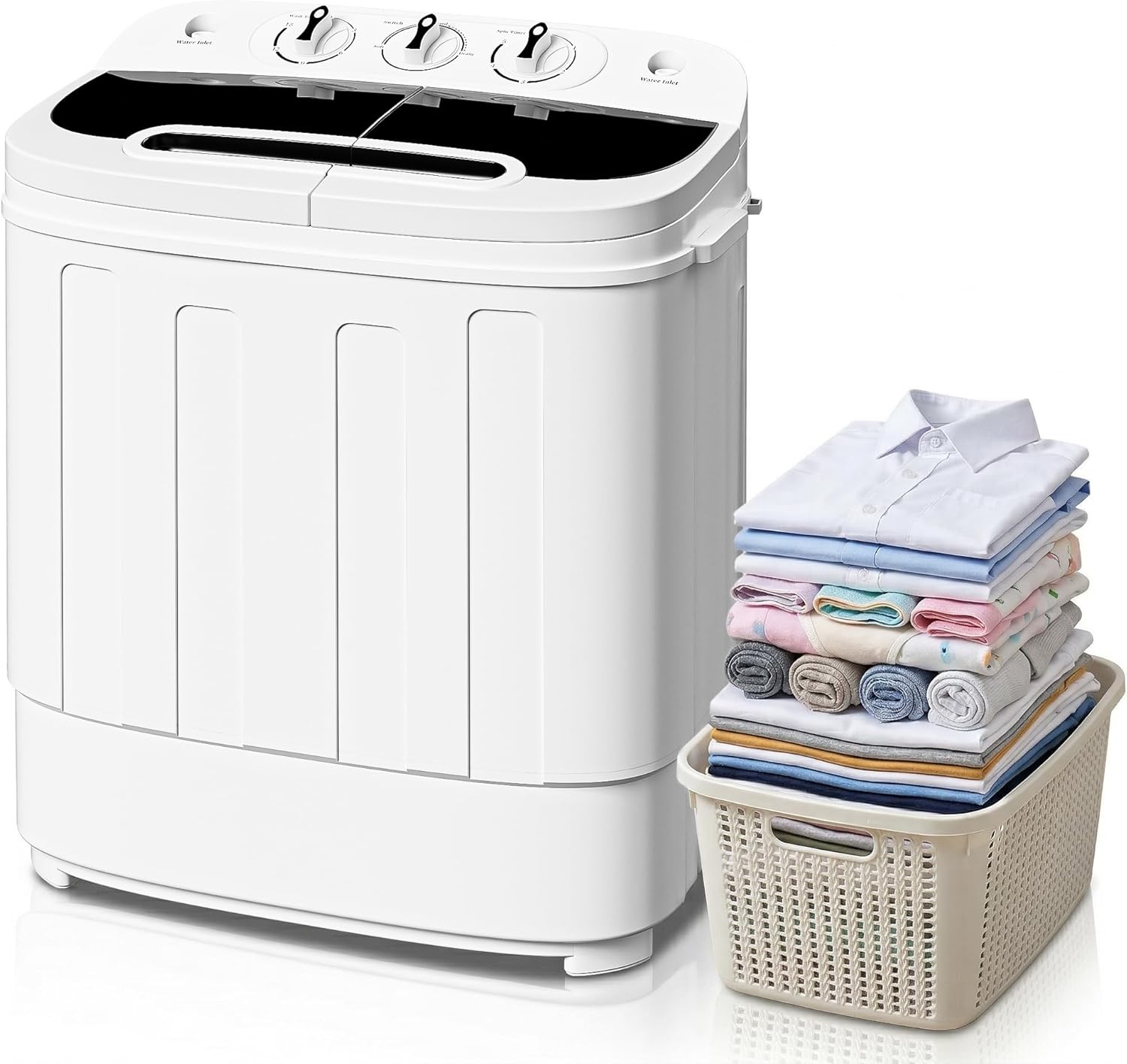
SUPER DEAL Compact Twin Tub Washer
| Capacity | 13 liters |
|---|---|
| Operation Mode | Semi Automatic |
| Max Rotational Speed | 1300 rpm |
| Voltage | 115 volts |
| Number of Standard Cycles | 2 |
This twin-tub portable washer lets you wash and spin-dry separate loads at the same time, making it a practical choice for apartments, dorms, RVs, or camping. It uses a top-load washer section and a separate spin tub driven by a 1300 RPM motor, with rotary knobs and an LED display for simple timer control. The unit emphasizes convenience: an easy water inlet, a lint filter to catch debris, and a drain pipe for straightforward emptying. Designed for small loads, the washer lists capacity as 13 liters with recommended washer and spin weights of about 8 lbs and 5 lbs respectively, and timers for wash (up to 15 minutes) and spin (up to 5 minutes). Construction is mostly plastic which keeps the machine lightweight and rust resistant but may feel less durable than metal tubs. The semi-automatic controls mean you will transfer clothes between tubs and handle water fill and drainage manually, which trades full automation for lower cost and easier portability. For buyers prioritizing compact size, energy efficiency, and basic reliable cleaning, this unit is a sensible budget pick.
Best for: Buyers who need an affordable, portable laundry solution for small living spaces and value quick, simple operation over full automation.
Less Ideal for: Larger households or anyone who wants a fully automatic, hands-off washing cycle should look for a full-size or integrated washer instead.
- Twin-tub design allows washing and spinning at the same time to speed throughput.
- 1300 RPM motor provides strong spin performance to reduce drying time.
- Compact, lightweight plastic construction makes it easy to move and store.
- Includes lint filter and drain hose for cleaner laundry and simple drainage.
- Semi-automatic operation requires manual water filling, draining, and moving clothes between tubs.
- Plastic drum and body are less durable than metal alternatives.
Verdict: A compact, low-cost twin-tub washer that delivers effective cleaning and fast spins for small loads when portability and value are the main priorities.
OLIXIS Portable Washing Machine AS-XYJ1508-3D5

| Capacity | 1.06 cubic feet |
|---|---|
| Number of Standard Cycles | 10 |
| Operation Mode | Fully Automatic |
| Controls Type | Touch |
| Voltage | 120 volts |
The OLIXIS portable washing machine is a small, fully automatic top-load washer built for tight spaces and frequent small loads. It offers 10 standard cycles, three water levels and a 7.7 lb capacity, so it handles delicates, towels or a small blanket without manual intervention. The stainless steel drum and touch controls make operation straightforward, while delay-start and child-lock features add convenience and safety. Automatic imbalance detection and adjustable feet reduce vibration and noise, which helps when using the washer in apartments, dorms or RVs. Drainage is gravity-based using the included 20.9 inch hose, so you must place the hose outlet below the machine level; there is no pump for uphill draining. The unit is freestanding on standard 120V power and is easy to install and move, though its small capacity means multiple loads for larger households. For buyers prioritizing compact, reliable performance on a budget, this washer provides sensible cycles and build quality in a space-saving package.
Best for: Buyers who need a compact, performance-focused washer for apartments, dorms, or RVs and value reliable cycle options and quiet operation over large capacity.
Less Ideal for: Those who regularly wash large loads, family-sized laundry, or need a washer that can drain uphill without a pump should consider a larger or different design.
- Full-automatic operation with 10 wash cycles for flexible washing needs
- Stainless steel drum reduces corrosion and fabric wear
- Automatic imbalance detection plus adjustable feet for quieter, steadier operation
- Delay start and child lock improve usability and safety
- Compact freestanding design fits small apartments, dorms, and RVs
- Gravity-only drain hose requires placing the outlet below the washer and cannot pump water upward
- 7.7 lb capacity is small for larger households requiring multiple loads
Verdict: If you want a budget-friendly, compact washer that delivers dependable, quiet performance for small loads, this OLIXIS model is a strong choice.
BANGSON Portable Washing Machine BSW250045

| Capacity | 1.31 cubic feet |
|---|---|
| Number of Standard Cycles | 8 |
| Operation Mode | Fully Automatic |
| Access Location | Top Load |
| Installation Type | Freestanding |
This BANGSON portable washer is designed for small spaces where a full-size machine is impractical. It offers a 1.31 cubic foot stainless steel drum, eight wash programs and six adjustable water levels so you can tailor cycles for shirts, delicates or small bedding, and a timed LED display to monitor progress. The unit includes a drain hose and fill hose and has a child lock, delay-start function and automatic imbalance correction to reduce vibration during spin. Its compact freestanding footprint fits apartments, dorms, RVs and similar tight spaces and the manufacturer highlights energy efficiency compared with similar models. Expect straightforward push-button controls and basic cycle options rather than advanced smart features or very large loads; the capacity suits roughly a dozen shirts or a few bulky items at a time. For buyers prioritizing space savings and simple, reliable washing performance on a budget, this model delivers sensible features in a small package.
Best for: Buyers who need a reliable, space-saving washer that handles everyday laundry in small homes, dorms, or mobile living and who prioritize straightforward operation and energy efficiency over large capacity.
Less Ideal for: Large households or anyone who routinely washes heavy bedding or large loads should choose a full-size washer instead.
- Compact footprint fits tight spaces like apartments, dorms, and RVs
- Stainless steel drum with multiple wash programs and six water levels for flexible cleaning
- Delay start and child lock add convenience and safety
- Automatic imbalance correction reduces vibration during spin cycles
- Small 1.31 cu ft capacity limits load size and requires more frequent cycles for larger households
- No advanced connectivity or premium features beyond basic controls
Verdict: A practical, budget-friendly compact washer that delivers flexible cycle options and efficient operation for small-space living.
JUJOJB Portable Washing Machine ZM-017G

| Capacity | 16 liters |
|---|---|
| Operation Mode | Semi Automatic |
| Cycle Options | Baby Wear, Quick Wash, Sanitary, Speed Wash, Spin, Normal |
| Noise | 55 db |
| Voltage | 110 volts |
This foldable portable washer is built for tiny loads and quick refreshes rather than full laundry days. It offers three push-button timed wash modes (3, 5, and 10 minutes), a separate spin-dry basket for removing excess water, and adjustable leveling legs so it can sit on countertops or in an RV. The unit is lightweight and folds flat for storage, making it easy to tuck under a bed or pack for travel. Practical benefits include low water and power use, rapid cycles for underwear, socks, baby clothes, and workout gear, and a sanitary cycle option for occasional sanitizing. Expect real limitations: capacity is small so you must split loads for washing then spin-drying, the plastic drum and lightweight construction mean it is not suited to heavy or bulky items, and the spin basket only handles very small loads to avoid imbalance. Noise is moderate and controls are basic push buttons, so this is a simple, no-frills solution when convenience and portability matter more than capacity or automation.
Best for: Shoppers who need an inexpensive, portable way to clean small items—ideal for dorms, small apartments, RVs, or travelers who prioritize compactness and low operating cost.
Less Ideal for: People who need to wash large loads, heavy fabrics, or full-size garments regularly should choose a larger or fully automatic washer instead.
- Very compact and foldable design for easy storage and travel
- Low water and power usage with short timed wash modes for quick refreshes
- Separate spin basket removes excess water for faster drying
- Adjustable leveling legs let it sit stably on uneven surfaces
- Small plastic drum and limited capacity require splitting loads
- Spin basket holds only a few items at once, so multiple spin cycles are needed
Verdict: A budget-friendly, ultra-compact washer that gives quick, low-cost cleaning for delicates and very small loads when space and portability are the top priorities.
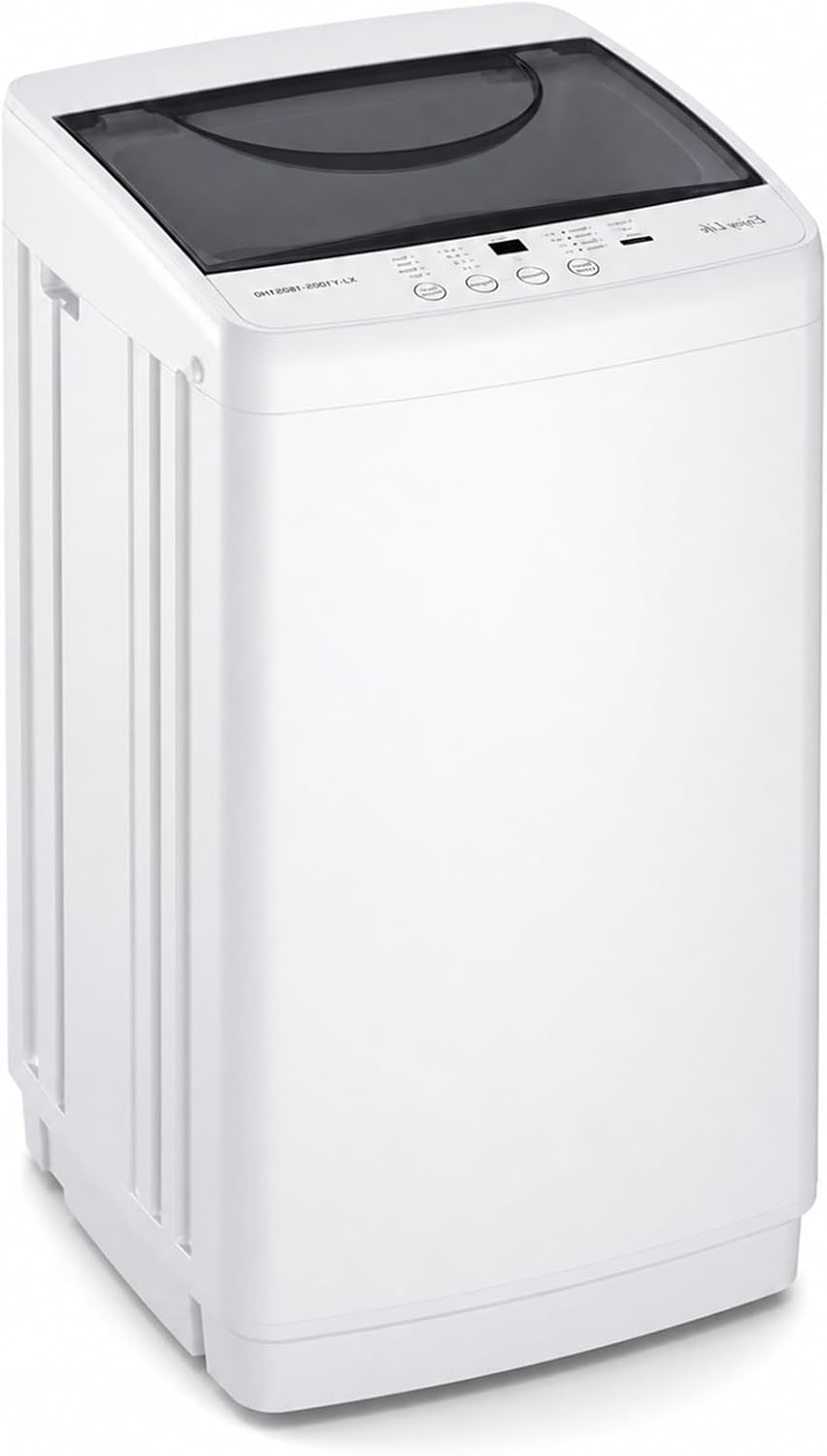
DUMOS Compact Portable Washer
| Capacity | 1.06 cubic feet |
|---|---|
| Number of Standard Cycles | 10 |
| Max Rotational Speed | 720 rpm |
| Noise | 72 db |
| Operation Mode | Fully Automatic |
This DUMOS compact portable washer targets small homes, dorms, and RVs that need a simple in-unit laundry solution. It offers 10 wash cycles, three water levels that handle loads from about 2.5 to 7.7 pounds, and a stainless steel drum that resists rust and protects clothing. The unit is fully automatic with push-button controls, a time-remaining LED, child lock, and a 2–24 hour delay start for scheduling loads. It relies on gravity drainage via the included 20.4-inch hose, so it must be placed near a low drain or bucket and cannot pump water uphill. Noise and vibration controls plus adjustable leveling feet help keep operation stable on varied floors, while a 720 rpm spin reduces drying time for small loads. For buyers on a budget this machine delivers practical features and a compact footprint, but it is limited by its small capacity and drain height requirement, so it works best as a supplement to shared laundry or for light, frequent loads rather than full household washing.
Best for: Buyers who need an affordable, reliable small-footprint washer for light, frequent loads in apartments, dorms, or mobile living and who prioritize dependable, straightforward operation over large capacity.
Less Ideal for: Households that want to wash full-family loads, bulky items, or need a washer with an integrated drain pump should look at larger or pump-equipped machines instead.
- Compact footprint fits corners, bathrooms, dorms, and RVs
- Stainless steel tub reduces rust and protects clothes
- Ten wash programs and three water levels for flexible small loads
- Delay start and child lock add scheduling and safety features
- Adjustable leveling feet and imbalance detection reduce vibration
- Requires gravity drainage with a short included hose and cannot pump water
- Small 1.06 cu ft capacity is not suited for large or bulky loads
Verdict: A compact, budget-friendly portable washer that delivers dependable, no-frills laundry for small living spaces.
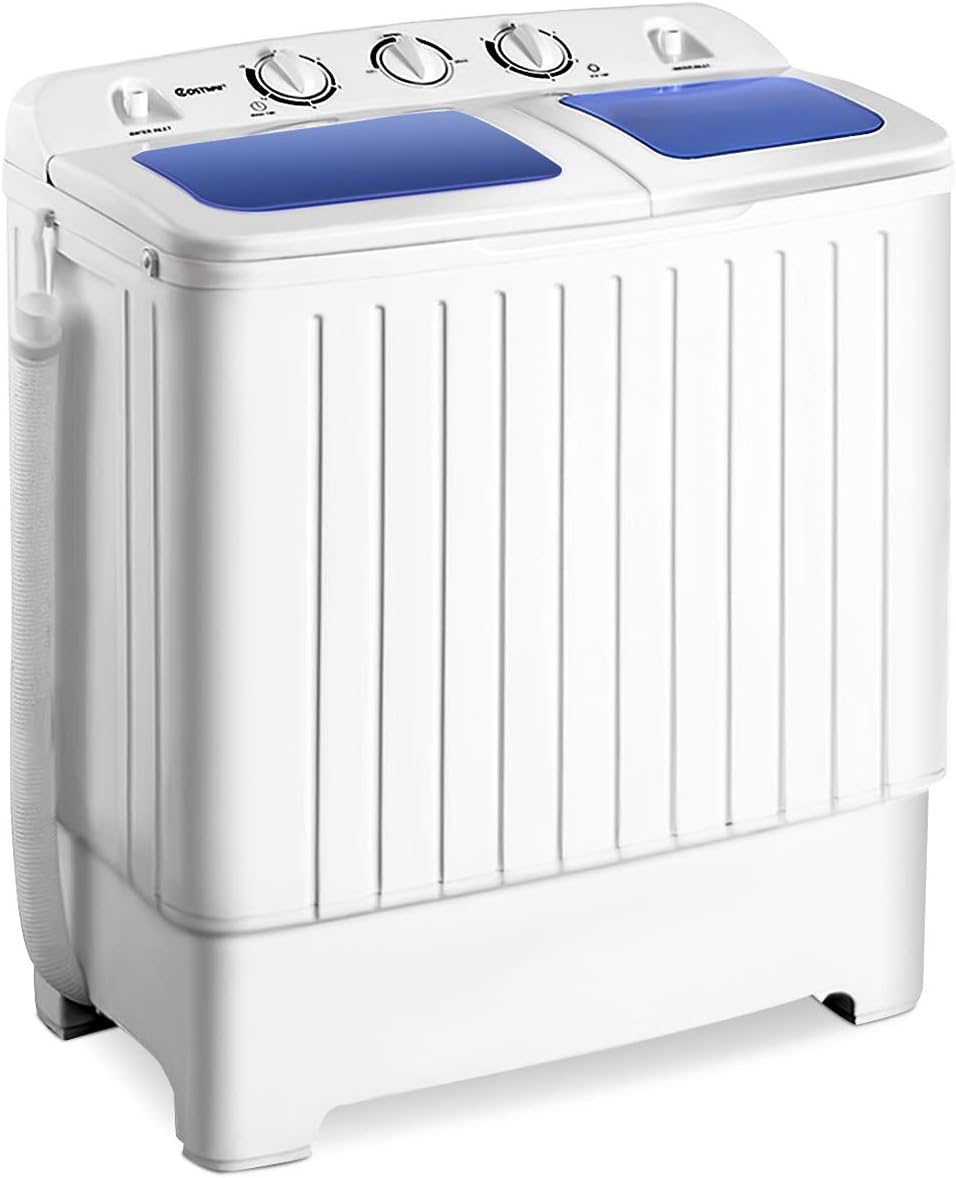
Giantex Twin Tub Washing Machine
| Capacity | 20 pounds (12 lb wash, 8 lb spin) |
|---|---|
| Operation Mode | Semi Automatic |
| Wash Power | 300W |
| Spin Power | 110W |
| Spinner RPM | 1350 rpm |
The Giantex Twin Tub is a portable semi-automatic washer and spinner combo that handles small laundry loads without a permanent hookup. It has separate tubs for washing and spinning so you can wash up to 12 lbs and then move items to the 8 lb spin dryer to remove most moisture before air-drying. Controls are simple mechanical knobs with a 15-minute washer timer and a 5-minute spin timer, and the spinner reaches up to 1350 RPM for faster water extraction. Practical touches include dual water inlet options, a removable lint filter, and a gravity drain hose that can be hung to drain. Because it is semi-automatic you must move clothes between tubs and monitor cycles, and the spinner leaves clothes only 80 to 90 percent dry so you still need a drying area or line. The 300W wash motor is fine for delicates and small loads but this is not intended for heavy bedding or continuous heavy use. For buyers who need a compact, inexpensive way to avoid laundromats, it delivers a straightforward, space-saving solution with a few convenience features.
Best for: Buyers seeking an affordable, compact laundry solution to cut laundromat visits and handle small, frequent loads in tight spaces who prefer simple mechanical controls and visible social proof of performance.
Less Ideal for: Those who need fully automatic, hands-off washing for large or frequent heavy loads or anyone who cannot accommodate air-drying after the spinner cycle.
- Separate wash and spin tubs let you wash and drain concurrently for faster cycle flow
- 12 lb wash and 8 lb spin capacities suit small household loads
- Simple knob controls and preset timers are easy to use without a learning curve
- Removable lint filter and dual water inlets increase convenience and installation flexibility
- Semi-automatic design requires manual transfer between tubs and active timer monitoring
- Drain relies on gravity so location and setup determine how easily it empties
Verdict: If you want a low-cost, compact washer that reliably handles small loads and reduces laundromat trips, this twin-tub Giantex model is a practical budget pick.
Auertech Portable Twin Tub Washer

| Capacity | 28 pounds (18 lb wash, 10 lb spin) |
|---|---|
| Operation Mode | Semi Automatic |
| Max Rotational Speed | 1300 rpm |
| Installation Type | Portable |
| Controls Type | Knob |
This twin-tub portable washer pairs an 18 lb wash tub with a 10 lb spinner to let you wash and spin-dry two loads at once, which is handy in dorms, apartments, and RVs. It runs semi-automatically: you connect an inlet hose to a faucet, fill to the recommended water line, set the timed wash and spin cycles with simple knobs, then manually switch between functions. The 1300 rpm motor gives brisk spin speeds to remove more water before drying, and built-in overheat protection helps prevent motor damage from extended runs. Practical features include a transparent lid to monitor loads, a lint filter, and an included drain pump so you can route wastewater to a sink or higher drain. Expect quiet, efficient performance for small-to-medium batches, but you must avoid overloading and balance the spinner to prevent vibration. Because it is semi-automatic, it requires more user involvement than an automatic front-loader and lacks a digital display and advanced programs, but for buyers prioritizing space savings and straightforward laundry on a budget it performs well.
Best for: Buyers who need a compact, budget-friendly washer for small living spaces and prefer a simple, robust unit they can operate and maintain themselves.
Less Ideal for: Users who want fully automatic, hands-off cycles, precise program selection, or large household capacity should consider full-size automatic washers instead.
- Twin-tub design lets you wash and spin simultaneously to save time
- 1300 rpm spinner reduces moisture so clothes dry faster
- Includes drain pump and inlet hose for flexible drainage and hookup
- Simple knob controls and transparent lid make operation intuitive
- Built-in overheat protection protects the motor during heavy use
- Semi-automatic operation requires manual switching and more hands-on attention
- Limited to basic timed wash and spin programs with no digital controls or presets
Verdict: Auertech's twin-tub portable washer is a practical, space-saving choice for budget-conscious buyers who want straightforward, effective laundry for small loads.
Choosing the Right Washing Machine on a Budget: Key Factors to Consider
Cleaning Performance
How well the machine removes common stains and soils is the most important practical factor. Look for machines with proven agitation or drum-action designs that handle mixed fabrics without excessive wear. Cycle options that include targeted stain or heavy-duty settings increase versatility for different load types.
Cleaning performance also ties to temperature control. Machines that offer a range of wash temperatures let you tackle greasy stains with warm water and delicates with cold rinses, which improves outcomes without increasing detergent use.
Energy and Water Efficiency
Lower energy and water consumption reduce lifetime operating costs, which is critical when buying on a tight budget. Check published efficiency ratings and expected annual energy use where available, and favor machines with programmable eco or quick cycles that use less water and electricity.
Efficiency can affect cycle length and cleaning intensity, so balance the lowest consumption with acceptable wash results. For many households, a modestly more efficient machine will pay back over a few years through reduced utility bills.
Capacity and Cycle Variety
Choose a drum size that matches your typical laundry load. Smaller capacities save on purchase price and space but may require more frequent loads. Larger drums handle bedding and bigger loads more conveniently but may be more expensive and slightly less efficient per load if not filled.
Cycle variety matters because it determines whether the machine can safely launder a range of fabrics. Essential cycles include normal, delicate, heavy-duty, and a quick wash. Additional options like soak or extra rinse can improve cleaning reliability without adding significant cost.
Build Durability and Serviceability
A lower initial price is only a bargain if the machine lasts without frequent repairs. Assess the quality of drum materials, motor type, and warranty terms. Machines designed with simpler electronics and fewer moving parts are often easier and cheaper to repair.
Consider how accessible common service points are, such as lint traps, hoses, and pump filters. A design that permits basic user maintenance will reduce long-term ownership costs and downtime.
Noise, Vibration, and Installation Fit
Noise and vibration affect where you can place the washer and how comfortable it is to run at night. Look for models with balance-control features and clear guidance on leveling during installation. Reduced vibration is particularly important in apartments or homes with shared walls.
Also verify the machine's footprint and water/electrical requirements against your installation space. A budget machine that does not fit the hookup or door clearance can create unexpected costs or complications.
User Controls and Maintenance
Simple, intuitive controls reduce the learning curve and the chance of user error. For budget shoppers, straightforward mechanical or clearly labeled digital interfaces are preferable to complex, app-driven controls that add little to core performance.
Maintenance needs such as drum cleaning cycles, gasket accessibility, and filter access should be minimal. Machines that require frequent professional servicing or that hide maintenance points increase total ownership cost over time.
Top Tradeoffs When Choosing a Budget Washer
When shopping for a budget washing machine you will encounter tradeoffs between upfront cost, capacity, and long-term operating expenses. Lower-priced units often omit advanced features like steam sanitation or smart controls, but they can still offer acceptable cleaning and durability when matched to realistic household needs.
Prioritize the capabilities you actually use. If you do small daily loads, a smaller, efficient washer is a better value than a larger unit you rarely fill. If your priority is minimizing utility bills, pay attention to energy and water use rather than cycle count.
- Smaller capacity equals lower cost but more frequent loads.
- Very low-priced models may cut corners on suspension or insulation, increasing vibration and noise.
- A modestly more efficient model can save money over the long term, even if initial cost is slightly higher.
Installation, Space, and Hookup Considerations
Measure the available space, door clearances, and the location of water and drain hookups before choosing a model. Front-load and top-load machines have different clearance and ventilation needs. Also confirm that floor strength and leveling are adequate to avoid excessive vibration.
Consider whether you need a stacking kit, pedestal, or specific water pressure range. Budget models are often simpler to install but may still require professional help if hookups are nonstandard.
- Verify water inlet type and drain height.
- Allow clearance for the door to open fully and for hose routing.
- Check electrical requirements; some compact washers run on standard household circuits while others may have specific needs.
How to Match Capacity to Household Needs
Estimate typical weekly laundry volume and choose drum capacity accordingly. Singles or couples who do frequent small loads often do well with compact machines. Families or households that wash bedding regularly should choose larger capacities to avoid running multiple loads.
Remember that running an undersized washer at full frequency increases energy and water use. Conversely, a larger machine used half-empty loses efficiency per garment. Aim for a balance where most loads are near two-thirds to three-quarters full.
- 1–2 people: compact or small-capacity washers.
- 3–4 people: mid-size machines.
- 4+ people or frequent bedding washing: larger-capacity models.
Simple Maintenance That Extends Machine Life
Basic user maintenance greatly extends the life of even budget washers. Regularly clean filters and seals, run a monthly cleaning cycle if recommended, and keep detergent use within manufacturer guidelines to prevent buildup.
Address small problems early. Unusual noises, persistent odors, or imbalance issues often have simple fixes such as re-leveling the machine, cleaning the drain pump filter, or checking hoses. Preventative upkeep reduces the chance of costly repairs.
- Wipe door seals and gaskets after wet cycles.
- Run a maintenance rinse occasionally to prevent residue.
- Inspect hoses annually and replace if showing wear.
When to Consider Paying a Little More
It can make sense to spend a bit more if the added features address real pains. For example, if you need very quiet operation for an apartment, models with better insulation and balance systems justify the extra cost. Similarly, if you wash bulky items frequently, a larger drum will save time and reduce wear on fabrics.
Weigh the expected payback from improved efficiency or durability against the higher initial cost. In many budget ranges, a small step up in price yields noticeably better longevity and lower operating costs over several years.
- Prioritize higher build quality if you expect heavy use.
- Consider improved suspension or noise-reduction features for tight living spaces.
- Look for longer warranty terms if you want extra ownership protection.
How We Chose the Best Washing Machine on a Budget
We focused on practical, measurable attributes that matter most to buyers seeking a washing machine on a budget. Primary evaluation criteria included cleaning effectiveness across common soil types and fabric types, energy and water efficiency ratings to estimate running costs, drum capacity and cycle variety to match household laundry loads, reliability indicators such as build materials and warranty terms, and user experience factors like noise, cycle times, and control simplicity. We excluded premium machines with advanced steam, sanitizing, or connected features that push the price above typical budget ranges. We also filtered out models with consistently poor user feedback on basic tasks such as stain removal or load balance. For eligibility we prioritized machines with clear published efficiency specs and straightforward maintenance requirements. The list favors options that strike the best balance between low purchase price and acceptable long-term cost and performance for everyday laundry tasks.
Our full evaluation process is outlined in our review methodology.
FAQ
How much should I expect to spend to get a reliable budget washing machine?
Spending a little more within the budget range often buys better build quality and lower running costs. The key is to balance purchase price with expected energy and water use and the typical frequency of repairs.
Are compact washers a good choice for small apartments?
Compact washers are ideal for small spaces and lighter laundry loads. They save floor space and often use less water, but you may need to run more loads if you have larger items like bedding.
How important is energy efficiency on a budget model?
Energy efficiency is important because it affects long-term operating costs. Even on a budget, choosing a model with reasonable energy and water use can reduce utility bills over the life of the machine.
Can I install a budget washing machine myself?
Many budget washers are straightforward to install if you have standard water and drain hookups and a compatible electrical outlet. However, if plumbing or drain heights are nonstandard, professional installation may be advisable.
What routine maintenance keeps a budget washer running longer?
Regularly cleaning filters and seals, running occasional maintenance cycles, and checking hoses for wear are the main user tasks. Addressing imbalance or unusual noises early prevents bigger problems.
Final Verdict
When choosing a washing machine on a budget, focus on the features that directly affect everyday use: cleaning performance, operating efficiency, appropriate capacity, and straightforward serviceability. Expect to trade off advanced conveniences for simpler controls and fewer niche cycles, but prioritize machines with solid construction and clear efficiency specs. Decide which compromise you can live with—smaller size versus more frequent loads, or slightly higher upfront cost for better efficiency—and pick the option that minimizes long-term expense while meeting your laundry needs with reliable cleaning and low maintenance.